Subscribe
Share
Share
Embed
Welcome to the Sound On Sound Electronic Music podcast. On this channel we feature some of the pioneers of the industry, interview musicians and talk about retro and current gear.
More information and content can be found at https://www.soundonsound.com/podcasts | Facebook, Twitter and Instagram - @soundonsoundmag | YouTube - https://www.youtube.com/user/soundonsoundvideo
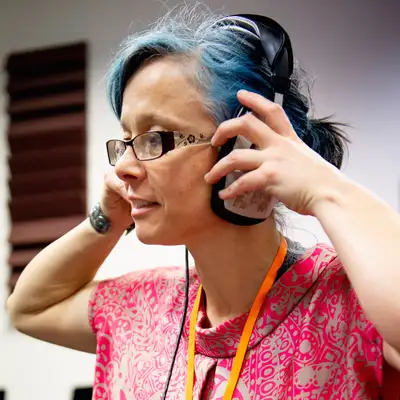
Hello and welcome to the Sound on Sound podcast about electronic music and all things synth. I'm Kara C and in this episode I'm talking to Chiara Luzzana. Chiara is an Italian composer with a rather niche focus. She makes music for corporate brands using only pure sounds and samples relating to their products.
Clients include Swatch, Alessi, Lavazza Coffee and Nivea.
Passionate about her music concrete approach, Chiara says she doesn't need musical instruments when to her, life plays the best notes. Given my own enthusiasm for found sounds and untapping the musical potential of everyday objects and sounds, we really enjoyed talking about some of Chiara's projects processes and tech.
So a taste of Chiara's music to get us started. Here's an extract from a commission Chiara composed for the watch brand Swatch.
Hello Chiara Luzzana and welcome to the Sound on Sound podcast. Hello and thank you so much. It's a real pleasure to be here with you and I thank you for the invitation. I'm a huge fan of your podcast so I'm really happy. Fantastic. So you're based in Milan, and I guess you travel around the world for your work.
We discovered you via Zoom, the digital recorder people. And yeah, I'm really interested to hear how you would describe what you do. You know, I'm a kind of person that, um, is not used to describe herself, but I can say that I'm a sound artist and soundtracks composer, and I create music with the pure noises of everyday life.
So I study, uh, classical, uh, instrument, but then at some point I decided to destroy the rules and try to make music only with pure sound. Especially, I'm working on, uh, sound branding, so, um, creating soundtracks for brand is my main process. And it's a bit challenge because, you know, the brand have a straight rules and they have a, a kind of a particular guideline in the, in, in them advertising.
So it's super challenging. but also give me a lot of, uh, a lot of magical stuff that happens sometimes in my sound project. Yeah. Fantastic. And I imagine alongside those challenges, there's the kind of, it sounds like it gives you clear direction as well, though, because there's clear limitations, a clear, brief, if you like, mission.
So in that sense, does that help to make it a bit clearer or is that a challenge as well? Yeah, you're right. Uh, I mean, um, In some way, it is very, very restricted. But working with brands, it's very stimulating because everyone plays in a different way. Of course, you have your own compositional style, but the brand is always the protagonist.
So the most important things is that you have to keep your ego at bay. And these allow you to improve yourself And since I have my, uh, very own method of creating sound branding, um, this is also more difficult to express, uh, in some briefing. And because I record the pure noise of the brand to build a sonic sound.
Some newspaper have defined me as the storyteller of, uh, uh, the big brand. And I think these, uh, uh, it sums up my work. It is not just music, but. a real storytelling and that's the challenging point. Yeah, and also the adventure, I imagine. Yeah, absolutely. Yeah, I can see what you mean in terms of the story because, you know, something like a swatch watch, you got right inside that, didn't you?
And you're almost revealing that. the inside and what's going on on the inside, but in a different way, in almost a sensory kind of way, because you're working with the world of sound and rhythm and music. So I wonder if you could give us an example of a couple of projects that you've worked on and how you've approached them.
I know that you've used, for example, the Fibonacci sequence. Of course. And you said about Zwhatsh and the, uh, the curiosity about this project is that there was a very, uh, ambitious project, but it's born initially from a personal idea. So then at the end, it became the official soundtrack cause watch ward and then the Venice Biennale soundtrack.
And that's the reason why I started with the personal project that then I presented to the, to the brand. And, uh, this. Is how my career it starts. So, as I say, the old, the sound project I make, uh, dedicated to the brand are very different from each other. In one project for Nivea, a very well known cosmetic product company, um, I create a sensory journey.
Where a visitor could create a soundtrack recording, uh, the sound of, uh, their skin. So, I have built a custom microphones for this purpose. And the experiment was incredible because when you realize that each skin sounds different. No way! It becomes something magical. And, um, the visitor were like super surprised about this.
For Alessi, you mentioned the Fibonacci project. This was the Alessi brand, where I sampled their design objects. They were made from brass, with brass material that is very malleable, to create an orchestra of elements. And since the patterns of these objects refer to the golden ratio, which define the perfection of the music.
The elements of nature and of life in general, um, the connection with Fibonacci was immediate. So I took each sample and I, alternated it, uh, in the soundtrack, in the composition, following this sequence, especially in the rhythmic part. Also, this project was very challenging because, you know, you have to put together the briefing from the design and then the musical style.
And for a sound branding project, These two sides of the same coin, uh, it needs to be really connected. Yeah. Yeah. And that's kind of your job to integrate it, isn't it? To bring the, to bring all that together. Yeah. Add another dimension. Wonderful. So I have to ask, um, can you tell us how you, Developed and what microphone you had to develop to record skin?
Uh, it starts from a contact microphone, a very small contact microphone, and with a particular surface where the visitor can apply on their skin. It's all about, um, the touch between the, um, the capsule and the skin itself. Most of them are contact microphone, um, with some really precise capsule and that's it.
So all that surround us, it's It's play some really great notes. Um, sometime you don't need a very precise microphone. You just need a contact microphone and every surface can play. Uh, it's just about to learn how to listen to it. Yeah. And how to amplify it or bring it to life. Yes. And how to put together all these different elements to create a soundtrack with a strong mission in mind.
Mm. Yeah. Yeah. Wonderful. So how did you get down this rabbit hole as we call it? You know, how did Chiara come to be? That's crazy person. Yeah. Wonderful. Crazy. But also I know from very young, you were very tuned into sound like myself. I had an obsession about car indicators and things like that. So I totally can understand, but I'm guessing, yeah, that kind of way of looking and seeing an experience in the world is something that's a part of you.
You're right. I started Very, very young. So I started to listen to the sound even before speak. And this soon became my language. So at the age of six, my parents get divorced. And so to fight loneliness, I've started to listen to the silence around me. And suddenly I noticed that the silence doesn't not exist.
In fact, in the middle of this silence, I've recognized the sound of 50 Hertz that you know, that is a particular noise that, uh, Actually is the sound of the electricity and with this, I start to, um, to make all these objects around me place in tune with that 50 Hertz. Then growing up, I dedicated my life to studying, as I say, the classical music first, and then I started to devote myself to everything that was pure sound experimentation first as an audio engineer.
And then with the certificate in musical cognition at Berklee College. Actually, I've always worked in music. I've been a hip hop producer. Yeah. A hip hop producer, like the first one in Italy. And that that's, it's a clear point of how old I am because I'm, I was the first hip hop producer in Italy. Uh, I'm joking.
And then, um, a DJ for more than 20 years, but in the same time, my heart was beating for another type of music, musical style. And compositional approach. And so I want to tell you this because it's important in my, uh, in my artistic career, because one day of 2012, I've decided to leave Italy and my studio in Milan, trying to push myself, uh, over my limits as artists, but also as a human being.
That was important. So I applied in an artistic residency in Shanghai and they, and they called me back in five days saying, Chiara, you has been selected over more than 3000 requests and we are waiting you in Shanghai. And so this was exciting and scary at the same time. And till the end of 2019, I lived in Shanghai where I started my new approach to the sound and the soundtracks for brand.
What did you get up to out there in Shanghai? How did that help you develop your craft? When you start to live in Shanghai, you notice that you are completely alone. No one can help you. So you have to really to push your limits over and over and over yourself. So I start to believe. in my, in my passion, in my different approach of compositional music style.
And, and these helped me a lot because I was alone, just me and my deep passion. And that's bring to life, uh, this work to, um, create music for advertising in general. Uh, it was a challenge inside another challenge. Uh, but it was definitely. A really cool moment of my life. I think that the moment in which my life changed and switched to another type of story.
Wonderful. Yeah. You talk about everyday life being your symphony and yeah, your passion is to bring inanimate objects to musical life. Um, could you tell us a bit more about the everyday life being your symphony? Well, um, I've always thought that life can play the best notes. I got my hands on musical, uh, instrument, as I say, such as the piano, guitar, and clarinet, but I found my true calling in noise.
So every sound of every day can become a soundtrack. As I said, the important thing is, is, is to stay listening, learn to listen. And everything around me is an inspiration. I'm not inspired by music or artists, but by people in general. When you. begin to understand that everything around you has its own musicality.
Every second is a good one to capture a new sound and make it play. And You know, walking on a dry autumn leaves can become a hi hat or a car passing over a manhole, a 808 drum, a watch like the Project Force watch, or a ship like Costa Cruises project can become a soundtrack. So when you start to think that everything around you is an orchestra, you start to play with that orchestra.
I really resonate with that because for me it's almost a mental health thing as well because it reminds me of the wonder of life. So, you know, I was just thinking a project I did on the south of England on a little island called Hailing Island. I basically recorded a staircase and that I just limited myself that that would be my drum kit.
And I got such a nice kick. You said really important things. Not only in general, but also in my life, because when you try to force yourself to have just that sound and with that sound to create all the instrument, all the, uh, your library, your personal library, uh, this, this make you like a superhero because you try to create music from, you know, a piece of paper or, uh, A bad noise.
It's it's real. It's really something that is important for our lives, too, because when you try when you try to harmonize a noise is like harmonize our, um, interior think our balance between who we are and the life that we are living, okay? So it's a really, uh, also a mental process that help you a lot.
Yeah, and a great technical challenge. You know, it reminds me of the early tape pioneers where they, in music concrete, where they had very limited resources. So You know, you hear a sound and you can hear its potential, can't you? And you know exactly what you need to do it to create that sound. I really love and I'm a huge fan of the concrete music or all the Cologna, uh, experimentation.
I came from, you know, That kind of experimentation when you have just one tape and with this tape you have to cut, make a loop and try to have all the best that you can, uh, have and, uh, and that you can create just only with a piece of tape. These let your creativity to explode because you have just one source and limiting your, uh, You can create something, um, powerful.
Yeah, and unique. I think you start to develop your own voice. Yes. So, yeah, can you tell us a bit about what you're doing now in terms of your production techniques? So what kind of, are you using software, hardware? I'm a super huge fan of microphone, you know, and there are two things that I never Part with it's a contact microphone and a small tape recorded.
It's a very creepy one. I like to record the rough sound, dirty sound on tapes that are rewritten every time. This allows me to mix different sound sources and obtaining a warmer and the rich mixture, even if he's a bit dirty, but this is the The potential, is it self-made contact mic, or a bought one? It, it's absolutely self-made.
Uh, also my hydrophone microphone that I put, i i in every water in every lake, it's um, tremendously. A contact microphone built by myself. Nothing special about the contact microphone. And instead, regarding pro microphones, I'm used, I'm used to use audio technical microphones. And if I have to pick my three favorite, I'd say, um, the, uh, the pro 37 model.
It's a condenser microphone with a very small diaphragm and my shot my shotgun microphone. It's the BP 40 71. And the stereo model, also by Audio Technica, the BP4025. With these three microphones, I can, uh, cover all my, um, my setup. So we know that you use Zoom digital recorders, which ones in particular do you tend to take with you around the world on your amazing projects and why?
It's a tricky point because I have always used a lot of multi track recorders from test cam to sound device. I've started with my first Zoom recorder and over the years I decided to stay with a single brand that had some characteristics that were fundamental to For me. So these three characteristics are long battery life and quality of preamps.
And the speed of use. So years ago, I, I chose zoom recorders and I'm still proud of my choice. Um, because they are my companion on every journey. I'm in love with a zoom F six, uh, which have a six, uh, independent serial channel and the power to record 32 bit floating. And what does it mean? Being able to afford the luxury of making a mistake and recovering every, um, recording in, in studio, in post production phases.
So during my work, I often record in adventurous situation and having this ability to recover every takes, it's a great feature. So in my arsenal, I carry the Zoom F6 everywhere. However, I have been lucky enough to do a project dedicated to Zoom, in which I use the prototype of the new model ready to explode on the market.
And I think at the time of this podcast, it's already on the market. I decided to call it the Sound Designer Dreams because it's a small version of the F6 model. Its name is F3. So handy that I mounted it as if it were a watch, and I recorded an entire project balanced on my So it was, uh, really hard to keep my balance, but with a single, uh, harm, I can record two channel with a boom microphone.
And also in this case, 32 bit floating to ensure the excellent success of the recordings. And moreover, On the display for the first time, there are no normal meters, but the creation of the sound wave in real time, which allow you to immediately see the progress of the sound recordings. Yeah, that's like a different way of monitoring, but we're so used to that, aren't we?
We're used to be able to read. We can read. The sound and the music from the waveform, can't we? And in a sense that's, that can tell you if there's any errors as well, if there's been a pop or a click. Exactly. And you, if you can see the, the picking, but you know, with 32 bit floating, you are not so, you don't have to be so careful about your recordings.
That's the, the powerful of these, uh, these products. Of course, you have to, uh, to keep your, um, your recording level at As a rule of my recording, I tend to keep the input volume in recording very low, around less 15 decibels, so that I can have headroom enough even in post production phases. But, in any case, when you are recording in a, in a very adventurous place, like in a canoe, or, uh, Uh, in, uh, Lavazza, uh, plantation in Brazil, the plantation of, of coffee.
The important thing is to keep, uh, uh, your attention on the sound, uh, not on, on the metering. So tell us about the project for Zoom, which means that you were in a canoe. It was a really inspiring project because it's completely made in Italy. This project has been, uh, created, um, on the river here in Italy that is called Po, is, uh, the longest, uh, river in Italy.
And it's completely a made in Italy project because of me. Of course, I'm from Milan. And also because I follow, uh, the movement and the sound of this, uh, uh, champion, Ciao. Ciao. She's a gold medalist of canoe. Uh, she won the first place in the Tokyo 2020 Olympics. And it was funny and really inspiring to record each her movement, um, to create a soundtrack only based on this.
Pure sound. Wow. And how, how can we hear this soundtrack? It will release on the Zoom official page and the official, um, social network channel. And I also, um, take care of the direction of the video that explain the soundtrack. And, um, This video will be presented at the most important film festival. So, it's also challenging because it's not only a soundtrack, but it's a documentary movie.
And all this project was made with a new F three because of the, the freedom of movement, the freedom to take a boom microphone with you with one harm and check the, the, the volume, the metering on your, uh, on your arm, like a watch,
uh, regarding. Other favorite gear during my compositional process, I'd like to manipulate noise and pure sound with pedal effects. I got tons of pedal effects. They are a wonderful method of getting new sound textures. My favorites are the Strymon, a nice guy. And the hologram microcosm. It's a very powerful granular, uh, synthesizer and a reverb effect.
Uh, instead regarding my dough. Uh, I know this is a, uh, it's a bit, uh, a nerd side of me, but, uh, I, I love that, that I love speaking about gear. But, uh, , I, I come from Pro Tools, logic, Cubase , but at the moment my absolute favorite is, uh, studio One from PRIs because it has really incredible potential and an intuitive approach to compose a sample mix.
and mastering in the same place. So I really suggest you to, to try it because it's a, it's a super powerful though. So do you tend to put your sounds through synthesizers or is it more about a chain of effects if you like? It's more about a chain of effects because it's portable. Uh, I can use also during my live performance and it's, uh, it's something like, uh, unpredictable.
So you can try to, to make one sounds from a, uh, you know, from a piece of paper and all this chain allowed me to create some strange, uh, texture. But it's great. It's great. I think the organic sound in my composition, it's something that bring the composition itself alive. Yeah. Yeah. Tell us about your live performances.
Yeah. What kind of set up do you use for that? And what, what are you aiming for creatively? Cause you know, you're not performing songs. So what's, what's the kind of creative vision if you like? Actually, I'm not a performer. I came also from this world of live performance and live concert. But at the moment, since more than seven years, I give a talk as a public speaker.
And in my talk, I always mix the importance of listening. And this kind of performance is a live performance where I record most of the time the sound of the audience. And with all these chain of effects, I manipulate that sound to create a real time soundtrack to as a gift for the audience. So transforming noise, um, it's It's my way to tell people to believe in something that most of the people think that is impossible, like transform noise into music.
It's a kind of philosophy. that you can share from a stage. Also in this, in this case is not only music. Yeah. Yeah. It's making me think of Evelyn Glennie, the wonderful percussionist, um, who talks about listening, even though she's deaf. And then also, of course, Pauline Oliveros and the deep listening approach.
That's a great connection. I thank you to say this. And again, it's a connection to the world around us. I'll never forget the David Toope quote where he talks about how music can take you away, you can escape, but there's something about sound that actually brings you in closer, connected to the world around you.
Yeah. Yeah. It's, I think that sounds and listening is one of the most, The most important sense to understand, uh, but is also the most important to fix and define emotion. Um, we must have to keep in mind that our ossicular chain, our eardrum, they reach their adult size around the fifth week of pregnancy.
That means the fetus develops hearing as a first sense because it has to get used to what will happen to it in its future life. Yeah, and I'll never forget someone saying you can't switch off your ears. You can close your eyes, but you can't close your ears. Yes, that's true. That's tremendously true. And obviously Evelyn Glennie talks about how we don't just listen with our ears and Rupert Neve says the same.
It's the poetic. Side, but it's also the honest side of our work, and it's also the science is a physical, you know, frequency is a physical manifestation, isn't it? And, you know, especially in the advertising world or working with brands is important to to tell the story of the brand to tell the mission of the brand, uh, a wrong Um, frequency can destroy your sound project in a, in a bad way.
It's really important how the brain reacts to the sounds. I wonder if we can get a bit more in detail, whether we can sort of dive a bit into one project that you can tell us a bit more about the whole process. One, two, three. Recent project, uh, the one for Lavazza, a coffee brand, uh, was really challenging because I followed the coffee from the first bean that falls on the plantation in Brazil to the touring factory here in Italy.
It was a last minute project. They call me like four days before and we organize all, all the staff or the equipment and they flew to Brazil and they called here the wonderful sound of the coffee plantation at dawn and the miracle of nature. And I started to record this little bean to create the rhythm.
And then since, yeah, since the, um, since my My soundtrack, it has to remain pure without using any common musical instrument. I had to find some, um, melodic style. So, I found these wonderful birds that were singing. only at five in the morning. So I broke all the Creole on the plantation with a very strong, cold, uh, temperature and it was raining, but that, that birds were singing just for five seconds.
So I recorded that sounds and they, and they trans transformed it in, into the melody of the soundtrack for Lovato and also for All my projects, I create a video that, um, you can see on my website because I always to tell the behind the scene process, because it is important to let the listener or the viewer, um, to know that.
The sounds remain pure without alteration. Of course, I got my chain of effects, but the coffee bean, for example, could have a reverb, a delay, but it must be a coffee bean. So you, you, you must have to recognize where the source is from. Yeah, you want people, you want that transparency. It's absolutely fundamental in my work to be really clear and transparency with the sounds.
Yeah, I can imagine, especially for advertising, because then they can obviously link them back. How about the coffee machines? Did you do any recording of the coffee machines? You know, we are Italian. We love the mocha style, uh, of making coffee. We are also a bit boring about this mocha process. You know, I used to drink Americano and not the mocha coffee.
But the sound of mocha, it's super amazing. You can do whatever you want just with one sample.
And what were you producing for, for that particular, the Lavazza project? Was it a soundtrack to an advert or yeah, what exactly was it that you had to produce? I create four different soundtracks and these soundtracks were developed for For different chapter off Lavazza, because I followed the coffee from Brazil.
That was the first chapter till to Genoa, where the coffee being arrived into the container and these in Genoa was the second chapter and then at the touring factory, third chapter and then the last one in our Home with the sound, the ticking sound of, um, the, the mocha and, uh, the spoon and all the, the necessary that you need to make a coffee.
And, and then this become, uh, the official soundtrack of the um, Rome. Cinefest 2019, where I perform the, the wall soundtrack. And of course, I'm not advertising a TV, a TV spot and a podcast, a corporate video and, and, uh, an audio installation also. Fantastic. And are you working in stereo in your installations or have you, are you, do you also use immersive audio?
Especially in these, uh, audio installation, the sound. Has been treated in an ambisonic way. So, um, not only stereo, but a really, uh, wide panorama. Because the people passing through this tunnel and can hear the sound of the coffee without seeing video or images, just only with the, with your eyes. Here, do you have any favorite plugins in terms of, because they all have their own sound, don't they?
I really love with, um, sound Toys Suite, and my favorite is the Crystallizer is, uh, it's, it's so super powerful because you, you put through the Crystallizer a, a small pieces of sample and you can have this wonderful, granular texture. that continues to play over and over and over. And it's a cool touch of, um, style different, uh, that you can put on your composition.
Yeah. Quite creative. And how about dynamic control, compressors, limiters? I'm not so linked with one particular brand or I also love to change all the time. Uh, I love the Universal Audio, uh, compressor and, uh, the Neve compressor in plug in, of course, not in, uh, in, I don't have the hardware, um, version, but, you know, I, I like to change every time to, to, to listen how the sounds change, uh, with different, uh, Compressor or limiters.
I'm not so straight to the to just one model. The project brings, uh, the compositional approach is is not in reverse because You know, because I have to create music for brand. So for Neva, for example, the compress, the compressor, uh, the use of compressor was really intense because you have to bring all these different nuance, sound nuance, and, you know, I, I'm used to get bored.
very soon. So every time I tried something different to make my processor, uh, still, um, inspiring me that every time it must be different.
And do you have any exciting projects coming up in the near future or that you're working on at the moment? Well, I think I can say that I will create the soundtrack for the greatest brand in the world in intended precisely as the physical dimension, dimension, uh, something that is very reminiscent of space.
So something really huge. Finally, I, I will reveal my project, my main project, the sound of city like one city. I mean, the name of the project is regarding to one city, but it's not one city because it's the sound of all the city in the world, starting from the pure noise. And it will certainly be an opportunity to tell you and your listener all the details and send you the exclusive preview of the soundtracks.
So that's a, that is a promise. Okay, so this is top secret for now, but it will be, all will be revealed. Yeah, just a bit. Excellent, excellent. Well, um, yeah, we wish you all the best with your wonderful Adventures in Sound. And yes, keep reminding everyone of that magic for sure. And, um, all the best. So thank you so much.
And Just one suggestion. I know that your listener already knew this, but believe in your dreams. Because if I have been able to create soundtrack with noise and build my own company on it, you can do whatever you want. Thank you for listening and be sure to check out the show notes for further information as well as links and details of the other episodes in the electronic music series.
And just before you go, let me point you to soundonsound. com forward slash podcasts, where you can explore what's on our other channels. This has been a Karo C production for Sound On Sound.