Holy Shift! Biomedical Breakthroughs Shaping Tomorrow

It sounds like science fiction, but brain-powered technology is already here. In this episode of Holy Shift!, host Angela Gill Nelms sits down with Dr. Chethan Pandarinath, a neuroscientist and engineer who studies how we can read brain signals and turn them into action. From helping people communicate and move after injury to building technology that listens to the brain in real time, Chethan breaks down how this science works, why it matters, and what the future of brain-computer interfaces could look like. Expect big ideas, clear explanations, and a fascinating look at how close we really are to mind-powered technology.
 
Learn More About Chethan Pandarinath:
Support Tomorrow’s Breakthroughs – Donate Today: 
If you want to support the research you heard about on today’s episode, consider a donation to the Wallace H. Coulter Department of Biomedical Engineering at Georgia Tech and Emory. Every contribution—big or small— supports ongoing work and fuels future innovations.
https://www.givecampus.com/campaigns/46972/donations/new
  • Select "Designation"
  • Choose "Make a Special Gift to Georgia Tech (write in your preference)"
  • In the open field, write: "BME Fund for Excellence (555788)
 
Connect!

About The Host: Angela Gill Nelms is a trailblazer in transforming bold ideas into impactful healthcare solutions. She serves as the Director of Biolocity, accelerating the commercialization of early-stage medical technologies developed at Emory University and Georgia Tech. She is also the Founder and CEO of The AGN Group, and the host of the Badass Leaders Podcast, where she champions courageous, compassionate leadership. Learn more at www.AngelaGillNelms.com.

Meet The HolyShift! Team:
  • Produced by: Erin Buckley and Zachary Danziger
  •  Filming & Editing: Jackie Hampton
  •  Logistics & Marketing Support: Katie Hart, The AGN Group

Creators and Guests

Host
Angela Gill Nelms
Producer
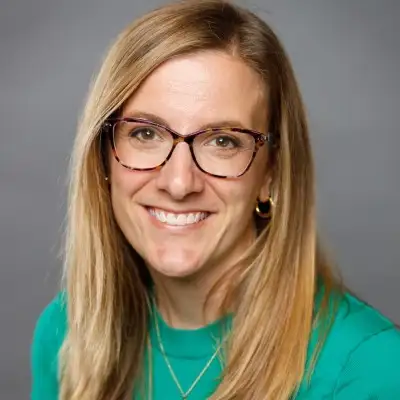
Erin Buckley, Ph.D.
Dr. Erin Buckley is a biomedical researcher specializing in non-invasive optical imaging of the brain. She earned her PhD in Physics and Astronomy from the University of Pennsylvania and completed postdoctoral fellowships at the Children’s Hospital of Philadelphia and Massachusetts General Hospital. Her work focuses on developing and applying diffuse correlation spectroscopy and near-infrared spectroscopy to measure cerebral blood flow, oxygenation, and metabolism—particularly in pediatric populations.
Editor
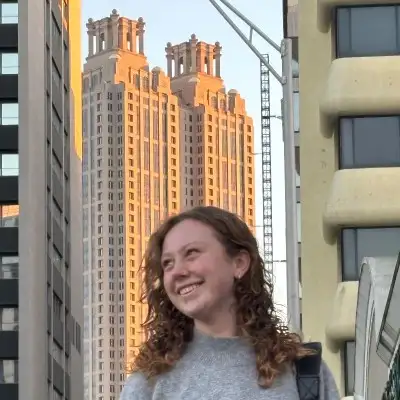
Jackie Hampton
I am a senior at Emory University interested in the way cities work (especially my favorite city and hometown, Atlanta). My major in Interdisciplinary Studies offers me the opportunity to think about urban challenges and solutions from multiple perspectives, taking courses in Environmental Science, Anthropology, and Political Science. I am also completing an Architectural Studies minor, which includes both art history and studio courses.
Designer
Katie Hart
Hi, I’m Katie! As Senior Client Relations Manager and Executive Podcast Producer at The AGN Group, I’m the go-to person who brings each podcast episode to life—from concept to launch—and the driving force behind branding, social media, and strategic partnerships.
Producer
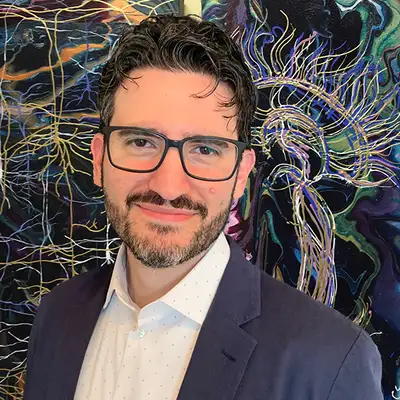
Zachary Danziger
Zachary Danziger is a researcher blending neuroscience, AI, and mathematical biology to understand how the nervous system enables fluid, natural movement. His work spans human-subjects studies, animal experiments, and algorithm development focused on neural control of motion, brain-computer interfaces, neurourology, and neural modulation of peripheral reflexes. Driven by new theories and insights, he aims to translate fundamental science into advances in physical therapy, human-machine collaboration, and neural health.

What is Holy Shift! Biomedical Breakthroughs Shaping Tomorrow ?

Step inside the world of biomedical engineering at Georgia Tech and Emory University. Holy Shift! brings you fast, inspiring conversations with the researchers creating engineering breakthroughs that improve health health — from new imaging tools to personalized treatments — to show why their work matters for all of us.