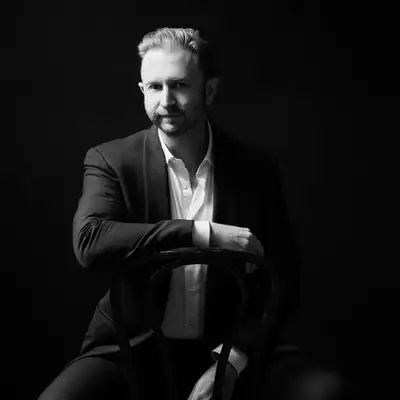
Most technology transformations do not stall because the technology fails. They stall because no one in the room has resolved a prior question—what, precisely, is being changed, and who is accountable for that change surviving contact with the business. Pascal Uerlings has spent six years working at that unresolved question, building one of Australia's more prominent Salesforce and AI implementation consultancies in the process. This is a conversation about why most AI initiatives fail in the operating model rather than the server room, what genuine psychological safety actually requires of a leader, and the gap between the founder narratives one reads on LinkedIn and the slower, less photogenic work of building something that lasts.
Takeaways
- The model that made Pascal walk: why a consultancy organised around revenue targets cannot, in practice, organise around customers
- Founding J4RVIS in April 2020, weeks before the pandemic — and why timing concerns were never the strongest argument against doing it
- The structural reasons AI pilots produce enthusiasm in strategy decks and entropy in operating models
- Voice agents and the architecture of agentic AI: why the future is multiple agents talking to each other, and why that resembles the integration challenges of the past at higher sophistication
- The mischaracterisation of Gen Z as disengaged — and how the complaint usually says more about the leaders making it
- What it actually takes to build a culture of safety in cross-cultural teams, particularly across Australia and the Philippines
- Imposter syndrome reframed not as a deficit but as evidence of care — and why performing certainty is a worse leadership failure than admitting doubt
Chapters
[
00:00] – Cold open
[
01:14] – Subscriber message
[
03:14] – Introduction
[
05:37] – From Belgium to Australia: the path to founding J4RVIS
[
13:00] – Building a people-centred consultancy: values before customers
[
19:15] – Pulling the trigger: launching weeks before COVID
[
23:09] – Imposter syndrome as a leadership superpower
[
29:19] – Why AI initiatives stall before production
[
39:04] – Voice agents and the architecture of agents talking to agents
[
48:22] – Leading across generations and cultures
[
57:12] – Identity, safety, and leading from who you are
[
01:02:56] – Good thing, bad thing, who knows? Lessons from six years
[
01:06:58] – Lightning round and close
Guest Links & References
About the Show
On the Subject of Leadership is a long-form conversation series examining leadership, governance, organisational life, and decision-making—without slogans or performative certainty.
Hosted by Dr Robert N. Winter.
Subscribe / Follow
Credits
Recorded remotely via Riverside
Music: The Hidden Thread by Roberto Prado / Artlist
What is On the Subject of Leadership?
On the Subject of Leadership is a long-form conversation about what makes organisations work—and why much of what passes for leadership advice does not.
Each episode features an executive or practitioner whose conclusions have been tested in consequential settings. The work is analytical, not anecdotal: incentives, power, trust, culture, and the limits of authority. Ideas are challenged, not affirmed.
This is not motivational theatre. It is a search for what holds up under pressure. If you take leadership seriously and are sceptical of easy answers, this is for you.