Subscribe
Share
Share
Embed
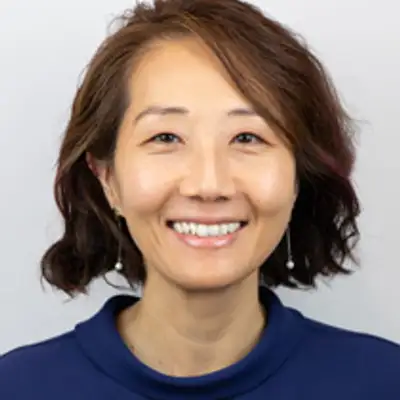
Our work informs our sense of self. Changing careers — or even jobs within a career — can affect how we see ourselves. When we go through a career transition, we are likely asking ourselves questions about who we are, who we are becoming, and who we want to become. Leadership coach and educator Helen Chung walks us through the intense, sometimes unexpected emotions that can come with a job or career change.

Frank conversations to help you take control of your career.
Going beyond resumes, interviews, and cover letters, each conversation brings a unique perspective on relevant topics for you and your professional development.
Presented by Pepsi, Career Conversations is produced by the University of Washington Alumni Association.
Learn more: https://www.washington.edu/alumni/career-conversations/
This is part two of career conversations, a discussion about career transition. If you haven't listened to part one yet, please start there and then come back here for part two. I am not going to guess, I have a feeling what your third example is going to be. But you tell me what the third scenario is that you had in mind.
Yeah, so this scenario has to do with a possible career change. And this could happen early, mid or late career.
Really?
Yeah. And I'm calling this person Leann, so.
OK,
Leann just worked really hard to reach the senior level manager in a consulting firm. But the job requires her to do quite a lot of traveling and requires long hours and sometimes weekend hours. She finds herself feeling increasingly dissatisfied with the lack of work life balance in this role. And she's beginning to wonder if she should make a change. Maybe she should really pivot outside of from consulting to something else.
Sure.
And she's feeling a lot of dissonance with what she thought she wanted and what she was building towards. And this lack of fulfillment that she is experiencing, largely due to lack of work life balance. And so in this situation, I think the four S's--I'd like to I'd love to apply for this situation.
Yeah.
So if Leanne asked herself OK what is the current situation and what stressors might be playing into what's happening? So let's say Leanne has a family right now. She has to spend quite a bit of time away from family, and that's really emotionally draining, physically and emotionally draining for her. What's something for her to consider is in this role, can she make some sort of a change where she might not have to travel so much or where she may not have to spend so many hours in the evenings or on the weekends? Is that a possibility? That's the situational question. And then the self question. I think I'd love to turn this towards her values. So what are Leanne's values issues, living them out in her work? You know, is there work life? Work life balance is a huge factor or so for all of us. And it does prompt us to make decisions to move from one career, one job to another. But there could also be some values at play and is Leann living out the values and principles that are dear to her.
Right.
Is her work congruent with an expression of those values, or is the work getting in the way? That's something to consider as well. And then support the third S. If she chooses to make a career pivot, who in her network could support her? Either to make that pivot to get a different job. Can she financially sustain a career break?
Yeah, that's a huge portion of it, right?
Yeah, so should she slow play this where she's thinking about making that career change, biding her time, doing the things, being proactive along the way, but keeping the job. Because financially, she and her family may really need it.
Right.
Then finally, the fourth ask is really what are her options? And so having worked through those first three S's, I think she would be in a better place to be able to identify. Here are some scenarios that could play out and what is ideal for me and my community and my family. What's possible? What's feasible, what's desirable.
Right.
And so thinking through the multiple alternatives and strategies I think could be helpful to somebody like Leann.
Yeah I'm also thinking back to your comments earlier about how we really were many people in one self and especially someone who's making a big--moving industries or moving come, you know, changing their career or their work completely and be a big transition just of how they think of themselves, too. I think you mentioned that earlier, but I was just thinking through in your example of Leanne that would probably be something that she's thinking through herself. That ‘S’ of something that she would probably consider as well.
Yes I agree with you on that.
Yeah, I love that. So we've talked about a few different types of transitions now, and you gave us some great examples. Are there strategies that people can leverage to navigate some of these changes that might apply? Broadly, obviously, every situation will be unique, but maybe some ideas for people to consider.
Yes, so a couple of these I have kind of mentioned, so it's somewhat repetitive, but that's OK. It's always good for us to hear it over and over again before it gets in our brains.
We also need to hear things more than once for it to stick. So, the first thing I would say is, is do some sense making. So, slow down notice and pay attention to what is happening both externally outside of the self, but also internally and also how other people are involved in the situation. So, you know. Taking that pause. Noticing what's happening. Paying attention to the thoughts and emotions that are creeping up. Paying attention to that dissonance is really healthy, very constructive. And it can feel uncomfortable to stop because especially if we're on a timeline of sorts, we feel like we have to make a transition. We don't feel like we have the luxury of taking that time.
Sure.
But then speaking and noticing what's happening, really, it's a practice of mindfulness does not have to take a lot of time, but it can be just a critical part of moving through transition. Well, the other thing I would say is connect with people in your network. And reconnect with people, you know, who were part of your life prior to where you are today. Herminia Ibarra talks about strengthening our weak ties. Weak ties can be representative people. Maybe you are former coworkers, former bosses, mentors, or leaders that we've just lost touch with. And, you know, the purpose of LinkedIn is that while we have a lot of those contacts there, reconnect with folks and have a conversation. You're not necessarily asking people for a job, but you're asking to reconnect. It's really wanting to reconnect relationally. And sometimes those weak ties are places where we can get to that inspiration or maybe a catalyst for the next thing or the next person that we ought to talk to.
Yeah. I think that also ties back to the support that we were talking about earlier. Maybe this was true for me in my transition. I ended up reaching out to some people on LinkedIn just to sort of put feelers out and make those reconnections. But it also was helpful to just talk to people who were outside of my direct circle so I could speak a little bit more freely to them about what my goals or my hopes were for my transition. And they were maybe some of them had had similar situations, maybe they hadn't. And I will also say they were all so lovely. It was so nice to make those connections. I found that reaching out to people on LinkedIn. It always feels a little scary to me. But people were so happy to catch up for 15, 20 minutes, whatever it was. And I've also had people reach out to me sort of in the reverse, and I'm always so happy to, if I can, to fit time on the calendar and say like, hey, yeah, I'm happy to connect and chat, offer whatever insight I can. So I love I love that idea of connecting and reconnecting.
Yeah I love your examples there. Michaela reminds me of what Adam Grant is an organizational psychologist. What he says about building relationships and connecting gives people, gives all of us a way to be generous with each other.
Oh, I love that.
Yeah and I think sometimes we forget that, you know, we're here for each other and we can use these opportunities, even if it's 10 or 15 minute conversation.
Sure.
To just express our gratitude and generosity. And we are in a community. So I love what you just said about how you went about reaching out to people on LinkedIn, but also sort of outside of that circle.
Yeah Yeah. And it ended up being extra fun because then when I was able to put on LinkedIn, like, hey, I got a new job. I had some of those people reaching back out like congratulations because they had been a little bit involved, not truly, you know, deeply involved. But I had spoken to them over the months. And as I was going through the transition. And so it made it extra fun to be able to celebrate a little bit with them as well. And they were so excited.
Awesome.
Yeah. Yeah it was really fun.
Yes, I forgot about one other--
OK, so what else you got for me?
The third one is to experiment.
OK.
And I want to credit Herminia Ibarra on this one as well. It's well, little experiments that are low stakes, lower risk, where you get to do something in a different way or you get to try out a skill that you haven't been able to apply before. And this would be, for example, if I go back to the scenario with I think it was Mary who's in a new management position.
Right.
Where she's feeling like an impostor because no one's ever formally trained on how to be a good leader. If she can get some mentoring, she can, you know, maybe think about here's something I want to try with my team in the next meeting. And it's a very sort of low stakes, low risk. He tries it out, gets some feedback on it, reflects on the experience herself in terms of what worked, what didn't work, what would I change the next time? Basically, you're just running an experiment, reflecting on what happened, and then you iterate on that experiment the next time you want to try it again. It is really through these small experiments that we do get better. We, we, I mean, we expand our skillset in that way. And the reason why I credit Ibarra with this is because-- a book out, which I can't remember the title of right now, maybe it will come to me later in this conversation where she says that most of us think that we have to change our thinking about leadership before we can be a good leader. She turns that on its head and says, no, we need to act in new and different ways that will ultimately change our thinking and our concept of leadership. So she says, do it. Try it first, and reflect on it because I do think we have a very, very strong bias in our culture that leaders think the right things and then they can do things.
Right.
And she's like, let's reverse that. And I think experimentation is one way of doing so.
Yeah. Oh, I love that. I love that idea. It kind of flips it on its head.
Yeah.
I want to go back a little bit. You talk you were talking about sense-making and that feels in my head--at least you can correct me if I'm wrong--but feels sort of related to storytelling of someone's life, of their career, of their work or job. Is that—am I sort of understanding you correctly, is that sort of connected there?
Yeah, I think they are connected. And there is this wonderful, wonderful psychologist named Carl Ike,
OK.
Who looked at--who sort of developed this theory around sense making. He's not the only one, but he's influenced our thinking around sense making quite a bit and he suggests that sense making enables us to come up with what could be? So plausible stories about the future. And I think where storytelling comes into play with navigating career or work transitions is building this ability to tell stories about ourselves that are not quite—they’re stories that are not quite yet, like their--
Oh Yeah.
And they're like open ended, unscripted, emergent stories. But that's really what is happening at that identity story level when we're moving through, I mean, some of the bigger changes that we do move through is what could happen and how am I moving this plot along? So at a very basic level, stories have a plot and a protagonist.
Sure.
And if you think about a career or a job work transition, the plot is whatever's happening with that transition. The protagonist is me, It's whoever is going through that page. And we often don't have a clear story of who we're going to be on the other side of that. We're experiencing it. And this is sort of that very liminal space that in the end, there's a lot that can happen in that in-between space. And where we want to end up is probably getting to the end of here's what happened and here's my story. Let me tell you about it.
Sure.
In a very coherent way. But when we're actually moving through the process of change, the “not yet” story is unfolding.
Right.
The exciting thing is that we get to be part of that. We get to drive that. The scary thing is we get to drive that, but we're not quite sure.
Right.
And all of that sort of an intensity of emotions as we're going through.
Yeah, I love that. So how might people sort of leverage storytelling to navigate a career transition. How can they use. Use that.
Yeah, that is that's a great question.
The million-dollar question.
It is. I think it goes back to something that Ibarra suggests, which is think about the provisional story. So what is the story that's going to help me move through this event right now? And so if I go back to Leann's story where she's thinking about making a career pivot because she doesn't have work life balance. I think Leann could ask herself, OK, where am I in my life right now? And how does what I'm going through relate to the bigger story about my life? So if Leann, for example, is mid-career and she has a vision of the impact that she wants to make, change the world or on her community. That's a bigger story, is that she wants to make and so she can ask herself, does this chapter of my life right now fit in with that larger story? Is it in alignment with the book or I guess.
Yeah, I like that.
And if it is, then maybe she'll make some tweaks with the way her job is structured so she can continue to live out that story. If it's really not, that chapter really doesn't belong in that book. Then she might think about, OK, I need to, I need to make a pivot. Now, when to make that pivot is sort of another question, but I need to do that because I will be in alignment with my bigger meta story, if you will, which is really revolves around the impact that she wants to have on people. And so. That chapter is kind of that provisional story of the larger book, if you will. And the story can also help in terms of reminding ourselves. That this story, this mini story may not last forever, right?
That's helpful. Yeah, that’s really helpful.
Right? Like this isn't going to last forever. There is going to be a kind of a closure to this in and then a beginning of something else. So psychologically, that can also be helpful.
Yeah,
I hope that makes some sort of sense.
It does. And I love that concept of a chapter in a book, and thinking through, does this make sense in the larger story, in the larger book of my life? And I like that whole idea, or that image as we're talking about chapters in our lives and in our careers. In an even larger, broader sense. Changing our—I’m asking a little bit of a different question here, but, we're talking about how to make career transitions, but in a sort of broader sense, do you think the idea of a career or work in general has shifted? Like it feels like it's over the years, that idea has shifted a little bit from what it used to be for people.
Very much so. I would say that the nature and experience of modern work has evolved. So, for example, people can now hold multiple jobs concurrently.
Yeah.
Sometimes they have a day job, but then they might somewhere else.
Sure.
In our gig economy, people have the side hustle hustles going on. And sometimes people have multiple different careers over the course of their lives now. And so the story about, you know, you get your education, you get into a good organization. You pretty much are there for 30 to 40 years and then you earn a pension. That story is very rare now.
Sure. Yes.
And there's also we're just more migratory as people now as well, then we used to be. So and then technology has shifted. So the rate at which we experience change personally, interpersonally, professionally, you know, is influencing our traditional experience and even concept of work. And so I would say today, describing career as more boundaryless and protean is more salient. And so what do I mean by that? Well, I mean, protean career is one that we create ourselves. There's more agency involved. There's less scripted to it. It's more maliable. That can be helpful. But it can also hinder us if we're longing for more structure. But in that boundaryless and protean concept of a career, we are finding that agency. So self-direction and fulfillment in work. Both of those things are really important. And so the model of career success is not just about extrinsic measures of success, such as how much you get paid and your promotions, your level of status, right? Going beyond those extrinsic measures of success. Career now has this psychological component where we want to have some measure of life satisfaction in the work that we do. Job satisfaction. We want to experience well-being.
Right.
Our job should help us reach a higher level and a deeper level of well-being than before. And you know, we've all experienced sort of a range of work that some of us experience, more or less of that. And so I would say the career has shifted now where we're kind of figuring it out as we go. And we're exercising a lot of agency so that we can have that life fulfillment. But there are also economic sort of constraints that people are bumping up against as well. That's making the career then more complex than it needs to be.
Yeah, Yeah. How would you say it's influenced by, I'm sure partially by individuals and their values and what they're looking for out of a career, but also by our culture, our society. How does that all come into play?
Yeah I think that, you know, sort of career and work transitions are informed, as you're saying, by some of our individual characteristics. So our personality, our preferences, our individual motivations and goals, but also these transitions are informed by our environment and external factors. Other people, our family of origin, right? Our culture, our philosophical, religious, spiritual beliefs, shared values. So I think culture does influence how we think about transitions and identity formation and how we move through. But just to give you an example, maybe from my personal life, as you know, I am Korean-American. Korean culture is really deeply embedded in Confucian values and ethics, and Korean culture is very collectivistic. And so there's part of me that wants to think about my job, just as my job as something that gives me satisfaction, you know, but because I'm informed by my own culture, I tend to think about my job as a vehicle. That—a vehicle for, you know, for my family. So I'm sure like something wants to change with my job. It would have huge implications for my nuclear family. But also my extended family.
Yeah.
So, thinking not just about my partner and my kids, but also about my mom, who's a widow.
Right.
And, you know, so it sort of radiates--the value of the job, sort of radiates outward. And the idea of a career for me is so embedded in a communal and relational framework, and that does come from my culture. And I think that, depending on whether we grow up in more individualistic or more collectivistic cultures, what kind of personal experience can have on a career on that continuum of. You know, having to do with self or largely embedded with and relating to other people.
Yeah Yeah. That's fascinating to think about. And I think that is true and, and, can be different for each person, especially being Korean-American. You have both sides, right, of the Korean culture and those values and the American culture and those values. And balancing that, I'm sure, has been an interesting experience in your life, I'm sure.
Yes, for sure. Interesting to say the least.
I think that's a simple way to put it, sure!
No, no, it's. It's true.
Yeah, yeah, Yeah. We have talked about so much. Really helpful info today. And as we're wrapping up and sort of coming to a close, what would you like people to take away from this?
Well, what I want people to take away see,
I know that's hard in that we've been talking for an hour or so now, just in some sense what that would be--t doesn't have to be collective of everything we've talked about, but--
yes, so few things that come to mind. When we are navigating transitions, I would want people to pause and reflect on what's happening. So that sense making peace, I think is critical. Number two, to remember that we're not alone. We don't have to go through transitions by ourselves. We can lean on other people and the wisdom of other people. And number three. The transitions are part of life and we should normalize them and the end and the ambivalence that we feel about transitions that mix positive and negative emotion. And that's just a normal part of what change, of what changes. And so, you know, transitions, they don't last forever, but we go through lots of transitions throughout our lives.
Right?
And so I think ultimately I'd love for our listeners, for people to think a little bit more about moving through transitions in a mindful way so that we can build our own resilience. And again, I think the journey is just as important as the destination.
Love that. If people just listen to that, I think they'll get a lot out of it. But I hope they hear the whole conversation because we've talked about so much wonderful and helpful info today, and I'm so glad that you've joined me. And if people want to continue learning from you or supporting you in your work, what's the best way for them to find you or support you?
Yes so I love having conversations.
Me, too. That's why we're I think that's why we're here.
Absolutely and so people can find me in a couple of ways. I'm on LinkedIn, so people can connect with me there and they can also just directly email me: Helen3chung@gmail.com. Just send me an email and say, hey, I'd love to connect. I would welcome a conversation. I am in higher Ed, but I also do some coaching consulting. So, if transition is something that people are going through and would love perspective on or would love some coaching guidance on. I'm available for that too, so LinkedIn and then email me directly. Helen3chung@ gmail.com. And this has been a wonderful conversation. Thank you, Michaela.
Thank you so much. I have learned so much and also just really enjoyed chatting with you. I love how research really influenced our conversation, how you're pulling from all sorts of places. And I find that really interesting. So now I'm excited to go back and reference some of the people that you talked about and their work and learn even more from them. So thank you for that.
Thank you.
Thanks, Helen. We'll talk to you soon. Thank you for tuning in to career conversations and audio series created for the University of Washington alumni community that focuses on deeper topics, help you create and sustain a fulfilling career. This series is one of many programs and events created and supported by the UW Alumni Association to keep alumni, students and friends connected to the University and to each other to explore more ways the Alumni Association can support you in your career, or for you to mentor and support other UW alumni and students. Visit UWalum.com. Learn more about programs like UW Husky Landing and Huskies@Work. You are a Husky for life. And there are many ways to stay connected and be more involved in your Husky community. Join us at UWalum.com. I'm your host, Michaela Gormley. Thanks so much for listening and Go Dawgs!