Refrigerator Moms

Julianna Scott and Kelley Jensen dig into a storyline from the hit medical drama The Pitt, where autistic character Becca is treated for a UTI and her sister Dr. Mel invokes "supported decision making." The hosts applaud the show for raising the topic — then spend the episode unpacking everything it glossed over. From the legal mechanics of conservatorship to the near-total absence of guidance around reproductive health for disabled adults, Julianna and Kelley get into the weeds so the show didn't have to. Kelley also shares the surprisingly sweet story of securing conservatorship for her own son before his 18th birthday.

Highlights
  • The Pitt introduced "supported decision making" to a mainstream audience — a real legal framework worth understanding
  • No state in the U.S. allows anyone to make reproductive decisions on behalf of another adult, including through conservatorship
  • Conservatorship varies significantly by state and comes in different categories: financial, healthcare, and more
  • Supported decision making lets the individual retain final authority while supporters explain options and consequences — but it raises many unanswered questions
  • Sexual and reproductive health for disabled adults is one of the least-guided, most legally complex areas of disability care
  • Conservatorship can be suspended or revoked if circumstances change — it's not necessarily permanent
  • Start conversations about conservatorship and reproductive health at puberty, not at age 18
  • Loop in your child's pediatrician early — documented conversations can help you advocate later
  • Don't use Britney Spears as your benchmark for conservatorship — her case was extreme and atypical
  • Informal supported decision making is something many autism families are already practicing without realizing it
🔗 Learn More: 
Website: refrigeratormoms.com 
Instagram: https://www.instagram.com/refrigeratormoms/ 
LinkedIn: https://www.linkedin.com/company/refrigeratormoms 
Facebook: https://www.facebook.com/refrigeratormoms/ 
TikTok: https://www.tiktok.com/@RefrigeratorMoms

Refrigerator Moms is sponsored by Brain Performance Technologies, a specialty mental health clinic that offers neuromodulation treatments including SAINT (Stanford Accelerated Intelligent Neuromodulation Therapy) for treatment-resistant depression and major depressive disorder, as well as MeRT (Magnetic e-resonance therapy) for autistic people aged three or older. Learn more at https://brainperformancetechnologies.com

00:00 Intro & The Pitt recap
01:09 Becca's UTI storyline explained
01:36 Sponsor: Brain Performance Technologies
02:08 More questions than answers
02:14 When representation oversimplifies
03:15 Becca's consent & boyfriend Adam
03:55 UTIs, protection & unanswered questions
04:11 Becca's living situation
05:05 Sexual health & disability: no guidance
05:28 What is supported decision-making?
05:37 What is conservatorship?
06:07 Ad: Brain Performance Technologies
07:10 Conservatorship & reproductive rights
07:56 Supported decision-making explained
08:18 Where does supported decision-making fall short?
08:34 Pregnancy, responsibility & legal gaps
09:16 Kelley's son's conservatorship story
10:47 The judge says "Granted"
11:10 When independence IS possible
11:42 Advice: don't use Britney as your benchmark
12:47 Start at puberty, not at 18
13:06 Document with your pediatrician
13:10 Julianna's son & informal supported decisions
14:23 Autonomy, complexity & The Pitt's value
15:01 Outro & disclaimer
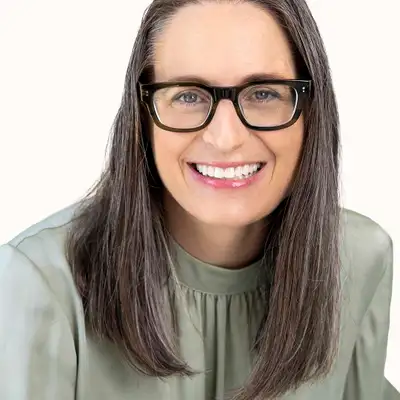

Creators and Guests

Guest
Julianna Scott
Guest
Kelley Jensen

What is Refrigerator Moms?

Born from 20 years of friendship, during which they navigated the trenches of autism parenting and advocacy, the Refrigerator Moms is Kelley Jensen and Julianna Scott’s way of reaching out to parents waging the same battles they were.  Their purpose with this podcast is to clear the fog, silence the noise, and find a path through neurodivergence for parents that are stuck between bad choices. They tackle parenting topics such as mom guilt, tantrums, pathological demand avoidance, siblings, medication, comorbidities, social media, and much more.