Subscribe
Share
Share
Embed
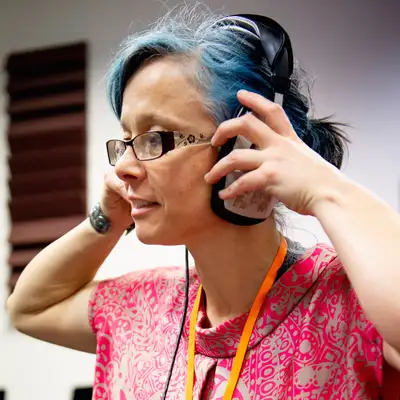
Welcome to the Sound On Sound Electronic Music podcast. On this channel we feature some of the pioneers of the industry, interview musicians and talk about retro and current gear.
More information and content can be found at https://www.soundonsound.com/podcasts | Facebook, Twitter and Instagram - @soundonsoundmag | YouTube - https://www.youtube.com/user/soundonsoundvideo
Hello and welcome to the Sound on Sound podcast about electronic music and all things synth. I'm Caro C and in this episode we're talking to Graham Massey here in Manchester, England. Graham is probably best known for the pioneering work of 808 State, who took the energy of the early UK rave scene into the pop charts with several top 10 singles and albums in the 1990s.
808 State returned to international touring in 2018 to celebrate their 30th anniversary with the release of the album Transmission Suite in 2019. Graham has also worked as a producer and remixer for diverse key figures like Björk, Quincy Jones, David Bowie, The Stone Roses, Goldfrapp and Yellow Magic Orchestra.
Graham's worked as a composer on film soundtracks, music for commercials, theatre pieces, public art events, and he's also the leader of a number of other musical projects in the city of Manchester, which you'll hear about shortly. To get us started, here's a snippet of Pacific, an 8 to 8 state classic track, which was released in 1989.
Well, for the first time, um, I'm doing a podcast in person and today I'm joined by Graham Massey. Yes, next to the radiator in the kitchen. Lovely. A cosy way to do podcasts. It's the future. Of course, we're both based in Manchester, UK, hence why we could meet as we were in the Almost the same postcode. Yes, exactly.
Brilliant. Um, yeah, I guess we're going to have to start with the timeline and the music that most people will know you for, which is 808 State. Yeah. Obviously, our passion is the gear and your creative processes. So I wonder how it all began. For me, my personal journey to 808 State was, uh, engineering course at a place called School of Sound and Recording in Manchester.
It was one of the first music engineering courses in, I was going to say the country, but I think it's actually one of the first in the world in a way. There were no particular institutions around in the, this will be the mid eighties. And, uh, it was a time where the first Atari computers were coming in.
I remember the day it arrived and it was almost like. a 2001 moment where we sort of like crouched around it and threw bones into the air, you know, it was like nobody knew how to even turn it on, no one could teach you it because it was, you just had to get the book out and get stuck into it, you know.
And, uh, it opened up a whole world of possibilities, because previously to that sequencing and sampling, you know, is a bit of an ad hoc, expensive situation, you know, if you weren't in, in a college situation, you know, to gather that equipment and, and have a knowledge of that equipment. There were certain people in Manchester who, Delved into it, you know, new order, for instance, you know, I remember seeing you all this equipment with different bands.
They used to lend that equipment out to, um, there was a various bands. I'm thinking of one called top and like small gigs in Manchester where it's like. Why have they got a Fairlight? You know, and it was like, oh, they've lent it off New Order or what? They were very generous in sharing that enthusiasm for the early technology But yeah I'm trying to think where drum machines and sequencers lived back then in the 80s in Manchester in in the the village like atmosphere of the music industry in Manchester and I do remember when Uh, one guy, um, John Hurst, who was like an apprentice of Martin Hannan and his flat, which, uh, he shared with the drummer from our band at the time, a guy called Phil Kirby from Biting Tongues.
They had this, uh, amazing flat that was full of things like ARP 2600 and all the Roland gear from like the 808, 303, uh, the 101s. And this was probably about 83, 84. So were they still as expensive in relation to the cost of everything else at that time? Yeah, they were rare, you know, you didn't see them all everywhere.
You know, the, you had to have a lot, a bit of knowledge about how to plug them all together. And, but that's when you first started hearing those familiar sounds, you know. And the music that they were playing, for instance, I think John Hirst had some involvement in Section 25's Looking from a Hillside, you know, which is like often quoted as one of the first uses of a 303.
One of the first popular uses. So he was our Sound engineer at the time. And he'd do little solo gigs as a support slot to, to us when we're doing little gigs in Manchester, he was called yak boy. And it was like, you know, a one man show with Roland equipment. So fast forward into, um, you know, 87, 86, 87. And when.
A group of us got together via the Eastern Block Record Shop. That was there back then? Yeah. Eastern Block started as a record stall in Affleck's Palace, you know, and then it got its own shop. I ran a cafe across the road from this shop, and consequently all the record shop people used to come in. And it was, it was, uh, I used to play all kinds of weird music down there, so it was a music centered cafe.
In fact, uh, John Peel used to come and hold court in my cafe, you know, when he, he'd make regular trips up to Manchester and, uh, connect with the record shops, Piccadilly Records and Eastern Block and many others. So he'd come and hold court and, um, yeah, it was just this vibe of, the technology was mostly involved in hip hop records, really, you know, drum machines and there was a lot of kids.
Going into the record shop who were like groups of rappers and a little bit of equipment, you know, they'd have budget equipment so when I first met a guy called Gerald and The spin masters who later came into a to a state they you know They had their hotchpotch of equipment and we'd be doing hip hop gigs with this equipment At the same time, the radio in Manchester, there was a guy called Stu Allen who, uh, died in recent months, actually.
And the amount of tributes that came out for Stu Allen, he had such a, an effect on Northwest England in terms of, um, music culture. He brought in all the Detroit and Chicago music. As I say, he didn't bring it in, but he kind of broadcast it. Everyone walked around with the cassettes, you know, it was the era of the ghetto blast.
Yeah, I was going to say that. Were you already plugged into that international perspective or was it more of a thing that was happening locally that kind of became international, if you know what I mean? Um, no, I'd say like the international influence took seed in Manchester is what I'm saying. You know, there was a, there was a firm interest in American music and an outlet for it, which was local radio, Radio One or anything like that, you know.
So all these seeds took, you know, started growing into. a more colloquial kind of music scene. Gerald was really ahead of the curve. You know, he, he was, uh, making his own tapes in his bedroom and getting, getting them played on this radio show, the Stu Allen show. It was really based in the sort of youth club.
kind of scene in Manchester. Again, the spin masters were really part of that. They started DJing at the Salvation Army actually in Manchester. And you think like, well, that doesn't sound very hip kind of thing, but those parties were big, you know, they were kind of like. where it was at, at that point, you know, the youth culture, you know, it was pre drinking age, you know, so it was all boiling away there, you know.
Yeah. So at that point, when I started this engineering course, we started funneling all the talent coming through the record shop into the studio from that point of view. And we took a real interest in Acid House because to me, Acid House Talked to me more than a lot of the other music, you know, I love the alien quality of the music The fact that it related more to the left field music that i'd grown up with You know, everyone, um, in the hip hop people didn't know who I, how I fitted in kind of thing.
I was more from the post punk generation and growing up making records for new hormones records and factory records. And I was an experimentalist, you know, so it was a collision of quite a few different personalities. that started experimenting as 808 State. So the first records we made were literally improvisations in, in the studio, uh, over the course of a weekend.
That first album we did, New Build, is limited on time because studio time is really expensive, you know. I managed to sort of get the keys over the weekend and because I was doing like a caretaking role at the studio So we snuck it in left, right and center, but that album was knocked out in a weekend, you know.
Using? Using the, the rolling equipment at the time, you know. Gerald had the 808 and the 303. We had about, Three 101s between us. So we set all those going. We had, um, some other bits of equipment. Like the Atari is on one track. An FZ1 sampler, um, which was a Casio. One of the first quality samplers that was under a thousand pounds.
So that, that was there. And then there was a really ancient sampler, um, an Akai, uh, wall mounted thing with spaces for floppy disks. Someone's going to have to tell me what that is, but it was pre night S 900. And that had a trigger in mechanism. So you could send the trigger out from the drum machine into that, and you could.
alter the envelope of the sample at either end with, with these sliders, you know, so that, that is a real feature of that album. It's kind of a, it's a, gives it a real flavor. We had a Pearl Sync cushion unit as well, for instance, that was something that was left over from the post punk days and that's all over it.
Um, anything you could trigger really. There was no, barely any MIDI involved in that album because we were on a limited time, you know It's just like what can we do quickly? That's the flavor of that album. We were just getting into it at that point
And then how did things develop and get bigger as it were as as you know, give it a few months after that and equipment like the Roland D 50 was coming in. It was a linear synthesis keyboard that you would recognize from every pop hit of the mid 80s, you know, from Madonna records to Michael Jackson records.
And that was, that was interesting to us because. You could actually start to use the language of those pop records in your Crazy Mad Acid music, you know, it kind of gave it a legitimacy, a connection to the world of pop. Kind of familiar language, in some way. Yeah, these textures, and it's, it's, uh, it had a shortcut to a polished production sound, you know, they, they came with reverbs and night, they're very nylon y kind of polished sound.
Once we got that keyboard, we couldn't leave it alone. You know, we were putting it in everything. And when I listened back to 1989, 828 state material. It's like, I wish we'd been a bit more reserved with it, you know. It's on everything, you know. And, uh, there was another piece of Roland equipment then called the Roland R8 drum machine, uh, which went, uh, In the opposite direction to analog drums, it was like, it used samples, but they were like now kind of, um, better quality and you could alter all the parameters of, of them tuning and, uh, groove.
It was a very sophisticated drum machine for its day. And that flavors a lot of our material from 89 onwards. When you listen to 808 State Records now, there is layers and layers of drums. There's like 909s layered with R8 drum machines, 808s in there, samples. It's such a drum orchestra. Beats, you know when people think of drum machines They think of the space and the economy of boom clack boom clack but we took it in the opposite direction and got really into thing like what you could do with the swings and the offsets of What we used back then was a time code So we were trying to get things to sound tight at times, which some of that equipment really helps with.
Things like the 909s having a certain swing on them and the way DIN sync locked really a lot tighter than MIDI. And then I can hear periods, uh, back in the early 90s where we struggled all the time to get. Tight grooves and almost went against trying to do it all almost giving up and going in the opposite direction of Going a bit free with it, you know going a bit sloppy.
I listen to those things down. They have an identity of The technology of that day as well. And how about the melodies and all the hooks? I'm thinking cubic. I'm thinking Pacific. Yeah. I mean, for an electronic band, it wasn't just about the sounds, you know, it was, there's still a lot of musicality. Say you take a handful of groups from back then, you know, uh, like LFO and.
Future Sound of London and stuff. I think, you know, we're way more into the kind of, uh, musical side of things, you know what I mean? We didn't, we sort of overcompensated with, with the music sometimes, you know, which the doors of the day, you know, and we were talking originally, we're using a thing called, what's it called?
Hybrid Art Sympathy Track, which didn't encourage you to do, uh, linear timelines. It was more like, like a loop bass kind of thing, you know, it's like loops and loops and loops. Also Steinberg Pro 24 was, was the standard door of the day, and that was similar. What was the forerunner of Logic? Was, uh, C Lap.
Most of the other bands, techno bands of the early 90s, I seem to remember favoring C Lap, which, um, Would make you compose in a certain way, you know, it wasn't until, uh, Pro Tools later in, uh, in the 90s that we could, we started doing a much more timeline based kind of music. The way we used to compose was sort of like having, filling a 24 track tape full of loops, basically, and some of them would be eight bar loops, some of them would be two bar loops, some of them would be six bar so they would all Spiral around each other while you composed on the mute buttons.
And one of the aspects of, uh, being four of us in the band at one point is eight hands to operate the mixing desk. Yeah. Because we didn't use automated mixing desks back then, you know, so you had to have it in your brain. You had to have a map, really, you know, and, and what we used to do is lay, lay down sections and edit them together on tape.
Yeah, kind of stitch them together afterwards, do the arrangement afterwards. Yeah, so, so, if you look back in, in, like, I've got lots of notebooks of, like, these, like, diagrams of, like, cut up, um, sections and, you know, where, where things would fit. Yeah. So there's the composition was, was going on, but it was a real Heath Robinson kind of way of setting about it.
And that kind of fits with your whole improvisatory kind of. background and really your centering within music. Yeah, I would, I do, since I was, um, first playing music in my teens, improvisation was the key thing for, for the group of musicians I grew up with. You know, we would think nothing of getting in a room and playing for like six hours and, and not really trying to organize it.
You know, it was, it was about, How can I say, it's kind of like letting music flow through you. It sounds like it's come from a kind of hippie background, really, of like, you know, cosmic music, kraut rocky kind of stuff, you know. It sounds like that kind of stream of consciousness kind of approach, that, that idea when they talk about writing being like that.
Yeah, it's nothing to do with chord structures and hitting the middle eight and that kind of thing. You know, I would say the, the, the records we're listening to mostly in the, in the, 70s, things like Miles Davis, 70s albums as, as they emerged, what was fantastic about them was the fact that you could tell there was all this spontaneity in the music, but then there was a post production thing of editing his producer, Teo Massero used to take the raw tapes and then almost like a dub reggae artist apply.
the effects of the day and then arrange with his razor blade pieces of music that then made sense, you know, like for instance, you take a track like in a silent way, where it's actually just there's no shame in repeating a whole section again to make a composition. So that kind of thinking was definitely there when we're doing things like making those first 808 state records.
And I think the technology, especially the hardware, kind of the sequencing hardware, the drum machines, especially sort of lend themselves to that, don't they? Because you sort of try things out and then you're like, it might have some happy accidents in there. Yeah. I mean, I really love the, the sort of dumbness of, of some of those early acid records or the house records that were just.
Insanely repetitive. That was great for a while. There's a number of our records that will do that. But to get a great vibe and leave it going, I think our attention span, and again, because there was like three of, three or four of us in the room, it's not about one person's attention span, it's about a group attention span, meant that these records splintered all over the place and, and became, um, took some weird turns, you know.
Yeah. And so how did all that translate to live then in terms of, you know, what kit you could take on the road and what, what works and how much of it could be? Well, the first concerts we did were basically a tabletop full of Dinsink and Trigger. We didn't bother with a computer at first, you know, we just had a tabletop full of, uh, compatible equipment.
And then we didn't have a set list. We just started going, you know. And there's some tapes knocking about on the internet of that stuff. And there's an album called Pre Build that we released through Reflex Records in the early 2000s that has some early improv stuff of that. And you can just, you can just hear it organically unfolding, you know.
Yeah, that, that, that's how we did it live when we were doing all the warehouse parties of the late 80s. And so, yeah, it was a bit hit and miss. Me and Gerald, in more recent times, have done a thing called rebuild where we've done exactly the same thing where you just set up a tabletop full of gear and jump off a cliff with it, you know, and it's terrifying.
Yeah, I couldn't imagine. And yet within, you know, you're going to play for say an hour and a half or something and there's moments where you go in this, you know, moments where it's just not working and then moments where it all just emerges out of the darkness and that's a fabulous feeling, you know, it's back to that improvising thing, you know.
Yeah, and taking the audience with you. I'm just letting music come through you, and responding to the moment, and trying not to panic, and then trying to think on the fly, and all your experience of the technology comes into it, you know. That's how we started doing it until we've had some pop hits and then we had to sort of rearrange it to the point where you're representing, um, a record, you know, that's, that's the way it's been a lot of the time, you know, where you represented a back catalog and that kind of thing, you know?
Yeah. But I would still say that I would still do quite a lot of improvised electronics. For many years, I've done it under the name Masonix. For instance, I went on a An American tour with Orteca back in the 2000s, where their stipulation was like, you've just got to improvise every night, you know, not, no tunes, you know, that was really exciting.
And then I've carried on that project for over many years, you know, just sort of, uh, doing spontaneous electronic stuff. But one say to each day because this kind of, uh, what's the word? A brand almost, you know, we also do those gigs that are, you know, when you've got to get on at a festival and you've got a 20 minute changeover and they won't let you have a sound check, it's another matter, you know, it's, uh, you know, that's a different show, you know, but we've made that show.
Almost a bit more musiciany in that we use a drummer and I play a lot of sax and guitar in 808 now. I'm bringing the improvisation into that, which we've actually always done that. And particularly when we first used to go on these big tours around America and stuff in that you can't do the same thing every night.
You know, you go crazy, you know, so, so we built improvisation into that set. And sometimes people appreciate it. And, but you know, a lot of electronic purists wonder why we do have a drummer and that kind of thing, but I've stuck to my guns on that one. It's about human energy for me, you know, especially in that situation, you know.
But I've done all, all kinds of formats of 808 over the years. Yeah. In recent times, I went and did a tour around Germany of just the tabletop version of some of the tracks you can't from the back catalog that you, that suit. a tabletop situation, you know, so that, that was, uh, refreshing to me to be able to address some of the, some of the album tracks that rely on more fiddly, not twiddly business, you know.
Yeah. Peppered my timeline as an electronic musician, but also just as someone being at festivals and clubs and being interested in electronic music and electronic dance music. I talked to someone recently who's a drum and bass junglist and he mentioned you as part of that kind of roots of. A lot of stuff that became Drum and Bass and Jungle.
So there was, as you say, all those seeds were being planted and sprouted. Yeah. I mean, it was, uh, the early nineties was exceptionally exciting in terms of genre bending of, of music. You know, it was like every week there was like unique records, you know, this development in music. You were never short of inspiration because it was all like a feedback system of like every, everyone in.
I was going to say the country, but it's the world, you know, it was all feeding back on itself and addressing the same issues really, you know, of like moving this music on. So yeah, I think, you know, some of our early tracks did, um, I'm trying to remember the name of the club where a lot of drum and bass came out of, Rage.
You know, tracks like Cubic were big at Rage. Uh, you wouldn't say that was a drum and bass track, but it's the break beaty aspect of, uh, some of the, some of the tracks that we did. And the, I remember doing tracks early on that use sub bass. Uh, we got a instrument called the JD 800, uh, another Roland synth where one of the presets was just an 808 kick drum that you could then spread over the keyboard and apply portamento and distortion to.
And it's like, The minute we got that keyboard, we started doing that. And then a couple of years later, it was everywhere. I'm not saying we invented it, but I remember it being a thing of like, got to use that again, you know, cause, uh, it just, the bottom end, it gave to. Again, this kind of elastic quality to, to the, um, and the sub, you know.
Fantastic, fantastic, fantastic, fantastic. Fantastic, fantastic, fantastic. So would you Confess to being a synth collector or would you say it's just been more about you collected things along the way? These days in the world of Instagram and where you people show off their synth collections, I'm, I'm a lightweight, you know.
Are you? Yeah. Okay. I think so, you know, I'm, I've not got into modular for instance, you know. And I still have that attitude of like, I'll use a piece of cheap gear. The last record we did, uh, Transmission Suite, it was a lot of, you know, a lot of the kind of Roland era stuff that was coming out at the time.
I wasn't afraid of using that, and there was a lot of sort of flack about it at the time, you know. But people got to remember that, you know, things like the original 303 and the 808 were derided in their day as well, you know. So, it's more important the speed of your ideas and when you can execute them.
Uh, I think some of the equipment now is just getting, um, You know, you, you don't want to spend like four hours of your day doing a patch, you know, you can do that later, you know, you can do, it's just getting the ideas down and then decorating. That's kind of what I do. I work, work in the box mostly, and then farm it out to, for particular analog sounds later down the line, you know, the mixing stage.
And I don't know, I don't have a regular, method of working, you know, a new piece of equipment to me. And again, that can apply to some cheap synth, you know, so long as something sparks an idea, that's the most important thing really, you know. And for you, have there been with 808 State and beyond in terms of, have there been those constant companions, those constant tools?
Yeah. Yeah. I mean, you can't, like something like a mini moog has been, it's an essential part of my But I would say I'm, I'm using that less as, as the, as getting older and older and less reliable because some of the emulations are getting up to standard. Now, you know, one of my favorite instruments of recent times is the Roland TR 8S, which I think is an amazing drum machine, uh, really flexible, really creative.
In, in the past, you used to have to sort of, um, do passes of drum machines and, You know, you couldn't do everything on the fly like you can now. So that, that's, I'm almost quite obsessed with that instrument. It's, it's, uh, opened up a new world, particularly in remixes and stuff, you know, and how you can mutate beats and get into a whole new area of beats on it.
And then in terms of like, was there any moments you can think of that you're like, Oh, when this arrived and made our lives so much easier or better or richer? Yeah, as I was saying before, I think when I first bought my first Pro Tools rig, the ability to move huge bits of data around on mass and, and start developing the thing that I'd done with editing in an accurate way.
That changed the music we made. You know, the, the first album I would say where you can hear that is Don Solaris that we did in 1996. It's a different kind of music that, and that is based on Simply that Pro Tools coming out that point and obviously the laptop thing You know it's taken a few years to get that to the point where the idea of what a laptop could do and what it could actually Do was it there was a slow painful process Originally, I think I must have got my first one at the end of the 90s and I could only basically do MIDI off it But now I could just have that one piece of equipment and do everything.
Yeah. That's the most important piece of equipment in me armory, really. I wonder if you have any thoughts or feelings on sort of where the electronic music ecosystems are, whether it's local or your, you know, your own networks, but also in terms of the technology and the music, where do you feel we're at now?
I think the primary difference between what we were doing back then. in terms of making electronic music in a city and affecting a city. Because not only did we, were we doing gigs and making records, but, uh, they had the 808 radio show that we had, which was very influential on our city and the Northwest, in terms of a delivery system.
And, uh, there was an article yesterday that I was reading on the internet about, how the working class are getting shut out of the arts in terms of like, you know, any kind of music making sort of situation that requires time. What we did have at the end of the 80s was a lot of people on the dole. It was kind of easy to be on the benefit system back then.
I think I must have been on the dole for about eight years or something. You get your housing benefit, but I went to the university of music in terms of just playing and playing and playing with people. It's kind of, you were subsidized in a way, weren't you? For that incubation kind of period. And they say it's the same as a, If you want to be a professional climber, if you want to be an MP, all these things, they take time to get to that point where you can actually say, right, I am this.
Yeah. And, and as sort of lack of identity created a search for identity that was really quite intense. It's like, I'm worthless. Or am I worth something? Do you know what I mean? That often comes from working class backgrounds of like why many footballers are from working class backgrounds and things. You know?
It is, it is an interesting situation we find ourselves in now that there is a lot more art in the world in terms of people having access to equipment and stuff, but the people they who are making it and who are they making it for? There was nothing like the feeling in Britain when rave first happened.
It was insanely kind of communal. It felt like one of the main things about rave is the way the country connected up over those parties. So, uh, once upon a time you didn't know anyone from Glasgow. And all of a sudden the Glasgow people knew the Manchester people who knew the Birmingham people. It was a social, um, uh, boundaries that were very intact in, in the mid eighties kind of thing.
You know, the old blurred and melted into a much more cohesive version of Britain and the world, you know? So I remember, you know, going abroad for the first time. I'd never been out of the country until I was like 30, you know? And first going over to places like Ibiza and meeting people from around the world with the commonality of that music.
It develops an optimism in you as to how, how to live your life better, you know. Which, this current version of the Britain that we're living in is completely the opposite of that, you know, which is just survive, you know, and back to separation and back to division. Yeah. And those stories need telling, I think, you know, and those environments need promoting.
So I think, you know, I remember personally, it was the first time I felt safe on a dance floor. No one was going to bother you or, you know, things like that, you know, sort of sexual politics kind of thing. It was like the culture that lived before it was like, Medieval, you know? I think that has endured in terms of dance music and club culture in that sense, you know, in terms of more electronic music club culture I'm talking about.
So now we have an electronic music culture that is hobbyist in a way, you know, that's one side that's developed through accessibility in the, lowering of cost of the equipment. There's a massive hobbyist kind of area of electronic music that doesn't have a home, you know, it doesn't have a social place, you know, so that everything like boundaries are coming back in almost, you know, whereas I love, I love the fact that you've got the weirdest records in the most popularist places.
You know, I love the fact that, you know, 808 state records were on radio one in the daytime on builders radios. We didn't compromise the experimental nature of music and yet people are open to that if you put it in front of them you know the gatekeepers for me are kind of things are changing because like, you know, there's so many portals to music now and The the gatekeepers aren't as sort of strict as they as they used to be but there's no cohesion in terms of like, you know And this is like, as a personal perspective, it's like now I'm sort of in the 60s now, you know, so I'm not going to have the same perspective on it, you know, but I feel very blessed to have like, you know, ridden that initial wave of like, not just the electronic music revolution.
But what that revolution was for, which is social cohesion and change, you know, that was amazing to be part of that conversation. Definitely. Yeah. And of course, you've had lots of other projects aside from 808, so let's delve into some of those. I mean, ones I know of, Sisters with Transistors, you've got Toolshed, Biting Tongues, all sorts.
So in terms of kind of gear and musicality and processes, creative processes, um, yeah, I've always had an attitude in music making as to just use anything that's in the room. My first group was Biting Tongues, who were on New Hormones and Factory. It was a post punk group, but you were encouraged by the attitudes of the day to be non the non musician was okay, you know.
All that thing that came out of, you know, Eno not being a musician, and every post punk group in Manchester had a bleating trumpet in it, for instance, you know. Pick up any instrument and make noise, you know, was the playground of that and using a lot of music concrete techniques, you know, like just using cassette players.
And I mean, I think we kind of got that through bands like, um, Cam and Gong grown up in the 70s where they would use tape recorders as part of the Orchestra, you know, so that was where I started and then Sisters with Transistors for instance was it was a result of eBay. Basically. I used to like Old transistor organs and you could pick them up so cheap and you just pick them for their prettiness really sometimes They're just lovely objects But then once you've got about eight of them you get into the differences of this dying kind of culture of And we formed a group, uh, based on my friend, uh, Mandy Wigby, uh, Henrietta Smith Rowler, who's now Afro Deutsch.
She was learning the keyboards at the time. Uh, Ragnar and Naomi, uh, were piano teachers in the neighborhood. They were teaching all the kids in the neighborhood, uh, uh. So we, we formed this group, uh, an organ quartet. And I think the idea probably came from the Steve Reich album with where they got four organs on the cover, you know.
I think that's just the initial sparking point of like, oh, let's do a group like that. And that, was that a nightmare to get them in tune and keep them in tune? It was a nightmare to get to a gig and them all to work so sometimes we did take a spare one each and we used synth in the bass end so um there was a lot of weight in that you know it was a van full but writing that music you had to write very almost baroque kind of music because you're dealing with like single lines weaving around each other.
You end up with a very ornate, baroque kind of sound. Uh, but we wanted to be like a disco band really, you know. So there's a little bit of ABBA to it as well at the same time. It is a great fun project and a relief to have these parameters of like, just right to this equipment rather than right expansively with no boundaries and a Chinese menu of VSTs or whatever.
Yeah, yeah, those limitations. Yeah, I love, I love some limitations, yeah. As I spoke before, uh, Masonix project is about doing a more esoteric version of electronic music for me. And largely, again, about doing live gigs with it. Toolshed is my jazz project. Well, I say my jazz project, it's not really. It's, again, about improvising.
And having some. amazing players from Manchester. A lot of them came from Matt and Fred's jazz club, you know, so some of the drummers are really versed in jazz and improvisation. It actually started off as a techno night at the Night and Day Cafe in Manchester. They wanted me to do a DJ thing every month and I just started using it as a platform for writing on the laptop and then using real musicians.
in, in that context. So sometimes we'd end up with four drummers and, and drum loops. Again, it was like an exercise in density and great soloists. You know, we had, um, people like, uh, Graham Clark, who was a improvising violin player, used to be in the band Gonk and saxophone player called Sam Healy, who's just amazing.
You know, a lot of young talent that came through the colleges in Manchester, like, uh, Royal Northern College of Music and Salford University, where they have great music courses. So it was a platform to get together different skill sets, but with old attitudes. I find that, you know, I'm not nearly skilled on those kind of levels, but mixing those different kind of age groups and backgrounds is where you get real gold, you know, mixing different disciplines together, you know.
So at one point we had the 28 piece big band version of Toolshed Back in the days of funding And um, that was a life changing experience That was awesome But we continue to do Toolshed Sometimes we do it as a trio Sometimes we do it as like 8 people Depends who's around We did one just before Christmas, actually, at this amazing pub in Todmorden called the Golden Lion.
Anyone in the DJ scene will know the Golden Lion. It's like where Andy Weatherall used to tip up, you know, four or five times a year and do amazing sets. And there's these little cultural hubs, uh, around the North West where new music is allowed to flourish, you know, so we play those kind of places. And where are you at in terms of your own music?
What, you know, what excites you, what excites you nowadays in terms of, you know, the magic of music generally, but also in what you want to create? Yeah, I'm at a point now where, um, I've had a bit of a break, you know, since, uh, Andrew died, uh, who was, Andrew Barker, who was in 808 state. Obviously now I'm the only member left.
We used to be four members, you know, gradually one by one, and I'm now a singular item. So, I need to think about collaborations really, you know, in terms of to make a new record. That's where my head's at. I'm looking into, uh, collaborations and, um, trying to kind of honor the whole 30 odd years of 808, you know, when we're doing gigs now, you kind of trying to make a track that fits.
In that set, it's quite difficult. You either have to destroy the whole thing, which, when you look at artists who changed all the time, back to Miles Davis, you know, he'd have to trash everything, you know, left, right and centre at times, you know. His band changed all the time, you know, so, and I can see why, I can really understand why, you know, because you can't fit 30 years of music into a set easily.
So, um, it's a matter of momentum a lot of the time. Back when we used to make, uh, those albums for ZTT, you know, we were, we had a record contract and, uh, a funding system and all those great studios of the day. That studio, uh, culture is growing again, I think, you know, it's like, particularly in Manchester, there's quite a few.
People who've invested in a nice environment and equipment to do recording again. I'd like to get back into one of those situations, a more formal recording situation. Uh, the last record we made, we hired, um, the old TV station, uh, Granada TV. Had, uh, the, the old control room at Granada TV was our base.
Well, we could lay out all my synths everywhere. It felt like an amazing environment, but we, it was on limited time. It's now been made into a hotel. So, um, I want to not put down roots and make, build a brand new studio. What I want to do is write and then go into a more formal recording situation, I think, and work with a good engineer as well.
Because a lot of the time doing everything yourself, Is a tough one on your perspective of what you're doing, you know, so, um, I'm looking to hold hands with people a bit more, you know, yeah, to be a bit more held in the process. Yeah, I think, you know, I don't, I've got nothing to prove, you know, I can just, you know, just lean back into that a little bit more now.
Fantastic. Cool. Well, happy onwards journeys in music. And um, yeah. Thanks a lot for your time today. Thank you for listening. And be sure to check out the show notes for further information as well as links and details of other episodes in the electronic music series. And just before you go, let me point you to sound on sound.com/podcast so you can check out what's on our other channels.
This has been a Karo C Production for Sound On Sound.