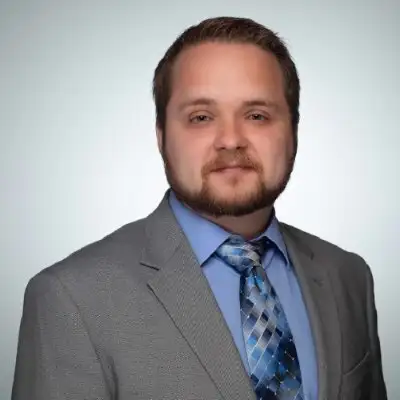
Deglobalization is rewriting where factories get built, and Ujjwal Kumar of Siemens explains what has to change on the plant floor before reshoring actually works.
For thirty years the manufacturing playbook was labor arbitrage. Move high volume, low mix production to wherever disciplined labor was cheapest, then ship it back. Ujjwal Kumar, President of Automation for Siemens Digital Industries in the Americas, argues that model has quietly stopped making sense. Demand has fragmented into high mix, lower volume, regionally specific production, and the factories in Suzhou running on robots and autonomous systems no longer carry a cost advantage over the same operation in Chicago. When the labor content collapses, the business case for distance collapses with it. That single shift explains more about the current reshoring wave than any tariff headline.
The trigger was not one event. Supply chain disruption after COVID proved that geographic proximity to supply was a profitability advantage, not a nice to have. Then came the political shock: vaccine access turned out to be governed by country of citizenship rather than global distribution, and leaders across every region started sorting industries into a folder marked critical. That folder now holds semiconductors, steel, power generation, defense, space, and life sciences. Ujjwal walks through where the money is actually landing right now, including AI data centers in remote locations that demand autonomous and remote operations, power generation across fossil, renewable, nuclear, and hydro, and a level of greenfield life sciences investment in the United States he has not seen in decades. The life sciences point is the sharpest one in the episode. Drug manufacturing left as mass produced batch operations and is returning as cell and gene therapy, personalized medicine, and precision biologics, which means lot sizes of one and R&D sitting physically next to production. The design it here, build it there model taught in business schools simply does not survive that.
About Ujjwal Kumar
Ujjwal Kumar is President of Automation for Siemens Digital Industries in the Americas. A mechanical engineer by training with an MBA from the Michigan Ross School of Business, he began his career at General Motors in Detroit and went on to spend ten years at GE and seven years at Honeywell Process Solutions before leading Teradyne Robotics, one of the largest physical AI based robotics platforms. He oversees the Siemens automation portfolio spanning discrete, process, and intralogistics automation, and he continues to mentor MBA students at Michigan Ross.
Timestamps
0:00 Introduction
2:00 Career path from General Motors to Siemens
6:10 What deglobalization means for manufacturing
9:00 COVID, vaccine quotas, and the reshoring trigger
13:05 Labor arbitrage versus automation arbitrage
15:50 Attracting the next generation of factory workers
19:35 Why semiconductor reshoring will take years
23:00 Tribal knowledge and the documentation problem
26:00 Where the investment is going right now
32:30 Adaptive manufacturing and the AI hype question
35:30 Platforms, ecosystems, and Siemens Xcelerator
43:20 Careers, AI, and advice for engineers
References
Siemens Xcelerator Marketplace:
https://xcelerator.siemens.com/global/en.htmlThis episode is sponsored by
Siemens is a technology company focused on industry, infrastructure, transport, and healthcare, and it supplies industrial automation hardware and industrial software to manufacturers worldwide. Its Digital Industries business covers discrete automation, process automation, intralogistics, and the Siemens Xcelerator platform.
https://www.siemens.com
About Your Hosts
Vladimir Romanov is a co-host of The Manufacturing Hub Podcast and the founder of Joltek, an independent manufacturing and industrial automation consulting firm specializing in modernization strategy, digital transformation, and workforce development. Joltek works with manufacturers and investors to de-risk modernization and build the internal capability to sustain results.
Connect with Vlad:
https://www.linkedin.com/in/vladromanov/Want to go deeper? Vlad and the team at Joltek have covered related topics here:
Understanding Supply Chains:
https://www.joltek.com/blog/understanding-supply-chainsManufacturing Challenges with New Machinery and Plants:
https://www.joltek.com/blog/manufacturing-challenges-new-machinery-plantDave Griffith is a co-host of The Manufacturing Hub Podcast and founder of Capelin Solutions, an industrial automation firm helping manufacturers adopt smart manufacturing technology. He brings 15 years of experience in industrial automation and digital transformation.
Connect with Dave:
https://www.linkedin.com/in/davegriffith23/Subscribe to Manufacturing Hub: https://www.manufacturinghub.live
LinkedIn: https://www.linkedin.com/company/manufacturing-hub-network
YouTube: https://www.youtube.com/@ManufacturingHub