Subscribe
Share
Share
Embed

10 Questions with 10 Pastors is an interview podcast on preaching, ministry challenges, and more.
Host Tyler Sanders speaks with pastors about sermon strategy and preparation, the ups-and-downs of serving a church, and controversial topics like: Who has the best burger? In-n-Out or Five Guys?
Tyler Sanders 0:00
My first question for you, In N Out or Five Guys?
Andy Pettigrew 0:05
Man. Shake Shack.
Tyler Sanders 0:09
Shake Shack. Wow. I've never gotten a third answer before. Why Shake Shack?
Andy Pettigrew 0:14
Well, for one, we don't really have either of those on the East Coast. So, I never really go. So if I'm going to choose something it's going to be Shake Shack. But if I had to choose, it's probably going to be In N Out.
Tyler Sanders 0:25
Have you ever had it before like ever? Have you been out and have one?
Andy Pettigrew 0:27
Once, and I was unimpressed with the fries.
Tyler Sanders 0:32
Yeah, it's best to go animal style with the fries. It has like onions and cheese, all this other good stuff on it. That's kind of how...that's the secret way to do it.
Andy Pettigrew 0:43
Well, you lost me at onions but I'll give it a whirl.
Unknown Speaker 0:52
Welcome to 10 questions with 10 missionaries. Brought to you by Gateway Seminary. With your host, Tyler Sanders.
Tyler Sanders 1:08
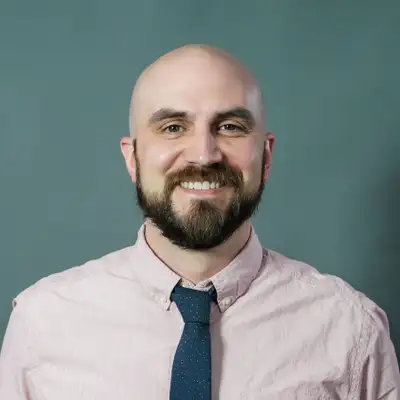
I'm here with Andy Pedigrew who's director of NextGen Mobilization with IMB. Why don't you tell me a little bit about what that means? What kind of work do you do?
Andy Pettigrew 1:17
I work with leaders and individuals in kind of an age bracket of 15 to 29. So think about those leaders as well. So we're stewarding relationships with all those in that age demographic to help lead towards more missional engagement. So I spend a lot of time personally with a lot of universities and seminaries and church pastors and church leaders that are working with, again, 15 to 29 year olds, which could be youth pastors as well, trying to help them in developing pathways to going overseas for long term.
Tyler Sanders 1:56
Yeah, sure. Now, can you tell me a little bit about your salvation story, just kind of some highlights of how you became a Christian to how you kind of landed where you are now.
Andy Pettigrew 2:05
Yeah, God's grace. I mean, if I could just summarize it in two words, it would be God's grace in my life. And I have been around a lot of people that have amazing stories of transformation. Mine is simple, by God's grace, in that I grew up in a home with two loving, believing parents who raised me in going to church. So for as long as I can remember just going to church. At the age of five, made a profession of faith to my pastor. My parents at that time believed, if you want to get saved, you gotta go to the pastor. I remember, at that time I was struggling with sin. I'd done something wrong and just told my parents, I never want to sin again. I'm just tired of getting punished for doing something wrong. And they said, well, we can't fix your sin problem. But let us take you to the pastor, who lovingly and shepherdingly just helped me to understand the nature of the gospel. And made a profession of faith very early on in my life. One of the reasons that that's really cool is about a couple of years later, actually, I remember when I was seven, I told my pastor, the only thing I ever wanted to do when I grew up was to preach and being in a church and do ministry just like him. Which seemed kind of weird for seven year old, but I was the kid, and early on when I would ride my bike through the neighborhood and tell anybody that would listen about Jesus. I got made fun of a good bit and got pushed around even by my own siblings, because I was kind of a weird kid. Because I believe in this stuff. It was really my teen years, though, that things began to solidify. So I was like, there's no way that I was saved at the age of five. Like I've been around five year olds, it's too young, but just really came to wrestle with the reality of the gospel. Did I believe that Jesus Christ died, was buried and resurrected? And that had I repented of my sins and placed my faith in Jesus? And I said, yes, those were true things in my life. And so a mentor said, whether that happened at five or right now, that's what it takes to be born again. And so anyway, just some solidification, even in my teen years. Going on the mission field was never a matter of if, but when. And so I had walked alongside of my family, even after I got married and thinking, when is this going to happen? And my parents played a big role in that. They took me on a lot of short term mission trips. So I really wanted to be on the field at some point in my life. So there were a lot of stages after I got married, before actually landing in Africa, which I'd love to share a little bit more about, but there were some stages to get to that point. Most of those stages were...these are different seasons in my life. I spent some time at a local church as a youth pastor. I spent some time in the Pacific Northwest doing collegiate ministry there. Actually working with the North American Mission Board. And then I said, Oh, I've got to get to the mission field. I got to go international. But I knew I needed to go to seminary. I actually took some courses from Golden Gate Seminary, which is now Gateway. Took some courses there when I was in the Pacific Northwest, ended up eventually at Southern Seminary, graduated from there, also served as a director of Campus Ministries at Union University for several years. Again, still trying to get to the field. And then finally got open the door and said, It's time for you to go. And so my family, we had a four year old and a one year old at the time, and we moved to Africa. We were there for about 13 years until coming into this role.
Andy Pettigrew 4:07
Wow, okay. And can you tell me a little bit about the work you did in Africa?
Andy Pettigrew 5:47
We served in the country of Botswana for about seven years. We were in Botswana, primarily to work among university students. 75% of the population of Botswana would be considered youth. They were under the age of 30. So we had a real heart to work among university students, to work among youth, really seeking to help develop churches there. Discipling young people, discipling youth, discipling those under the age of 30, towards healthy church. While doing that role, I was offered an opportunity to serve as a kind of a strategist for all of Sub Saharan Africa, because the statistic that I just gave me for Botswana, is true for all of Sub Saharan Africa. The median age being around 18, or 19. So the question is, and really the one that laid heavy on us is, how do we see the next generation really understand the gospel, grasp the gospel and steward it for the generations to come? If you look at missions in the Global South, that's where the majority of Christians are now. That's where I believe the next generation of missionaries are coming from. Sub Saharan Africa in 2018, ranked as having the world's largest number of Christians in any kind of region of the world. Many of those Christians, though...one could ask, though, do they really fully understand the gospel? What is the nature of the church there? But knowing that 75% of the population is below the age of 29. The thing that kept me awake at night is that statistic of the number of Christians living in Africa, could change in one generation. If the next generation, which is the vast majority of the population, if they don't grasp the true nature of the gospel, what is the future generations hold? So that's really what drove us. We were living in Botswana, I did end up moving to South Africa for several years. In South Africa, kind of leading a lot of our city work. Something else about Sub Saharan Africa is that the world's largest cities will be in Sub Saharan Africa. I mean, most of the cities in Africa will be larger than New York City, Shanghai, and Tokyo in the years to come. And so looking at, how do we develop strategies amongst cities? So I was in South Africa doing that, and then eventually landed in Nairobi, Kenya. That's where we spent the last couple of years of our time in Africa, primarily in leadership for the work there. So after serving in Nairobi, the Lord was leading us to transition back to the states to take on a couple of different roles. And one of those being the role that I'm in now. So transition to living in Richmond, Virginia, working at International Mission Board headquarters, to steward the work of Next Gen for the IMB.
Tyler Sanders 8:44
Yeah. Now, you've been a lot of places. What was the biggest culture shock moment for you and your family?
Andy Pettigrew 8:54
I think wrestling with just personally as a family, understanding the gravity of youth, and understanding the gravity of how do we work with so many young people who did not know the gospel? You know, one of the one of the things that was not really a culture shock moment, but a moment where it was really important for us to wrestle with the hard question, the right question. And I think for anybody who's listening to this, I would encourage you to wrestle with this question as well, what do you do when someone says, yes? So culturally, we were expecting, 'okay, it's going to take a long time, we're going to need to spend a long time with people in order for them to understand the message of Christianity and eventually disciple them.' Within our first couple of months in starting ministry in the capital city of Botswana called hub Moroni, we met a student there, and I began sharing the gospel with him. Actually, he had asked him to meet with me. So I remember sitting exactly where we were, under a tree and explaining to him the message of the gospel and then asking him the question about like, which path are you on? Are you on the path that leads to righteousness? Or are you going to continue in the path that leads to eternal separation from God? And he said to me, "I'm on the path that leads towards eternal separation from God. And I want to be on the path that leads to life. Can I be saved right now?" And I said, "You mean, right now?" I think it just threw me for a whirl, I was expecting him to kind of say, I'm not ready for this, and I don't know when I'll be ready. I expected it to take a long time. Just knowing that Africans are very relational. And I wanted to make sure I earned the right to be heard. He was ready to be saved right now. And I had the answer the question, am I ready? If they say yes. So often we share the gospel with people, and we hope they say yes, but are we ready for the next step when they say yes? When you say, "Hey, do you want to follow Jesus?" And they say, yes. What is your next step? That was a really powerful learning experience for us, right early on.
Tyler Sanders 11:18
Yeah, that's a good one. Now, let me ask you about that. Let's focus in on that kind of period. What was your day to day, like? As a missionary, what was your day to day work day like?
Andy Pettigrew 11:32
One of the things I love about living overseas, that's actually been a little bit hard for us coming back to the States. We would spend every morning as a family in the Word, praying and studying the Bible. Even when my kids were super young. We had a missionary mentor that said, "no Bible, no breakfast." And he kind of drilled that into us, just recognizing we spend every day in the Word. We spend every day in prayer, recognizing that we cannot expect to go into war, doing exactly what the enemy hates, if we're not going to say to God, "hey, I need you. We declare a need for you. And we're going to do that in prayer and studying your Bible." To ask for help. So we did that together as a family. I mentioned that because being in the states, that's actually been really hard. I think the pace of life in America is so much more challenging. So we had a little bit more control of our schedule, just to say, we have one mission today. And that is to get out of our gate and to go share the gospel with those who need it. Now, I had an administrative role, as well with the organization overseas, and so I had emails that I had to respond to. Texts I needed to get back to. Business I needed to take care of. But every day, I had a little bit of control over my schedule. So day to day, it was spend time in the Word personally, spend time in the Word as a family, just studying the scriptures and praying together. And then making plans to leave the gate, to go and to talk to people. Again, I had to carve out time for that other business stuff that needed to take place. But honestly, and I'm not exaggerating, that really was our day to day. Like get the stuff done that needs to be done, but figure out a way to leave the house to share Christ with someone today. And we had many seasons where we would travel to different places, in order to spend maybe extended periods of time with people. We would travel to different villages, I would take students to a lot of different places, and training them in gospel work and even church planting. But day by day, that was pretty much job one.
Tyler Sanders 13:54
Yeah. You spent a lot of time working with young people. What would you say is a consistent challenge doing missions work with and alongside young people?
Andy Pettigrew 14:09
The culture, the youth culture that you may see in America is the same culture globally. Now, there's some variations, obviously. When we think about cross cultural work and how the culture influences them. But social media, the internet, etc, has truly made the youth culture, a global one. So a lot of our challenges simply were just dealing with a lot of the things we deal with today. Today, we're thinking about identity issues. We're thinking about sexuality issues, we're thinking about issues that relate to various challenges in the culture and things that people are facing with temptations from the world. We were dealing with the same thing among youth there. But I think some of the challenges that we faced, quite frankly, were just how do we make sure that the culture of Christianity that exists where we were working, that they were not ascribing to the traditions of their parents, that they were truly wrestling with the scriptures. One of the things that we faced among the younger generation, the education system really did affect a lot of the work, the gospel ministry that we were working with. Just even the church work. Just because there's a culture there of believing anything and accepting anything that your elders were telling you. When I say elders, this could be your parents, grandparents, so it could be familial. It could also be in the education system. Obviously, it's in the government as well. So the education system, in particular, because we're working with university students, you accept whatever your university professor is telling you. Or if you're in kind of a secondary school, you accept whatever they're telling you. And you don't question that. So to think critically was difficult. One of the most powerful 'aha' moments that we would have is when someone...when you would open up the scriptures, and they would say, "help me understand what that actually means? Is that really what the Bible is saying?" Or if they hear a preacher saying something, that they would not just take it at face value and they would really go and examine the Scriptures, and to say, is that really what the scriptures say? Those were big moments for us and did not come easily. So helping to learn how to think critically was just part of the work that made it somewhat challenging with working with those youth.
Tyler Sanders 16:33
Yeah. This is kind of a two parter, are two sides of the same coin. What do you feel like is a spiritual gifting or kind of a natural strength you have that matches up well with the work you do.
Andy Pettigrew 16:53
I really enjoy teaching, I enjoy spending time with people and just opening up the scriptures. I don't know if that's a spiritual gift, as much as it is just something that we all need to be doing, but something that I loved to do. And spending a lot of time with few people and helping them understand the truths of scripture, praying that impacting the few will...or investing in a few will impact the many. So teaching would be one of those, also helping shepherd people through challenging situations. So I would serve kind of in pastoral roles where I would walk alongside of people through various challenges. Helping even provide some guidance to people in life was really important, because where we were living, particularly in Botswana, just a fatherless culture. And so providing even some leadership along those lines, as well. I guess, some giftings in administration to that helped kind of play into the work that I would do in a leadership role in Sub Saharan Africa, with the organization.
Tyler Sanders 18:12
Okay, that's good. That's a the good side of the coin. Here's the other side of the coin. Can you tell me like a swing and a miss you've had like, maybe just something you guys tried in the mission field and like, it didn't work out the way you expected? Or something like that?
Andy Pettigrew 18:29
Which one? I feel like my wife and I would regularly look at each other and say, "When are we going to stop learning things the hard way?" We would mess up on language, we would mess up on culture, we would try to start things culturally and it just didn't work. Some of the hardest seasons were when we were working with someone for quite some time and discipling them and teaching them the scriptures and then come to find out they were still praying to their ancestors or going to some kind of witch doctor or something along those lines and thinking how did we miss that? How did we...yeah. I think we...maybe not a swing and a miss, but something that we look back on that we learned is, just the importance of the local church. That the church is is critical everywhere you go. Working with university students it was hard to get them towards local church because it was hard to raise up leaders among them. And so I wish, like I'm looking back, I wish we would have started work more towards helping plant local churches in the city there. But you know, I think some of the the fun things that...fun is an opperative word there...maybe funny things. It's just, you know, just messing up on foods and not...like I would sit down in places that I shouldn't have sat down, eating with people when I shouldn't have been eating with. Maybe eating with children, which is a funny thing to say, but in that culture, the men ate together. And so I would find myself sitting in places that I probably shouldn't have been sitting and looked at in funny ways. So anyway, the culture things are things we look back on and language and all that stuff.
Tyler Sanders 20:20
Yeah. Well, I've got a question I asked everybody and that's, what are you reading right now?
Andy Pettigrew 20:28
I just finished a book called The Escape Artist by Jonathan Freedland. The subtitle is something about the man who broke out of Auschwitz to warn the world. I'd literally just finished that book. I think it was a hard read, because it talks about his challenges in a concentration camp, particularly one of the most renowned concentration camps. The thing that really gripped me after reading that book, is that it didn't end well, in my opinion. When I say that, I mean, like this guy literally survived incredible circumstances. And he finally...so he escaped death while living in a concentration camp. He finally finds the means to escape the concentration camp. And he has one mission, the reason he was trying to escape was to be able to tell the world about the horrors of living in a concentration camp. And I kept thinking, there was a moment in reading the book, and this actually pertains everything we're talking about which is why I'm sharing this, there was a moment in the book, where he finally escapes. And you're thinking, will this guy ever get out of this concentration camp? It's so horrible. He finally escapes. And I had a moment reading the book thinking, Okay, you escaped, just get out of there and hide and just wait until the war ends. But that was not his mission. His mission was to escape, to tell people, to warn them about the horrors of the concentration camp, to end the pain and suffering that was taking place. And I thought to myself, Man, what a parallel to our calling as followers of Christ. Thinking about what God has pulled us out of. The grace that He has shown us from being rescued from sin, being rescued from death, and we have a mission. He didn't rescue us so that we can relax, He rescued us so that we can be a part of His mission so that the nations will know and worship and enjoy God. The reason I said it didn't end well is because this guy's life was a mess. He did warn the world. It was a really kind of hard time to do that, most people didn't believe him. And then, you know, his life was just a wreck afterwards. And it didn't end where I wanted it to end, for him to find true hope in Jesus. The hope was not just escaping and wanting the world, the hope was in Jesus. So anyway, it's a very powerful book. I'm currently reading a book, though, that I recommend called "God Shines Forth." It's in the Union series with Crossway. All of those books are really good, "Gentle and Lowly" was one of those that a lot of people have read. So this is in that same series. And kind of the thrust of the book is, if we believe that it's the believers responsibility to make God known in the world, we need to recognize that this cannot be done without first knowing and enjoying God ourselves. So it walks you through, like how do you know and enjoy God on a personal level so that you are more effective in spreading the beauty of God among the nations?
Tyler Sanders 23:34
That's really good. That sounds fantastic. My last question for you, how can a listener, a church leader or a pastor who is listening to this get involved with the work you're doing?
Andy Pettigrew 23:47
My work, we spend a lot of time helping leaders develop pipelines, or even just being aware of opportunities that exist for NextGen. Because we need to recognize that we want to see more people going, praying, ascending, and even giving. We want to see more of that take place so that the Mission continues. And so you can go to imb.org, enerally, and find anything you want to there. Our work is imb.org/next gen. That website will take you directly to projects that exist on the field. For those between the ages of 15 and 29, can go and to serve. There's opportunities for them to serve shortterm, midterm, or long term. You could spend a summer, you could spend a semester. The journeyman program has been around for quite some time through the International Mission Board. Journeyman, where you can spend two years of your life overseas, fully funded for those who are Southern Baptist. And those are opportunities to serve alongside of missionaries on the field, IMB missionaries on the field for two years. One thing that I want to share real quickly is the another opportunity that exists right now that we want people to be aware of. It's under a kind of the umbrella of Project 3000. The job is really called "a missionary explorer." A missionary explorer can spend two years of their life helping find and engage unengaged, unreached people groups. So the reason it's called Project 3000 is because in the world right now, there are at least 3072, unengaged, unreached people groups. These are entire groups of people with little to no access to the Gospel. And as far as we know, no one is working among them. So we're asking for 300 people to go and take a job going and living out of a backpack to find these unengaged, unreached people groups. Begin to share the gospel with them and then report back so that we can begin a missionary process among them. Hopefully to to send long term workers. You're joining the team. I mean, you are living out of a backpack. A one star hotel was probably luxury. It's like, you do receive training and mentorship and oversight, but I mean, it's like trekking through trails and places all over the world to find these unengaged, unreached people groups so that we can get the gospel to them eventually. So we have about 100 jobs in the books right now. And we're looking, you know, we would love people in their 20s to consider this. To find ways that they can go and serve overseas as well. Fully funded opportunity for two years, like the journeyman program.
Tyler Sanders 26:31
That's awesome sounding, that really is incredible.
Andy Pettigrew 26:35
Yeah, I'd be happy to share more, drop some links in the show notes or whatever.
Tyler Sanders 26:40
Yeah, we'll have all those available for people because I'm sure there's gonna be someone who hears that and they think, that is me. That's exactly what I want to be doing. That's fantastic. Andy, thank you so much for your time. Really appreciate everything you had to say.
Andy Pettigrew 26:54
It's been a pleasure to be with you. Thanks for asking.