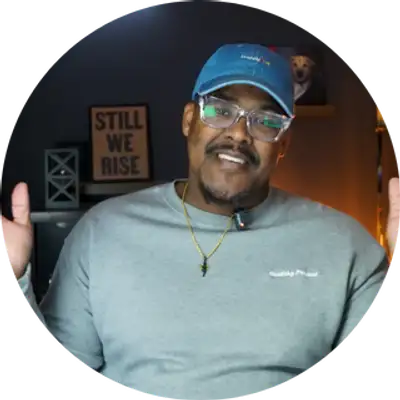
Corey Dion Lewis sits down with Dr. Margot Kushel, a practicing general internist with over 30 years of experience at San Francisco General Hospital and Director of the UCSF Benioff Homelessness and Housing Initiative, to explore why homelessness is fundamentally a housing problem—not a healthcare problem—and what this means for medical professionals and communities.
Dr. Kushel shares compelling insights from her three decades of clinical practice and research, revealing how the lack of affordable housing creates impossible situations for healthcare providers trying to treat patients experiencing homelessness. From managing diabetes in a tent to storing insulin without refrigeration, she illustrates why "there is no medicine as powerful as housing."
What You'll Learn:
- Why regions with high homelessness rates are defined by housing affordability, not mental health prevalence
- How structural racism and redlining created the current crisis, with Black Americans 4-5 times overrepresented in homeless populations
- The stark reality: only 36 affordable housing units exist for every 100 extremely low-income households in America
- Why Housing First policies work better than Treatment First approaches, backed by evidence from veteran homelessness reduction
- The hidden homeless population: workers living in cars, college students couch-surfing, and older adults losing housing for the first time
- How the politicization of Housing First policies threatens progress and patient outcomes
- Practical ways healthcare providers can advocate for housing as a health intervention
Key Clinical Insights:
Dr. Kushel explains why treating chronic conditions like diabetes, hypertension, and mental health disorders becomes nearly impossible when patients lack stable housing. She shares real stories from her practice, including a 63-year-old patient who hadn't eaten in four days while fighting eviction, and discusses how readmission penalties unfairly penalize hospitals serving homeless populations.
The Evidence for Housing First:
Learn about the dramatic 85% housing retention rate of Housing First approaches compared to 5-10% success rates of traditional Treatment First models, and why the George W. Bush administration adopted this evidence-based policy. Dr. Kushel also shares findings from California's comprehensive statewide homelessness study, debunking myths about people traveling from other states.
For Medical Professionals:
This episode is essential listening for physicians, nurses, nurse practitioners, physician assistants, medical students, residents, community health workers, social workers, case managers, and anyone in healthcare who treats patients experiencing housing instability. Dr. Kushel provides a framework for understanding how to advocate beyond the clinic walls.
About Dr. Margot Kushel:
Dr. Kushel is a physician and researcher who has dedicated her career to understanding and ending homelessness. She directs the UCSF Benioff Homelessness and Housing Initiative and the Action Research Center for Health at the University of California, San Francisco. Her research informs policy at local, state, and federal levels.
Resources Mentioned:
- UCSF Benioff Homelessness Initiative: homelessness.ucsf.edu
- California Statewide Study of People Experiencing Homelessness
- "There Is No Place" by Brian Goldstone
Episode Takeaway: "There is no medicine as powerful as housing. Homelessness is a housing problem."
Whether you're a healthcare provider frustrated by social determinants of health, a medical student learning about population health, or a community advocate, this conversation will change how you think about the intersection of housing and health.
SHOW NOTES
Episode: Housing as Medicine: Why Homelessness is a Housing Crisis Guest: Dr. Margot Kushel, MD Host: Corey Dion Lewis Category: Medicine Duration: ~49 minutes
ABOUT THIS EPISODE
Dr. Margot Kushel, Director of the UCSF Benioff Homelessness and Housing Initiative, explains why homelessness is fundamentally a housing crisis and how this understanding transforms medical practice and healthcare advocacy.
GUEST BIO
Dr. Margot Kushel, MD
- Practicing General Internist, San Francisco General Hospital (30+ years)
- Director, UCSF Benioff Homelessness and Housing Initiative
- Director, Action Research Center for Health, UCSF
- Leading researcher on homelessness and health outcomes
- Policy advisor at local, state, and federal levels
KEY TOPICS & TIMESTAMPS
[00:00] Introduction: The Housing-Health Connection
[02:00] Homelessness is a Housing Problem
- Why mental health and substance use don't explain geographic variations
- The role of affordable housing shortages
- Comparing high vs. low homelessness regions
[05:00] The Clinical Reality: Hands Tied Behind Our Backs
- Treating diabetes in patients living in tents
- Why standard medical care fails without stable housing
- The frustration of healthcare providers
[08:17] The Numbers: America's Affordable Housing Crisis
- 36 units per 100 extremely low-income households nationally
- San Francisco: 24 units per 100 households
- One million units short
[09:15] "There is No Medicine as Powerful as Housing"
- Using physician voices in policy advocacy
- The limitations of healthcare alone
- Addressing root causes
[13:55] Hospital Readmissions and Housing Instability
- How readmission penalties penalize safety-net hospitals
- Patients discharged to sidewalks
- The need for systemic change
[17:08] Structural Racism and the Homelessness Crisis
- Black Americans: 4-5 times overrepresented
- The legacy of redlining and housing discrimination
- How wealth gaps perpetuate housing instability
- San Francisco example: 5% population, 37% of homeless
[19:28] Historical Context: How Housing Policy Weaponized Race
- Post-WWII home ownership boom
- Redlining and mortgage discrimination
- Intergenerational wealth transfer blocked
- Ongoing discrimination in rental housing
[23:49] The Hidden Homeless Population
- Workers living in cars (Uber drivers, janitors, fast food workers)
- College students experiencing housing insecurity
- The invisible crisis in CSU, UC, and community colleges
- People with addresses who aren't truly housed
[27:17] Older Adults: The Growing Crisis
- Half of single homeless adults are 50+
- 40% experiencing homelessness for first time after age 50
- Bodies breaking down from physical labor
- The eviction-to-homelessness pipeline
[28:14] Clinical Case: The Amoxicillin Story
- Patient in garage without refrigeration
- Antibiotic treatment failure due to housing
- Why "having an address" doesn't mean housed
[29:11] Debunking the Migration Myth
- California study: 90% lost housing in-state
- 75% in the same county
- The logic failure of migrating while broke
- Political narratives vs. research evidence
[32:00] Policy Deep Dive: Housing First vs. Treatment First
- Historical "treatment first" approach and its 5-10% success rate
- Sam Tsemberis and the birth of Housing First
- 85% housing retention with Housing First
- George W. Bush administration adoption
[36:19] The Veteran Homelessness Success Story
- How Housing First + VA healthcare system reduced veteran homelessness
- The only healthcare system guarantee in America
- Real money + coordination = results
- Why non-veteran homelessness increased while veteran decreased
[38:21] The Political Weaponization of Homelessness
- How a Republican idea became a Democratic wedge issue
- Joe Lonsdale and the Cicero Institute
- Demonizing stigmatized populations
- The assault on evidence-based policy
[40:43] Trump Administration Policy Reversals
- Unwinding Housing First
- Consequences for veterans and all homeless populations
- Fighting disinformation
[42:14] The False Dichotomy: Housing vs. Treatment
- Why forcing treatment before housing fails both goals
- Supporting treatment through housing stability
- The pragmatic case for Housing First
[43:53] Barriers to Treatment Access
- 26% tried to get substance use treatment and couldn't
- "Come back when I'm housed"
- Maslow's hierarchy in clinical practice
- The impossibility of treating homeless patients effectively
[46:12] What Healthcare Providers Can Do
- Raise your voice: "There is no medicine as powerful as housing"
- Fight disinformation
- Advocate for patients beyond the exam room
- Use your credibility as a healthcare professional
[47:41] Community Action: Show Up
- Attend housing development meetings
- Counter NIMBY opposition to affordable housing
- Speak at churches, PTAs, and community groups
- Support affordable housing in your neighborhood
[48:16] Resources & How to Connect
- Website: homelessness.ucsf.edu
- Sign up for updates and webinars
- Access research reports and data
- Educational resources for healthcare training
[49:15] Closing: The Core Message "Homelessness is a housing problem. There is no medicine as powerful as housing."
CLINICAL PEARLS
💊 For Physicians & Advanced Practice Providers:
- Screen for housing instability as a vital social determinant
- Document housing status to justify treatment challenges
- Adjust expectations and treatment plans for homeless patients
- Advocate with hospital administration about readmission penalties
💉 For Nurses & Care Coordinators:
- Housing status affects medication adherence, follow-up, and outcomes
- Connect patients to housing resources before discharge
- Recognize the futility of some discharge instructions without housing
🏥 For Medical Students & Residents:
- Learn about social determinants of health beyond textbooks
- Understand policy as a tool for improving patient outcomes
- Develop advocacy skills as part of clinical training
STATISTICS THAT MATTER
📊 36 affordable housing units per 100 extremely low-income households (national average)
📊 24 affordable housing units per 100 extremely low-income households (San Francisco)
📊 4-5x overrepresentation of Black Americans in homeless populations
📊 85% housing retention rate with Housing First policies
📊 5-10% success rate with Treatment First policies
📊 50% of single homeless adults are age 50 or older
📊 40% of older homeless adults experiencing homelessness for the first time after age 50
📊 26% of people with apparent substance use disorders tried and failed to access treatment
📊 90% of California homeless residents lost housing in-state
📊 75% of California homeless residents are in the same county where they lost housing
RECOMMENDED READING
📚 "There Is No Place" by Brian Goldstone: Ethnography of families experiencing homelessness in Atlanta
📄 California Statewide Study of People Experiencing Homelessness Available at homelessness.ucsf.edu
📄 UCSF Research Reports on Housing and Health: Evidence-based policy recommendations and data
KEY QUOTES
"There is no medicine as powerful as housing." — Dr. Margot Kushel"Homelessness is a housing problem. It's all about the mismatch between the cost of housing and lower income people's ability to afford it." — Dr. Margot Kushel"When you compare regions with high rates of homelessness to regions with low rates, what separates them is not mental health or substance use problems, and interestingly not poverty. It's the housing crisis." — Dr. Margot Kushel"I can be the best doctor I can possibly be, but if our patients are experiencing homelessness, our hands are tied behind our back." — Dr. Margot Kushel"If you make housing the prize, you get neither housing nor treatment." — Dr. Margot Kushel
CONTINUING EDUCATION VALUE
This episode addresses:
- Social determinants of health in clinical practice
- Health equity and structural racism in medicine
- Population health management
- Healthcare policy and advocacy
- Chronic disease management in vulnerable populations
- Substance use disorder treatment barriers
- Mental health care delivery challenges
Relevant for CME topics: Population Health, Health Equity, Social Medicine, Primary Care, Internal Medicine, Emergency Medicine, Psychiatry, Addiction Medicine
CONNECT WITH DR. KUSHEL
🌐 Website: homelessness.ucsf.edu 🏥 Institution: University of California, San Francisco 📧 Contact: Available through UCSF Benioff Homelessness Initiative website
ABOUT THE HEALTHY PROJECT PODCAST
The Healthy Project explores critical health topics affecting communities across America, featuring conversations with healthcare leaders, researchers, and advocates working to improve health outcomes and equity. Hosted by Corey Dion Lewis.
🎙️ Host: Corey Dion Lewis 📧 Contact: [Your contact information] 🌐 Website: [Your website] 📱 Social Media: [Your social handles]
SUBSCRIBE & SUPPORT
If this episode changed how you think about housing and health, please: ⭐ Rate & Review on Apple Podcasts 📢 Share with colleagues in medicine and public health 💬 Discuss in your hospital or clinic 🔔 Subscribe for more episodes on health equity
MEDICAL DISCLAIMER
This podcast is for educational and informational purposes only and does not constitute medical advice. For specific medical concerns, please consult with qualified healthcare professionals. Information about homelessness services and housing resources should be verified with local providers.
★ Support this podcast ★