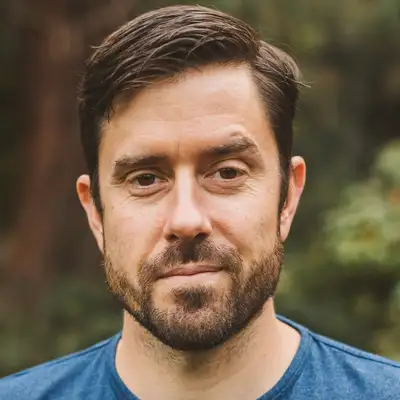
In this episode of Make It Mindful, Seth Fleischauer talks with international school consultant Chris O'Shaughnessy about narrative therapy — what it is, why it matters, and how its techniques can quietly transform the way educators approach empathy, resilience, and cross-cultural understanding. What begins as a conversation about storytelling opens into something much bigger: a practical framework for helping students separate fact from interpretation, build emotional muscle in measurable steps, and find common ground even when values genuinely clash.
Along the way, Chris draws on everything from gym metaphors to the Enneagram to a sociology study involving voluntary self-electrocution to make the case that the oldest human art form — telling stories — might also be one of the most powerful tools in a teacher's toolkit.
Together, Seth and Chris explore the neuroscience of narrative, the taxonomy of resilience, and what it looks like to introduce intentional discomfort into a classroom — including the surprisingly radical act of letting kids be bored.
Key Topics Discussed:
- What narrative therapy actually is — and why it's less about therapy and more about learning to hold your own story at arm's length
- The description → evaluation → interpretation framework, and how a photograph of a woman in a wedding dress teaches you more about assumptions than any lecture could
- Why our brains prefer a complete story to an accurate one — and what that costs us
- The "gym as intentional inefficiency" model: how to introduce beneficial discomfort in measurable, safe steps
- Dr. Wong's taxonomy of resilience — cognitive, behavioral, emotional, relational, and motivational — and why giving students language for these differences is itself an act of empowerment
- What to do when cross-cultural conflict isn't a misunderstanding — it's a genuine clash of values
- The Enneagram as a tool for digging beneath belief systems to find the shared motivations underneath
- Why boredom might be the most underrated creative catalyst in schools — and the sociology study that proves people would rather electrocute themselves than sit with it
- Awe as an emerging opportunity in education (Seth's answer to Chris's lightning round question)
Guest Bio:
Chris O'Shaughnessy is an international school consultant whose work takes him into schools across cultures and contexts around the world. Drawing on a background in sociology, he helps educators build the skills — empathy, resilience, cross-cultural communication — that don't show up on a standardized test but determine everything about how students navigate the world. He is based at chris-o.com.
Host Bio:
Seth Fleischauer is the founder of Banyan Global Learning and host of the Make It Mindful podcast. His work focuses on global learning, cultural competency, and the evolving role of technology in education. Through Banyan Global Learning, he develops live virtual learning experiences that connect students to new people, places, and ways of thinking.
Episode Links:
What is Make It Mindful: An Education Podcast?
Make It Mindful is a podcast for educators and school leaders who think seriously about how learning is changing and want to explore what to do next. Hosted by Seth Fleischauer, founder of Banyan Global Learning and former classroom teacher, the show covers three territories: what AI actually changes about teaching and learning, what it takes to help students connect meaningfully across cultures, and the human conditions — belonging, awe, trust, emotional regulation — that learning depends on regardless of what else changes.
Guests include district administrators, researchers, clinical psychologists, curriculum designers, and classroom practitioners. Conversations are long-form and honest. Produced by Banyan Global Learning.