Subscribe
Share
Share
Embed
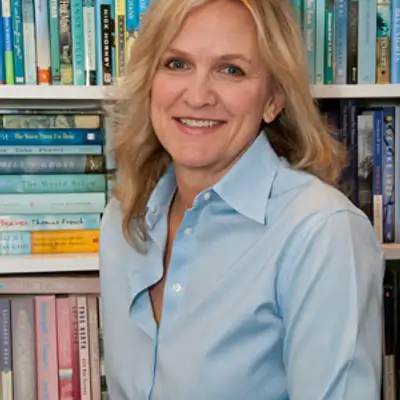
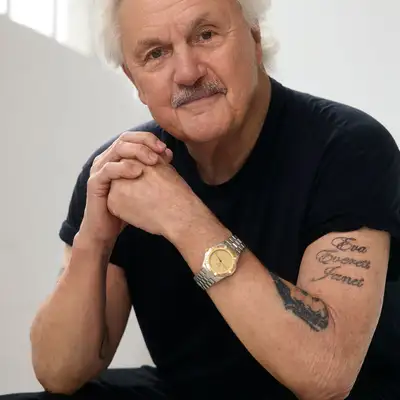
Celebrate the joy of reading with the Book Love Foundation podcast. This is a show filled with information and inspiration from teachers and leaders across grade levels, states, and school systems. We interviewed authors and educators for the first five years and now turn our attention to leaders in public, private, and charter schools. Find out more at booklovefoundation.org or join our book-love-community.mn.co of 2500 educators from 28 countries. We sustain joy together, one kid and one book at a time.
Kevin Carlson 00:06
Hello and welcome to the Book Love Foundation Podcast. I'm Kevin Carlson from the teacher learning sessions. This episode is part three of a conversation Penny had with John Irving last summer. You can hear parts one and two in our previous two episodes, all three parts came out at the same time, so you wouldn't have to wait, and I hope that you will listen to all three parts of the conversation. Why did we release it as three episodes? Because the conversation is so good and you are busy, and we didn't want you to miss the ending, as this episode shows, endings are very important. Now here's Penny and the conclusion of her conversation with John Irving.
Penny Kittle 00:48
John Irving's books have taught me what great fiction can be. I can remember closing The Cider House Rules and sitting holding the book in my hand, not wanting to let it go. I felt the same way about last night at Twisted River, which is a more recent publication, I felt the same way about Prayer for Owen Meany. In fact, I ended up writing the words to the ending of a Prayer for Owen Meany in my notebook. When we held Owen Meany above our heads, when we passed him back and forth so effortlessly. We believed that Owen weighed nothing at all. We didn't realize that there were forces beyond our play. Now I know they were the forces that contributed to our illusion of Owen's weightlessness. They were the forces we didn't have the faith to feel. They were the forces we failed to believe in. And they were also lifting up Owen Meanie, taking him out of our hands. Oh, God, please give him back. I shall keep asking you. You know, when I write words in my notebook, it's because they say something so important that I want to think about them. I want to write next to them. I want to keep playing with those words next to my own.
John Irving 02:12
It's fairly well known that I am an ending driven writer. I always know more about the ending of a story than I do about where I'm going to begin it. The stories I write, by the time I start writing them, I know almost everything that happens in them. I live with them, sometimes 8, 10, years Twisted River, almost 20 before I began it, before I started writing it. In almost the case, no novel I've written has taken me as long to write from the moment I started writing it as it waited to be written before I began. They sit around a long time. I just take notes. I have to know where I'm ending. I have to know last even last sentences, whole paragraphs. I have to be writing to to a point, to not only what happens, but what the tone of voice is, how things says itself, the language, the tone of voice. I've talked about this a lot, that I believe in plot. I believe in knowing where you're going. I believe the only way I can pay the proper attention, I hope I do, to the language and to the interior architecture of a story where the chapters end, where the parts, if there are parts, and what the passage of time is. I believe the only way I can attend to those things, line by line properly is if by the time I start I'm not even thinking about what happens. I mean, I always knew what happens so that it's as if, by the time I begin a story, the story has somehow, somewhere in my life, already happened, and all I'm doing is remembering it. It's already that clear. Well, there's something else that I've talked about less, and that is sometimes a book takes a long around, a long time for another element that is not as quickly forthcoming as what the end of the story is. But I also have to have a pretty strong vision or premonition of what the part of the story is that I don't want to write, what the part of the story is that I am dreading writing, what the part of the story is that makes me wish it weren't there. I. What the part of the story is that is at the core of what I hope about this story never happens to me or to anyone I love. And if there isn't that, if there isn't something that is almost makes me sick to think about it, well then it isn't good enough. And when I say good enough, I mean bad enough, it isn't worse enough. And if there something of that upsetting nature or that degree of upsetment in story, why bother? Why string myself out for 3, 4, 5, years on some if there isn't an element in it that that gives me pause in in that way, because it doesn't even affect me. How can I have any expectation that it will have a similarly emotional or psychological effect on a reader? Yeah, and, and that's why I think there is, I think, in all of the stories, strong sense of permission, I hope in most readers, that you know what's going to happen. Yeah, you see what's coming ahead of when the characters do you the reader? Yeah, there's no, you know, let's, let's go to our, perhaps personal favorite, one of mine. Let's, let's go to twisted River. Say, from the moment, from the moment the Cook and his son run away. It's a cousin that they will be caught. Yeah, it's a chase story. From the moment they leave and Ketchum knows it. Ketchum tells them, you run now you'll always be running. Yeah. Ketchums way of handling it is you wait in a dark room until Carl shows up and cut his head off. You know, why? Why screw around for the next 400 pages. And Ketchum, of course, will, will be the one who leads Carl to him. So you know, you know that it's a chase story, and chase stories aren't any good if, if, if they don't end up where you think they're going to end up, somebody's running away, well, they're not going to make it otherwise. What kind of the story is it? Otherwise? What is it? It's a adult story or something. It's not for grown ups to put it in, in simpler, sort of theatrical, dramatic terms, my job is the first thing I have to is make you, if not love someone, at least care enough about them so that you don't want them to be hurt. Yeah, and and then hurt them. That's the deal. Yeah, that's what you do. You say, Well, whatever happens, don't let anything happen to her. But of course, that's exactly who it's going to happen to otherwise, what I'm saying is, why do it? I mean, if you don't care about the character who suffers the loss? Well, you're not going to suffer it either, right?
Penny Kittle 08:28
No, it just seems to me that you you have to suffer quite a bit to write.
John Irving 08:37
Yeah, it's peripheral. I'm not belittling the imagination when I say, well, it's only in my imagination, but the truth is, it is only in my imagination. I don't wake up at night and not get back to sleep because of the anguish I'm feeling for a character I've created, even if I've created that character over an 18 year period of time, and am only now writing about him or her. If I wake up at night and can't get back to sleep, is because I'm worrying about somebody real, yeah, like, like anybody else. It's because I'm thinking of one of my own children or one of my grandchildren, or I'm thinking about my mother, or, you know, that's just like anybody else. Yeah, it isn't. Now I might wake up and not be able to go back to sleep because it's mechanical part of a novel that I'm thinking about. Like, Well, okay, I may know the end of the book, but I have a chapter that that doesn't appear to be ending where I thought it should end. And, you know, I that's mechanical. I'm thinking, well, there's something wrong with the construction of this. I have to start this one over again. I'm not ending up where I want to end. You know, it's if you build houses, you, you know, you wake up thinking, well, she. Is the door to that second floor bathroom is really stupid. It's going to be in the way of where the staircase comes out on the end of the hall. And, yeah, you know, and that's what, you know, a novel, a novel is like a big house or a small hotel. I mean, it has to work. You know, the bathrooms have to be in the right place, the kitchen has to be in the right place. Have to be doors to get in and out there. It's a construction and you know, if the house doesn't work, you blame the architect or you blame the contractor. Somebody's at fault. Somebody didn't think it out. I mean, we've all lived in houses where the doors open the wrong way. And, yeah, after live in a room for three or four years before you think, oh, good God, this kitchen is entirely wrong. The stove should be where the refrigerator is, and that goddamn door should open out instead of in. And, yeah, oh well, those are the things that are hard. It's not hard to be able to support yourself doing the only thing you ever wanted to do.
Penny Kittle 11:06
That's awesome. Thank you so much for being here the journey of a writer and the journey of a reader in that writer's work, I think John has captured for us the complexities and the thinking that lie underneath those words that we cherish. In the end, I think of John Irving as someone who works out the big questions of life and his fiction. The reason that I want my students to become deep, passionate readers is that they will stumble upon a John Irving masterwork, follow it to its end and be left breathless like I was at the end of Owen Meany, thank you John Irving, for giving us this gift of masterful writing. And thank you to my friend Bayard Kennett, who lives across town, who is John's cousin and arranged for this meeting. Thank you to Kevin Carlson, my producer this Foundation's podcast could not happen without his careful attention to editing. And I am so grateful. Grateful to all of you. Talk to you soon.
Kevin Carlson 12:11
Support comes from Booksource, a leading distributor of authentic literature for K 12 classrooms. Booksource believes that engaged reading is the key to a brighter future, and that creating better readers has the power to create a better world. When students have access to a rich and varied classroom library and the ability to choose books that explore their personal interests they enjoy reading and spend more time doing so. Visit booksource.com to discover how book source can help you foster engaged reading in your classroom by getting the right books into the hands of your students. The Book Love Foundation podcast is produced by the teacher learning sessions, connecting teachers with ideas, experts and each other.