In this episode, we talk about the Danish philosopher Søren Kierkegaard. We have with us an expert on his philosophy, Professor Roe Fremstedal at NTNU, Norway. He presents his interpretation of Kierkegaard as an ethical thinker. We start from the distinction between knowledge and faith. A central point is that when it comes to faith, we cannot be certain. While when it comes to knowledge, we can have evidence that supports the knowledge. The uncertainty of reason means that humans must choose. We cannot help but relate to faith and questions without evidence. Refusing to relate to faith will also be a choice. In the podcast we discuss that even those who say they do not believe have a belief. And those who are good people, but think they do not believe, actually believe deep down.
However, we will not be completely clear in this podcast when it comes to answering life's essential questions, rather there will be a good deal of nuance in Kierkegaard's philosophy and not least clarification of some of the misconceptions about him. Enjoy!
For further reading: Roe Fremstedal, Kierkegaard on Self, Ethics, and Religion: Purity or Despair, Cambridge: Cambridge University
Press 2022
And soon to come: Roe Fremstedal, The Ethical and the Religious, Cambridge: Cambridge University Press in press 2026 (Elements in the Philosophy of Søren Kierkegaard
Creators and Guests
Host
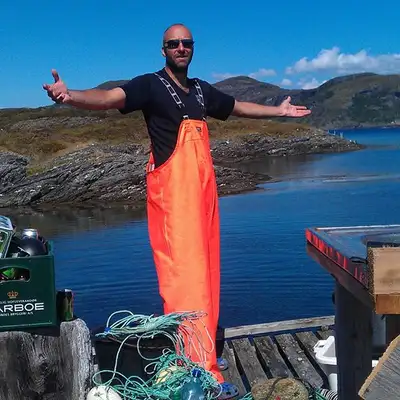
Knut Ove Æsøy
Knut Ove Æsøy grew up in Florø, a small town with about 10,000 inhabitants in the far west of Norway. The town provided closeness to nature and especially the sea, and much of his upbringing was about fishing and farming in addition to school and sports. He began working in industry at an early age before choosing an academic career. He has a doctorate in philosophy of science and currently works at OsloMet and the education of Norway's future teachers.
What is Athens and Jerusalem (in Education)?
In this podcast we explore the relationship between a scientifically rational and a spiritual approach to reality. That is the relationship of Athens and Jerusalem. Our currently prevalent Western worldview is supposed to be based on rationality. If production of weapons of mass destruction, degradation of the natural environment, and increasing deterioration of mental well-being are signs of rationality, the term is to be considered a dangerous one. In all these, one can detect lack of ethical and existential considerations which renders this worldview essentially an irrational one.
On the other hand, various forms of religious dogmatism and fundamentalism lack true spirituality, as they fail to create both a personal experience of serenity and upliftment and a social practice of empathy, solidarity, and equality.
Essentially, both scientific and religious dogmatism seem to fail due to their disregard for a true and holistic view of human nature. Neither traditional Athens nor historical Jerusalem, alone, have been able to help our deepest human potential flourish, which we consider the task of our modern school system.