Show Notes
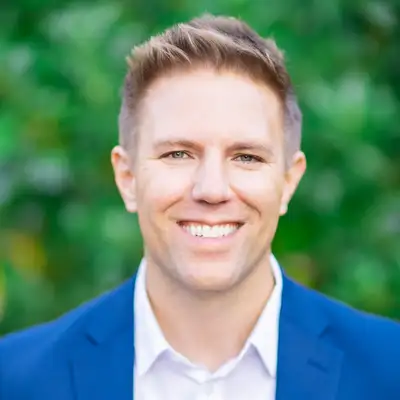
I'm excited today about today's topic because I think it's essential to what's happening in the real estate market in order for real estate agents to continue to thrive and offer the value to consumers that they'll respect and appreciate enough to allow you to have a business with the margins that you want to have. We're going to go into a topic about how to become the CEO of your business and I have with me today somebody who's brilliant at this topic. Those of you who know him probably admire him first as a loving husband and father, which is something that is very dear to me. Those that work along with him, despite the accomplishments I'm about ready to read, all those that know him best say he's a very humble man to which I would attest to that as well. So, Chris Suarez, he's a real estate agent here in Portland. He's sold himself over a thousand transactions and over $250 million in volume. He actually didn't ask me to say that, so he's probably a little bit embarrassed that I did say that, but nevertheless someone with great accomplishments. He's somebody who has ownership as a broker owner in five different offices for Keller Williams up and down the I-5 corridor, he has an expansion team, meaning other brokers around the country of which he's the CEO. In addition to that, he still goes on buyer and seller appointments and balances that out with his other responsibilities of being a CEO and a big thinker. So Chris Suarez, thank you so much for joining us today. It's a great pleasure of mine to get to spend some time with you and share your genius with the think bigger real estate audience.
Awesome. Well, I appreciate being here. I appreciate the opportunity to connect. We talk a lot face to face, but now we're talking screen to screen and happy to share anything I can. But also I'm really thankful for what you continue to do for the community and our industry as well. It's a love for the real estate industry. I think that drives us both. So I'm happy to be here.
Yeah, no, it's true. I've been asked before "Justin, have you ever thought about getting your real estate license?" And that comes up often and I think my passion isn't necessarily to be with buyers and sellers, it's to be with real estate agents. So all day every day, in my role, I get the opportunity to be knee to knee talking strategy and finding ways to add value to agents. So, I appreciate that, Chris, that means a lot coming from you. Let's get into a little bit here about this topic of becoming a CEO. I've studied your teachings on this and others where there's a real difference between an entrepreneur and a CEO. Would you just share for the audience, what are some tactical differences in mindset in their activities, and just how they show up and be, that really differentiates somebody from being an entrepreneur. Which a lot of people embrace and love, but maybe they're hitting a ceiling and they're tired of hitting a hitting a ceiling and they want to do more in their business and/or just have a better quality of life. Let's talk about the how embracing the role of a CEO will help them.
Yeah. Justin, I think one of the interesting things about our industry is everybody starts as an entrepreneur. Like if that wasn't, if that wasn't our core, we wouldn't be in real estate. And so typically you look at a founder of any, any company, real estate or non real estate, and they have incredible drive. They have natural ability, right? They have intuition. They have enthusiasm. And depending on your level of any one of those things, that's sort of the level of your natural ceiling of achievement or the size of the business that we're going to create that makes a phenomenal entrepreneur. And then as we're really, really good at that, and as we care about people, our business is going to grow naturally. And at a certain point in time, I think our industry has told us, "Well then, you'll naturally be the owner of the business."
And so since you own it, we start putting three letters on our business card and it just says, you know, Chris Suarez, CEO and by nature, the fact that we call ourselves that, we just think that we'll just continue doing what we've always done. And now we're just the CEO of a business because we hired someone or we added people or we've grown. Interestingly enough, I think that was me, early on, right? I sold real estate and I sold more real estate and then more real estate. And I thought, well, "Gosh, I'm going to have people now because I need them to deliver service." And so now I was just automatically a CEO and as I started researching founders of different companies outside of our industry and the founders that, that stayed CEOs of their business versus the founders that hired CEOs of their business--and there are incredible companies that went either way--the founders that stayed as a CEO had to change dramatically what they did, what their skill set was, what they focused on. In fact, they had to go from like dry, natural ability, intuition, enthusiasm. And then all of a sudden their skillset flipped to focus, strategic options, systems, models, accountability. And that's not natural. And one of the things I came across in my research was this statement that the number one reason why tech, I was researching tech, which we might as well just call that real estate now anyway, but I was researching tech and it said, "The number one reason why tech companies failed was because the founder stayed a founder." They didn't become a CEO. And so I thought, "Gosh, well how do we become a CEO?" And the four things that showed up was the CEO is responsible for creating.
And you think, well, so is a founder. A CEO is responsible for truly planning. And you think, well "Yeah, so is a founder," but the next two was implementing and integrating. And that's where I think most real estate agents, right, entrepreneurs fall down. We are great at creating. We love creating. In fact, we create too much and we love planning. And so we all have goals, but it's the implementation and integration that falls on the shoulders of a CEO that ultimately takes a lot of time and we just don't typically put enough time into becoming that CEO or being the CEO for a business. So I know that's a lot, but that, that really sort of reframed my thinking of who do I want to be for my business or any business that I'm involved in. Am I the founder? Like am I the entrepreneur? Like I love being that. But if I'm going to put a CEO title or those letters on any organization that I run, I have to be something different for the business and for the people that I've invited into the business.
It's powerful that you say that, Chris. You're right, there's this concept that an entrepreneur is a noble role, to, which I agree. I think it is. I think many of the problems that are solved in the world come about because of entrepreneurs and business owners who are willing to take a risk in order to create a solution for the market; however, you've pointed out something interesting here, which is that one can't stay in that mode forever or their impact will be limited if they simply get to a certain place where now they've got to become something else and they refuse. And so it's easier to jump to a new venture, which you see oftentimes, which is an entrepreneur jumping from thing to thing to thing without necessarily either bringing in somebody else or becoming somebody else to take that business and impact to the next level. And so what you're saying is you've studied that in big businesses. But you're seeing that even on a micro level within the real estate community, that real estate agents themselves need to become something different than what maybe got them started in the business.
Yeah. I think just going back one second and you said, "Well, we see people that jump from one thing to the next thing, to the next thing." Those are called serial entrepreneurs. And actually that's fun. Like there's nothing wrong with that. As long as we acknowledge the fact that, "Hey, I'm being a serial entrepreneur right now and that's how I'm going to... that's my career. That's how I'm going to make money. I come in, I start something, I launch it, I get it going, and then I'm on to something else." Yeah. I think unfortunately in our industry, in real estate, for real estate agents, what happens is they start something that they get going and they get bored because they don't want to be a CEO of a business. Or maybe they just don't have the support or you're not taught or looked at as a business owner and so that's where you see a lot of transition and movement in our industry. Honestly, it's like, well, stop thinking the grass is always greener. I don't even think it's always that. I think real estate agents think they're just entrepreneurs and no one sits them down... they haven't found the business model, even from a brokerage or leadership perspective of saying, "Hey, let's create a business. Let's teach you how to be a business owner." You just need to become a CEO so that you don't have to be a serial entrepreneur if you don't want to. Sometimes you just fall into it because it's fun.
Well, you pointed the key components of becoming a CEO, which two of them I know aren't always the most fun, right? The implement and the integrate. The first two are more fun: the create and the plan and that kind of describes an entrepreneur. But it's those last two that really define whether someone's going to build a business that lasts, that creates a life for themselves worth having for them and everybody else, right? Where they're not just running around reactively to the requests of their customers, but they've built something that people are willing to wait for. They've built something that people are willing to pay for.
Yeah, I think my philosophy as an entrepreneur. We fix, right? Like we're fixers and so that's why a lot of real estate agents feel like they show up every day and they're putting out fires. As a CEO, I think we identify a complex problem in any industry or for the consumer or any customer and then we develop simple solutions. So instead of fixing, we're actually spending our time developing simple solutions. And it might sound like the same thing, but it's quite different. If I'm constantly fixing that I'm actually not developing. I'm not creating, even though I think I am. I don't even get to stay in my creative space because I'm putting out the fire of the buyer or the seller with the investor or the transaction.
Whereas if I show up every day. It was Gary Keller who gave me advice really early on and he said "The biggest business opportunity any of us have is to find complex problems and create simple solutions." And if we just woke up every day and created a simple solution, then we'd have people lining up to use that simple solution. I think as real estate agents, we feel like, "Gosh, I think we're getting disrupted. I think people are taking our business or our industry away." Well, maybe they are and not just because someone else has created a simpler solution for a buyer, a simpler solution for a seller or a simpler solution for a real estate agent. And so for me, I wake up every day and just say, "Hey, where are the complex problems? What's the simple solution?"
Interesting. I love that, Chris. Thank you so much for sharing that. Let's talk a little bit about functionary versus fiduciary. You shared some interesting stats with me that kind of lay out what a typical real estate agent's day looks like that might help us really diagnose why there are so many tech companies pouring billions and billions of dollars into the space. In fact, I was reading, just two days ago that there's been an 87% increase in venture investment into the real estate tech space in the past three years. That's a massive amount of optimism with investors saying that there's opportunity here. Talk to us about what you've discovered in a typical real estate agent's day that would maybe correlate with that.
Yeah, yeah. I, you know, when I heard this, when I heard this statistic, I thought, well, that explains everything. It was an NAR statistic. You know, there's so much value and truly, I believe that NAR really, really pours back in. We just, we just have to un-package it and find it instead of wondering why we pay dues. The fact is NAR did research around time and the study says from the moment we meet someone, so let's say the moment someone is a lead to the time that they close and they say on average a Realtor spends about 50 hours from lead to closing. So 50 hours and when we take a step back and we think, "Gosh, if I'm closing two deals a month and it's all on my own, there's a hundred hours."
Yeah, that makes sense--four deals a month--then all of a sudden, there's 200 hours and five deals a month. And you think, "Yeah, that's what I'm working. A hundred hours a week. So as I took a step back and NAR said this, what they found was 20 of those hours was before they went into contract before they even were face to face with you. Twenty of those hours was once it was in contract. So, 40 of those 50 hours was completely functionary and 10 hours was spent face to face on average with the customer, with the client
Time out real quick, Chris. That first 20 hours, does that include the lead generation time of finding the lead?
That lead, so lead follow up lead generation, conversations, just not face to face.
Okay, perfect.
And the 20 hours after, let's just say it's a buyer, they found their house, they're in contract, then what. Or there's the listing or the sellers now in contract, they're pending, then what? But the fact is, 10 hours is spent face to face. And so when you say those words, functionary versus fiduciary, the reality is no matter how good we are, 20 hours before the relationship is functionary. Tech, technology, machines can do that. Twenty hours after the house is found is functionary. Tech, machines, process software, hardware can do that. So the most important, and what we truly get paid for, what we need to realize we get paid for, or in the future, the only thing that we can get paid for or will get paid for, is the 10 hours.
And that's what our clients sees as well. So when our clients wonder, "Well, why are you getting paid so much?" They see functionary, functionary, and here's where I get you, here's where you're a fiduciary. What's interesting about that? That's 20% of the total time start to end. It's the 80-20 principle showing up in statistics of our typical, the life of the lead or the life of our transaction. And so as I took a step back, I said, "Well, gosh, you know, the fact of the matter is, if that all does become functionary..." then we need to make sure that a couple of things are going to happen. If machines do it all for us, if the technology does it all for us, and that 40 hours is eliminated, well we say, "Gosh, what's happening to our commission?" There's downward pressure on our commission and maybe there is, or maybe there isn't right now, or there will be in the future, but the fact is is we get paid for our fiduciary.
And if I could take that full 20 here, 20 here and apply that to fiduciary, fiduciary, fiduciary then I have five segments of 10 hours of true fiduciary. I'm not interested in doing the functionary. Like other people can or other things can and I think that's a completely different mindset. Or we have to say, let me figure out which technology will take on that functionary so that 10 hours can expand to 20 with each client. And all of a sudden relationships become the most important thing in our business and always will be because fiduciary will not get disrupted. Our industry is way too big of an investment and then as a wealth determiner in the world, real estate is. So, fiduciary will always play a role.
You know I love that you have highlighted that point. As I mentioned to you before, I've analyzed some of the more professional industries that still demand a high dollar per hour and people aren't flabbergasted when they see the bill. For example, an attorney, a really good wealth advisor. I was inspired by what Ben Kinney said, who I know is a good friend of yours, at Keller Williams Family Reunion this past year, which is that the future of real estate agents, he believes, is that they need to show up as wealth advisors for people's real estate portfolio. As I've dug into that a little bit around this concept of being a fiduciary, and you think about an attorney, they don't answer the calls at the front desk, they even have a paralegal that deals with much of the functionary activities. They show up as a fiduciary and they're well paid and people understand that they're paying for real value.
You know, you look at a wealth advisor. I've been delving into that industry as well to really learn what can be taken from what they do that would really benefit real estate agents. And even studying their KPIs, the metrics that they track, the conversations that they have to see how we as an industry can emulate some of that too in the consumers eyes be seen more as that wealth advisor for people's real estate. And it's been really interesting and some of the topic here of functionary versus fiduciary, really stands out to me because you're right, I think even the portals of the world look to make real estate agents functionaries, right?! They control the funnel if you will, they have the customer relationship and then out the bottom they're looking for people to open doors and write contract stuff that over time, maybe less paid, right? Your dollar per hour on those would be less than if you were face to face with them throughout the process.
But the only, the only way they can do that is by starting with the consumer and the customer. See, as as an industry, as real estate agents, um, sometimes we get caught up in just delivering phenomenal... We just said, "Hey, we did our job, we sold your house...." or "We found your home" and we don't focus enough on the consumer or the customer or their experience in that process and so technology, some even portals have said, "Hey, we're going to own that. We're going to step in there." And the reason why they've been able to show up as the consumer advocate is because they've told that story that they are and all of a sudden the ones that do it the best, honestly Justin's, still are, whether publicly or privately are reaching out to real estate agents to get advice on the value of the homes they're about to buy or get advice on the value of that estimate that they're getting.
So they still see the need for the real estate agent because the real estate is the fiduciary, but they just have focused on the consumer way more than I have, or you have, or our industry has because our industry said, "Hey, there's a lot of moving parts. Do them all." And I haven't been able to focus on the consumer or the "We're the fiduciary or becoming a phenomenal consultant"... because there were so many tasks that I had to get done for them and unbeknownst to us because we didn't streamline functionary faster, technology did that first or very, very quickly. And they said, "Now, let's capture the consumer." And they've told a story of of being consumer focus when at the end of the day, the greatest portals have phenomenal real estate agents behind them and the worst portals have terrible real estate agents behind them and the value of the portal, I still 100% believe, comes down to the value of the agent that they've convinced to partner with them in dealing with their portal.
It says a lot about how much the industry still needs the fiduciary agent, doesn't it?
Yeah. Yeah. Firm believer.
So let's go tactical on this Chris. What's standing out for me, in part, and I don't mean to openly plug Xperience Real Estate, but, what I see you doing with this, which standing back from my perspective, I see updates from your team and you have $40M, $50M, $60M, correct me if I'm wrong, I could be misstating here, $70M/year teams and producers joining your expansion business. And what I'm putting together now is that these teams that are established, meaning you wouldn't think that they would need to partner with another group. But what I'm hearing you say is, or maybe I'm reading between the lines, is that your offer is to help take some of those functionary tasks off the table so that they can focus on being fiduciaries.
Yeah. So I take that same concept I shared earlier and said, "Hey, if I provide simple solutions to complex problems for any segment of any market: buyers, sellers, investors, real estate agents, then people will line up. Look at Amazon. They don't do any fiduciary. It is all functionary. Like they created a really simple solution to a complex problem called the shopping habit. And it's the simplest solution to a shopping habit that we have. And so we line up all day every day and use them and pay membership dues and dues go up and no one cares and no one even notices and no one cancels. Yeah, like when I heard the statistic that they made $1 billion in one day, the day that they raised membership dues and I couldn't even tell you what they raised them for because no one cancelled because the value, the solution was so simple that it was needed.
So I say, what are the problems in our industry? It's hiring good talent. So we do that. It's lead generation systems. So we do that. It's marketing systems. So we do that. It's conversion, which is coaching and consulting, right?! So it's just a platform of services such that any team, 30 million in production, 10 million in production. Like you said, we've had $50M and $70M producers plug into the platform of simple solutions of running a business. Ultimately I believe our real solution is allowing them to become the CEO of their business as opposed to just the founder of their business and many stay as both and many then hire out a CEO. It's up to them. I think one of the coolest things I heard recently, it was Mark Miller, Chick-fil-a. I was studying that company as I was researching for the course, Become the CEO. And I think he was employee, 13 or 16 but he's the VP of High Performance Teams.
That's his title.--pretty cool title. And he said, here's what we have to realize. The blessing or the gift of solving problems is bigger problems, right? You solve the problem, you're going to get a bigger one. You solve a problem, you solve that one, someone's going to come with a bigger one. And so I think that that philosophy sort of just flows through our entire organization. We create it like the name of our team is Xperience Real Estate for two reasons. One, because we believe that the future is the Xperience that the client receives, whether it's online or offline. And also, while we're doing that, we want our agents and our people to be built around this mission that we deserve Xperiential lives while being in an industry that we love. And typically it's one or the other. You deliver Xperience and service to your customers, so our lives are terrible, right? Evenings, weekends, mornings, lunches. Our philosophy is a simple solution for each part of that business and we'll be okay and the consumer will continue to come back.
I love it. Let's talk what someone might take away from today's episode. Hopefully we've convinced some, or persuaded some to see one way forward, what I believe is the best way forward, is to be more professional, more like a CEO. Obviously implementing leverage--identifying what are the functionary tasks and how do I streamline those, whether through another person, system or tool, right. And take at their week and say "How many of these 50 hours a week are really in fiduciary roles," and start to increase that number by leveraging things through people, systems and tools. Would that be something, a very tactical takeaway, and if so, what else?
Yeah, so I look at that and, and when I built out the Become the CEO course, I said phase one is building and building really incorporates systems, tools, models, and people--like setting that up. Like what are the actual systems, operational systems, communication systems, lead gen systems, hiring systems, marketing systems. So we actually go through, "Hey, what are all the systems?" Then, what are the tools? Tools could be software tools, hardware tools. It could be people, right? What are the tools and what are the models? There are a lot of different models of running a business as an individual agent. I love agents that do that. Like I was that person for years and I don't think there's anything wrong if that's the business that you choose to run.
So what is the model that you're going to run your business through and with? And then do you need people? If, so, what are the roles, like how do they launch? How did they succeed? How they begin to lead. So, phase one is building. I think for me, I look at phase one and phase one is building. And then you know as you look at those other phases, phase two, is tracking, because once you've built something, you have to know, "How am I going to attract a customer base and then people to service customers?" So phase two is attracting and that's a week that we go through that. Phase three, is really, integrating. That word integrating... Well what does integration look like now that you have these systems and tools and models and people and customers... how do we integrate? And then phase four is how do I really be a leader, whether I'm a founder leader and in the business or whether I'm now stepping into becoming that CEO or being the CEO of the business? How do we truly lead others and lead the organization through growth phases. So that's really tactically the sort of four steps to really own a business, lead a business and be the CEO of a business should we choose to.
Chris, this has been fun. I know you and I both have classes to teach here in about 12 minutes, so we better wrap things up. Although I'd love to extend the invite already to have you back at some point in the future because you're one of the best guys and smartest guys I know and any chance I get to learn from you, it's a pleasure. Do you by chance have the link, Chris? And if not, I'll put it in the notes of how people can access your course "Be the CEO"
Yeah. So what I'll share with you is that URL Become the CEO. If you go there, you can sign up for the course. It's a four week program. I mean it's pretty intense. It is really a workshop on becoming a CEO. So it's four weeks and you can get some information there, but on that site, there's about an hour webinar as well.
becometheceo.com. Is that it?
Yup, that's it. You got it. There's also an hour of content on that site that you can just watch the first phase that's just free. So you don't have to sign up. You can say, "You know, let me just, let me just learn a little bit more about those beginning phases of becoming the CEO." I truly believe that our industry will not get disrupted the way that some think it will as long as we transitioned from being real estate agents to being business owners and serving our customers and our clients in
a different way. So we go through that a lot in the four week program, but there's a lot of tactical ways to do that in that one hour webinar as well. That's updated, live.
Awesome stuff. I would encourage everybody to go look at it. I know I'm going to be tying into the course. It's a topic that's going help me in all kinds of different areas of life. So, thank you again, Chris, for being on the show. I appreciate you. You've truly helped us to think bigger, which is my mission so that people can have the business and lives that they really want. So, it's been a pleasure and I want to thank everybody for tying in to today's episode of the Think Bigger Real Estate Show.