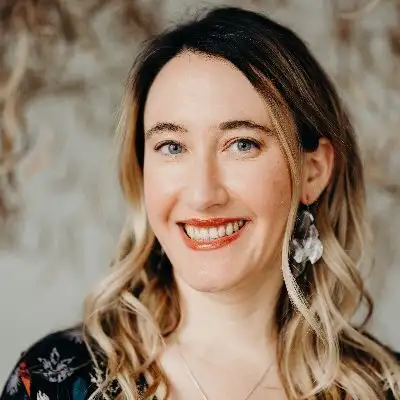
Jayme knows better than most people what’s like to feel “born in the wrong body,” and to be treated differently. Born premature with cerebral palsy, she had to grow up quickly, managing the pain, limitation, inconvenience, and treatment of her disabling illness. At puberty, she discovered she was same-sex attracted as well. Then came what she describes as “sex dysphoria,” a persistent feeling of deep discomfort with her female body, and a desire to be seen and treated as man.
Listen as Jayme vulnerably and courageously shares her unique perspective derived from having learned how to thrive in spite of extraordinary hardship. This episode contains discussion of suicide, and may not be suitable for all listeners.
Show Notes
Jayme knows better than most people what’s like to feel “born in the wrong body,” and to be treated differently. Born premature with cerebral palsy, she had to grow up quickly, managing the pain, limitation, inconvenience, and treatment of her disabling illness. At puberty, she discovered she was same-sex attracted as well. Then came what she describes as “sex dysphoria,” a persistent feeling of deep discomfort with her female body, and a desire to be seen and treated as man.
Jayme now lives and thinks of herself as a man, and those closest to her support this identity. She feels that social transition has helped her mental health. So why would Jayme talk to a biological realist like me? As we explore in this conversation, Jayme’s unique experiences of exclusion and discrimination, based on her disability, have cultivated a deep appreciation for human connection in its many forms, as well as a thick skin for tolerating viewpoint diversity. She also takes personal responsibility for how gender dysphoria affects her, rather than asking the world to change for her. Furthermore, as someone who has been affected by medical problems since day one, Jayme does not take health for granted. She shares many of my concerns about how gender is treated in today’s healthcare industry, and having done her research, she has chosen not to undergo medicalization.
Listen as Jayme vulnerably and courageously shares her unique perspective derived from having learned how to thrive in spite of extraordinary hardship. This episode contains discussion of suicide, and may not be suitable for all listeners.
A note about language: I entered this conversation knowing little about Jayme, and so I stepped delicately, initially using the term Jayme uses to describe herself, “transsexual.” It eventually became clear to me that Jayme has not chosen to undergo any hormones or surgeries to mimic the appearance of the opposite sex. I would therefore not use the term transsexual, in retrospect, as I reserve that term to describe people who’ve undergone such medical experiments. Rather, I would describe Jayme as a gay woman living with gender dysphoria. In stepping delicately, I also initially used the gender neutral pronouns “they/them” when talking with Jayme about herself. I understand it is Jayme’s preference to be called he/him, as social transition has been her way of managing dysphoria. I appreciate Jayme’s willingness to build bridges between people with different worldviews, including people like me, who avoid the use of “identity”-based pronouns and stick to classical language that accurately reflects biological sex.
As with much of my work, there’s something in this episode to upset everyone... except those who appreciate an earnest attempt at bridging worlds; respect the vastness of the human experience; and don’t need to agree on everything in order to find value in someone else’s perspective.
Take
$200 off your EightSleep Pod Pro Cover with code
SOMETHERAPIST at EightSleep.com.
Take
20% off all superfood beverages with code
SOMETHERAPIST at
Organifi.
Watch NO WAY BACK: The Reality of Gender-Affirming Care (our medical ethics documentary, formerly known as Affirmation Generation). Stream the film or purchase a DVD. Use
code SOMETHERAPIST to take
20% off your order.
Follow us on X
@2022affirmation or Instagram at
@affirmationgeneration.
Have a question for me? Looking to go deeper and discuss these ideas with other listeners? Join my
Locals community! Members get to ask questions I will respond to in exclusive, members-only livestreams, post questions for upcoming guests to answer, plus other perks TBD.
★ Support this podcast on Patreon ★
What is You Must Be Some Kind of Therapist?
A podcast at the intersection of psychology and culture that intimately explores the human experience and critiques the counseling profession. Your host, Stephanie Winn, distills wisdom gained from her practice as a family therapist and coach while pivoting towards questions of how to apply a practical understanding of psychology to the novel dilemmas of the 21st century, from political polarization to medical malpractice.
What does ethical mental health care look like in a normless age, as our moral compasses spin in search of true north? How can therapists treat patients under pressure to affirm everything from the notion of "gender identity" to assisted suicide?
Primarily a long-form interview podcast, Stephanie invites unorthodox, free-thinking guests from many walks of life, including counselors, social workers, medical professionals, writers, researchers, and people with unique lived experience, such as detransitioners.
Curious about many things, Stephanie’s interdisciplinary psychological lens investigates challenging social issues and inspires transformation in the self, relationships, and society. She is known for bringing calm warmth to painful subjects, and astute perceptiveness to ethically complex issues. Pick up a torch to illuminate the dark night and join us on this journey through the inner wilderness.
You Must Be Some Kind of Therapist ranks in the top 1% globally according to ListenNotes. New episodes are released every Monday. Three and a half years after the show's inception in May of 2022, Stephanie became a Christian, representing the crystallization of moral, spiritual, and existential views she had been openly grappling with along with her audience and guests. Newer episodes (#188 forward) may sometimes reflect a Christian understanding, interwoven with and applied to the same issues the podcast has always addressed. The podcast remains diverse and continues to feature guests from all viewpoints.