Subscribe
Share
Share
Embed
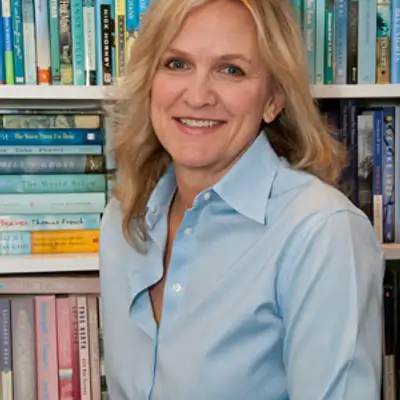
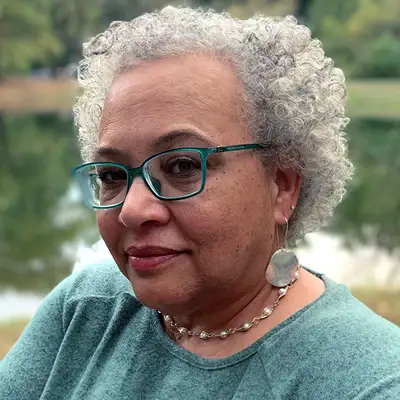
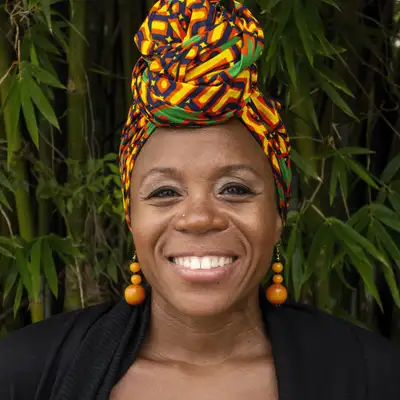
Celebrate the joy of reading with the Book Love Foundation podcast. This is a show filled with information and inspiration from teachers and leaders across grade levels, states, and school systems. We interviewed authors and educators for the first five years and now turn our attention to leaders in public, private, and charter schools. Find out more at booklovefoundation.org or join our book-love-community.mn.co of 2500 educators from 28 countries. We sustain joy together, one kid and one book at a time.
Penny Kittle 00:00
Welcome back to the Book Love Foundation podcast. It's season five. I'm Penny Kittle, founder of the Book Love Foundation. We fund classroom libraries. We have currently given away almost $600,000 in grants to fund 270 outstanding teachers in 41 US states and six provinces with the ongoing pandemic and our current political climate, we believe we need to build more inclusive libraries. It's more important than ever. That's why we planned a special season of podcasts to give you our listeners some ideas on how we continue this important work. Today, we're going to listen to an interview by Book Love Foundation Board Member Julia Torres, who is a Denver librarian and the co founder of the Disrupt Text Movement. She's an anti racism educator and a national speaker. Can I just say, as someone who's presented with her, she is amazing.
Julia Torres 01:16
Hi, I'm Julia Torres, and I'm a librarian in Denver, Colorado, and language arts teacher, and I'm here with Edi Campbell today.
Edi Campbell 01:24
Thank you, Julia. I'm also a librarian. I started as a school librarian in Indianapolis, Indiana, and I moved over to Terre Haute, Indiana and became an academic librarian.
Julia Torres 01:34
Thank you so much for being here with me today, Edie, I know we met one time in person for the first time after knowing each other online, we met at NCTE, and I saw you, and you saw me, I all I really remember was grabbing you into the biggest hug, because I was so happy to finally meet you in person.
Edi Campbell 01:53
I remember that it was NCTE, and I kept seeing you. I should know her, because she's with people I know, and I think we did the name badge. Your name tag was turned around. I might not have had mine on, but then we had that moment.
Julia Torres 02:07
Yeah, it was really beautiful. And you've been such a lovely addition to my life, mostly because you have been so nurturing, and I have learned so much from you. So you've also been somebody who you are known, I think, as somebody who gives tremendous insight to the kidlit community and to the world of educators who are working with young people. So I thought we could come together today to talk a little bit about your work, but also to talk about where we are in the scheme of things kidlit today, librarianship specifically talking about how we serve young black people in schools, and what that looks like for us now, and what we hope it will look like for the future. How does that sound?
Edi Campbell 02:50
Sounds like a good conversation. Let's go.
Julia Torres 02:52
Okay, okay, so talking a little bit about why we got into this, and how it can be easy to lose sight of how and why we got into this. And I was talking a little bit about how I started teaching in Park City, Utah. And you know, folks who may not be familiar with Park City, because I know we've got Canadian listeners. We've got folks all over the world who might be listening to this podcast. It's a mountain town that was originally a mining town, and the majority of the folks who live there are like retired pilots and doctors, surgeons, folks like that. But there is a larger community growing of immigrants who are in service work, who are living in the resort town as well. So when I started teaching there, there was this really interesting divide right between the folks who considered themselves to be retired folks who just happened to have a kid late in life, that was in high school, and then the parents of my immigrant families. So in the midst of that, I hardly I don't know that I taught one black child in Park City, Utah, and then I came to Colorado and I taught in the suburbs, and there were very few black children, because Colorado has some of the most segregated, racially segregated schools in the United States. We've got suburbs that are predominantly white and suburbs that are predominantly black, and then we've got the urban school district, which is Denver Public Schools, where I work now, that has the highest concentration of black and Latinx students. So in that time, you know my trajectory toward learning how to serve black youth has changed tremendously, and I have been supported in a multitude of ways by a variety of people, but I can honestly say that the students themselves, being around them every day and listening to them and really asking them what works for you and what doesn't that has been what has taught me to teach them the best. What about your trajectory? Can you tell us a little bit about where you've been and where you are now?
Edi Campbell 04:48
So it's interesting you hearing you talk about schools in Colorado and how segregated they are, and I'm going to tell you what it is like in Indianapolis. And I think that each of these communities has devised their own. Way to divide, segregate and separate people. So I grew up in Toledo, but my professional work as an educator was in Indianapolis. I began in the Catholic school system. I was in a K through eight historically black school. It was like many black parishes, they're built so that black Catholics could have their own churches, ie not attend the white churches. But I left that because the pay was so low, they got doubled my pay when I went to the public school system. Went to a high school in Indianapolis, part of Indianapolis public schools. So in Indianapolis, there are still townships and Indianapolis Public Schools. Imagine a three by three grid, and that center is center Township, and that's Indianapolis Public Schools. And those eight outlying townships are still inside the city of Indianapolis, but each one of them has their own school district. Oh, wow. And in addition to that, you have cities like speedway. I think there, there are a total of 16 separate school districts inside the city of Indianapolis. Wow, that's a lot. So that's why, in the 70s, we had deseg orders. So you might think that you live in Washington Township, but your children will go to Indianapolis public schools. It's crazy. So think of 16 separate school districts. Richard Lugar had a lot to do with this, the way to divide these, these townships and the police departments and the fire departments. So let's think of 16 separate superintendent salaries, bus facilities, special needs facilities. Think of what this is doing with the money for education. So over the years, of course, blacks have moved out of center Township, have moved into the outlying areas. When I started at the high school I was working at, it was a large amount of white students. There were international students, but it became more and more black, and by time I transitioned to the library, for sure, it's predominantly black. Faculty composition did not change. It stayed predominantly white. We had a black principal who had a national reputation. I didn't mention when I was at the K through eight Catholic school, she been fine black educators, so she recruit the white teachers by saying they can't teach themselves, so they need you to teach them. My black principal at the high school, of course, did everything she could to find black teachers, and one of the things that I did at that time, and I did not do this intentionally for this purpose, but I put my picture on my resume, and that helped me get jobs. It's sad to say that I have never been hired for a position that did not consider my race.
Julia Torres 07:40
Neither have I. Every place I've gone. It's either been, we have no one, so we need you, or we are building a group of educators of color, and we want you to be part of it. And that's been, I can say it's interesting in either way, right? Because when you're the only, then students relate to you in a certain way. And when you when students have had mostly white teachers, they relate to you in a different way. And that was my first experience here in Denver Public Schools, yeah, yeah.
Edi Campbell 08:10
When I was in the high school, it became predominantly black. I was teaching juniors US history, and I'd be their first black teacher.
Julia Torres 08:17
Yeah, that was my experience here in the suburbs of Denver. And you know, I think that when it came to helping students learn to love literature, my black students had a lot of them, not all, but a lot of them had internalized some kind of narrative that they didn't like to read. And it wasn't just a teenage thing about reading isn't cool, but a lot of my kids had internalized this idea that reading wasn't something for them, that it wasn't a pastime that black people did or do. Did you have that experience?
Edi Campbell 08:52
I was teaching social studies, okay and but I can definitely relate to what you're saying, that there was just something about reading and learning and knowing that somehow we talk to our black children that they weren't expected to know or to think. And I think it's something in public schools, it's it's we, we're training factory workers. Still factory workers don't think. They don't question. I even still see that here in the way education students are prepared. They are prepared to teach children who will plot through a textbook, who will read those two or three paragraphs for the test and not question and not think. So.
Julia Torres 09:32
Can you tell me a little bit more about what you've seen in teacher preparation and teacher ed? Because that's something that I'm just kind of getting into a little bit more now, but I'm curious about that, because so many of the teachers in my environment are Teach For America or alternative licensure candidates, which means they came to teaching after very minimal training. It wasn't via the traditional student teaching, you know, two or three years of education. And then going into the classroom, it was a much longer process back in the day. Now folks can get into the classroom relatively quickly. So what are you seeing with regard to that?
Edi Campbell 10:10
So education is interesting. We don't teach research to educators, and their practices are supposed to be research based. So if, if they're not learning research, they don't know what good research looks like, yeah, which means they're not going to question policies and practices. They're just, you know, we just want them to do, and they're not going to teach children how to research. But I'm in Indiana, and Indiana is a whole other animal, especially in corners, you know, we only have one major city in Indiana, and the rest is small city. You've been in small cities.
Julia Torres 10:43
They're very different homes, yeah, yeah.
Edi Campbell 10:46
And here in Indiana, I even in Indianapolis, the mindset very much is it's okay to be okay, so we're not going to question. We just don't question, yeah, and that permeates the way we educate people, because we don't want people to question, and that's dangerous in these times. It's really dangerous in a time where we have so much misinformation, where we have so many different sources of information, if people don't question and don't think and don't know how to work through information, let's look at what's going on right now. Politically, people can be told anything and accept it. So if they're on YouTube and they receive a continual stream of things that initially may have gone against everything they thought believed, but they keep seeing it and hearing it over and over again, and they have no tools to analyze what they're being told they're eventually going to accept it.
Julia Torres 11:42
Absolutely. And that goes back to what you were saying about black students in education. I think that people don't really understand the importance of striking that perfect balance between having high expectations and not enabling someone to be a dependent learner.
Edi Campbell 12:01
Well, you have to wonder how much of that is intentional, right, right? Because, so we're going for that factory work. We're going for that person who's going to do what they're told and not cause a problem, who's who's going to be a consumer, right? Who's going to just buy, literally and figuratively, everything that's put out there, yeah, and we, particularly, you know, black and brown people. And it's interesting. I was reading, we talked about all the reading we're doing on Sundays. And I was reading something about children's literature. And it was talking about how the numbers of books, you know, we always look at those CCBC numbers, and the numbers of books, of diverse books, hasn't been increasing over time, but the population of black and brown children has been increasing.
Julia Torres 12:42
It sure has by two. It's gonna outnumber the number of white students
Edi Campbell 12:47
in school. This isn't intentional, because there are messages, explicit and implicit messages in children's books about how children should behave, how we want to socialize them. So if the images in books remains white characters who are the sources of power. Yes, and there really aren't that many black and brown children. That's not intentional?
Julia Torres 13:10
I think that you have to look at the people who are adamantly, vehemently, passionately resisting stories of black and brown historical and present empowerment. They're resisting those stories being brought into schools, and then they're also policies put in place that keep black and brown children stuck in the place of feeling, and really all kids, to some extent, stuck in the place of feeling that reading isn't something that will enhance or enrich your life, just active reading, whether it's informational reading, research reading. I mean, when kids really want to know something, I've watched them research. My own children will do their own kind of research. Yeah, said about knowing how to sort through just be curious and get that curiosity satisfied, but then also ask the right question, that will lead to more questions, and then being able to sort through sources and to evaluate the sources that you find. And so much of that rich depth of thought is being removed from schools, in addition to the creativity pieces right because the disappearance of writing in schools has been tragic. I think you know, the the more the more segregated your community. And if you are in one an area of the community that is considered to be underserved or predominantly full of minoritized and immigrant group people, then it is more likely that you will be more restricted with regard to how you can learn, what you can learn, how you can express yourself. The disappearance of school newspapers. We've seen the disappearance of creative writing. We've seen the defense of the canon and folks bringing and when I say the canon, there's one canon that is defended over. Or some other and then people fighting with tooth and nail not to have the newer children's literature brought into schools. So all of those combined to make this perfect storm that is tremendously oppressive and not reflective, as you said, of the growing groups of immigrant and black and brown and people of the global majority that are going to be in schools, the majority in schools, while the teaching force remains static and predominantly white.
Edi Campbell 15:28
You know, the two things I think that that dominate our culture, our our fear and scarcity. And when those two things combine, boy, you know, they're gonna lock down on power. People are people. What we really need to fear. If we fear anything, it's the 1% who really controls the message, who really controls us, who has turned us essentially into consumers, is as long as we're buying whatever they're selling, as long as they're profiting off of our labor, not our creativity, not our thoughts, without our labor. Yeah, nothing will change. Nothing will change. The school I work in ISU is smaller college in Indiana. It's really large ones here, and we had been that school where white and black children, you would get urban blacks from low performing schools. And you would get rural whites from more performing schools at my university. It just, they stay separate. They stay separate. They don't come together on on meaningful issues. You know? They just, you know, how we navigate this world. We just stay in our lane. And I'm thinking of the power that could exist in bringing those students together.
Julia Torres 16:46
Absolutely. I have many times heard people talk about the commonalities that exist between an extremely rural existence where you're cut off from much of the world, and a deeply urban existence, where your world is very specific to what's going on in your part of any given city in America
Edi Campbell 17:07
Where you're still cut off, where you don't have the infrastructure, where you don't have the economic means in either of those communities to do what you see everyone on television doing, where you don't have The community centers, where you are still viewed as not being enough or not having enough. I think the situations are so similar between those two populations, and the difference is the racialized experience that they receive.
Julia Torres 17:31
And that's something that the publishing industry has really or the children's publishing industry has really capitalized on, I think people's curiosity to learn more about it, but then also, I think that there's a lot of conversation recently about stories that need to communicate so many different aspects of what it means to be black in this world, and not just the experience of trauma or experiencing violence or being exposed to really difficult aspects of life, which do go hand in hand, unfortunately, with being black in this country, I don't know anybody black who hasn't experienced some kind of traumatic aspect of being in this society and being adjacent in proximity to white, just because of the power dynamics at play, and the history of this country. And so, you know, when we think about Black History Month, and you know, we're at the end of it right now, and lots of folks have been talking about, let's buy black and let's promote stories of black joy. And there are more of them, arguably, now than there ever have been, which is fantastic. Still haven't managed to get toward a place of understanding that Black History Month was intended, from my understanding, to be an end of the year celebration of everything that you did the year before, to recognize black people's contributions throughout history and throughout the world. It's not supposed to be one month where we focus only on blackness and then we don't do it starting March 1. It's definitely something that we are supposed to grow and continue so that it's intended to be integrated into our lives and who we are, not just black folks, but everybody.
Edi Campbell 19:12
I'm not sure I've read, but I don't remember what Carter G Woodson's original intentions were when he came up with first the week and then the month. But you talk to so many people, I think black people everywhere, first, you know, there's that, why the shortest month? And then why only a month? And it happens to every racial or ethnic group. Every other group gets their special month. And I've always taken that month as a time to celebrate and to learn. But I was teaching us history. I had to learn it all the time and teach it all the time, and it was work, because that history book doesn't have what black people were doing throughout history. It has no we were slaves, and really it has, we were slaves and we had the civil rights movement, and this was what the 90s. That's not. That long ago, when, when that's all it wasn't. And I would really like to pick up a current US history book for high school students and see how the teaching of history might have changed through the textbook.
Julia Torres 20:12
And I think that's where we are at a tremendous place of possibility, right? Because we're now living in an age where there is almost too much information available. And one would think, How could there ever be too much information available? But we are constantly bombarded with information, and so that part of your brain that we were talking about earlier that requires you to be able to sort through information and categorize it and apply it to your life and evaluate it for its accuracy, and be able to source the information. It's more important now than ever for us to be able to to cultivate that part of our brains, both as adults, and to support young people in doing that, which is why I do think I hope in freedom, dreaming about the future for black kids, but for all kids also, I hope that black kids will be empowered all over not just in urban communities where people are hyper aware that this is necessary. Whether they do it or not is another thing, but I know folks are aware that it's necessary to imbue black children with a sense of their own greatness and the history from which they come, which is not just one of pain and suffering and overcoming oppression and racism. I know people are aware that that needs to happen, but I hope that that will become more consistent in every place, so that in suburban, predominantly white American classrooms, kids are learning about Black Power movements, and not from a place of, oh, this was scary, and Assata Shakur was a criminal, and Angela Davis should have been in prison, but like learning this is how these people were taking their power back. This is why these things happen, and these decisions were made and these words were spoken.
Edi Campbell 21:51
You know, and hearing you say that, especially when you start out talking about evaluating information, think about the role of librarians and how it is part of our role to teach how to critically interact with information, how to evaluate it, how to assess it, how to access it, how to organize it, in such a critical role today, but it's we're paid so little for that librarians are extremely undervalued, maybe because We are a female dominated occupation, possibly. But where we become libraries become that place where young people go for their own learning, because of the programming that libraries create, because of the books that we collect for them, but we provide that opportunity for young people to see beyond the past, to imagine the future, to feel empowered because they get to select the books they want. They get to select and choose, and in some libraries even create the activities they participate in, and even in saying that librarians are, I think, so undervalued in what we can and do provide for young people. But we have to realize that what librarians are doing is not just about reading and books and children's books, but we do so much more than that for young people, provide so many more possibilities for them centered around information and such incredibly important skills for the future.
Julia Torres 23:17
Yeah, absolutely, I couldn't agree more, and I hope that as we go into the future, we can this coronavirus pandemic time will enable people to sit down, especially this summer, and instead of focusing so intensely on things like learning loss and what students haven't done, I hope we can ask them questions about what they have done and then leverage that try to meet them wherever they are. What have you become curious about during this time of the pandemic? What reading did you do and in what forms did you do it? I know right now I'm finishing up Clint Smith's new book how the word is passed, and he talks about the legacy of slavery by going to certain places like Whitney plantation and Thomas Jefferson's Monticello. Thank you, History teacher. Thank you. So he went to Monticello. He went to the Whitney plantation. He went to There's a very famous prison in Louisiana that was known for its inhumane condition. The importance of this book, I'm able to stay with it because Clint Smith wove a narrative for me through kind of memoir, but then also history, and then also the format, the creative format of being able to write an essay. So I hope that educators will look at these skills and also these outcomes that we're wanting for students through a more organic lens, you can have someone fall in love with the art of the essay through reading Roxane Gay, for example, and then they might see themselves. I read an essay where Roxane Gay, well actually in hunger, she talks about tattoos, but it's like a little mini portion of. Hunger that reads sort of like an essay, and I saw myself, so why can't we find pieces of nonfiction like that that will draw students in and then help them understand that all of these forms of reading can be interwoven. It doesn't need to necessarily be a whole class book study or we're reading this chapter and then looking at these online resources that connect this chapter, because it feels so compartmentalized and forced when we do it that way.
Edi Campbell 25:27
I think lot of different problems going on there. You've got the teachers who don't read themselves, and he's got teachers who honestly don't have the time to read, and that's where working with the school librarian is so critical to find this material that you might not find on your own, and then so you read the portion of Roxane Gay in class, but your library has the book so the student can continue reading if they want to, or the librarian knows where to send that student online to find more of Roxanne Gay's writings. Because she's so prolific in her work, there are other places to find what she's doing. But yeah, I have to throw this name out there. There's a teacher. Her name was misty Roseman. She passed away last month, young English teacher. I think Misty was her late 40s. Maybe she was that English teacher who learned from her students and who listened to her students, and who gave them what they needed and what they wanted, and the incredible amount of energy it took to do that. She was that teacher I learned from to just watch her interact with young people and to see that her English class, they were reading things that they wanted to read, and they were finding themselves in literature. She was a vice principal. She moved up so she could guide other educators, but, yeah, it is a lot of work. It is hard work, but now that's that's what we call good work. That's right, you cannot be a teacher. I don't think people even say they want to do it anymore, just for the summers off it. There's so much more to it than that, because I don't know things are moving, I think at a much faster rate than they used to. Young people are not satisfied, cannot be satisfied with the way things work, and the only way to know what they need for their future is to listen to them.
Julia Torres 27:21
Amen. To that. Edie, there needs to be so much more listening in the world. And I am a perfect example of somebody who likes to talk. My grandma liked to talk. My mother likes to talk. My son likes to talk. It's in the family we like to talk. But I think that as I am, as I've moved from a beginning educator, and they always talk about, don't be the sage on the stage. Yes, we've heard that. But how have we learned to listen and to actively listen in such a way where we're really internalizing the things that people say? Do we take notes when our students talk? Do we teach them how to listen to one another? Because they say when you teach something, then you really know it. So if you're teaching someone how to listen to someone else, then that shows that you really know how to listen yourself. Sometimes, am I just talking myself in circles right now, maybe it could happen. It could be the case.
Edi Campbell 28:18
But it gets hard for us, for me because of the model that we grew up with, right? And we still get that, you know, we still get people who tell us, this is how you should do it, and they're doing they're they're delivering the message the old fashioned way, you know, the way that we've always gotten it. So kudos to us for trying to change it and do better and know better. You know, not everyone Our age is trying to so kudos, and it's hard to change that model of instruction. You do the best you can, and I say you do the best you can, but you have to realize your best isn't always good enough, right? You a good teacher is a good learner. You have to learn when you're in front of a class and of students, you feel that energy, and you know when you have missed your mark. You know when you've missed it, and you learned in that moment, don't do that again.
Julia Torres 29:05
That's right. Yeah, that's right. You really do so before we wrap up here, Edie, before we started this call, we were talking about reading and taking the time on Sunday to just start the week off by reading something that's going to set the pace for the rest of the week. What can folks research, read, learn about right now? That's really fueling your fire.
Edi Campbell 29:25
I posted a picture. I cheated, tweeted it, Facebooked it of my coffee table, and there are about six books I'm the middle of right now.
Julia Torres 29:34
Yes, I think I liked it. It was on one of the platforms. I definitely saw that picture and liked it. I think that what I would love to know from you is in an ideal world before we leave this earthly plane. What would you like to see for black kids in school? So many things, but something that comes to the top of your mind.
Edi Campbell 29:55
Joy. I want them to look forward to going to school, to feel empowered. Heard appreciated to leave school two or three days a week with a headache because they have just thought and learned and processed so much information and just to be so excited about what's going on in that building.
Julia Torres 30:13
Yeah, I think that I would like respect for them more than anything, because a lot of my students will tell me straight out that they don't feel respected, and we know that respect is a way that we show love, so it doesn't really make sense to talk about how much you love your students if they'll freely tell another adult that they don't feel respected. So if we can reflect on the ways that we may use our advanced age or education that we have gotten that we paid a lot of us paid a lot of money for. I mean, that's just the truth we did, and we spent a lot of time on it. But I don't think that that gives us the right to oppress young people and to make them feel less than or to make them feel due to policies and procedures that we're too afraid to question or just doing what was done to us in school. I don't think it's really fair to create an environment where they don't feel like on some level, at least we see them more as equals than as subordinates. You know, yeah, for sure. Yeah. Thank you so much for talking with me today.
Edi Campbell 31:20
Thank you. This was, this was lovely. Thank you. I'm so glad we could connect and do this. This was, this was wonderful.
Penny Kittle 31:36
The Book Love Foundation podcast is produced by Chelsea Papineau of Canadian Television, a board member for the foundation, and my niece. It's with gratitude that I recognize how many of you are struggling to go back to school after spending the last year online. The Book Love Foundation Board has extended its deadline this year and is currently accepting grant applications until April 15, we hope that might bring a little more joy to your pursuit of books that will change the lives of your students. Our funding depends on kind teachers like you sharing our work with others for more information about applying for a grant, or just to check out our new website, professional development, our summer book club. How to get involved. Check out bookclubfoundation.org, thank you again and happy reading.