Subscribe
Share
Share
Embed
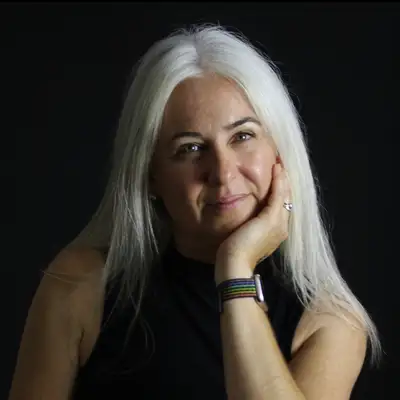
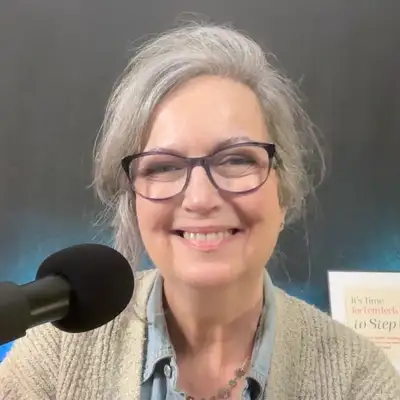
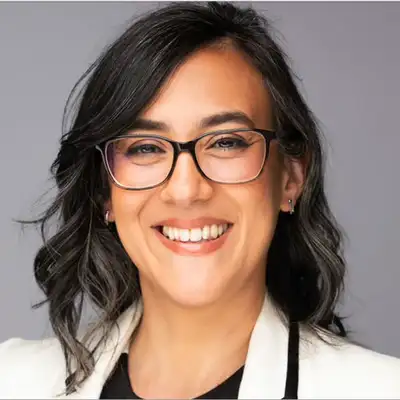
Real talk. Smart strategy. Women’s health marketing, served straight up.
If you're a brand leader, marketer, founder, or investor in women’s health or FemTech, pull up a stool — this is your podcast.
Hosted by Gabrielle Svenning and Karen Flynn of GrayMatter Agency, this Perimenopositive™ podcast explores the brand strategies driving success, featuring candid conversations with founders, brand strategists, healthcare professionals, and industry disruptors about what it really takes to market products and experiences built for women today.
Gain insight in how to:
• Position your health brand with authenticity and impact
• Build trust in the age of influencers and misinformation
• Design marketing that resonates with the women driving care decisions
• Elevate your voice while staying regulatory-smart
• Future-proof your brand for what’s next in women’s health
9 episodes. Zero fluff.
Mocktails included.
Follow & be notified when episodes drop!
Gabrielle (00:00)
Most meaningful changes in women's health marketing start with something very simple, listening.
Karen (00:05)
When we really listen to women's experiences, we do more than uncover problems. We uncover possibilities. And that can change everything.
Gabrielle (00:33)
back to Two Uteruses Walk Into a Bar. I'm Gabrielle Svenning.
Karen (00:36)
And I'm Karen Flynn. Today we're diving into something that feels honestly overdue in discussions about women's health marketing. The importance of communication that is built around emotional understanding and relevance.
Gabrielle (00:47)
When we talk about using a feminine communication style, we're talking about a strategic advantage in the modern marketplace, one that's rooted in listening, sharing, community, authenticity, and the courage to tell the truth about real experiences.
Karen (01:01)
And Femtech is uniquely positioned to lead here. These brands are building for women, with women, and often because women's voices were ignored in the first place.
Gabrielle (01:11)
Today's guest knows that dynamic deeply. Ikram Guerd Chief Marketing Officer at Aspivix is helping shape, reshape how gynecological care is designed, discussed, and delivered, bringing a more human, patient-centered lens to a very personal experience.
Karen (01:28)
Yeah, it's gonna be a great discussion. To get us ready for it, let's talk about our mocktail of the day. Today's mocktail is the bee's knees. Some honey syrup, lemon juice, lemon soda, sprig of rosemary if you have it, little sugar if you have it. It's bright and it's comforting.
And it's what happens when you blend substance and softness.
Gabrielle (01:46)
So raise your glass, let's get into it. Cheers.
Karen (01:48)
Yep, let's get into it, cheers.
Gabrielle (01:51)
Ikram Guerd is the chief marketing officer at Aspavix, a women's health company innovating to make gynecological care less painful and more empowering. She leads the marketing of CareVix, a device designed to modernize outdated practices and create a better, more supportive experience for women during exams.
Ikram brings a background in global health marketing and a deep commitment to listening to women's voices as the foundation for meaningful innovation. Welcome, Ickram. Thank you for joining us here on Two Uteruses Walk Into a Bar.
Ikram (02:21)
Thank you. Thank you, Gabrielle and Karen.
Karen (02:22)
Welcome, Ikram, thank you for being here.
Gabrielle (02:26)
We really appreciate you joining us for this episode, Feminine by Design.
I know that when you and I first started talking about this and we were going over, you know, where does the Aspivix story really fit in, you gravitated to this one in particular because of the way you approached marketing for CareVix. And I'd love to just start there and talk about how, you know, how did you...start off. What was your strategy for launching this wonderful device?
Ikram (02:55)
Yes, thank you so much. that's a very broad question. So I'll try to take it step by step.
So the way we designed the device and the way we started thinking about the solution, how do we bring it to the market, is first of all to listen to the women's voice, to their experience.
So in gynecology, when you go to your gynecologist and let's say you need to get an IUD inserted, we have heard so many stories, personally, friends, and women just around you who have been sharing their experience as being an awful experience.
Talking to different women, it doesn't seem like it's an isolated problem. It feels like the experience overall when you're getting an IUD for most of the women is very painful.
So then going back to the education, where the pain comes from, where should we ⁓ investigate, and that's how the story really started.
So one of our first co-founders is a gynecologist, and he started explaining how the device, the IUD, is inserted and looking at the different procedures.
So first of all, you will place the speculum and then after they will use something that is called a tenaculum to grab the cervix. That way you can stabilize the cervix and after that you will be sounding the uterus. That way you can see how deep is it and how far you can go with the IUD placement. And then after that you will place the IUD.
So basically just to make it very easy to understand, you have four key steps and each step brings some discomfort. or even worse, pain.
So looking at that, looking at the speculum it has this duck kind of shape. It's metal, it's not very comfortable when you just take a look at that. So it already starts with women when they are looking at the speculum. We all know as women when we go to our gynecologist how the speculum looks like, but you don't know about the other steps.
So going back to the education, the tenaculum, like what is it, why is it even used for?
Looking at the sharpie teeth, it has two sharpie teeth that will grab the cervix, then you can understand how the pain comes from. Especially on the cervix, it's probably one of the most sensitive parts of our body. And most of the time it's done with no pain management. So think about having two sharpie teeth on your cervix and it generates pain and bleeding. so that's definitely where we started working on developing a solution that is way more gentle.
Karen (05:14)
Wow.
Ikram (05:24)
A and more mindful of the experience for women. I know. And just to add on that, because I'm a very visual person, I have one here just to show it to you. So that way, I don't know you can see it. So that's the...
Karen (05:34)
Okay, that's very similar to what I was imagining with how you described it. Wow. Yeah.
Ikram (05:30)
Exactly, just think about that on one of your most sensitive body parts.
Karen (05:45)
No, thank you.
Gabrielle (05:47)
Well, I have to say, just as a side note, you know, I think I if it were a man who was getting his testicles pinched and pulled, I don't know how long it would have taken them to come up with a better way to move the testicles. You know, I mean, it's just the it's crazy. I mean, it's hypothetical, but there's something telling me that that
Ikram (06:08)
Agree. And when you think about this, it's called the tenaculum. So if you speak German, tenaculum means bullet extractor. So it was used over 100 years ago to extract bullets from soldiers and to stabilize the skin. And then now we are using it daily in gynecology.
So it has evolved a little bit in terms of...the teeth. You have different versions, metal or plastic, but that's pretty much what is used. Some gynecologists are able insert IUD without even using the tenaculum, but that's a very minor part of the OB-GYN. So that's... ⁓
Karen (06:40)
So when you heard these stories, when you were learning about the pain and you're getting all the stories from the ground, from people, kind of walk us through that then translated you work on changing the that did? Yeah.
Ikram (06:57)
Yeah, so just like taking a look at innovation in that space, there were almost zero innovation. So why did it even took us 130 years to come up with something? And it's always going back to the voice of the patients in our case.
How can we, like we know, like when you go to your physician, especially women, we have a...probably a higher threshold in terms of pain tolerance. And you just don't want to complain about pain because you don't want to be dismissed. You don't want to feel like, she's complaining and she's a diva queen and she's like, okay.
So that's also something that is very important to take into account. It's just the bias when women are complaining about pain. that's also something we took into account.
So by bringing our device, now it's been developed, it's been FDA cleared, C-marked, so we're very excited about this long journey that now we are coming to commercialization. So it's a huge milestone. And what we've been doing.
So that was most of my job, especially when I started a little bit over two years ago, is how do we raise awareness? Who should we be talking about?
Physicians have been using the tenaculum forever. They are trained and the new generation of physicians are trained on the tenaculum. How do we change the practice by bringing something new that is working?
So we've done randomized controlled trial in Switzerland. We have different sites currently using it as well. So we have clinical data, which is most important for physicians. You need to have that to bring to them to be able to show some evidence that it's working, that it's significantly reducing pain and bleeding, and that it's definitely making the experience a better one.
So you need to find those early adopters who will be excited about seeing something new and trying it out and offering this to their patients. And what we have seen along the way is we cannot just focus on the physician, even if our device is a class two medical device. So the only one who will be using our device are physician.
The end receiver are patients. So they have a voice and we need to include that, not just only on the design part, but also in our communication.
So a couple of months ago now, it's been little bit over a year, I went to a conference and I've met with a women's health expert, Dr. Brittany Barreto, and I just kind of jumped at her. It's like, oh, I've been following her. It's like, oh, she's like super cool.
And I was like, oh, I need to talk to her. So jumped at her, introduced myself like, oh, hello, I'm Ikram I'm working for SPVX. It was like, oh, okay, tell me more about what you do. Do you have a picture of your products? I'm like, you know what? I have even better. I have the product itself. So it was like, oh, that's cool. I like to play with new toys. So we set apart for five minutes and I just show her how the device can be used in two minutes and she got it. So she started playing around and she liked it.
Because my background is in marketing, that's an amazing opportunity. So I just asked her, do you mind if I just take a few pictures of you using it? Sure, just do a video. So we did this 20 second video. So we did two. She's basically just using it and showing that it's working and saying, now I'm a gynecologist. Just to be able to show that how easy the device is and how reassuring it looks
The following week, she posted it on TikTok. Usually she gets between 3,000, 5,000 views. We got over two, 12 hours, 1 million views. Over the weekend, 2 million views. Now we are over 3 million point four, something like that. And most importantly, it's not just about the views, it's about the conversation. So close to 2,000 women commenting, sharing their experience, asking where they can find it, where they can find an OBGYN using it.
That was an eye-opening experience because like okay this is way bigger than we thought and women even even if they are not the one using the device they can definitely influence their physician.
Gabrielle (11:18)
100% and in fact, and I'm sure you've seen them there has been a real viral trend among women posting from their gynecological exams having an IUD inserted and the pain and speaking from own personal experience of having a very traumatic experience which is why I really gravitated to the CareVix and to your story at ASPIVIX I believe at that same women's conference is because it's such a relatable situation that
Ikram (11:25)
Exactly. Exactly.
Gabrielle (11:46)
I didn't realize was so common, you know, because back to the shame and to the conversations that happen in the practice and in the exam room. And that's one of the things I just want to ask you is that does require it's like you're introducing a new practice, a new device, literally, but you're also changing a narrative in the the dynamic between the doctor and the patient.
Can you talk a little bit about that as far as what that means and I can imagine like a place like TikTok it's such it's a place where women feel it's a safe place where they can find you know okay this is normal for me to bring up so now they come to their physician how what's that kind of conversation and how are you arming your your docs with the kind of prep for this kind of conversation
Ikram (12:33)
Yes, yes, 100 % agree. Like when you type IUD is amongst the top 100 keywords on TikTok. And we see more and more women feeling more empowered to share their stories. So many women are sharing their stories, recording, as you were mentioning, Gabrielle recording themselves getting the IUD placed. And it's just heartbreaking to see how painful it looks like. So this ⁓ whole conversation was also
Gabrielle (12:50)
Yeah.
Ikram (13:02)
One thing that if you really want to change care, you have to change the conversation and to involve whoever is impacted with the current practice or the current standard of care and try to see what is out there to be able to change this care. So the way we work is like, okay, we have some conversation ongoing, finding early adopters.
bringing this solution to those early adopters. So we have a different type of institution currently using it. So we have Columbia University, IU Health, two large university hospitals, but we also have more on the clinic side, TIA Health, Women's Health Clinic, and they are spread in the country. And their main target is really how do we offer a better holistic experience for women? So our positioning fits really well with what they are doing.
And when you see the type of the population of women going to those locations, very gen Z.
Gabrielle (13:52)
Right.
Ikram (13:58)
who will be, they like the experience overall, they will be the very first one to post as like, I just had an IUD and it was amazing and I had acupuncture and I had Carevix it's a new device. So it's also finding those early adopters who can find patients who can also spread the word. And for physicians, it's really making sure that we can keep them on top of what is happening and work with them. It's always difficult to bring
Karen (14:02)
Yeah.
Gabrielle (14:06)
Yep.
Ikram (14:24)
a
new device in the market and change the practice, especially when it has been used forever. So working with those different stakeholders, trying to build clinical studies, get some excitement, getting the patient influencing their practice as well. And at the end of the day, if a woman, I think that's the thing that was also a kind of aha moment for us, but also for patients.
Gabrielle (14:28)
go.
Ikram (14:51)
First of all, you need to be educated. So you cannot be empowered to have a conversation with your physician if you don't know how the procedure is done. So that's really where we spend some efforts in explaining where the pain comes from. So that way you can ask the right question and request for something else. And then you can also influence at the end of the day if the physician is not willing to change the practice for something way more gentle.
Karen (14:57)
Right, okay.
Gabrielle (15:05)
Yeah.
Ikram (15:14)
You know what? The patient can go somewhere else. So that's also another way where women are empowered. They're the one making the decision at home for their household in terms of healthcare costs spent. So something just to keep in mind. If you're not happy with where you should get, you should be taken care of, you can go somewhere else.
Karen (15:17)
Yeah. Yep.
I love listening to your story. That's so great, by the way. What a great story that is.
Ikram (15:42)
Thank you, Kevin.
Gabrielle (15:42)
Yeah, I
feels like you should be wearing a cape. That's the kind of like the importance that this is bringing. You really are being a hero, the company. I know you're representing the company and they're, but yeah, I'm sorry, Karen.
Karen (15:46)
It's true.
Ikram (15:47)
Thank you.
Karen (15:51)
It's true.
Ikram (15:53)
company.
Karen (15:57)
No, not at all. I love it. There's you've got like two or three prongs going all the time, education and all this. But it's also really iterative, isn't it? I mean, you took advantage of an opportunity as a marketer to get that video out, which immediately inspired and grew a community of voices that would go and start
informing a lot of what you guys took back to the company and stuff, which I love. And I think that that's kind of what this whole segment is about. And it was like when we talking about communication styles and empathy and community building and how people talk and how we use things like social media to continue conversations and talk in the voices that we already have as patients, as women, as practitioners.
Ikram (16:26)
Thank you. ⁓
Karen (16:46)
and how symbiotic that all can be. It's really, it's a very exciting kind of application of all of those theoretical things, you know, to see it in practice. It's fantastic, yeah. Yeah. I bet. Good.
Ikram (16:55)
100 % agree. Yes, no, I definitely enjoy what I'm doing.
because you feel like you're part of a mission and you're making an impact. And there's almost not one single day where I don't have experience from women, just women sharing, women I don't even know and sharing their personal stories. it's just, yeah, it makes me, like when they hear about our solution they feel like there's hope.
Gabrielle (17:16)
Yes.
Ikram (17:24)
And it just resonates and it just makes me so grateful. So I'm very excited about it. Yes.
Gabrielle (17:30)
to that
point about the emotional stories and you know there certainly is there's just no dearth of of anecdotal evidence and as you said and I think this has been getting to clinical evidence so for people who are for marketers such as yourself or you know in these situations where there is so much emotion and it almost probably and it's personal emotion let's be honest and not everyone is comfortable talking about intimate
Ikram (17:53)
Yes.
Gabrielle (17:57)
you know, gynecological procedures, even if they are a physician per se, I think that there's a certain amount of science versus, you know, how do we balance the clinical and the emotional is what I'm getting at. my question is sort of aimed at those clinical studies because I would assume that that is really the cornerstone of your efforts.
Ikram (18:08)
Yes.
Yes.
Gabrielle (18:17)
to bring that balance and say, okay, not only you can go on TikTok or social and see all of the thousands of stories, millions, but ultimately to your point, a physician wants to see clinical need. So how do you, how much time in your own kind of strategy planning and in, I know you've only been with Aspivix a couple of years now, is that right? Yeah, how much time does that take? It's like even before you're even marketing or going out there, you have to do these studies.
Ikram (18:38)
Yes.
Gabrielle (18:45)
Can you speak a little bit about that in the role that they played? Because I think that's important for someone who's coming up through the ranks of this endeavor, introducing something new, you need the proof.
Ikram (18:59)
Exactly, that's the first step.
It's all about building trust and credibility. So going back to the evidence, the clinical data, so our team has worked with two large university hospitals in Switzerland. So again, finding those early adopters willing to try something new, prototype. So we use at that time a prototype. We had ⁓ five versions of the prototype, the one that was used in our single blinded randomized controlled trial.
where we were comparing our device to the tenaculum. Just for women getting an IUD, we really designed the study ⁓ based on their experience, making sure that we can really show the difference between those two in terms of experience for women. Our team has also, for some procedures, attended the procedure. So they can also see the scientific aspect of it, but also the emotional part of it from the patient experience.
And all of that is how we came up with a very...
great numbers in terms of pain reduction, especially for nulliparous patients. So women who never gave birth, so the nulliparous patients, are the ones who will definitely benefit even more from our device than women who have already given birth because the cervix evolves and it's tighter when they never give birth, so it's more painful when...
Karen (20:18)
Yeah.
Ikram (20:21)
the tenaculum is used on them. So we've learned so much in terms of patient provider experience, but also how do we finalize the design? So 73 % pain reduction, 83 % bleeding occurrence as well. And it shows one of the main summaries, it shows significant...
Karen (20:22)
Mm.
Ikram (20:40)
statistically significant pain reduction. That's what we were looking at. And we were able to also submit to FDA because FDA is also very interested in seeing if it's working and if it's safe, safe for the patient, but also for the provider. So all the check boxes were checked. All the boxes were checked. And then we got the FDA clearance very quickly after the study. And then we were able to introduce the product in the US. it's interesting also to see
Karen (20:45)
Okay.
Gabrielle (20:59)
Yeah.
Ikram (21:08)
from Europe Switzerland and the difference with the US. How do we find also early adopters in the US? They want to see data from the US. So working with Columbia, IU Health and NTIA was also very encouraging because at the end of the day, what we have seen is so we've built a program called the Ambassador Program. We find 25 sites, different sites. We wanted to collect experience from the provider.
Gabrielle (21:10)
Yes.
Ikram (21:34)
and from the patient.
for IUD insertion mainly, but for other procedures in gynecology as well in nine countries. So we did it in the US, Brazil, and different countries in Europe. And we wanted to have a full spectrum of users. So who is placing an IUD? There is the OBGYN, there is midwife, nurses, some cases even the general practitioner. So there's different type of users. And then you have also different in terms of segmentation, you can take a look at private offices, clinics,
Gabrielle (21:56)
Mm. Mm-hmm.
Karen (21:58)
Okay.
Ikram (22:04)
large university hospitals. So they don't necessarily have the same volume, they don't necessarily have the same challenges. So how do we get also experience from different institutions and users? So we were able to collect 1300 use cases, so real-world data, and that was on top of our clinical study. So we have all this data that shows 94 % patient satisfaction, kind of the same for the provider side, and we have a lot of different data from both sides. And that's also
Gabrielle (22:08)
Right.
go.
Ikram (22:34)
Those are important data that build the credibility of our solution and that we are able to show to physician and I will just end on that with
It's a joint effort between patients voicing their experience and companies developing new solutions. So what we've been doing is kind of collectively because IUD pain management and IUD insertion became a hot topic, especially those two last years. Everybody's like talking about that. So what are we doing? So we were able all collectively to influence the scientific societies. So first step was last year with the CDC.
Gabrielle (22:50)
Mm-hmm.
Yes, I, yes. Right.
Ikram (23:12)
So they updated their guidelines for IUD insertion and pain management, urging physicians to better manage pain for IUD insertion. So that's the first big win. The second big win, exactly. And the second big win was this year in May 2025, ACOG, which is the American College of Obstetricians and Gynecologists, they came up with finally updated guidelines. The last one were from 2016. So almost 10 years later,
Gabrielle (23:21)
Yep, yeah that was exciting. Yeah.
Ikram (23:41)
New guidelines now also pushing physicians to better manage pain, not just for IUD, but pretty much all gynecological procedures, biopsies, IVF and so on. And placing the patient at the center and being able to have a more open conversation and being able to show different options to women so that way they can choose what options. It could be anesthesia, could be the instruments, it could be all together, but at least they can feel more empowered.
Gabrielle (23:51)
Excellent.
Karen (23:51)
Yay. Yeah,
that's great.
Okay.
Mm-hmm.
Ikram (24:10)
to choose something that is better for them. So that's the second big win.
Karen (24:11)
Mm-hmm.
That's a very big win. I
love that. And do you think that that's a of a direct result of just women sharing their stories?
Ikram (24:23)
I think it's a combined result of women sharing their stories, more and more pressure, ⁓ a lot of content on social media. There's always like new press articles and like, okay, this is definitely a hot topic. And then there's also some new, finally innovation coming. how like companies like ours, like we spend a lot of time educating, building content. There's also OBGYNs There's many different influencers building educational
Karen (24:27)
Yeah. Yeah.
Gabrielle (24:33)
us. ⁓
Yes.
Ikram (24:51)
content for the patient and explaining how the IUD is placed and what could be offered and so on. So I get to combine efforts from the entire community.
Gabrielle (25:00)
I liken it to social responsibility. That was my background and companies, the notions that companies have a responsibility and an obligation to use their influence and their resources to help shift narrative, change behavior. And I see it unique to femtech companies that the responsibility is from a thought leadership perspective and making sure that the right information is out there and countering
the negative information and the misinformation. And what I love about Aspivix and what really ⁓ intrigued me about you and your story is you did seem to naturally embrace the role of these digital channels, of channels that typically Med Device would not be comfortable operating in, right? Because they're so unregulated. So there's a certain amount of in being responsible and being a leader in putting that out there, you still are.
Ikram (25:29)
Yes.
Gabrielle (25:53)
⁓ ceding the the platform to the the patient. It's the patient's voice. It's not the company voice. did you receive any sort of pushback or was the whole company on board when you went and did that video on TikTok? Did you have to ask for approvals or were you basically like we're just going to do this?
Ikram (25:58)
Exactly. Yes.
Very good question. It came as a surprise. So we did this video, she posted it. It was like, okay, now we just went viral. And it just all took us by surprise. Us first and also Dr. Brittany Barito. She posted it. So we discussed about, yeah. And then she posted it. It's like, okay, wow.
Karen (26:22)
that's right, because she posted it. You didn't. She posted that. That's right. Yeah.
Gabrielle (26:24)
Right.
Ikram (26:29)
So everybody was on board when we saw the numbers, and especially because the product was FDA cleared. If it wasn't FDA cleared, we might run into some issues and we need to pull it out. But now everybody's aligned and we all have the same mission and we all are experts in what we are doing. So just making sure that we all drive awareness and use the tools we can or we have. And the good thing about marketing, especially digital marketing,
Karen (26:32)
Hmm.
Gabrielle (26:32)
You
Yeah. Okay.
Karen (26:40)
Yeah.
Ikram (26:57)
is you can pretty much test anything as long as you're compliant and see if it's working or not. And then if it's not working, at least you tried it.
Gabrielle (27:06)
So did that experience change your approach at all to your own marketing mix and how you think about future, you know, outreach to both patients and physicians?
Ikram (27:17)
Yes, exactly. So we were initially focused on B2B, like working on studies, communicating on the studies, have a little bit of education for patients. But then it kind of not totally, it definitely impacted our marketing plan in the way where we started thinking about maybe we should have a D2C. Women were asking more and more, going through different social media or through our website. I don't even remember
how many requests we had from women directly, can I just buy it? So we did also a survey in terms of what is the willingness to pay it? Can they even buy it? So it really depends on countries. Each country is very different in terms of healthcare system. In some countries, like I'll just take France as an example, because I know France, women just get a prescription and then she can go to the pharmacist and buy her IUD and bring it to their physician.
Thinking about that, it's like okay, that's maybe something we can think about doing in the US, where even if it's a Class 2 medical device, women are willing and they can use their HSA, FSA, they're willing to buy it and bring it to their physician. So that's what we have been ⁓ thinking and we will be also testing in a couple of, in the next couple of weeks. But women are like, I so many requests, I just buy it and bring it?
The device, the way we designed it, it's super easy to use. You have three steps, so it doesn't disrupt the workflow. You just need at least to know how to push a button. That's pretty much it. So you will probably fail one time because it's like, okay, well, how should I place it? But after that, once you get it, like there's no going back. And that's one of the feedback we get from our provider. But before having a patient coming with her Carevix to the physician, and if they never used it prior, just need to make sure that he or she is already on board and that she knows.
or he knows how to use it.
Gabrielle (29:10)
Absolutely. I think about as you continue with your commercialization project or excuse me, effort and are looking at reaching all these audiences, how do you ensure that cadence is right? because the user experience of a bunch of women looking for doctors or asking their physicians
who may or may not have heard of Carevix before, and also making sure that all of the right doctor, know, physicians out there can respond to it. Is there any sort of magic sauce or sort of approach to how you're doing that? Or is it just sort of time and opportunity probably?
Ikram (29:45)
I wish I could have a straight answer. ⁓
Gabrielle (29:48)
Yeah.
Karen (29:48)
Mm.
Ikram (29:50)
We will be testing, so we will be launching officially in two regions in September, and we will be testing two different models, only B2B and B2C So we are assessing different scenarios, and based on that, I'm happy to have a follow-up conversation and then share our findings.
Gabrielle (29:56)
Mm-hmm.
Karen (30:10)
All good? Yeah.
Gabrielle (30:12)
Yeah,
no, this is enough because this is so great because you're early in the process, which I think is really helpful for our listeners because, you know, when you're in essentially a startup, and I know that you've had many years and you're beyond that, you've grown, the company has grown, but it's still in its nascent stages of commercialization. It can seem so daunting and there's so much responsibility to, you know, to both not only introduce this product, get it out and educate,
Karen (30:16)
Mm.
Gabrielle (30:41)
but also that role of thought leadership and also the added layer of dealing with a very ingrained ⁓ practice and habit. So you're changing behavior. You've got a lot on you. So I can appreciate where you're coming from and just really so grateful for the time that you've spent. If there was anything that, you know, before we leave, like with a practical takeaway ⁓ for fellow FemTech marketers.
Ikram (30:55)
Thank you.
Karen (30:58)
Absolutely.
Ikram (30:58)
See
you.
Karen (31:02)
Mm.
Gabrielle (31:06)
How can they bring more empathy, listening, and that sense of community building into their strategy?
Karen (31:14)
Like what would be if somebody said, gosh, we really need to do this. And like, would you have advice for a friend, you know, your first step, something to start looking at maybe. Because I know every product is gonna have their own world, right? Yeah.
Ikram (31:28)
Yeah, exactly.
No, I think my advice would be... So the way we are really focused in our brand and our solution is...
around three pillars. So the very first one is trust. So how do you build trust? How do you build credibility with your targets, customers, depending if you're just B2B or not. Then how do you expand and be visible and how do you build a community? And it always go back to what we call going to Gemba. So going on the field and talk to your users and the patients. So making sure that you
create some kind of feedback loop with your patient.
Karen (32:10)
Okay, yeah.
Gabrielle (32:10)
Yes.
Ikram (32:12)
with your physician so that way you are not disconnected. And find those early adopters who are very excited and who will be the best voice to talk about your solution. So that's really where we are trying to put our efforts. It's not just us as a company saying, okay, we have this solution, but having others talking about your solution. Once you find those few champions, they can definitely help you accelerate. That's what happened with
the physicians that are currently using from our different sites I mentioned. But just on the side note, when was it? was a little bit over a year ago. I get one LinkedIn notification. ⁓ One woman who wanted to connect with me. was like, okay, cool. I don't know her. We didn't have any mutual connection. So I accepted her invite and she wanted to have a quick call with me and she introduced herself to say like, I'm one of your very first patient.
Gabrielle (32:51)
Mm-hmm.
Ikram (33:06)
And I just wanted to say thank you. And I was like... And so we had a call, 30 minutes. It was one of the most emotional call, I have to say. She was crying, she was explaining her full entire journey. I was crying with her, it was just a mess. But...
Gabrielle (33:08)
Wow.
Karen (33:09)
Aha, nice.
Ikram (33:26)
till that day I still have goosebumps because that conversation was so like it gives you a reason why you're doing what you're doing and she had an awful experience so was like I'm not going to do it again and then I'm like I'm going to skip all the details but her experience was heartbreaking and then she started looking around and googling and finding is like this is 2023 or 2024 there must be something out there like that there's no way I'm not going to get another IUD where it was already
Karen (33:28)
Yeah.
Gabrielle (33:28)
Yeah.
Ikram (33:56)
⁓ traumatizing and she did some research and that's how she find our site and website and then she just sent us a note so like do you have any site currently using it and at that time we've just trained Columbia so she drove all the way from Philly to Columbia to New York and she was committed.
Gabrielle (34:01)
Mm-hmm.
Ikram (34:14)
That was kind of the last chance. Like I'm going to give it a try. I'm already like super anxious, but I'm going to give it a try. So we talked to the physicians like, there's someone, she's coming maybe that week. So there's a procedure that you need to schedule. The team was just amazing. And again, the physician who took care of her, she was like using the device for probably one of the very first time. So she wasn't like 100 % like super sure, a little bit anxious at the same
Karen (34:20)
All
Yeah.
Gabrielle (34:40)
Wow.
Ikram (34:43)
But that gave also some kind of confidence to the patient because sometimes you have this perception that the physician knows it all and you cannot really ask questions. But the fact that the physician was also kind of new and learning made her feel better, reassured and more human or more I would say accessible.
And the experience went very well. Like it worked perfectly with her on her cervix, no issue, and the experience was way better than the first one. So after that, so she called me, she explained to how did it go, and she was so grateful. Usually when you have customers, patients, users who are very dissatisfied, you will hear from them right away. But you don't hear necessarily when things goes well.
Gabrielle (35:09)
Wow.
Karen (35:25)
Yeah.
All right.
Ikram (35:29)
And she really wanted to thank the team for all the work, for the innovation, for listening to women's voice. And so that's why going back to the Champions, we didn't even ask for it. She just raised her hand and was like, I want to share this, story. That's very powerful.
Gabrielle (35:34)
Wow. Wow.
Karen (35:44)
That is very, very...
Gabrielle (35:45)
That's so powerful. And
you know, I think also a takeaway that I'm getting from that is the role of sort of an archetype. you said, the patient at the center at all times, right? Never forgetting that. Having that one patient story.
Ikram (35:53)
Yes.
Gabrielle (35:57)
really motivated you and kept you focused on why you were doing something. She embodied all of the women and I think that that was a really fortunate and probably it sounds like gave you some much needed sort of just encouragement too because launching a product, bringing it to commercialization and doing, you know, bringing innovation to a market that isn't used to it is daunting. you know, again, congratulations, best of luck on your launch and
Ikram (36:01)
Exactly.
Exactly.
Karen (36:22)
Yeah.
Ikram (36:24)
Thank you.
Gabrielle (36:25)
We are so honored that you were able to be here.
Ikram (36:28)
Thank you. Thank you much. ⁓
Karen (36:30)
Thank so
for sharing how you have cannabis. Actually, I'm going to let Gabrielle take over this part because I just talked myself into a corner. So Gabrielle, would you... Just wanted to say thank you for coming and doing this. Of course.
Gabrielle (36:42)
No, I think we've covered it. I think we've covered it. Let me just... Yeah. Yeah.
Ikram (36:49)
No, I'll just add something if that's
Gabrielle (36:52)
Please.
Ikram (36:53)
of any interest. So I will just add that as a marketer, when you're bringing a new solution, a new brand, take any opportunity to spread the word. I've been doing fundraising.
And it has been also another aha moment because most of the time I have investors in front of me. They're men. So they don't know. And you don't know what you don't know. And once like they start seeing what I'm presenting, like, okay, that's something related to women. So they cannot relate. And that's also something very interesting because at the end of the day, I took that as an opportunity to educate them as well and to connect with them, even if they will never have to
get an IUD,
maybe who knows, it will be, it always looks like very different. so I always start with, you all have women in your life, spouse, sisters. So that's something of an interest for you. And I'm also trying to be very provocative. So I always bring this tenaculum just to catch the attention, show them how things are still done. 2025, we're still using this device. And just have them think about if this device was used
Gabrielle (37:38)
Yes. Yes.
Ikram (38:05)
their private parts. How would they feel? And then they have at least my attention and then I can explain what we are doing and they can go back with something they learned and have a conversation at home with women in their life. And they can also, that's also another way to kind of spread the word and raise awareness.
Gabrielle (38:25)
your approach of, you know, of bringing that device, showing it and visualizing it is the theater that people need to lean in and pay attention.
Ikram (38:36)
Yes, exactly. Exactly. We have a very short video of like five seconds showing how it's used. So it's like it's all the visual effects, I would say, showing the current device, how it's used in a very short illustration and the issue we are tackling and how it will definitely change the game.
Karen (38:36)
I'll take a search.
Yeah, right. Yeah.
Yeah.
And I like that, I mean, I think this is something that you need to be provocative about. I love that you're bringing the device in and you're making it crystal clear what we're talking about here. Yeah, not trying to be soft about it at all, because boy, when you take a look at that and you think about how it's used and where it's going, you don't necessarily have to be a woman to imagine that.
Ikram (39:10)
So ⁓
Exactly, and I'll just add
that with my device I cannot go through TSA. So that's also something I bring to the story. Like, okay, of course it's safe to use it in practice, but going through TSA with that, definitely not.
Gabrielle (39:21)
You can't. you can, yeah. Yeah.
That's ridiculous.
Karen (39:30)
That's actually,
yeah, it's ironic.
Gabrielle (39:32)
I know it's so ironic. Okay, well, one thing I also would love if we could have that if you want to send us the short video of how it is used, I would love to post that in the show notes as an opportunity. I know that I saw a video on on your website that shows them holding the balloon and the the tenaculum, you know what it does instantaneously and amazingly what the gentle suction pressure, how the
Ikram (39:42)
Sure, happy to. Yes. ⁓
Yes.
Gabrielle (39:58)
the balloon doesn't pop. I don't want to give it away, but there it is. did. Yeah.
Ikram (40:01)
I'll send that to you.
Gabrielle (40:04)
This conversation is such a powerful reminder that innovation in women's health doesn't come just from devices, but it comes from how we listen, how we design, and how we communicate.
Karen (40:14)
Love it. It was wonderful to talk with you, Ikram. Thanks so much for sharing all your expertise. I know people are gonna walk away with a lot of insight. So thank you. Thank you.
Ikram (40:16)
Thanks.
thing.
Thank you so much. Thank you for the opportunity
of having me. It was such a fun discussion. So thank you again.
Karen (40:28)
Yay! That's
Gabrielle (40:28)
And
Karen (40:29)
great!
Gabrielle (40:29)
if you want to learn more about CareVix for our listeners, please check out our show notes. don't forget to subscribe to future episodes of Two Universes Walk Into a Bar. We hope you found this informative. And Ikram, thanks again for joining us. Take care, everyone.
Karen (40:43)
Thank you.
Ikram (40:43)
Thank you Gabrielle,
Karen (40:44)
Thanks.
Ikram (40:44)
Thank you Karen. Thank you.