Subscribe
Share
Share
Embed
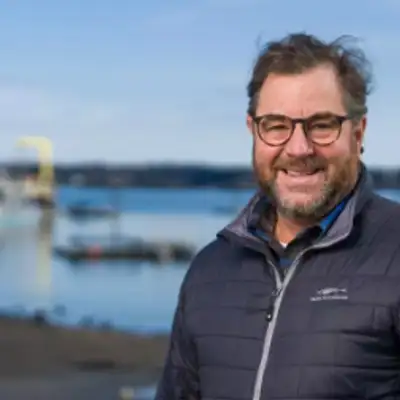
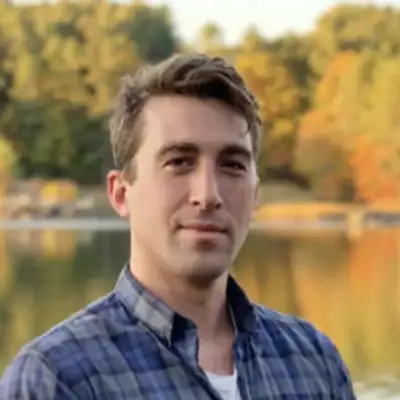
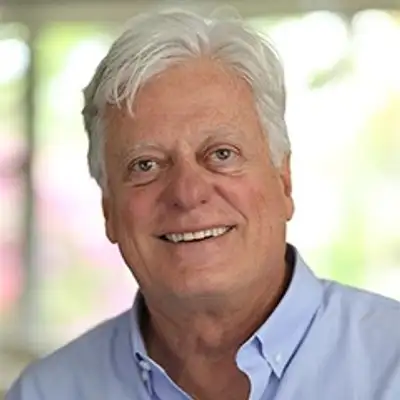
Get Aquacultured! is a new limited-series podcast from University of New Hampshire The Center for Sustainable Seafood Systems that dives into the many sides of aquaculture—straight from the people who know it best. Hosts Gabriela Bradt, Michael Coogan, Michael Chambers, and Michael Doherty share a lively conversation with industry experts, practitioners, students, and educators working in aquaculture. Together, they’ll bust myths, spotlight different perspectives, and bring the fascinating world of aquaculture to life. From science and innovation to classrooms and coastal communities, Get Aquacultured! explores stories you won’t often hear in the mainstream media—but that matter for our oceans, our food systems, and our future. Fun, informative, and accessible, these conversations are designed to connect you with the people and ideas shaping aquaculture today
Mike Coogan
Hey there, and welcome to Get Aquacultured!, the podcast where we dive into the deep end of the world's fastest growing food industry. On this podcast, we invite industry professionals, researchers, and educators to bring you inside the systems that make up modern aquaculture. So whether you're a curious eater, a coastal neighbor, or someone who likes to nerd out about ocean science, we're glad you're here. Did you know that more than half of seafood we eat today now comes from aquaculture? And now much of that comes from finfish farms, an industry that's feeding the world, stirring debate, and driving innovation all at once. To help us untangle fact from fiction, we're joined by Dr. Dan Benetti, professor at University of Miami and director of U Miami's experimental hatchery.
He's a finfish aquaculture veteran who spent decades studying, farming, and teaching the science behind raising fish for the table. On a personal note, Dan was the person who got me hooked on aquaculture as a student at UM over a decade ago. He'll share how modern finfish farms really work, what challenges the industry faces, and where we're headed next as we look to the ocean for more of our seafood. I'm your host, Mike Coogan, and today I'm joined by my co-host, Michael Chambers. From myths and misconceptions to the real science happening beneath those pens, we're taking you behind the scenes of an industry you might think you know, but probably don't. So set your nets and open your minds. It's time to get curious about the fish on your plate.
Let's Get Aquacultured!. You do not need an introduction. Dan Benetti, you are a legend in this world.
Dan Benetti
Don't start the man the myth.
Mike Coogan
But yeah, I'd like to introduce Dr. Dan Benetti. He's the director of finfish aquaculture, or aquaculture in general, at the University of Miami and a professor there and has been since, I believe, 1998, right?
Dan Benetti
That's correct. Amazing. Such a long time.
Mike Coogan
It has. And, you know, I. I owe many things to you, but specifically, I owe you, you know, my career, really. You got me started in aquaculture. You. You spread the bug, infected me back in, I think, 2014, and I've been doing it ever since. When I was down at University of Miami in grad school and I was actually working on coral work, and I.
I didn't officially get fired from the job. They said they ran out of funding, but I basically got fired from that position and, you know, wandered across the street to the hatchery there and met you and saw everything that you guys were doing there and, you know, get. Getting fired was the best thing that could happen to me.
Great group over there. You guys had a ton going on and. And we were growing cobia and mahi and Nassau grouper and pompano and some. Some aquaponics, some stone crab, a little bit of everything there. So it was very exciting. Best.
Dan Benetti
Too many species.
Mike Coogan
Too many species. And, and. And we'll get into some of that. But yeah. Without further ado, let's get started. I think the first thing is that we like to do with all our guests. And I'm actually curious because I know your professional side, but I'm curious to hear how.
How it all began. You're from Brazil, of course, but what was your introduction into aquaculture? How did Dan Benetti become Dan Benetti?
Dan Benetti
I was born to this man, really. Just like all of us, we know when, you know, when you reach that, what you really love it, right? I was not a good student in high school and I was terrible. But then I went to college and I discovered aquaculture was just, you know, and this was it from the worst student, I became one of the best because I really loved it. It was just. I grew up fishing. I still fish to this day, but, you know, and I think that's it.
And then I never look back. I've had a great career, but a lot of effort I put into it, a lot of passion. And it's kind of even radical because when I was in college, just like most of us, you, you know, you have long hair and a beard and all that stuff. And all of a sudden when I graduated, my. My dad told me, enough, I mean, you are on your own. And then I joined the Navy, the Brazilian Navy. And I.
I stayed there for eight years as the office of Naval Research doing aquaculture. So all I did was spawning mullets and working with that stuff. And again, it was actually great. And I learned in the Navy to certain discipline and to get things done. I mean, I'm not a discipline organized guy, by no means, but I learned to be led and to lead. And I think that helps me out quite a bit to get, you know, things going. But afterwards was a masters in Scotland and all a little bit of temperate species like you guys work with. Did. Did some work with salmon and then got back.
And then when I got back to it was then Miami, the PhD and then I lived in Hawaii, I lived in Ecuador. I've been around. But the job in Miami, once I. I got it has Been wonderful to this day because it never really got in my way. It allowed me to do a lot of things on the side. Always related. And both of you are aware of a lot of the things that I've done because you were there.
Besides being in academics and doing the research and all my responsibilities, I was able to really travel the world and do consulting and work with different species and. And to this day, I thrive on collaborations. I don't do anything alone. The first thing I do, say, oh, let's do a FAO project in Jamaica, let's do IMTA I'm going to call Michael immediately because I don't do anything alone, man. True. But this is probably, again, an asset because collaborations bring the best of all of us and get us going.
Yeah, I guess I answer to your question, Mike.
Mike Coogan
Yeah, absolutely. No, collaboration is key, you know, especially in this field. You know, it's so. So resource heavy. You know, you need. You need the tank space, you need the cages, you need the vessels, and then you need the. The brains as well.
And everyone knows, you know, something that somebody else knows. You know, you always hear so and so has forgotten more than he'll ever know, you know, from the old heads. But you can always rack it, you know, if you dig deep, you can always pull that information back out. Yeah, you have like, these, you know, hatchery gurus, you know, or like broodstock gurus.
I think of, like, Steve Kloeblen. I remember being there, and he, you know, he had a specific thing that he knew more than anybody else about. And, you know, you meet all of these. All of these characters that have the same obsession with you, but they're, you know, focused on something in particular. Everyone's got their strengths.
Dan Benetti
Absolutely. And again, if we need something.
How can I put it? We have our own expertise. We kind of know things, but our colleagues know more about specific topics than we do. So it complements one of the things. When I was young, when I was just graduating, I wanted to be the first one to do things, pioneer and do new things and use pieces and all that stuff. But over time, I've learned that we should not reinvent the wheel. We should try to use models that work and apply so that things can work, we can do new species, we can develop new technology, all our lives.
But if it doesn't make sense from the economic or social point of view, it becomes pointless. You publish the paper as we in academics, we have to do it.
I have to. To do what I had to do. But in reality, I always like to. To get things done and move into the practicality of it. And with that, collaboration was essential. I have never done anything alone, and I don't take credit for. For anything that we have accomplished because it was, you know, like. Yeah. With other people around.
Mike Coogan
Absolutely. You've had. Had some good teams. Now, you said you grew up fishing. What. What's the. What do you fish down.
Where are you from in Brazil?
Dan Benetti
Yeah, no, I. I am from the south. I'm from Porto Alegre from Rio Grande du Sul. And I studied in Rio Grande de Sul, which is almost at the border with Uruguay and Argentina. It's cold.
The water is just. I mean, the. It's probably as cold as New Hampshire. Really. It freezes and. But again, a lot of tropical species too. And what I used to fish was, well, black drum, for example. Okay.
Mike Coogan
Oh, they have that down there.
Dan Benetti
Yeah. And you know, like, we call papatera, which means. You see, it was a cyanide that. Very common, but mostly from the beach and from jets, you know, jetties. Yeah, yeah, so. But also diving Santa Catarina. We used to dive a lot and do some fishing, some groupers and.
Yeah, fishing was. Was always part of my growing up, my background. Yeah. Cool.
Mike Coogan
And what is your favorite seafood to eat? Fish or otherwise?
Dan Benetti
It's. It sounds fun. I love seafood. Everything. You just name it Mahi Mahi. Of course. I love it too.
But I love cod. I love salt cod.
Mike Coogan
Yeah. The Portuguese.
Dan Benetti
My God, you see my name, man. I salt cod. And I like to leave it a little salt. I don't take all the salt. People say, this is so salt, and say, well, it's.
It's by design. I like, like that with, you know, with potatoes and rice and all that stuff. And I love it. So if I would have to. To pick one, amazingly would be salt cod.
Mike Coogan
Interesting. Back to your roots.
You know, I. I've only had it once. I lived with a Portuguese guy when I was in Auburn, and he. His mom sent him salt cod for Christmas. The big Christmas dish, I guess, right?
Dan Benetti
Yeah, Easter mostly.
Mike Coogan
Oh, Easter. Okay.
Dan Benetti
Easter.
Mike Coogan
I think we had it in Christmas, but either way.
Dan Benetti
Yeah, Christmas too. Christmas, it was.
Mike Coogan
It was delicious, first off. And it's so flaky. The salt really gives it that beautiful flake cod. Already is. But he had it soaking in the fridge in water for like three days before. And I was like, what are you making over here? But it was fantastic.
And he did the same thing with. With potato, layered potatoes and everything.
Dan Benetti
Hungry. I haven't had lunch.
Mike Coogan
Oh, I'm sorry.
Dan Benetti
This is in Fact, one of our, my sayings, I tell everybody, hey, when they start complaining that, you know, there is no time for that, hey, this is aquaculture lunch. Might not happen. I'm sure you both relate to it.
Mike Coogan
Yeah. Unless you're an oyster farmer and then you could eat as you, as you, as you work with it.
Dan Benetti
Right. Or corals.
You should have stuck with corals, man. They don't move. They're there. You go back afterwards, they're still there. Yeah.
Mike Coogan
You can't eat them, though.
Dan Benetti
Well, that's true. Yeah.
Mike Coogan
That's a beautiful part of our, our industry is the, the culinary aspect of it sort of jumping off of that. We were talking about oysters, scallops, corals and finfish. What makes finfish aquaculture different to other forms of aquaculture? A lot of people when they think of aquaculture, they think of finfish aquaculture. But, you know, there's a million million different ways to grow all these different marine organisms. How does finfish aquaculture change from, from these other organisms?
Dan Benetti
Absolutely. It's. In fact, those are terms that we've been using a lot. Right. Generative and regenerative aquaculture. So an IMTA or oysters or that sort of technology, they would be regenerative because not only you're growing something, but you're actually doing, improving the environment and creating a lot. Whereas the generative, we have to really be focused on trying to be as ecologically and economically sustainable as possible.
Because just when we talk a lot about sustainability and I'm sure you guys are on board because nothing can be sustainable if it is not economically viable. Sure, but we need to. But this is one of those situations in, where we focused on is that sustainability and ecological efficiency comes hand in hand with economic efficiency as well. Because, for example, we all know that in the form of aquaculture fin fish, at least marine carnivorous fin fish, of course it requires a lot of fish meal and fish oil, all that stuff. So we are using less and less of that. We're reducing the levels of inclusion of those ingredients in the feed, looking for alternatives. We have a, a strong nutrition program here.
And the direction is always to become, you know, to reduce, to look for alternative sources of any of protein. In fact, we're focusing now on the black soldier fly, which we're doing. One of our PhD students doing quite well on that. But again, we understand that scalability and to use that to try to replace fish meal as with an ingredient such as black soldier fly meal is not going to fly. Literally. So what we try to do is to actually transform those larvae into real, real bullets in terms of accumulating a lot of good, good stuff to use as additive, not as an, an ingredient say to utilize like 1% or 2% of black soldier fly. And the, the mechanism that we're using now.
We tried everything I say we is a PhD student Julio Camperio and Jorge, the leading of the nutrition program. The they tried all types of waste to feed this, the Black Sea black soldier fly with all sorts of waste, organic waste from agriculture, from mixing, you know, from, from restaurants and stuff like that. But the best results were achieved using byproducts from fish processing. We are actually operate collaborating with the Atlantic Sapphire, the salmon farm in Homestead and we are using their, their byproduct to feed the, the larvae of the black soldier fly. And they have been accumulating a lot of Omega 3 and DHA and all that stuff.
So it's cool. But the difference again, wherever I'm trying to develop any new project, I immediately think of imta. It's a no brainer as far as I'm concerned. As far as the Offshore, as you know as well as I do, I mean it's too high energy, it's going to be difficult because you know, the nutrients really, you know, are taking over by the environment before it could benefit. In a high energy environment, that's my opinion, to benefit macroalgae or mollusks. But in more protected areas, such as the area that we're beginning to work in, Jamaica for example. Let's use that as an example.
Clearly the IMTA concept is a winner and again that's where it comes in. We do the generative aquaculture, but also we add components of regenerative so we become sustainable and do two, three crops instead of one. And I'm not sure if I answer your question directly but I mean what people want to eat is again it's salmon, it's tuna, it's cod, it's you know, all this seriola, the compact, the carnivorous fish. So we can only try to get better at raising them but we're not gonna stay away from using, you know, fish meal and fish oil. We can reduce, but there is a limit.
Mike Coogan
Yeah, exactly.
Michael Chambers
So Dan, curious. You know, obviously we have a giant seafood deficit in the United states. It's over $20 billion that moment. What are the biggest bottlenecks for us to actually create aquaculture production in the United States in your mind?
Dan Benetti
Michael, you and I have been, have been fighting for this for what, three decades at least or Yeah, I mean, I think Mike Coogan wasn't even born when we already doing this. But no jokes aside, we've been doing this for the longest time. We haven't been able to be competitive because of the time that it takes, the complexity of taking, Getting permits and the high cost of labor. It's very difficult without subsidies for us to compete with what's being done abroad. But that doesn't take away the entrepreneurship of the Americans, because if they cannot do it here, if we cannot do it here, we. We do it abroad. I mean, most of these companies producing abroad in aquaculture, I mean, they belong.
It's our, Our technology, our investment, and it comes back to us. The final product comes back to us.
So, I mean. Yeah.
Michael Chambers
Do you think with the current administration, there might be opportunities for us to break down some of these permitting challenges?
Dan Benetti
It's amazingly and coincidentally maybe that we just came out with a new executive order. Right. Yep. From the government that seems to be opening up some venues of increased funding and opportunities for us. And. Yeah, I think the answer is yes, Michael. I, I think there's going to be a point that we, we have got to do something.
We cannot just continue to import all the seafood that we. We produce. Yeah, yeah.
Mike Coogan
I mean, the tariffs could do. You know, they'll. They'll bring up the import price. I don't know if that's necessarily going to mean that suddenly we're producing a lot. But you touched on, you know, incentives for, for farmers here. You know, you look at the dairy grain, you know, terrestrial agriculture, and they've got subsidies on pretty much everything. None of that really exists for, for aquaculture in general.
And when it does, it's interesting. A lot of the time, you know, there's all these grants for, like, small farmers, for oysters and for kelp and things like that, but you never see anything like that for. For fish, for finfish, aquaculture, which is what Americans want to eat. It's kind of funny, you know, it's true. You wonder. You wonder who's coming up with all of these different projects and funding sources. It's the average American.
Nothing against seaweed, but they don't. They've never eaten. Even eaten seaweed except for a little bit of nori and a sushi roll. But they want to buy, you know, a cod or a haddock or, you know, tilapia or whatever. They want to eat salmon, tuna, and they don't know where it comes from.
Dan Benetti
Absolutely, you are correct. And again, being a sea grant here, we, we have to Be frank. Because we're getting less and less money is getting harder and harder to get less and less money to commit with more and more to the point, that is sometimes. It has happened to me that by the time I was going to hit the submit button, I changed my mind.
It wasn't possible. I mean, you are asking for $60,000 to do enormous amount of work. You know what I mean?
We keep charging. We. You know, we've been training people like yourself, Mike. We have been helping. Forming a lot of people who are all over the world for making a contribution here. NOAA Sea Grant has funded so many students, so many technologies, and now a lot of those guys running facilities all over the world. Even in Dubai or, Or you name it.
I mean in Ecuador, Mexico, Panama, Costa Rica. Our guys, your classmates, my people who train with you. With you.
For example, Yoli. I think Yoli was your classmate, right?
Mike Coogan
Little after me, but yeah, little after, yeah.
Dan Benetti
Is now with the IATC and she's doing a lot of work with.
Mike Coogan
She's doing amazing.
Dan Benetti
Yeah, amazing. So it's, It's.
It's great because what. What makes me proud is that my greatest asset of everything that I've dedicated my career, my life to, it is our network. It's you guys. Right? That's what makes us great. Whatever I need, I just pick.
Michael Chambers
Absolutely.
Dan Benetti
Yeah. Right.
Michael Chambers
It's the aquaculture family.
Dan Benetti
Absolutely. And I have something funny too to say because I joke that I know of things that are happening all over the world before they happen. Because our guys are inside. Except in my lab, that nobody tells me anything. Yeah.
Mike Coogan
So you've touching on tuna and what Yoli's doing. So is she based out in Panama at Achotines?
Dan Benetti
Well, she's. Of course, she's an Achotines. She's one of the leading researchers now, but she's based in San Diego.
Mike Coogan
Okay.
Dan Benetti
She does a lot of. She goes to Japan, but. Yes, she goes to Panama too.
And we're going to Panama. Why don't you guys come and join me?
Mike Coogan
Hey, I would love to go.
Dan Benetti
That was.
Mike Coogan
That's one of the most beautiful places.
Dan Benetti
Make 2230. We will reserve a seat for you and Michael.
You too, man. Come over.
Michael Chambers
I. I know. I've always wanted to take you on your offer.
Dan Benetti
Join us. We, you know, we go. We rent a car and we go around. We're gonna be at open blue at the hatchery at the end.
Offshore, by the way. Yeah, there's a lot going on. And then we go to Achotines. To the lab. Be great.
Mike Coogan
You know, Dan, I think, I think I'm the only person that's ever audited a study abroad. And it was your, your class.
I didn't officially take it. You were like, yeah, come on, join. Yeah, and it was great.
Dan Benetti
You know, had I known that you were only auditing, I wouldn't have paid.
Michael Chambers
So when is the, when is the course offered?
Dan Benetti
May 20th to 30th. But don't look at it as a, as a course, like a formal course, etc. Mike. No, he was there. It's kind of a workshop. Everybody interacts all the time. If you go, you're going to be teaching, you're going to be doing two or three classes on imta, and it's truly an interaction.
I don't think we're even teaching any formal theoretical class lately. Just put the people to work and we work. You know, we meet with the CEOs, etc, and there's a lot of cool things going on, which, if I may, I mean, I don't want to monopolize here, but I guess I should, right?
Mike Coogan
Yeah. This is your microphone.
Dan Benetti
Oh my God. You shouldn't have told me that, man.
I can talk. No, but it's always such a pleasure. I feel like I'm home here talking to friends. But for example, what's happening now? Everybody talks about towards carbon neutrality, circular economy, blue economy and what, what we are really. And actually this answers part of your initial conversation, Mike, that about the fin fish aquaculture, for example. What Open Blue is doing now is admirable because they have, they are, of course, they're vertically integrated.
They do everything they have from the hatchery and they have all the way to the market. But the thing is that all the waste from the byproduct, the byproducts from the processing was wasted. Not anymore. They have a rendering plant. They have the processing plant, but they have the rendering plant now. So everything there is zero waste. Everything that is coming out goes to this rendering plant that they transform into, into a meal, like fish meal and, and oil.
It cannot be used for feeding the cobia or any of the species, but it goes into all, you know, like swine and chicken. Zero waste, guys.
Michael Chambers
Wow.
Mike Coogan
And for anyone listening, this is Open Blue. They're the largest, I believe, offshore finfish farm in the world. And they grow cobia off of Panama.
Dan Benetti
That's true. They have, they are doing quite well. They are doing. They have 22 submerged caves, sea stations. Michael was one of the pioneers on that model. To this day, I mean, it's challenging, right, to operate and to run those, that operation. So what happened is that it's of course from the environmental perspective the impact, the footprint is minimal in relation to what it produces.
But it is expensive to raise that fish under those conditions. So when you reach the market it has to be offered at the high price to compensate for the high production cost. And once he hits the market, it competes with other white fish of lower value. So that is the struggle that we need to find a way here, but again towards zero, zero waste. And just to complement that part, the skin is being shipped to Europe and they extract collagen from, from that. So it's really truly zero waste. And I love that concept.
Mike Coogan
Yeah, no, that's necessary. Now you, you mentioned, you talked about open blue, that's offshore. You mentioned Atlantic Sapphire. That's obviously a huge land based salmon facility just outside Miami and Homestead. What do you, what do you, where do you see the future? In the US specifically, but you know, globally as well. Do you see it as land based finfish aquaculture offshore?
Does it depend and then we'll follow up after. But I'm also curious, do you think it all has to be on this massive scale? These are both like some of the largest companies producers in the world. Right. But there's also sort of, I don't know, Michael Chambers method. Right. Small community based imta, you know, many small farms to feed the village rather than one big farm to feed the city kind of deal.
Dan Benetti
This is the concept that we are trying to with FAO develop using Jamaica as a model. And Michael is going to be a part of it, guaranteed. Mike. We couldn't follow up in phase one because the budget is limited and everything is, you know, how you go. But if we go to phase one, that's the model that we want to do it like smaller farms, several around the island and looking for the right place and etc. Etc. This is a great concept.
It won't work everywhere, not in the United States. I mean you cannot go small in the Gulf of Mexico or Gulf of America, whatever you want to call it. Yeah. But the reality is that it's not for the small, for the heart fainted. Let's put it this way Ras all, we all have some reservations. The technology is amazing. It's a marvelous piece of engineering and it works.
But I make, I say works between quotation because it, it will always be geared towards a niche market. You're never going to be able to produce 10,000 as many want to do. I don't believe that, and forgive me, the company itself, I'm not criticizing them. In fact, eight of our former students, your colleagues, Mike, work there. So we're backing them up. We're very supportive of their operation. But I think again, they will operate.
They can provide salmon to the south, Florida to Florida, but they are not going to be able to provide or compete with Chile or Norway to feed the entire United States or the world. Sure. Now for us to continue to, to look at the big picture, for us to continue, if we want to meet those 30, 40 million metric tons that we need to produce, it has got to be offshore. There is no more. The resources are exhausted in land. Water resources are exhausted, land resources are exhausted. Coastal areas, you cannot compete.
There's so many activities. So if you look at that as a process of elimination, you can do small scale, as we discussed before. But the big one, to produce enormous quantities of feed, it's going to have to be the offshore. The, the Chinese already realized that as we know they are developed this kind of farms in the offshore. And it's happening in Chile, is happening in Norway. It's, it has to happen here too if we want to, to feed the masses, so to speak.
Michael Chambers
Right. So Dan, let me ask you this then. If, if I was an investor and I came to you today and I have a check, it's unsigned, there's no number on it. And I said, Dan, I want to get an aquaculture, what should I do? What would be the best thing to invest in to today? What would you.
Dan Benetti
You guys are smart. You're right, you asked the right question. Well, this is a very good question. I'll tell you what, because I get divided one, the, the main question that I would ask you right off the bat would be are you willing to invest in technology? Because the value of technologies is great. But again is a two edged sword because for example, let me use the black fin tuna as an example tuna. We've been working with tuna for the longest time and with our colleagues from all over the world, we believe that we understand what it takes to close the cycle and produce the juveniles.
We are very close to it, but we don't have the facility and the money. Now the blackfin tuna, for example, is a great model because it is a true tuna and we can raise them in six months to 10 months and already have a fish that is large enough for loins and for sushi. Sashimi is not going to be a gigantic tuna that would compete with the blackfin tuna in the Japanese market. No, but Something that you know will reach, will be available to everybody. High quality, et cetera, et cetera. But we don't have the technology yet. For example, we have a big tank here, 230,000 gallons or something like that.
Maybe more than that. 230,000 liters. I don't know how much that. It's a big tank that we bought back in the days when we were funded for the blackfin tuna. But that funding exhausted. We never give continuity. But Michael, I would say if see would be a good investment because I would think with $1 million would be enough to get the blackfin tuna cycle complete in producing juvenile.
Now then you would ask me, no, I'm an investor, where am I going to raise them? We'll cross that bridge when we come to it. But the value of the technology I believe would be a good investment because it would be valued at more than what you would invest. And I am certain that we can do it. Now, the other side, the flip. How do you say the other side of the coin would be? If you want to do land based.
And again, it would be limited to the production. The flounder, the hirami, the Japanese flounder would be a champion. Gotcha. Because to me is the number one candidate for ras aquaculture in land based systems. That is money in the bank.
Mike Coogan
It's like stacking pancakes.
Dan Benetti
Yeah, exactly. Exactly the top of each other, I would think.
But nobody's doing it. We brought this fish from in 2015, the broodstock. It's an interesting story because they were Fish and wildlife apprehended in coming from South Korea without fluke permits. They were alive for the live market. And then he went into the aquarium network. Ended up in Chicago in the Shedd Aquarium. We know people there.
One of my former students too, Enrique Mouser, you might know Mike yet. Enrique calls me and say, hey, this fish is available. And I said, well, bring it in, bring it in.
They brought the fish here in 2015. In a week these fish were spawning and they never stopped. To this day, spawn survival is good, the performance is great. But no one, it has gotten no traction in the United States. Go figure.
Mike Coogan
Now are these. Are these F1s?
Dan Benetti
Yeah. No, the broodstock is already F, F, F2.
Mike Coogan
F2. Okay.
Dan Benetti
Yeah, F2. And they are not, they are not in bread because we take care of that thing. But then, Michael, I will ask that question now.
If you had. Well, for the flounder would be more than a million dollars. But if you had money, you wanted to invest, what would you do first?
Between the Two. The two questions, the two options that I gave you. But then you're all.
Michael Chambers
Well. Before I answer that, I'd like to say that I think I have an investor for you on your olive flounder project in Providence, Rhode Island. He's the owner of Fearless Fish and he specializes in sashimi markets, particularly fish that have been processed using Ikejimi methods. And the prices he gets for his fish are outrageous. It's going too high in places in New York City. So this would be a niche market and I've actually mentioned this to him, but at some point I would like to have you two connect and chat more about.
Dan Benetti
That would be great. I think it would work. The performance of this fish is outstanding. The survival is great. The FCR is great. Everything is great and you're gonna be part of it. Set Mike here as a conduit.
Mike is gonna carry the weight for it. No, this is, this is something that we can make it work. Yeah. Okay. You can sell live, you can sell any way you want.
Michael Chambers
Yeah, that's encouraging because we're going to start selling him fish this year directly. And he wants our steelhead trout in the round.
And, and we have to. There's a special way we, we harvest them, process them, spike the heads, and it's all about the story, the handling, and he wants the fish in the round. Okay. And he will then process them further to his customers demands. But he's getting like close to 40, $42 a pound for fillets to these marketplaces. And he said the fish that is most sought after is flounder, and he doesn't have it.
Dan Benetti
We had a visit from a potential investor too. The guy has a fish market that is doing very well in Rhode Island. Not going to start saying names, et cetera, et cetera, because we don't want to advertise anybody. But it's very interesting too, because this is a fish that everybody wants and I think it's a winner, really. Let me put it this way. And again, I've been doing this for longer than I would admit it. I think I've been working with aquaculture for 40 years.
At least, at least 20 different species. Hirami, number one.
Mike Coogan
If you're going offshore, you know, assuming you have not closed the cycle for blackfin tuna, you know, has been done for yellowfin, sort of for, for bluefin. Right. But what you are, you're the tuna guy, but tuna included. But anything else, what would be your, your offshore species you would go with if you already have the infrastructure.
Dan Benetti
You see you just call me the tuna guy. I'm not the tuna guy. I am a guy who have connections with tuna all over the world.
Mike Coogan
Hey, you wrote a book, so that makes a right.
Dan Benetti
The book I edited a book that is despite myself is a great book. But why is is it a great book is because there is like 30 or 40 authorities. The best tuna people in the world contribute for that.
So we know what's happening. We know, you know, the bottlenecks. And the reason the Japanese are doing is that they have been doing this for 50 years and they got a lot of help from the ground. I can tell you the whole story about Japan, but they are doing it. And maybe 10 to 20% of all bluefin tuna, the northern bluefin tuna that has been stocked now for grow out is coming from hatches they're doing. There is a whole. We can do a whole podcast just on that.
But having said that, we're still. The. The yellow fin tuna hasn't been done because the, the. The commission, the iatc, you know how great those guys are. The tuna spawn, the yellow fin. But this has not been their priority. They never focused on doing that.
And when we go there, we spend a month, we spend two weeks. Sure. And then we leave and then, you know, they do their trials. They produced a couple of thousand fish here and there, but there was no continuity. But the reason I like the blackfin tuna again, because we don't want to compete with the. The bluefin tuna needs to be as big as a dog short.
Mike Coogan
Yeah.
Dan Benetti
To reach the market and the blackfin tuna, you can develop a different market. Good quality loins sashimi, because they will be fatter, they will be shorter and deeper captivity. So. Okay. But you said no tuna. All I'm talking about is tuna.
Mike Coogan
No tuna is okay. If you were gonna stock a pen, if you had $5 million and you were going to start an operation and you already had the net pen infrastructure, would you do blackfin tuna?
Dan Benetti
Well, if we had the blackfin tuna, I would, I would give it a shot. But we're not there. We're waiting for Mike to invest, Michael to invest. And again, I'm back to, to what I said in the beginning that I like nowadays I like to keep my feet on the ground. I would seriously consider that. Red drum. Redfish.
Mike Coogan
Red drum.
Michael Chambers
Okay, that's good to know.
Dan Benetti
It's a winner. It's a win, right?
Michael Chambers
Yeah.
Dan Benetti
There is a market.
Mike Coogan
Huge market.
Dan Benetti
Hardy is great, is relatively easy. Nothing is easy. But there are other species as well. But I wanted To I would like to put that kind of a top of the list. But then there's of course the red. Red snapper.
Mike Coogan
Yep.
Dan Benetti
There is the cobia itself, the seriola. You know, I don't want to. The problem with pompo, I'll tell you what, the problem with pomp, it's a great species. The problem with pump is that the Chinese is producing and selling delivered to the United states for A$50 a pound. How can you compete with that?
Why would anybody with. I saw it at the. The Boston Seafood show. They were offering this project $1.60. And I said, but how about delivery? Said it wouldn't make much difference. This is the price.
Michael Chambers
Wow, that is cheap.
Dan Benetti
But the other species we're talking about, of course others are saying, but for example, Mauritius. Well, actually the red rum the Italians discovered they're producing red rum there. And you go to sashimi market in sashimi restaurant in Rome, you can eat the red drum. So of course the Israeli are producing and capitalizing from the juvenile the production. And also in Mauritius they are doing it and they are exporting everything to the United States state and they can't.
Mike Coogan
Produce enough Mauritius off of Africa.
Dan Benetti
Yes, they do red drum.
Mike Coogan
Really?
Dan Benetti
Yeah.
Mike Coogan
Okay.
Dan Benetti
Red drum is a good species. I'm trying to push it. Nobody listens to me. Ever.
Mike Coogan
No, we agree. We've got some red drum coming in the works as well. Yeah, I think it's a fantastic species.
Dan Benetti
We probably should call it red fish. It's more appealing, right?
Michael Chambers
Yeah, yeah, that. I like that better.
Dan Benetti
Yeah.
Michael Chambers
But you know, Mike and I have been working on trying to get some projects going in Puerto Rico and the US Virgin Islands. And so do you think that would be. I know it would be a great species for those areas, but are they indigenous to those areas? Are there going to be issues trying to transport them there?
Dan Benetti
Absolutely not. In fact, we just had the visit of one of Portuguese representing a very large feed company on his way to Martinique. Martinique is producing and he's getting back into the. Ten years ago they produced red rum redfish. So Martinique is a producer and they will expand their activities. We're shipping to Jamaica their red drum. We're not shipping the.
The red snapper because it was not in this season. By the way, they just be resumed spawning the red stopper. But we're still far from making it commercial. Whereas the red drum is commercial.
Michael Chambers
So it is.
Dan Benetti
Yeah, yeah, it wouldn't be a problem. I think that if you want to do red drum in. In Puerto Rico, we're in. We are offering to collaborate if you would like to.
Michael Chambers
Absolutely. Well, you're the first person writing a call if we get a permit and.
Dan Benetti
The. The thumbs up.
Mike Coogan
Yeah. Now behind you of course, you've got a mahi mahi dolphin fish. And you've grown those for many, many years. And they're beautiful fish to grow. They grow incredibly fast. But they're kind of vicious, cannibalistic little things that love to run into the wall. I've always wondered, well, I'm curious as to your thoughts on mahi in general.
They also spawn like crazy, which is great. But would you ever consider growing them in a net pen?
Dan Benetti
Great question again. Mahi mahi. Yeah. I own a lot to mahi mahi. My PhD dissertation was on mahi mahi. I've learned quite a thing or two about mahi mahi. Let's put it this way.
Been working with them for the longest time. We raised them since Hawaii and we raised them here. We raised them in Ecuador. It doesn't work. And why it doesn't work because as you said, they eat each other up. It's not that they bring the wall, they eat it. There cannot be two males in the cage or in a tank that they will kill each other.
That's why they have that. That hat is to bang. You can hear.
So we could try to produce an all female. But I think I would. Yeah, we could do that because the growth is astonishing. The quality of the fish is incredible. But they are extremely aggressive. Once they reach a pound and a half, two pounds when they start reaching maturity. If you tell me, Mike, listen, I have a market for a plate size mahi mahi.
It's a winner. Before we harvest them. Before they kill each other. Yeah.
Mike Coogan
Well so that's obviously not, that's not in the US but I mean everywhere else in the world seems to love their plate sized fish.
Dan Benetti
Yeah, you correct. But mahi mahi. We are not used to a mahi mahi plate size. Yeah, we tried. And you can do it in. Can you imagine in three months you have a. A pound and a half, two pound fish.
Mike Coogan
Crazy.
Dan Benetti
I mean it takes two years to get a branzino to that size. And we have the mahi the other option with Mahi since we are on it. Okay. Plate size a go canning Inside tin size 42 days. 42 days. You have a Mahi that is tin size. I mean.
Yeah, that market. And this has become a big deal in food market. Right.
Mike Coogan
We're. We're jumping in it too.
Dan Benetti
Exactly. And the third option that you mentioned to is that they spawn so much every day. Every other day. I know that for caviar you have to kill the fish and get the eggs when they're still inside. But food technology exists. We wouldn't do that with mahi mahi. But we can collect an enormous amount, millions of eggs every other day.
Obviously we cannot do it because they are hydrated, they are loaded with water, they are not good for eating. But if you dehydrate them and add whatever color or whatever even taste you want to, you could produce mahi caviar. So we have three options for mahi.
Not raising them to market size. But we have the caviar, we have the team size. Yeah. We have the plate size.
Mike Coogan
We need some entrepreneurs and investors.
Dan Benetti
We need. There have been some attempts in the past, but the problem that we run into is that they didn't have where to raise the fish we were producing. We did what we had to do. We had a lot of eggs, we have a lot of juveniles and plate sized fish. But the company didn't, the investor didn't. That is the problem here in the United States. For example, the red snapper, we got funding from NOAA Sea Grant to do the red snapper.
It doesn't always work with, for example with the Nassau Grouper, didn't work with the hogfish, it didn't work. So sometimes it just doesn't get to that. We can close the cycle, publish a paper, but clearly we're not getting anywhere. But the red snapper.
We produced 30,000 juveniles. We could not give them away. Could not. We ended up shipping some to the Bahamas. They are still there, like huge. With Ben Frisk, I think, you know, they're huge.
They're still there. And we shipped several thousand to the west coast to be stocked in a pond, in a brackish water pond. And what has happened is that they grew fast, everything was going well and then believe it or not, sound like a, you know, crazy or excuse, but the lightning bolt hit the pond and killed them all. Wow. I have pictures. If you don't want to, if you don't believe me. It's very sad to see all those fish floating dead, killed by a lightning bolt where they were reaching market side.
The red snapper, it's almost there too. It would be a good investment again if you're looking into the investment. But we've been talking about this because you're going to broadcast this to all sorts of people, right? Stake holders, so to speak. So there are good opportunities for investment. Yeah.
Michael Chambers
So Dan, going back to Mahi mahi. If you're only going to raise them to a pound, would you do it onshore or would you do it sea pens?
Dan Benetti
Again, a good question, because we could do it onshore because it's such a. You can, you know, there's. They're always cannibalistic, they will always be. But I think that one pound, you will still have a survival of maybe 10, 15, 20%, which is quite a lot because they spawn hundreds of thousands of eggs. So I believe that that could be done land based as well. But if you have a farm, if you have cages would be probably even better.
But cages in the United States? Where?
Michael Chambers
Right.
Mike Coogan
Yeah.
Michael Chambers
I'm thinking the Caribbean.
Dan Benetti
Oh, in the Caribbean. Yeah. We're gonna get there, Mike. Yes, we're gonna see. You're going to be part of it.
Mike Coogan
That's your retirement plans, the both.
Dan Benetti
You can't send Mike to Jamaica because he will never come back.
Michael Chambers
My son has a girlfriend in Jamaica right now, so he may never come back.
Dan Benetti
Yeah, good, cool.
Mike Coogan
What are you growing right now at University of Miami?
Dan Benetti
There's a lot going on here, as you know. John Stiglitz is also, you know, rising to the, to the occasion. He's a, you know, in the research track. Associate professor. He has taken over. He's got a grant for the flounder, so I gladly stepped aside. So it changed.
When I get the funding, I take over. When he gets the funding, he takes over. But we have, We. We don't have the mahi anymore. We lost the fund and we don't. I'm going to tell you about the ones we don't have and then we have everything else. And so the Nassau grouper, we don't have anymore.
The hogfish, we don't have anymore. The blackfin tuna, we don't have it. What else we don't have? I just mentioned something else. Yeah, pompano, we don't have any more too. So cobia. Yeah, well, the cobia is the main species for us here.
I mean, it's our bread and butter. It's. We work really hard on cobia. We're developing breeding program. We work with open blue Puna del Mar. We're doing really a straight collaboration with them in all fronts, from nutrition all the way to the circular economy. And they grow up.
But we have the cobia, we have the flounder. There's a company investing in the triple tail. Yeah, great fish. That's a good fish. Yeah. There's some work on the, on the yellowtail snapper as well, whose growth Is not that great. And, you know, but again, there's a little bit of work on seriola, too.
I don't want to minimize certain work, but it depends on funding. So those pieces, for example, the seriola. We are. We have some fish there. John is doing the seriola. But the technology for seriola is known as. You know, we have done quite a bit in the past.
We can resume with that word anytime soon. I think that's what we. Oh, yeah, we have the red snapper, too. Have you ever cultured snook? Well, we did a little bit of work in Ecuador with the local species of snook. We did some work here when I was still a student at Rosenstein.
It's in Mexico. Leonardo Bar, a colleague of mine, they also do some work. And Mike was in Brazil, and he is aware that they were doing snook in Brazil. But what I say about those pieces that we cannot really bring to commercialization if they're after. Even after a decade, decades of work, is that we don't do snook. Snook does us.
Michael Chambers
Okay.
Dan Benetti
Snook do us. Well, you know what I mean? I'm speaking figuratively, but many have tried and.
Michael Chambers
Yeah, interesting. Okay.
Dan Benetti
If you would come to me, Michael, you would. With your willingness of invest. Back to your question to come to me about mahi. I think we can do it, but we would have to disclose all the. Why is it that in 40 years many have tried. So many have tried, and all failed with my. Not technology.
Technology exists, but commercial viability. So mahi keep doing us.
Mike Coogan
And I think we should mention before we wrap up, some of the species that are being grown in the U.S. you mentioned seriola. That's obviously been commercial out in Hawaii and been doing well for over a decade. There is salmon culture and. And the seriola farm, Blue ocean. They're the only ones grown truly offshore. You know, there are salmon cages up in.
Up in Maine. There's a couple recirculating facilities, homestead and some things in Maine. A little bit of eel up there. But is there still a baramundi farm in Mass?
Dan Benetti
No.
Mike Coogan
Australis or whatever it's called now.
Dan Benetti
He moved to Vietnam, Right?
Mike Coogan
Vietnam. Okay. I know they had that operation Cage.
Dan Benetti
Cultures and there's the rest there. But it was more like a showcase.
Mike Coogan
Yep.
Dan Benetti
And the bulk of the production, I think nowadays 100 is coming from. It's a great species, a great fish to raise. And.
Michael Chambers
And the difference there is that they were growing them in tanks in Massachusetts in freshwater, as opposed to cage culture in Vietnam and salt water, so that the quality of the meat was very different.
Mike Coogan
Sure.
Michael Chambers
But Linas. Linas took his group down there for the latest Sea Grant Academy.
Mike Coogan
Great Falls they call it now.
Michael Chambers
I think it's Great Falls. Yeah, it's still open, but I think you're right, Dan. It's like a showcase for all the fish that come in from Vietnam.
Dan Benetti
Yeah.
Michael Chambers
And apparently the fish that they sell from the facility in Massachusetts is all live. They go to live markets, which is interesting.
Dan Benetti
Yeah. I think it's.
It's a good strategy to have developer showcase and, you know, and all that and a brand name and development and then bring it in from off. I don't think there's anything wrong with that as long as it's disclosed to the customers.
Mike Coogan
Yeah. And then what else we've got.
We've got Aquaco. We've got some pompano growth, some pompano grow.
Dan Benetti
It has recently changed hands.
Mike Coogan
Okay.
Dan Benetti
And there is. There are, you know, small facilities all over, but I think you've covered. Well, except for blue ocean marine culture in Hawaii. They're doing quite well, too. They keep producing, it says, the only truly offshore aquaculture operation in the United States. Yeah. You guys have quite a bit going on there too, right?
Mike Coogan
Yeah, we're doing some steelhead trout. There's a couple other trout farms. Nothing offshore. Yeah. But we're. We're. We're in state waters.
Dan Benetti
Too bad.
Mike Coogan
It's great cage culture. Yeah, it's pretty good, right? Very good. But what else? There's some striped bass, a little bit of red fish hybrid.
And then I. I have to say, you know, from Auburn, catfish, that's the king of all. We haven't mentioned catfish, but if we're talking finfish aquaculture in the United States, it's all catfish in the south ones.
Dan Benetti
Absolutely.
Mike Coogan
The forgotten fish of America.
Dan Benetti
It's a great. Is the fish that everybody loves to hate. But it's.
The whoop is awesome.
Mike Coogan
It is awesome.
Dan Benetti
It's. Yeah, it's going on.
Mike Coogan
Yeah.
Dan Benetti
Yeah.
Mike Coogan
So I. I have one other question I have to ask, because this is everybody's question. It was just Easter, and I brought some. Some smoked fish dip to a bunch of. A bunch of old Italians and they loved it. Everyone thought it was delicious. But they.
When I told them that I had grown that fish, they were like, oh, like fish farms. And I'm sure you get this question a million times. Everybody gets it all the time. But why do you think finfish aquaculture has a Bad rep. And then I guess sort of tying into this question, how has finfish aquaculture changed so much and in the last few decades? Because they're sort of, they're sort of the same answer, right?
Dan Benetti
Yeah. The technology has evolved. Maybe in the, you know, in the dark ages there were issues. Absolutely. But to answer to your question, I think it's that the, the people in the organizations working against it, they are powerful and we are still a relatively weak industry with low lobbying power and all that. But I mean it's not that it. Listen, we are feeding the world while they're talking and, and while they're criticizing, they're eating salmon and all the fish that is farmed.
I have many, many links I would like to share with you if you are, you are well aware of what's going on. But I, since I teach about it, I had a couple of slides with all the links from all over New York Times, Washington Post and all that stuff. I mean in Manhattan of all places, eight, all the Goodman shops selling wild fish, including, I'm not going to disclose any names of certain Goodman shops, but they are absolutely well known. They were all selling wild salmon. New York Times did an investigative reporting and they took DNA sample. They were all farm. There was not one.
There was not one. And then the Washington Post assembled 10 top seafood chefs from the entire United States in Washington. And I have those articles. It's not that I'm making this up and blind testing farm salmon and wild salmon, the first six hands down, farm, they are fresher, they are fed. There are many reasons why we have a minute to, to just to comment on some of it like a say and I don't want to, you don't get ahead putting anybody down. And obviously the wild salmon is terrific. Even though 70% of those wild salmon are released from hatcheries that taxpayers money are funding.
But that's okay and they are great however they are caught, when they are caught, they may be starving for a week, migrating the world over and they are caught. And again, it's not me saying because I have to be responsible for every everything I say, but it changes hands five to seven times before reaching the final customer. Can you imagine what comes to you after two weeks of handling in the fish that might have been starving now farm some Chile, Norway, Faroe island or, or Canada or whatever. They are harvested today, they're processed overnight. The next days in the market they are harvested. It's prime with the right level of fat. And you know, they starve the fish for a few Days you cannot.
And it's always there year round. It's not seasonal. Right, right. So there are many reasons why farm fish is taking over our dinner table. And this, I take this quote I think was from one of these Washington Post or one of these newspaper. But I have the links if you'd like to, to have or if you'd like to share with your.
Mike Coogan
Yeah, we can, we can post them in the description. Yeah, yeah, yeah, no, absolutely. I think you also touched on it before. You know, sustainable has to be economically sustainable as well. And, and feed is the biggest cost of an operation. Right. So if you're wasting feed or polluting the environment, you're wasting a lot of money.
So it's not in the best interest of a facility to do that. You also mentioned, you know, in a high. What the reason why IMTA doesn't work necessarily offshore in these exposed environments is because the nutrients, they're gone pretty much immediately. You're not impacting that, that surrounding water. I mean if you have high flow area, deep water waves, I mean whatever, whatever waste is coming out of the fish, they poop. That stuff is gone.
Dan Benetti
Yes.
Mike Coogan
Simulated by the environment immediately.
Dan Benetti
Yeah.
Mike Coogan
And you know, we've done those studies.
Dan Benetti
Yeah, I know you guys focused on that. We did that study in Panama too. The assimilation capacity, environmental capacity of assimilation of the open ocean, high energy environment as you put it, with strong currents and greater depth. It's amazing.
Like 500ft from the farm. You cannot detect anything more.
Mike Coogan
Exactly.
Dan Benetti
Cool.
Mike Coogan
Well, Michael, do you have any other questions?
Michael Chambers
I. I think this was a beautiful episode, Dan. I really appreciate your, your information, your, your passion for what you do. You've inspired both of us for, for many years and we just thoroughly enjoy working with you now and hopefully more so in the future.
Mike Coogan
Sounds like we got some projects coming up.
Dan Benetti
Thank you. I really appreciate, it's been a pleasure being here. I mean I feel like. Do I have to pay to be talking to you guys or. It's free.
Mike Coogan
You didn't sign it yet, did you? Yeah. You're paying us. No, it's big money.
Dan Benetti
I would pay to do this anytime, you guys. I would pay to do this again with you guys.
Mike Coogan
Well, next time we're, we're down in Miami area up here. We'll have to grab a beer, have some fish.
Dan Benetti
Anytime guys. Anytime. Real pleasure. I have great respect and admiration and friendship for you guys.
Mike Coogan
Yeah, feeling mutual. Now the, the one last thing is if anyone wants to find out what you are doing, I don't know if you're on the socials or if University of Miami Aquaculture is where. Where can people find you?
Dan Benetti
Well, again, my email signature. I have the website and. And, yeah, um, Aquaculture.
You go to, um, Aquaculture. If you. If you Google um, Aquaculture or University of Miami Aquaculture, you'll be there. Or they can reach out directly to me.
We're always open to. Absolutely. Yeah, you're right.
Mike Coogan
Yeah.
Dan Benetti
Well, good.
Mike Coogan
It's been so good to talk to you, Dan.
Dan Benetti
Thanks. My pleasure. Really appreciate it.
Michael Chambers
Such a pleasure.
Mike Coogan
Yeah, we'll let you get to dinner.
Michael Chambers
See you soon, Dan.
Mike Coogan
Yeah.
Dan Benetti
Okay.
Mike Coogan
So good. Take care.
Thanks for listening. Each episode is sustainably culture here at the University of New Hampshire and produced by Talia Katreczko. Get Aquacultured! is funded by the EE Blue Aquaculture Literacy Grant and supported by NOAA and the North American Association for Environmental Education. Subscribe today and listen to more episodes wherever you get your podcasts. And if you like what you heard, leave us a review. We'll catch you next time on Get Aquacultured!.