Subscribe
Share
Share
Embed
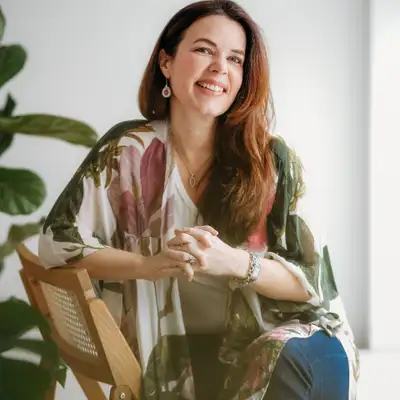
The Words in the Wilderness podcast is for those who have the conviction to make changes in their life as they drag their feet through the messy middle, crying into the void "it ends with me."
Led by Jacky Power - The Therapeutic Poet - these are conversations that look underneath the label, the diagnosis, the tidy explanation, at what's actually going on.
If you've made a decision to change your life and now you're in that wobbly, lonely bit where nobody quite gets what you're going through, I made this for you. Because I've been there. Many times.
Each episode starts with one of my own poems, using therapeutic poetry to set the scene. Sometimes it's just me, unpacking human tricky things. Sometimes it's a guest - a therapist, a coach, someone whose lived experience has taught them something worth passing on.
We talk about leaving what doesn't fit anymore, about breaking the patterns you inherited and don't want to leave as your legacy, about all your human tricky things that you've maybe been taught to hide.
I'm Jacky Power and I'm on a mission to rehumanise, one poem at a time. Reminding you that you have permission to feel and use those feelings as data to decode, not symptoms to squash.
Follow Jacky on Instagram: @the_therapeutic_poet
Find out more: www.jackypower.com
Listen to Jacky on Insight Timer: www.insighttimer.com/TheTherapeuticPoet
Join her on Substack`:www.jackypower.substack.com
**WORDS IN THE WILDERNESS — EP07**
**Guest: Nicole Runyon**
---
**Jacky:**
Hello, this podcast is called Words in the Wilderness and we're diving into the wilderness of parenting today with Nicole Runyon, author of *Free to Fly*, mental health professional specialising in child development. Listen, I need you to hear something before we jump into this conversation. If you feel like you're failing as a parent, if you're drowning in guilt about screen time or beating yourself up because your kids won't eat vegetables, or wondering why everyone else's family looks so perfect on Instagram while yours is in chaos — then stop right there. Because Nicole and I are about to blow apart some of the biggest lies that you have been sold about parenting.
That kid who got a head start learning to read on an iPad at age two — they're not a genius. In fact, we're doing the exact opposite of creating geniuses. Did you know that 90% of kids start out highly intelligent before school, and then that number plummets?
We talk about why the struggle — the physical difficulty of learning guitar, or working through conflict with a sibling, or feeling frustrated — is exactly what makes our kids' brains grow. Why removing all discomfort is actually stealing their resilience. Nicole tells me about a client whose little sister seemed behind in language development, but really all her peers had just been artificially accelerated by apps. And we talk about why that matters more than you think.
Something as simple as letting your kid order their own food at a restaurant — that's building their autonomy in ways that reduce sibling conflict. And those Sunday dinners where everyone shares one thing they appreciate about each other? That's creating the foundation for siblings who actually get along.
And here's the thing that hit me hardest in this conversation. Nicole says that you — with all your instincts, your knowledge of your child, your imperfect humanity — you are more powerfully positioned to help your child than any professional will ever be. But we have to talk about guilt first, because guilt is getting in the way of you trusting yourself. Nicole's advice on this: don't run from it. Be with it, because it's the only way through.
This isn't about adding more to your overwhelmed parent to-do list. This is about stripping it all back. Connection over perfection. I've got a poem about that. Messy humanity over filtered feeds. So if you're tired of swimming against the tide and ready to understand what your kids actually need — not what Pinterest or an Instagram reel says they need — then this conversation is for you. Let's get into it.
---
**Jacky:**
Welcome, Nicole, it's great to have you here. Now Nicole, you're a psychotherapist, you have worked with children and adolescents for what, 20-plus years?
**Nicole:**
Thanks, it's great to be here. Yes, yeah, about 23 years.
**Jacky:**
Yeah, and now you're a speaker and also an author — you've written this book, *Free to Fly*, which I have just finished reading and I'm really excited to talk about it with you today. Why did you write this book?
**Nicole:**
I wrote the book for parents and really anyone who is interfacing with our kids today — this generation of children — because I think we're going through a really unique time with how we raise children, how we show up in our parenting, how we show up as adults who are meant to guide our children to growth and maturity.
One of the things that I noticed in my practice quite some time ago, right around 2014, 2015, were children who were coming to me with major mental health issues. Many of them were coming out of hospital after their first suicide attempt. They were self-harming, eating disordered, panic disordered. And in my training — and as you know, as a therapist — many of these issues when they present in our clients, we have something to attach to. Something psychosocial, perhaps some trauma, a very explainable reason for why we're seeing what we're seeing. But that wasn't the case with these kids. The parents were loving and supportive, sitting right next to them in the treatment room, asking what they could do to help. And I was a bit baffled at first.
It caused me to lose my footing because I couldn't quite put my finger on it either. But simultaneously, while I'm getting this influx of mainly adolescent girls, I noticed that in our schools and in our community they had allowed smart devices during the day — they were calling it green light. If a teacher said green light, you were allowed during free time to be on your smart device. And so I saw a direct correlation between their usage, and mainly social media, and the influx of mental health issues I was seeing.
**Jacky:**
I think anyone who's interested in this, whether you're a parent or you're interested in the wellbeing of children, this is a really important conversation. Because we live in an increasingly pathologised world where there are so many disorders being labelled now. And I think what you're talking about is a real crux point — because it would be easy, or natural perhaps, for people to say there's no trauma here, so there must be some kind of disease. There must be some kind of pathology going on. But what you're saying is that actually what we're looking at more than ever is that real nurture versus nature debate. And environmentally — you look at any graph tracking the rise of social media or smartphones — and it's massive: suicidal ideation, depression, anxiety. So when you started speaking to parents about this potentially being an environmental issue, how easily was that received?
**Nicole:**
Yeah, that was interesting. Initially I had thought it had to simply be the smartphones, the social media, the gaming, the addictive nature of it. So I started speaking to parents and the reaction was that they were interested but nobody was really willing to do anything about it.
Over time I realised that the smart devices and social media are just symptoms of a bigger problem — which is parents and educators who feel that this is just the way things are. I heard a lot of: "Let's all settle down about the phones — people were very upset about TV when it came on the scene and we're all fine." And so what I realised was that ultimately we are pathologising children for the adults not feeling like they can step into their authority.
**Jacky:**
And I think it's really interesting — when you do couples work, you can talk about invaders that come into the relationship: the in-laws, work, addiction, different things. And I think what we're seeing is a bit of a paradigm shift, where rather than the device or the junk food being seen as the invader, the parent is being seen as the invader between the child and their smartphone, or the child and the junk food. Would you agree? It seems like a complete shift.
**Nicole:**
Yeah, that is a really great way to put it. Absolutely. Instead of the traditional model where parents were the people who said no to things that weren't healthy for children, now there's this influx of: we want to keep children happy and comfortable, we don't want to disappoint them, we don't want to hurt their feelings. And even to the point of an extreme mentality that it's abusive to cause disappointment in your children, or give them consequences, rules and boundaries.
**Jacky:**
But I think that comes back to the pathologisation of emotions, doesn't it? If you grieve for longer than six months, it can easily be called a grief disorder. I have this thing I say — that you can have feelings reverence or feelings reference. And we've ended up diving into feelings reverence, where every single feeling needs to be acknowledged and validated and that's enough. Rather than asking: is this person unable to emotionally regulate, or is it something to do with their personality, or one of a whole bunch of other reasons? We talk about everything as "it's bad for my mental health" — not "I'm grieving" or "I felt bitter" or "I felt angry." It all gets this shorthand of poor mental health.
**Nicole:**
Yes, yes. And I love that distinction — reverence or reference — because I always say feelings are a message. We need to allow for them so we can pay attention to what they're trying to tell us, and then come to the other side of the feeling. The idea isn't to keep the person in the feeling, it's to understand it and then get to the other side of it. And that's really uncomfortable. I think we are really struggling as a culture with allowing for discomfort.
**Jacky:**
As a culture we have been groomed to not feel discomfort. There's an app for everything, you can order something in, you don't have to have that difficult conversation — especially with AI now, you can put any difficult conversation into ChatGPT and it'll do it for you. So we're losing critical thinking, discernment — those human things that are so necessary when we're in relation to others.
**Nicole:**
Yeah, and I think you're right that our discussion is really bringing us back to this issue of pathologising essentially any kind of mental or emotional issue. This term "mental health" has gotten really overblown in the sense that we've made it so that we think it's a problem in the brain, a disease or a disorder, that we can't get ourselves out of because it's physiological or neurological. And I think that's a real detriment to the strength of the human experience and how resilient we can actually be.
**Jacky:**
And it's a real challenge, because people do have difficulties and those need to be validated. But it's almost as if the labels have become the badge of honour that validates the struggle, rather than us accepting: "OK, I call these our human tricky things." Rather than saying you have this human tricky thing so we need to make allowances, everything gets shoehorned into this or that label and people stand behind that as the only thing presented to the world.
**Nicole:**
Absolutely. And I see it more in children and adolescents because they're so immature in the sense that they don't understand how getting through something hard is necessary. When they're struggling, our therapy culture tells them something's wrong with you — and they become, in a sense, a victim. They wear that diagnosis or disorder as a badge of honour because they don't feel like they can get out of it, and nobody is giving them the message that they can.
**Jacky:**
Yeah, it's almost encouraged. So what have you seen happen with children who came to you with a diagnosis, but through the work you've done around their environmental influences and the stories going on, they've come through with a different narrative intact?
**Nicole:**
Yes — and that's because I shifted the paradigm in my practice from seeing children to coaching parents. It had been quite a journey from when I first started seeing kids in the early 2000s. Earlier on, parents were always involved in a child's treatment and willing to acknowledge their part in things. But over time — because of our therapy culture — parents were doing what I called the "soccer practice" model: dropping kids off, picking them up, putting a credit card on file. It was really hard to get them in my office or even on the phone. So I decided to flip the paradigm onto parents.
Parents who come and work with me actually see huge changes in their children very quickly, because so much of what's going on is within their power and control. The first chapter in my book is called The Mirror — as parents, our children are like little mini reflections of us. And so the work is really more within us.
**Jacky:**
And that is a bit of a shift, because there can be a narrative of: I'm a great parent, I'm willing to accept that my child needs therapy, I'm willing to put the money there — but it is outsourcing the problem. "Please come back fixed and then we can all carry on."
**Nicole:**
Absolutely. It's the idea that they're doing what they need to be doing, they're getting professional help, and so it's very easy to think that's the right way to go. And for some kids it absolutely is — there are kids with neurological issues who need to work through things in therapy. But that's not the majority. I estimated about 70% of my practice with kids were kids whose parents needed help, as opposed to kids who needed therapy.
**Jacky:**
Which is a massive percentage. In the book as well you trace the generational shift — those who had baby boomer parents were the latchkey kids, there was a kind of emotional neglect going on. And then there's been this shift to: I don't want my kids to experience what I did, so I'm going to be super attentive. But instead of authoritative parenting, you end up with permissive parenting. I have a poem I wrote about my own parenting journey that speaks to this pendulum swing. It's called Parental Reflections.
*I'm sitting here and thinking through all the things I didn't do,*
*wondering if I had my time again what I'd do to make amends.*
*I'd hold you closer when you were born. I'd make sure you didn't fall.*
*I'd be available all the time. I'd answer your every call.*
*I'd be firm in my boundaries as much as in my love.*
*I'd tell you every day that you were more than just enough.*
*I'm sitting here and wondering how that would have helped to change our now.*
*But I know that those amends would bring different struggles to bear,*
*different ways I'd let you down whilst you've been in my care.*
*So I sit here beside you for when you need me by your side.*
*And I'm sure I'll get it wrong again, and it won't be good enough that I tried,*
*but I'll try again and we'll try again*
*until we find a way to help you find your light again, to help you find your way.*
This is why this podcast is called Words in the Wilderness — I literally turn to words when I'm in the wilderness. And the wilderness of parenting is a real wilderness.
**Nicole:**
It is. As you were reading — I've heard this twice now — and it is so visceral. I feel the pain behind when we make a mistake as a parent. It is the most painful experience to self-reflect on. And...
**Jacky:**
And that rushing to fix, right?
**Nicole:**
And to acknowledge to our kids that we're not perfect and that we will keep trying, and that they need us to not be perfect. They need us to make mistakes.
**Jacky:**
100%. And when you're talking about building resilience — if we're imperfect and we accept our imperfections, what a beautiful lesson that is to our children. It means they can bring all of themselves to the relationship. And when they mess up, that bit gets accepted too.
**Nicole:**
Yes, isn't that the truth? When we model that we can make mistakes and make amends, then they can do the same for their own mistakes. And we can't prevent that.
**Jacky:**
One thing I found really interesting was the developmental stages — the reflexes, and the integration of reflexes. My understanding is I have two children with dyslexia, one has dyspraxia, and dyspraxia is seen as one where the reflexes haven't integrated properly. What you were saying in the book is that could potentially be as a result of not getting enough of the right type of physical stimulation. Dyslexia is often said to run in families — but that could be environmental rather than purely physiological or biological. I have three children and my youngest doesn't have either — and things were very stressful when I was mothering my older two. I'm really interested in this area, and also in not seeing it as something necessarily wrong. Because what I do recognise in my kids through their dyslexic thinking is that they have different abilities which bring a whole different complexity and interest to the world.
**Nicole:**
Yeah. So what I do for myself, my clients and my kids is I like to find root causes. If there's a problem on the surface, I want to know what's behind it. I started doing research because I was getting an influx of kids having horrible meltdowns well past the preschool years — meltdowns so extreme they were affecting the entire family dynamic. And again, parents were loving and supportive, no known trauma. So I started to learn about primitive reflexes and body inflammation, how that inflames the brain and cues the nervous system to go into fight or flight.
What I learned about held primitive reflexes is that essentially when kids don't move — including as infants when they're supposed to be doing the rooting reflex — these reflexes are all for survival because they can't communicate any other way than crying. And what I noticed with technology is that we are actually preventing movement starting in infancy all the way through the toddler years. These first five years are when movement scaffolds the brain for growth.
We want to see babies engaging in their primitive reflexes — not strapped into a smart bassinet. And then all the way through to crawling — we're not acknowledging that that is an actually important milestone. The CDC in the US has now taken crawling off the list of milestones.
**Jacky:**
That's shocking.
**Nicole:**
I think it has to do with the lockdowns — parents were working from home, not available to their children, babies were strapped into contraptions and not moving. And so rather than addressing that as a problem, the CDC said they don't need to crawl.
**Jacky:**
Can we just stop on that for a second? Because it's really important that children crawl, isn't it — for brain development?
**Nicole:**
It's very important. Huge. Because when kids retain their primitive reflexes — when they're not moving — that prevents the brain from growing. Movement scaffolds the brain for growth. They need three things: both eyes to work together to process visual information to the brain; both ears to process auditory information to the brain; and their body to physically cross their midline — right side over to left, left over to right. That's what crawling does: opposite hand, opposite leg. It scaffolds the brain for growth. A retained reflex is a reflex that did not move into the nervous system as it should.
Once they're done with those reflexes — usually within a year, though I think one takes three years — they absorb into the nervous system.
**Jacky:**
Yes — and if they're not absorbed, because this is what my two kids do have, and we did do occupational therapy early on — I do wonder, because I tightly swaddled them. That was the thing when my kids were young: swaddle them so they can't get out, for security and safety. And now it seems they were on their own little lockdown in their swaddle! And how exhausting it must be for them if it doesn't get integrated — from a neurosensory point of view their whole system is going: "That's new, and that's new, and that's new and that's new," all at the same time. Whereas as they get older, that all gets absorbed. And that's what sensory overload actually is — the nervous system doesn't have that filtering yet.
**Nicole:**
Yes, I think that's exactly right. And in the book there's a table that explains each primitive reflex, what happens if it gets retained, and what kinds of symptoms you would see on the surface. So many families have kids with these issues that aren't rooted in anything they can attach to. I want people to understand: if your child is experiencing A, B, and C, it could potentially be because of a held reflex. And occupational therapy and sensory motor integration are things that can actually help — there is a way out.
**Jacky:**
Yes — because neurologically, there is neuroplasticity. Things can change and grow. And if you do recognise that your children have this, there are things like occupational therapy. We also did some sound therapy — there's a whole learning programme with sound. And the sounds relate to certain parts of the nervous system.
**Nicole:**
The sound is fascinating. It's what I was talking about with both ears working together to process auditory information. What sound therapy does is put different frequencies in the right and left ear strategically, to allow for the integration of auditory information in both ears to be working together.
**Jacky:**
Yeah. And if you can help your kids in any of those ways, it's so important. The tricky thing is that there are so many distractions, and my kids didn't really want to do it. And as a young parent — my eldest is 20 now, so this is quite a while ago — there wasn't really the information around that this is actually super beneficial and worth doing the work for. And I think that's part of the key message of the book: you can read it and think, oh my goodness, there is so much that is wrong, and it can feel quite overwhelming. But the flip side is that it really is about getting back to basics — connecting with your kids and being human with your kids. We really need to embrace that messy humaneness again, don't we?
**Nicole:**
Yes, yes. When I first started doing this, I thought people were going to think: this is basic information, why are you telling us this? Because what I was advocating for was exactly what you're saying — simplify parenting, simplify family life, simplify our interactions with our kids. Parents need to know this is not complicated. You don't have to get your kid a slew of treatments or try to solve all these problems. You just have to connect. And that's a hard thing to do right now because we have so many distractions making it almost impossible to connect and be human.
**Jacky:**
Yeah, and it really is swimming against the tide. I found it really annoying that all of my kids' homework is via an app — things are pinged at them and they're told they've done it well. But the physiological act of writing with a pencil on paper really helps memory for kids. That's what commits it to memory. Doing it on a keyboard is not the same.
**Nicole:**
That's right. And the education system, just like parents and really everybody, has been sold a lie about technology — that it's going to make our kids smarter. There are lots of benefits to technology of course, but there is foundational work that needs to be done before we introduce technology as a tool for children. We're not doing that. We're using it as a supplement for teaching and education overall. And it is preventing children from doing all of the developmental tasks they need physically, emotionally, spiritually.
**Jacky:**
And I love what you said about a client who had a younger sister — the mum was concerned about whether she was developing at a good enough pace in terms of language and speech. And what you reflected was that all of her peers had been taught language through apps. So they were more developed, but that doesn't mean that development was the necessary, natural, healthy development of a human being.
**Nicole:**
Absolutely. I wish I could scream this from the rooftops — we don't create geniuses by giving kids a smart device to learn to read at age two. It's quite the opposite. You let their brain grow and develop naturally. And in fact, something like 90% of kids have high intelligence before they enter school. And then it slowly starts to whittle down to a very low percentage of kids with high IQ scores.
**Jacky:**
Which is really tricky for them — if they're going into school thinking they're super intelligent and then they don't keep that trajectory, what does that do to their self-esteem and identity? It's like whack-a-mole: is it a concern here? Is it a concern here?
**Nicole:**
Absolutely. And I've had kids tell me: "I thought I was smart. Everybody said I was smart. Why am I struggling so much in school?" And this idea that the struggle means you're not smart is a huge misconception. The struggle is actually what helps your brain grow. It's necessary.
**Jacky:**
Yeah, and it's completely along natural lines. Like in gardening — when you've got little saplings growing, if you expose them to wind, it helps them really establish their roots. And we are part of nature; we are nature. It makes absolute sense that we need things that challenge us to build our resilience. I saw an interview with Prince a while back — Guitar Hero had approached him to be the figurehead and he refused. He said the reason was because he loved learning to play guitar, and it was tough — it's physically tough, it hurts your hands. But once you learn it, the sense of accomplishment is just so great. We need those bumps and bruises along the way. That's what builds resilience.
**Nicole:**
Yes, absolutely. And that is what makes the brain grow. When we're doing something hard, something we hate — that is actually what helps us grow.
**Jacky:**
You also talk about food in the book and the impact that has on children.
**Nicole:**
Yeah, so ultra-processed foods, high in sugar — these are foods that are not easily digestible, they're causing body inflammation. And that inflammation cues the nervous system for fight or flight. This is why we're seeing so much anxiety, lack of attention and focus, and ADD-type behaviours. I like to get to the root cause. If we're seeing these issues on the surface, let's look at the diet. There's a high percentage of kids who react very well to elimination diets — their brain inflammation reduces and the symptoms reduce too.
**Jacky:**
And you look at what's built in the gut — most of the serotonin is built in the gut, right? Gut health is so important.
**Nicole:**
Yes, it is. And it's really hard to have proper gut health in the environment we're in — toxins are coming from everywhere. But we can mitigate it with eating whole, nutritious foods. Unfortunately, kids today are growing up with ultra-processed foods that are ruining their palates for good, healthy, whole food. So they become very picky eaters. I often just keep it simple for parents and recommend pairing high-sugar or carb foods with a protein or a good fat to slow that blood sugar spike — because so much of the behaviour we're seeing is that blood sugar spike. Then slowly start making changes. It doesn't have to happen overnight.
**Jacky:**
Yeah, keeping things really simple and basic. I went into a bit of a spin the other day because someone said children remember family traditions if you're doing X, Y and Z — and I thought, oh my God, everyone was stirring the Christmas pudding and I don't do that with my children! They've been denied this familial, cohesive opportunity! And then I remembered I can actually just talk to my kids about what they like about Christmas. There are so many things coming at us that influence the way we see ourselves as parents.
**Nicole:**
Absolutely. I do the same thing — I start to spiral about what I didn't do or did wrong. But you have to look at what you are doing and how you are connected. Connection can happen from literally gardening together, running errands, cooking together. These are things we have to do anyway and we can do them together.
**Jacky:**
Exactly. It doesn't have to be all bells and whistles. But I want to honour what I really heard in your book — I don't want to put people off, but the work that it takes to be connected with your kids, and just how worth it it is. When my kids were younger I have three boys, and a lot of the conversation was about whether they squabble or fall out. And actually they don't — not because I'm very, very lucky, but because they're good natured kids and because I did put in a lot of work. Boundaries work, conflict resolution work, and at Sunday dinner we'd all go around and say one thing we appreciated about each other. I put in the work, right? But it is also a pleasure.
**Nicole:**
Yes, yes. I love that. And it's true for anything you put work into — it's hard, and sometimes you wish you could take the easy way out. But having a connected family where siblings for the most part get along is going to be hard and take a lot of work. And I think this is what social media has done to us — it makes us think we're just going to have it naturally, because what we see on social media is the good stuff: the whole family arms around each other, smiling. What we don't see is what happened before and after that picture. And for the most part, parents are heavily responsible for whether siblings get along. What you're describing — that Sunday tradition of telling each other what you appreciate — is getting outside yourself and saying: you're a person too, I care about you, I honour and respect you. That does help siblings get along. Every family has conflict, but it's the idea that there can be conflict resolution because there's mutual respect, and that comes from the values of the parents.
**Jacky:**
And don't underestimate the little things. One thing I always did was let my kids order their own food at a restaurant, or at the barber's let them tell the barber how they wanted their haircut. It seems so small — and it's easier to just order for everybody. But they're all micro moments that contribute. They're the significant moments, rather than the big one-offs.
**Nicole:**
Yes — because so many of those small moments build a child who feels they can do things, who feels capable and good about themselves. And essentially that does reduce sibling conflict, because so much conflict is: I don't feel good about myself and I'm going to project that onto my sibling. If we give children opportunities to be autonomous and to feel good about who they are individually, they can honour somebody else's good qualities too.
**Jacky:**
So this podcast is called Words in the Wilderness, and we've been talking about the wilderness of parenting. What words of encouragement would you leave people with? If someone is going to go and do something differently today, what would you encourage them to do?
**Nicole:**
I want people to know that the connection you have with your child is the most powerful thing possible. And that you, as the parent, are more powerfully positioned to connect and help your child than anybody ever will be — including professionals. That's not saying professionals can't help. It's saying that your instincts, your knowledge of your child, are more than anybody else's. If you're struggling with something, proper help is wonderful to have. But the answer is within you. And if you need to make changes, you can.
**Jacky:**
And can we talk about the role that guilt can play in that — how it can get in the way of trusting your instincts and connecting?
**Nicole:**
Absolutely — because just as you said so beautifully in your poem, we do make mistakes. And when we internalise that as parents, it's very painful to know that what we're seeing in our child could potentially be because of something we did or didn't do. So the guilt is part of it. And I would say: embrace it and don't avoid it. Don't think it's just going to go away. The way you can move through it and get to the other side is by being with it for a bit and being able to see where you went wrong or where you have some work to do — because then you're going to make that change, rectify your mistake, grow as a parent. And then you can let go of the guilt.
**Jacky:**
Yeah, so for the parent it really is that shame-reduction work, isn't it? The fragility we can have around: oh my goodness, I've made a mistake, I've done something I said I wouldn't do because that was done to me, and yet I have, because I'm human. But that is the most reparative thing we can do — accept the what-is and start from there.
**Nicole:**
Yes. Yes, absolutely.
**Jacky:**
Anything else you'd like to share, Nicole? If people want to know more about you, where can they find you?
**Nicole:**
Sure. I have a website at nicolerunyon.com. I'm on Instagram and Facebook as iGenerationMentalHealth, and on LinkedIn as Nicole Runyon. What I'm doing next is I want to speak — to be in front of parents who want to hear this message and make change. I'm also coaching parents.
**Jacky:**
Fantastic. Thank you so much for your time today. It's an absolute pleasure talking to you — it's something I feel really passionate about, and I really appreciate you giving me the time.
**Nicole:**
Thank you. It was a pleasure speaking to you.
**Jacky:**
Thanks, Nicole.
---