Subscribe
Share
Share
Embed
Welcome to Defining Hospitality, the podcast focused on highlighting the most influential figures in the hospitality industry. In each episode we provide 1 on 1, in depth interviews with experts in the industry to learn what hospitality means to them. We feature expert advice on working in the industry, behind the scenes looks at some of your favorite brands, and in depth explorations of unique hospitality projects.
Defining Hospitality is hosted by Founder and CEO of Agency 967, Dan Ryan. With over 30 years of experience in hospitality, Dan brings his expertise and passion to each episode as he delves into the latest trends and challenges facing the industry.
Episodes are released every week on Wednesday mornings.
To listen to episodes, visit https://www.defininghospitality.live/ or subscribe to Defining Hospitality wherever you get your podcasts.
DH - Matthew Boone
===
Dan Ryan : [00:00:00] and you being an architect, and I'm sure all of your fans who've stood by you along your career path were very overjoyed to see that.
So I just wanna say hooray for us
Matthew Boone: Thank you for that. Yeah, no, the, the Huntington Project, Huntington Hotel here in San Francisco that you're referencing, it's, it's an amazing project. And yes my father is an architect. And so when he was at my house recently and saw it on my coffee table, he was quite proud, to be able to see, work from his son is in Architectural Digest.
So full circle moment there.
What I do is inconsequential. Why I do what I do is I get to shorten people's journeys every day. What I love about our hospitality industry is that it's our mission to make people feel cared for while on their journeys. Together, we'll explore what hospitality means in the built environment, in business, and in our daily lives.
I'm Dan Ryan, and this is Defining Hospitality.
This podcast is sponsored by Berman Falk Hospitality Group, a [00:01:00] design-driven furniture manufacturer who specializes in custom case goods and seating for hotel guest rooms
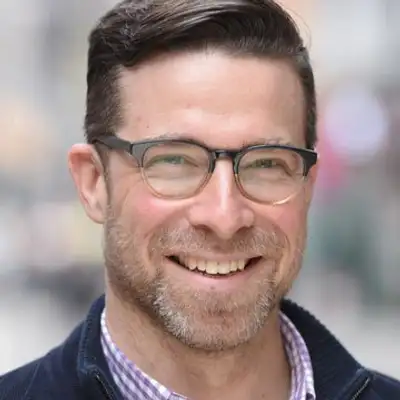
Dan Ryan : Today's guest is a hospitality leader, architect, and project management expert. He spent more than 20 years working across architecture, construction, and various hospitality projects.
He now leads hospitality at Ryder Levitt Bucknell, or as we all call it, RLB, bringing together design, development, and project management. He is the head of hospitality at RLB. Ladies and gentlemen, please welcome Matthew Boone. Welcome, Matthew.
Matthew Boone: Thank you, Dan, for having me. This is gonna be fun
Dan Ryan : It is. And I know that we've talked about doing this for a long time. I'm glad it's finally come to fruition. I would also like to say that we've worked on countless projects, me and you, but also company to company over the years, and it's very rare that a project winds up in Architectural Digest, and you being an architect, and I'm [00:02:00] sure all of your fans who've stood by you along your career path were very overjoyed to see that.
So I just wanna say hooray for us
Matthew Boone: Thank you for that. Yeah, no, the, the Huntington Project, um, Huntington Hotel here in San Francisco that you're referencing, um, it's, it's an amazing project. And yes, um, my father is an architect. Um, and so when he was at my house recently and saw it on my coffee table, he was quite proud, um, to be able to see, uh, work from his son is in Architectural Digest.
So full circle moment there.
Dan Ryan : Wow. I don't think I picked that up, that your dad was an architect also. So architecture runs in the family, or when did that start?
Matthew Boone: Uh, no, it started when I was born. Um, he was a single, uh, man office, um, in Fresno, California. Um, and so I would wake up on the weekends and go to his construction sites to see the residential, um, projects, um, walk around frame jobs, um, collect the little, uh, copper, um, cutoffs and use them as rings. [00:03:00] Um, and so that was kind of how I spent Saturday mornings. Um, so yes, uh, I'm an architect as well. Um, went to Cal Poly in San Luis Obispo, got licensed. Um, the funny story is that, uh, my grandmother, my dad's mom, um, threatened to break my hand if I ever went into architecture, um, just because of the struggles that she saw that my dad went through, uh, when I was growing up. So somehow I managed, uh, to get out of it, uh, unscathed. Um, and now, now, uh, yes. uh, still working in the architectural industry, but now on the project management side.
Dan Ryan : not a practicing architect, but you bring your design sensibilities to every single project. And with that, the question I have, 'cause I-- sometimes I have a-- I've spoken to other project management folks, and especially in hospitality, and you being the head of hospitality, there's always this balance between, okay, we're here for hospitality.
We wanna run our teams, our projects [00:04:00] with this sensibility in mind. But you also are developing or renovating a real asset that has time and money factors and schedules, and I wanna pull that apart because I'm just curious about how you balance that. But before we get into that, how do you define hospitality?
What does hospitality mean to you?
Matthew Boone: So hospitality to me, it, it really is a mindset. Um, so like you said, I've been doing this 20-plus years. Um, and the first kind of hospitality job, and, and this was when I was in Chicago, um, and I was in a six-man, six-person office, uh, with kind of, uh, two principals. Um, just so happened that, you know, the next project up was mine, and it was for a new restaurant in Chicago. Um, and the, the leaders, um, was a front of house and back of house, um, uh, front of house manager and chef, and they were restaurateurs. Um, and I didn't know anything about it. And, and I would [00:05:00] go to meetings with them, and they would talk about, you know, how you greet people, how-- where's the coat, um, hung up. Let's not have it on the back of a chair. That's, you know, that looks messy. Let's hang it up. And, and how do you interact with people? And it was this, this beautiful dance in a way. Um, so really got interested, really started thinking about kind of hospitality as just being hospitable. It's, it's all about people.
Um, so for me, it is a mindset. When you wake up in the morning till you go to bed, it is the interaction with people. my job as project management, like you said, it's, it's scope, schedule, budget, um, and it's very-- could be deemed as kind of straightforward and dry and very programmatic. Um, but in the hospitality world, that's not how you interact with people.
Um, so it-- for me, it is, is thinking about what people need, um, pe- thinking about what people want before they've know what they want or, or think that they need it. Um,[00:06:00]
Yeah.
From a project manager, it is on running an OAC or running meetings, it is thinking about, you know, for-- it's a risk mitigation. And so that's again a project management kind of way of thinking, but it's, it's thinking about what could happen on the project or what the owner would want on a project before it happens.
Um, but it gets down to, to a concierge at a hotel, to a server at a restaurant. Um, but even, you know, an Uber driver just asking, "How is your day today?" You know, "Would you like this? Would you like that?" Um, so it's thinking about the other people. Um, so it's a very being nice and being thoughtful is being hospitable.
Um, so that's what I try to bring to, to my job and to my projects and to my team.
Dan Ryan : So I have a response to that, but I didn't realize you were from Fresno, and I'm gonna timestamp this because tonight USC is playing Fresno State,
Matthew Boone: are.
Dan Ryan : I really hope USC doesn't live up to their recent [00:07:00] expectations and lose to Fresno State because it would be very heartbreaking. I just watched, uh, Rutgers get smoked by UMass, and they were favored by 30 points.
But anyway, I don't wanna talk about football right now. What I want to go back to is you said that this idea of front of house and back of house are a beautiful dance.
Matthew Boone: Yes
Dan Ryan : To me, that resonates so incredibly because at Berman Falk, Gary Berman forever would always talk about front of house, back of house, and we spend so much time figuring out how that front of house that, what, that you might interact with looks like the duck on water, right?
Gliding across effortlessly. But then underneath the water, the back of house, the legs are pushing frantically so that we can help... I love how you said it's managing risk, but to us it's all about certainty and risk management. How do you work on a project to balance front of house and back of house?
Matthew Boone: So from an owner's [00:08:00] perspective, um, it's usually about ROI. It's about, you know, can we sell the room for more a night? Can you charge more for a drink? Um, so that typically does come down to finishes and user experience. Um, so for a guest checking into a hotel, you know, the, the designer will want it to look the best, have the highest finishes, the most touch points. Um, but that may not be what the building is saying that we need, um, or the engineering is saying that we need. And so unfortunately, a lot of the budget comes down to what's behind the walls. Um, so the mechanical, the electrical, the plumbing, the structural, and those are way more expensive than some bathroom tile, um, or in your case, you know, furniture. Um, so it is a balancing act with ownership to, to get the best bang for your buck, picking your moments, um, and understanding what can be the biggest impact or impact the guest experience the most, [00:09:00] and that is what we need to focus on. Um, and it could d- come down to the ROI on, you know, the guest rooms versus meeting space or F&B, and so you might not be able to do your dream project all at once, and so we'll phase it over several years, um, depending on what kind of the CapEx is showing. But it, it, it really is that dance, and so, you know, we are kind of the liaison between the ownership side, um, to understand their goals. Um, and typically in hospitality, it's tied to, to brands or PIPs or operators, um, wanting a certain thing. Um, but then the designers come with their vision. Uh, the engineers have their requirements. Um, so it is sitting down and being honest and saying, "You know, we have to upgrade the electrical based on code, and so we might not get that $25 a square foot tile. We need to go down to a $5 a square foot tile." Um, but then it's, it's my job and the team's job to find an appropriate solution for that. [00:10:00] Hmm. end of the day, it's all about and ROI, um, so that's kind of where we focus on.
Dan Ryan : I have another question that I've been dying to ask, and I think you as the head of hospitality for RLB... Now, RLB is in many different verticals as far as owners representation and project management. You're also a global company. I think you have somewhere around 3,000 people working there. I've done some work in Asia, some work in Europe, and Berman Falk now we're expanding into Europe and we're, we're just working on our first projects.
We have an office out there, so it's very exciting. But if I could create two worlds of ways to run a project, it seems like there's the North American way, which where you might have a, a project manager, an owner's rep, and then all the different consultants from architects, designers, purchasing agents, to you name it.
And then there's the rest of the world that [00:11:00] has quantity surveyors, cost managers, all of these other things. They just seem to be run very differently, and I would love for you to expand on that and expound on that, because I've just never understood why these two worlds run very differently. But also the outcomes can tend to be the same, but the way that they're set up are very different
Matthew Boone: It is. And, and quantity surveying is, is a term that I learned coming to RLB about three years ago. Um, so quantity surveying is a, a very Europe-based, um, you know, kind of specifically Irish and, and English. Um, but it does then go to where British colonies are. Um, so South Africa we have a large presence.
Australia we have a large presence. Um, and so quantity surveying is really it's cost estimating is, is how the US deems it. Um, but it is a very rigorous, um, they have, uh, um, specific majors that you go to university for, um, to study quantity surveying. [00:12:00] And so it is takeoffs and applying how much things cost on a unit cost to develop a cost for the project. the United States, y- you're right, Dan, that we typically do We get asked for a project, "Hey, we want to do a hotel renovation. We think the budget's gonna be about, say, 50 million," and now go and proceed with design. At some point, you know, 50% DD or so, we'll bring a GC in to kind of benchmark to see if we're on the right track. Wait, we're way over budget. Now what do we do? We VE. We, you know, take time out of the schedule, um, where... And so it's much more of a design bid built. Um, in other parts of the world, um, the QS team is brought in to kind of establish what that budget is. Um, and so we'll do takeoffs, or we will do cost per square foot based on program to then establish a budget. Um, then we [00:13:00] stay on to do almost like a cost police. And so we sit in meetings, and it'll be, "You know, I think we're trending over budget with that LVT in the guest rooms. What would the savings be to go to carpet?" We're over there, um, you know, in the corner crunching the numbers and saying, "Okay, if we do that, you know, client, you'd be able to save X amount of dollars."
Um, and then we do the cost controls throughout the PM, uh, or the CA process of reviewing the change orders from contractors, validity based on our benchmarking. And so we're doing that, um, around the world, and we're actually seeing, we're getting phone calls, um, now recently, um, of people that are working in British or British colonies to say, "Hey, I know you guys in these parts of the world, and it's a QS, and I'm trying to sell that to my stakeholders in the US." Why don't we do it? typically it costs extra money up front when you don't have extra money up front, um, and you're trying to get funding, you're trying to get lending. Um, and so [00:14:00] it's more of just they do a lot of pricing in-house. Um, I have several clients that they do pricing in-house. Um, or they will reach out to us and say, "Hey, can you just, you know, tell us a, a cost per key for a room?"
And that's how they establish budgets. Um, so it's not quite as rigorous or fine-tuned as doing a true QS model.
Dan Ryan : if you could elaborate on that in the sense of what you've seen in your three-year tenure there about, you were talking about in North America there's, there's like a balance between cost management and project management that you see, um, in hospitality but also across your other verticals in North America and other places.
What's different about the North American model as you're hearing from your colleagues who work arou- around the world?
Matthew Boone: Yeah. So the, in, in North America, and we, like you said, we have different verticals, um, from data centers to industrial to, um, aviation, um, we're [00:15:00] big into convention centers. And, and a lot of that is, uh, revenue comes from that is, you know, 50%, um, from project management, 50% coming from the, the QS or the cost estimating. Um, in hospitality, it, it's way skewed to project management. So we're 85% project management, only 15%, um, cost. And so I think a lot of that is just looking at the, the REITs or the, the operators, um, that are coming in. They have somewhat of an established benchmark that they know how much they would wanna spend per key, and then we just get into the project and go. Um, and then in hospitality, it's more, common to kind of bring that GC on early, um, for pre-con because one, we're doing model rooms early, and so they are then pricing a lot of the stuff along the way instead of us. Um, so it's also, I think, more of [00:16:00] hospitality people trust right now, um, a GC number versus necessarily a, a cost estimate, um, coming from a third party. Um, and that's just kinda like what we've been talking about. That's just more of the norm here,
Dan Ryan : if there were a US developer listening or, or a owner or a REIT who doesn't think that they need a cost consultant in that more, like, British way of doing things, um, what would you say... How would you try and convince them that, "Oh, you should consider this because of X, Y, Z"?
Matthew Boone: I mean, a lot of it is, is getting back to what a true project manager is supposed to do, is just mitigate the risks. Um, we are there as that buffer to the owner with our, our expertise in, in scope, schedule, budget. Um, and so for us, if, if, and we've all been there, is be handed a project and say, "This is the budget," and then we get going and we realize that we can't cover all of the scope for that budget. Um, so we are spending time, and in most [00:17:00] cases for business interruption, um, purposes, time is a lot of money. Um, and if we are rushing to get heads in beds, that's a lot of money too. Um, so it definitely does impact the schedule. Um, it impacts, you know, if you have an architect and a designer that they're given a budget of $50 million and they, you know, design what they are asked to design and it comes back at $80 million, well, they're gonna come back, um, most likely, um, with a change order for an additional service.
So it just does not-- it doesn't work in anybody's favor to, to go and to design really without understanding what the true costs should be and could be. Hmm. now, you know, can we tighten those numbers up in the beginning, um, with different metrics and benchmarks? Yes. Um, but the better way is, is to get a team that, that does this and to get a team that is experienced and, and has those numbers to establish what a number should be.
Um, now, [00:18:00] and then it gets into the underwriting. Um, you know, so many times we've been brought in after underwriting has been completed and it's like, "Oh yes, it should be this number, but you know, this is what we're approved to spend." And so then we're cutting a bunch of stuff, and it goes back to that experience level that then we're not giving or getting what the guest is expecting.
Dan Ryan : I'm also amazed, and again, you're dealing with numbers that have a lot more zeros than FF&E, right? So FF&E is always the last line item, I mean, typically on a pro forma or development budget, it's the last line item, right? But I think it has an asymmetric impact on the guest experience, especially in the hotel.
But regardless of whether it's the construction costs or the FF&E costs, I'm amazed at how many owners don't share those budget numbers with the people that they're bringing on because they closed on the deal. [00:19:00] There is a pro forma. There, it was underwritten to something. Why not just share it with everyone so that we all, like, can see if this is gonna work or not work and not burn time later?
Why do you think that is?
Matthew Boone: So, so I used to work at EDG, uh, which is an amazing design firm up in the, uh, North Bay, um, focusing on, on high-end, uh, um, hotel and hospitality work, and we would ask that question all the time. And, and the answer that we would get, um, usually is, you know, "If I tell a designer that they have this much money, um, it may stifen creativity."
Hmm.
Which, which-- And, and so I want you just to create and think, and then we'll put you in a box. And it never works out that way because i-in-- and even if you somehow hit the number, they're always afraid, and, and it's odd, it never happens, but to, to under design. And so if they have, say, you know, 50,000 a [00:20:00] key, uh, to do something, that then the designer's gonna come back and only spend 25,000. Well, great, but if that is a good experience and a good touchpoints and good, um, design, that's even better. Um, so we always struggled with that. We always ask. Um, you know, asking during like an RFP stage or contracting stage, there's also the thinking that, well, as from an owner, that they're going to increase their fees if they know what the true budget is, um, because a lot of us price it based on percentages.
And so if, if I don't give them the fee or the, the budget, maybe their fee will be less and I'll get a better deal. Um, but I am one, and you know this, Dan, with me, I'm one of transparency. Um, if I have the numbers, it's best to just get to the numbers and let's start working. You know, from your perspective in furniture, I tell you you have 18,000 to do this room, [00:21:00] you're going to dial it in to be 18,000 instead
Totally
how much does this cost?
And it could be 25, and now we're spending weeks and weeks to redesign it to get down to that 18 number.
Dan Ryan : What's really interesting is if you're spending 18, I- there's all these rules of thumb I can go and say, "Okay, well that much, this much will apply to the case goods and seating," which are typically the second biggest check an owner might write on a project, on a renovation project anyway. And I can look at that number and then look at the rendering before all the documentation is done and be like, "Okay, this is gonna work," or, "Oof, we might have an issue with these two specific things.
What's most..." And then you're-- Then you can ask the question, what's most important to you in this room, designer or owner?
Your
And then we can work around that, right? So it, it's a way to give us constraints. I understand how that doesn't work on, in some projects because you don't wanna stifle, especially if they're very much cutting edge.
But [00:22:00] why, why doesn't that happen more? It's just very frustrating because I, I've been finding that we're able to turn projects over six months faster on a typical, uh, year-and-a-half project, year-and-a-half long project
Matthew Boone: Yes. N- and, and I don't have an answer, Dan, for why. Um, I would love to have as much clarity going into a project so then I can meet with all, from designers to furniture to lighting, to say, "Here is your number that you need to hit, and if you beat that number, great. Um, you know, I'm sure somebody else on the project or we can make it even better." Um, so I would love to have numbers, uh, earlier.
Dan Ryan : Especially to be able to compress the l- like the critical path items, like the longest lead items. And sometimes it's different on every project. Sometimes it's furniture, sometimes it's steel, sometimes it's other architectural things that I just can't you would know much better than me
Matthew Boone: from, you know, Bulgaria
Yeah.
Dan Ryan : Do, do you know I was number one in Bulgaria once on this podcast?
Matthew Boone: There
Dan Ryan : [00:23:00] Because I interviewed Rado Ivanoff, who I think we'll have dinner with next week if you can make it, and his- he's from Bulgaria, and after our episode aired, I called him and I said, "Please thank your mother for listening to the podcast."
Matthew Boone: Well, now I'm sure that some AI will pull this up and, you know, like, "Oh, look, Bulgarian tile."
Dan Ryan : Yes.
Matthew Boone: Okay.
Bulgaria again.
Dan Ryan : Yeah, so, uh, we're gonna be hu- we're, uh, we're always huge in Bulgaria. We gotta go hiking there. That's my new, my new jam. So RLB, you're the head of hospitality in North America, but like you said earlier, you're in every different vertical from data centers to education to rattle off a couple more
Matthew Boone: Convention centers, um, is bread and butter for us. Um, you know, biotech and tech. Um, so that, that's kind of where we've been playing lately
Dan Ryan : Cool. So in what we do in hospitality, especially on the renovation or the development side, it's all about capital expenditures, CapEx. And [00:24:00] what's so crazy to me right now, if I turn on the, a business radio, turn on a business TV, or read the Wall Street Journal, front page is CapEx. CapEx, CapEx, CapEx, but it's only data centers.
Why, uh, why is it not being applied to hospitality? What, in your opinion or what you're hearing from your, across your teams, is preventing the unleashing of capital to CapEx programs within hospitality?
Matthew Boone: I mean, the, the easy answer is just the uncertainties, um, in the US market, the travel market, the tourism market. Um, it-- So interest rates, all of that good stuff. Um, however, I mean the larger REITs are still spending, um, and there seems to be over the last kind of four to six months, some loosening up and, and some interest.
Um, I was talking with some, some people recently that there are some mega projects that [00:25:00] are, are looking at coming to the US and a lot of that is because of the uncertainties around the rest of the world that people are looking at putting their money in the US, um, and that investors are lining up, um, to do this.
Dan Ryan : No matter how unfriendly we might be to them.
Matthew Boone: Now everybody has different opinions. Um, you know, chatting with
Safe harbor
like, "I don't agree with that." Um, but
Dan Ryan : what I will say is North America and United States also, but let's just look at North America and South America, h- ha- being flanked by two oceans and from geopolitical unrest and all that other, it, it says a lot. And it, and the US and North America Ca- or Canad- uh, Canada, Mexico, it, it is seen as a, quote, "safe harbor."
So it is reassuring to hear this, no matter how unwelcoming we might be.
Matthew Boone: Yes. And, and so those are, those are bigger money for bigger projects.
Mm-hmm.
Now for the, the smaller CapEx, [00:26:00] um, coming out of COVID, a lot of, you know, deferred maintenance and PIPs, and so the brands are starting to, you know, call those in and say, "No, you don't get any more relief, so you do need to upgrade that chiller or have that elevator mod." Um, and that's a lot of where the, the CapEx money right now in the last couple of years has gone to. Um, and, and so we're seeing that, but we're also start to seeing this kind of shift in more, um, kind of blended projects, um, for, uh, residences because the residences then help pay for the renovation of the hotel.
Hmm.
And so that's really hot right now and kind of more the experiential, um, so blending in mixed use or wellness or other things to accompany just a hotel. Um, and that's where, you know, kind of, you know, where we all started in the defining hospitality. Um, I was on a panel last week for NEWH, and it was, it was discussing where hospitality is really getting into other sectors, and it's, [00:27:00] you know, people first thought hospitality is just hotels. Um, but it's more of this design philosophy or this mindset that's getting into senior housing. It's getting into to tech offices. You know, how many times have we been like, "Yeah, I wanna make this, you know, more of like a, a, a hotel lobby feel," um, and it's a tech lobby. Um, so people are kind of bringing that in, and so I think that that is just going to help encourage more, um, for the, the hotels, kind of the true essence of hospitality to, to up its game and kind of keep responding, um, to this hospitality movement across other sectors.
Dan Ryan : I'm glad you brought up chillers and elevator modifications its so exciting It is exciting, but I also-- I'm curious about it because-- Actually, it might not be exciting. And actually in hospitality it's probably not exciting because that's not-- It's-- Those are the things that the guest feels. They might not experience,
Matthew Boone: There's no touch
the se-
You
there's no touchpoint
more for a [00:28:00] room because the chiller was just upgraded,
Dan Ryan : Yeah.
Matthew Boone: toughest part for owners to, to spend millions of dollars on infrastructure and plant work, um, but they can't charge more for a room. But it needs to be done
Dan Ryan : So I want to pull on that a little bit, and I'm going to go out on a li- out over my skis here. But it would seem to me that the explosion of hospitality in the United States in particular happened, let's say, from the late 80, uh, late 80s, early 90... No. Yeah, late 80s, early 90s to, let's say, the GFC in 2008 as far as mo- mass expansion.
And for a lot of the aging infrastructure in the buildings, the h- the hotels, chillers, elevators, et cetera, et cetera, do you think, or can you shed any light on are those being pulled to the front of PIPs now because they were installed 30 years ago and now they need updating, and that's a drag [00:29:00] on why things are not penciling out?
Like, is, are the bulk of those larger plant, I think you called them, items, are, is that what's stifling FF&E renovations?
Matthew Boone: To an extent, um, and a lot of it is, is-- and, and I am based in San Francisco where, you know, during COVID all the hotels were shut down, shut down for a while. And so now when they refire those back up, um, there was issues. Or, you know, if it's something, you know, on some of those mechanical, um, equipment, it has a lifespan. Um, and if it's, you know, 10, 15, 20 years, you know, we are getting to the end of those lifespans. And so yes, there's a lot of projects right now that are kind of that infrastructure, um, and it's that deferred maintenance of projects and those take a lot of money. Um, and they are not exciting or sexy, um, but they're what keeps, literally keep the lights on or keep the air flowing. Um, you know, the-- if you [00:30:00] look at a guest experience, the complaints usually, and I know there are some out there, usually are not the, the tile in the bathroom was not luxury enough, or the stone countertop isn't, you know, nice enough. It is, how fast do I get hot water in my shower? What is the Wi-Fi in the rooms? Or my room was too hot or too cold. And so the biggest complaints are about the MEP, but the guest experience is usually all focused around the room, the lighting, you know, how, what the design is and what the touch points are. But they don't say, they don't complain about that. They complain about the systems.
Dan Ryan : The only complaint I have about showers in hotels in particular is especially in the two fixture showers. Why is it that when I turn it on, I get sprayed in the face with the handheld one that's freezing cold in the morning? Why can't they just turn that and point it the other way? That's my big number one complaint right now.
It just [00:31:00] happened.
Matthew Boone: It is, yes, it is a, an operations thing that we can ask whether it's a union or non-union hotel. That's a negotiated item to turn.
Dan Ryan : Oh, you have to negotiate that?
Matthew Boone: um, in most places, uh, it's now, it's code requirement that you are able to turn on the shower without getting wet. Um, and that's for a
Dan Ryan : Oh
Matthew Boone: purposes. And so we,
Dan Ryan : We're freezing.
Matthew Boone: Yeah, I know. It's the opposite. Um, and so we've spent millions of dollars moving controls from
Yeah.
Side to the another side. Um, and so it is, you're able to turn it on and then heat the water up. Um, so those are older, um, and a lot of the movement has been in the past kind of 10, 15 years away from the tubs. Tubs were in every single hotel room for, uh, decades, but now business travelers are looking for showers, and so we're taking
Come on
putting in showers, but all of those tub controls, all of the wet wall is still there.
And so that's why you're left [00:32:00] with a shower with controls that then sprays you
Dan Ryan : Oh, good. Well, I just don't want to get sprayed anywhere. So everyone listening,
Yes,
it in the specs that, uh, the, the handheld one needs to be pointed to the wall.
Hey everybody. We've been doing this podcast for over three years now, and one of the themes that consistently comes up is sustainability. And I'm just really proud to announce that our sponsor, BermanFalk Hospitality Group, is the first within our hospitality industry to switch to sustainable and recyclable packaging, eliminating the use of styrofoam.
Please check out their impact page in the show notes for more info.
Dan Ryan : I might get the story wrong here, but I'm gonna speak from my own experience, which means it can't be wrong 'cause this is my experience.
RLB started in which country?
Matthew Boone: So we are Britain-based. Um, so yes, English at
Okay, I just wa-
ago
Dan Ryan : Wow, 300 years ago. Hmm. I'm reading a book on the East India Company right now, and it probably, there's probably some overlap. [00:33:00] But from my experience, most companies who are not based in the United States, th- so they're international, they come to the mainland, and then they expand from there.
And then once everything is up and running, then they'll, like, tiptoe into Hawaii
Matthew Boone: Yes.
Dan Ryan : try and build a business there. What, uh, my, my experience, and I've done so many projects with RLB over the years, mostly in Hawaii. It seems to me that RLB established themselves and grew in Hawaii first, which is very atypical, built an amazing team.
Hello, Aaron. You know I want you on this. You know it.
Um,
on it too, Dan.
But,
no, i- it's, it's true.
But
you know... And, and we expanded over, you know, the last 300 years in different places. Um, but about 30 years ago, um, a group, you know, thought about expanding into North America, um, and landed [00:34:00] in, in Hawaii. Um, and that was, um, Paul Brousseau, uh, which is our current
Yeah
Matthew Boone: and so he was there. Um, and another shout-out to Paul McIlroy,
Dan Ryan : Paul
Matthew Boone: formerly of Lucid and, and Highgate. Um, so he was there. Um, and so we kind of grew from west and then expanded into the mainland. Um, so we have a huge presence in Hawaii. We have offices, uh, in, uh, four offices in three islands. Um, and hospitality is still our bread and butter.
Um, so we were-- One of our first projects was Hilton Hawaiian Village, um, right after it was built. Um, had some remediation issues with some moisture, um, and some mold. And that's really funny is that's how we kind of got into the hospitality world, um, is because of a mold issue at Hilton Hawaiian Village, you know, when it was first built. Um, so Aaron, uh, Keohara leads that team, um, and it's amazing. It's our strongest team is, is, are out in the islands. [00:35:00] Um, and now we're trying to really build our presence here on the mainland, um, kind of bringing that same RLB culture and that RLB kind of community aspect, um, over here to the mainland.
Dan Ryan : Okay, I wanna go back into the-- 'Cause normally when you think about Hawaii, it's like, okay, let's get established here, and then we'll establish a beachhead in Hawaii, and then let's grow in Hawaii. And you guys are doing it the other way. So I wanna, I wanna talk about the expansions into the mainland, but in a second.
What I first wanna go to, I'm glad you brought up that Hilton Hawaiian Village story because I think in all of our careers, we have those big problems, the big challenges that we wind up learning the most from. Every challenge is an opportunity. We think we've seen everything, but once we think we've seen everything, we're surprised.
I loved hearing from Paul McElroy, his experience of Hilton Hawaiian Village, because it was one of the largest, um, litigations, construction litigations in the state of Hawaii in history, where they basically had to take the whole building apart, put it [00:36:00] back together, and he was an expert witness, I think for RLB or for someone else.
But the amount that he learned was better than any doctorate in anything we could ever do. So I'd love to hear your thoughts on that, number one, and number two, what experience in your career was your best learning experience? And I'll put learning experience in quotation marks.
Matthew Boone: So, so yes. And, and, and I don't know all of the details, um, of the Hilton Hawaiian. Um, I, I've heard stories from Paul and from Aaron, um, and Paul, um, on that. Um, but yes, that-- I mean, and that we were a two or three person, um, uh, team at the time, and we responded to a project that was much larger than we could have handled. Um, but Paul and Paul at the time, um, then [00:37:00] decided, "You know what? We can take this on. Let's do this." Um, Aaron happened to be, you know, a, a newer intern, just hired, and said, "You know, she's really smart. Let's put her on these projects, and she can help us out too." Um, and now she's, you know, grown to where she is now. But, but taking that risk and, you know, you talk about learning, is learning to do that large project with a, such a small team and a newer team, um, kind of then laid the foundation for where we are with RLB now. And so, and those clients, and we're still working on that. We've just finished, uh, the, um, completion of the Rainbow Tower there, and we're starting on Alii Tower right now for the renovation. Um, so we're still on that building, um, and on that property. Um, and it's just because over the years, we've built that trust. We've built that knowledge base. Um, we know all of the players, um, and they know us.
No
so it was definitely a learning that paid off and that, that risk that paid off. Um, so then [00:38:00] coming over to the mainland, um, and, and myself in San Francisco, um, the biggest learning was, you know, coming from, um, the design side, like I said, where I was, you know, managing projects, but just doing kind of the design side.
So the, the drawings, the RFIs, but not getting into more of the owner stuff. Um, came over to my previous company, JLL, and worked on the Clift Hotel here in San Francisco. Um, and the Clift Hotel was a challenging one, where we were shutting the hotel down, and we had to do three hundred and seventy-two keys, public space, meeting space, and we had about 14 weeks to do it, um, for construction. And it was my first time really just, I am at the weeds on day one, and I really don't know what I was doing a lot of the time. But I had such an amazing team around me, not just my internal team, [00:39:00] but the contractor, the client, the architect, and so we all kind of learned and did it together. Um, so walking around a job site on Christmas Eve delivering donuts, um, to 200, uh, crew members because we were opening up a week and a half later. You know, that to me, again, goes back to, to the whole mantra of, of hospitality that yeah, I hired them, they were getting paid. But I appreciated so much what they were doing that I felt I needed to go to, to bring them donuts, to bring them pizza just as a thank you for this. And so that's really where I learned that in the project management world, you could be the, "I need this now.
I need this now." Or you can say, "Hey, let's work together. What do you need from me? And I need this from you," and really building on a team aspect. Um, those are the most successful projects where you can go in and [00:40:00] everybody understands their role, everybody understands their responsibility, and you trust the experts to do their job. Instead of saying, "Hey Dan, I know how to build furniture. You should do it this way. And why is it taking six weeks? You should be able to do it in three weeks." that that just creates tension. Um, and so if you come to me and say, "This is what it's gonna take, Matthew, but you know what? I'm gonna do my best to maybe shave a week off," I can take that, I can go to ownership.
So really working together as a team, discussing everything, and respecting each other's roles and responsibilities was kind of the biggest lesson I learned on that project.
Dan Ryan : When you were working on The Clift, was that the only project you were focused on at that time?
Matthew Boone: Um, I had another one, uh, the Alton, the Kimpton in Fishman's Wharf. Um, it's a former Holiday Inn converted to a high-end Kimpton. Um, and it was the worst Denny's kitchen I've ever walked into.
Um, so now it's a super high-end, uh, Filipino restaurant. It's [00:41:00] one of my favorite restaurants. Um, so big transformation in the back of house, um, and front of house.
Um, but no, I had that project, and that was going on, um, right before COVID and during COVID
Dan Ryan : Wow. Uh, so I find the projects where we learn the most, like our biggest learning, learning experiences, again, those of you listening and not watching, the learning experiences are in quotations, um, usually involves having to go to site on Christmas or Thanksgiving, right? Because that's when you know how serious it is, and again, it's heads and beds.
It's an operating financial asset, and when I... It's funny, you know, bringing up, if I look at myself in the mirror now versus, you know, 25 years ago or 30 years ago when I started in the industry, there's some wrinkles, there's gray. When I look at Paul McElroy and, like, he, he, again, he's devel- he's, he lives in sunnier climes, so he...
But he does have gray. He is aging gracefully, Paul. It's stressful what we [00:42:00] do. What's magical about what we do also is that you have Erin, who's been at RLB for 22 years, and she looks exactly the same as the day I met her, and I don't know how she does that. Is it Hawaii?
Matthew Boone: I, I think it's a little bit of Hawaii. It's a little bit of her personality. Um, she-- Erin is great where when I started at, at RLB, um, and coming into hospitality, um, I was like, "Okay, I'm new here." I got a phone call from Erin and from Paul Russo the first day saying, you know, "Whatever you need, here's my cell phone, reach out to me." Um, and they have been the most kind of welcoming and
No
turn it is now kind of where we want to take hospitality. Um, sky's the limit. And so they are open to anything. We talk about everything. Um, and they always end every meeting with, you know, "And thanks for meeting, and if there's anything I can do for you, let me know." And so just [00:43:00] having that, that mindset, um, helping people, I think, um, works out.-
Or I think that's what it is, and the good food. And I know she's been through the wringer on a bunch of projects and, but I don't know. She just... It's amazing.
Dan Ryan : on the mainland expansion,
Yes.
What are the biggest opportunities you're seeing and the biggest challenges that you're seeing?
Matthew Boone: So opportunity-wise, it's, it's we have, um, 30 offices. We have 300 people at RLB, and on s- specifically focused on hospitality, we probably have 50 to, to 55. Um, and so the opportunities are, you know, we have that reach, we have that national presence that we can take on, you know, a portfolio, uh, for people. And, you know, typically those are gonna be where we have offices. And so we're able to kind of give you that local presence, that boots on the ground, um, but also have that [00:44:00] institutional experience, the 30 years that we've been doing this. Um, so we're seeing opportunities right now. South Florida is, is huge, especially with the branded residents, um, that I talked about earlier. Uh, the Texas triangle, um, so from Dallas, Houston, um, up to Austin, um, that is kind of a hot market we're tracking. Um, Nashville, um, just seems like they, every time the people says yes, they have enough hotels, you know, there's another, um, one planned. So we're really focusing on that, um, those kind of areas.
And so everything is kind of... And, and Phoenix, where we're headquartered. Um, so those areas with the renovations, um, the larger REITs, the mega projects, um, like I talked about, are starting to, to come across, um, because people are interested, um, in, in doing those. Now those are long-term projects. Um, we're really excited.
Um, we, we have a great [00:45:00] team, um, up in New York. Um, I'm in San Francisco. Um, we're down in Miami. The Caribbean team, um, is in St. Lucia. Um, we, David Piper leads that team. We're working in 18 different countries down there, um, and speak the language and understand kind of how the handshakes work. Um, so for me, it's exciting.
I'm getting to kind of In my role, learn about all of these, you know, communities. I'm working with Dane up in Denver on my team, super excited about building hospitality. And so yesterday we were like, "Who should our targets be? You know, where do we wanna go after? Is it just Denver? Is it Rockies? Is that Salt Lake too?" Um, and, and so I, I dig into these cities that, you know, I've traveled to, but I don't know who the, you know, the specific players are, what's on the boards, um, say in Austin. Um, so I'm getting into that with Melissa that leads our Austin team. Um, and so it's fun for me to [00:46:00] kind of learn these cities, go to these cities, meet our teams there, um, and try to get projects. Um, the challenging part is we've established this great reputation, um, in Hawaii and, and so with Park Hotels, which is one of our clients, you know, how to take that institutional knowledge from Hawaii and bring it to the mainland and not lose anything, and not lose that, you know, this is how Aaron's team does it, this is how Terrence's teams does it.
And now give it to somebody in Miami or New York or Charlotte and say, "Replicate this." And so from, from my role is really building the team out, building that training out, building out kind of understanding the RLB way. Um, looking at, at having people go from, you know, one of our mainland cities out to, uh, Waikiki and go to Oahu and work on projects and do punch walks, uh, on Aaron's team and [00:47:00] Terrence's team for four months just to get that experience and get that knowledge and then go back. Um, so those are some of the training ideas that we're, we're looking at.
Dan Ryan : Thank you. I was also... I think we were all surprised by the influx of tourists for World Cup. I think we all heard it was gonna happen, and then it actually did, but we, we were like, "Oh, who's really gonna come?" And blah, blah, blah. But I was pleasantly surprised. I think I was proven wrong. Of all the cities you just mentioned, I didn't hear Los Angeles.
As a former Los Angelino, with the Olympics two years away, what is holding that up? Like, I feel like we need to prep it a little bit for all of our, all of the, the tartan army and, and all the rowing Norwegians, and all the, all those, all those awesome folks who came. How do... What, what are we doing or not doing there?
What's happening?
Matthew Boone: I don't know. And, and that is this, this topic of conversation that I've had with architects, designers. We have, uh, [00:48:00] TJ leads our LA office. He is hitting the, the pavement trying to figure this out. You know, from furniture vendors, everybody expected same thing. We're going to have an influx of hotels for the World Cup, for the Olympics. And LA, I think it is just, it's large enough. There isn't a tighter kind of community down there. I don't know if it's a leadership-- I don't know what it is, Dan. But no, I-- Two years ago, we were talking about LA is going to just explode, and now we're two years later, and we're still talking it should explode, but now we're running out of time. Um, so it's, that is something that maybe at one of these conferences we need to just have a whole big, you know, room talk about. Um, but yeah, it is, that is a conundrum, definitely.
Dan Ryan : Yeah. And may- and I don't know. I've heard, you know, kind of whichever way California goes, the rest of the nation goes. And I know operationally and [00:49:00] legally it's been harder to run hotels in the city of Los Angeles, just from what I've heard and who I've spoken to over the years from people at A- AHLA or the brands or just different hotel management companies.
But I don't know, maybe that has something to do with ... I don't know. But I, I was just so happy with the outcome of the World Cup. We, we did have a couple of projects that were accelerated because of the World Cup, and I just think Los Angeles and people who own hotels in Los Angeles, let's wake up. Come on.
Wake
We gotta put our best foot forward
Matthew Boone: give us a call. We'd be happy to help out, um, and we can put some Berman Falk furniture in it, so sure.
Dan Ryan : Yes. A- also, if I go back to 1984 and the LA Olympics then, I think that was like peak America back then. That was like, it was so awesome. It, every- e- everything was awesome. Everything. At least from my, what was that, nine-year-old self, I could say that, because I loved Rambo and, and all the movies that were coming out.[00:50:00]
Um, as you look to the mainland expansion and growing your business here, what's exciting you most about the future, Matthew?
Matthew Boone: it is building this team at RLB and adding people to the hospitality team and the hospitality mindset, and really kind of building on this foundation that we have, this great 30-year foundation. It's not about, yeah, would I love that skyscraper in Houston or, you know, other projects?
Yes. But to me, it's all internally, and, and I can't wait to see what RLB can do, and really build us up and build this team up, and be able to, you know, call on, you know, our New York team and, and f- find out how things are going, and find out that they just won a project and they're hiring two more people that, you know, have had hospitality experience, and really kind of grow hospitality even more, um, at RLB. Um, [00:51:00] And, and project-wise, yeah, we all want those, you know, kind of amazing portfolio projects. Um, sometimes, like you mentioned, those are the ones that, you know, you learn from the most. Um, so it's the, it's the smaller projects, um, that kinda keep the lights on, um, but typically, you know, have great clients.
Um, I have, uh, a project here in Walnut Creek that the client is amazing, um, and, and is a first-time hotelier, um, in doing a hotel renovation, um, and so leaning and relying on me. Um, but she is great, and she is kinda coming into things, um, and learning, um, but just has that kind of fresh mindset. Um, so working with good people and building the team with good people, that's what I'm most excited about, Dan.
Dan Ryan : I love the image of the owner in Wa- you said Walnut Creek? And what I t- what, my feeling that I took away from that is that it's her first hotel, [00:52:00] and she ... All hotel owners pay all these consultants who are experts, and I also don't know why all these owners don't trust the consultants they're paying all this money to.
Matthew Boone: It's very true, and it goes down to, like, the best projects are the ones that you know your lane, you stay in your lane, and you trust your team to do a good job. Um, and, and she is great at that. Um, and we, we exchange funny texts, and she, she is definitely a great client
Dan Ryan : Awesome. Well, I was a little disappointed and crestfallen that when you said what you were most excited about in the future wasn't being number one in Bulgaria
Matthew Boone: Hey, you know what? If there are projects in Bulgaria, I am sure RLB can, um, service those. We got a great team over there. Um, you know, I, you know, kind of connect that dot. I had somebody that they want to do work in, um, the United States, and we're [00:53:00] talking, and then he is based in London and gave me a call and was like, "Can you direct me to, uh, who would do data centers in Milan?" Great. So I searched on, on RLB, I made a couple phone calls, and I connected him, and now RLB is doing a data center in Milan just based on our reach and just based on I was helping this gentleman out on some, uh, pers- prospective work in the US, and he knew we were global, and so now we have work in, in Milan on data centers
Dan Ryan : Awesome. Well, let's hope the Italians don't charge the data center with pitchforks and torches, uh, as it seems to be the worm is turning on that in public opinion. it's always very interesting when opposite sides of politics come together on something, and, uh, it's, it... I'm always amazed when that, like, boomerang happens.
So, Matthew, I've loved this conversation. If people wanted to learn more about you or connect with you or learn more about RLB and everything you have on glo- going on globally, but also your growth in [00:54:00] North America, what's a good way for them to get in touch?
Matthew Boone: Um, definitely. They can go to rlb.com. That's our kind of global website. Um, from there you can get into the regions, um, and kind of look at our work in, in North America. Um, you can find me on LinkedIn, um, and you can have my email, um, matthew.boone@us.rlb.com. Um, happy to answer any questions
Dan Ryan : Awesome. And we'll be sure to put that in the show notes so y- anyone can click or screenshot or whatever. Thank you so much, Matthew. I know we've been waiting to do this for a long time, and it's so great to be in Architectural Digest with you in some aspect. And,
Matthew Boone: Yes, we didn't even dig into the Huntington. Um, but no, Dan, this has been great. Um, a- and you make, and I h- can say for others, you make this very welcoming and just a great conversation. Um, so I love hospitality, I love the industry, and so just talking about it for an hour is easy and fun.
So I appreciate the invite. I appreciate everything you've done.
Dan Ryan : Awesome. And [00:55:00] also on the Huntington, if we didn't give a shout-out to Ken Falk and KFI and the whole team and Alexa, that made that all together, come together
Matthew Boone: were great. Highgate as a client, Flynn Properties as the owner. Um, so yeah, it was a, it's a magical property. Um, so anybody out in San Francisco, take a look at the Huntington. Arabella's is an amazing new cocktail lounge. Big four spa. Um, it's the best service hotel that I've ever been in.
Dan Ryan : Wow.
Matthew Boone: true gem
Dan Ryan : All right. And then I guess when this posts and it goes on Substack, we'll probably lead with those photos and so that people can just see it there as well. Um, seriously, thank you. And listeners and watchers, thank you because without you, we wouldn't be having almost 300 of these conversations to hear about what we do in hospitality, mostly from the built environment but from all aspects.
Um, and if it changed your way of thinking of hospitality or you think you know someone that could benefit, please forward it to them. Um, and don't forget, like, [00:56:00] subscribe, all that jazz, and we'll catch you next time