Subscribe
Share
Share
Embed
How is the use of artificial intelligence (AI) shaping our human experience?
Kimberly Nevala ponders the reality of AI with a diverse group of innovators, advocates and data scientists. Ethics and uncertainty. Automation and art. Work, politics and culture. In real life and online. Contemplate AI’s impact, for better and worse.
All presentations represent the opinions of the presenter and do not represent the position or the opinion of SAS.
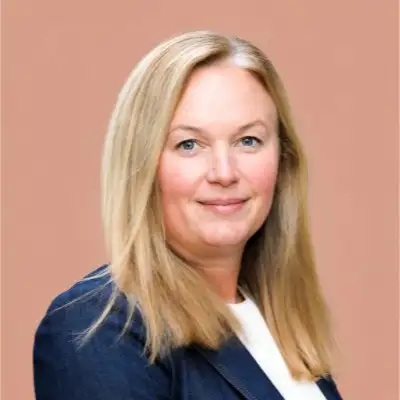
KIMBERLY NEVALA: Welcome to Pondering AI, brought to you by SAS. I'm your host Kimberly Nevala.
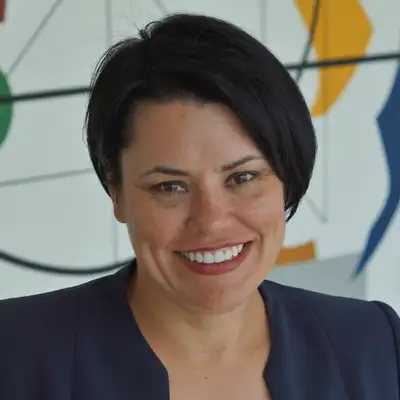
In this episode, we are pondering leadership and learning with Kelly Monahan. Kelly is a well-known future of work and AI advisor, and prior to cofounding her current venture Beyond the Desk, she was the managing director and brainchild behind Upwork's Research Institute. Kelly, welcome to the show.
KELLY MONAHAN: Thank you so much for having me today.
KIMBERLY NEVALA: Now, I have to say, I just realized recently that you are a native Rochesterian.
KELLY MONAHAN: Oh.
KIMBERLY NEVALA: Which just made me giggle.
KELLY MONAHAN: Oh, girl. You want to talk about Buffalo Bills, garbage plates? Let's go. I'm here for it.
KIMBERLY NEVALA: I've had a garbage plate. I actually went to the U of R and, strangely, I think we've had four or five guests that have-- either were born and raised in Rochester or who have gone to school in Rochester. So I feel like the city is punching above its weight.
KELLY MONAHAN: Oh, I think it is a sleepy city. But I'm telling you, all good people somehow end up through Western New York at some point in time in their lives.
KIMBERLY NEVALA: Amazing. Small, small world. Or small country perhaps.
KELLY MONAHAN: Yes.
KIMBERLY NEVALA: Now, I know that you started your career and spent some quality time in HR and then worked your way into research. Really looking at that intersection of leadership, labor markets and technology. And emerging tech specifically; things like AI. But I also know that of late you've become an author. And so over the last two years - I think you're on a book a year pace right now -
KELLY MONAHAN: Irish twins is what I'm calling it.
KIMBERLY NEVALA: Irish twins.
[LAUGHTER]
KIMBERLY NEVALA: Love that. But I am curious if you've always been kind of a natural storyteller and was becoming an author an aspiration you've held for a long time? Or is it just something that circumstances conspired to bring you to the point where you're like this is just required. This is needed at this moment.
KELLY MONAHAN: That's such a great question. It's so funny, because I ended up as a researcher where I now think and often in numbers as opposed to words. But when I actually reflect back before I got all that storytelling told out of me, I was a storyteller. And I actually did really well when I was in school when it came to writing assignments and all of that.
But then, if anyone goes and gets a PhD, you know the last thing that you can do is go tell stories. And so I think I went through this really interesting period in my late 20s, early 30s, where I lost a little bit of that part of me and it became very academic. And it was like, all right. We've got to stick to the facts, tell you the limitations of why you shouldn't - before you even believe me and what I'm going to say - I'm going to tell you everything that you shouldn't believe.
And so I took on a bit of that academic persona. And of course, I ended up in big consulting at Deloitte and Accenture early on. And so that was also very much of a practical/academic think tank I was part of. And so I came to the point 20 years after corporate America. I'm going around the world, preaching all these data points of leaders, pay attention. People are not doing well. And even you as leaders are struggling.
And I just sat there, and I thought, you know what? This is not what people need right now. We need to go back to storytelling. And it's OK if there's not a lot of numbers. And it's OK if I lose some of my credibility as an academic. Right now, I think it's about really meeting the moment and meeting people where they are. And we know, I mean, that's just an evergreen truth, stories are actually what bring us together, not data. And so it's been really fun and it's been really freeing. And it's almost like this rediscovering of who I actually really am.
KIMBERLY NEVALA: Well, I think what's so telling - and what's so interesting and important about maybe that work and your reentry into narrative and into storytelling - is that so much of what we do and how we operate in the world at work, and not, and how we think about deploying technology - and this is a point that comes through in your work so clearly - is about narrative. It is about what we tell ourselves, or what we want to believe, or so on and so forth, both about ourselves and about others.
But so before we dive deep into that, tell us a little bit about the arc from first writing Essential about essential skills funnily enough, not surprisingly, perhaps back in January of 2025. I believe it was published last year, correct?
KELLY MONAHAN: Yes, correct.
KIMBERLY NEVALA: To Reclaim the Plot, which comes out shortly here in 2026. What was it that took you or were there particular moments or inspirations that moved you from Essential to Reclaim the Plot.
KELLY MONAHAN: Yeah, that's a great question. So as I think about writing Essential - and I had a coauthor, Christie Smith, and Christie and I had worked together in consulting for years. We really were still in the headspace of we need to lay the business case for readers to realize people are their most important asset. And you think about the book came out in 2025, but we did a lot of the writing in late 2023, early 2024. And AI was becoming a dominant discourse, but not quite to where we are today.
And so I think we still had this perspective of if we lay out the research, if we lay out the business case and try to get CFOs and CEOs to realize. Because we saw this slip back. I think coming out of the pandemic, everything's like a pendulum swing. A lot of companies cared deeply for their employees during the pandemic. And then as soon as the pandemic-- we kind of came out of that. Leaders swung all the way to the other end of the pendulum and are like, you're lucky you have a job. And that was a lot of the things that Christie and I were seeing. And we're like, OK, let's write the business case for that.
So that's Essential. And it's all about, how do you, as a leader, actually remember to put people first in your decision making? And we went, and again, an amazing opportunity to go meet with all these clients and really travel around the world to share that message. But I heard the same thing over, and over, and over again. And it was this: as a leader, I'm exhausted. I've lost my way.
And people started then telling me behind closed doors, we've lost the plot of what work is actually all about. But I can't say that. Because I'm getting all this pressure from my board. Or I'm getting all this pressure from my CEO. And I experienced that in the position I was in where I felt like we were losing the plot of what the work was actually all about. And me, as a leader, I saw how I was beginning to drift away from even some of my core values and principles.
And so that's the arc of-- as I went to sit down and think through, OK, I've got a story to tell. I actually didn't even think this book was going to be published. I wrote this narrative first for myself just to process 20 years of repeated pattern of what I saw across all different industries and companies. And I thought I have to tell this story just as a therapeutic process for myself. And then as I started sharing it, people were like this; and Wiley was great and said, we've got to pick this up and run with it.
KIMBERLY NEVALA: Well, I love this - I was going to say it's a "construct," but I don't think so. This idea of using a narrative to talk about the narratives that were really engaging and motivating folks in the workshop. So there's something just particularly sweet about that turn of events. And I think folks might say, well, what does this really have to do with-- we're talking about AI and the deployment and the adoption of AI.
But one of the things that you make so clearly evident is the fact that the narratives in this case, that, for instance, as leaders, we tell ourselves about our employees, about labor, in fact very much influence how we think about the technology, why we deploy it, and in what ways it then gets used. So can you talk a little bit about that relationship? About the narrative that leaders tell themselves about their employees and how that then shows up in a very impactful way in how they think about AI.
KELLY MONAHAN: Yes. I think there's two dominant narratives that we've just accepted as universal truths. This is doctrine of how we operate business. And at the end of the day, economics and business is a social science. And so it's meant to be malleable, and it's meant to be updated in terms of its assumptions. But two assumptions have persisted.
The very first is most leaders don't think people want to work in the first place. Most people, if you ask them, hey, do you think people would have, if we had universal basic income, do you still think people would go seek out something that caused them to work? Most people would say no. They think people are inherently lazy. The second thing is we've accepted as a universal truth that the primary purpose of business is shareholder wealth maximization at all cost.
And the problem is, when you hold those two truths and you hold them as if they're doctrine, AI becomes this amazing lever to substitute human labor and lower cost. And the problem that is coming at such a great expense of your customers, the people who you actually need to buy your products. Which Henry Ford figured out back in the 1920s and had to raise wages so people could actually buy the product they were building. And I think we're at a pretty similar situation with many industries today where if we continue down this path of using AI as a cost-cutting leverage, because we don't think people want the job anyways, that's really dangerous when you begin to follow that mindset.
And so something that I talk about in Reclaim the Plot is what if, just what if people did want to work? Like, what if the actual assumption was people generally want to contribute and it's part of being a human? And number two, what if instead of maximizing, we optimized shareholder returns so that we can then optimize back into our local communities and for our labor. And so it's shocking. Just two pretty simple questions actually change everything in your approach to how you would actually go about employing AI.
KIMBERLY NEVALA: Yeah. And so talk a little bit more about what the shift in the approach is. And then how that actually shows up in the adoption of AI. And I suppose we should say this is probably true for any other emerging tech as well. But sure.
KELLY MONAHAN: Oh, absolutely.
KIMBERLY NEVALA: --is AI for sure.
KELLY MONAHAN: Yeah, that's a great point. Pick cloud, RPA - doesn't matter.
KIMBERLY NEVALA: Yeah. Whatever it is.
KELLY MONAHAN: Today's AI, two years from now we'll be talking, and Lord knows - maybe it's humans and robots.
KIMBERLY NEVALA: We're going to get, we're going to get back to the agile story in a minute here, too. But anywho. Yeah.
KELLY MONAHAN: No, absolutely. So here's how it shows up. And as you mentioned, my background is in HR. 90% of HR policies and the way that we approach even the employee experience is based on those two assumptions. It's based on people don't want to be here anyways and so, again, how do we incentivize people to work in the interest of shareholders or investors, depending on whether or not you're public or private.
And so that shows up in every day in our employee experience. We automatically start with the assumption of you're probably going to do wrong on your technology. You're probably going to do wrong in how you deliver your work. And so that's why I think, if people feel like this command and control, almost micromanaging approach, that's what happens. So when you follow that logic, and now you have a tool called AI, that quickly becomes a surveillance tool.
And we've seen this. Like, I used to work at Meta, so it's my former employer. And now we're tracking keystrokes and tracking to the minutia of what people are doing on their job because AI allows us to do that. Is that the best use case for AI? I think that's very questionable of whether or not that's actually elevating people's potential and employee experience. So that's an example of if you don't necessarily trust people to begin with, you're going to start using this immediately for surveillance.
KIMBERLY NEVALA: One of the things that we often talk about is we should be using these tools to reimagine business, reimagine what work, not only just how the work is done, but what the work is. And I don't see that happening truly a lot. I see us really leaning in, in some cases, to - and I think this is appropriate, you mentioned RPA - this sort of automation on AI steroids. I think there's a lot of room for that, and a lot of value given that.
But I do wonder if some of these underlying - maybe we don't even know that they're there necessarily. Just they've become so innate and so intrinsic - narratives are also holding us, even though we say we want something different, to this model of business in the past.
KELLY MONAHAN: Yeah. Here's an analogy that I'm using right now with clients, just because I think you're absolutely right. We need a new analogy to help us make sense of where we're at today. And so I generally think AI is the elevator of our times, meaning before the 1880s, before Otis invented the elevator, we only had-- you looked at cities. They were five to six stories of the highest, in terms of the buildings, because it didn't make sense to build anything higher. Who's going to want to lug a whole bunch of stuff up by feet that much higher?
Then the elevator was invented. And people didn't say this is so exciting. We can now move from floor one to floor five so much faster. Engineers and architects got to work and said, how do we actually reimagine what the building experience is? How do we reimagine how we work and live? And that is the design blueprint that I think most leaders need to get to.
Sure, you can go faster now that you have an elevator, now you have an AI to make your workforce more productive. But you don't actually change the needle in terms of innovation. You're not actually creating any new value. And I don't know about you, but I think what we actually desperately need right now, both as an economy, but also as a society, is innovation.
And innovation in a way that doesn't keep us addicted to a cell phone, but actually increases longevity, increases quality of life, increases human connection. That is the way that I would love to see AI being used for. The problem is the incentive from a lot of the AI companies, and these organizations that are adopting them, is simply not to reimagine the building but just to move faster from floor one to floor five. So it takes hard work. We have to reimagine the blueprints. This is not a one-to-two-year roadmap. I'm talking this is a five-to-seven-year roadmap, and most executives don't have the patience or tolerance to think that long right now.
KIMBERLY NEVALA: The other thing that comes with this is there's the perceived need for speed. And you have said that the cycle of speed, then, comes at the expense of discernment. And I've started to wonder if we have completely become disconnected from an understanding of what a reasonable time horizon for almost anything is. Including how and where we deploy and get results, true value, sustainable value from AI.
KELLY MONAHAN: Yeah. I don't have the neuroscience research to prove this, but this is my hunch just working with leaders. During the pandemic, for many businesses and industries, it became a life-and-death situation. I remember I was at Accenture working with our CHRO at the time, and we were just huddled in this like New York City Office of what is going to happen? What do we do? And we were spread across the globe. And so really trying to think through the talent strategy, making sure we kept our people safe, but we're continuing to deliver work.
And so it just became this really heightened sense of yes, you need to move fast. Yes, you need to make sure that you keep your people safe. What are the new policies? And my fear is I haven't seen leaders come out of that chaotic thinking and that sense of urgency. And when I said this the other day to someone and they pushed back a bit, I think we're in a manufactured crisis. I do not think there's a real business crisis out there.
I think we are-- are most industries facing headwinds? Absolutely. The macroeconomic conditions are very difficult right now. Most industries are in a low to no growth environment. A war looming in the Middle East is also not helping, in terms of business growth and in customer spending. We just had the Inflation and Cost of Living Report come out. Cash has just gotten much more expensive. Those are all true. That is not a crisis. Those are headwinds that any business who's around long enough has to navigate.
And my fear is we are now treating AI as if it's the pandemic, and that if leaders do not figure out how to generate $1 billion in savings over the next year, that they're somehow going to go out of business. And that's why I think we've lost the plot, because to me, it's actually about preserving your core - that is never going to go out of style - and figuring out in the periphery where does AI create benefits? Where do you start having cost savings? Where do you maybe find new markets? But it's almost as if we've lost any good business sense of what leadership and change management is and have manufactured this hyper-chaotic cycle that we must continue to operate in.
KIMBERLY NEVALA: And in this environment, one of the things that you do in Reclaim the Plot - which we will recommend to everyone as a good companion piece to Essential - is you talk about drifts. And in fact, I think the corporate agent in this is called Driftwell; correct me if I'm wrong there. And there's a number of gaps you point out that leaders need to mind. And you also make this point that's been, I suppose the same has been used in other places, that leadership drift happens sort of slowly and then and then all at once.
And I pulled out four gaps to mind. And I believe the narrative then puts these in the context of specific executives. So the gap between purpose versus performance, financial logics versus human consequences, the appetite for innovation versus operational capacity, or even tolerance, I think of both employees and customers. So we'll probably come back to that one. And then I think anointing cultural standard bearers and then not actually giving them a voice. So asking them to voice your culture and standards but not really allowing them to do so.
And in thinking about those-- so feel free to maybe comment on any or all of those. And then I also want to talk about the differential between collective leadership and then focusing just on a leader.
KELLY MONAHAN: Yeah. All great things. So yeah, those are the four areas of drift that I have seen over and over again.
Because at the end of the day-- I worked a lot when I was at Deloitte with emerging leaders. And so Deloitte has this great Deloitte University and I'd go down and actually work with emerging leaders. No one started off as an emerging leader - these are going to be partners, really high-profile leaders - saying I can't wait to burn people out. I can't wait to make these decisions that's going to automate people out of a job. Like, no one gets into leadership thinking that.
But then, as I began to follow these leaders, within five, seven, 10 years, they were brand new people. And I'm like, what happened here? What shifted? And I think my empathy towards them is there is so much pressure, to your point, to move at a certain speed, to be seen as this tough, logical leader who's a business leader and doesn't make human decisions. That's left for HR or someone else to clean up. And you just start to see over a period of time this drift. And I even had leaders tell me, in order to get this position, in order to make partner, in order to become executive, I've had to check the humanity at the door. That's not serving me well to lead.
And I think that's the disconnect. And that's the drift. Where the irony is, what leaders want more than anything else, is people to run through a brick wall for them. Where, if there is a project on a Friday night and they need to rally the troops, that they have enough people to call to get the work done. Most leaders today do not have that. And I think that is because they have drifted and have been putting people at the bottom of the pedestal for so long. And now, all of a sudden, we're asking people to come in and run through a brick wall, and it's crickets. And then maybe Gen Z gets blamed for not wanting to work, or everyone's just lazy, and that reinforces that initial mindset.
And so that's the cycle. And more than anything, I want leaders just to be recognizing that pull and that drift. And, again, recommend that there could be a better way to do this.
KIMBERLY NEVALA: So is this a particularly fraught moment in time, then? Because I could see based on some of the narratives around AI, or even this tendency to want to speak about an AI agent as a colleague or a teammate, something that I really don't like both I think intrinsically, just sort of in the pit of my stomach, but also when I think about what that actually, the signal that starts to send. The story that starts to tell about how we think about labor versus these computer systems.
But I could see someone saying today, because of the prevailing logics, well, it's going to be OK, because in the future, I will have those AI agents and they don't care. They can go through any brick wall and they don't mind. Or, somehow, we will just avoid the need ever to have the brick wall moment. I don't think that's correct, but I'm interested in your thoughts on that and what research might tell us about.
KELLY MONAHAN: Yeah. I think that's such an interesting perspective, because I think you're absolutely right. I think there's almost this purgatory that leaders are just kind of biting their teeth for a bit and waiting for this moment to pass. Where, to your point, now 25% to 30% of their workforce is AI agents. So two quick points.
One, I want to double down that we cannot humanize these machines. All my research that I've conducted over the last two years has shown this phenomenon. And now Oracle, who's conducted a very similar survey, has found the exact same thing. The more that we use AI and view it as a coworker or teammate, the less we trust our human colleagues and the less we're likely to actually want to work with humans.
And on the flip side, you might think, OK, well, that makes sense. It never pushes back. It's speaking to you exactly how you want it to speak to you. But the longer-term consequence is you experience much higher loneliness and less purpose in your role. And I think that's the trade-off that we have to realize; is if we continue to humanize these machines and you call it your bestie, or you view it as this like reliable coworker, I think you're fooling yourself. And actually setting yourself up, both personally and I think across the company, for longer term dissatisfaction and loneliness.
Now the second thing when it comes to-- let's talk about AI agents. I mean, I don't know if I'm doing something wrong, but sometimes I see these posts on LinkedIn and I say, well, are you sure that's really happening? First of all, there's a limited source of energy. We do not have an infinite supply of energy. So there's going to be a very real reckoning where energy and utility companies will have to decide: do they route energy to residential communities or to data centers? I work with utility companies. That reckoning is going to happen. And it'll be very interesting what we decide at that moment.
The second thing is AI agents, just like humans, are not flawless and make mistakes. And we have not figured out any sort of governance model of who we hold accountable if and when something goes wrong. And so I think that is where I'm on pins and needles. Is what is that catastrophic moment that's going to happen for an organization that causes harm and it's an AI agent that was kind of let loose and out in the wild doing that. We have no governance or any concept of how to handle that.
And then thirdly, I quite frankly think a lot of these AI agents are overstated in actually being able to do the human work. Trust me, I have a legal AI agent. I've got a marketing AI agent. I am trying to, as a small business, scale myself. And you know what I'm doing right now? And Upwork is going to love this. Calling back freelancers. Because I thought, this is not - I'm so frustrated - this is not the draft. You're not understanding what I need. It's just easier to work with someone.
And I just think because work contains so many messy components, so much nuance, an agent might get you 75% of the way there but that last mile is everything. And that's what actually differentiates you. And I very much still see a human in the loop for that.
KIMBERLY NEVALA: Yeah. Do you also think that when it comes to looking at customers-- Now, I am the customer who at the moment has refused to accept the update in my car for about nine months. I'm now getting these urgent messages. And I'm like, unless you don't - I don't care about the bug, and I don't care about the new video game you think you're pushing to my screen. Unless you can tell me why this matters to me, I'm not doing it. My TV's doing the same thing. It's like, do you want to update it? No, I do not.
KELLY MONAHAN: Yeah.
KIMBERLY NEVALA: No, I do not. I think this will have value for you; it doesn't have value for me. So there is this sort of level of gratuitous push that comes.
But also, I'm not really that interested in a lot of things if they're just automated and pushed up. I mean, I've said before, I can't draw. My stick figures are unrecognizable, and I wish that were not true, but it is. And on one hand, I'm like this is great. But it doesn't-- I guess I'm impressed that we have systems that can draw, and do these videos, and things like that. But for me, I'm like do I want to see a robot orchestra? As an engineering marvel, maybe once. But I'm more impressed that some human, with all their bits, knows where to put their finger exactly. I mean, mathematically I feel like the robot should be able to do that.
KELLY MONAHAN: Sure. Exactly.
KIMBERLY NEVALA: So there's still something missing. I mean with the human, and so I also wonder from a business perspective, having that human connection. Say what you will about influencers, it is about storytelling and it's about having that human piece. I guess someone will say, well, they're all going to be AI influencers now. But now I've just thought you stop watching all of them at some point.
KELLY MONAHAN: 100%.
KIMBERLY NEVALA: So do you also lose the ability, if you're starting to lean into these things too much, for that human element? The human that can tell your story, can tell why it's important, but it can also detect what's coming next and what will be important next?
KELLY MONAHAN: Yeah. I think there's two things that differentiate us as humans that make sense for organizations to keep humans in the loop. The number one is our variance. We are actually not that predictable. And that unpredictability is what creates innovation. And so if you want creativity and innovation, AI is going to become-- it's going to commoditize. Everywhere that you're using an AI agent is really-- you're now commoditizing that task or workflow.
And oftentimes, I don't think you're going to want to commoditize your creativity, your marketing, all these areas that sure, an AI agent can create a brochure in Canva. But over time, everyone's brochure is going to start to look the same. And they're not going to have as much variance. And as humans we are drawn to variance. And so I think that, to me, is the number one thing, that in order for AI to work effectively, it actually has to remove a lot of the variance out of decision making.
So that's number one. And then I think the second thing is we think about, to your point, human connection and where humans need to stay in the loop is we have conflict. We have angst, and at times, we debate. And to your point, you're also saying about making sense of the environment around us.
Sure, you can have AI agents, I guess, kind of mimic a conflict. But the reality is most of the creative breakthroughs come through when you're in a valley. When you're in the trenches working alongside others is where you have the breakthrough. And I think I just have a hard time seeing AI being able to mimic that same sort of behavior, that same sort of breakthrough behavior. Again, it's actually not meant to break through. AI is meant to recognize patterns. It's meant to help synthesize large amounts of information. It's meant to make repeatable, scalable decisions.
Those are all great things that quite frankly, as humans, we're not that great at anyways. So give that to the machine and let us-- Now, the problem is most leaders don't want to deal with humans. They don't want to deal with the messy middle. But that's actually what's left, and I think that's where the creative energy is.
KIMBERLY NEVALA: When we think about, I guess, attitudes towards labor. What labor is more broadly. I'm interested from research have those shifted in what you've seen and what do we need to do to start to bring that back? The realization that this is still important because, at the end of the day, it's about people?
KELLY MONAHAN: Yeah. So as an academic, I was doing a lot of historical business research because I wanted to understand, how did we end up here? At the end of the day, this is still a pretty fairly new phenomenon. We've been doing this for modern work history for about 100, 120 years, you could argue. And so to me, this is still like a brand new, really, frontier experiment we're still all operating in.
And so it was interesting. One of my research studies took me back to 1920. And it was this first undercover boss and his name was Winnie Williams. And he went into the coal mines, and he was going into the jobs that, again, society thought no one wants to do these anyways. So he went in and spent months alongside these coal miners. He went into - he noticed the Industrial Revolution was really picking up - he went into factory workers and became one of them.
But the end of the day, he was actually an investor and also a researcher. And so what he found was - this. One of my favorite quotes he came up with is, there has, one, was there has never been a worse time between management and workers and a disconnect between what people really want. And number two, people don't seek, nowhere else, with as much earnest meaning in their lives as they do in their daily job.
And that, to me, is an evergreen trend. Here we are over 100 years later, and I feel the same way. I think we are one of the most disconnected times between leaders and workers of what people actually want. And I think the second thing is still as true as it was for the coal miners. Is people use their work to so earnestly explain why they exist of their meaning. And yes, there's family, and yes, there's all these other things. But work is such a key point of our identity. We are also meant to contribute and be a part of something larger than ourselves. And it's hard to do today outside of a job.
And so to me, as if coal miners were feeling that way, you can't tell me that all of us in these luxury privileged jobs aren't also feeling that same way. And so that's what the research has illuminated throughout the last 100 years. We have failed to get this right.
KIMBERLY NEVALA: Yeah. It almost feels to me that the disconnect-- we have a disconnect between leaders and labor, if you will. It sounds like leaders themselves have some internal disconnects between what they probably really want and some of the mental models, business models that they've been grown up in, if you will, or taught to pursue. And then workers themselves are in a situation where they don't feel valued, probably have a disconnect as well, where you want to go to work and do work that's meaningful, work with other people.
But if it's not valued, that in and of itself becomes this sort of self-perpetuating narrative, I would suspect, right? Which is people are disengaged. So clearly, it's because they don't want to work. And so therefore, we're going to use a system or tool in this way. As opposed to-- and there's options here. We can use it for good. But it becomes a self-perpetuating prophecy, I suppose.
KELLY MONAHAN: Yeah. And I think the one reckoning that we're going to have certainly over the next couple years is as a society, I do think we've had-- Again, it's all about storytelling and narrative, what we tell ourselves. And I think for so long, we pushed, at least my generation, into STEM education.
And I grew up, as you said, in Rochester. Big blue-collar town. You know, Kodak, Xerox, there was all the factories were. That's where people were making the film. And what happens is we started to belittle. You don't want to do that job. You don't want to work in manufacturing. You don't want to stand on your feet all day. You don't want to be a plumber or electrician. And so there was all this narrative and hype around, hey, you need to go work. You want to go into a corporation. You want to go on Wall Street. You want to go in tech.
But the reality is we've devalued as a society the narrative around the skilled trades. But this is the exact moment where we need more people going to the skilled trades. And everyone always asks me, well, how do I future-proof my career? Well, don't go into business. I mean, go into a non-knowledge work job and you're likely to future proof your career right now. And so that, to me, to your point, is that storytelling. I think we're going to have a really interesting reckoning and having to retell us what desirable work is and what that looks like; because I think the skilled trades are going to come back in style.
KIMBERLY NEVALA: Yeah. Absolutely. But certainly business is not going away either, and likely not knowledge work either. Because again, understanding how things work, whether that's in a corporate environment, or--
KELLY MONAHAN: Yes, that's right.
KIMBERLY NEVALA: --down in the mine, is again really important to figuring out how to do it better, differently, or not at all, or if we should. So I think that experience-- so I want to come back, then. Because I know with Essential, you really were looking at some of the essential skills and training to how do we meet this moment that's coming at us fast. And in the future as well here, how do we build space to have better discussions about what leadership should look like? And how do we actually make room for better leaders?
I have a colleague, an associate who I adore. And she is probably one of the most gifted persons I have ever worked with in terms of her ability to really just bring people together, and to break down barriers, and to make forward progress, even when it just seems all roads are blocked. Make forward progress with people who don't agree, which is even more important.
And she said to me, once she's-- that she hadn't pursued a particular, or had let someone come in on a leadership opportunity, because she just didn't want to have to operate in the way that leaders have to operate. And I found that really sad because I said, well, this isn't a reason not to be a leader. You should be. That's exactly why you should be a leader and show how do we do it differently. But that does require us to be in environments and to make space for a different kind of leadership.
KELLY MONAHAN: Yeah. I mean, I think it's funny. I think of Edward Deming, as you describe, your friend there, to your colleague, of a bad system will beat a good person every time. And I think that's where probably a lot of people like her feel. Is how do I actually show up and be the person I need to be in this environment? I mean, I can just share a little bit. Both from my research but also just personal experience.
I've worked in some pretty tough, cutthroat cultures. In consulting, it's up and out every two years. So either you are-- up and out means you are competing with your colleagues to stay up on top. And so when I was at Accenture, I just looked around, and same thing. It was probably similar to your colleague of, again, there has to be a better way to do this. Because coming in every day and doing such great work, but doing it in a competitive way, and there's all this back fighting that was going on, just didn't make sense to me.
And so I was so thankful because I was working with the CHRO at the time, and my boss at the time said, lead this team how you want. Throw out the traditional corporate consulting playbook and see if your way works because this team had-- It's a great time to try this when there's a team already struggling. So when the bar has nothing to go but up, right? Unfortunately.
KIMBERLY NEVALA: Never let a good crisis go to waste.
KELLY MONAHAN: Yeah, exactly. And it was so powerful because I think the number one thing that we're not doing is seeing one another in the workplace. And this team I took on and began to grow just had felt unseen for a long time. And so it was something so simple, but I created this PowerPoint presentation. Because I was like, how do we bring everyone together and get us all towards a shared purpose and mission?
And I just literally had everyone's picture begin to pop up. And I just narrated something that I think is their superpower on the team, and how important that person was in their role. And it just became this really-- it was actually more powerful than I even intended it to be. But it became this moment, this defining moment of, one, acknowledging as a leader, I see you. I also see what you're really good at and I see how your contribution is contributing to the purpose of this team.
And from that moment on, it just, we gelled. And all of a sudden, we started using a different language of hey, I need your superpower right now. Hey, can you step in and help me with this? And it almost gave us better permission to no longer compete with one another but realize the more that we were leveraging each other's skills, the better it became.
Now, in order for me to do that, though, to your point, capacity is the biggest barrier to this. Because most corporate leaders are back-to-back to back with not even a space to breathe. And so then trying to see people, and acknowledge people, and then develop people, becomes something that goes so far to the back burner. And so one of the big practices I also instilled was Mindset Mondays. And this was as much for my team as it was for me, a leader, to create that breathing room and space to invest in myself. And so it was just a 15, 30-minute calendar block where we designed these learning activities and stayed on top of things. But what that did is it set the tone for the week because we all started off with a learning mindset. We were all learning the same thing. And it gave us something to also dialogue and not just talk about the work but also talk about what we were learning in that moment.
So to me, those are the two things that we've got to get right with leaders is one, see each other and actually recognize what people are good at. And then, two, make the space to invest in that learning mindset. When you're learning, you are much more likely to show up in a collaborative way. And that to me, that disconnect is, I think, often what I see. We want learning cultures, but then we're also very competitive and we don't create the space to actually learned something new.
KIMBERLY NEVALA: Does this then tie into something that I've heard you speak about and write about as well? Which is just humanizing not only the HR experience, but humanizing skilling, career advancement, how we think about all of these elements. Because someone would be forgiven, I think, for thinking - or at least not from what you've said, but from what I've said - that there's some nostalgia for just always continuing to do it the way we've done it.
And there's no question, I think this has always been the case, that there will be the need for new skills, new ways of approaching work, new tools, systems - I just can't call it an agent, or a digital colleague - to bring that into the work. So what do you think is most important for organizations? And what are the strategies and the practices that go the distance in that space?
KELLY MONAHAN: Yeah. I mean, I grew up in, as we've talked about, in Rochester, New York. So I saw what happens when an organization does not continue to pursue upskilling and keep up with digital technologies. And that outcome is far worse. And all of a sudden, 45,000 people lose their job over a course of several years.
So to me, what I advise leaders today is your job is not to keep people employed for a lifetime. That social contract has shifted. That is never going to come back. And that might not even make sense anymore on both sides of that equation. I do think, though, it is your responsibility to keep people employable, and that means investing in their upskilling and learning. And that, to me, is the target as opposed to trying to demand loyalty or longevity. It's actually demanding a two-way relationship around employability on both sides of that equation.
And so what does that mean? That means that in organizations, you have to continue to redesign jobs for the future. I mean, I was kind of laughing. When I was at Upwork, we'd write job descriptions, and then we'd post them. And then something would substantially shift or change, and we're like, oh. Actually, now we need a different skill set, or now the job requirements have changed.
And so even the idea of thinking about jobs is becoming somewhat of an outdated phenomenon because it's shifting so quickly. And so how do you move to much more skill-based roles and project-based mindsets? Again, the Hollywood model is a great, I think, model for us to learn from. People come together for a movie, create something great, disband, and go off and do something else. I see high-performing talent operating very similar to that today.
And so as a talent, though, part of your responsibility is to make sure you are also pursuing learning as part of that skills development. And there are so many opportunities to do that, whether it's on Coursera, LinkedIn Live. There's just so many opportunities to engage in learning. The problem is going to come, again, to capacity. Is how do you make sure that you are actually prioritizing, as part of a job requirement, in learning? And I just don't see that happening enough.
I think part of it's giving lip service. But I don't see leaders saying, you know what? I expect you an hour a week to learn. And the one quick case study I'll give you of this is AT&T. They took all of their-- people were-- telephone lines-- were working up and down the telephone lines. And the CEO said, you know what? I'm not going to hire anyone external as we make the transition to the cloud, because they knew that was already going to result in job loss. We're going to take our existing talent and have them learn this new technology.
And one of the coolest things is they installed LEGOs in the break rooms. All these little different LEGO sets because they wanted to say part of your job is to sit here and play. And to reactivate that muscle and to realize that you're going to learn something new and we have to reactivate that. So my question I always ask executives is, where's your LEGO rooms? What is the artifact? What does that look like within your organization?
KIMBERLY NEVALA: And so as you are moving forward with Beyond the Desk and working with organizations, are there other questions or other considerations that people are just either not voicing, or that you think need to be voiced? Or considerations that are just quiet, we're quietly talking about, but not out loud that need to become these conversations out loud. And also where does your research go next?
KELLY MONAHAN: Yeah. So I think one of the things--
KIMBERLY NEVALA: Or work, I should say.
KELLY MONAHAN: Yeah. One of the things that - from a what we're not talking enough about - is that leaders are talking about behind closed doors is their own AI usage and fear of the technology. And so I think there's a lot that's still left to be discovered there.
Obviously, there's a lot of pressure to push this technology down and have the workforce use it. And I think there's actually a disconnect of what does this mean for me as a leader. Like, how am I supposed to be using AI? And then as you start going down that pathway, it's, oh, do we still need the same size leadership team? And you start to see some of that same fear. So in some ways, I think deep down, the feelings and sentiment towards the technology at an individual level are very similar no matter where you are in the organization. It's just a disconnect on how quickly it's going to impact someone. So I'd love to see some more work and research done on that.
The second thing is, and this is where my research is right now, is what is - and I'm going to use a bit of an academic term - but what is the skills ontology that we need within organizations? Every leader tells me the number one thing they're looking for is AI skills. And I said, OK, great. AI is a tech. Like, what does that mean? What does that look like? And I get a blank face. And it's like, I need someone who can prompt well. I'm like, OK, that was a couple of years ago. What else is this looking like?
And so I think one of the most urgent things that we need HR and just leaders to start thinking about is the actual skills. Because we can't develop skills unless they're actually named and organized within most ontologies; whether that's Workday or whatever people are using. And so that, to me, is something that I'm really eager and feeling a shorter runway on getting this moment right. Because I worry we're continuing to release this technology, continuing to not understand its real consequences. I mean, you just saw that with the most recent Anthropic model release this past week. And we need organizations to get that scaling size right so we can actually catch up.
KIMBERLY NEVALA: Yes, absolutely. All right. So one of the greatest things about hosting the podcast for me is talking about folks that are so much more knowledgeable and deep in the weeds of all of these things in ways that I will likely never be. So I want to give you an opportunity just for some final words for the audience and/or to pose and answer a question that I really should have asked and maybe missed along the way.
KELLY MONAHAN: We covered a lot, which I think is great. I think for just speaking to the audience is this is a tremendous period of change, but this, too, shall pass. And I do think as humans, we do know when we're at our best. And that's operating at rhythms and routines that actually bring out the best of us. And so my challenge, or what I encourage leaders to think about, is how can you use this technology to bring back more humanity in the workplace? To bring back better rhythms, better routines in a way that, to your point, we are actually brainstorming and doing creative work. We do feel that what we're doing is meaningful and that we're beginning to build skyscrapers.
We've been working the same way for a long time. And I do think we've got this incredible technology to rethink a lot of what we've assumed about both people and business. And more than anything else, I hope my nephew - and it's my legacy, thinking 20 years from now - I hope that they want to come into work and get excited about it. And that it's not seen as ugh, that corporate job. Or I don't have a good opinion about corporations; which is a bit of where we are today. And that's what I'm hopeful for. Of how do we actually use this moment to course correct the narrative of what business is all about.
KIMBERLY NEVALA: Awesome. Well, challenge issued and hopefully challenge to be accepted by everyone listening as well. So thank you so much for your time and for the insights. And also for distilling all of those insights into what was Essential, which is a fantastic book, and also to Reclaim the Plot, which is a story about the stories we are all telling each other that we all need to read. So thank you so much, Kelly.
KELLY MONAHAN: Thank you for having me.
KIMBERLY NEVALA: Awesome. All right, folks. So to continue learning from thinkers, doers and advocates like Kelly, you can find us wherever you listen to podcasts and also on YouTube.
[MUSIC PLAYING]
SPEAKER 1: This has been a SAS podcast.