Subscribe
Share
Share
Embed
The World of Higher Education is dedicated to exploring developments in higher education from a global perspective. Join host, Alex Usher of Higher Education Strategy Associates, as he speaks with new guests each week from different countries discussing developments in their regions.
Produced by Tiffany MacLennan and Samantha Pufek.
Alex Usher: Hi everyone, I'm Alex Usher, and this is the World of Higher Education Podcast.
Historically, students have played an outsized role in politics. They were key to overthrowing regimes in places like South Korea in the 1960s, Ghana in the 1970s, and Serbia in 2000. And even in the recent past, we've seen students oust a regime in Bangladesh.
But things seem to be changing. Since the overthrow of Sheikh Hasnas government in Bangladesh a year and a half ago, we've seen strongly youth infused protest movements, which have overthrown governments in Nepal, Madagascar, and Bulgaria, and caused significant problems in Serbia, Morocco, Georgia, and of course Iran. Yet, with the exception of Serbia, which is quite clearly a student protest, the rest of these have been called Gen Z protests.
What's going on here? Why Gen Z? What happened to good old fashioned student protests? Is it that as Massification has played itself out, students are no longer considered vanguards? Does it have more to do with the kinds of communications technologies the populations use to mobilize themselves? Or is it something else entirely?
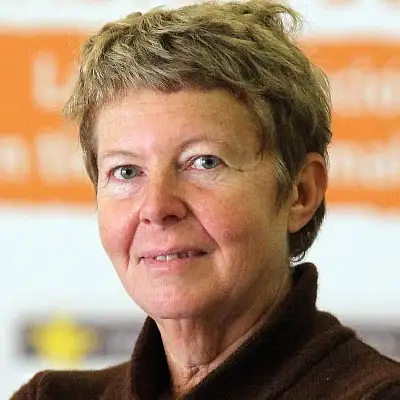
Today my guest is Donatella della Porta. She's a professor of political science at the Scuola Normale Superiore in Florence, Italy, and she's a world expert on youth and student protest. We had a chance to range far and wide over this topic. We talked about why the social base for protest is broadening, why Serbia is different, and why I have too North American a view on student protests about Gaza. Guilty.
Altogether, it made for a great episode, and so without further ado, let's hear from Donatella.
Hi Donatella. Thanks for joining us. To start us off, can we just have a sort of a broad discussion about youth and student protests after the last few years. You know, globally, what have they been about? We've seen very big uprisings in Nepal, in Madagascar, to a certain extent Morocco, Bulgaria, Serbia, the students have been out on, you know, groups of students have been out on strike for over, I dunno, 15 months now. It's been a very long time. What do these recent movements tend to have in common?
Donatella della Porta: They are rooted in specific circumstances. First of all, thank you for inviting me and uh, looking forward to our conversations. To address your questions, as a starting point to reflect on this type of protest, I think that we have to consider that each of them has some specific circumstances, some specific accidents from which they developed.
In Serbia was uh, also a big tragedy that affected especially young people. But they have in common some specific characteristics of a generation Z that has been living through several crisis. Sociologists, we talk of uh, a period of poly crisis and these generations has been living through all of them. So a crisis related with the climate change, a crisis related with financial breakdown, a crisis related with the war and genocide, and crisis that affect youth in particular because it affect their future, it makes it more uncertain. And while other generations expected an improvement, vis-a-vis their parents generations, for the Generation Z, what they know is that they live in a moment of big challenges, that in uh, uh, Europe or in the west the, either the perspective of a peaceful development along their life is considered as at risk. So it is a generations that is reacting to many crisis, especially reacting to injustice and the inequalities that affect the young people in an intersectional way, but that are typical for this generation.
Alex Usher: I'm surprised you didn't mention corruption, because that's, that's an aspect that it seems to me to have been fairly prominent in some of these. And I mean, taking to your point, they, they, they may not expect a lot of economic growth, but maybe they expect more fairness in society. And corruption is one of those things that undermines a sense of solidarity, I guess.
Donatella della Porta: They are, it's different what they expect and what they look for. So they for sure want to have a more fair societies and are reacting about authoritarian power that is always connected with corruption. So very often they react to old leaders that have been in power representing the corrupt interactions between political elites and global capitalism. But they are. Afraid that what they hope will uh, not be easy to achieve. So it is also a generations that is moving, not in a climate of hope like it was often described for the generations of the sixties, a development that was expected to go in the direction of more progress.
What we know is that its progress is not linear, that it's challenged. And corruption is one of the elements, but it's not just the unfairness of corruption in abstract terms. It is the ways in which corruption's been intersecting with very everyday experiences of the difficulties of get fair treatments. Uh, with the Epstein files, what emerges now is also that what used to be considered as some pathologists that just affected global south developing countries and uh, looks now instead as something that has been permeating and corrupting also democracies. So it is not just protest it up in, in authoritarian regimes. What emerges uh, is the proof that democracies has been corrupted from within.
Alex Usher: I, I see a lot of people talking, not about youth protests, but about Gen Z protests, right? That, that's so not, not youth in general, but a specific cohort. What actually distinguishes generation Z in, in terms of activism? Are they different from previous generations or is it just, it's just another wave of youth and, and youth approach these things differently?
Donatella della Porta: In sociology, we distinguish cohort and generation uh, in the sense that the cohort is more of a statistical type of descriptions while generations tend to refer to cohorts that have been living through especially intense moment of mobilization. So we talk of 68 generations and we talk now about Generation Z as a generation that has been living through similar type of challenges.
The one I mentioned in the beginning, they've been especially active on issues of climate change war genocide, militarization, authoritarian turn, authoritarian backlash, and so on. And they have been also rooted in their specific circumstances in their own countries, but participate in a global culture.
So what has been noted for Generation Z is the fact that some type of language of cultural symbols of use of media, but also of uh, reference in some specific figures tend to go transversally across different countries. And in terms of mobilizations, what characterizes these generations is the capacity to mobilize very quickly and in forms of protests that are innovative uh, in their capacity to use artistic performances and forms, bridge them with forms of direct actions. They're mainly peaceful protest, but they face often harsh repressions. So they try to, to navigate this type of challenges through the use of innovative repertoires that tend to spread from one country to the next. Also, thanks to a very intense type of communications made possible by social media.
Alex Usher: One of the things that really intrigues me about this latest wave of protests is that they are described as youth protests rather than student protests, right? And there was a previous generation here uh, you know, 1968 in Europe, to some extent Tahrir Square, anti-apartheid movements. Or you know, the, the, the overthrow of the government in Korea in the 1960s.
I mean, these are cases where governments were de stabilized or overthrown specifically by students and not youth. And I'm surprised, you know, those were times when students made up a, a much smaller percentage of youth in general. Why is it that as student numbers get bigger, universities seem to be you know, less powerful as centers of protest?
Donatella della Porta: It is not that those who participate are not, or let's put it in this way, it is not that students do not participate, but the use of new technologies and also the type of knowledge that they spread also among non-students have provided some sort of spreading of resources for protest that in the past were limited to students, or mainly available to students because universities were considered to be a sort of safe spaces that also within authoritarian regimes were often considered as a bit more liberal than uh, other spaces.
Now what we see is at the same times a challenge to this freedom within universities. So if we think about the United States, Trump's politics about the universities is an extreme form, but also in other countries, even in Western European countries, universities became much more um, commodified, commercialized. Much more aiming towards creating so-called professional skills rather than critical thinking.
So at the same time, we have a reduced impact of the type of resources that came from universities themselves, the networks that were spread within universities, but also, increasing capacity from other groups to mobilize.
So the type of movements that we see are movements that also involve working class, for instance, kids, that also uh, involve kids that could not go to the universities, but then that nevertheless have enough uh, resources to, to mobilize. Something that in the past was more difficult to achieve.
Alex Usher: We're gonna take a short break. We'll be right back.
And we're back. So, if youth politics is increasingly happening outside formal student organizations, or student movements, what does that imply for the role of universities as institutions? Are they losing influence over political socialization, or are they just playing a different role than they used to?
Donatella della Porta: I think they tend to lose capacity to socialize when they assume a very narrow visions of themselves. And the type of transformations of the universities from the time of the 68 protest to nowadays is quite evident. Less people participate in campus life. Less students participate in campus life because they have to work at the same time. The perceptions that the universities want to give is not as producer of critical thinking, but of producers of specific forms of professional informations. Also universities became, in many occasions, instrument of repressions themselves, so, that type of protections of the students we saw, that's again, taking the most extreme example of the American campuses. Uh, very often administrations called the police inside the campus denounced their international students to the police themselves, so they are no longer perceived as a space of uh, socializations of the young to futile life.
And um, uh, I have also an anecdotal experiences in, I went to Germany, invited to speak about this type of uh, issues, invited by students, but to speak outside of the universities because they perceive their universities as censored spaces, not free spaces.
Alex Usher: What's the role of technology in all this? I mean, you, you sort of mentioned this earlier, early on in the interview you talked about you know, the ability of individual students to be creators, to do creative work. And they do it online and they don't, they don't need to be you know, physically present together on a campus. Like Guy Debord, it would be very difficult to imagine Guy Debord showing up now and, and being useful because that notion of public spectacle just, it doesn't, the public space doesn't work the same way. But also it means that students can, or youth, can organize themselves remotely. Again, it changes the distance. How do you think that changes protest? Either for students or for youth?
Donatella della Porta: It's often a double type of process that we already saw very clearly during the pandemic moment in which people were isolated and forced to live a life online, but at the same times, they were looking for occasions to meet also physically. What I mean is that, online and offline are not to be considered as two separate worlds, but very often the type of connections that you build online and the capacity to use different type of technologies, because often we talk about, for instance, the social media as if it were just one homogeneous type of media. But Facebook is different from telegraphic, different from TikTok, and it is often also used in different way by generations that grew up by stratifying different means of communications, not substituting one for the others. So what we observe when studying the social is that the social effect also different forms of communications, journalism televisions, radio, podcast and so on.
What is typical of the use of the social, and it was observed already during the Arab Spring, is the fact that they are known for very quick and massive mobilizations without intermediary, uh or without too strong leaders. This creates potentials for protests to spread very quickly, but also it creates then a challenge in keeping the momentum because those type of organizations are sometimes missing.
Alex Usher: And presumably also it, it creates some challenges in actually articulating an agenda. It's easy to mobilize against something, but if you want to actually have the, you know, a communal process to come up with alternative ideas, technology's not great at that, right? And so, you can bring people out against something quickly, but not necessarily create a longer standing movement. Is that fair?
Donatella della Porta: Yes, but this is also why usually these movements that tend to use a lot, uh uh, new technologies also tend to organize offline. So if we think about the Arab Spring, so previous generations, but also protests that were very participated by young people, they were called Facebook or Twitter revolutions. But in reality, their innovations was the creations of camps, Tahrir, and uh, Plaza del Sol in Spain uh, spaces in which people could physically participate. So I think that's the, the movement and the activists are aware that's communications intense emotions, but also the development at the cognitive level of ideas cannot happen only online.
And we have done some research on the post pandemic time and for many social movements, it was actually an open issues, how to keep the inclusive capacity of some social medias, for instance, to a lot of participations of elderly people or people that were living outside of the city centers and so on. But at the same time also incentiving physical participation. So it's a mix. Online and offline. And uh, it's recognized that communication online lack this capacity to develop strong emotions and ties. But it is also not true that movement use only socials. They are very aware that in order to mobilize, they have to go beyond the internet and in real spaces.
Alex Usher: Yeah, I, before we finish, I wanna ask you about Gaza, which has been the subject of a very big mobilization. It strikes me that the anti Gaza or the protest against Israel's actions in Gaza have been more campus centric than youth centric, right? That they have been uh, they've occurred on campuses more than they have, this may be a North American bias, I admit it may be different in other countries. But so I guess two questions. One is, why, why do you think that might be that students specifically rather than youth, are interested in issues that are you know, on the other side of the world in some cases. And second of all, know, specifically in the United States, it's striking to me how much more involved students are in talking about an issue that happens around the world rather than the, you know, the arrival of fascism in the United States itself, right? Like, we don't, we've seen a lot of, of, of protests about Israel in Gaza in the last three, four years, we've seen very little about ICE, you know, the and, and border patrol, things like that. Why do you think that is?
Donatella della Porta: I think that uh, it is a bit of the North American bias
Alex Usher: Fair enough.
Donatella della Porta: what we saw in Europe is a very large participation, for instance uh, in Italy, in an intensifications of the protest uh, against what the activists define a genocide in Gaza has been the participation of the workers. Doctors that have uh, blocked arms to be loaded on uh, uh, ships and so on. And the large participations also of young workers with a migrant background that connected experiences of exploitations at work with experience of discrimination because of their religions colors and so on. Uh, this has been the case also in other uh, European countries that we are studying. With the mobilization status been very widespread, also outside of the universities, but there was a moment in the spring of 2024 where indeed this type of protest were very present at the universities. Also a bit imitating, importing what was happening in the United States. That I think, that's the reasons why there was this type of sensitivity, was related to international students, but also was related to the growing importance in sociology and history of reflections on colonialism, colonial past, intersectional inequalities. So it created an alternative uh, type of knowledge on what was going to happen.
Thinking about nowadays, the type of uh, repressions in the campuses, it is been very heavy as I mentioned, also often with the con events, the complicity of university elites. So the, the campuses are now an extremely dangerous place to develop protest. And there is a lot of protest at the moment in the United States, Minneapolis, Chicago New York City, California, have been places in which people mobilized. But they also mobilized in the defense of specific places that were often the type of neighborhood where migrants live and in which students played the role. But they also converged with the different type of organizations that resemble more the organizations of the Civil Rights Movement with a lot of mobilizations also of society and religious groups outside of the university itself.
Alex Usher: Donatella della Porta, thanks so much for joining us today.
Donatella della Porta: Thanks a lot. Thank to you.
Alex Usher: And it just remains for me to thank our excellent producers, Tiffany MacLennan and Sam Pufek, and you, our listeners and readers for joining us.
If you have any questions or comments about this episode or ideas for future ones, please don't hesitate to get in contact with us at podcast@higheredstrategy.com. We're off next week, but join us in two weeks when we'll be joined by Georgi Stoytchev. He's the head of the Open Society Institute in Sophia. He'll be talking to us about recent developments in Bulgarian higher education, and specifically its very special brand of university rankings. Bye for now.