Subscribe
Share
Share
Embed
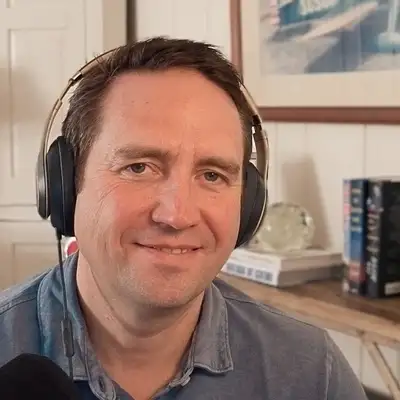
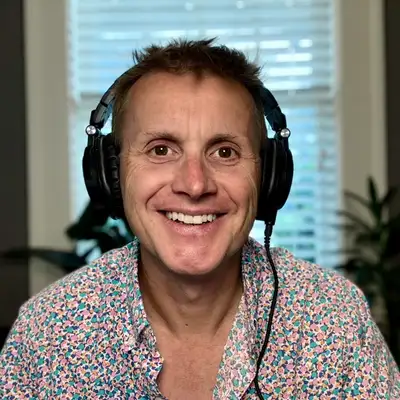
Space Insiders is your bi-weekly deep dive into the intersection of space, cloud technologies, and entrepreneurship. Hosted by Tony Sewell and Rob Ruyak, both seasoned space-tech executives, this podcast features candid conversations with founders, investors, and entrepreneurs shaping the future beyond Earth. Whether you're launching a startup, investing in innovation, or just space-curious, Space Insiders gives you the behind-the-scenes insights you won’t hear anywhere else.
New episodes drop every two weeks. Subscribe now and join the orbit!
Disclaimer: The views and opinions expressed in this podcast are those of the hosts and guests and do not necessarily reflect the official policy or position of any organization or employer.
Welcome to Space Insiders. My name is Tony Sole, and as usual here with my space mate, Rob Riak. How you going, Rob?
Rob Ruyak:Good, Tony. Good to see you as always. Looks sunny there.
Tony Sewell:Yeah. Oh, man. It's been it's been great. I'm looking forward to getting down to the beach this weekend. I know it's not like that where you are.
Rob Ruyak:Nope. Nope. It's not. We had this ice storm, I don't know, like, three years ago, it feels like at this point. I think three weeks ago, and it's only now melting.
Rob Ruyak:On the other day, it was like, I think it was 39 degrees, and I didn't wear a jacket outside because it's all relative. It felt like I was in Florida. It was
Tony Sewell:glorious. Nice.
Rob Ruyak:Not out of it yet.
Tony Sewell:Well, Rob, we just wrapped up another great interview. This week, we spoke to a guy by the name of Mike Morris. He's the founder and president of a company called Citomni, a Denver based company. It was a real surprise package, this one.
Rob Ruyak:It was. Yeah. I've known Mike for a little while now. He got introduced to me by phenomenal colleague of ours from AWS, Rachel Jacobs, a couple years ago. And, you know, this interview, I think, will surprise everybody with what we talk about in the beginning.
Rob Ruyak:But
Tony Sewell:And I always think we should give too much away because
Rob Ruyak:No. It's hard not to, but listen to the whole thing. But the beginning is really good. But he's founder, and he's the head of Satomi. They do a lot of different things.
Rob Ruyak:But specifically out of our interest is, you know, they focus a lot on space system software based in Denver, launched in 'twenty three. And Mike's had a lot of experience. He's worked at Lockheed Martin as an engineer. He was also one of the early employees, senior director of operations at ASI, which was acquired by Rocket Lab a handful of years ago. He also ran a lot of the operations in software engineering as well.
Rob Ruyak:So, he spent like twenty two plus years in super senior roles and has crossed that kind of large company, large company acquired by small, mid sized company to actually starting one. So he's very interesting, very technical, but also an interesting leader. And it was a great interview.
Tony Sewell:Yeah. And I think without giving details away, the opening couple of questions and Mike's description of the origin story of Satomi is generally riveting and I am not going to give it away. Make sure you listen to it. Think you're really gonna enjoy it. So, Rob, I think we'll just let people get to the interview.
Tony Sewell:What do think? Let's do it. Alright. See you in a minute. Alright.
Tony Sewell:Welcome back. And, today, we've got a great guest joining us, Mike Morris, the president of SeatOMNI. Mike, thanks for joining us.
Mike Morris:Yeah. Hi, Tony. Hi, Rob. Thanks for having me on. This is great.
Rob Ruyak:So good to see you, Mike. I'm excited for this.
Tony Sewell:Yeah, Mike. Rob has told me a lot about you. And as we sort of kick in, can you tell us I was having a little bit of a look at the website, First Seat Omni, and I was interested to kind of kick off with you talk about We value thinking outside the box and providing creative solutions that others may be intimidated to solve. So I'd love to kind of start there and hear about what CisOmni does and then we can sort of learn a little bit more about you.
Mike Morris:Yeah. That sounds great. As you know, I can share with you some of the history on how the company got created. But really, it is, you know, I look at the group that we have together. A lot of the employees that we have, I've worked with for, you know, twenty years or longer.
Mike Morris:And so it really is, you know, you build this friendship and this dependency on each other and you look at challenges and everyone has, you know, we've been working together so long and doing the same same you have the same personality and attitude as far as like, you know, there's no mountain high enough. And so that really is, you know, the feel of satomany is like, let's let's make it happen and, you know, tackle every even the toughest challenges.
Tony Sewell:And can you tell our listeners what Satomi means and the origin of the name?
Mike Morris:Yeah, for sure. So Satomi is Oglala Lakota word. And you know, on the website, we have all of it throughout. The way that it started is, you know, forming a company is always hard, you know, and even finding a name, you go out there and you look at a domain name and every single one of them is taken.
Rob Ruyak:It's so true. You just gotta find dot something.
Mike Morris:Right. Dotsomething. Yeah. But for us, we knew we wanted is we wanted to embrace you know, my native culture. And so we really were looking for Lakota word that was a good match.
Mike Morris:And that's where, you know, when we did this, we were thinking space, we're thinking sky, the stars. And the so we found a word, satomany, and there's a common phrase out there, Marcus satomany, which means everything on Earth. And we ended up talking to the medicine man in our tribe. And we wanted just more insight on the word. And he was really helpful in explaining it.
Mike Morris:Really, it was just opened our eyes because as he described it, even though, like, if you look it up, a word of meaning all of them throughout, he describes it more as where you are now and where you're going. And it's this world and it's the spirit world. So it's it's not just the universe. It's, you know, there's no time boundaries. It really is.
Mike Morris:It really is everything. And so, you know, when he described it that way, we knew like it was a perfect fit. We really love the word itself and we love the meaning behind it. And it was very special to us to have, you know, his name was Warfield. We were to have Warfield's support on this in in helping us find this name.
Mike Morris:So, you know, in related to that, also, we you know, it's important to us to look at the Lakota virtual virtue in and really form our company around it and communicate it to all of our employees that this is yes, this is what we believe in. So as you look at honesty, generosity, kinship, spirituality, and many of the many of the other Lakota virtues, that's what we want to be. That's what we want to tell our employees, inform the company around, because we really believe that that's, you know, makes us gives us our solid base.
Rob Ruyak:My god. Mike, can I please work for you? I got to tell you, that is so powerful. Didn't I had no idea the the background there. And I don't think I've ever heard a story so meaningful behind a company name.
Rob Ruyak:You know, that's it's really impressive.
Mike Morris:Yeah. Thanks, Rob. It's you know, it really hit home when we decided on it. I mean, like, you know, as I even know, I started as finding a company name is challenging, you know, but when you settle on something and really feel it inside, you know, it makes you, you know
Tony Sewell:I I love about that story, Mike, is like so many times when Rob and I have had these discussions with the people we've interviewed, so much of it has come back to culture and we had a whole sort of reflective session on this a couple of weeks ago and it reminded what you were sort of talking about reminded me, I think it was Jana Spruce who was sort of reflecting on how culture is the only thing I don't think it was Jana actually, anyway, how culture is that's your true competitive advantage and the differentiator. And the fact that you've started with that, with the name, I think it backs up sort of everything we hear. So the story you've told and the origin behind Sittoni's name, how does that come across in the way you run your business and the mission of your business and the types of business that you're going after?
Mike Morris:Yeah. We're still very high-tech, but it is a daily reminder of what we're grounded in. And so in finding that balance is super important because I think it does. Our employees are very aware of it and they know that everything that we're doing needs to be ethical. We need to be honest with each other.
Mike Morris:You know, we need to have that friendship and collaboration to really grow the company. And I think that it is, you know, at this point in my life, you know, it's, you know, I've experienced a lot through the years and it really boils down to that is I really want, you know, the employees to be part of the family. You know, it seems it sounds cliche is with a small company, but it is true. That's what I grew up with with ASI. And that's what I think is is going to be.
Mike Morris:That's what Tony is as far as like, this is an enjoyable place for the for the employees, and we'll still continue, you know, doing high-tech fun stuff.
Rob Ruyak:It's incredible. It's incredible. Wow. What a what a way to retain skills and talent. I love it.
Rob Ruyak:But what is what is the company do, Mike? So let's love to learn a little bit more about what you guys do and how you bring all that passion to the market.
Mike Morris:Yeah. So, we I would say our areas of expertise are, you know, still on the space side, you know, still a lot of space software, you know, you know, a lot of expertise in ground systems, mission operations and flight software. You know, we're doing some IVMV on launch vehicles as well. And then we have general software and, you know, we're doing some case management system software. And then we have, you know, our software products.
Mike Morris:And so it's, you know, mostly space focused, but also branching out into general software. And then, you know, I formed a partnership with with twenty one software and we're growing the cybersecurity side. And that includes a product called T cell, which is a which is a security hardened spacecraft OS. So still related, but just complements the work that we're doing here.
Rob Ruyak:Is it? So, tell us more about the business. So, a product and kind of labor based business, like a consulting firm too? How does that work?
Mike Morris:Yeah. And it's very much modeled like what we did at ASI, where we want to do enough contracted engineering to still fund the R and D for our product line. So we have prospector, we have a case management system, and now we have T cell that we're involved in. And that's what we do is all of the contracted engineering work we do is in the state still in the same domain so that if we pull someone off of contract and engineering and put them on the product side, we're bringing in even more fresh ideas into that and capability that they can continue to grow. And so it is a balance.
Mike Morris:You know, I look at it and, you know, we were working with a lot of great customers, you know, doing challenging, you know, challenging projects. But at the same time, being able to pull that knowledge base back in and and grow your products, I think, is key.
Rob Ruyak:Yeah. And I think you and I were talking about this pretty recently on the, let's say, the flight software, flight OS type of capabilities being developed in the market today. You know, Tony and I talk a lot about this. Like, you know, the space industry is this revisited market. There's years of it being developed.
Rob Ruyak:Right? It's not a new thing, but it's revisited from a commercial lens. And with that, a lot of the the new market dynamics and the and the ways that commercial entities buy and sell and everything else. And what I found with a lot of companies in this industry to date, you know, a lot of it's all vertically integrated, and especially things like the heartbeat of the spacecraft, which really is the OS. So how is that is that changing?
Rob Ruyak:And and as you guys work with customers, are you I mean, is it still a lot of kinda like you provide that OS at Core Flight software and then you customize it, and it's it's still very custom cabinetry? And are you seeing this particular part of the industry moving towards more of almost like a Windows type of approach for every operating system where you install it once, it's got standard hardware, and it just runs? Where do you see this kind of going?
Mike Morris:Yeah. And, you know, what we're doing with T cell is very much as we support, you know, hardware platforms. But if you're come if a customer comes to the table and they have a new flight computer, then we need to put the OS to that flight computer. So it is kind of a modified off the shelf, you know, in most cases. But I do see that, you know, it's interesting because, you know, I think commercial the commercial space industry has really pushed, you know, people to do things faster and cheaper.
Mike Morris:And so I think it's the companies have to evaluate and look at the ROI on doing it in house and being vertically integrated or looking at a proven product. And, you know, it's a tough decision because, you know, that decision not to do it. A lot of times it's, you know, you've done it the same way for for years, sometimes probably too many years. And now you have to maintain this legacy software. You need to test it.
Mike Morris:You need to maintain it. You need to enhance it when there might be a technology that isn't supported that much anymore. And so it really is that trade off of finding, you know, what we look at is like we can provide products that are a good replacement for the current tools that are in house. So whether it's prospect or a T cell, you know, it's the we can come in and not only provide the tool, provide the expertise to support that. So let's say on the T cell side, we have a team of security engineers that go along with it.
Mike Morris:So that way, companies, they don't need to have their form of security team just to figure out how to protect the spacecraft. They can get this product with the supporting experts in that area to support it. And they don't have to grow their own internal team. And I think it's been, you know, customers will still decide or companies will still decide to do it all in house as well. But it just means they have to grow a new business unit, you know, just like on the prospect or side, they need to have data analytics group just to know how to take that data apart and the domain of to be able to make sense of that data.
Mike Morris:So,
Tony Sewell:Mike, the comment you made about the pressure to move faster and cheaper, what sort of risks is that creating? And you talked about cybersecurity as well. I'd love to get your thoughts on that.
Mike Morris:Yeah. You know, I think that it's, you know, the risks that I introduced is if you're doing it the same way you've always done it, you're usually minimizing those risks because even if the schedule takes longer, you know what it's going to, you know, you know, the budget and schedule around it for the most part. If you're introducing a new product, then there is risks of the unknowns there. Is this going to work perfectly for you? Are you going to have to customize it?
Mike Morris:Then, you know, and that's why I really think that the products that have out there, the commercial products out there have to be proven and they have to have great support. You know, and I look at it as like for us to put any product out there. We have to be able to stand behind that and help the customer through any of those challenges on the cybersecurity side, you know, doing it in house. The government is coming, out with a lot of policies and regulations surrounding cybersecurity in space. And that's from day one, that's the risk.
Mike Morris:I mean, you'll write a proposal. And if you don't know how to interpret those policies, you're signing off on a proposal saying, oh yeah, we can do this without knowing the lower level details of the risks that you might be introducing or the costs that you might be introducing to actually accomplish it. And so, you know, we've worked with companies at that level to overlay what we provide as a product on those, let's say, those security controls and what the contract is requiring them to, to comply with. And it, you know, and if if they take shortcuts right now, there's not a strong audit to say, did you do this correctly? But I think as we move forward, you know, as as there becomes as technologies advance in space and there's more threat vectors, you know, there's definitely going to be a threat there.
Mike Morris:And then there's at some point, there's going to be a process to be like a, you know, almost like your safety or quality of saying, how have we checked all these cybersecurity requirements on the spacecraft? Because it's just, you know, because as we're advancing technology, those bad actors are advancing technology Do as well, and we have to protect
Tony Sewell:you think the industry is keeping up with the potential for that threat?
Mike Morris:I think we are behind because even as we talked about at the beginning of the call, that's the last thing you wanna worry about is cybersecurity. And as an engineer that has done, you know, software for years, it's like, just want to get a job done. I want it to have mission success. And but cybersecurity needs to be addressed as more secure by design. So you need training out there, not only for the managers to know what they're asking for, but also the engineers to know how to do, you know, software and best practices related to related security.
Mike Morris:And it needs to go all the way up to have funding and support by the company to have it in place. And so, it's a challenge.
Rob Ruyak:So, what I mean, just to make it real for people that are not familiar with it, you know, what are the biggest concerns around cybersecurity in space, in your opinion?
Mike Morris:Yeah, I think cyber, the biggest threats right now, you know, are, you know, attacks from the ground, you know? So let's say you have a mission ops center that's compromised because you look at it and there's all different kinds of threat vectors coming from the ground perspective. And on the spacecraft, I look at it there and there's interference. So of course, there's there's interference with the spacecraft. If someone wants to try and send some signals to block your signals or to interfere with them, that's a reality.
Mike Morris:But at the same time, on the spacecraft, you have supply chain issues or some of the spacecraft, you can upload a patch there. And if you don't know where that software came from or if you don't trust every line of code in that software, you don't know that you're not injecting some vulnerability. And, you know, just to give you an example, a of the software packages out there right now, that's a commonplace for trying to inject code that's malicious. And people this time, they're like, oh, here's some more open source code. You know, if it's open source, I can probably trust it.
Mike Morris:And that's really what it gets down to is, do you know where do you know where all of the source code came from that's on your spacecraft? Can you trust all those hardware components on it? From mission ops, can you trust the commands that get sent up that are from the source that, you know, that they were supposed to be sourced from? Yeah, it's, you know, a lot of different a lot of different vectors. But it's something that, you know, has to just become more of an everyday knowledge for people instead of more of a react to it after something bad happens.
Rob Ruyak:Yeah. I mean, that makes sense to me. I mean, I think the jamming part, intercepting comms, embedding viruses and other adversarial issues within the code base. But what about also there's like you know, everyone cares about these optical satellite links now, these voice holes and, you know, being able to, you know, transmit comms between multiple satellites and multi orbits and all this. I mean, how real is that potentially as a threat?
Rob Ruyak:Sounds like to me it could be a pretty significant threat.
Mike Morris:Yeah. I think that thing is, you know, I don't know why I geek out so much about this, but I truly think that when we get into these mesh networks, you know, with optical links and we're treating space assets the same as we treat ground assets with, let's say, the bandwidth and the throughput with, you know, data, it's gonna be excellent. I mean, I think the ideas will just grow exponentially from there of what we what's possible. But at the same time, you think of the vectors that become introduced, you know, even five g, you know, direct direct to the spacecraft. We're now having a lot more, you know, a ton more people with access directly to that spacecraft.
Mike Morris:And just like with optical links, it's like it's going to be instantaneous when, you know, when you can have someone that's constantly trying to hack your spacecraft. It's it's excellent. I think it's a transformational technology, But at the same time, we need to look at it and protect it.
Rob Ruyak:Yeah. And it's I think you were saying before before we started recording that this is not something where it's, hey, we need to figure out how to do this because it's going to come. You're you're you're you were telling us that it's already happening, right? I've already seen. Yeah.
Mike Morris:Yeah. And that's the thing is, you know, we're members of Space Isaac and it's a it's a. Govern government formed entity that's membership based, that really is a central area to collect all space cyber incidents and responses. And, you know, I sit in that weekly meeting and get briefed on the attacks that are going around. And it is it's eye opening of all the different angles that, you know, the space industry is being done.
Tony Sewell:All right. So, Mike, just to, I guess, pivot off, I want to get too bogged down in depressing topics like the threats in space, but it is super important. But going back to your business, I think one of the interesting things that we've seen as interviewed different people in different parts of the space industry over the last twelve months is their experiences. And you came from a large company, ASI. You lived through an acquisition and you decided to create this small business.
Tony Sewell:So what's been the hardest thing to adjust to leading a small business? There's obviously a lot of benefits of being small as well too, so.
Mike Morris:Yeah. Well, you know, I think, you know, ASI, when we left Lockheed Martin, there was three of us that left Lockheed Martin together and grew that company up as a small company and which ended up getting acquired by Rocket Lab. And so that's, you know, I had a lot of great experience, you know, both from the engineering side and also on the business operations side of what it took to run a small company and to grow it. What I think is one of the biggest challenges right now as a small company is The number of regulations that get passed down on us. I look at, you know, security accounting quality.
Mike Morris:All of those have slowdowns that come with their own policies and procedures and everything that we have to be in place to conform in or comply with those comply with those regulations. And it's and it's not at all good in nature, but it pulls the focus away from the technical side. And so just being a small company, I think that that's one of the challenges that you have to balance and be prepared for if you want to hold some of these government contracts and work in the big space.
Tony Sewell:And how what have you found as being, like, a competitive advantage that you have as a as a as a small sort of 15 person company working in this space with with some of the the biggest names in the industry?
Mike Morris:I think it's just being a close knit company, you know, so, you know, our employees get together and, you know, we're collaborating weekly and leaning on each other a lot. And I think that that's, you know, in a bigger company as you grow, you kind of get siloed and you get put off on your projects. But we still had a good size, you know, where, you know, there's multiple times a week that people are collaborating together, sharing ideas, you know, providing input on other programs. And I think that really is the benefit. So it's more of a group effort in a lot of cases when there's some tough, tough challenge to tackle.
Mike Morris:And I feel like that's partly our culture and also just the benefit of being small enough where we can lean on each other a lot.
Tony Sewell:You're muted, Rob. Shoot.
Rob Ruyak:Can you edit that one out too? Welcome to the party, Mike. But keep the snort in, though. What do you think is the hardest part about running the company, Mike, Especially as a small company. What's the biggest challenge?
Mike Morris:You know, I think the biggest challenge, honestly, is staying on top of business development, you know, and always having, you know, looking out to the horizon, you know, looking for those opportunities and just planning for it and not, you know, always with the idea of, yes, we can grow the company, but also just maintaining and keeping, you know, keeping exciting work going and looking for new opportunities, you know, and I think, you know, we we ask for input from our experienced engineers and we ask for input from our from our young fresh engineers also that, you know, to feed into like this idea generation. And as we come across an RFP, what are those different ways that we could tackle it? Really, that is one of the challenges, I think, is making sure we're on top of business development and making it a priority in the company. And then, you know, on the other challenge, you know, like I said earlier, is just complying with all on the business side, whether it's accounting or security and quality. You know, those things are are challenging just because it pulls away from some of the engineering.
Rob Ruyak:Yeah. It's interesting because I think in what you guys do, I I mean, you do a lot. But if let's say the on the space side, It's really hard just to hire someone who's, like, really, really good at networking and and positioning product. I think in your world, it's so heavy kind of on the engineering and domain expertise side. It's gotta be difficult to to find those right people.
Rob Ruyak:I mean, we've done it. We had a tough time, you know, Tony and I, we were building teams. But you're not selling something that a lot of people know a lot about, like the cloud or servers, right, or packaged software, right? So, I'm assuming that one of the biggest challenges and also probably opportunities is that
Tony Sewell:you have a lot of a lot of
Rob Ruyak:the engineers are doing that work too, I'm assuming, right? So, there's a lot of wearing multiple hats. And I think we've talked to a lot of people that have small companies and startups, and I feel like that's like the biggest challenge is, you you can only do so much. You can only hire so many people. You only have so much funding.
Rob Ruyak:So, there's this trying to find a balance between playing multiple roles for a lot of the different people in the company. So, that's got to be a I can see that being a pretty difficult challenge. And also educating the customer on what you do is tough probably, too. Right?
Mike Morris:Yeah. And you said it perfectly because, you know, like when from an from a technical perspective, I love those, you know, those people that have a lab in their basement and, you know, they're creating, science experiments. But at the same time, if I need someone to talk to a customer, we need to write a proposal. That's a whole different skill set. And so, we are mostly engineers in Suttoni, but at the same time, try and kind of get people to wear multiple hats and still contribute.
Mike Morris:You know, it's surprising how many people want to stand up and at least help out where they can.
Rob Ruyak:Yeah. So, when ASI was acquired by Rocket Lab, how long did you stay again? I can't remember. You had told me. Yeah.
Rob Ruyak:Stayed at Lab for a while. Right?
Mike Morris:About a year. Yeah.
Rob Ruyak:Okay. And what was that transition like? Was that tough?
Mike Morris:You know?
Rob Ruyak:I mean, they've grown significantly. They're doing, I mean, great things. You know, I'm sure that was a big transition.
Mike Morris:Yeah. You know, I think it was, you know, a great experience. And Rocket Lab is a great company, you know, and I really enjoyed working with the people there. But it does, you know, part of the transition as you go through that acquisition, you know, it's you really have to, you know, like when I look at it and look back is I can point would be like, you know, you know, over communicate, you know, try to be as transparent as possible, really keep the morale up of your team, you know, your company and keep everything positive because there are changes, you know, and you're going through this, these transformations to more adopt what the parent company wants, but it affects titles, it affects, you know, sure, it might affect your responsibilities and you just really need to look at it as far as being how do we how do we keep all the employees and staff, their best interests, interests up front and make them aware that there's going to be changes. But, you know, in some of those changes is like, okay, I don't agree with this, but in the big picture at the business and it's what's best for the parent company.
Mike Morris:So I think that's just it. There are challenges with it. And I think in the end, I stayed for about a year and I enjoyed it. But I just knew that, you know, there was there was more out there. And I I really enjoyed kind of what we did with ASI.
Mike Morris:And so, you know, creating to Tony was, you know, was always on the front of my mind.
Rob Ruyak:Yeah. You're one of those people that have that, you know, fire in the belly to start something new and, you know, own something impactful. So I get it.
Tony Sewell:Mike, what's it like be like, growing a business in in this environment? Because, like, we talked last week about So the Space Capital guys had just put out their latest quarterly report and they talked about how the space industry, like comparing it to the rail industry, we've gone from building the railroad to getting the route, this is not a speculative industry anymore. It's very much a it's becoming a more important tier and how businesses think about investing and whatnot. So that obviously creates challenges with staffing and, like, you're competing with, like, companies like Amazon and and SpaceX and and others for talent. Like, how how do you how do you deal with that?
Tony Sewell:Because that's gotta be that's gotta be really challenging.
Mike Morris:Yeah, it is challenging. Know, part of it is you look at some of these larger companies too, and salaries have gone up a ton and just being able to in the industry and be competitive. It's a lot of work and something we have to constantly be on top of. But a lot of it goes back to the people we have and the people they you know, and so that's when we're looking to grow the company, you know, that's the first, you know, that's the first source we go to is like, do our employees have any contacts or who are the people that they know, you know, that would be able to say, yeah, can join a great team. And it really is a lot more by word-of-mouth and networking that we end up growing the company.
Mike Morris:And it's still there's a lot of people that reach out and and are looking for are looking for opportunities with a smaller company. So it's always exciting when someone calls up and wondering if you have openings.
Tony Sewell:Yeah. Rob, before you came on, Mike and I were sort of reflecting on the double edged sword of being with a big company. You get access to lots of resources and the pay can be good for a while until the company decides that they don't need that part of the business anymore and then you don't have anything. So, know Rob and I, Mike, have talked a lot about the idea of creating a business and doing something ourselves and having some control over our destiny was part of the reason why started off doing this podcast. I mean, I think that's gotta be a I know I feel that the older I get and the wiser I get, well, I hope I'm getting wiser, but, you think differently when you're in your twenties, obviously.
Tony Sewell:But I think that's gotta be a big realization and lifestyle and the community of the company you're with and the values you reflected on at the start. Just hearing you describe that at the start, could feel the connection, and I think that's gotta be a really strong draw for talent for a company like yours.
Mike Morris:Yeah. It does. I think that's, you know, what I really like about it is, you know, we wanna have a good company. We wanna have, you know, and I think, you know, people work hard, but they also have a lot of fun. And, you know, I think that's just key to it.
Mike Morris:You know, it's like, are you having a good time? You know, you're learning something and it's, you know, and if that's the case, then usually, you know, the company will just grow from there and more people will join on because that's really what you're founded in.
Rob Ruyak:I I don't know if I could say it any better, Mike. I mean, to your point, Tony, the older I get and the longer I work, when I take a few minutes to kinda really reflect on what motivates me and what frustrates me, you know, as a leader or manager, I I really do think that and and, Mike, you ref you referred to this, and it's partly why I wanna ask the question around an acquisitions because things change so dramatically. I think the best leaders ask their people, like, what's your plan? And if the if those folks don't know what their plan is, then it stimulates them with that question and then think about it. And I do think there is, like, an indirect or nonobvious retention aspect to that as a leader.
Rob Ruyak:Like, you keep your people when they know that, oh, like, there's a point like, there's somewhere I can go with this. And I think And not
Tony Sewell:just not just being used as a tool.
Rob Ruyak:And not just being used as a tool. And I think also the older I get, I realize that it's also on me to make sure that I'm thinking about what I wanna do long term. And then if the company doesn't have the opportunities for me to get to where I wanna go and is not supportive in those areas, it's my decision to make a change. And I don't think it's obvious to most people. Right?
Rob Ruyak:I think we're you know, so oftentimes, you're just going, going, going, going, going, and and then almost assume that there's gonna be, like, a reward at the end of that, like a promotion. Right? Or or anything. That's not how we should live our lives. It's just how it goes.
Rob Ruyak:But I think even you know, and for some people, having a mission that is, like, so well thought through and so well understood, and it's not just a a recruiting vehicle, but it's really embedded within the DNA of how you make decisions. Almost like the social contract within the organization like, Mike, you have implemented. For someone like me, that's very attractive. Like, I I love that. Because in instances where I would assume this happens on a you know, I'm just I'm gonna guess.
Rob Ruyak:You know, you're always gonna have conflict in an organization, and you're gonna have everyone's gonna have really good ideas. But at the end of the day, if you can turn back and say, what's the mission of what we're trying to achieve here? Right? Does that fit with it? I think that helps make decisions, and it really helps bring people to figure out how do you take the next step.
Rob Ruyak:You know, like at Amazon, Amazon is really good at this, where it's like we're customer obsessed. So, everyone in the room could have a really good idea, but someone at some point can say, Was there a customer for that? What's a customer asking for? And sometimes it really helps move the ball down the field. So, I think having a culture like that, that is like a living, breathing thing, it helps you make decisions.
Rob Ruyak:It's like a social contract is very powerful. And then I think retaining people by simply asking them what motivates them and how can I help you? How can the organization help you achieve your career goals is very important, I think.
Mike Morris:Yeah. I agree with you 100%. And I look at it and when you talk to employees about that, you see it in their response of how much it's appreciated. And it's not just talk, you know, and that's why it's, you know, it's on, myself or the other leadership to say, how do we address this? And you're totally right.
Mike Morris:And that's why I think it's you have to have a connection with your employees, you know, and for them to be able to also even just tell you that because sometimes it doesn't come out and you do need to prompt them for it. And, you know, it's just that matter of care and that culture that you're breeding that's going to make it just even that much stronger.
Rob Ruyak:Yeah. Well, I've kinda seen that in you since I met you, so it's always been good to catch up. And and, Mike, thank you for everything today. And I I thought it was a great conversation, Tony. Did you
Tony Sewell:have fun? It was. Yeah. Yeah. Really strong strong opening there, Mike.
Rob Ruyak:Yeah. Think you
Tony Sewell:you had us both mesmerized with the with the story of the company. We really appreciate the discussion. It's been fascinating.
Rob Ruyak:Yeah. It's hard to pivot hard to pivot to cybersecurity after all. Sorry.
Tony Sewell:I'm just gonna be honest. It I'm just gonna.
Mike Morris:Yeah. No, I appreciate you guys having me on. You made it really easy and I enjoyed this and hopefully we can do it again.
Tony Sewell:Awesome. So, Mike, we like to always finish the episode with just a of a fun question to learn a little bit more about you as a person. So we're interested. So if money wasn't an object and you weren't running a business, how would you be spending your time or what's that one thing that you think you'd love to be doing for a living?
Mike Morris:Yeah. You know, that's what I look at and even now, I love skiing, I love fishing, I love traveling. And, you know, being able to do that. And that's where running our business is consuming. So that's what I look forward to.
Mike Morris:You know, if I didn't have the business and I would enjoy life more like that. But that's why I'm like an even with so many. It's like, how do we eventually find that balance? You know, it may not be for a little while, but we need to get there and, you know, be able to go have that fun.
Rob Ruyak:Love it. What about you, Tony? What would you do?
Tony Sewell:One of my good mates from the army, he left the army a while ago. He'd had some sort of challenges with PTSD and whatnot, And he went off and studied horticulture. He was a signals officer like me and I'd love gardening and stuff. And I've often thought like, I would just love to have a gardening didn't. Business or something where I could just be outside mowing lawns, looking after gardens.
Tony Sewell:I didn't know any other day, always, like We've just recently moved to Melbourne, Australia, Mike, and it's a beautiful part of Melbourne we're in, and there's all these new plants and trees that I'm reacquainting myself and there's birds everywhere and stuff, and I just find myself looking at, wondering about what these plants are and what sort of tree is that. And so I I think I'd love to be doing that. Maybe that'll be maybe that's in my future. I don't know.
Rob Ruyak:I had no idea, Tony. I I know you love to talk about your grass. I look at I I look out the window now, and I see in DC, I see ice still. I see a lot of dead trees and no birds. It's Right.
Rob Ruyak:It's pretty depressing over there.
Tony Sewell:Can probably hear them coming through that my mic. There's there's been birds chirping on.
Rob Ruyak:So, Mike, here's one thing about Tony. So, you know, he just moved back to to, I almost said Florida.
Tony Sewell:I don't know why. I have I have
Rob Ruyak:I have beach and and warm weather in my head, Australia. Right? And, you know, he and his family have a great place. They have this view. Apparently, he sent me many a picture of the beach a couple blocks away.
Rob Ruyak:And so, you know, he's I'm I'm just so jealous. It's terrible. It's terrible. I think I'd be a rock star if I could be. Alright.
Rob Ruyak:That's what I do. Abs 100%. I love playing the guitar. I'm not good enough to be a rock star, but
Mike Morris:You would be.
Rob Ruyak:I I would love it. I I think that'd be fun. Just, you know, playing and making people, I guess, drunk and happy and laughing. And it's just something that is just so appealing to me. I probably get sick of of being on the road a lot, but but I've always wanted to be a rock star.
Rob Ruyak:Yeah.
Mike Morris:We just got tickets to see Chris Stapleton at the Gorge.
Tony Sewell:Oh, good.
Rob Ruyak:When is that? When is that, Mike?
Mike Morris:I think it's in July. You know, so it's gonna be hot, but, you know, that's on the bucket list is going to that venue.
Rob Ruyak:Oh, I might have to go to that. I I would travel for that. He's he's phenomenal and and live. He's really good.
Tony Sewell:The the what's that? A a venue called?
Mike Morris:The Gorge?
Tony Sewell:Oh, yeah. It's not Red Rock. It's different. Oh, no. No.
Tony Sewell:It's that's different.
Mike Morris:Yeah. Red Rocks is here. And then the gorgeous in the kind of in the middle of Washington state. Oh, right. The destination venue.
Mike Morris:Can even even the horticulture stuff, like being out there. And I'm sure it's just like, you know, peaceful and, you know, you just take it in.
Tony Sewell:He is one of the most incredible musicians, and his band is just phenomenal. Yeah. You can if you haven't seen him before, but you're gonna have a ball. It's so good.
Rob Ruyak:Yeah. I'm excited. Horticulture and music have been one in the same way.
Tony Sewell:Crossover here, Rob. Maybe there's
Rob Ruyak:a different way.
Tony Sewell:Well, you said you're talking about grass. I mean
Rob Ruyak:That's right. Yeah. There you go. You Yeah. Yeah.
Rob Ruyak:Mike in Denver. He's got a lot of expertise. Right. There we go. Well, Mike, thanks for everything, man.
Rob Ruyak:It was really good to see you. How how could people get in touch with you if they'd like to do so?
Mike Morris:Yeah. I think LinkedIn and our website is, you know, is probably the easiest. We have our capability sheet in the, you know, at the bottom of the website and, you know, just, you know, if anyone wants to just, you know, if you share my number and they wanna reach out and grab coffee, I'm always up for that as well. Awesome.
Tony Sewell:And Mike, yeah, will you will you and your company be at the space symposium coming up in a little while?
Mike Morris:Yeah. We'll be there. I think I'm only there on Wednesday.
Tony Sewell:Okay.
Mike Morris:But if I can be there more, I will, but we plan on attending.
Rob Ruyak:You're getting out there this year, Rob? I think so. Yep. Yep. Mike and I were talking about that last week.
Tony Sewell:So Good stuff.
Rob Ruyak:Yeah. I love that. I love that conference. It's a it's a good one.
Tony Sewell:Nice. Well, Mike, thanks again for joining us. And to everyone who's listening, thanks for thanks for joining, and we'll talk to you next week.
Mike Morris:Yeah. Thank you, guys.
Rob Ruyak:Thank you, Mike.