Subscribe
Share
Share
Embed
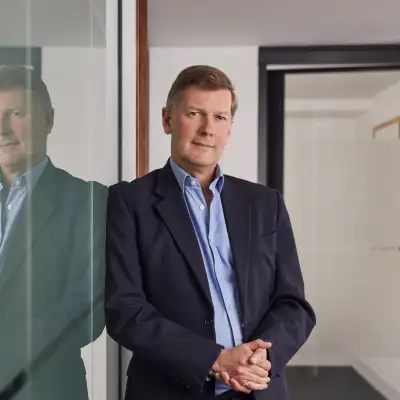
Welcome to The Boardroom Path, the essential podcast for aspiring and newly appointed Non-Executive Directors navigating the journey from executive leadership to the boardroom. Hosted by Ralph Grayson, partner at Sainty Hird & Partners, each episode offers insightful conversations with industry leaders, seasoned board directors, and governance experts. Our guests share practical strategies, valuable perspectives, and actionable advice on how to effectively transition into board roles, maximise your impact, and build a rewarding NED career.
[00:00:03] Ralph Grayson: Welcome to The Boardroom Path by Sainty Hird & Partners. I'm your host, Ralph Grayson, a partner in the board practice. In this series, we'll offer practical steps and useful perspectives for aspiring and newly appointed NEDs. Throughout its 30 year history, Sainty Hird has recruited senior board members across the City, Industry, the Public Sector and NGOs.
We're now also evaluating those boards, as well as coaching and mentoring those seeking to transition from an executive career into the boardroom. So we'll be speaking to some leading figures in the board advisory and NED world. Specifically, we'll seek their counsel about how and where to spend time and energy to make an effective transition into the boardroom. The goal is to equip recent and aspiring NEDs with tips, tactics and strategies to be most effective and build a successful career as a board director. In the process, we aim to help you to think more about who you are, how you operate and how you can make this work in the boardroom.
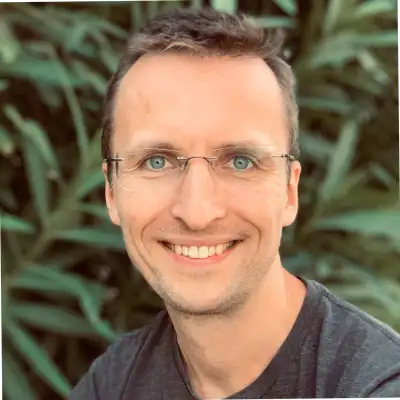
After stepping down as the founder CEO of Makers, one of the UK's leading coding bootcamps, Evgeny Shadchnev became a coach specialising in helping entrepreneurs through CEO succession. He now guides founders and boards through the complex personal, professional, and psychological terrain when the stakes are at their highest. His insightful strategies prepare entrepreneurs to confidently navigate the transition from founder CEO to a new CEO. Evgeny is the author of "Startup CEO Succession", a founder's guide to leadership transition, and is the host of his own podcast "Startup CEO Succession" where he explores real stories from founder CEOs who have stepped down, professional CEOs who took over from them, and the venture capitalists who saw the process from the inside. No founder CEO should feel trapped in their job. Much has been written about starting a business, but emotional and strategic guidance on stepping away as a CEO of a VC or PE-backed business is scarce. How the founder and the board approach the process can create or destroy millions in value, and for boards, getting this right or wrong can be one of the most consequential decisions the board will ever make.
Evgeny, whether it's been wearing my executive search hat, running a CEO succession process, mentoring a founder where he or she should step aside in the best interests of the company or as an investor director sitting on a board reviewing a portfolio company's performance, without doubt the most stressful times I have had involve founder CEO succession. So I'm delighted that you are joining us here today on your visit to London. Thank you so much for joining me and I look forward so much to your insights.
[00:03:11] Evgeny Shadchnev: Thank you so much for having me.
[00:03:14] Ralph Grayson: You've led your own succession. Perhaps we can start there. Could you maybe share a bit of background and your own story?
[00:03:20] Evgeny Shadchnev: Yes. So I started a company called Makers back in 2013 and Makers is a coding bootcamp. We help complete beginners to learn how to code, get a job as a software developer. I led the business until 2020 when I stepped down as a CEO and hired my own successor, Claudia Harris, and Claudia is still running the business to this day.
In hindsight, I realised that we've done a reasonably good job during the CEO transition. But it didn't feel like that at the moment. When I was going through the CEO transition, when I was facing the question of whether I should step down, who should lead the business instead of me, how to explain it to the board, all those moving pieces. And of course, COVID was also happening in the middle of all of this. It did not feel straightforward at all. It was only in hindsight that I realised that actually it went pretty well, and that eventually led to the book and the podcast that you mentioned, and ultimately to my work as a founder coach working with other CEOs, navigating this transition.
[00:04:21] Ralph Grayson: Fantastic story. So I think when we first spoke before this recording, you talked about three kind of missions that you want to address when you exited the business, one of which was the book andthe podcast. But perhaps you'd just like to put a bit of colour behind those three goals and where the book andpodcast fits in that.
[00:04:40] Evgeny Shadchnev: Yeah, so, the book and the podcast, they were not an immediate goal. But I did have an intention to train as a coach, which I did. I started working with other founders and this became a big part of my professional life. A vocation I absolutely love and it's one of the things that keeps me happily occupied.
Another thing is artificial intelligence and everything that happens in technology. My background is in technology. I used to work as a software developer. Before I started Makers, I studied computer science at university, and so everything that happens in the world of artificial intelligence today is of a lot of interest to me. I'm fascinated by what's happening there by questions like what it means to be human in the age of AI? How do you think about application of artificial intelligence? It's equally fascinating and terrifying to me. And the third centre of gravity in my life ismeditation. It's my personal practice. I love it. It's also something which feels very meaningful to me on a personal level.
[00:05:41] Ralph Grayson: So much to unpick here. Let's just start with your experience as a founder of how a founder, should think about the utility of a board, and also how board members should address some of those issues you've touched on with a founder CEO, mental health, mission,how they help with that maturity as the business matures.
How they can help a founder turn into a CEO.
[00:06:09] Evgeny Shadchnev: There is a lot to unpack here. So ultimately the role is to help the company to be more successful through better governance. But what it looks like in practice changes a lot as the company evolves. Because a board at a seed stage, if the board exists at all, or at a board at a Series A stage is different from a board at the larger business when it's more concerned with governance. Whereas at an early stage the companies primary job is to survive, find product market fit, and frankly figure out what the business is doing, and hopefully not to make any significant mistakes.
So the role of the board changes a lot. One of the roles, one of the aspects, is to help the founder to navigate this inevitably difficult journey on a personal level. Not to get to the point of burnout. Be self-aware enough to know when they need help. Some of it can be discussed, and maybe should be discussed, in the boardroom, but some of it requires a trusted, personal relationship with someone on the board, often a chair, maybe non-executive director, maybe an investor, who has the experience, trust, to take a founder aside and say, look, can we please talk about how you're really feeling? Because I have a sense that maybe we need to have this conversation.
[00:07:31] Ralph Grayson: Of course, this is all predicated on the founder knowing whom he or she should have on their board. How would you advise people to think about that? Particularly in the context of most founders or early stage CEOs see the board as necessarily evil. It's, if you want my check, I want a seat on the board.
So we then get into the nuance of what's the difference between an independent NED acting in the best interest of the company as opposed to an investor director who's acting in the best interest of the investor. How do founders think about what good looks like? Where should they indeed even get advice as to who should they have on their board?
[00:08:10] Evgeny Shadchnev: Maybe mistake number one that I see a lot of founders make, especially first time founders who have never seen what a good board looks like is to assume that the board is a necessary evil to be managed. As you've said, you want my money, I want a seat on the board and then founders just assume that the board is a problem that just doesn't go away.
Whereas a board can be a source of strength and support if it's built well, if it's run well, but it's not a skill anyone is born with and so first time entrepreneurs often don't even know what good looks like. If a founder, if an early stage founder, especially first time founder, is lucky enough to have someone trusted and experienced in their network that they can turn to and say, can you please help me build a board and understand what a healthy board level dynamic looks like. It can be tremendously helpful because founders have a lot of problems to navigate on a day-to-day basis and fighting a board, for no good reason, doesn't have to be one of them.
And unfortunately, it's frequently a problem because when the board is not built deliberately, sometimes random people join the board or people hire friends or people without necessary experience, but who can sell themselves as a good board member. But it doesn't necessarily lead to a good board dynamic. And so when I speak to other entrepreneurs, when I go to networking events with other founders, one of the common topics is complaining about how difficult the investors are and how to navigate a hostile board. Whereas we should really be talking about how to build incredibly helpful boards because it's not easy, but absolutely possible, and so important.
[00:09:50] Ralph Grayson: So let's turn that on its head a little bit. If somebody is invited to be a board member on an early stage board, and perhaps they've never done it before. An earlier stage board is about mentorship. It's about understanding how to help the founder raise capital, product market fit.
What would you encourage an aspiring board member who's invited to join an early stage board, what should they be thinking about in terms of can I add value?
[00:10:14] Evgeny Shadchnev: So the specific answer would be very context dependent, but there's a general pattern. If it's the first board level position at an early stage company, I would probably try to join a board where there are other experienced board members around I can learn from. Because being a good board member is not a skill that we are born with and so in order to learn how to build a good board, we need to see what a good board looks like from the inside, over the years of navigating inevitably difficult questions that come up at board meetings. If a person is considering joining as a board member at an early stage company, I would probably hesitate a bit if I sense that other people around the table will also be joining their first board role because then everyone will be learning how to be a good board member at the expense of the company output.
[00:11:05] Ralph Grayson: I think that's a really good answer. So many times now I hear aspiring board members have been told, go and join an early stage board, because that's a good way to learn how to be a board member. It used to be, go and join a charity or a not-for-profit to earn your spurs, so to speak.
And now we have so many different platforms out there, Connectd, I guess would be an example,of board advisors being introduced to founders. I think you are raising a really interesting context there that a perhaps an inexperienced founder plus an inexperienced NED is not going to lead to a functioning combination.
[00:11:37] Evgeny Shadchnev: Most likely not, especially if the board hits some genuinely difficult territory of navigating complex conflict of interest or a CEO transition which is one of the most complex scenarios to navigate. So yes, in this situation, having someone experienced at the board level genuinely helps.
[00:11:54] Ralph Grayson: Fascinating. What I'd just love to get your perspective on is the difference in your mind between a founder and a CEO and when should a founder and how does a founder evolve into a CEO?
What's the timescale and any particularpoints on the map through that evolution and how should boards be overseeing that founder in their evolution to a CEO?
[00:12:22] Evgeny Shadchnev: So the job of a founder is to make sure the company survives in its early stages, that the company doesn't die on takeoff and finds the initial product market fit. Therefore, what the founder does day to day is talking to customers, being in the detail of everything that happens in the business. They have enormous influence over everything that's going on in the company, and they're often directly, almost always directly involved in building the product. So they're always between talking to customers and building the product and knowing everything that's going on and having an opinion about everything because that's what often makes the difference.
But these behaviors often become counterproductive when it gets to the point of the transition to the CEO stage. Because at some point the company grows, hopefully by this point it has found the product market fit, it has built a team, and now the founder is not managing everyone in the business anymore. There is the first senior management layer, and the job of a founder shifts from making sure that the company survives to running the business that is already viable.
So the focus shifts from building a product, to building a company that builds the product. And the tricky thing in this transition is that the behaviors that made the founder successful at an early stage become a problem if they try to operate as a CEO. For example, what looks like being very opinionated in a helpful way and shaping every detail of the product design when the team is five people becomes very unhelpful micromanagement when the team is 70 people. So founders need to step into the CEO role and shift their focus a bit away from the product and more to the company. Start thinking about building the culture and managing through other people, especially when they've got two layers of management at some point, senior management and another middle management below them. So the job becomes quite noticeably different.
Some people make this shift. Some people try to make this shift and fail. Some people look at the changing nature of the job and realise that they don't want to make this shift in the first place and by this time, they might have been in their role for a decade and their personal situation might have changed and their sense of priorities and values. They might have started the company in their mid twenties right after university, and now they're in late thirties with two kids a mortgage and just a whole different idea about what good life looks like. So the situation changes quite a lot on a personal and professional level, and the role of the board is to anticipate this and know quite far in advance what the company is likely to need in the next few years. The founder CEO is capable and willing to deliver and whether there is a disconnect between the two?
Time matters here because if the company needs to change the CEO for whatever reason, this process really benefits from planning and just taking time to think it through. Number one reason when things go wrong during CEO transition is when the transition is rushed through. Whether it's an investor or the founder, walks into a board meeting and says, come with me, three months later, the company has a new CEO. It's a really, really difficult scenario.
But if the conversation starts two year early, along the lines of let's talk about where the company is, let's talk about what I need on a personal level, let's see how it aligns or doesn't. The chances are so much higher that both, the company and the founder, will navigate this transition gracefully, maybe with the founders staying as a CEO, but learning how to be a CEO, maybe the company changing the chief executive, but one way or another. It'll be much more graceful transition than trying to rush it through.
[00:16:24] Ralph Grayson: So I think we've established there that there's a correlation between company growth and personal growth. What, in your experience, have been the triggers that lead either party to say, we're at a crossroads here and we need to examine that founder CEO fit.
[00:16:43] Evgeny Shadchnev: There are many, but I think maybe one of the first ones comes when the business gets to the point when the founder needs to become a CEO and shift their attention to building the company that builds the product because it's a meaningful change in skillset. A founder can't get the entire team around one table with two large pizzas to have a company wide meeting. Now they need to think about careful communication acrossa large team maybe two or three international offices. That's a very different skillset. So this is one of the points when founders often start thinking whether they want to do it and whether they're capable of doing it. The board also has very same questions often because the board, through their experience, may see it coming earlier than the founder.
Another trigger point quite often is the burnout. Founders push themselves so hard to take the company off the ground, and it's possible for one year, two years, three years, five years, 10 years. But one day a founder can wake up and say that, come what may, it's just not worth my time, my mental health, my relationships. I've seen more than one marriage suffer through, let's say, excessive focus on the business. And at some point people wake up and realise that it's just not what I'm willing to do anymore.
And of course there are situations when often at the PE stage when a big investor comes in, invests from a private equity perspective, and they do it with an expectation that they will bring in a professional experience, a seasoned CEO, to trim the business or scale the business or sell the business, or maybe it's a CEO they worked with before. So it's not even about the founder not being capable, it's just an investor with control of the board having a specific preference of how they want to do things.
[00:18:38] Ralph Grayson: Yeah, I think that's a really interesting point. I mean, we often get called in to do an assessment immediately before the next fundraising. So whether that's series A, series B, PE, whatever it may be, and I think that's a unique opportunity for both the founder and the board to say, are we the right individual skill sets as a collective? And it could be as much relevant for the board members to be refreshed as it is for the CEO. But how would you advise anybody to think about that in a formal way, to examine as a collective, the exec team and the board of, are we the optimal dynamic here? Once you've opened Pandora's box there's a great danger that it becomes a finger pointing.
[00:19:21] Evgeny Shadchnev: Yes, especially if it's open too late. So if the conversation about whether the CEO is the right person for the job starts when it's obvious to everyone that it might not be the case, yes, it becomes the Pandora's Box with all kinds of consequences. So my advice would be to start this conversation very early on, not as a way to address any specific problem, but as an acknowledgement that the company is still at the seed stage. You might still be running the company for the next 5, 10, 20 years or maybe forever, but it's healthy to have an ongoing conversation about what is the job spec, what does the company need, what is your skill set, and what are your preferences? Every one, two years, just as a healthy process, just like it's healthy to have quarterly board meetings, not because the company has some kind of crisis every quarter. Hopefully not. Just as good hygiene, just like we discussed cash flow and the profit and loss and major risks and compliance. It's also healthy to have a conversation on an ongoing basis about the job spec of a CEO, what the company needs in the next few years, and the person currently holding the role. And then it becomes not a crisis to be navigated when it becomes a crisis. But rather an ongoing conversation, which is so much easier to approach.
[00:20:44] Ralph Grayson: We are seeing a lot, the investors inviting us in as the third party who are seen to be dispassionate, hopefully objective, having external counsel I think is crucial at that point to avoid any finger pointing. But one of the key issues I find, particularly for the founder CEO, is taking away that emotional aspect. The founder is the company, it defines them quite often and that draws out something that also I think needs early intervention, which is the benefit of having a coach. To actually have somebody who's on the journey with you saying, what do you want out of this? Are you acting in the best interest of the company? Are you being emotional? What's your perspective on this?
[00:21:33] Evgeny Shadchnev: Yes, having a third party, someone independent to talk through, for example, a coach can be tremendously helpful. But one other thing I would say on this, and I touch on this in my book on CEO transition, is that it can be very helpful for the board to indicate, maybe even informally, at an early stage, something along the lines of, if it ever comes to the point that the company needs to change the CEO, the board will treat the founder well. Because when this company changes the CEO before an exit, founders who might be wealthy on paper often find themselves afraid of this transition because it's not obvious what else they're going to do professionally as the next step. They might have some financial concerns. Their entire identity is invested in this business.
So from a founder perspective, they might have all kinds of fears associated to the idea of a CEO change and so from a board perspective or if there is a chair they trust or one of the directors to give an informal indication that, look, if we ever need to change the CEO in this company, we will treat you with respect, we'll make sure that you're looked after and we'll make sure that the transition is graceful, can do wonders to help both parties to have a more open conversation about whether a CEO is still the right person for the job.
[00:23:02] Ralph Grayson: So we've established it takes time to reflect and prepare and it's important not to procrastinate. So from a practical perspective,how does somebody incorporate that into regular board meetings? How does it not become a surprise to either side when it's suddenly a board agenda item?
[00:23:22] Evgeny Shadchnev: I think when it escalates to being a formal agenda item, by this point, a lot of informal discussions should have taken place already. So this is where someone like a chair of the board, someone a founder really trusts and has a good relationship with, can make a lot of difference. In my own case, I first spoken informally to my chair of the board way before it became a formal agenda item in our board minutes. We had trusted and informal conversations about what is the company, what do I need, what do we think the future for the business looks like? And discussing all of this informally, not making any decisions. But just getting on the same page paved the way to eventually bringing the entire board on the same page. Again, in between board meetings, over informal dinners, so that by the time it actually makes its way into the board minutes, into the agenda, everyone is aligned and it's not much of a surprise to anyone.
Which also makes me think of one of the lessons I learned on my own board is that all big questions should be discussed between board meetings without surprising anyone in the room on the day. Yes, board meetings are very important, but much of the real work happens in between formal board meetings.
[00:24:45] Ralph Grayson: That is your trust, I think is fascinating. The trusted space to have that conversation and when to say something. So let's presume it's the founder who's reached that decision. So they've either used a coach, again, I think that's money so well spent, or they've looked in the mirror or they've talked to the other half. What happens if they've got a co-founder, for example? How do you do that in a trustful way?
[00:25:08] Evgeny Shadchnev: That's where every situation is different. I know founders who told their co-founders that they're going to step down, but they haven't told their board yet. Just like I know of founders who went to their board first and then the co-founder learns roughly at the same time as the rest of the board. It's so context dependent. Sometimes the co-founder becomes an obvious successor to the CEO, but that quite often the co-founder is neither willing nor is capable ofdoing this job and so the CEO search starts from scratch. So here, every situation can be so, so different.
[00:25:46] Ralph Grayson: I presume you're going to give the same answer, but I'm going to turn it on its head and ask the question anyway. So if it's one board member who's got misgivings for whatever reason, how, outside of the formal board meeting, should they socialise that with their other board members or indeed is that the point at which they take the founder aside and say, I've got misgivings.
[00:26:12] Evgeny Shadchnev: Well, again, it depends. But I can see it being done skillfully both ways. I think it's less about the order of conversations in this case and more about how it's done. If a board member genuinely comes to another board member and says, look, I see this pattern. Here is what I think about it. These couple of things happened. I've got my own perspective, but I'm also curious about your perspective, and I'm honestly not saying that we should change a CEO. I just want to understand how you see this, and maybe the outcome of this conversation is that they realise that it's just part of the learning process for a CEO and not a big thing or maybe they will realise that they have very similar concerns but they never had a chance to discuss them in the open and that might maybe escalate to a conversation with a chair again in an informal way. So yes, informal, trusted, conversations at the board level matter a great deal.
[00:27:04] Ralph Grayson: I want to come back to mental health and your passion for meditation, because I think it's incumbent on the board to be looking at whether it's the founder or it's the first CEO or whoever it may be within the founder team or the excom, if you see somebody struggling that is outside your fiduciary duty as a board member and it's outside of your governance remit, but it is incumbent on you to step in and try and give good advice.
So where's the interface as a board member between being that shoulder to cry on the arm over the shoulder, are you okay? It's okay to be fragile and it's okay to talk about this. Where does that pastural care, if you like, as a board member step in?
[00:27:50] Evgeny Shadchnev: I think it's up to the board member to stay attentive to this dynamic to notice if there is any potential problem and surface it to the founder themselves in the first place. Most likely, whatever is happening for the founder is complex, personal, multifaceted, and the best thing the board can do, or the board member can do, is to surface it in a way that will be heard and accepted by the founder. The chances are that it'll come not in the form of advice or telling the founder what to do, but rather in the form of just accepting your own humanity and saying, I know what you're going through because I've been in a similar situation and this is how I felt and this is why I recognise something that you don't recognise.
On this point, I remember a conversation with a founder I had a couple of years ago. He raised a round from some fairly experienced investors, that you probably know here in London, and the investors asked him whether he wants to stay as a CEO because he's been running the business, I think for nine years at that point, and he must be tired, and it was a genuinely open question that they were willing to invest regardless. They just wanted to double check. At the time, he sincerely said that he's got no intention of leaving or stepping down, and he sincerely Believed it and when we had a coaching conversation about this later, maybe a year later, he realised in hindsight that those investors saw at the time what he wasn't ready to see himself. That he was tired. That it was difficult to run this business for nearly a decade without having achieved a breakout success yet. It was difficult to raise another round that would eventually lead to another round, and investors in those cases just had enough experience to realise that, yeah, this founders has been pushing the boulder uphill for quite a long time and they had enough emotional intelligence and maturity to share this observation without making the founder feel like they're being pushed out of business.
[00:29:56] Ralph Grayson: Something we've seen, on more than one occasion, when we've come in to do an external assessment. We use something called Leadership Versatility Index, which looks almost like a kaleidoscope as well how did the founder fit within the founder team and the excom as it's grown and it can be that the founder is frustrated at pushing the boulder uphill because they've recruited the wrong excom members, because they don't know what good looks like, or those people haven't managed their own personal journey to keep up with the growth of the company. To what extent have you seen any examples where it would be right for the board to say, no, you shouldn't leave, we need to upgrade, replace, whatever, the CFO, the COO, or don't make it a binary decision, but actually you should be the CFO or you should be the head of sales or whatever. What's the dynamic around that, if you like, change of role rather than that binary exit?
[00:30:51] Evgeny Shadchnev: That's a great example of where an experienced the board can make a tremendous difference and maybe an experienced chair or a coach or someone who understands the nuances of the situation and can help the founder to see the difference between, I should not be doing this job, or I'm not capable of doing this job and I'm being incredibly stressed for no good reason and we need to make some adjustments.
I remember at some point, when I was discussing some challenging aspect of being a CEO with my own chair many years ago, she listened to me and then she said, "Evgeny, you can make this job anything you like. It's so incredibly flexible and you can choose what kind of CEO you want to be, and if you can't see any kind of a CEO you want to be in this business, then maybe we should have a conversation about potentially replacing you. But please keep in mind that you can shape this role as much as possible." And so while I was a CEO, I was also trying to experiment with a lot of things of reshaping the senior team andhiring a chief of staff made, a big difference for some time and changing my responsibilities, focusing more on what I was good at and what I liked and less on what I was not good at.
So going back to the board, a board can make a big difference here by helping the founder to understand that maybe it feels incredibly difficult and stressful because the founder just doesn't realise that this part of the job can, and should, be delegated to someone on the senior management team and maybe some part of the senior management team need to be refreshed. That's not necessarily CEO replacement scenario. But again, in order to have these conversations openly, a foundation of trust needs to be there and this makes all the difference. The board dynamic is a human dynamic. It's an emotional dynamic. So much more than any formal responsibilities that we see in our employment contract.
[00:33:00] Ralph Grayson: So that segues into another part of the kaleidoscope in my experience which is when the founder says, I don't want to be the CEO, but I do want to be in a different functional role in the excom, or I'd like to be the chair, or I'd like to go on the board. What are the pitfalls of that lateral move rather than that binary exit?
[00:33:22] Evgeny Shadchnev: Yeah, so there are few here. The move into a functional role can be successful and can be a good idea under two conditions. First, the founders should genuinely have the skills for that role. So in other words, if compared against external potential candidates or the on the market for that CFO role or CPO or CTO role, they should be seen as genuinely capable. So it shouldn't be a CFO position just because the founder wants it, they should be qualified to take it. But another condition, which is equally important, is that the founder needs to have enough self-awareness and humility to get out of the way of a new CEO.
What happens quite often is that founders who choose to stay with a business in a functional role let go of the CEO title on paper, but still continue, maybe even without realising it, that they continue trying to influence the direction of the company. Throwing their weight around as a founder and of course the team listens to them as a founder and the business ends up with two centers of gravity in a new CEO who doesn't feel like they've got the full support of the founder and the founder who feels like they don't have the power of the CEO anymore and that can be quite an unhealthy dynamic. So if the founder is qualified to take a senior role and is self-aware and humble enough to remember that they're not running things anymore and they're here to help the new chief executive, even if they disagree, which will inevitably happen, then it can work.
But speaking of the chair and board roles, there is one more nuance to it. It's not just say that this is necessarily a wrong move, but I would say that in the vast majority of cases, when I've seen it happen, it was seen more as a kind of placeholder or an intermediate or transitional role on the way to somewhere else. Again, if the founder happens to be the best possible chair this business can have, given possible selection of other chair candidates on the market, fair enough. But quite often it's not exactly the case the company doesn't even consider doing an external search for a new chair. The founder is given a title of a chair because they ask for it and because it feels like an easy option for someone, but they don't really do this role because maybe they've never done the role of a chair before and they don't have the skills and the rest of the board doesn't look up to them as a real experienced chair and so it becomesa suboptimal solution.
[00:35:59] Ralph Grayson: Yeah, I think that's wise words. We talked before we recorded this about the presumption that people have been successful as an executive member of the management team, and therefore they will be a good board member. I mean, the two just don't go together, and I think with founders and early stage evolutions, that's even more high risk.
Investor messaging becomes really important at this point though, both from the founder and from the board. What was your experience when you went through this process?
[00:36:31] Evgeny Shadchnev: You mean sharing the news that the CEO needs to step down?
[00:36:35] Ralph Grayson: Yeah, for whatever reason,the founder's stepping down. I mean, that can be pretty scary to investors, right?
[00:36:41] Evgeny Shadchnev: It can be. I was really lucky in a sense that I had a very good and trusted relationship with my investors. So at some point I first spoke to the chair, again, informally. We had a few conversations without any rush, without trying to make any decision, just looking at this situation. But then we invited our main investor again for an informal dinner, and again, share the situation without trying to make any decision and had a discussion about everyone's situation, everyone's priorities, everyone's thought about it.
Then I think for a few months, I started to kind of procrastinate on it. I was kind still thinking about it, but I wasn't actually taking any practical steps towards orchestrating my own CEO transition and so at some point the investor invited me for an informal dinner, and he looked at me and said, "look, that CEO transition we spoke about. How do you really feel about it?" In that moment, I realised that I really need to commit to either staying for a few more years or actually doing something and so I kicked into gear andstudied the process and nine months later I stepped down as the CEO.
[00:37:54] Ralph Grayson: So the process has started, who takes ownership of that transition? Because I've been involved in searches where the founder or the CEO wants to make their own replacement and their recruiting in their own image, and that leads to a pretty dysfunctional search. I've also been in situations where the board has taken such ownership, has been so fingers in, almost becoming the quasi management, that's led to a massive disruption between the executive team and the board.
How do you manage that? Who takes ownership of the search process?
[00:38:32] Evgeny Shadchnev: In the ideal world, which doesn't always happen, in the ideal world it needs to be a collaboration between the outgoing CEO and the board with someone on the board. Again, ideally a chair, taking the leading role in orchestrating the entire process. Both parties have a lot to offer at that moment. The founder knows the job in the company better than anyone else on the board because they build this company, because they've been a CEO for many years. So they've got the first hand experience of what the job actually is. At the same time, the board has a more objective, and often they bring more experience to the table. They've seen other CEO transitions, they've seen other companies go through this point, and so they've got maybe an idea of what CEO transitions look like or what the company might need over the next few years and that's the experience that the outgoing CEO might not have.
So ideally, there should be a dialogue between two parties, with a chair of the board orchestrating the situation of listening to everyone, making sure that everyone is aligned, interviewing candidates, and ultimately making sure that it all goes smoothly.
[00:39:42] Ralph Grayson: The crucial thing in my experience here where it does need alignment is writing the job spec and writing a job spec that reflects where the company is going to be in the future. So speaking to a Russian, this is an ice hockey analogy going where the puck is going to be rather than where the puck is now. Okay, so who drives that process? How do you make sure that everybody's aligned in terms of this being an opportunity to say, we can rewrite the business plan now. Here's where we know we're going to be in three years time.
[00:40:11] Evgeny Shadchnev: Ideally the chair, again, in the perfect world doesn't always happen because not every board has an experienced chair or a chair in the first place. But ideally it's a chair who has enough experience to navigate this dynamic to understand where the puck is going, where the business needs to be in a few years time, and what is the skillset required. Because the chances are it is going to be different from the skillset of the outgoing CEO and that's a perfectly normal situation. But it might not be obvious to the outgoing founder CEO themselves.
[00:40:44] Ralph Grayson: You touched on this a little bit earlier, but I think it's worth coming back to, the board should be thinking at this point about other legal and financial considerations. So the cap table, the exit package, how to deal with other stakeholders. What was your experience of that? Did it go well?
[00:41:01] Evgeny Shadchnev: Yeah, I was, again, really lucky to have a very supportive board with a trusted relationship, during that transition. I had a lot of trust and confidence that the company is going to treat me well during the process and on my side, when I came to the board, I said that I'm not stepping down until we all agree that this is the right moment.
I'm not optimising for a certain date. I don't have another job lined up. So I don't have a deadline. I'm here for as long as necessary. But let's make sure that the process is right. And from the company perspective, the board said, thank you very much, let's make sure that the process is right. We started with what the company needs, with the company interests. But, in the process, the board also looked well after my own interests. Which meant that after closing the laptop off on whatever 31st of August 2020, I didn't have an immediate worry for what to do next and could afford to take some time off and think slowly and carefully about my next professional steps.
[00:42:12] Ralph Grayson: Which then brings us to the next point where it often goes wrong, which is the onboarding process. So this is the point at which you have to step aside and not be in the way, but you and the board have to make that integration as smooth as possible. So to empower the incoming CEO to make sure that the stakeholders understand what's going on and that is a smooth process.
How did you get that balance right, and how did you interface with the board in making sure that everything was aligned?
[00:42:47] Evgeny Shadchnev: So we got incredibly lucky. So what happened is thatwhen I had the conversation with my chair about stepping down and then half a year later we brought our investors into the conversation and we discussed all of this. At some point I turned to my chair and said, Claudia, it's your job to run this process. At which point Claudia turned back to us and said, thank you very much. I would like to be considered as a candidate, and this changed everything. Because suddenly the chair of the board could not be responsible for running the entire process becauseshe wanted to be one of the candidates and, long story short, the responsibility for orchestrating this process fell on our lead investor andsoon enough we made her an offer to replace me as a CEO, which was accepted.
It was really lucky because as a chair of the board, she knew the company inside out. She had a trusted relationship with me andI think for about half a year before she formally assumed the job, she started joining our senior team meetings and generally being a bit more present in her formal capacity as a chair, but still paying more attention to what's happening day to day. So by the time I formally stepped down there was nothing to hand over. We've done everything very careful and deliberately in the months leading to the formal transition of power.
[00:44:11] Ralph Grayson: That's so interesting. I mean, certainly what I'm seeing wearing my search hat more and more board members stepping into executive roles as part of a formal transition, maybe a subject for a follow up podcast, Evgeny. What if the new CEO gets it wrong?
[00:44:26] Evgeny Shadchnev: It happens. That's why CEO change is so, so risky, even at the best of times. It's possible that the new CEO gets it wrong and then it falls back to the board to navigate the situation, and then it really depends on the exact details. But the chances are that the company might need another change of the chief executive. In this case, again, a strong board with a strong chair and people who have a good, professional, mature, working relationship. This can be the foundation that can carry the company through two successive CEOs transitions. But generally it's a risky scenario.
On a side note, founders are often worried that the board is going to replace them if they make a mistake. But from a board perspective, from a company perspective, replacing a chief executive, especially the founder CEO, is such an incredibly risky move that it's only warranted when things go incredibly wrong or when investors are failing experience and they just don't see the magnitude of this change and so my message to founders who are concerned about their boards replacing them is that the chances are that it's probably not going to happen, purely because experienced boards understand how dependent the success of the company is on the founder CEO.
[00:45:50] Ralph Grayson: So much more we could discuss here, but, you've kindly put me into your packed scheduleand we've hit our timeline. Very quickly, what do exited founders go on and do? What's the future for you look like now?
[00:46:02] Evgeny Shadchnev: There is a whole range of options for founders who have stepped down as CEOs. Some of them go into starting another company straightaway. Often founders realise that they thrive at an early stage, but they don't want to be CEOs. So that's a classic founder, not CEO scenario. Some people just love the early stage and they do it repeatedly. Some people go into advisory, coaching, fractional work of various kind. Some people take time off at least for a bit to rest, recover, reflect, and if they can afford it, I always advise to take them off to just think about the next steps because it's a turning point in someone's career and it's a very rare and precious point when you've got the experience and the network of all connections, all ingredients, to choose your next professional step. It's often a mistake to grab the first available opportunity. Some founders, as we discussed, go on their own boards, for example, becoming a chair of their own company. Although more often than not, it's just a transitional pattern and, a year or two later, they find themselves doing something else. Functional role in their own business, as we discussed, isoften an option. And of course, uh, some founders end up joining another startup often as a member of the senior management team or go in to a large company. I know founders who run their business and left as CEO or sold their startup and then found themselves a really nice home being a head off some big and important division at the big and important company, and that's also a valid transition.
So there is an absolute multitude of choices and that's why it's so important to slow down, stop, rest, reflect, assess your career, values, lifestyle choices, future plans, and make a deliberate step forward.
[00:47:56] Ralph Grayson: So for you, that's a trip to America, then a trip to India and then back home to Portugal. So I wish you safe travels. Thank you so much for recording this with me. Very briefly, when you come back, more books, back to the podcast, how do people follow up with you or follow you from here?
[00:48:14] Evgeny Shadchnev: So the best way to keep up with my book is my Substack. I write a weekly newsletter called "Unconditional Human". You can write it at substack.evgeny.coach. If you just Google my name, Evgeny Shadchnev, you'll find me either on Google or on Substack, and of course please feel free to connect with me on LinkedIn. I'm quite active there as well.
[00:48:35] Ralph Grayson: Fantastic. Safe travels and thank you again.
[00:48:37] Evgeny Shadchnev: Thanks so much.
[00:48:39] Ralph Grayson: I hope that you've enjoyed listening to this podcast and have found it helpful when thinking about how to approach your own path to the boardroom. If you would like to push this a little bit further, Sainty Hird runs a bespoke one to one programme designed specifically to this end. For more information, please visit our website saintyhird.com, follow us on LinkedIn, and subscribe to the Boardroom Path to receive new episodes. Thank you for listening.