Subscribe
Share
Share
Embed
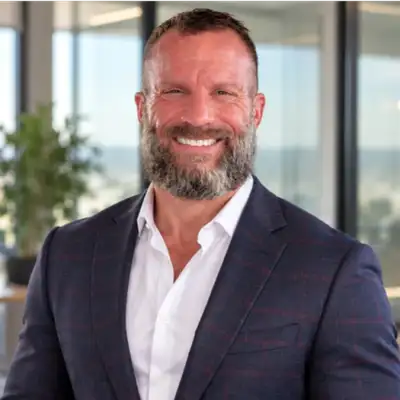
Some Goodness is hosted by Richard Ellis, a seasoned sales leader passionate about inviting top business minds to share their wisdom. Each episode is only 15-20 minutes, perfect for your commute or workout.
[00:00:00] Richard Ellis: Most leaders learn to buy technology and roll it out. The ones pulling ahead now know the work well enough to build part of it themselves. Todd Katcher was running bars in Nashville when a customer asked him to build something for his car dealership. Todd knew nothing about dealerships but said yes anyway.
[00:00:17] Richard Ellis: Digital Dealership System now runs in more than a thousand stores. Today, we get into how he chose where to focus, when he builds versus buys, and why he doesn't count on relationships to grow the business. Welcome to Some Goodness, where we engage seasoned business leaders and experts to share practical guidance and tips to help new and future leaders maximize their impact.
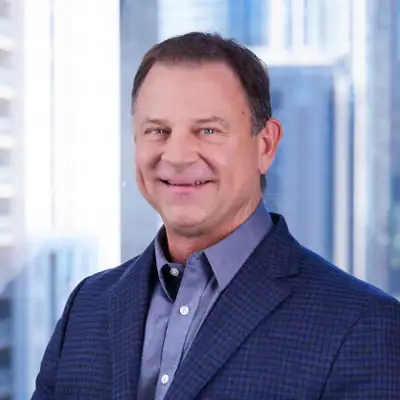
[00:00:38] Richard Ellis: My guest today is Todd Katcher, founder of Digital Dealership System, which puts digital signage and live performance boards in more than a thousand car dealerships. He got there from running bars in Nashville by saying yes to one customer's request. He still writes a lot of the code himself Hey, Todd.
[00:00:55] Richard Ellis: Welcome to the show.
[00:00:56] Todd Katcher: Oh, thanks for having me. Good to see you.
[00:00:58] Richard Ellis: I always love a good entrepreneur of [00:01:00] story. You've got a bit of a crazy background. So really looking forward to our time today. Why don't we just dive in? I'd like to start with, you know, the fact that your career path wasn't really a straight line, right?
[00:01:11] Richard Ellis: You've been involved in bars, an ATM business, then a technology company in an industry that was new to you, and so let's just start with this question. When you walk into something you don't understand yet or that's new, how do you learn it fast enough to lead it?
[00:01:25] Todd Katcher: Dive in yourself. It's real do everything yourself, and that's the only way to do it.
[00:01:29] Todd Katcher: There's no way... I tried. There's no way to go ahead and have other people do it for you. You really have to understand everything yourself regardless. I mean, even today with some of our new products that we're developing, if I'm not in it every single day, I've tried to have other people do Q&A for me, it doesn't work.
[00:01:47] Todd Katcher: So when we first started or when I first started and pivoted and doing something that I've never done before, I did everything, and that was real just a formative experience, and I still do it to this day. It's real you have to get every part of [00:02:00] the business in order to go ahead and excel that way. When someone else is doing it, you know what your expectations are, not only for the speed, but also for what the results are gonna be.
[00:02:09] Todd Katcher: If you could do something better yourself that you hired someone else for, then they're the wrong person. If they're specialized in that part of what you're doing, whether that's sales or support or marketing or content, whatever that may be, you may be able to do it, but you wanna hire people better than you, but you won't know what it's like until you actually do it yourself.
[00:02:27] Todd Katcher: So I come from the mindset of get your hands dirty. Even if you have the money to go ahead and hire other people to do your job, let's say, it is still your job if you're responsible for it. I've always been the one to do everything, and then as we grow, find out who to hire to fill the gaps with somebody who may be better than you, but then realize that they gotta be better than you if they're a specialist in that area.
[00:02:50] Richard Ellis: Absolutely. Well, and in kinda getting involved in the trenches, right, and doing everything from the start, you've got your day-to-day experience in [00:03:00] developing the product and then figuring out how to market the product- Mm-hmm ... and sell the product and then, you know, deliver the product and run the operations of the business.
[00:03:09] Richard Ellis: I'm just curious, you know, just from your background, did you start in one of those silos or functions or others, or were you just naturally intrigued and interested and curious about all of it?
[00:03:19] Todd Katcher: I think that whenever you get into a business, you just gotta get in there and just figure it out as you go.
[00:03:24] Todd Katcher: When I went ahead and took over the bar business, originally I knew nothing about the bar business. I'd been to bars. Yeah. It's actually where I met my first business partner was part of a bar, and then after 40 days, I wound up getting rid of the partner and then owning the bar myself and running it myself.
[00:03:40] Todd Katcher: So, like, what do we do first? Everything. There's, there's no priority 'cause you gotta figure it out all at once, so that's when you have those long hours. That's when you go home from work and work again. It's like you do whatever needs to get done, and there is no end to your day. It's not only getting dirty, it's getting involved in every aspect of the business, and it's, you find out what you're good at and [00:04:00] what you're bad at and then what you need to learn, and it's, it's everything.
[00:04:03] Todd Katcher: Learning, we can get, we can get into some of the specifics of each, each individual business as we go, but there is no process other than everything.
[00:04:11] Richard Ellis: Were there any particular surprises as you, you stood up the bar business and partnered there, or you got into the dealerships and kind of figured out that whole new thing?
[00:04:21] Richard Ellis: Any interesting surprises that would be worth sharing?
[00:04:24] Todd Katcher: Well, in general, I think it's, would be helpful for your audience to kind of start with where we are with things. So back in around 2006, I invested in somebody. I live in South Florida, and at that time I was frequenting a bar that played live music during the day, and the girl singing was dating somebody from Nashville.
[00:04:42] Todd Katcher: And I had a little bit of jingle in my pocket in 2006, and he said for a couple thousand dollars I could open up a bar in Nashville, just give me money, I have a lot of experience. And I said, "Sure, why not?" Well, after we opened up, about a month later I went ahead and took over and moved my life up to Nashville to protect my [00:05:00] investment.
[00:05:00] Todd Katcher: His estimate of what the cost would be was one-tenth of what it was, so after mortgaging my house and giving away my car and all this type of stuff, I moved everything to Nashville. And I think to answer your question, within that it was really just know who you partner with before you partner with anybody.
[00:05:18] Todd Katcher: You need to really do the research on the people that you partner with. Not saying that they're bad people or with bad intentions, but can you partner with them and what your roles are, and how do you handle success and how do you handle failure, and really understanding that before you get in. It's kinda like a prenup, if you will, or pre-marriage counseling.
[00:05:36] Todd Katcher: You really need to go through these scenarios because you get that high of, "Hey, this is gonna be great," but it's not always great. And it's one of those things that that was a, a definite quick learning experience. And then as we pivoted or as I pivoted through that, through the digital sign network and then with the car dealerships and everything else, and we could dive into the specifics of that journey, to this day I'm still constantly learning new stuff and just surprised about how [00:06:00] things happen in reality.
[00:06:01] Todd Katcher: I, I find there's a lot of people that, especially in the automotive industry, I'm sure it's true in other industries as well, where there's a lot of talking heads, where they talk in theory but they don't talk in practice. And anybody who looks at the automotive industry where we spend a lot of our time these days, from the outside when we start telling them how the industry actually works from the inside It doesn't make any sense.
[00:06:23] Todd Katcher: Logic is not part of the process in the automotive industry and not part of the decision-making process, and that is reinforced every single day. But from the outside, it's not transparent that way.
[00:06:33] Richard Ellis: Right. Right. Well said. Well, I do wanna dig into your background just a little bit in terms of a few of your businesses.
[00:06:40] Richard Ellis: You mentioned, you know, starting with the bar business and then the digital signage business and then getting into car dealerships, and you seem to be a master of identifying opportunities that you could really leverage a- and build a business around. Walk us through a little bit about how you came up with these opportunities or how they presented themselves to you, and what [00:07:00] were some of the tests that went through your mind on, is this worth pursuing and putting my time and resource and money behind?
[00:07:05] Todd Katcher: I think it's all about opportunity that presents itself to me at that point. So when I was a bar owner, I opened up a digital sign company in 100 bars and nightclubs and restaurants across Nashville. And at that time, 2006, 2007, around that time, I created the hardware that was playing these digital signs and had to create the accounts and get the accounts to be able to put digital signs in all these bars and restaurants, and that was a process that I needed to learn.
[00:07:34] Todd Katcher: And then I figured out, how am I gonna make money? And because I wasn't realizing that I was building an ad business, and you might have heard the adage that says, like, "If you build it, they will come," type of thing. So the digital signs, you need the billboard, if you will, or you need the platform that then you sell marketing on.
[00:07:52] Todd Katcher: So in the digital sign industry, there's two ways to make money. One is by having an ad platform, which means you have to build the platform for [00:08:00] people to advertise on first, and then the other one is to provide a s- a service that people will pay for that service, right? So in that case, I built an ad network, but I didn't know how to sell advertising.
[00:08:10] Todd Katcher: And one of our regulars at the bar came up to me and said, "Hey, these things are really cool. I see them all around town. I could use one of those for my car dealership." Now, going back to what you asked, how do you make the decision on when to make that? If he was someone who came up to me and was a dentist- I may be doing dentists now or owned a hospital or somebody.
[00:08:33] Todd Katcher: So like at that point it wasn't as much of a decision versus, all right, I have this ad network and now I have to sell ads and here's a car dealer who would go ahead and pay me for the services I provide him. I like that idea better, so let's go ahead and add that. I didn't take down the digital sign network until like 2012, 2011.
[00:08:56] Todd Katcher: It just stood there, but I never sold any advertising on it. So I had 100 screens [00:09:00] with no revenue that I had to maintain, which was taking budget out of the dailies, right? So wh- where I had these other dealerships that were paying me, that was like, "Oh, this is the way to go," because now I could sell something.
[00:09:12] Todd Katcher: And again, from the outside with no knowledge about car dealerships, this is logical that they would wanna promote what they're selling, their services, their new cars, their finance programs to the people in their store. Yeah. That sounded obvious to me, and that was kind of the beginning of what's now called Digital Dealership System.
[00:09:28] Richard Ellis: So it really, uh, allowed you to turn your initial business of digital signs into, you know, having an additional revenue stream of advertising on top of that. So you could sell digital signs, you could sell advertising, and then of course, you know, for the dealerships- I'm assuming they weren't doing any of that right now.
[00:09:47] Richard Ellis: I mean, when I think about, you know, my, my dealership experience, I go in and I'm waiting for my car to get serviced, and I'm just looking at Home Shopping Network or some random TV show or the news, right- Yeah ... in the lobby rather than them [00:10:00] promoting their services to me. So that sounds pretty ingenious.
[00:10:02] Todd Katcher: Yeah. So at that point back then, no, there wasn't anything like this that existed. And if it was, it was in a fraction of dealerships. And there weren't many other companies that we were competing against. There still aren't many companies. It's a very niche product. So we wound up becoming a provider for car dealerships, and our-- the products that we wound up promoting wound up increasing significantly based on where somebody is in the flow in the dealership.
[00:10:28] Todd Katcher: So in the service drive, in the lounge, as you mentioned, in the showroom. And then we have leaderboards to motivate their team that are staff-facing programs. So we've expanded that over a period of time to offer a wide range of services for car dealerships, and each one has a different value position for the store themselves.
[00:10:45] Richard Ellis: Got it. Let's double-click into just some of the decisions you've had to make along the way, because I think that's relevant to many types of business. A- and one is a build versus buy. And I think you were sharing with me earlier that, you know, on the digital signage front, you actually built [00:11:00] that hardware almost from scratch and piece parts and kind of assembled your own sign rather than repurposing flat-screen TVs or something like that.
[00:11:09] Richard Ellis: So walk me through a little bit of the decision process there, and was it in hindsight a good decision or, or not?
[00:11:15] Todd Katcher: Well, back in 2000, imagine what you had in your house in 2007, 2008, as far as a TV goes. You probably had a big tube TV. They weighed a lot of weight, you know, maybe up to five hundred pounds.
[00:11:25] Todd Katcher: I don't know what they put in them, but maybe rocks. You know, they had this-- I remember the Sony Wega TV was, like, the one that was the best picture. And maybe you had the one that was a big console that would've had wheels on it, and it rolled on the floor. You know, those types of things. So high definition was not something that was readily available, and even then, compared to today's standards, it was less than 720p resolution compared to today's 4K resolution that you could buy for $300 these days.
[00:11:51] Todd Katcher: So when I first created the iteration of the screens that were in bars and nightclubs, I actually ordered [00:12:00] a case of just the screens Without any frame around it whatsoever. And then I ordered all the parts, the motherboard, the hard drive, the Wi-Fi, all that type of stuff built in. And then I went to a manufacturer in Columbia, Tennessee, and wound up making something, a metal box, specifically to hold everything all in a single container that could then mount on a wall as a single unit.
[00:12:22] Todd Katcher: So we had to go through engineering, and that- that's kinda my background a little bit from college, just drawing everything out and lining everything up, where everything fit, all the wires and everything else, and I designed that. And then as we went into dealerships, we had to get something a little bit more sophisticated, so we had to pre-order screens from NEC at the time.
[00:12:40] Todd Katcher: I don't even know if NEC still exists anymore, but I had to buy commercial grade screens from them. And at that time, a high definition screen being 720, they would cost about $2,000 for a screen And we would supply that to the dealership 'cause you couldn't go to the local Best Buy to buy a high-definition screen.
[00:12:56] Todd Katcher: So all this stuff, all these challenges that you had [00:13:00] at that point, it was, i- you didn't have a choice to build or buy. You had to kind of make do with whatever you could at that time. As we've developed now with technology, it's a little bit different when you're making that decision. Sure. But I, I think back then, it's just you have to do whatever is needed in order to move forward.
[00:13:14] Todd Katcher: So you have a product, and how do you get that out in the marketplace?
[00:13:18] Richard Ellis: That, that makes sense. When you said 2006, 2007, I'm thinking, "Oh, that was not too long ago," but it's literally 20 years ago.
[00:13:24] Todd Katcher: 20 years,
[00:13:25] Richard Ellis: yeah. And it's crazy to think about, man, how time flies.
[00:13:28] Todd Katcher: Definitely.
[00:13:28] Richard Ellis: So kind of pivoting into the dealerships now.
[00:13:31] Richard Ellis: It's kind of a new business model a little bit. You got this advertising opportunity there. Tell me a little bit about how you kind of tweaked that offering for the dealership and kind of listened to the customer and what they want and integrated that into your approach.
[00:13:45] Todd Katcher: Yeah, so when I first met that dealer at the bar, and he went ahead and said, "Build this for me," I said, "Well, what do you wanna build?
[00:13:51] Todd Katcher: What would it look like, and what would it do?" And w- I always refer to the Vegas experience. So we're not selling advertisements inside the dealership. [00:14:00] We don't do an ad network anymore. We're a managed service provider, and we make our money by providing a service that the dealership sees value in. And because of that, it's, when you look in Vegas, if you're at the Wynn, they're not gonna market MGM, or they're not gonna market the Fountain Bleu, let's say.
[00:14:18] Todd Katcher: Or i- if you're in the Fountain Bleu, they're not gonna market what's going on at the Wynn. They want you to stay on property, right? So they're gonna highlight the events they have, the shows they have, the restaurants they have, their loyalty rewards program. So then take that into a car dealership. What are they gonna put in front of the people?
[00:14:33] Todd Katcher: So the average car dealership, it's a weird range of numbers, but they'll spend between 50 to $100,000 a month in advertising to get people to their dealership. They want you to spend as much money as possible inside the dealership. So add-on programs, trade-in programs, searching for inventory for a new vehicle.
[00:14:52] Todd Katcher: Maybe you have a special finance program to go ahead and a- to, let's say, a new car is $299 a month, and you're getting your car serviced, and you didn't know the new model was [00:15:00] out, so you could take a test drive. Or what services are required for your vehicle. Maybe the in-store experience, like adding TV screens all around the showroom, so that way it separates your store versus other stores in the area selling the same product.
[00:15:13] Todd Katcher: The automotive world's very unique. It's the only industry that I've heard of where you have franchises that sell the same car that they buy for the same price But yet they compete against others in the same region, right? So imagine in another industry, like let's imagine like McDonald's in your local city or your state.
[00:15:32] Todd Katcher: Imagine if they got the same product and they sold the same product, theoretically the same quality- Yeah ... but yet they all paid their own budget to advertise individually. Go to the McDonald's on Main Street. You go open one on 2nd Street. But that's how the automotive industry works. Yeah. If you, depending on where you are, what's called your DMA or your, your dealer marketing area, you might have five Chevy stores or five Ford stores in your area.
[00:15:55] Todd Katcher: Highline cars, like a Porsche, you might only have one per county. But when you look at a [00:16:00] Chevy or a Kia, you might have five in your area based on the population. There's a street in Texas where we have customer, I think it's Houston, uh, they're five miles apart with the same brand, with the same ownership
[00:16:12] Richard Ellis: Wow.
[00:16:13] Todd Katcher: And they both sell 700 cars a month, and they compete against each other. Go to this one- Right ... or go to that one. So like, again, it's like this mentality that's a little bit different in automotive. And so we provide services to go ahead and enhance the customer experience inside the store, and that goes with any retailer.
[00:16:29] Todd Katcher: So you're in a mall and you have a retail store in a mall, and people don't know that you also offer some sort of concierge service or free alterations or a buy two, get one free promo. How are you gonna advertise to the people that are coming into your store for in-store marketing? And that, that's the idea behind digital signs in this way.
[00:16:48] Richard Ellis: Well, and I like that you highlighted just the uniqueness of the dealerships because one of the things that, you know, we see move the needle in sales in general is the more you can be relevant and specific to [00:17:00] that buyer's objectives, what they're trying to accomplish, and the challenges that are getting in the way of accomplishing those objectives, the more successful you're likely to be.
[00:17:08] Richard Ellis: And so being able to tune the approach and what- Mm-hmm ... goes on the, the digital signs to specifically address their issues, their needs, whether they're competing against the same brand in that market or not, you can pivot and really put a tailored program in there for them.
[00:17:25] Todd Katcher: Yeah. If you think about the levels, we're providing a service that the dealers want to make their store unique to the dealer, to their customers, and then they want their customers to have a unique experience in their store.
[00:17:37] Todd Katcher: So let's say that we often have a same brand in multiple locations, right? In the same county, and they're competing against each other, but they order different stuff from us based on their general manager or their owner's requirements for what they feel they wanna invest in the in-store experience. So just because you're a Honda store doesn't mean you're gonna have the Honda package.
[00:17:58] Todd Katcher: You're gonna have something unique to your [00:18:00] store that creates energy in your store differently from one visitor to another. So again, it depends on their messaging they wanna talk about inside their store. Everyone is extremely unique, and that makes it a little bit challenging, but at the same time, it, it can be a little bit more fun for us as well.
[00:18:15] Todd Katcher: Every store doesn't get the exact same thing every single time. We have 20 different products and services just for digital dealership system. I've had a couple orders today with customers that I've been working with, and they're both the same brand, but they order different things for their store. And again, it depends on where they're focusing and where their drive is and where they wanna invest their money.
[00:18:33] Richard Ellis: Fantastic. Yeah. And so having a product or a solution that's configurable for that provides a ton of value, and then having your sales team and marketing really be able to speak to that and highlight, "Hey, this is how we're different," right? It's not just a square peg, round hole issue and, you know, take what fits and leave what doesn't fit.
[00:18:50] Richard Ellis: It's like, no, we can configure the solution to meet your exact needs, and that provides you that extended value.
[00:18:56] Todd Katcher: There are some philosophies out there that you should have less [00:19:00] products, so that way you're more focused, but we often wind up cross-selling. So they might start with one basic product and then add on, and if we didn't have those additional premium services, we would potentially lose a significant amount of revenue because our premium services are multiples more than our basic services.
[00:19:17] Todd Katcher: And sometimes that basic service is, is that catalyst that gets them to sign up because it's very low cost. But then you go, "Oh, I didn't realize you do so many other things," and that's kind of the intention. Or it also works in reverse, where someone comes to us for one of our premium offers and goes, "Oh, now I could go to just one vendor who can provide all these systems for us."
[00:19:36] Todd Katcher: So we're kind of doing that all within the digital signage umbrella, though.
[00:19:40] Richard Ellis: Very nice. So you've kind of built in a natural land and expand motion. You land at a low price point, good value, get in the door, and then there's lots of opportunities for expansion there.
[00:19:50] Todd Katcher: You're
[00:19:50] Richard Ellis: right ... within that client.
[00:19:51] Todd Katcher: Mm-hmm.
[00:19:51] Richard Ellis: Yeah, I like it.
[00:19:52] Todd Katcher: Exactly.
[00:19:52] Richard Ellis: Well, I did want to spend a minute on just your leadership. So you've expanded now to, like, 10 different [00:20:00] companies across two continents. You got a lot of people and products to oversee. You're a natural built entrepreneur and builder. How do you kind of determine your time strategy and stay hands-on enough, but without becoming the bottleneck, you know?
[00:20:15] Richard Ellis: Walk me through a little bit of how you oversee a lot of businesses.
[00:20:19] Todd Katcher: So first of all, I have my priorities. Digital Dealership System is number one. That's where the revenue comes from that's allowed me to expand out. So even when I had the bars and I started to do other things on the side, I always knew what paid the bills.
[00:20:32] Todd Katcher: Okay. And you hope that one time ... I, I think people in general, especially today, they have that entitlement-type thing, and they go, "Well, I'm gonna leave my job and go work for myself." Well, you have no income working for yourself, so before your side project has to come up to cover your overhead, before you go ahead and leave it, but you can't take the focus away from your primary job or you're gonna get fired.
[00:20:55] Todd Katcher: So-
[00:20:56] Richard Ellis: Right.
[00:20:56] Todd Katcher: Since I own the business, I would fire myself if I spent [00:21:00] too much time on my secondary businesses or third or fourth or fifth or tenth business, right? So I really manage my time where I really focus in, first of all, my day is based around Digital Dealership System. Second, it will be based on the day, but I also go ahead and I wanna keep my staff really engaged.
[00:21:18] Todd Katcher: So the way I manage my staff, we have 10 people in our office, we have six developers overseas, and then we have a DevOps team in Canada, which we're in Florida, so they're still on the continent, but in a different country. So I try to touch base with everybody on a regular basis. They normally will send me what their plans are for the day.
[00:21:37] Todd Katcher: Support's a little bit different because they have no idea what's gonna happen that day. So we, we'll go ahead and I touch base with the team about every hour or two hours during the day. I get up and walk around and touch base with everybody here in the office, and it's really, the priority's always Digital Dealership System.
[00:21:53] Todd Katcher: But find time for those other projects. I have one project I'm working on which is a document management program, [00:22:00] and that program I didn't touch for, like, a week at all. Because it just wasn't a priority. But then I got into it, actually on a weekend, and I made progress on it. So some of these things are still in development, and some of them I get some sort of reaction from something and I go, "Oh yeah, what about that one?
[00:22:17] Todd Katcher: I haven't touched that in a minute." And then some of them are kind of just rolling out, and they're in different process of development as far as being independent companies. I don't know that all of them will be profit-driven, but right now the intention is to focus on Digital Dealership System. That comes first.
[00:22:33] Todd Katcher: And then when time allows, I look at the other ones based on priorities. And those priorities are always shifting, and it's really based on the market. I don't mean the market as far as users go, it's more of like what's happening. Sometimes we'll get a email, like we have one company that's, works with animal rescues, and so I'm developing that myself.
[00:22:51] Todd Katcher: We also have a developer who's, I'm phasing out, so I'm taking on more and more in that project. So when something comes up or a conversation comes up [00:23:00] or I'm looking f- to maybe adopt a new, a new dog or something like that, I go, "Hey, I really should dig into this a little bit more," and how does that fit into my day?
[00:23:08] Todd Katcher: It may be touching it for 15, 20 minutes. It may be after I get home and I unwind, I spend an hour or two on that project. So it's really managing time. Managing staff is really about figuring out what your priorities are. And if you would ask anybody in our staff what's number one priority, we're all on the same page with that, I'm 100% positive on that.
[00:23:27] Richard Ellis: Very good. Very good. I like that you kind of segment your time strategy a bit, right? But you got your clear priorities in order. You honor the income, and that affords you the ability to then go pursue and leverage these other opportunities. Really good. Well, we are out of time. Let's close with just one last question.
[00:23:43] Richard Ellis: That is, you've learned a lot and explored a lot of things, some, you know, brand new to you. So what would be any quick advice you would give to a new leader pursuing a role in a new company or a, just a new role that's new to them? What should they do or focus on in the first 30 days?
[00:23:59] Todd Katcher: I will [00:24:00] go over what I've done.
[00:24:01] Todd Katcher: I don't like giving advice for people, especially when I don't know their whole story. I don't think that's necessarily fair. But what I will do is I'd like to go ahead and just say get your hands dirty. I think we started with that, and I think you have to know every aspect of your business. And the other thing to consider is, someone told me this a long time ago, and it stuck with me.
[00:24:20] Todd Katcher: I believe that everybody that you meet you should take something from, whether positive or negative. And one of the things that I've kept, and I don't know who I learned it from, don't compare your chapter one to someone's chapter 100. What you wanna do is ask somebody how they got started, not how they got to where they are.
[00:24:35] Todd Katcher: And when you look at somebody's origin story, that's what you need to compare your origin story to. A lot of people today, they see someone's glamorous lifestyle. They might see the jets or the cars or they're free rolling, or maybe they spend a day on the beach and they just kinda let things go, whatever else.
[00:24:51] Todd Katcher: They made their decisions, but they didn't do that day one. And I made that mistake previously where when I had some people working for me in Nashville, I [00:25:00] went ahead and said, "All right. Well, I'm gonna change my schedule now 'cause I got these people doing work for me." That was a wrong decision. I think the opportunity then is to really, you need to get in and you need to be a leader by leading and by doing things that you would expect others to do.
[00:25:14] Todd Katcher: You want the hustle, you have to know every aspect of your business inside and out. You gotta get dirty. You gotta do the things you don't wanna do. I hate titles because titles define your roles, and so if somebody calls me a janitor, I'm a janitor. It doesn't matter what my role is. It doesn't matter what my title is.
[00:25:29] Todd Katcher: I do the job that needs to get done. It doesn't matter what my title is. And I think people get too wrapped up. One of the things I despise is somebody who goes in and says, "I'm the founder and CEO of this company." I'm like, "But you don't have anybody working for you." Right. So what would a title ma- matter?
[00:25:44] Todd Katcher: Or the person who says they're a visionary. I'm like, "No, people call you a visionary. You don't call yourself a visionary." So people get wrapped up in these titles, and I think that distracts from what their mission should be. What is your day-to-day? My day-to-day doesn't have a title. My title will be do what needs to get done.[00:26:00]
[00:26:00] Todd Katcher: That's kind of where my mindset goes. Don't let your title define you and, and don't worry about what your title is on your business card and why do you even have a business card. So I would really focus really in on, on that and getting your hands dirty and learning every aspect of your business, including the ones that you don't like.
[00:26:16] Richard Ellis: Love it. Really good advice, very practical. Thank you for that. I echo the get your hands dirty, get involved. Some of my favorite leaders that I've had the pleasure of working with, when they started a new role in a company, they didn't just spend time in their function. They spent as much time also, if they're a sales leader, they spent time with the marketing team, with the product team, with the customer service team, and it gave them insights and perspective you wouldn't otherwise get.
[00:26:40] Richard Ellis: And so, uh, I think there's huge dividends for that, so thank you for sharing. Uh, we are out of time. As you know, we love to share goodness just professionally here on the podcast, but also personally. And so I will ask you my favorite question, that is, outside of our discussion today and your many businesses, which are fascinating, what's some goodness that have come your [00:27:00] way lately?
[00:27:01] Todd Katcher: I think the one thing that came to mind is just the pat on the back that I sometimes will give myself for doing things that you don't wanna do. So sometimes you wake up on the wrong side of the bed. Sometimes you wake up, you didn't sleep really well, but you still do what needs to get done. So it's kind of funny, when I was thinking about this ahead of time, and really with looking at some of your podcasts that you've done in the past, you ask this question regularly, and one of the things I realized is that, you know what?
[00:27:25] Todd Katcher: Today was a challenging day, but I did everything, and I got everything done. So if there's any message in that, it's that, you know, just go through the motions. Sometimes you show up, and you don't wanna be there, or you don't feel good, but just get moving. Like, I'm a gym guy. Sometimes you don't wanna work out, but you go to the gym anyway.
[00:27:41] Todd Katcher: And even if you don't lift as much weight, or you don't run as hard, or you don't push as hard or whatever, you're still there, and that's better than not being there. And sometimes it's not just about showing up. It's about doing what you can in the capacity that you have that day, and then giving yourself a little bit of grace.
[00:27:57] Todd Katcher: Sometimes, let's say you lifted 100 pounds last [00:28:00] time, and this time 90 pounds was difficult. That's okay. You tried. You know? So- And you
[00:28:04] Richard Ellis: were in there, and
[00:28:05] Todd Katcher: you put in the work ... and you were there. You did it. And it's not just going through the motions. I just wanna be clear. You might have done it a little bit slower, but you did it the best you can based on your body or your mind, and today was one of those days.
[00:28:16] Todd Katcher: So ironically, you know, when, when I was going over this and learning a little bit about you beforehand, I said, "You know what? Today's one of those days that there are some challenges today already, and I made it through." That's just a little pat on the back, you know. It's like, you did it. You went through the motions today.
[00:28:31] Todd Katcher: You pushed a little bit hard today. Your body and your mind are saying, you know, "Slow down. Relax," and you pushed through anyway, and you did your routine. And here you are today on a great podcast and learning something new and reflecting on some past experiences, and hopefully giving a little bit of value for your listeners.
[00:28:47] Richard Ellis: I think that's so good. I, I'm a huge fan of celebrating the small wins, and that's a great reminder that just doing something you weren't excited about doing, but you put it all out there, and you did it, you know, that's worth celebrating. So that's really good. Thank [00:29:00] you. Well, thank you, Todd. Great episode.
[00:29:02] Richard Ellis: Really loved having the time to dig in with you and just learn a little bit from your experience, so thank you for being with us today.
[00:29:07] Todd Katcher: Hey, thanks for the invite. I look forward to hearing from you again soon.
[00:29:10] Richard Ellis: All right. We'll talk soon. Thanks. Thank you.
[00:29:14] Announcer: Some Goodness is a creation of Revenue Innovations.
[00:29:18] Announcer: Visit us at revenueinnovations.com and subscribe to our newsletter