Subscribe
Share
Share
Embed
The World of Higher Education is dedicated to exploring developments in higher education from a global perspective. Join host, Alex Usher of Higher Education Strategy Associates, as he speaks with new guests each week from different countries discussing developments in their regions.
Produced by Tiffany MacLennan and Samantha Pufek.
Alex Usher: Hi everyone. I'm Alex Usher and this is The World of Higher Education Podcast. South Korea has one of the world's liveliest higher education policy scenes. For over a decade now, the country's been dealing with the challenges of a declining youth population, and hence declining student numbers, yet at the same time, it's continuing to invest heavily in knowledge and education from programs in artificial intelligence to the upgrading of 10 major regional universities. While all the while seeking to offset population loss through the expansion of international student numbers.
And all of this is happening with the background of major political polarization exemplified not just by the attempted coup of December, 2024, but also by a huge gender divide among youth and exploding right wing manosphere. There's never a dull moment in Seoul.
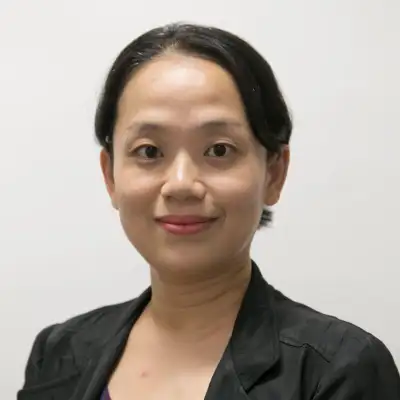
Returning to the podcast once again to discuss all of this today is Jisun Jung. She's an Associate Professor at the University of Hong Kong's Faculty of Education and a close observer of the higher education scene in Korea. Jisun patiently answered my questions about the direction of government policy, the repercussions of recent AI cheating scandals, and how Korean to English translation problems color the way foreigners see right-wing student activity in the country.
It's a fast episode about a country where the policy evolution never stops. Hope you enjoy it. And with that, let's hand things over to Jisun.
Jinsun, when we last spoke a lot of our discussion was about Korea and demographics. The country's lost, you know, something like half its youth population in the last 25 years, and it's still going down. One thing that's happened since you were last on the program is that the government adopted a law which was popularly nicknamed the Zombie University law.
Which is a, yeah, it's a great name. What's in this law? What does it allow the government to do, and why was it necessary?
Jisun Jung: So the whole idea we give sort of exit strategy for those private universities who is in a very difficult situation in terms of enrollment. So previously, the way that they shut down the university was all based on evaluation. So the government evaluated your performance and the government finds all this kind of malpractice of the institution and they simply kind of order shutting down the university.
And there were huge resistance of this. Private university owners, basically, they say foundation, but many small private universities, they are based, it's just a family business, but they complain like it's our asset. We invested a lot for the campus, facilities, buildings, infrastructure, everything. That's our asset.
And then they had this resistance, the new law is basically giving 15% of sort of settlement fee, that's how they call. But it is like they give 50% of money that they can have some flexibility to sell their asset, property, land, in a way kind of financial compensation. So it's to encourage the private universities to close down voluntarily.
Otherwise, it's not gonna happen. All the private universities simply resist to shut down. They will continue their business, but as a government, we know it's not gonna last long, so let's just keep some compensation and then let them to sell their some land and property. Then instead, you have to consider your survival strategy, and then you can kind of choose what you should do.
And the government also implemented some additional policies adding that Zombie university policy.
Alex Usher: Right. So it's a financial incentive which matters in the private, in the, which matters in the private sector, right? But what about the public sector? I mean, presumably there are some institutions, public institutions that are financially at risk or have low enrollments? Are people looking ahead for how to close some of those, or is the idea just to squeeze private institutions as long as possible to protect public ones?
Jisun Jung: Public universities, they are not the target of closing. They are target of merging. So they are all encouraged to be merged. That's the whole process. So 19 public universities became eight for last 10 years, and that's going on. For example, in Busan, second largest city in Korea, they have one public comprehensive university, and they have a teacher's college, public. The teacher's college will be merged to the comprehensive university's faculty of education. Or we have one region actually close to the North Korea, quite north side of the South Korea, over there, they had four public universities, they're gonna become one public university, so they call it as a one major public university.
So we make this a small public university as a second campus, third campus, and they specialize certain field. And then we make this university even bigger, even more comprehensive, that we can be internationally competitive.
So all these small public ones will, it's gonna be merged to the big comprehensive public university, which each city, each big region has one, kind of state university, almost like those representative city public university, they will be the one who lead this whole other small ones. So it's a merging strategy rather than closing, shutdown down.
Alex Usher: Right. Well, we'll come back to the issue of regional universities in a second, but I I want to ask you a question about Korean universities and their pursuit of international students. 'Cause it seems to me that one of the really big policy responses to declining domestic population has been to go after international students, and last year the country hit 300,000 international students. That was two years ahead of a goal that had been set by the government. Just before Christmas. One of the major newspapers with I would assume a lot of encouragement from the sector itself created a new set of rankings just for Korean universities, just for international students who wanted to, you know, pick between them.
I mean, that's a lot of effort. Is this gonna work? Like, what do you think of this strategy? How likely is it that international students can be a lifeline for more than just a handful of institutions?
Jisun Jung: Well, as long as there are enrollment, universities will do everything to bring them in. And surprisingly, you know, Korea is getting this kind of culturally popular and then there are some increasing demand from the international students, which is very promising from the government's view. So they do everything to bring more international student, and I think more and more students are coming.
That's a kind of positive thing for the university's survival. But of course the quality is always problematic, except your universities in Seoul, other regional universities, they simply accept anyone who applies. And a lot of international students, they come not to study in Korea, but to work here as sort of kind of a labor force in the small cities and
Alex Usher: That sounds familiar to a Canadian.
Jisun Jung: really? Yeah. Yeah. exactly
I um, I believe so. Really like these small cities. You go there like small factories farms, and they are full of students. These international students, they are enrolled in these regional universities, but they are not in the campus, they are in this workplace and they send the money to their family, but universities can't do much about it because they need these students.
And many of them, they don't have any Korean language proficiency. 'Cause many university even don't require strong standard for the Korean proficiency. And you know, Korea is not like environment that English is medium of instruction, no, you should speak Korean, especially in the small cities, without speaking Korean, they can't join any group activities, they can't have a proper campus life. But it's both sides. Student is anyway, they come for other purpose. University need them for the financial reasons. So quality is really problematic now.
Alex Usher: Right. I wanna come back to that issue about regional universities because since the election last year, the new government has really been on a tear about creating, I guess they don't use this term, but it's basically regional centers, regional excellence universities. The slogan is 10 Seoul National Universities, 10 SNU's.
You know, and that's not creating new universities, that's about pouring a lot of money into what are already some fairly big, you know, substantial universities outside the capital. And as I understand what happened in the budget in December basically doubled the budget of those institutions raised public spending overall on universities by about 20%, 4 trillion won is the number that I saw. That's pretty incredible for a sector that is shrinking, right? Like this is a, a smaller sector and the government's putting more money in. What's your take on this policy and how likely is it to meet government objectives for greater national scientific strength?
Or, or maybe that's not what it's about. Maybe this is purely a regional development policy.
Jisun Jung: Well, both. So 10 SNU, make 10 SNU's, it was kind of political campaign terms. So they use it for the political purpose and they have other terms like regional university, making research intensive university and the public and in their small regions. The main purpose, of course, to make more research intensive university, plus they wanna reduce kind of this regional disparity.
So like 20 years ago, each city, each region had that comprehensive public university. All the regional talents, they went there. No problem. And then they stayed there. University maintained the good reputation in that region, but that's not happening for last 20, 10 years. All the students, they simply wanna go to the Seoul, the capital, big cities.
So this region university kind of were not fully put the anymore by local society. So the whole idea is we keep a lot of money and then we retain this talent giving scholarship and bringing talented researchers and then we make them to do research in something you can relate to the regional industry.
Again, you go to like ocean side, like Busan, you have this marine department and you work with the marine industry there. You go to other city and then you have very strong agriculture field and you work with agriculture there. So it's to make very specialized research focus in different regions. Why should Seoul hold every research cluster? That's the whole idea. I, I am personally a bit pessimistic where I, I see the point and it seems uh, ambitious plan, but it's something against the market kind of consumer's choice.
Alex Usher: Could it work with a smaller number? I mean, 10 is just seems to me like a lot, right? Like you could put, you could make a couple of university, you could make a university in Busan a lot more attractive in a couple of other cities. But I think by the time you get to the ninth or 10th city, that's, that's tough. That's really what you're saying, right?
Jisun Jung: But, but that's politics, right? You can't give the money only to one city because politically it's quite divided, you know, west, east, in Korea, and then you choose that university, then it's gonna create a lot of these political issues. So, should be fair, because the whole idea of one comprehensive university in one region was already developed since like 1960s.
During the industrialization, each region has had one strong university and they're quite doing very well. So we see these public universities for a long time they took very critical roles, but then reputation was lost by like, I don't know, for last 20 years down.
Alex Usher: We're gonna take a short break, we'll be right back. And we're back. I wanna move on to another story. We've so many different stories to cover today. I wanna talk about the long strike of medical students in South Korea. Now, they went out, I think sometime in, in might, even, even 2023, 2024 anyway, and they were on strike for over a year, protesting against a government plan to increase spaces in medical programs. This is not something medical students often strike about, you know, saying we should have more medical students and the medical students hate the idea. And now it's still an issue, 'cause although it was, you know, the strike ended several months ago, maybe a year ago, institutions are still struggling with trying to reintegrate students because they missed a year, right? So there's a whole bunch of students who are having to read their, they're, they're got a double cohort in effect. What was the strike really about and how did it get resolved?
Jisun Jung: So we always have this problem lacking medical doctors. You go to this uh, countryside rural area, you don't find the hospitals, you don't find public hospital clinics. Selecting medical doctors always problem. Everybody agree we need more doctor. That's number one. But the way the government implemented the policy, that was the trigger.
So the government wanted to show we are gonna increase the number. But they simply announced the policy we're gonna increase 3000 more medical school students from next academic year. And that was the issue. Even academics, professors in medical school, they say, we are not ready. We cannot afford to accept 3000 more students in medical schools, and then it'll decrease the teaching quality.
They don't have uh, facilities, they don't have labs, they don't have places for the practicum. Nothing is ready and this is not the way that you implement the policy. And they started a protest. But socially where, including myself at the beginning, we usually criticize this student. Because it looks like they are selfish who just wanted to dominate their own positions.
They, it looks like they don't want other people to become doctor, and then protests are longer and longer and it looks like they abandoned patient in the hospital because these students who are doing practicum like internship, they didn't show up in the internship. And of course the people, the citizens were the victims. And the conflict went on and on where the government wanted to show, another thing of South Korea medical school is the most preferred major, you know, you make a lot of money, it's another social problem of South Korea. Nobody wants to go to the engineering. If you are the top student, you have to go to the medical school. So the from the government is politically, if you increase the students to 3000, it looks like uh, 3000 parents is you can make them happy. So it was a part of the reason, and then it didn't go well, and the government also couldn't push it back because they already announced and they wanted to show strong leadership on that. And then it just lasted long. And then in the meantime, people suffered a lot. And then we change the government.
So now what they're doing, they will increase the number gradually based on the projection, how many doctors do we really need? And then year by year. Plus they're gonna open another medical schools in small cities that never had medical school, and then they also will develop some policies. You recruit the students from that region and then you make them to stay in that region. As a regional kind of local doctor, again, it's about regional disparity and that's, so they are combining several policies. It's too early to say, and doctors kind of came back. Students is not fully, but they came back. In the middle, there were a lot of smaller issues. Do they have to take exam or not? Do they get an exemption for some lost semester, they didn't take the courses. Those minor issues were not minor for them, but those issues also happened in the campus. It's still going on. It's not fully resolved, but at least they are sitting in the negotiation table.
Alex Usher: That regionalization of training, again, that sounds very familiar to, will sound very familiar to a Canadian audience. 'Cause that's, that's largely how we've been handling it the last 10 or 15 years. So, listen, just before Christmas there was a very big exam cheating scandal involving artificial intelligence at I think Yonsei University.
And it seemed to trigger a lot of soul searching about the meaning of higher education in the artificial intelligence age. Has this event created any impetus for change at South Korean universities? Or was that kind of just a flash in the pan?
Jisun Jung: So it became a huge scandal and news because it was in Yonsei University. I think people really pay attention. The scandal happened in a really top university. In a way it's unfair they get the spotlight. If the scandal happened in a top university, like how can top university students cheat by using the ai? And it was in the news for quite some time. There is no government policy and it's all university level, so we, we don't go South Korea, you don't have that kind of big policy for students learning and teaching part, although they are funding policies for teaching and learning mostly it's done by institutions.
So each university is trying to set up regulations, but I don't think it's only case of South Korea, everywhere in the world, each university is struggling to establish new rules.
Alex Usher: But what the government has been doing is putting a lot of money into universities for AI. So I, I hear you about policies of use of AI, but a huge project I think 38 universities now offering AI digital training for employees. So that's kind of a workforce development strategy. Or program you know, they, they've authorized a competition to set up 10 new artificial intelligence graduate programs.
Why is Korea betting so heavily on AI as a technology, and what do you think the strategy chances are for success?
Jisun Jung: We have this anxiety, I think it's a social anxiety, political anxiety. We had this kind of, we have this political anxiety and they can't take it like we are behind. I think that was the big social collective, I would say anxiety in technology. So the, when we introduced internet in 1990s, they had this kind of pride, like, oh, we were very advanced by using the internet and making internet available to every citizen and that we are the best. In the meantime, there was so many regulations for technology or advancement and then regulation made all advancement of technology, innovation quite slow.
And so this is the time, and again, it was last presidential election part of the campaign, we are gonna be making really strong innovation, technology oriented industry, and makes sense because Korea has a big industries and they rely on these industries, all the industries, they will be restructured by this AI and artificial intelligence. But we don't have enough number of expertise. We don't have enough workforce. So, top most important policy should be done by government, by investment. That's the whole idea. And they are opening new programs, but like again, engineering is less preferred by top students in Korea right now. Come look at China. Like top students, they go to engineering and this is what criticize, this is what being criticized in Korea a lot. How come all the smartest students, they only go to medical schools not engineering schools. And that's one policy direction. You give a lot of this scholarship and then you can bring good students to engineering and also bring a lot of people even from internationally and make new teachers, invite them as teachers. It's not really going well to bring people because there is simply lack of people who have expertise but, they see this is the future and they have no kind of, no hiding to announce, their goal is we should be number three in AI. So that's their goal. Like we have anyway, US and China, but we can't lose against any other countries. We should be number three in this race. And then let's put the old investment to AI policy. That's the direction now.
Alex Usher: Interesting. I wanna end on a more general question about students in politics and obviously Korea overcame a very grave threat to its democracy in the summer of 2024. And you've elected a new government, but the country still seems very split in a way similar to the United States, similar to Brazil, with an authoritarian poll and a, and a more democratic poll, it's not quite left and right. And in Korea, there's an interesting twist to this because although all those countries have got big gender splits, you know, with males tilting more to the authoritarian and that's particularly, seems particularly pronounced to me from the data I've seen from Korea.
One thing that's happened in the last few months is, a new movement called Freedom University which is an interesting term, right? Like it's, it's an interesting use of the term university. From a distance, you know, it looks a lot like a make Korea great again, kind of exercise. That that's the direction that they're going in.
You know, the difference being is that it's young, urban males instead of older, suburban and rural males that are at the heart of the movement. So what is Freedom University and how does it sit within the long tradition of student radicalism in Korea?
Jisun Jung: So we have all these uh, unhappy young men, especially for last couple of years. I think it's also related to their kind of economic situation, unemployment rate of young men. And South Korean men, also young men, they have this kind of, complaint or victimization, in a way, they have this argument we have to serve to the military's compulsory, right?
So it's like, one and a half year, and then we lose the competition to the girls and to the female peers. They always have this kind of idea, why should we only sacrifice to the country not gaining things? So it was a small kind of gender split social complaints here and there in social media, but how they made this kind of association, it was made to, against the impeachment of the former president.
So when former president was impeached with this martial law, these young man, they got together and saying we should protect this person. There are many rumors, and I believe the rumor, like it was politically arranged by someone, behind of the scene. It's possible. And then they had this protest against impeachment, but of course politically like became stable and impeachment or martial law or former president, it's not the big issue anymore.
You know, Korea moves very fast. Instead, these people, they moved their target in a way, like anti-immigration, especially against the Chinese. So like whole thing is we are losing our right, like these boys are losing right against the girls. We are losing our right and jobs because of Chinese immigrant.
So now it's almost like anti-immigration, anti-female. It is very concerning, but I also have to say, it's not really huge number. So socially, saying they're not that recognized, I have to say it's very, very minor. So I don't think they really change the whole picture. Even young people, they see these people I guess uh, sort of strains or politically, very extreme people.
I don't think they are making any impact, only concern if situation is not good, like economically, if there are a lot of unhappy young men, there is always possibility for this unhappy young man to find the alternative view or alternative way culturally, politically. That's the concern, but until now, people see them as a sort of extreme small group of young men. So not really making huge impact yet.
Alex Usher: Got it. Jisun, thank you so much for being with us today. Korea's a I'm sure we'll have you back, as we were saying before we got on today, you know, this is a really dynamic policy environment. Always something to learn from what's going on there.
Jisun Jung: Thank you.
Alex Usher: And it just remains for me to thank our excellent producers, Sam Pufek and Tiffany MacLennan, and you are readers and listeners for joining us. If you have any questions or comments about today's episode or suggestions for future episodes, don't hesitate to get in contact with us at podcast@higheredstrategy.com.
Join us next week when our guest will be Dr. Pushkar. He's joining us again from the International Center in Goa, and we'll be catching up on developments in higher education in India. Bye for now.