Subscribe
Share
Share
Embed
Since 1986, Convene has been delivering award-winning content that helps event professionals plan and execute innovative and successful events. Join the Convene editors as we dive into the latest topics of interest to — and some flying under the radar of — the business events community.
Convene Podcast Transcript
Rethinking Sponsorships and Exhibitions with Sean Soth and Dan Cole: Building ROI, Trust, and Value in 2026
*Note: the transcript is AI generated, excuse typos and inaccuracies
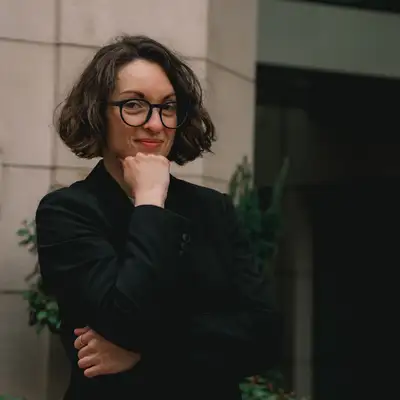
Magdalina Atanassova: Welcome to Season Nine of the Convene Podcast, brought to you by Visit Spokane.
Throughout this season, our guests help us look ahead to 2026 — decoding what’s next for the business events industry and sharing insights to help you plan smarter, design with intention, and lead with confidence.
Sponsorship and exhibition models are evolving fast and the old pay to play mindset no longer works.
Joining me today are two leaders reshaping how event professionals think about partnerships and ROI.
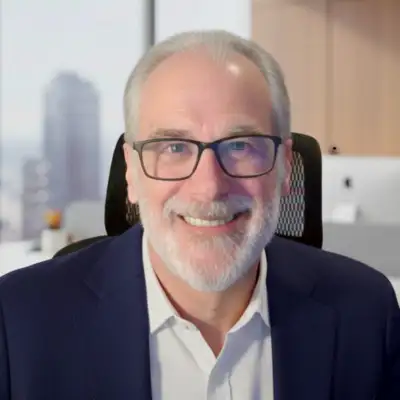
Sean Soth,
president at Hi-Fidelity Group,
helps associations grow sponsorship and exhibit revenue through creative business development.
He's also the founder of Professionals for Association Revenue,
a community advancing sales excellence across the association space.
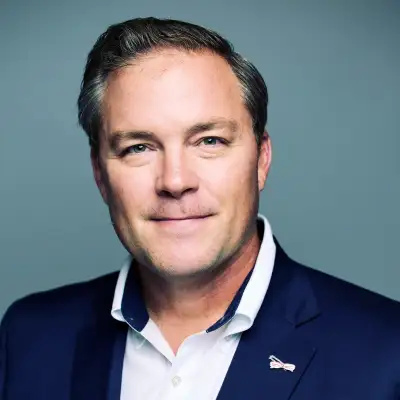
He's joined by Dan Cole,
senior director of exposition sales at the AVIXA’s InfoComm,
who brings more than 30 years of experience crafting bespoke programs that align client goals with one of the industry's most dynamic trade shows.
Together we talk about redefining value,
building trust,
and the future of sponsorships and exhibitions heading into 2026.
We start now.
Hi, Sean. Dan, welcome to the Convene podcast.
Sean Soth: Hi, Maggie.
Dan Cole: Hey, Maggie. Great to see you. Great to be with you.
Magdalina Atanassova: Thank you for joining us.
Between you two, you have over 50 years of experience in association and trade show business development.
How have you seen sponsorship and exhibition models change and what's driving the biggest shifts as we had into 2026 and beyond?
Sean Soth: Is it 50 years, Dan? Holy moly.
I'm gonna have to check the bio.
Well,
thanks for the question, Maggie. I think just to get us started, I would say we're seeing larger competition for sponsor dollars and a heavy reliance on sponsor dollars not only for association events,
but also our commercial events.
And because of that, I think folks are getting creative.
So you're seeing a shift where how we present value is going to become even more important for our work.
Customers want very specific experience activations and engagements at their shows and sometimes that takes nuance and creativity.
It certainly takes teammates inside of our organizations and I think those trends are here to stay.
Dan Cole: I would follow up on that in total agreement. I think what I've seen based on experience at Infocom and other trade shows is that sponsorships and it just didn't happen last year or overnight, but it's gradually evolved to a need for decision makers to have tangible ROI rather than a gut feel on how their sponsorship performs.
So that goes part and parcel in terms of what John mentioned in terms of value.
Also,
we've seen exhibitors evaluate the trade show with different models of participation,
enhancing their exhibit space on the show floor,
but also insisting upon immersive experiences rather than just banners or on site branding, which is actually a very successful offering for our show.
But Bespoke opportunities is truly a greater open mind to custom tailored participation that surrounds the exhibiting exponents on the trade show floor.
Sean Soth: One of the things that I've seen in our work is we're trying really hard to remove friction. So when it comes to those customizations, how do we get there if we're not really.
If that's not part of our atmosphere of our teams? Like, presenting custom options isn't really part of the menu.
I'm seeing organizations do a much better job, at least attempting to in including exhibitors into the programming. They have remarkable networks and communities of their own, their customer base or the markets that they serve.
And you're seeing the beginning of a shift where,
you know, before you. You maybe would keep, like to say, the church and the state separate, and exhibitors will stay in the exhibit hall and not so much in the session rooms.
We actually came from a show just a couple weeks ago where a majority of the exhibitors were actually asking to be included in the programming for the following year. And that's the first time I've seen that.
And when I say included in the programming, I mean participate not just as pay to play speakers, but actual sessions that they may be able to attend or at least contribute to in a different way.
Dan Cole: Participation, and in this case, thought leadership is the example.
The greater sense of ownership that exhibitors have,
accountability,
parts of being part of a solution that gets very. That can become very, very pervasive through a company, and that's great,
rather than, again, just an exhibit space. But to the degree that people can become involved in the program. And thought leadership, not all of it is about, as Sean mentioned, pay to play,
but to take an active role that's part of the planning process and discovering the scope and theme of the event.
Magdalina Atanassova: You know, when you say they like to be a part of the program,
I hear you, but what immediately comes to mind are those,
you know, before the session, there is this video of 30 seconds that the audience just wants, you know, to get rid of.
Also, thought leadership is great, but how do you balance the fact that they don't,
you know, kind of cannibalize the program? So how do you make it really, really good, you know, of value to the actual attendees?
Sean Soth: I think every show promoter or event manager, whether you're with an association or a private event,
has had those moments where you're sitting in the audience and you're like, I should have never,
should have never agreed to this output. It is damaging to the brand or the experience for our attendees.
It got too commercial. Why didn't we vet this differently? And sometimes you've done all those things, and it still happens.
What I mean by inviting them into the programming is actually whether it's through committee representative, maybe some of your longest tenured customers.
Give them behind the scenes opportunity to learn about how you're planning for the next year and invite them into that.
It is difficult,
it's nuanced, as we mentioned, but one way to simply do it is to start with, what we all have is survey and data. Everybody wants survey and data.
And educate your exhibitors and sponsors on how they can use that in their output, in their, in their own sales team's work.
I think once you have industry partners where there's a true partnership and a dialogue,
being able to tell someone, hey, we're not doing those commercial activations quite the same way.
We have other channels that we want to explore. Maybe it's a LinkedIn event or maybe it's a, you know, a digital offering which is becoming,
you know,
very much a positive bookend to live events and has been for some time.
Those are the ways to kind of think through your channel offerings and keep the value of your attendee experience at the highest level. That would be. That pays off for everyone in the room, including your brand new exhibitors.
Dan Cole: I would add to that that in terms of, if we use thought leadership as an example,
setting expectations is incredibly important. Like Sean said, you can try as hard as you can to set those expectations.
Sometimes they fall short in terms of what the exhibitor or sponsor brings to the table. I think part of that though is sharing the mission of the association.
If it's an association holding the event,
sharing the mission of the association and the mission of the show. For instance, this year we redesigned our floor plan in terms of its theme and we've really leaned in in terms of explaining that to exhibitors and appealing to them how they can match their objectives with the objectives of the show.
It's very appealing to them once we explain that. And the same goes for the nature of our thought leadership. And we're not afraid, without being specific to say, look, here's what does not work.
It's a great branding opportunity for you, but the audience is not going to interpret as such and it could damage your brand.
Here's what we're trying to accomplish in this session,
this program,
this keynote.
How do we make it congruent with your objectives and appealing to the audience? And overall,
here's the mission of the show, here's the way it's been designed. You will be seen as aligned with the event,
not because you bought in to something that might not be congruent. With your objectives, but because you were seen as a thought leader as.
As.
As an endorser of a very successful event with a track record.
Magdalina Atanassova: And Dan,
how have you. How have exhibitors. And sponsor.
And sponsor exhibit. Let me try that again.
It may be early for you, but apparently it's early for me.
Sean Soth: I'll get you the coffee right now.
Magdalina Atanassova: Yeah, you said it. You said it. There you go.
So, Dan, how have exhibitor and sponsor expectations for physical, virtual and hybrid spaces evolved since the pandemic? Since you mentioned digital,
this is a.
Dan Cole: Near and dear subject to me. I believe that as we've talked about for decades, the experiential, the importance of immersion and all this,
all these characteristics, We've talked about it forever, and I believe Covid changed everything.
And it's like I said before, you have a much more strict evaluation of trade shows because during COVID exhibitors and sponsors solidified other alternatives. They've considered all other alternatives, but these became immensely popular as a alternative to trade shows.
Hence they, as I mentioned before, they are looking for opportunities to replicate those experience that they can do on their own. I was just at a client last week or the week before.
They're flying clients in. They're making a significant investment to their own location to hold events or lunch and learns what have you. That is not necessarily new to the industry or to the events industry.
However, folks have really, really doubled down on these sorts of events and projects.
That does not mean that trade shows will go away. They do have to. We finally,
because of COVID you really do have to reinvent yourselves. You can't leave it to,
you know, a longtime exhibitor that comes year after year. You owe it to them for a reimagined show. We've done that. As an example with our floor plan. We have developed activations very early in the game, and I'll be talking about them.
We're only four months into the shut a cycle, so we've doubled down and really leaned into the planning process starting right after the show in terms of these activations that are centering in on different adjacencies with the industry.
They go part and parcel with the design,
excuse me, the mission of the show as an example. And it allows us to articulate these two exhibitors very, very early in the process so that they can plan, many of which in the fall timeline, they're budgeting process.
I don't think you would have seen the emphasis on that or the urgency of that.
Several years ago,
Covid changed everything. It really shifted or increased the focus, as Sean mentioned before, on ROI and value data. Absolutely. And people want data from these activations as well. And they want,
just like thought leadership, they want a part of the planning process for these activations. Again with that client two weeks ago,
that's exactly what we did. We started from scratch in terms of the discussion and it turned into a very tailored opportunity for this exhibitors who's potentially sponsoring this activation. By getting them involved early and really listening to what their objectives are with the show, we're able to create something,
collaborate on something that's a win win for both of us.
Sean Soth: Hey Dan, how early are your earliest activations? Like you finished the show,
you're already working a year in advance.
What's the earliest activation related to the conference?
Like, is it a full 12 months ahead or like what's the timeline where those activations start for your team?
Dan Cole: As appealing as it would be Sean's, for 12 months ahead,
we've allowed time for our team allow along with association members to be able to evaluate last year that comes directly after the show and plan our objectives for the following year.
That's how that whole reimagination of the floor plan started. Actually, it started to your point before this past show ended in June because we needed to show the floor plan and sell space for the following year.
That reimagined floor plan did. Now, as it relates to the activations, we're able to engage in feedback discussion with exhibitors again, gain their feedback from this past year's event,
understand objectives, and I would say right now,
you know, literally within 120 days of the show,
we have begun to, or we are, we are launching these activations. So it could take place 12 months before. But that does not give enough time for strategic planning, which I can confidently say I'm proud of the fact that our organization has intentionally done that strategic planning,
vetting the idea without a doubt, and then launching these activations. So it's, you know, we're a quarter into the process.
We believe there's plenty of time to do that, as evidenced by this,
by this meeting that we had a couple weeks ago.
There's planning time, there's enough collaboration time with clients to be able to develop these bespoke activations. The theme is there, how we develop that is even is preferable to be able to do it with various potential sponsors of this activations to build it based in on the image of the of our objectives as a show,
the mission and what those clients are trying to achieve.
Very cool.
Sean Soth: I was curious because I feel like obviously the strategy on how everyone is going to win at the event is paramount and you do need time to bake that, learn what worked, what didn't start, stop, continue all the rules of the game.
I'm starting to think too, and I've only seen this in a handful of organizations,
but people are starting to understand their exhibitors sales cycles,
particularly long tail sales cycles, like intricate large relationship environments, maybe manufacturing or healthcare,
where three months is sort of like that, you know, it's a whole quarter, it's a whole amount of time. And having just a little reminder and activation over the year leading up to that event.
I think you're gonna start seeing people match what their customers need in that timeframe. We're seeing it a lot on the digital side too.
A huge increase in finding new ways to have digital channels. Whether that's a standalone event or just even LinkedIn, that's a LinkedIn meetup for your audience.
Dan Cole: That's actually a really important point. I can tell you that we deal this with this directly both outside of our own events which are around the world.
So where we consider other opportunities that exhibitors have besides Infocom, besides our products from business development, whether they be webinars or training or other digital broadcasts, but also even within we do events around the world.
We have a very, very large event that we partner with another association in Barcelona.
And the buying, to your point, Sean, the buying cycles really influence how people participate in that event and how they participate in Infocom and also the distribution channels.
So as we partner with our sister event, if you will,
the strategic planning takes that into account. So we're not infringing upon one another, we're complementing one another. Now that's an example internally. But as I mentioned before,
you have to consider outside alternatives as well that clients have,
including doing their own events, as I mentioned before.
VISIT SPOKANE AD: Searching for your next event destination? Have you considered Spokane? The Convention Center sits right on the banks of the Spokane River — surrounded by everything your attendees could need, from shops and restaurants to wide-open green spaces. Whether you’re exploring new cities or gearing up for show time, the Visit Spokane team will make it all flow.
Start planning at VisitSpokane.com.
Magdalina Atanassova: And do you see any trends, associations versus corporate in terms of how they approach sponsorship and exhibition sales?
Sean Soth: When it comes to associations, they're going to be particularly member organizations. They're going to rely on a far more restrictive budget.
And when they grow, there's challenges Sometimes when they grow, everybody doesn't have a plan necessarily for that extra business.
Here's where the shift will begin to happen.
Competition's not going away whether you're a member organization or not.
And it's only getting harder to stand out for the attention of not only your attendees, but also your exhibit base.
And so you'll begin to see shifts in the skill set of our teams,
even with AI sort of beginning to dominate the landscape, people learning how to use it. You need amazing guides. I'm talking to all those exhibit salespeople out there, all those media salespeople out there.
Your customers will need you to make sense and have the best recommendation for their investment with your organizations.
So I see a increase in building the skills our teams need for business development for the very, very first time. Associations just, we haven't historically needed to do that. We've been order takers and there's actually a wonderful opportunity in being order makers.
Okay. And so I feel like what we. Where we're headed is a more skilled workforce that is able to position our brand and our value across the enterprise.
And Dan mentioned it. I love the idea of actually knowing how your organization may be positioned itself with competition in the space and just saying, you know what? We know everybody's going to that meeting,
so let's make sure we support our people there. Let's support our customers too.
That is an exceptional mindset shift. Right. And that mindset shift means that you're going to have you look at your exhibitors and your attendees as like valued or shared ecosystems of their own.
There is true value in that. Like, if you think of your largest exhibitor right now, if you're listening to this and you think they have your largest sponsor exhibitor,
they very well may work with more people than your entire membership or your entire attendance at your. At your meeting. And in fact, if they're a global brand,
chances are that's absolutely the case.
And so inviting them in and appreciating their client base and client journey, it will help open new doors to sponsorship revenue. It'll help you guys understand what the client values and where they want to invest.
It may even provide an opportunity for audience growth for your organization,
if that's.
Dan Cole: An authentic, sincere endeavor. Couldn't agree more.
Something I that Todd, excuse me. Sean and I have spoken about at length over the past year is gaining the participation and engagement of the C Suite or even more senior executives in the process.
That brings an additional degree of credibility to the table. Our senior vice president of the event is directly involved in engagement with larger customers. Our CEO as well,
he participates in meetings.
Again, from a credibility standpoint, it's not that we as business developers or salespeople lack the credibility.
It's just additional credibility and a degree of gravitas that makes that important.
The C Suite or senior VP level are involved in strategic planning for their own organizations, for their own associations, if you will.
And InfoComms or AVIXA’s taste, bringing them to the table with that shared mindset or that shared perspective from a strategic standpoint is highly, highly effective. It's been a dominant thing for the past year, getting the high level executives involved.
And it does relate to sponsorships. It's not talking just about exhibit space, it's talking about a bespoke approach.
Because our own association, relative to our membership,
is always looking for bespoke approaches to the industry or in terms of providing solutions. Even outside of the trade show, we have a very robust 365 day a year program for folks to engage with the industry on a year round basis.
The show might be the hub. We've got various very, very effective spokes that are provided from AVIXA itself that complement or are in tandem with the show itself.
Magdalina Atanassova: You kind of touched upon it briefly, but the budgets are quite tight right now.
Across industries, across the globe, everywhere, we are seeing people really tighten their budgets. So how can event professionals create compelling sponsorship packages that deliver real ROI without requiring massive financial investments from sponsors?
Dan Cole: John, I'll let you take that one first.
Sean Soth: Sure.
I think it's about having a real understanding of a few value points.
You can only create value two ways,
exceptionality and price.
And so when you think of exceptionality,
how exceptional is our offering?
Number one, can they only meet your audience in one place through this channel?
But the other side of that is understanding the relationship between your customer and their and your customer's customer.
Okay. And so for example,
recent show, we just came back from a member show. We were there to just support and learn from.
The average sale was well into the millions. Well into the millions.
The average sales cycle for that sale,
about six months.
And in knowing that that team was able to highlight how important it was to have the right, I don't even want to say conversations, I'm going to say collisions.
Just the right moments.
And if your association or event organization is leaning into that understanding,
you'll be able to win on price every time. In fact,
I think we have a real opportunity as show organizers, event organizers,
to celebrate the value of our audiences.
And it may be time to take a deep dive. Understand what type of customers you all are bringing in to the conference center over the stretch of the meeting so that your exhibitors understand and are well informed of how you're helping them accelerate that sales process.
And for the folks that have smaller transactions,
a million dollars is incredible. But there's far more folks that are dealing with much, much smaller volume. Let's say you're selling a product, a small product.
What if you're just selling consumer products?
There's still an excellent opportunity to be a resource for your exhibitors and sponsors so that price does not become an issue. When you're a resource and a partner and their experience and their success,
that is understanding their customers and what they need and designing the show with moments that allow for those small collisions to happen,
you're going to have partners that stay with you and are ready to invest, maybe even invest in new activations to improve their standing.
Dan Cole: I agree totally. I would add that in conversations and dialogue that dialogues that Sean describes,
it's also important to remember the dominant buying motives are what's important to various influencers and decision makers that you're dealing with along the way.
So somebody at a high level, whether it be a CFO, might have different objectives if they are involved in the decision making. And oftentimes if you're north of a million dollars, they are different objectives than a CMO would have or a CEO would have.
A senior vice president of sales might have different objectives than the event manager. And so all of them are part of the ecosystem. Understanding what drives them and how they relate to Sean's point.
The objectives, the pain points of the company overall,
all of them, or a lot of the time people have different perspectives,
although they toe the line in terms of the mission or the objectives of the company.
But to be able to appeal to their dominant buying motives, for lack of a better term, that's one I've used to Alden's use,
again, increases your degree of credibility and allows you at the lower levels in particular to create advocates and ambassadors internally on behalf of your product or solution.
Million dollar sale is different than a $25,000 sale, but you are still dealing oftentimes with the same dynamics. That point person, if they are not the decision maker, which preferably they are, is going to socialize your information that you pass on and the conversation you have if you're not able to have it with others,
it's important to be able to arm them with the appropriate information and to remember that they're socializing that.
I'm dealing with a CEO of a company right now. It's the exact opposite. He's social,
socializing the idea internally. I know he's got specific dominant buying motives, but he's also dealing with his senior leadership team in marketing.
I'm arming him,
we're arming him. And he's a pretty big company.
So it's interesting how it goes both ways. It's important to understand what every level,
at every level, what the perspective is and the expectations are.
Sean Soth: Yeah, I would, I would just encapsulate that too. Just to say,
like,
know your customer of your customer.
So particularly as event producers, we need to do a better job of really mining what sales cycles look like,
how often the attendees work with our exhibitors.
We have a in our toolkit and I'm sure PCMA has some awesome examples too. Just some survey questions to help gain the awareness of those data points. Like tell us about your sales cycle, are you currently working on a project?
Have us understand your sourcing. Are you currently sourcing for a project now in the next 12 months, I mean really get to know the customers of your customer and then spend time on how to present that information in a valuable way.
If I send someone survey results,
that's just a waste of their time. If I highlight why our audience is important and how I think that particular exhibitor or sponsor can benefit or make a difference,
that's contextual, that will help us move the needle and it's genuine.
Dan Cole: And you can't do that without an understanding of the customer's customer.
I agree completely. If not, you are just throwing information out there and hoping for the best and every other competitive business developer or salesperson is doing the same. You can't do it without an understanding of companies,
pain points, objectives,
their clients that their target market, their budget cycle, their sales cycle, et cetera. And it's, you know, it doesn't happen in a vacuum.
Oftentimes we simply can't do that or other times we need to, but that's the whole. Or we, we are able to, that's the whole basis of value based selling or consultatives selling.
Magdalina Atanassova: And I need to stop for a second on technology because you mentioned AI and it's a hot topic. Everyone's talking about AI.
So how should professionals be thinking about integrating emerging technology into sponsorship and exhibition offerings without overwhelming their audience though?
Sean Soth: Well, I've seen a couple of really amazing homegrown opportunities where contextually you're talking about the data of just one organization and how it's presented or shared or searched or queried,
and sponsorship of just that channel. So that's a simple view.
But when you're thinking about equipping our teams,
AI does give us. It's like having a research department at our fingertips.
It does need guidance and we need to learn to work with it.
But one of the things that I've seen a lot of teams do is actually use AI to Juxtapose their attendee lists against maybe other industry shows or year to year and again hone in on that value driver.
So if you've got to try this, try this today.
Plug in your last two attendee lists into whatever AI engine you enjoy most and ask it to extrapolate core themes and changes,
any trends it may notice in job title or tenure or geographic area.
You will be surprised what you're able to glean from that and how to then use it. And then follow that question up perhaps with what's the best way for my customer base to consume this information?
And you may be surprised how close it gets to what you will need as a sales resource moving into the next year.
Dan Cole: If you're not using AI strategically,
you'll just be left already being left in the dust.
I'm grateful that our organization has a tremendous open mind towards AI.
We have a person in a position at the association that is this person's ballywick and they are,
for lack of a better term, a sysop with regard to with AI and our customers are using it as well. I mean, just one example with Sean. You know, we used to talk about big data.
What Sean's talking about is big data. Now here's the definition of big data. Going through the IA AI engine looking for trends and other patterns within that create success and maybe inhibit success.
So you've always got to be ahead of the curve. This is sounds cliche,
but it is urgent. And from a next gen standpoint, the people coming in to the industry as trade show and event professionals have a totally different mindset. They're trained in a different way, as are our customers as well.
So this is second nature to them and the industry. The event industry needs to continue to adopt. I, I'm pleased to see an accelerated pace towards technology in the event industry.
Whether it's AI or other forms of technology that can increase efficiencies and productivity and value and demonstrate value of the event. There's all sorts of technology that's coming to the fray that early in my career or even midway through, I never could have imagined next gen folks, but customers of the coming generations,
that's what they expect. That's absolutely what they do and what they use.
So it's a warning sign and an opportunity sign for the industry. Technology has got to be leveraged and there's an expectation that an event is or an event organizer is using it, not just AI.
Magdalina Atanassova: Was there anything we didn't mention? We definitely should. Before we wrap up, I would just.
Sean Soth: Go Back to that key trends for 2026 is.
I don't know if it's a trend.
It's certainly hard work.
But the alignment of our C suite with our revenue producers, our business development teams,
is really paramount.
It's very challenging to sell when you don't necessarily understand the North Star or goal of the mission. And it may seem like, oh, what do you mean?
We've been working on this for years. Well, that's just the point.
How has your strategy in the space evolved?
And can we as a team,
as teammates,
share that in a way that's important to all customers, members, attendees,
and certainly our investors, our sponsors and exhibitors?
So I would just lean into all the C suite out there that may be listening and say,
work hard at the idea of being great teammates. You're leading. It's tough to lead organizations, but it's also challenging to sell at times when we aren't sure where the work is headed.
So make sure that's consumable for not only your team, but the people you're working with, your customers.
Dan Cole: And inversely or conversely, salespeople and business developers should not hesitate to reach out to the C suite if they have the attitude, as Sean just described,
it is a win win. I know that internally all organization. Our CEO is extremely eager to be involved in the business development sales process and makes himself available, as I mentioned before, and proactively shares information with us as well.
Magdalina Atanassova: I hope really a lot more C Suite people reach out to their teams and just say it openly. I feel sometimes that's just not spoken and,
you know, people in other levels feel like there is a wall so they don't feel comfortable reaching out. So thank you for breaking this kind of mindset and thank you both so much for being on the podcast.
Dan Cole: Thank you. It's great to be here.
Sean Soth: Thanks, Maggie. Great time.
Magdalina Atanassova: Remember to subscribe to the Convene Podcast on your favorite listening platform to stay updated with our latest episodes. We want to thank our sponsor, Visit Spokane. Go to VisitSpokane.com to learn more. For further industry insights from the Convene team, head over to PCMA.org/convene. My name is Maggie. Stay inspired. Keep inspiring. And until next time.