Subscribe
Share
Share
Embed
From The Learning and Development Projects at Silberman School of Social Work - Hunter College
Alchemy Podcast Episode 1: Full Transcript and Thematic Report
Episode Metadata & Participant Directory
Name Role / Relationship to Alchemy
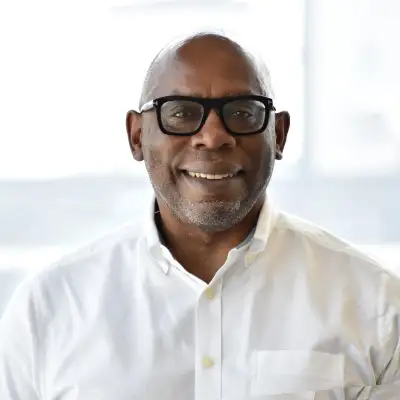
Geoff Rogers Host; self-described "acolyte" and sponsor of the program at the Silberman School of Social Work
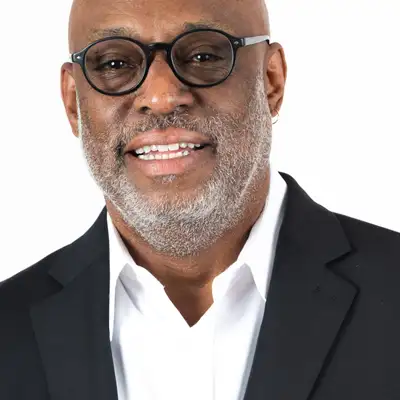
Dr. Kwame Scruggs Founder and Director of Alchemy Inc.
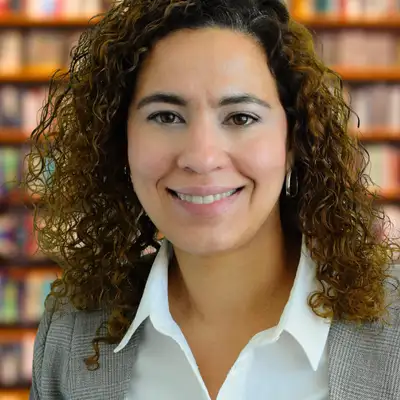
Dunia Garcia Director of the Cabrini Fellows program at the Silberman School of Social Work
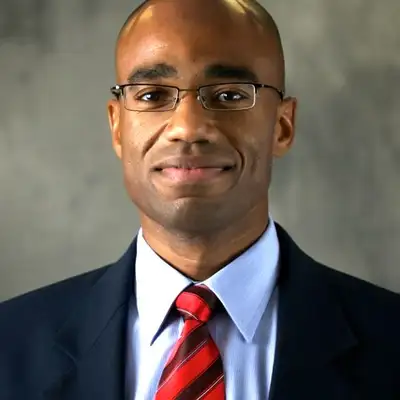
Eric Garvanne Former Columbia grad student; Facilitator at George Jackson Academy and the Silberman School of Social Work
Jesan Sorrells Producer of the Wellness at Work podcast; provides an "outside perspective"
Recording Date: March 19, 2026
Podcast Series Title: Alchemy at the Silberman School of Social Work, a serialized podcast presentation.
--------------------------------------------------------------------------------
Part I: Introduction and Professional Context
Thematic Summary: The episode opens with host Geoff introducing the "Wellness at Work" series, framed as a collaboration between the Silberman School and Dr. Kwame Scruggs. Kwame provides the historical context for Alchemy Inc., detailing its 22-year history originating in Akron, Ohio, and its foundational use of myth to bypass defensive reactions in urban youth.
Geoff: Welcome to the Wellness at Work podcast brought to you by the learning and development projects at Silberman School of Social Work, Hunter College. This is a series of conversations designed to inspire wellness in helping professionals. Our conversations will focus on understanding the importance of self-care, reducing trauma, and bringing to listeners new ideas and practices that promote wellness at work and in your professional life. Welcome to our show today. Welcome to Alchemy at the Silberman School of Social Work, a serialized podcast presentation inspired by the transformational work of Dr. Kwame Scruggs and guided in partnership with the vision and leadership of Dunia Garcia, director of the Cabrini Fellows program at the Silberman School of Social Work, Hunter College. Here myth becomes more than story. It becomes practice, process, and possibility. Welcome to our show today. First, I'd like to introduce my colleagues, can you introduce yourself?
Kwame: Kwame Scruggs, uh, founder and director of Alchemy, Inc. Is that good enough?
Geoff: Um, talk a little bit about your work around alchemy and if you would.
Kwame: Okay. Uh, my work around alchemy. Alchemy. We're in our I think 22nd 22nd year founded in Akron, Ohio. We uh started off working with urban youth urban youth and uh everything we do is through mythological stories and fairy tales. And the reason why we do that when I was uh and this a long story I'm I'm gonna make it short. Okay. Uh the reason why I use myth I just found years ago when I was got introduced the myth through a book by uh Michael Meade and he would tell a myth. He get tell a myth and give his interpretation of the myth and I just learned so much about my life through that and I was working with youth and adults at the University of Akron at the time upper bound and uh I just found that if you tell somebody they're doing something quote unquote wrong if you tell them that directly they become defensive but I found if you if you tell them through a myth through a story it removes— it removes you from the situation and it allows you to look at the situation objectively. So I just started using myth with the youth and adults and the s*** worked. Okay. Okay. So I just I just kept using it and hey so long story short worked. Excellent.
--------------------------------------------------------------------------------
Part II: Speaker Origins and Connections
Thematic Summary: This section explores the individual trajectories of the participants, highlighting the intersection of clinical psychology, social work, and media production. Eric recounts his transition from a Columbia graduate student to a facilitator at the George Jackson Academy, while Jesan establishes his role as a "voice of the crowd" familiar with Joseph Campbell but new to the Alchemy method.
Geoff: So Eric um can you talk a little bit about how you came to who um came to Alchemy and came to working with Kwame because you're working with Kwame now. Um yes to can you give us a little um a little update as to where you are and where you came from?
Eric: Uh well how I actually came to meeting Kwame was uh I I was invited to an informational session on uh the training program that he started at Silberman in 2025 last year and it was just by happenstance that I was um a grad student at Columbia and I was uh in the psych— the clinical psychology program and they have um a separate unit under that um called the spirituality mind body program within clinical psych and one of my professors who knew his work um told me about it and suggested that I go and I went to um that informational session and um once I was there and I saw the work that he was doing and uh I was like this is something that definitely resonates with me not necessarily for the work that I want to do but for uh helping me to actually work more on me and possibly later on being able to share with others. So uh I went through the 50 hour training program with uh over 2025 where I met— where I met you and um learned about your unique um way of uh uh communicating and sharing your insights with others and um and yeah from that uh I asked uh towards the end of that training program I was like hey man I I would really like to sit in and learn more about how this is done um and he was in his Kwame uh form was like hey man I I got a place for you um and we'll pay you for that s***— his words— we'll pay for that s***. Um, which I wasn't looking for, but I was cool with. And so now I'm working with him at George Jackson Academy, a middle school in the East Village um with some really really beautiful young souls over there and uh and also working with him uh at Silberman um where we're doing some training as well um with some uh community leaders there. So that's how I came to get involved with and how I met you.
Geoff: So for the folks at home, when Eric says my unique insights, he means something else. But I'll let you all wonder about what that— what that meaning in fact is. And Jesan um I'm so glad that you're going to be joining the conversation today. And can you tell us a little bit about how your perspective is? I mean, you've had not a lot of information about alchemy and I've shared with you and I talked about and um and and Alchemy and um how— how incredible I— I feel it is and its impacts for I think for social service folks including you know social workers as well as folks who are involved in social services. I think it's one of these— it's seminal to how they can figure out how best to engage their people in a respectful way, as well as understanding how— how they come to their work, how they come to their lives. But Jesan, can you talk about a little bit about your background and how you— you've come to this conversation?
Jesan: Sure. So uh for the folks who are listening uh to this podcast, uh welcome. Uh my name is Jesan. I am the producer of the Wellness at Work podcast, you probably heard me on the first episode um the very first episode uh where I was talking with— where we were talking with um with Stacy around her work uh in uh in the wellness space in the self-care space. Uh so I help out Geoff on the back end of the show and um I'm stepping in today around alchemy um in order to provide a— an outside perspective as Geoff said uh of someone who is maybe uh new to Kwame's work uh new to the work Kwame and Eric and and Dunia are doing uh and providing that perspective um I've never gone through classes. I— I've never uh engaged around uh this myth work. However, I am very familiar with uh myths all the way from uh Joseph Campbell uh who I— I did a— ripped off a whole bunch of stuff uh from him in art school way back in the day 20 plus years ago now. Um all the way down to the kinds of work that I do in hosting my own show, which I'm not going to talk about here, but in hosting my own podcast and talking about the nature of how storytelling and narrative uh can impact society and structure. So I have a rough idea of what it is that Kwame and Eric are involved in in Dunia. Um but uh I'm here today just as a— not as a foil but as a voice of the crowd, right? Uh to give the perspective of folks who who may not have um a perspective around myth uh and the ways in which Kwame and Eric and Dunia are using that myth to move forward social services work.
Geoff: Thank you. And I'm so glad that you're joining in. Um, so, so gentlemen, what— why are we—
Kwame: Geoff? Geoff, excuse me— excuse me, man. I'm sorry. Can you say how you became involved?
Geoff: Oh, okay. So, um, Dunia and I— Dunia is going to be joining us a little bit later. Dunia and I, um, work at the Silberman School of Social Work and we, uh, are— we have the same boss. Um, we work for a fellow named Gary Mallon. Um, and one day Gary said to me, "I think you and Dunia could do some work together." Um, and you know, when your boss says something like that, you sort of go down thinking yourself, "Oh my god, should I be updating my resume or should be taking more medication?" I don't know what to really make of that. But anyway, so I— Dunia's office was literally across the floor from me and I— I— I sort of wobbled over there one day and and knocked on her door and we started to talk and we in fact did collaborate on a— on a curriculum development project together around um uh working with people who are in social services and helping them be more effective in their jobs. But what was— one day, Dunia just said to me out of the blue, she said, "We're having this myth class. Um, doing some workshops and would you be interested in coming?" And— and they are on Saturdays, Saturdays in the morning. And um I— it's weird. I didn't hesitate or sort of whine about being— um having to get up on a Saturday morning and come back to the campus. Um so um as I— as I started to participate in the workshops I sort of understood there was— um they're about myth but the depth and the intention and the development that happens when you are contemplating what goes on in the myth and how it relates to your life and your own development. It became essentially— I would take the workshop and then go home, lie on the bed and stare up in the ceiling and try to figure out what happened. And honestly, it took me a long time to really sort of understand that I was applying— what I was trying to apply was learning— was really applying how to confront different aspects of um my— my development and my personality.
--------------------------------------------------------------------------------
Part III: The Philosophy of Myth and Transformation
Thematic Summary: The core philosophy of Alchemy is introduced as a method for self-discovery that relies on the "ancient art of transformation." Kwame explains how he moved from Robert Bly’s Iron John and Michael Meade’s work to developing his own question-based method, emphasizing that in this space, the objective is to transition from speaking to active listening.
Definition: Alchemy is the ancient art of transformation.
Geoff: So, I became intrigued by how— how— how much of a change process this was for me. Uh I know I'm napping on much longer than you guys did, but it— it's my show and I can do what I would want. So, you know, um it was— it was one of these things that I will say to you and in my adult life that the— the— the agency. It has provided me with the agency to really change and grow and and confront those— those aspects of your personality— of my personality that required. So, um I became for a lack of a better term an acolyte. And for you folks at home, yeah, it's a little worrying, but just from my end and it's nothing that Kwame encourages. Um, but I became a real sponsor for it to really come to Silberman. So, my long-winded way of saying that and then— and then Eric and I met and um I guess Eric sort of alluded to how um complex I can be in a group situation and how what goes on in class spurs me to really sort of examine myself as well as examining um the information that's coming from the other people participating in the class. Um uh yeah, you know, I— I— I grew from also hearing and interacting with Eric and so I— um Eric would say something and I go, "Oh, I hadn't thought of that." And then I go, "Why didn't I think of that?" And then I go, "Why do I feel like I needed to think of that?" And then— and then sort of— oh interesting. So the wonderful thing about this pro— well one of the many wonderful things about this process is the different perspectives that are presented and if you give them a chance to really um set with— sit with you um they really can— really enhance how you understand who you are and better understand other folks. I mean, one of the great things that I dive into a lot in my own work is how to engage um people who are very different from you. In other words, the importance of understanding and respecting otherness and certainly alchemy is very much connected to that. So, that next time you're going to want me to really be a little bit more brief, but here we— here we are. So, Kwame, thank you for reminding me about me. Um— um but let's return to my question. Why are we doing this podcast?
Kwame: Je— uh Geoff, it was your idea.
Geoff: Yeah, but work with me here.
Kwame: Sometimes the talent needs to be more than just the talent.
Geoff: Okay.
Kwame: But yeah, uh I guess here again it was your idea— idea, Geoff. Uh, but to help get the word out— to help get the word out. Uh, absolutely. That let me— let me say this. Uh, I'm— I'm, you know, sitting here listening to you guys and I'm— I'm not— I stumbled across this method. Stumbled across it. Okay. Uh, so it's not— it's not like it's something that I, you know, sat around thinking about and came up with some genius idea. Just like in myth, I stumbled across uh here again from just being induced from going through an African-based rights of passage. All right. That's what I was introduced to African spirituality and the work of Carl Jung and the work of Joseph Campbell. Uh and then I— and then I— uh Jesan, I don't know if I'm— I'm on the board of the Joseph Campbell Foundation.
Jesan: I did not know that.
Kwame: Yeah, I've been on the board for about six, seven years.
Geoff: Yeah. No, he's talking heavy. He's talking heavy right now. Here we go.
Kwame: So, but but uh here again, man, I'm— I'm not taking credit for— for— for this. Um when I— here again, I read Michael Meade's book. Well, I— I read Iron John first and you know, they told the myth and gave and Robert Bly gave his interpretation of the myth, but it was a— it was— it was a long myth in just one book. With Meade, he had about seven different myths in his book. And so, that first two myths that uh for me there was uh about the father and son relationship. The next two was mother son relationship. And then he talked about initiation through— through desire then initiation through sorrow. And initiation is just a— is a symbolic death and rebirth. But— but from reading— you know from reading that book— I read it four and a half times— purchased and given that book to 180 people. Okay. I had their names in the back of the book who I've given it to. But um I just learned so much about myself through a myth and— and at the time I was working with— with youth and— and adults uh here again at Akron Youth Upward Bound Program and I just said I'm going to start using this, you know, with the youth. I'm— I'm I remember walking at lunchtime and I— and I appeared in my window and I said, I'm going to start using this with the— the youth and adults and then— here again and then I started working with high school dropouts in Akron and Cleveland because I left Akron U and then in charter schools and just with other adults and everywhere I went, you know, here again the s*** worked. Okay. Okay.
Jesan: Our marketing. That's going to be our marketing.
Kwame: Hey, that ain't a bad idea. Here again, we stumbled across it. But— but here again, wow. It was the work of Michael Meade and it's just— it is just— I just found that when you tell somebody through a myth, it removes you from that situation and it just allows you to look at the situation objectively and it's— and it's about— it's— it's about coming to know yourself better. It's about coming to know yourself better. So yeah, Geoff, I don't know if that— So yeah, Geoff, we here to get the help— help get the word out, brother.
--------------------------------------------------------------------------------
Part IV: The Humanities and Academic Discourse
Thematic Summary: Jesan initiates a high-level discussion on the declining value of the humanities in American education. Kwame responds by citing the success of Alchemy, which was recognized by First Lady Michelle Obama with a national award. Eric adds depth to the debate by distinguishing between the "achievement mentality" of elite academia and the experiential wealth found in spiritual discovery and the appreciation of art.
Jesan: So, I'd like to step in here with a— with a question from the uh from the cheap seats, such as it were. And this is all well, this is all very— this is all very fascinating to me uh for a wide variety of different reasons. Um personal, professional, uh social, but let me— let me give a— let me give a 50,000 foot— let me ask a 50,000 foot question here. And and Geoff— Kwame, Eric, anyone on the— on the— on the reporting today? on the audio can uh can answer this question. Um in America we have seen in an academic level the decline in the perception of the value around the humanities— right— so English, art, um you know anything involving creativity— right? At the academic level we've seen a decline in the value of that and humanities departments have been closing since the 1980s— people don't study the classics anymore— at least not formally um more of it's going to an informal level and of course with the rise of the internet, we've seen an explosion of informal non-academic disciplines around myth, around the classics, around uh what we would formally call English literature. Uh the likelihood that an English literature major will get a job in a university is almost— at a PhD level— is almost zero now or approaching zero. And so— the question that I have is after listening to all of this, does Alchemy represent the future of humanities education in America? Is this where we need to go? Not just with myth, but also with the arts, with the classics, because there's value in all of these areas, right? Does this represent a template for how we can move forward uh into a world that desperately needs the insights from myth? And the desperately— insight, it needs the insight from the classics but is not getting them at an academic level the way they used to say even 80 years ago in our country.
Kwame: Uh great great question. Uh I— I was with the uh— I was associated with national guild for community arts and education for— for— for a few years and in what— 2012 we— Alchemy was one of 12 programs to win the National Arts and Humanities Youth Program Award— nation's highest honor. Okay. We received it at the White House from uh uh First Lady Michelle Obama. I think— I think this method is one of the ways you know to use for— for humanities. I think you know any art or music because here again that removes you from the situation. All right. And then— and then Jesan you're talking about that whole left brain right brain. Uh they say— if you give a— they say a six-foot man drowned in four feet of water. Okay. That makes no sense. All right. Uh they say— if you give a person facts and ideas you enlighten their minds, but if you tell them a story, you touch their souls. All right? So, this is— this is not for everybody. This is not for everybody, but uh uh I— wow. I'm— I'm— I'm saying this in all humility. In all humility. Wow. I had— hey, I just say that it's— it's— it's a pretty cool method. I'll just leave it at that. It's a pretty cool method.
Geoff: Oh. Um, Kwame I'm curious about what you were going to say as opposed to what you said.
Kwame: I— I— I'm extremely uncomfortable—
Geoff: Where—
Kwame: With— with— I'm extremely uncomfortable with saying, "I got the best toy on the block." I'm— I'm extremely uncomfortable. Okay. So, I got a— I got a pretty nice toy for us to play with. Okay. But there— there— there's plenty of people with— with nice toys. Okay. All I can do is speak to mine and see the impact, okay, that mine has had on others. All right. So, and— and here again, you know, man, I'm— I'm— I'm uncomfortable taking credit for it. But here again, the s*** works. Okay. Hey, hey, there it goes. Hey, it's, you know, three things that I always say. Three things that I always say about the method. Three things I've always said about it. And I— and I knew from day one, wow. I— I— I have some anecdotal stories, you know, that just told me, man, this myth is the ticket. This myth is the ticket. But um— um the— the three things I always tell people: it's unique. It's engaging. And most importantly, it works. Okay. Yeah.
--------------------------------------------------------------------------------
Part V: Live Demonstration — The Two Brothers Myth
Thematic Summary: Dr. Scruggs conducts a live demonstration of the Alchemy method using the "Two Brothers" myth. Participants react to the narrative's elements of secrecy, coveting, and the relationship between fathers and sons. The section also features Dunia Garcia's professional origin story, detailing her transition from a community organizer in the Bronx to a doctoral student at Rutgers University.
The Nature of Myth:
• "Myths are stories that have never been, but will always be."
• "Myths are lies which tell the truth."
• "Myths are false on the outside but true on the inside."
• "Myths are not just for putting children to sleep, but for waking adults up."
Dunia: ...so uh humbled by the introduction and also um to get to answering the question, I got the opportunity to meet Kwame um when I was in my doctoral study at Rutgers University uh where I was completing my um doctorate in social work. I'm a social worker by trade. Um and I— I think what I differ from many social workers. Um— um I've always been interested in doing individual work. Uh but growing up in um the Bronx uh in the 80s um and for anyone that knows the Bronx, it's often um associated with the "burn down" Bronx. Um I saw nothing but rubble, trash, um abandoned— in my community and yeah I wanted to do that individual work but what was really calling me um as I thought about uh doing my masters was community change and so I became a community organizer and it sort of became foundational to everything that I do is— is how do I maximize um change and capacity. Um and so um I did that work for a bit and I sort of had this hidden love that I wanted to explore which was to teach and I had heard— although later on I found out that there are other ways— that the only way that I could teach was if I got a doctoral degree. Um and that was a huge um internal battle that I had to overcome. But when I did um I ended up at Rutgers and— and I don't regret it uh for many reasons, but mostly because I got an opportunity to meet Kwame and and some really cool people along the way.
Kwame: ...This myth is called the Two Brothers. All right. ...So once upon a time in an African village on a farm near a river, there lived a man, his wife, and their two sons. Every day the two boys— they asked their father for permission to go and swim in the river when the sun got very hot. While at the river, the younger brother often took his father's canoe and went far out to the deepest part of the river. One day, like today, he went out farther— farther out than usual. Finally, he got to a spot where there were many large rocks and on top of one of the rocks he found a comb. Now this comb was quite ornately decorated. So the boy decided to take the comb home with him. He took the comb to the shore of the river. But he did not tell his older brother what he had found. Now while the boy was asleep that night, a beautiful woman appeared to him in a dream and asked for the comb. But well, was it a dream or did she really appear in person? We don't really know. She told him that while she was combing her hair that morning, she had accidentally left it on the rock. She promised to give him anything he wanted if only he would permit her to take the comb back to the river. And I'm going stop right there. And you just write down what resonated with you and that small portion of the myth. And as always, there's no right or wrong answers. It is merely for discussion's sake.
Geoff: Um— coveting. Coveting. Coveting. Covetous. Coveting. Okay. Coveting, right? Reaching for things that may not belong to me.
Jesan: Uh several things uh resonated with me through that. Um primarily I guess fathers and sons— the nature of passing along something, a message, a connection, passing along a piece of history uh more passively than actively. Um because the— the father is only active for— until the comb is found and then he is removed and now it goes on to the son. Now the son has to deal with sex and fertility and connection and engagement and he has to deal with it on his own without the father being there.
Dunia: I think what um kind of drew me to the story was the thought of going further into the river and then coming across something— um finding something. Um I can't swim, so I always get nervous with anything that has water. Um but I get the sense that I'm gonna be okay because I'm with my dad. Um—
Kwame: Okay, in the mu— that's interesting. Because in the myth he wasn't with his dad.
Dunia: No.
Kwame: Yeah.
Dunia: Yeah. That's the image that I got that I went to— I went off.
Eric: Um that there's a— that there's a weight to keeping secrets. Um, and that um it's just the image of him picking up a comb and feeling that weight that comes along with keeping secrets and um how that's something that I— I have to recognize that what secrets I keep is a choice and um but there's also weight that comes with that and I— I need to be um very cognizant of who I'm allowing to share their secrets with me and to share the secrets of others with me. Um because it's not free.
--------------------------------------------------------------------------------
Part VI: Reflection on Vulnerability and Ego
Thematic Summary: The dialogue shifts to an internal examination of the "empty cup mind." Participants explore the dangers of "ironic detachment" as a shield for vulnerability. Dunia reflects on the role of a nurturer versus an individual needing to ask for herself, while Eric wrestles with the question "Why not me?" in spaces where he feels like an outsider.
Jesan: ...So uh— so something that I'm working on this year, even outside of just the general work that I do, um, and something that I do need to ask for or that I want to ask for every day, is um, is more genuine sincerity and less ironic detachment.
Kwame: Ouch. Ironic— could you— could you expound on that? ...I definitely understand the sincerity. ...But the— the ironic detachment, man. What's your operational definition of that, man?
Jesan: So— so I am at the tail end of a generation that sharpened ironic detachment to a— to took it— took it from first a shield to protect us from the things as a generation. Dunia talks a little bit about this because she's probably in the middle or the older end of that generation that I'm in. Um, we use it as a shield to protect ourselves from the genuine societal collapse and cultural collapse we saw around us because it was the only way to deal with being a latchkey kid or being a product of divorce or having our dreams— you talked about being a superhero with a cape— having that cape ripped away from us and being— being pushed into reality uh way too early. As we have gotten older— as I have gotten older, I'm going to make this personal about myself. As I have gotten older, I have noticed that that ironic detachment is an anchor. It holds you down. ...They need sincerity. They need us to sincerely believe that things can be better. ...Because ironic detachment only deconstructs the myth. It only decon— it can only serve to tear down.
Kwame: ...They say— if heaven is a place where only the innocent go, yet the one who stands before you is guilty, then where are you? It's like a couple weeks ago I— I was somewhere. I was somewhere. And I'm— I'm like, "What are all these people doing here on a Tuesday afternoon or whatever?" And I'm like, "S***, I'm standing here with them." Okay. So, so, so, so when we thinking about casting judgment on somebody, yo— so here again, if heaven is a place where only the innocent go, yet the one who stands before you is guilty, then where are you? Yeah.
Jesan: So— do you think ego is something we need to get rid of?
Kwame: Well, no. Well, well, okay. I— um you need to get— it's— it's going how we define an ego. I think if you— if you're— you definitely need to keep portions of it to move on in this world, you know, you definitely got to— but just— just stop thinking or believing that you know every damn thing. ...You got to have that empty cup mind. All right. You know, if you got that— that— that cup of tea and you keep p— I can't remember if this is Zen or whatever. And you keep pouring that— that tea into the cup, it's just going over— you know— overflow. So, you have to have an empty cup mind.
--------------------------------------------------------------------------------
Part VII: Closing and Episode Teaser
Thematic Summary: The episode concludes with a playful debate over who should provide the final sign-off, illustrating the group’s dynamic of "letting the talent be the talent." Geoff teases the next episode, which will delve deeper into the concept of the "spiritual quest."
Jesan: So um Kwame, we've got 30 seconds basically to sort of wrap it. Final thought would be your final thought and then also plug for Episode 2 coming very soon.
Kwame: Wow, man. That— that's putting me on the spot, man. It's your show, man. It's your show. You end it, man. Or Jesan— Jesan got that voice, man. One of y'all end it, man. Don't put that on me. ...Too much pressure, brother. You got me over here sweating, man. I'm looking for my towel.
Geoff: Are you sure about letting talent be the talent? I'm not really clear on it.
Jesan: I think— I think we've got— I think we've got a good hour of— of the talent being the talent. I think we've justified— I think we've justified everything else that has happened. I think we're good.
Geoff: Um I— you know, this is a— a very uh condensed version of the kinds of explorations that Alchemy um can take you into. Um, and I, you know, I'm— I'm— I'm eager for— for the next episode and I want to thank you all um for your amazing participation and um so thoughtful and so um so talented and um I— I'm trying to let the talent be the talent. And so you guys um are all amazing and I'm— I'm— I'm really— the next— one of the things Eric in the next episode is talking about the idea of spiritual— spiritual journey right—
Eric: Spiritual quest—
Jesan: Spiritual quest—
Geoff: I figured I'd get him off by— by misquoting it. Um so um this— so folks if you're listening to this there's more to come. And thank you for joining us.