Subscribe
Share
Share
Embed


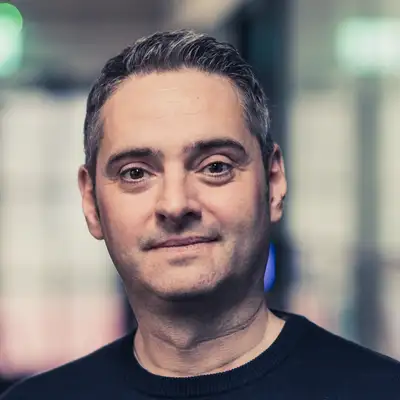
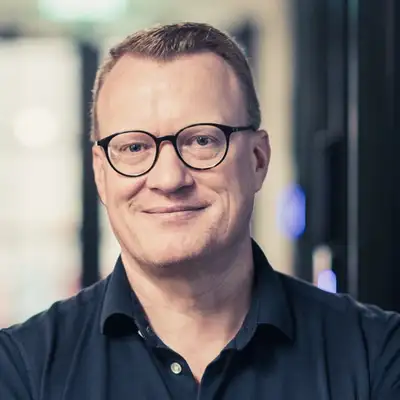
From the award‑winning team behind Cloud Realities, Realities Remixed explores what happens when people, culture, industry, and technology collide, because real breakthroughs rarely come from technology alone.
In each episode, hosts Dave Chapman and Rob Kernahan dig beneath the surface of innovation to understand what’s truly shifting. They speak with leaders, practitioners, vendors and thinkers across industries to explore how technology reshapes human behaviour, organisational culture, and society, for better and sometimes for worse.
Web - https://www.capgemini.com/insights/research-library/cloud-realities-podcast/
Email - realitiesremixed@capgemini.com
Well, I've just said I had to put them on to dry some clothes. So I I have now dried them and I've switched them off, so hopefully over the next hour or so. Which is warm the entire house as opposed to use a device specifically to use.
(00:34.05) I'm Dave Chapman. I'm Rob Kernahan, and this is Reality's Remixed, an original podcast from Capgemini, and this week we talked to the Center for Tomorrow about some of the world's most macro issues. Joining us later in the show to talk about that is Dex Hunter-Torricke. He's the founder and president of the Center for Tomorrow. if you want to jump straight to our conversation with Dex and it is quite a conversation, then you'll find the the time code in the show notes.
But before that, Robert. David. A big a big thing happened this week, didn't it? Did it? Yeah. You're making me nervous again. The end of the boys. yeah. Yeah, the boys, the show, the I've been tracking that since it started. Quite quite the show. Quite the show. Good character. Yeah, we're probably gonna we're probably gonna touch inevitably on a few spoilers in this conversation. If you've been watching the boys. If you've been watching the boys and you don't want to be spoiled, then just jump right to the to the decks conversation. but yeah okay so what did you make of the ending? I it's always difficult when you bring a show like that to a close. I liked it. However, I think they could have extended it. There was enough story in there to almost do an episode twice as long. And I don't see why they wouldn't do an extra 30 minutes of footage. And I think When it came together, it happened so quickly that you're like, Has that just happened? What hey? And then there was a bit of a ramble as it goes on, which it has to do. But yeah, they they I felt like they might be trying to tease up another series shoot off. I'm not sure, but felt like that right at the very end, didn't it? It did. But it's so I've watched The Boys in quite an unusual way. I haven't been watching it for the last few years. my son and a number of my friends, like Rob have. So I knew all about it, but I was kind of a bit superheroed out, so I didn't bother until about two or three months ago, and then I've just watched the whole thing to catch up with when the when the final episode comes on. So having having not sat on it for years, like I'dn't I I wasn't one of those people who had like explored a bazillion ways that it could end and have very deep rooted points of view about Frenchie and Butcher and things like that. So I didn't as I was watching it through, I didn't really dictate (02:56.268) you know, kind of clo clock the quality going up and down that much. I actually felt it was quite consistent all the way through. But one thing I think I do agree with is the fifth season, which was the last season if you haven't watched it, seemed to really delve into some areas that ultimately ended up being fairly inconsequential to the conclusion. And then the conclusion Has two major events go on in it, one that circulates around Homelander and one that circulates around Butcher. That they just they whizzed past in about Yeah. In about ten minutes. It was I think the script writing it felt like they might have had another few seasons and they've been told to bring it to a close and they've collapsed a load of things in, haven't they? it was clunky the fifth season. and it we had a pacing problem, I think, to a degree. I'm still very good, right? So I still think it's fine. He's still excellent. Yeah, yeah. These criticisms are minor, if anything. But yeah, the the pacing wa and the s some of the story arc was a bit confused. I just think when they when it all comes together crescendo in the middle of the show, that could have been two, three, four times as long and c they could have done so much with it. So Yeah, I agree. And I think your point, even if they just put an extra thirty minutes in that last episode, just to let it breathe a bit. And and there's a there's one particular moment of catharsis that I won't talk about that you're like, what That that was like three minutes. It's like that that could've I I could have watched half an hour of that, you know. It's funny though, you sit on our side of the fence and you watch it and then you think about the constraints of the people making the show and whatever else and you go, th they're they're kinda stuck a bit, aren't they? I did have a thought about it though. And this this is heavy spoiler, so seriously, if you don't want to know this, skip forward. I did think about it from Butcher's point of view, that end scene in the Oval Office. Yeah, right. Like it if say that extended that point out with like the depowered section out. Yeah. Like what was Butcher doing? I like I like actually the fact when I was thinking about it, Butcher just acts immediately. You know, so from his point of view, he doesn't stand there chatting, does he? So I felt that worked quite well, even though it kind of was frustrating to me 'cause I wanted a little bit more of it. So it it's it I actually probably played out like the reality would have if we lived in a world where this was all true, which is, you know, truly fantastic in the in the traditional sense of the word. (05:19.99) So yeah, it was probably that what would have probably happened situation, but I think there were so many places they could have taken that. They could have played with it a fair bit, but anyway. It is I mean, who are we? We are not the creative e engine behind. We are not, and it's fair to say that I think we both loved it. And actually I did think they landed the plane, despite all of my whining just now. I thought they landed the plane pretty successfully, actually. Th yeah, so there's some shows where I've tracked it for six, seven seasons and the ending episode is a disaster. And you go, Well, you've arc that Game of Thrones being the one that's most v voracious v what's the word voraciously talked about online. But the this one landed quite well, I think. I'm not disappointed. Yeah, you get some that you think, all that and that's how you ended it. My word. Anyway. Exactly. Well look, now talking about big events on a global scale, we're gonna talk to Dex Hunter Toric today. Now Dex is the founder of Center for Tomorrow, which is a global non profit research organisation. Which effectively is a think tank dedicated to navigating the societal, economic and political disruptions caused by artificial intelligence and advanced technologies. And Dex talks about the world in very macro terms and the and the good and bad impacts of technology and the and the good decisions you might be able to make, which can really have you know, g good intentional decisions can really have a profound effect on the future that we end up. with now back on cloud realities at a like an infinitesimally smaller scale, we used to talk about intentional leadership quite a lot. And even in things like cloud transformations, that leaders can make intentional decisions that might be slightly against the grain of organizations and and drive outcomes for those organizations that were that were previously unthought of. And Dex, Rob, is doing this on a global scale. It's a ma and just just what he's tackling, who he's talking to, the way he thinks about it, threading things together, it's it's incredible. And he's he's influencing and talking at the top table of the world. So yeah, it's a it's a very profound thing that he strives for. So it's fascinating stuff, and we feel very lucky to have talked to Dex today. So let's jump to Rob and I talking to Dex Hunter-Torricke. (07:45.57) So Dex, wonderful to see you today. Whereabouts are you in the world? I'm in London today. London. And where do you normally live? You're just outside London somewhere. Yeah, I'm in Richmond. But yeah, it's been a rare thing to actually be in London recently, just because I've been all over the world in the last few weeks, been in twelve countries in the last twelve weeks. Talking all about the future. So I launched this new organization, the Centre for Tomorrow in February. And I've been trekking all over the world talking to leaders from governments and businesses and communities all about how we manage a future shaped by AI. So I've literally just been everywhere from China to Brazil and everywhere in between. Wow. So let let's maybe come back to that in a second and what and what sort of threads you picked up in that journey. But tell us a little bit about Center for Tomorrow. What like in your head, what's its purpose and how did you end up there? So I spent the last 15 years in the tech industry, mostly in US big tech. And for the last several years I've been Particularly at the center of AI. I think the whole 15 years though has been this building backdrop of a world that is facing immense systemic challenges while the technology being shaped by innovators has been advancing exponentially. And I came to a realization in the last sort of couple of years, you know, a long journey I've been on, where I just really understood how profound and kaleidoscopic in a way. the possible futures might be in front of us, and yet how thoroughly unprepared leaders and institutions and societies are to manage the effects well. The technology itself is amazing. It could be thoroughly life-changing and world-changing. And if we manage it well, I think it will enable a much better future for us and for our kids. It's something that most leaders I see as being really, really unprepared for though. They have yet to understand just how transformational the impacts will be, how quickly those impacts will unfold, and how deeply interconnected all the challenges are. It's not actually mainly about solving a very narrow sliver of technical problems and meeting them with technical solutions. There's a much larger societal agenda that we need to figure out how to solve. And so this is gonna be the hardest thing politically, economically, socially in history, I think. (10:07.744) And that's everything I'm working on. I'm working to have people understand that, but also to figure out what are the actual solutions that we need to deploy now to get to the the good future. Is it predominantly an educational and sort of policy advisory body? Are you actually working on when you say solutions, are you working on technology as well? I am not working on technology. And in fact, this is exactly the difference between myself and and the many other organizations that often sit in this set of AI governance solutions. I don't think the technological solutions to this future are going to solve a fraction of the challenges that we need to get to those systemic fixes. They are actually thoroughly old-fashioned human institutional strategic choices in many cases. And so this is something where there's both an educational component, it is literally helping leaders understand what is happening and what is likely to happen, but it's very much on how do you actually end up with very specific policy, institutional, societal fixes to these problems? You know, our three big pillars are around, you know, how do you manage a future economy shaped by advanced AI? How do you build a different international order so that we are able to live in a more peaceful world with this technology? And then how do you manage the climatic effects of all of this? And The kind of solutions we're developing, you know, working with lots of researchers, funding our own research is very much in the vein of a think tank. But the other piece, which I'm just as excited about, is actually thoroughly hands-on. So most think tanks, they, you know, have a pretty narrow remit. They work to get policy ideas which are then injected into systems. That is extremely valuable. But I do think you've got to do something much bigger in parallel with that. And that is you've got to practically prepare leaders and organizations. with the skills, with the understanding, with the very different tools that then allow them to navigate the future. So we've got a whole set of programs which we've just been developing for the last year and which we're about to launch in the next few days all around how do you you know actually upskill organizations and teams. And we've got a whole upskilling academy that we're launching in the form of retreats, programs, corporate simulations. We just did our first corporate simulation as a pilot project in Germany three weeks ago. (12:22.522) with 70 executives at Commerce Bank looking at different future scenarios and how you navigate them. So yeah, huge amount of activity. And I just started writing a book as well. Is that what you do on Sundays? That is what I'm gonna have to try and cram in somehow on top of everything else writing. Saving the world and then writing a book on a Sunday about saving the world. Yeah, exactly. When you when when you run those sessions with like the one you just described in Germany, what percentage of people have their eyes really opened by that type of process and go, I never understood the sort of places this is going to go. And how many kind of saw it and you're helping shape it and crystallize it, is is there a big sort of my God moment for most? It it feels like that might be quite common. Yes. And in fact, yeah, that's exactly why, you know, I'm I'm working to to talk about these things because you have lots of, you know, exceptional accomplished leaders, professionals, executive teams, top of their game, top of their industry. And you know, absolutely they have yet to connect the dots with what is happening in their domain, with everything happening in everything else. And, you know, after nearly twenty years working with a whole bunch of leaders, I am very, very cognizant of the many dysfunctions of leadership. And one of the biggest dysfunctions of modern leadership, I think, is thinking your bit of the world is the most important part and that you can sort of focus on your little domain and everything will be okay. But The future is very inconvenient. Everything shows up in it. And so you need to have a thesis and a understanding and solutions grounded for the world that is actually coming, not just the one you would like to focus on. As you were traveling around recently, you mentioned at the top of the conversation that you'd been to a number of different countries having conversations about, I'm assuming the three pillars that you set out and probably a number of other a number of other things. Obviously culturally, you're speaking to some very diverse cultures in that tour that you went through. What themes were emerging beyond we don't really understand what this is gonna do to the future, but like what were the sub themes and did they have any sort of cultural bearing? I would say that there are some parts of the world which are more hopeful specifically about technology. Right. And you know, that that absolutely is shaped culturally, but also simply by whether or not your ecosystem is a leader in parts (14:41.598) of that technology. So when you're not good at a thing, you tend to take it less seriously. You tend to like it less. That's just a natural human instinct. I think there's something in there about why, for example, attitudes often in Europe towards technology are much more negative than they are in the US. You know, one has a history of being at the front of a lot of deep tech leadership. But on the other hand, you know, in places like South Korea and Japan, you know, people can be really positive about the tech, but they also still share the underlying skepticism that leaders and institutions and industry might have the right frameworks around those things to actually get us to the good future. I would say there is a tremendous amount of commonality though amongst leaders and obviously it's an unrepresentative group in some cases. You know, you've got business leaders, you know, academia, government leaders who are operating in pretty elite environments. But there's a tremendous commonality where they they worry a lot about the future. I would say they actually have quite stronger reactions to that quite often. And when you look at the polling, for example, about the kind of macro level stresses, you know, on populations, you know, the sinking trust in authority, the fact that, you know, large populations, you know, think that the next generation might not have as good a quality of of life as them. And then the actual raw data on the problems, you know, things like climate change. Those all add up to a a pretty universal set of problems that people talk about all over the world with me. And as you're getting into those pro I mean, the problems are sort of they couldn't be any macro in some ways. They're they're like the biggest problems of our day to a certain extent. How do you begin to break that down in conversation in a way that then leaves them with some actionable activities? Or do or does it actually not get that far in some of the initial conversations? They're much more about understanding the problem itself. No, it absolutely gets that far. the one of the most frustrating things to me in my life was going to lots of events. I started my career as a speechwriter in the tech industry and I used to manage a lot of events. And I always watched these thought leaders on stage who would get you all riled up about the future and then they tell you absolutely nothing practical. It's like, well, that's very helpful. I've got nothing useful there. And so, you know, in a way, I think the art of how you move the world. (16:57.258) on these issues, right, is you've got to be able to translate it to something which is thoroughly practical, which connects into lots of different agendas. and that's exactly why you need to talk to a very diverse set of leaders. There's not a single executive team anywhere in the world which is not, you know, really struggling and being challenged every day now with how do I evolve my organization, my culture, you know, how I hired and develop and retain talent, all of these things which are sort of timeless But the answers, the solutions are changing because of the very different, you know, challenges presented by totally novel technology. And so I always get into those things. What are the things that we should be thinking about when it comes to, you know, integrating tools, thinking about evolving culture? Where do you put values in any of this conversation? You know, often they're sort of nice to have, you know, put in at the end just as some window dressing. They're actually fundamental to the choices that you make. So I think there's lots of ways you can do it. And you know, actually being able to connect those massive things, which if you don't connect them, can sound sort of like, you know, interesting intellectual conversations. If you can connect them though, then with the things that boards and leadership teams are are meeting on every single day now trying to solve, then it starts to get interesting. When you take something like climate change, and I look at it, and I sort of say, is the world set up to be able to tackle this problem? So you look at progress on it. And you sort of go, we're not really making the progress we need to make on it. Paris agreements are changing, percentages are changing, people keep re-baselining. There's lots of conversation about it. But you look at the the way everything's come together, you just go, it doesn't feel like a system that's going to solve the problem. And has anybody had that fundamental conversation says, well, where does this actually go as a natural conclusion? Because the current nation state setup, nobody can actually fundamentally agree because nobody wants to lose out. You know, and it's sort of like Where d I mean th th it it it gets to a quite a depressing place with the conversation. What's your view on that about do you reckon how long does it take or what's needed for a system to fundamentally and d does it need a systemic crisis to understand it fundamentally needs to change? What where does that get to in your mind? This this is exactly what I'm focused on. So we're in a systemic crisis now. And part of what I'm talking about, a very large part, is illuminating the scale of that. And I think people recognize we're in a crisis, like (19:16.482) You know, on almost every front, you know people are really worrying about the future. And, you know, everything that's happening geopolitically, the disruption to our economies, the plateauing economic growth and quality of life, rising populism, you know, vast humanitarian crises, the global refugee crisis, all of these things absolutely are animating the agenda all over the world, you know, with varying levels depending on what different societies are facing. But how do you shift views on this and like What is the nature of the fix you need? absolutely, our global climate change solutions have broken down. We are emphatically heading for some of the worst case scenarios of climate change, according to the world's best climate scientists convened via the IPCC. And so we need to have a conversation about systemically how do we get to something that works. And, you know, from my point of view, that's exactly why you need to talk about and develop a very different agenda for how you manage the world in an age of these interconnected. technologies and solutions. my theory of change, I'm a simple man. you know, I absolutely think it starts with talking about it and illuminating that problem for a very large number of people and for publics so that you can then turn it into an actual tangible set of ideas. And the key is not to start with what is politically realistic, because if you want what's politically realistic, that is failure. That is exactly what we have now. And I have a, you know, another macro Thesis on, you know, the elite dynamics which are producing the nature of the broken system we've got now. Yeah. We've had a whole generation of experts who've become very, very specialized absolutely, you know, have been faced with larger and larger problems where institutionally we've been discouraged from pursuing these things. and in a way, we've settled for the art of the possible. People don't want to define the systemic problem. They want to just give us things that are sort of nice to do and absolutely achievable by a single institution. They can fit in your KPIs neatly. But we need to talk about the bigger thing. And if we do that, you can change the world. The world isn't static, public opinion isn't static, and decision maker agendas aren't static. A as you talk, it reminds me of Hinson's definition of the new normal, or I think he refers to it as the never normal, which is a situation where, you know, the the s the the circumstances of the past, particularly for people of say like Gen X age, simply are not going to return. And therefore we should adapt our (21:39.478) Ways of governing, ways of leading, ways of thinking, to the sort of scenario you're talking about. So I I'm interested in exploring that with you f from a couple of different angles. First of all, is it fixable in the way you describe? Or is it really just a condition of a bow wave of a a bow wave of things that we're pushing forward as a society that we're not getting underneath? I think these things are fixable. The fix is not ever going to be going back to the way things were before because Things didn't work before. That's why we're in the mess for a now. And in a way, conjuring up a vision of the future that's mostly based on the world of the past is a profound failure of imagination. What we can do in an age of the most powerful, you know, technology in history in an interconnected world with eight and a half billion people is incredible. We should be able to build planetary scale infrastructure. and solutions and to take advantage of all the knowledge that we've amassed in our whole history and particularly in light of the last few years where we've seen the greatest expansion of human knowledge ever in history as a result of AI. We're living in a true golden age of science. So there's no shortage of data, there's no shortage of the understanding. There are machines and systems operating every second now, which are pushing us towards something that could be deeply hopeful. but it requires us now to focus on evolving all the thoroughly analog things around that technology for us to succeed. You know, in a way, the way I always thought about it is when I was working in the tech industry and, you know, working on telling the story for a lot of innovators, we always tell this half of the story. Technology changes the world. And it's very true. But the other half is that the world changes technology. none of the inventions show up in this immaculate environment. And so We have a responsibility to think what policies, what systems, what leaders, what global solutions, what how do all of those things fit together in a whole interlocking matrix in order to then deliver the reality that you you actually want to achieve? And so I think those are massive ideas. It's as hard as it gets. The natural instinct for a lot of people who've been leaders in the old systems is immediately to just be skeptical and think, well, that's not gonna happen. I've been alive for a lot longer than you. I've been doing this thing for a while, I'm very good at it. And (24:07.074) Good luck trying to tell people to go and build this very different world order. And yeah, that is the only way out of this. In a way, I don't think we have a choice about whether we push for this. like there is a different set of solutions that we know are needed, and they may not be things that are politically realistic, but that is in fact the only way out of this mess. And if we don't try for that, then what's the alternative? Yeah, it's it's that classic the only way out is through. Mm-hmm. And you know, it it it isn't by pausing. But And in my head, it feels like for the system to adjust, it needs some dramatic event to occur, to wake everything up, to sort of shock the system, to say, right, guys, the way we're operating now needs to change. It's that compelling event that might not be such a happy event that might trigger some action. Because at the moment you see us almost sleep with the structure sleepwalking into Something that was not even sleepwalking into it. We're aware it's happening, but we don't appear to be changing any behaviors until actually maybe something that like that occurs. Yeah, and I think that that event is underway. And actually, I've seen more movement in elite agendas and conversations about some of these issues in the last 12 months than I have certainly in the last, you know, nearly 20 years. you know, I've been operating in these places because of the nature of threat that is now perceived domestically and internationally. You know, everything that's happening geopolitically and that's been unfolding since the start of this year, that has shocked leaders in many of the middle powers. And you know, I've been talking to policymakers, you know, from Europe to Brazil and everywhere in between. And people are perceiving a future now where most of the world's population, most of the world's countries will not have agency in a future where the technology is mostly shaped just by a couple of ecosystems. You've got a bunch of leaders now particularly in the global south, who are living with very urgent threats now coming from climate change. And even outside of that, you know, it's becoming harder and harder to deny the scale of the problem. You know, in the UK, you know, just in the last few days, we've seen a huge bit of research which has come out from a bunch of experts saying that housing stock in this country must convert to air conditioning now. That must be standard. And we're sure that, yeah. Right. We're gonna have to retrofit all the housing as well. You know (26:24.14) Today, what is it, twenty-seven degrees today? On Monday, in just a few days, it's going to be thirty-three degrees. It's likely to be the hottest May day ever in history since records began, since nineteen forty-four. And so, you know, that is just on its own a single challenge which will become gargantuan. how much will it cost to retrofit the entire housing stock of the sixth largest economy in the world in a fiscally strapped environment? I don't know, but it probably is going to make an uncomfortable addition to the two hundred billion pounds we have to spend on modernising our water system as well. so the all these things keep adding up. And you know, I think now that is the moment in which you can start to illuminate there is a way out of this. It will require a different set of solutions, but they are achievable. This is not utopian guff. We're not waiting for super intelligence to arrive for us to fix these problems. It will require courage and probably a very intense degree of global collaboration to solve these problems. I wonder if we zoom in on on tech. We you've you've touched on it a number of times as you've as you've set out the problem. You talk often about tech should be deeply hopeful. And obviously the world we're in at the moment, let's just say the jury is a little split on that on that position. So let's let's put the light on tech specifically in terms of how you think it's taking a position in the world at the moment. And then forward from here. I guess what does good look like without being too pat about it? And and in my head, there's a number of things going on at the moment. But I think one one of the things at the moment I think that's really polarized a lot of discussion in society the course of social media, where all kind of nuance seems to have been lost in the conversation and it's become kind of kind of heavily binary in in how people are coming on across problems. And that's before you even get to, you know, the world of AI and and what's coming down the road. So w w when you're conceptualizing the impact of of tech in these big macro problems, what does that look like for you? When I went to the tech industry, it was end of twenty ten and it seems incredible now just to think how different the mood was in societies about what those companies, those those tools could be. And the memory that, you know (28:47.956) I often come back to is when I first arrived at Google. I was at Google a couple of times in my career. the first time I was at Google HQ in California, working for Eric Schmidt. And my friend Jim, who sat on the left of me, one of my best friends, he was at the time managing as one of his projects a film that was being made at Google's campus called the internship. and that's right. It was Vince Sworn and Owen Wilson. It was like an absolute, you know, sort of plane quality movie, as I like to think of them. Like you would you should not pay money for that. You watch it on a plane. and that's a nice definition of films, actually. I like that. Everything is excused, it's not part of real life. And it was something where you could literally get people to pay money for tickets, unfortunately, to go and watch a cheesy rom-com set at Google's campus, you know, about a couple of people who become interns there. And Now, could you imagine trying to make that and get people to watch it? I mean, the thing would be cancelled so fast. I mean, you can imagine the ratio on social media. And, you know, this is this is what's happened, right? These industries built technologies that profoundly reshaped our societies. And because we were not prepared as societies to manage these things well, we're still trying to fit you know figure these things out, right? I mean, we're literally going through the social media ban conversation now. You know, nearly 20 years later. I mean, like, good job, we moved fast to protect a generation of people, right? If that's the problem. But because these things had all sorts of unpredictable, in many cases, destabilizing effects, things that did not improve our quality of life, people now, one, really don't like the industry and do not believe that this is something hopeful. But then secondly, the companies themselves, faced with an environment in which people have been extremely increasingly critical. governments and other industries have rightly demanded that the tech industry live up to its obligations, that it have a wider aperture on how to exert its responsibilities. The industry in many cases has chosen to do exactly the opposite of what is required. Instead of taking those challenges on and saying we recognize that building these technologies would involve you know huge, you know, societal costs and costs for ourselves in meeting responsibilities, let's solve this stuff together. Instead, the instinct has been to fight (31:07.98) to deny the evidence or simply to pretend that nothing is happening at all. Right. And this is this is what has moved the industry now into a position where actually instead of trying to engage with critics or or valid criticisms, instead actually the industry has started to team up with forcers and actors who are actually a huge part of the problem. And, you know, the kind of arguments that are put forth about, these are just platforms being neutral and they're, you know, reflecting, you know, you know, the the the modern neutral position, you know, on values and political challenges. That's just guff from my point of view. Every company gets choices, every set of leaders gets choices. At some point you have to pin your colours through the mass. Are you good with democracy and human rights and protecting minorities and climate change? And all of those things, which I'm I'm very simple, I am prepared to back all of those things a hundred percent. And at the point where the people I was working for, some of those, you know, ultra powerful leaders, no longer were able to say those things, or if they were saying them, did not enforce those words with actions, then I certainly found it was time to do something else. I I wonder if as well, we as individuals, as we're engaging with these sort of massive systems in a lot of ways, whether we're actually ready for it and prepared for it. So one of the things I reflect on is are you aware of like Dunbar's number? Of course. Yeah, so I I to and Dunbar's number for those who don't know, it's how many people can you comfortably keep track of? And Dunbar's number says around a hundred and fifty. And he breaks it down as sort of five core people who are in your inner circle, fifteen that are an extended support group, around fifty friends who you may see, you know, once a year, something like that. and then a and then about another hundred or so acquaintances. And it's always struck me, or it's certainly strikes me when you look at some of the behaviours that go on on social media that like with you know, some individuals and I'm not talking about Taylor Swift who probably has a company managing her Instagram or whatever it might be, but those individuals that ultimately end up with hundreds of thousands or millions of followers that they're trying to interact with themselves, they're way beyond Dunbar's number at that point. So I wonder if like as individuals we're even ready for that dynamic. I think that's exactly right. (33:27.5) You know, the fact that our own friendship and relationship circles and dynamics have evolved enormously is perhaps the most profound thing of all with technology. And even as individuals, I think many of us still struggle with the fact those dynamics have changed. You know, I think about the fact that, you know, when I was a kid, you know, when I was a teenager, you know, I'd have my core group of friends and we would hang out a lot in person. You know, it was just natural. You'd get a driver's license as soon as you could get one, you would go around each other's houses, you'd go to parties, you know, when you're old enough you went to the pub. Now you see on almost every metric that all of those things are in full retreat. And some of those things I don't think we should necessarily regret. You know, it's a you know much healthier population which often isn't engaging in the kind of binge drinking we all engaged in when we were young people. Right. But on the other hand, the number of people getting driving licenses has declined by double digits for young people versus you know the previous generation. And we see actually that, you know, social capital by many metrics, including the number of people people feel they can rely on and feel closely connected to, all of those things have massively declined too. And actually I think it's something like fifteen or twenty percent of people in the UK say that they have no friends, like in polls. What? Fifteen to twenty percent zero friends. And that number by the way is is pretty much comparable in the United States. So it's a it's a tremendous number of people. I mean, I looked at this polling all the time in companies as well, you know, companies I worked for. And even in highly, you know, successful organizations, you know, very, very, you know, elite workers and so on, you know, you'd often have numbers about ten percent of employees would say they literally were not friends with a single person in the company. And so I think we're actually a society struggling in many ways with a huge loneliness epidemic. And it clearly is shaped by technology in ways that we can sort of hypothesise about and things that we haven't really put the dots together yet. I mean that's such a dramatic that's such a dramatic stat. It's very dramatic. You think there's a that's a lot of lonely people. And you sort of can sense that that is what's going on. But I mean just the fix for that, just fixing that or trying to get society back to a position where everybody feels connected, communities back together, you know, all the things you sort of talked about in our childhood that brought us together have have gone. You go that that doesn't feel like we're making any strides to reverse that. (35:52.184) position at all. And that's just one part. So going back to your thing, which is it there's lots of these things we fix. Like you got this, you got that, you got that, you that. You just go, you can't see us turning that corner very soon. Other than like just kill all the technology and go back to the way we were, which isn't going to happen. And that wouldn't solve it either. No, no, exactly. You know, the moment you peer into any one of these problems, you realise very quickly you almost have to fix everything. You know, if you wanted more people to have you know, stronger, closer connections, you're gonna have to fix the education system because education historically is a motor of progress in people's lives, which introduces them to new connections and communities and experiences. you're going to need to rebuild all your public services and make communities places people actually have places to gather and want to spend time in. That doesn't work if you've hollowed out all your public services over decades. You're going to need to deal with things like the climate. guess what? If it's way too hot to spend any time outside for, you know, half the year, which is what's looking like the case for a whole bunch of countries, then that's probably not going to be conducive again to building community. And so on and on it goes. And so it's it's thoroughly inconvenient to be a leader in the 21st century because actually you are going to have to fix everything. I mean it's a tricky one. Yeah it's a tricky one. Let's talk about then AI within this world. Again, it's something we've touched on as we've gone forward. So when you look forward with your hopeful glasses on. What wha what role do you see AI playing? And actually let's just extend that to pick up that last point, which is the role of leaders and leadership then. So how could and should that evolve? I think it's quite clear that organizations are going to reshape quite s quite significantly in the face of AI. Maybe how sovereign states and certainly sovereign technologies work is going to need to be rethought from where we are right now. So it it I I realize I've intermingled a couple of threads there, but you know, leading in the world of AI, perhaps, what what does that look like going forward, do you think? There's the old cliche comparison perhaps between a manager and a leader. And, you know, what's the difference? The leader is somebody who has a vision. You know, you can be a manager in charge of solving a bunch of things, but you're not able to fundamentally transform people's view of the world and motivate them. (38:13.516) to go above and beyond. And you know, my favorite author is this writer, Antoine de Saint-Exuperi, who wrote The Little Prince and a few other things. And he said, if you want to build a ship, you don't drum up the people to gather wood and divide the work and give a bunch of orders. You teach them to yearn for the vast and endless sea. And that is the nature of being a leader now. In this moment, in the year 2026 on the Eve of artificial general intelligence, of human level intelligence and machines, a world facing immense systemic problems, facing every company and team having to transform by close of play if we want to be relevant in the next chapter of history. We have to teach people to long for a vast and endless future. And that requires us now to embrace a much bolder, candid agenda about what is happening. We are all on a burning platform essentially. but it's also to conceptualize how much better our lives, our organizations, the nature of all our missions could be, if we are able to be much more creative about what that endless future looks like. And, you know, this is what makes me hopeful. There's a world coming where this technology could drive a huge abundance in resources. It could turbocharge our ability to solve a bunch of the resource problems that underlie fundamentally many of the things that we've talked about already in this conversation. how do you solve public services? How do you tackle vast social you know challenges? You're going to need a lot of resource, you're going to need new tools, you're going to need new intelligence. And that is what the promise of the AI era is. Of course, to actually get to that and to, you know, have the tools harnessed for those things, that requires deliberate intention. It requires to fix a bunch of the effects that if not managed well actually will have the inverse effects. They might just lead to a vast centralization of economic power and so on. But this is something now where there's a world coming where we might not just be struggling to survive. And I think that's what work is and life is like for the majority of the world's people, including the majority of people, even in the advanced economies. You know, over fifty percent of the UK population lives paycheck to paycheck. Right. And we often have these conversations as though everyone's (40:38.348) you know, who's employed already, you know, has a fantastic job and they all derive immense meaning from it. And it's become the central thing we've got to hang on to. And I promise you the vast majority of people are not thinking, wow, I really love my job. Actually, polls show the vast majority of people hate their jobs. They don't even They barely out of Maslow's, you know, kind of hygiene factor, you know? That's right. And life becomes more precarious. And the hope for me is that if we solve these things and if we act with intention quickly in the next few years, because That is a very narrow window, I think, in which we have to define all the coming decades, then our kids do not have to live the way that we did. They will live much, much better lives. And that should be the clarifying thought for a whole bunch of leaders, I think. we could get to something vastly better. Maybe to bring our conversation today to a bit of a conclusion, let delve a little bit further into the human experience in a world of AI and talk about something that's quite often talked about, but I don't really think it's fundamentally come to a head yet, which is things like AI tools and the obvious examples of goodness that they can bring, and often gets tied to, you know, kind of economic prosperity or, you know, some aspect of that. But of course it's impacting society in many other ways. And one of which would be the creative art. And whether, you know, kind of, you know, kind of how how humans get their heads around is it valid to listen to AI? say derived music as well as listening to human derived music, does one replace the other one? And is there a sort of a duality we're going to end up having to learn to live with? There is a duality. And this is why I think it's not creative enough, ironically, to have this knee jerk reaction that AI just automatically is likely to have a atrophying effect on creativity or is something we should be resisting. Yes, there are things which are clearly awful. AI slop has become perhaps the term of the year because we've all experienced it. It's nothing additive to our lives. It's garbage. We've seen what a wave of low quality content looks like. We've seen what happens when you displace real creatives from doing good work and the effects on creative industries, you know, from these tools. And that's not (42:56.694) a set of things I think we want to keep doing, if we care about having a future for those industries and if we want to preserve creative talent. But on the other hand, humans are pretty extraordinary. I think what you think about AI often reveals an immense amount about what you think people are like. And humans are very resilient. Their imagination is, you know, endless. And people will absolutely use AI to do new things and to co-create. And I think that's the nature of where healthy usage of AI comes from. There's a lazy solution where you basically entrust the machine to just churn out something that's good enough. It becomes the slop. it becomes, you know, even in the world of work, you know, the using it as a lazy crutch where the stuff is just summarizing and producing content that doesn't really add anything. You're just trying to tick a box. But then there's another usage where you preserve your skills, you invest in them, you use the machine to help you do the things you're going to do in those realms faster and better. But you're still fundamentally taking the time and crafting the space in your life and in your workflow to actually build something even better. And I'm a writer, I'm working on my first book, at least the first book with my name on it. And you know, I use AI all the time. I don't use it for the writing, but I do use it for research, which it's extraordinarily helpful on. I have a research assistant, which I have AI helping me with. you know, I have a whole bunch of you know, different systems that I use. To organize the kind of work I'm doing, the creative process has become much more enriching and fulfilling. And I say that as somebody who spent, you know, many, many years, you know, as a speechwriter doing all of those things in a much slower way. I love it. I couldn't imagine going back to the old way of working. Do I feel it's degraded my creativity? Not at all, it's massively enhanced it. (44:52.876) Now we end every episode of this podcast by asking our guests what they're excited about doing next. And that could be something in your personal life, like you've got a great restaurant booked at the weekend, or it could be something in your professional life. So, Dex, what are you excited about doing next? I'm very excited that I'm writing this book all about the possible range of futures that are coming. I Yes, dig dig into it a little. Well, how how are you framing that up? It's such a vast topic. Well, one of the things I did at Google, amongst the a list of several hundred other tasks is I ended up reading almost every major nonfiction book about AI from the last several years. yeah. And, you know, I would often send cliff notes around to people so they could, you know, say they'd read it. one of the things I discovered after reading these things, binging a whole stack of them, most of them are really boring. And I was mainly tech centric or impact centric? That's the thing. I mean, I love tech, but I found these things utterly dry and not that informative because You sometimes get the nuggets of knowledge dropped by people working in the AI space, like what could the technology do in and what could it really tangibly mean for our future? It's usually sort of 30 seconds out of a long spiel at a conference. But I'm a very simple person. I just wanted to know, what does the future actually look like? What are our children going to be doing in their lives one day? How many you know, runways does Heathrow Airport have? Have we finally built the third runway after another 20 years? You know, what's the deal? I want to know the actual tangible output of this immense technological transition. And I couldn't get that from any of these books. And so I said, screw it, I'll just write it myself. And so I've spent the last, you know, year and a half r you know researching for this and and writing. And the way I've written the book is actually in the pretty narrow space of creative nonfiction. So it's all impeccably researched, it's all grounded in the fact. It happens to be set in the future. And I've written the book in two halves. The first half is what I think is the most plausible scenarios that unfold for our societies on the path that we are currently on as we move into a future shaped by AI, but also experiencing all the other systemic dysfunctions that we face. It is not a good future. The second half of the book is what would happen if we made very different choices. (47:16.846) And I paint the portrait of what that world and what our lives could look like, and it is a deeply, deeply hopeful one. It will be dismissed immediately, I'm sure, as utopian and as politically implausible, and those critics will be one hundred percent correct. It is not politically plausible, and it is something that you could very reasonably define as a utopia, and that is exactly the nature of the problem. That is why you know what's politically plausible? It's the first half of the book. That's the reason we're on that path. And so it's only a possibility, but it's a perfectly possible one. It is one that you could make choices to build that world. There is nothing physically stopping you from doing that. And so I've written the book essentially to convey the nature of the moment that I feel is here for us now. We have a crossroads moment as societies. We have a very narrow window now in which, if we are very bold, we could create a totally different reality. in which our children and our grandchildren have the most immense lives and a lot of the problems that right now occupy every day of our headlines, those things are gone for all time. If we don't choose that future and we say, that's not politically plausible, what a load of rubbish, then I know exactly where we're going to end up. What what do you think the window for the pivot is? So is it the next eighteen months or do we have as long as five or ten years? If we do not have in a a pretty mainstream and sophisticated state of development, a set of solutions to the economic challenges of AI, the geopolitical and the climatic, then I think the technology will decide for us. its pace of advancement will far outstrip our capacity to respond. Yeah, we t we talk about we talk about on the show something we've sort of termed the adoption lag. Which I think I think applies here, which is at the moment Technology in an almost unconstrained way is accelerating. Whether it's exponential or not, I'm not sure, but it's certainly accelerating and outstripping society's ability to adopt it, whether that be, you know, societal adoption, whether it be organ you know, organizational and and you know private and public sector adoption of these technologies, and certainly way beyond being able to regulate some of these technologies. (49:39.094) Yeah, I mean when did Facebook launch? It was two thousand and four, I think. you know, where what, twenty two years later do we feel we're managing social media well as societies? Right. AI is going to be a hundred, a million times bigger than anything that has come before. The effects are so cross cutting, they are unfolding all at once, everywhere, altogether. And yeah, if we want to get to that good future in ten years we've got to have a totally different agenda. That means the actual window has it's it we are in it now. It will not last very long. if we don't start this conversation at the mainstream level, you know, for another five years or more, that's just far too late because this is going to be really hard to build consensus. We're gonna have to try though. That's what we can do. W it when you look at the mainstream conversation very briefly and without major spoilers for your book, because I'm sure you're covering this, but w what would be the kind of green flag things that you if if you're looking at say two or three things that are emerging as part of main discourse that would give you a good feeling? One would be how are we transforming our education system dramatically for a totally different economy and future? It would be how are we thinking about dramatic structural reform to our economic and welfare systems for a future where there may be very large displacement of workers and the need to retrain people and to certainly ensure that they have a good quality of life. And the third one would be dramatically enhance cooperation between the middle powers on what they should be doing to preserve democracy and rule of law and international security without necessarily the cooperation of the superpowers. And I would want be wanting to see all of those things in the next 18 to 24 months. I mean maybe a rumble on that last one out of Davos this year. A rumble. This is a lot of the work that I'm focused on every day now. So with the center, you know, we're not just studying the problem, you know, actually how to apply and very quickly get to actual systemic solutions and to get leaders to agree to them. That is a large part of the work I'm doing. (52:02.488) I'm almost like a independent diplomat at the moment. So I'm just meeting with leaders continuously. I've had conversations with a lot of government leaders from from around the world in the last few weeks. And actually I think we might be able to move multiple nations into this kind of posture because the effects of what has been happening internationally since the start of this year have been so destabilizing. So yeah, there is there's a chance that we might end up with things that again, if you look from the outside, if you thought about it based on previous pattern recognition, you'd say that's not plausible. A crisis can produce entirely new choices. Yeah, nothing like an existential crisis to sharpen the mind. Mm-hmm. Dex, thank you so much for spending some time with us and sharing your agenda this morning. It is it is deeply important. So thank you very much. Thanks for having me. Amazing conversation.
If you would like to discuss any of the issues on this week's show, we've tackled some whoppers today. And how they might impact you and your business, please get in touch with us at realitiesremixed@capgemini.com. We're on LinkedIn and we'd love to hear from you. So feel free to connect and DM if you have any questions for the show to tackle. And of course, please rate and subscribe our podcast. It really helps us improve the show. A huge thanks to Dex, our sound and editing wizards Ben and Louis, our producer Marcel, and of course to all our listeners.
See you in another reality next week