Subscribe
Share
Share
Embed
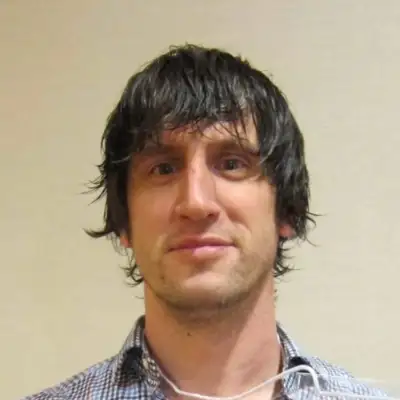
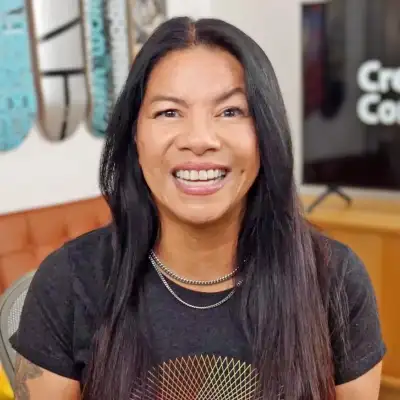
Cheers & Tiers welcomes you into a circle of design leaders whose bonds were forged during iconic AIGA design leadership retreats and conferences. These gatherings were more than just strategic sessions with the nation’s chapter leaders—they were moments of shared growth, laughter, and camaraderie that shaped careers and lives, blending organizational development with celebratory toasts and even the occasional human pyramid.
Fellow design leaders Erik and Rachel as they reconnect with friends about shared experiences, memorable lessons, and transformative moments gleaned that defined this extraordinary group. Join us as we honor the relationships and memories that continue to shape design and leadership today.
Chapter two.
Erik Cargill:I'm Erik Cargill.
Rachel Elnar:And I'm Rachel Elnar. And this is Cheers and Tiers.
Erik Cargill:Design leadership tales retold. This is a casual one.
Rachel Elnar:This is casual. Thought we could talk a little bit about, season one, kind of what learned from season one. So I took a look at all the transcripts for the 15 episodes and put together with the help of g chat GPT, really take a look at what were the interesting patterns and some of the lessons that we learned. So, you know, we were here. We started this podcast to talk about the good times after the retreat, after the programming, which is basically have a beer at a bar, what it was like to get into a pyramid, but we really learned more about leadership.
Rachel Elnar:So I thought we would cover some of the lessons that we learned.
Erik Cargill:Oh, perfect. Perfect.
Rachel Elnar:So lesson one, leadership starts before you feel ready. Most definitely, we were hearing a lot of quotes from people who just were feeling imposter syndrome. A lot of people talked about imposter syndrome. Gage said he didn't know anyone. Amanda said she remembers walking into the room and not knowing if she was ready.
Rachel Elnar:And Elysia said that when she first joined, she was terrified of speaking up. It's really kind of the idea of you just get into leadership. You're not ready, but that's sort of the first step.
Erik Cargill:You take that first step and then you really grow into it. And there are the veteran board members, they're there to help and pass the torch. So it's what feels like a trial by fire is how much fire do you want to step into, really, ultimately. When you joined, did you feel that same way?
Rachel Elnar:I think like anything else, you just have to kind of practice. You have to get used to it and you have to feel safe. And what's really nice about AIG and our friends in leadership is that they made me feel really safe to do whatever I needed to do. That was super helpful.
Erik Cargill:So helpful.
Rachel Elnar:Yeah. So one of the things I was thinking of is, you know, many times I've said yes before I wanted to get up on stage, get in front of the event and just say, hey, welcome. Glad that you're here. My voice quivering. I'm just embarrassed to be in front of people.
Rachel Elnar:Then you just do a couple of events. Right? And if the same people show up over and over and over, you feel safe, feel good.
Erik Cargill:Yeah. Yeah. Yeah. And I think, if I might be so bold as, you know, podcast is kind of like that, it kind of continues that, it's putting yourself out there, there's no guarantee that anybody's gonna listen, but you know, you put yourself out there and do the best you can and enjoy what you're doing.
Rachel Elnar:And I'm really happy that we have six or 12 listeners, so glad that you guys have joined us on our own new Yes,
Erik Cargill:thank you. Thank you, listeners.
Rachel Elnar:Well, definitely every guest started the same way, just started before they felt ready. Again, if you're thinking about getting into leadership, know that we all felt this way.
Erik Cargill:It's not necessarily something that goes away either. It's something that you build on.
Rachel Elnar:Yeah.
Erik Cargill:You do build on it, and some muscles you use more than others, and then you know, situations, those muscles will get called on again, and we just all adapt the best we can.
Rachel Elnar:All right, so the second lesson that we've learned that one invitation can change everything. So Eric, you know this well, Most leaders join because someone simply asked them. So Nick Prestaleo was mentioned multiple episodes as being the entire So many. So many. Victor said someone just asked me to come to a meeting and that was it.
Rachel Elnar:And Amanda Hovest talked about being pulled in by someone who saw her before she saw herself. So I know Erik, you've mentioned this multiple times. Wanna
Erik Cargill:You know, I need to revise what I had I had said before to a degree. Because the way I worded it before, it sounded like I just joined AIGA. I volunteered, then I was I was brought into a board position. I was actually I I found my old membership cards. So it says AIGA member since 02/2009.
Erik Cargill:So I joined in 02/2009, but I wasn't really going. I was just, you know, it's kind of very much on the periphery, almost like the digital periphery. I think I went to a couple things. And then I, once I decided to actually get involved, I volunteered at an event, and it was at that event that I was asked to be on the board. So yes, it did happen quickly, quicker than I expected it to.
Erik Cargill:Somebody saw something in me that they felt I could could fill that that role, and it was something that I was scared of doing. Was like I said, I've I've mentioned it many times. I I know nothing about or I knew nothing about asking strangers for money or especially businesses for money to give to a nonprofit organization. But there was some experience from some of the people in place that helped. And you know, that speaks to what we were talking about before.
Erik Cargill:So yeah, yeah, it was a quick indoctrination for sure.
Rachel Elnar:Same thing happened to me. I joined in 02/2003, 2004 as a student, mainly just to go to conferences. But I would go to some events and I was seeing what was happening in AIGLA and watching their events. And then I complained much like Brian Singer. I just said, you know what?
Rachel Elnar:You guys aren't addressing your, membership very well. You should do a panel about, designers who work in the annual report area because that is huge in LA. And their answer was like, you wanna join the board and make that happen? I'm like, ugh, alright. And so I got pulled in right away to be a PR chair, in 02/2006, 02/2007, and then I was a lifer from then.
Rachel Elnar:So yes, they just kind of pull you back in. And even if you want to get out, right? Like Frances mentioned, she kind of pulls away or Ashley pulls away, but you get kind of sucked back in. So
Erik Cargill:you do. I mean, even with, with, you know, big health events, you get pulled away. You get pulled right back in.
Rachel Elnar:Yeah.
Erik Cargill:I never expected to get pulled back in, but here we are.
Rachel Elnar:All right. The third lesson is that retreats aren't just events. They are origin stories. So retreats definitely showed up in every episode because that's what we talk about leadership retreats. And that was kind of the moment that people really felt like they belonged.
Rachel Elnar:Grand Rapids was number one about who, how many it was mentioned. Paul said there was something in the water in Grand Rapids. Something very special was happening over there. Victor says it was really fun. And I remember in Grand Rapids meeting a lot of really, really cool people, especially you, Eric.
Rachel Elnar:So Grand Rapids was up there. Miami, we were talking about sitting on beds, being in hot tubs or bathtubs. And of course, Denver, you know, the year that, marijuana was legalized was the year that we had our leadership retreat in Denver. So good timing.
Erik Cargill:We were at those, so it's easy for us to say you know, and a lot of people that we interviewed were also there, so it, you know, we can all relate to that, but even some of the people that were in AIGA before us talk about the same thing, the same sort of energy, and it was nice to know that that energy has been a part of AIGA for, you know, many years.
Rachel Elnar:So it was nice to see that everyone had a shared experience, but experienced it differently. And sometimes we all experienced it the same. And this just felt like sort of a treasure hunt or a fact finding mission in terms of trying to find out what was the experiences of everyone from the single event.
Erik Cargill:Well said, well said, and a lot of people had reported back, a lot of people that we spoke to reported back that they talked about their first retreat. They sort of, you know kind of hung back they felt the energy they kind of hung back and just kind of got the lay of the land and then the next one they you know they opened up a little more a little more a little more.
Rachel Elnar:And then before you know it, they're leading a breakout session or they're up on stage as IPCC or, yeah, definitely this community sucks you. And it's quite crazy that the retreat is the one place that everybody connects. And another thing is because of the retreat, almost everyone said, now have two fifty, 300 couches that I could just sleep on. I could connect with, have a dinner, drop in on anybody now that I have this network across the nation. That was the same.
Rachel Elnar:Everyone said that.
Erik Cargill:It's not like we got to know all two fifty people in three or four days time, but just simply being there and having that connection throughout and feel comfortable calling on those people, hey, I'm in town. Let's get together. Let's let's get to know each other more.
Rachel Elnar:Yeah. There was that instant connection. Like, you and I are distant cousins. We're in the same family, so we should talk type of thing.
Erik Cargill:You know, it's funny.
Rachel Elnar:Yeah.
Erik Cargill:I know we met in Denver. I don't really remember the context. I'm sure we were out. I remember meeting Amanda.
Rachel Elnar:I was there. We we met at a bar. Yeah.
Erik Cargill:We met at a bar. Okay.
Rachel Elnar:Alright. Lesson four, that real leadership is small, messy, and generous. Most definitely, I've learned that most of the leadership moments were behind the scenes, right? It was after programming, it was after a session, it was not at the podium. And so Christine Johnson said, I just want to spotlight people who do amazing work quietly.
Rachel Elnar:Wendy said, and then I moved to Seattle in 1991 and immediately started volunteering. I usually work the check-in station. I remember her saying that. This way I could learn who everybody was, which is great. Like, be there at the door, check people in.
Rachel Elnar:And then Victor also said that he remembers serving on a panel with other people at a DEC talk. And that's when he started realizing how much he really cared about showing up. So David John Walker also said the same, like, if you're a student, does it matter how old you are? Just ask for help. That's where leadership starts.
Rachel Elnar:So it just starts small, starts messy, starts generous. I love that it just everyone had a different take on it.
Erik Cargill:There's no rule book. There's no formula. There's no outline. It's just kind of it's really ultimately, you know, understanding how you work yourself and finding that place within the community that is very open to, hey, you got something to add? You got something to say?
Erik Cargill:You got something to bring in, a skill? Or like you said in your case, Hey, we're not highlighting this. Let's do that.
Rachel Elnar:Yeah. I I love that, Eric. I mean, basically, that just says how inclusive this this group is. Right? Leadership isn't walking in with a suit and a briefcase and and telling people your vision.
Rachel Elnar:It's basically you be who you are. You show up who you are, however you are, and that's how you get started. That's true creative leadership. So
Erik Cargill:Yeah. I love that. Yeah. And it's it's it's not lobsters in a bucket trying to you know whoever gets to the top has the best idea you know it's it's kind of yeah like you said it's free for all it's small it's messy but it's generous Generous, I think, being the operative word. It's it's you know?
Erik Cargill:Yeah. Come on.
Rachel Elnar:Right.
Erik Cargill:Come on in.
Rachel Elnar:Always giving and always inviting people in for sure. Although I do like the idea of lobsters in a bucket. That just sounds delicious to me right now.
Erik Cargill:Does, doesn't it? It does, doesn't it? Oh, poor lobsters in a bucket.
Rachel Elnar:Oh, maybe, yeah. Maybe because you're in Seattle. I think that's a great metaphor, honestly.
Erik Cargill:Yeah. I well, I think lobster is more of an East Coast thing. Maybe the East Coast people will will talk talk more about that. Crabs in a bucket. I've had crabs in a bucket, but it's not that sounds just a lot more painful.
Rachel Elnar:Got it, alright. Well I'm from LA so I don't know much about that. More like fish tacos, there you go that's more LA.
Erik Cargill:Fish tacos. I'd eat fish tacos out of a bucket, I think.
Rachel Elnar:That's good. That would be very messy leadership, by the way.
Erik Cargill:But it would be generous.
Rachel Elnar:It would be generous.
Erik Cargill:It would be very generous.
Rachel Elnar:Alright. Lesson number five. So we found out that this community is the product. So we always thought, yeah, we're talking about design. We're designers.
Rachel Elnar:We're creative people. But really what moved people was our friendship. So Amanda said how it's affected my career today is I feel the collaboration from those community moments taught me how to lead better. And Francis had recalled that you had people to compare yourself to others that were your industry, And that felt like your support system. And Josh also said, there's no backbone of the design community and culture without the people who built it.
Rachel Elnar:So I really love that we talk about people more than design. I mean, of course, we this is a design podcast. We talk about creativity. Sure. But it's really more about leadership and people and how we work together, our relationships, and how we lift each other up.
Erik Cargill:You you bring up a good point because it is a design organization, and it is design led. I don't ever remember showing anybody my portfolio or what I did for work. I certainly talked about it, but that wasn't what brought people together. It wasn't showing that stuff off per se. I mean, certainly we knew what strengths people had, but what was important was that very personal connection.
Rachel Elnar:Yeah, and I was surprised when I first got into AIGA, honestly. Because up until then I was running my own business with, my late husband, Michael. And and you would do pitches. Right? And you would make cold calls, and you would show your work, and you were always trying to win against other design firms.
Rachel Elnar:For me, it was like, okay, who has the best work? And the people who were in leadership or who were speaking on the stages at AIGA conferences, they had great work. So I thought you had to have great work in order to be a leader. That's not the case.
Erik Cargill:You know, it's funny. I found that out. Like I said, I joined in 2009 because that's what I had in my head is, oh, my work isn't as good as what I assume everybody else in AIGA has as good work. But yeah, the community is the product. I I like that.
Rachel Elnar:Definitely not process, not designing. It was definitely about
Erik Cargill:It's not process. It's it's very much come as you are.
Rachel Elnar:Yeah.
Erik Cargill:Sorry to, you know, go full Seattle on you there. But
Rachel Elnar:All good. You didn't talk about crabs in a bucket. So we're we're going we're going well. What are you drinking that you almost spit up, by the way?
Erik Cargill:Well, that so I'm I'm having some Irish whiskey, but I'm also hydrating. Oh, okay. Good. Sunshine LaCroix, which I'm trying to determine what the flavor is in sunshine. I I suppose, you know, if sunshine had a flavor, it'd be very crisp and refreshing.
Erik Cargill:Except for our friends in the Midwest right now who are, in a pretty severe heat wave.
Rachel Elnar:Oh, yeah. Sorry. Heard. Sunshine LaCroix does a new flavor, is it not? It's new flavor.
Rachel Elnar:I think Yeah. There's pictures of sunflowers, so I don't know what's in it.
Erik Cargill:Yeah. Sunshine and happiness.
Rachel Elnar:Oh, there you go. Oh.
Erik Cargill:That's what's in it.
Rachel Elnar:There you go. It's a good compliment to Irish whiskey, have to say.
Erik Cargill:Yeah. You know, you have Irish whiskey, you have a little spice and a little sunshine.
Rachel Elnar:Brings you down and angry.
Erik Cargill:Brings you down. Yeah. I'm not gonna do an Irish accent. I would Oh, okay. I think I would scare all 12
Rachel Elnar:Poor listeners.
Erik Cargill:Of our listeners away. Yeah. Especially Christine. Christine. There you go.
Rachel Elnar:Alright. So lesson six, full circle moments make it worth it for sure. So many leaders who were once invited are now doing the inviting. Amanda had mentioned I had mentioned earlier that Amanda said that someone brought her in. Well, it's her boss and mentor Kim Baer from KBDA.
Rachel Elnar:She was like, Hey, seems like you want to do things and, you know, she saw something in her and she's like, you should apply to be on the board. And now Amanda is now encouraging people to get involved. And Victor also talks a little bit about mentorship. He said when he first started on the board, he was paired with a mentor. He really believes that mentorship is important.
Rachel Elnar:And then finally, Bernardo started as a mentee, and now he's a mentor. So it's like giving back, constantly being brought in and then giving back.
Erik Cargill:Another mentor, another person that we spoke to, Josh Silverman, in just talking with him on the podcast, I had mentioned I was looking for a position. And he was the first to offer, hey, I can help you, get a hold of me, and yeah, he just so welcoming, and again, very much like that community is the product. Was, hey, let's bring you in, let's build you up, and put you back out into the world.
Rachel Elnar:That's the loop, right? Learn, and you let people you bring other people in and you give back, which is lovely.
Erik Cargill:What are moments in your career, or, you know, either lately or in the past where you have brought that same full circle moment to maybe a designer or designers that have you had moments like that?
Rachel Elnar:Easiest way for me to give back is portfolio reviews. So, you know, senior classes, they're about to graduate and come into the unfortunate job job market. But, you know, they are at an at a disadvantage if they don't get real feedback before they show their work Yeah. To creative directors, hiring managers, and whatnot. So not necessarily in a leadership position, but just sort of giving them a helping hand and giving them a point of view and how they can communicate, and maybe take leadership of the interview actually, and not to be so passive and think about as solving problems and solving problems for other people and helping people.
Rachel Elnar:That's the easiest way for me to give back. Of course, there's other things like mentorship programs, which I love. I know that AIG, New York is doing a re as a, both an executive mentorship program and a regular mentorship program. A lot of the chapters are doing mentorship programs. And I was involved with one in AIG Los Angeles as well, which I've met lots of friends who I've mentored, and have gotten mentorship from many too.
Rachel Elnar:So I do love giving back.
Erik Cargill:Wow. Well, they're lucky to have you, Rachel, for sure.
Rachel Elnar:Well, one day I will give some sort of advice on how to launch a podcast because I'm still figuring this out.
Erik Cargill:Well, and that, again, it's messy.
Rachel Elnar:It's messy. Yeah. It's small. It feels like crabs in a bucket.
Erik Cargill:Smith feels like crabs in a bucket. Yeah. That that whole DIY aspect to to things. It's it it feels like that whole DIY aspect is a lot easier to do now. You know we all have access to the technology and really it's time and commitment at this point.
Rachel Elnar:Yeah right.
Erik Cargill:And there's refining, I mean you know I myself even after all the podcasts that we've done, I know that I can improve, I know I could be a better interviewer, I know I could be a better listener at times, and those are lessons that I take away each time. Each time, I think I was listening to, I think it was a podcast or something Debbie Mullen was talking about, she was talking about her Design Matters podcast and how she was saying that the first couple years or first couple seasons are in her mind unlistenable. But she, you know, over time and repetition built up those muscles and, you know, design matters is huge.
Rachel Elnar:Oh, yeah. Yeah. I hear that a lot listening to podcasters and to hosts of shows. They say, Oh, check out my YouTube channel from twenty years ago. You will laugh at the very first one.
Rachel Elnar:Right? Because they were just terrible. So everyone starts somewhere, and that just tells me that the season one probably was the worst season we've ever done because it was the first time we started. And each season will get better after that.
Erik Cargill:Yeah, a musician, to say like I cannot listen to anything that I did in the first five years as a musician. I think a real quick story, even back then we recorded our first album and it took forever. This is you know back when we didn't really have access to technology and you had to go into a studio. I'm dating myself now, but, we finally finished the album, and then the guitar player and I, I was a vocalist at the time, the guitar player and I listened to the tape the hour drive back to our hometown. And as soon as we got there, I opened the barbecue grill and poured lighter fluid on it and lit it on fire.
Rachel Elnar:Eric. Oh my god.
Erik Cargill:I didn't want it to be out there.
Rachel Elnar:Yeah. Wow.
Erik Cargill:I didn't want it to be out there. However, without that experience, I needed that experience to know, number one, where I was, and we needed that experience to know where we were as a band. Incidentally, somebody else had a recording, and so there is a recording floating around there. I don't have one. But I wouldn't listen to it if I could.
Erik Cargill:But that's just what I'm saying is, you know, I wouldn't be where I am today without it. So it is, it is one of those necessary stepping stones. So I respect it for that. But that doesn't mean I have to listen to it.
Rachel Elnar:Yeah, no, I hear that a lot, especially when you're, when you're leading a team. Mhmm. You wanna make sure people have safe spaces to fail. Yeah. So they are learning.
Rachel Elnar:Right? Because if they just go out of the gate and everything's perfect, you're just not learning. So that makes sense. You need all those steps for sure.
Erik Cargill:Oh, yeah. And I love talking to young designers when they're just, you know, they're they're in those moments that I that I recognize. It's like, oh, yeah. Yeah. You know?
Erik Cargill:Let this stick with you. Don't try and run from it.
Rachel Elnar:Yeah. Yeah.
Erik Cargill:You know? There is a lesson here.
Rachel Elnar:So speaking of lessons, those are our six lessons that we learned for sure. Lesson one, that leadership starts before you feel ready. Lesson two, one invitation can change everything. Lesson three, retreats aren't just events, they are origin stories. Lesson four, real leadership is small, messy, and generous.
Rachel Elnar:Lesson five, this community is the product. And lesson six, full circle moments make it worth it. So, you know, I I love that we spent so much time documenting these stories and recording leadership stories, but lovely to to learn from everybody who we've spoken to. And that includes Amanda Hovest, Josh Silverman, Christine Sheller, Paul Mendoza, David John Walker, Mike Joosse Elysia Syriac, Ashleigh Axios, Brian Singer, Frances Yllana, Wendy Quiesenberry Victor Davila, Gage Mitchell, Bernardo Margulis, and k=Kristine Johnson. So, yeah, it was a great season.
Rachel Elnar:I'm glad that we did it. Can't believe in November that we would be here, but we made it.
Erik Cargill:And I gotta say, I know I've said it many many times off the air but I gotta say it you know, I gotta commit it to recording. Thank you for asking me. It's meant a lot to me. It's meant a lot to me to be plugged back into the community. It goes back right back to all the things that you were talking about, single one of those six points.
Erik Cargill:And yeah it means a lot to me to be a part of this, and watch this grow. Those of you out there listening, who have maybe stumbled on this for the first time, or if you're a veteran, know, reach out to your local AIGA or any other creative organization and see what's going on. Get involved.
Rachel Elnar:Yeah. And if Eric invites you to be on the board for AIGA Seattle, say yes.
Erik Cargill:Say yes.
Rachel Elnar:You need to ask for money from big corporations.
Erik Cargill:AIGA Seattle, resurrecting this Tuesday as a matter of So if you're well, if you're listening to this, it's well past
Rachel Elnar:Yes.
Erik Cargill:June 24 on Tuesday. So if I saw you there, I'm glad.
Rachel Elnar:But there there's a lot of people who are going to be attending. Right?
Erik Cargill:We had a 150 slots on Eventbrite, and those are gone. There is a a wait list, but we're, we've just been telling people that just come. Please just come. Please just show up. I've been asking a lot of people that haven't been involved in design organizations, come check it out, please.
Erik Cargill:Yeah. Please come check it out.
Rachel Elnar:Well, I hope it goes well. I'm excited to hear about you guys breaking the fire code because there'll be 300 people in there. Yeah.
Erik Cargill:Yeah. I wish you could be here. I wish you could be here for it and see it.
Rachel Elnar:Yeah. Well, next up is season two, probably switching to every other week so Rachel can get a little bit of work done. Yes. And then starting up again early August. That's what we're thinking.
Rachel Elnar:So we're going to take the month of July off.
Erik Cargill:And by the way let's just put this out there Rachel, everybody Rachel is the one doing the heavy lifting, doing the editing, writing blog posts, know, putting this out there, putting it online so you all can hear it and listen to it. Thank you.
Rachel Elnar:Oh, thank you. I appreciate that.
Erik Cargill:Thank you. And, yes, let's let's give you a break. And just so you know, season two, we are interviewing two people at a time, duos for season two.
Rachel Elnar:So, tune in to the, email list. Definitely go to cheersandtears.com. Sign up for the email list. What I'd love to do is if you guys will write us a review, doesn't have to be positive, but it has to be funny. It has to be hilarious.
Rachel Elnar:Right? What we'll do is we will do a sweepstakes drawing for anyone who submitted their review by the August. We'll announce it on the email list. We'll announce it on the first, podcast for season two, and you will win a $25 Starbucks gift card. So go ahead.
Rachel Elnar:Definitely get it in there. Cheers. Yeah. Cheers on that. Cheers.
Rachel Elnar:They don't have Irish whiskey there, though. So, guys, get your get your reviews in. We will pick one out of the hat and make it make it creative. You guys can do it.
Erik Cargill:Be creative, folks. This is what you do.
Rachel Elnar:Yes. Exactly. What you do best. Well, thank you, Eric. I appreciate, again, having a great season with you, and looking forward to season two.
Erik Cargill:Me too. Me too. We'll see you guys soon.
Rachel Elnar:Alright. Bye, guys.
Erik Cargill:Alright. Bye.
Rachel Elnar:Cheers and Tiers will be back next time with more design leadership tales retold.
Erik Cargill:Please subscribe, rate, review, and share this podcast with your creative community, design leaders, and friends.
Rachel Elnar:Cheers and Tiers Design Leadership Tales Retold is a production of chapter two and hosted by us, Rachel Elnor and Erik Cargill. This episode was produced and edited by Rachel Elnor. Podcast graphics by Erik Cargill. Animation by Verso Design and Megatoe Design.
Erik Cargill:The theme music track is Loose Ends by Silver Ships Plastic Oceans. Follow Cheers and Tiers on Apple, Spotify, or YouTube podcasts, or wherever you get your audio and video podcasts. Subscribe to our email list at cheers and tears dot com so you don't miss an episode.