Subscribe
Share
Share
Embed
On the Bold Brand Show, host Josh Miles and his guests go deep on a topic to uncover the growth secrets of the most successful firms, how firms can create lasting legacies, and what the future has in store for the AEC industry.
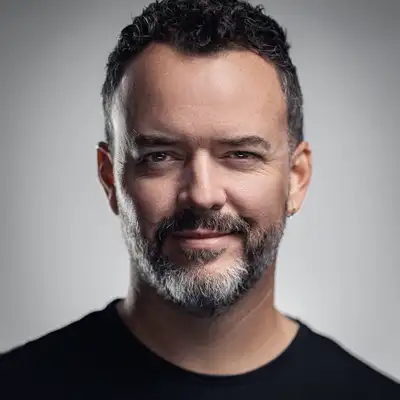
Keynote speaker, past TEDx presenter, and AEC brand strategist, Josh Miles hosts The Bold Brand Show.
This series showcases conversations with firm executives, marketing leaders, and innovators in the AEC industries. For more information, visit https://boldbrand.show + https://boldbrand.com
So from a marketing ops perspective,
what we're really focusing on right now
is pursuit content management
and finding a pursuit
content management solution.
So obviously the advent of AI has changed
and will continue to
change the way that we work.
We recognize that there's
a tremendous opportunity
by leveraging
technology to make the process
of pulling proposals
together much more efficient
so we can really focus
on the strategic content.
(upbeat music)
Welcome to the Bold Brand Show.
If you're in the AEC
industry and want to grow your firm,
we're sharing exactly how bold and
innovative firms win more.
The sad truth is most
firms that are struggling
in the AEC industry
are still doing things
the way we've always done them.
But this show is about
finding a better way.
I'm your host and founder
of Bold Brand, Josh Miles.
I'm a published author,
veteran of the TEDx stage
and a brand strategist with
over 25 years of experience.
But my superpower is
my focus on AEC firms
to understand how branding and marketing
in the professional services industries
is wildly different
than for retail brands
like Apple, Amazon, or Starbucks.
So in this podcast, we're
going deep with AEC firm leaders,
marketers, and
innovators in the AEC industry.
We'll focus on the
hottest topics and trends in AEC
to uncover the growth secrets
of the most successful firms
and how firms can create lasting legacies
and perhaps what the future has in store.
Today's show is brought to
you by Open Asset and Shred AI.
AEC pursuits are more
competitive than ever.
And the best firms know it's
not just about what you say,
but how you say it.
That's why leading AEC marketers are
turning to Open Asset,
the industry's go-to platform for
managing project photos,
staff resumes, and marketing files,
all in one easy to search place.
And now Open Asset is even
more powerful with Shred AI,
the AI powered proposal writing tool
purpose built for AEC workflows.
With Open Asset and Shred AI,
your team can instantly
surface past proposal content,
draft, edit, and
polish responses with AI,
seamlessly pull in
project visuals and resumes,
and eliminate the busy work
so you can focus on the storytelling.
Together, they're
transforming how AEC marketers win work,
faster, smarter, and
with fewer late nights.
Visit openasset.com
slash Shred to learn more.
Thanks again to Open Asset.
Today's episode is brought
to you by Fox Photo Studios.
Do you ever wish your video podcast
could just look a
little more professional
or that the process
was just a little easier?
I get it.
I mean, when I started
the Bold Brands Show,
I was setting up
everything in my home office.
Before I could ever hit record,
I had to rearrange the furniture,
the camera gear, and the lights
before each and every episode,
and then tear it all
down again when I was done.
That's why I opened Fox Photo Studios.
It's all set up for me just to show up
and start recording.
So now after a year of
planning and build out,
it's all open and ready for
you and your team to use too.
Welcome to Fox Photo Studios.
Of course, your show
could look a little like this
or even something like this.
And if you're really fancy,
you can bring your own neon sign.
And it's not just for podcasts.
Fox Photo Studios is a
fully equipped studio,
great for corporate
videos, commercial productions,
or even photo shoots.
Best of all, we're
just north of Metro Denver
near I-25 and I-70.
So follow Fox Photo Studios on Instagram
or visit
foxphotosstudios.com to book your next project.
We'll see you soon.
Welcome back to the Bold Brand Show.
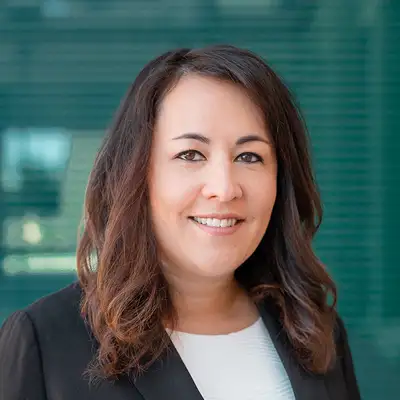
We're back today with Michelle Ott,
who's the Vice President
of Marketing Operations
for J.E. Dunn Construction.
Michelle Ott, CPSM, began
her career in AEC in 1997
at a Denver-based architecture firm.
And in 2002, joined
J.E. Dunn Construction
as their first
Colorado-based marketing coordinator.
That's a big deal.
Currently serving as the Vice President
of Marketing Operations,
her responsibilities
include strategic planning,
development of pursuit and
communication strategies,
and enhancing marketing
operations nationwide.
I've known Michelle for
a few years from SMPS,
where she's served in a variety of roles,
including SMPS Colorado past president,
and last year won the very prestigious
Leonardo Award.
Congrats again on that.
Thank you.
I'm excited to be here in your backyard.
I mean, Denver, not
literally in your backyard.
I don't live in your
backyard at a home house.
But you know what I mean.
Michelle, welcome to
the Bold Brands Show.
Thanks for having me, Josh.
Yeah, it's so nice to have you here.
On this show generally, as
I tell people all the time,
we're talking to leaders
and innovators and marketers
in the AEC space to
hear some of the successes
that you've had,
learnings that you've had,
and maybe some of the boldest moves
that you've made in your career.
Specifically today,
we'll be digging into topics
around leadership and
marketing operations,
and maybe even a little bit of the future
of the AEC industry.
Great, looking forward to it.
It's not incredibly
common in our industry
for somebody to stay at one
firm for a really long time,
as you have.
And so I'm curious to
hear about your career path
and your current role at J.E. Dunn.
And maybe before we jump
all the way into your story,
just for our viewers who are
kind of around the country,
give them a little overview of J.E. Dunn
for anyone who's maybe
not familiar with the size
of the company or offices and people
and those kind of things.
Sure, so J.E. Dunn Construction
is a large commercial general contractor.
We have 26 offices across the US.
We are typically ranked among
the top 10 general contractors
in the country.
26 offices nationwide.
We are just shy of 6,000 people,
and I'm expecting revenues of
around $8 billion this year.
From a career
standpoint, you mentioned that
it's unusual for someone
to stay at the same place
for as long as I have,
but J.E. Dunn has just
really done a fantastic job
of creating a growth path
for marketing professionals.
And it allowed me to grow
from being the first Denver-based
marketing coordinator
to now being able to oversee
national marketing
operations for the firm.
Having been on staff
with SMPS headquarters,
I've nerded out on a
lot of the history of SMPS
and the marketing various
associations in the AEC space,
and specifically how
marketing fit into that.
As an association, we're
just over 50 years old.
So prior to that, this
profession was looked down upon
in a very real way.
It was almost deemed
illegal in some ways,
or it was certainly frowned upon
that people would pitch their services
or would put out an ad to promote a
professional service.
So as other industries listen to
conversations about AEC,
may seem unremarkable that
there's a path for people
to get to stay in the
marketing role in a firm,
but there are a lot of big firms
that haven't gotten to that point yet.
Yeah, and that's
true, and it's interesting
because when you think
about the four pillars
of just the standard business,
so businesses outside of AEC,
the four primary groups are finance, HR,
operations, and marketing.
And I think that
we've definitely witnessed
that lag in the industry
because of some of the limitations
that existed within
the industry for so long
that being prohibitive
from marketing your firm,
and so it has taken us some time
to be able to get to that space
where we are kind of an equal part
of that quad in typical businesses.
Yeah, I think what's
particularly interesting
about your path is going
from the first marketing chair
ever in Denver to now leading
the national marketing operations.
What was that journey like?
Well, I will say, when I
started in this industry,
I can't say that I thought
there'd be a career path for me.
It definitely started as a job,
as many of us do in this industry.
And so it has been a
windy path, a zigzag path.
Definitely has not been a straight on.
When I started JADon,
marketing coordinator
was the only role that you could have.
There was no real clear path for growth.
And so really just kind of the
incremental expansion
of what that role could look like,
what it can look like
beyond a support role
as more of a strategic function.
And so not even just
creating just kind of linear tiers
of marketing
coordinator to senior coordinator
to marketing manager,
where now I've kind of gone
in this tangent and done
this like lateral shift
into marketing operations specialty
that I don't even think we
would have had on the radar
maybe five, seven years ago.
So what does marketing operations
practically look like
on a day-to-day basis?
And how much time are you
spending kind of on more local
regional issues versus
things that are happening
in other field offices?
Well, I'm gonna start
out by kind of describing
marketing operations on more of a
philosophical level.
And so it really has to
do with the optimization
and enhancement of basically
winning work in our industry.
And so it's all that
foundational activity
that needs to be done,
leveraging best in class technologies,
leaning into data and actionable insights
and then creating innovative processes.
And so from a philosophical level,
that's what it looks
like on a day-to-day basis.
It has to do with implementing, evolving,
maintaining large scale systems
such as our customer
relationship management systems,
client experience
systems, management systems
that we use to manage pursuit efforts.
Also how we manage things
from content to workflow
within the marketing space.
So tell us a little bit in addition
to like marketing operations,
what does the marketing team
as a whole look like at JE Don
and how are they kind of
distributed around the country?
Yeah, we actually have a
pretty robust marketing team
at JE Don and again,
this is another reason,
it's not meant to be a
JE Don advertisement,
but they've done a really great job
of really seeing the
vision of what marketing can be
and allowing us to
grow in that direction.
The way we're structured today
is we have a national marketing lead
and we have six geographical
and vertical market focused regions
and then we have four national groups.
And so marketing operations exists within
that national force.
So we've got marketing
operations, corporate creative,
corporate marketing and
corporate communications.
And then our six
regional groups are the west,
east, Midwest, south central
and then we've got our
advanced facilities groups.
That's kind of a more market focused
versus geographical focused
international healthcare group.
And so all of those groups
roll up to a national director.
And you had mentioned,
what are my
responsibilities on a regional level?
I did still serve as
the marketing director
for the west region.
So I'm actually quite
fortunate that I still,
I get to see really that
kind of cradle to grave activity
of marketing.
So laying the foundation,
creating the infrastructure
for pipeline tracking,
gathering insights on our clients
and applying those
insights in the physical pursuit
and capture process as well.
So I still have that benefit,
that lens of cradle to grave.
The pursuit piece is such
a huge part of marketing
in most AEC firms.
How much are you getting your hands dirty
and overseeing those specific functions?
And is that mostly just
in the west region then?
Yeah, so I will say it kind of varies.
So from a marketing ops perspective,
what we're really focusing on right now
is pursuit content management
and finding a pursuit
content management solution.
So obviously the advent of AI has changed
and will continue to
change the way that we work.
We recognize that there's
a tremendous opportunity
by leveraging
technology to make the process
of pulling proposals
together much more efficient
so we can really focus
on the strategic content
and the varying medias of delivery.
So that's one a little
kind of hands off way
I get to deal with pursuits.
In the west, I'm still involved
in early pre-positioning campaigns
and leveraging all the
channels that exist today
to build our brand, promote our brand.
And so when we are submitting a proposal,
we already have that
strong brand awareness
and brand association with the client
to better our odds of actually winning.
Well, as you and I were talking,
just before you hit
record, I'm a big branding nerd.
Like I do so much video work today,
but brand is kind of how I got started.
And so especially in AEC,
I'm always curious to hear about,
especially with large firms,
how they position themselves differently
from the competition, how
they set themselves apart.
And how does J.E. Dunn think
about the positioning side of brand?
And again, I would say
this is probably another area
that our industry has
been somewhat lagging,
really embracing
marketing as, like I said,
one of those core four
functions within the business.
And so for many years, I
feel large brands like ours
were very disparate.
Everybody wanted to be their own thing.
Everybody wanted to
be a local contractor,
you know, the guy with the pickup truck.
And what we're realizing
now is there is so much power
and actually tangible value
to a strong unified brand,
being able to consistently deliver,
make promises that you can stand on
and deliver on those promises,
whether you're
delivering a project in Denver
or delivering a project in Austin,
it really does augment your brand,
but it's taken us a little
bit of time to get there.
And I think that's
where our industry is today,
is really trying to focus
on that unified brand promise
and delivery.
I have to imagine being a large firm,
especially makes it challenging to have
something like brand
or positioning or even culture
be consistent across different offices.
How has J.E. Dunn worked to ensure that?
Or do you just sort of
like let the local offices
do what they're gonna do
or somewhere in between?
You know, and honestly,
it's always a work in progress.
We've grown tremendously, you know,
from where I started in
2002 to where we are today,
you know, we were a one and
a half billion dollar firm
to an eight billion dollar firm.
And so we've obviously grown tremendously
and it is hard to maintain that culture.
I have to say, I give a lot of credit
to our executive
leadership team, our C-suite.
They are incredibly accessible.
They have regular rotations
where they come to every single office
and have that FaceTime with the people
that are actually
putting the work in place,
that are doing all the
behind the scenes work.
And I think that that helps
to kind of lay the foundation
for a consistent culture.
And we also are very fortunate
that we have a lot of tenured employees
that can carry on that
culture from project to project
even in remote locations.
And so I would say the combination
of really strong
leadership that is very accessible
to tenured employees who
really believe in the culture
and continue to carry that on
has really made the difference for us.
I have to think like with
mergers and acquisitions,
especially that the culture challenges,
the brand challenges are even bigger
because you had something else before
and now you're part
of someone else larger.
Has JE done grown more by, you know,
shipping somebody off to a new city
and opening a new shingle
or are you focused more on acquisitions?
I would say we're
focused a little bit more
on organic growth.
So, you know, understanding
where the market demand is,
where we might have a good
position in growing there.
And we have historically, you know,
acquired firms in the past,
but as you've noted
that it can be a struggle
really trying to align the two cultures.
And we have such a
strong existing culture.
And in general, we've
kind of fared better
really growing offices
organically in more recent years.
On my last episode,
somebody had seated a
question with me as she stated,
she's our biggest fan and is
not someone I'm married to.
(both laughing) So it's a different she.
But she was talking about
how from her perspective
as being a leader in her firm,
but also so she's feeling pressure
to do the right thing fiscally
to make the right financial challenge.
But then also as a marketer,
wanting to do the new
thing and do the cool thing
and invest in a service
or invest in a product
or a piece of software or something.
And she was just saying,
hey, it would be
really interesting to hear
how other people think
about balancing those things
when you have this sort
of fiscal responsibility
and also that marketers
need to chase the shiny things.
So how do you balance that?
Yeah, and it can be a tough one
because I feel like we are
just built to be curious.
Marketers are just curious beings.
And I think the growth
that I've experienced
being in this marketing operations role
is I've really learned to analyze
and apply the maximum
amount of critical thinking
to each move that we make.
And so before we make
any major investments,
we do our due diligence.
So we make sure that we're
interviewing key stakeholders,
that we're properly
gathering requirements,
that we are creating a problem statement
and we're really assessing
what is the ROI of this change
before we really make
any big moves forward.
And especially in a big firm like ours,
it's beyond the
investment of the technology
where what is the people investment?
We just rolled out Microsoft Dynamics.
So we moved from a CRM
that we had for 25 years
into this new system.
That meant that in addition to all of the
build implementation testing hours,
we add all the
training and adoption hours
and that's still carrying on into 2026.
And so those are all the considerations
that you have to factor in.
But I'm still a fan of just kind of
the incremental exploring,
but before you make
any major investments,
it definitely has to be
dealt with a lot of planning
and thought and methodically.
So for something like a
major CRM implementation,
are you bringing in
consultants to help roll that out
or is that an internal
thing where you're tasked
with also doing all these other things?
So we did have a
consultant that helped us build
and implement the system.
But as far as training and adoption,
we did that all internally.
I think we found again,
Jaden as a 100 year old company,
like I said, a lot of tenured employees,
I think training from the
people that are actually using it
and understand our business
really goes a long way for our folks.
And then also just having
that continuity of accessibility
where someone knows that
they can reach out to me
or they can reach out
to a member of my team
and we can help them
because we built the system,
we built the training program.
So it is a large lift.
I'm hoping to see our
marketing operations team
continue to grow because again,
there's all those components
that we have to contend with
in addition to building and
maintaining the technology.
How's that rollout going so far?
It's going really well.
You know, it's interesting where I think
I probably romanticized what the outcome
was going to look like
because honestly on paper,
I would say we did
almost everything right
as far as tons of communication,
providing live virtual trainings,
having open office hours
and kind of all the things
that you would do to check off the list,
being, making sure
they knew who to contact.
But as we kind of close
out the end of the year,
I'm finding these
pockets where people are still
kind of surprised at
what it's capable of,
where it still feels very new to them,
where I'm surprised
that they're surprised.
And so this is why I say it's still
carrying on into 2026.
It is, these truly are living systems
that we're putting in place.
And so you're really
never done evolving it
and training and fostering adoption
and supporting the stakeholders.
Yeah, I mean, CRM or asset management
or content management, it
really only is ever as good
as the content you put in there.
Absolutely.
What are some of the
things that you guys are doing
to encourage people to
use it and to actually put
their data in the system?
I think where the rubber hits the road
is when people can pull information
that they find useful in there.
And I think that that's
what people are starting
to see now, some of the
enhancements that we made
moving over to this CRM is
really be able to understand
and better track why decisions are made.
So if a certain competitor, so doing
competitor tracking,
and if certain
competitors are winning over us
more frequently than we
feel like they should be,
we can go in and see,
okay, why are they winning?
We've noted price as the primary factor.
We've noted that they
have stronger relationships
with the clients and really
able to track that information
because armed with that information,
we can combat and neutralize
and overcome the competition.
Kind of on the heels of
wrapping the CRM implementation
from a marketing operations standpoint,
what's the next major thing
that you are gonna be tackling?
It is really pursuit content management.
And so, there's a lot of
products on the market right now
for proposal production.
I think we're really in
a unique space in AEC,
especially for firms like ours.
And actually, I think a lot of our firms
who are not low price bid type firms
that we really pride
ourselves on being value-based,
value selection type
firms, that we really,
we need access to
information, but we need the ability
to also customize and that
support and customization.
So, and we found that it's actually a
more complex problem
than just plugging in a technology
that searches all your past proposals.
There's the whole process of creating,
validated, federated, gold star content.
There's a process of
searching all past proposals,
weeding out maybe things
that don't apply universally
or not best in class.
And then there's also
the process aspect of it
where like you said,
proposals are such a big part
of what marketers do.
I think there's so much opportunity
for improvement and enhancement,
but I also don't think
we can get complacent.
I know some people will say that
proposals are table stakes
and I've never believed that.
And I actually never wanna
get too far from proposals.
They are the life brought blood.
There's what keeps us sustainable.
It gives me a job, it
gives my whole team a job.
So, it's really important.
Yeah, the marketing and business
development function
contrary to a lot of
technical professionals
really is the thing that
feeds the firm and keeps it alive.
You can do really good work and nobody
could know about it.
Which means you won't get
any work from really good work.
So, like being able to share that story,
I think is just so important
for firms to be able to win
and continue to see your
next 100 year birthday.
Absolutely.
Any other project specific things
that would be interesting
to unpack for the audience?
You know, I would say another thing
that we're seeing a
trend in, and honestly,
it's kind of an extension
of customer relationship management
is the whole client experience.
And I would say
experience management altogether.
And so, there is that
whole aspect of starting fresh
with the target client, pre-positioning,
making sure that there's that awareness
and ultimate conversion and repetition.
But part of that repetition process
is knowing how we're performing
and where we're falling
short, where we're doing well,
where should we lean in,
where do we need to pick up?
And that's what we're digging
into a lot further right now.
And so, we do have a
client experience program,
but we're starting to
extend that to really understand,
what are our
relationships with our trade partners
and our design partners look like?
So that, I really think that's the
differentiation right now
is when you're really
addressing the needs
of all those
stakeholders that are critical to us
winning and delivering work.
Yeah, you said something
that reminds me a lot of,
from a brand strategy standpoint,
I'll talk to a firm's
leaders and their marketing team
and say, who do you think we are?
Who are we trying to be to the market?
How do you think the market sees us?
And then I'll go
interview some of their clients
and see, well, what do the clients
actually think about them
and what do they actually say?
And it's interesting to
see, it's never a one-to-one,
it never lines up perfectly,
but to see those
things that are resonating
and then the things that aren't,
and then so does that
mean we wanna push harder
into those or do we
wanna lean into the things
that the market's
already saying about us?
Right, no, and I think
it's a great question
and it is quite fascinating
that we're often surprised
when someone might say to us,
oh, I don't see Jay
done as a sports builder.
And then we go on the defense
where we built the KC Current,
we've done all these
stadiums around the country.
Sure, we don't really have a resume here,
but we have experts that
we can bring to the table,
but you have to be conscious of,
you have to deliver that message out,
that's marketing at the end of the day.
You can't just know it,
you have to evangelize it
and that's our job here.
Yeah, we were talking to
a few guys a few weeks ago
about wanting to move into a particular
market here in town.
They were like, but we
don't really have any work
in that space.
Well, I don't know
what step one looks like
if you don't have anything to show for
it, but it's tricky.
It is really tricky
and sometimes you do have
to find those adjacencies
and smaller projects
and kind of start building
a small portfolio there.
But it is really tricky, that kind of gap
between what you want to
be and what you actually are
and the steps that you
need to take to get there.
You're going back to the proposal thing
for just a second.
Are you seeing any clients or owners
who are looking for next level things
from a technical
perspective on the proposals
in terms of accessibility
or websites have been
doing this for years.
So if somebody is
visually or hearing impaired
that there are different ways
that you can interact with the media.
And I'm hearing that
proposals are gonna start
going that direction and
maybe some of the public
and municipal work has
maybe already gone that route.
Does that change the
technology that you're looking at
or change how you guys are
thinking about building those out?
I don't think it changes our approach
to what we need to
build out because again,
having the right solution
allows us to see those trends
before they happen.
Even now, just in our discovery phase,
we've already gone through the process
of cataloging RFP
questions over the last three years
and cataloging all of our proposals
and actually really leaning into AI
and saying, what are clients asking for?
What are the questions
that are rising to the top?
And interestingly enough,
like sustainability
has kind of taken a dip.
It's not as prevalent as it's been.
Where this is the power of AI is we can,
instead of continuing to tell something
that we think is a big differentiator,
it's like, that's not really
what our clients are asking
and maybe they will,
but it kind of allows us
to react to what we've seen
and also maybe do some
predictive analysis as well
as to what we think we
might see moving forward.
But again, I think the
solutions that we're looking at
that leverage AI will be nimble enough
to be able to address the
changing needs of the clients.
Yeah, it really helps to be listening
to what the market is saying.
Absolutely.
Going back to the
thing we were talking about
from a pre-positioning standpoint
or where does what we say
line up with what they say.
I have the story I
tell all the time about,
I was at a networking
event very early in my career
and a guy who I knew who was an intern
for another marketing agency
was standing practically
shoulder to shoulder with me
and we're having two
different conversations.
And I hear the guy he's talking to say,
"Well, how are you
different from Josh's company?"
Because they do kind of similar stuff.
And he was like, "Oh, they
do like really high end work
for professional services companies."
And we tend to work with startups.
And I was like, "Wait, say that again."
If my competitor is saying that about me,
maybe I should say that about me.
Yeah, wow, that's amazing.
What an endorsement.
Such a golden nugget.
So here I am years later
leaning into high end work
for professional services firms.
But I think it's so
helpful to be paying attention
to not only what the
market's saying about you,
what your prospects and
clients are saying about you,
what your competitors say about you,
how they would say
they're different from you.
That would be really interesting.
And so as we continue to
expand our listening program,
our experience management program,
that's not one that
we've actually talked about
is really digging into
what competitors are saying.
But that would be a fascinating study.
You gotta go hang out at
more networking events.
Just listen in.
Shoulder up next to your competitors
and see how they tell the story.
I think the industry,
maybe every industry
is changing right now.
Are there other ways that
you're seeing AI or technology
or anything else sort of accelerate
how you're doing business or changing
how you're looking at things from a
marketing ops standpoint?
I will say I think
technology is really transforming
the way we're doing business overall.
And so not even just
from a marketing standpoint,
from an operations standpoint as well.
I think ultimately it
will make us more efficient.
It'll make us more communicative
and aware and responsive to client needs.
I would say the thing that I'm really
conscious of right now,
we've gone through a lot of change
in the last couple of years.
On the marketing operation side,
launching a digital
asset management system,
launching a client experience system,
launching a new CRM.
I think there's a lot
of technology fatigue.
And frankly, I think people are,
in my mind, I think
they're less nervous about AI.
I think they're more overwhelmed by it.
And so really figuring out
how do we harness the
power in the right way?
So going back to your
comment about your last guest,
or how do you stay
focused on what you're doing?
And I think it does
take that slowing down,
really analyzing what is a
problem you're trying to solve
and applying the right solution
and not grabbing at
everything that's available.
My favorite parlor trick at the moment
is when I have a question about AI,
is asking AI the
question that I have about AI.
I know, it's really amazing.
And again, I will say,
I'm really just scratching the surface.
I definitely have folks on
my marketing operations team
that are a little bit more,
a little farther down the road with it,
but it's amazing the power of it,
where you can use it to kind of create
first drafts of pieces
after you interview somebody,
or you can use it to kind of
frame out an experience survey
or you can cut that time down
in that kind of original
generation and a lot, a lot.
You can cut it down a lot.
Yeah. Yeah.
I'm currently enrolled
in a YouTube class for,
I do video professionally,
but YouTube is a
whole other Rubik's Cube,
like getting your
video to actually be seen
and be found in search.
And how do you use that
to drive leads specifically
in their algorithm?
And this particular
instructor has built their own AI
to help guide through things like
thumbnails and titles
and all these things that,
you think you're doing it right
and then to throw that over to the system
and to get nuanced
feedback on those kind of details.
I don't have results yet,
but I hope to tell you in the future
that it was a game changer.
Yeah, you know,
and that's one thing that
I'm really curious about
where, say we're all
using kind of similar prompts
for AI to develop our proposals.
Do they start all looking the same,
or if we're all putting in the client RFP
and saying, what does this
client really care about?
And then we're responding to it.
Does everything start to
be kind of carbon copy?
And I think it'll be interesting to see
what that looks like going forward.
But all that to say,
I still think that
there is still that need
for critical thinking that
only a human can provide.
And so maybe there's
not really a risk of that,
but that's just
something I've been wondering
where if you're
getting this kind of guidance
and someone else is getting it,
then isn't everybody at the top again?
So it'll be interesting
to see how it pans out.
Yeah, I mean, I've
enjoyed using it more so
as sort of a
brainstorming partner of like,
hey, I want to do this end result.
Here are three ideas that I have.
Which one is gonna be the stickiest
for this particular
audience or this particular need
and to help kind of shape
where I'm going with those things.
I agree.
I will say that's probably
how I use it now as well.
But again, I know I'm
just scratching the surface,
but it is a great, great starting point.
Do you feel like there
are any other big things
coming from a marketing perspective that,
good or bad?
What are you looking as the next six, 12,
18 months, 10 years?
You know, I think,
I guess this could be
perceived as good or bad.
I think that the more we get efficient,
the marketing will look very different
where we likely will need
less people to pump out pursuits.
But I do think that
opens up greater opportunity
for market research,
client intelligence, data analysis,
visual storytelling,
really understanding the client
and delivering in a way
that really speaks to them.
And so I feel like
we're going to move from
less of a production model
and more of a
customized deliverable model.
I loved how you were saying earlier even
how some of these tools have allowed you
to spend more time on the
strategy side of things.
I mean, imagine if you could
crank out just as many RFPs
or maybe twice as many RFPs,
but put different thinking into it.
And how could you incrementally
win a greater percentage of those?
Right, absolutely.
And so I think it will change
what is required of a marketer.
And so I think it's for the good.
I think most
marketers don't wanna be stuck
on the pursuit treadmill
and just pumping the same
thing out over and over again.
I think they wanna
really spend time digging
into the details and
delivering those high quality pieces
that really speak to our clients.
So I think it's a good shift,
but I can see there could be some
apprehension around it.
I know you've got sort of fingers
in a lot of the parts of marketing.
Is video something that
J.E. Dunn is leaning into
and is that anything that you're paying
greater attention to?
We do lean into video.
We find, especially on
our social media channels,
we get great interaction
when it comes to videos,
especially videos of our people.
I would say it's probably not something
that we've really mastered.
I think that we're kind of dabbling in it
like a lot of other firms are,
but we're continuing to
explore it a little bit further
and how we can really
lean into it for things
beyond trying to win new work,
but recruiting where, I always say this,
even though I've been in
the industry for a long time,
I recognize that the
mindset of the decision makers
and really just kind
of like the preferences
of decision makers is changing.
A lot of them do rely
on those digital inputs
to get first impressions and kind of
guide their decisions.
Sure, they're not gonna
award you $100 million project
because I saw a video or
they think your Instagram feed
is really entertaining,
but it does leave an impression
that affects how they
perceive your brand.
Yeah, it's that the
know, like, and trust piece,
I think is huge with video.
It's certainly real
in-person relationships
or you can't duplicate that,
but you can give somebody an idea
of if they think they like you
just by seeing you on screen.
Absolutely.
And I don't think there's anything else
that gives you that same
sort of potential shortcut,
especially as our younger generations
are moving into buyer
or influencer roles,
they're gonna do that research
in the way that they
research everything else,
which is probably with one thumb.
Right, right, absolutely.
And some of the things
we've actually talked about
on a pursuit innovation standpoint,
so going back to trying to
automate the things that we can
and not spend time on things
that are kind of repetitive,
kind of the general proposal things,
but really developing those.
But we have talked about
really kind of using mixed media
within our pursuits and maybe
using sound bites from people
or short form videos or, you know,
I know everybody's kind
of been exploring like VR
and that sort of thing,
but really thinking about
how can we get people to interact
with our content a different way?
Well, certainly when I have
the time to respond to an RFP
and it's not always
something that I want to do,
I'd rather somebody say,
hey, let's talk and see if it makes sense
for us to hire you.
Absolutely.
But when there is that
competitive bid sort of situation,
I always love putting
a video in the start
of the response of the proposal,
which usually sounds
something like RFPs suck.
And the reason they suck isn't because
I don't want to fill out the document.
Maybe I don't want to do
that as my most favorite thing,
but it's hard to buy from
somebody that you don't know yet.
And to think that you're
going to look at the PDF and go,
okay, I'll hire these
guys because of this PDF.
There's got to be more to it than that.
It's hard from both sides.
It's hard for us to pull it together
and really try to get in
the psyche of our client
and deliver what they're looking for.
And it's hard from a review standpoint.
So on the marketing operations side,
I've read through a number of RFPs
just because that's how we select vendors
and it is really challenging.
And honestly, I don't feel
like anybody wants to do it
from either side.
They just want to get to the project.
They want to get to the deliverable,
the building that
they're trying to build,
the technology that
they're trying to implement.
That's all they want to
do at the end of the day.
I mean, as people on the whole weekend
are trying to make decisions
whether we want to admit
it or not pre-emotionally,
and then we want to
justify it with the data.
So the document, the RFP
kind of gives us the thing
to be able to justify the decision.
But yeah, I'm curious to
see how that's going to evolve
over the next few years.
I agree, I agree.
And I think we're all
always going to be human.
And I think those emotional
decisions will still happen.
One of the things we
have been seeing, again,
I know we've been talking a lot about AI,
but honestly, it's a
hot topic for a reason
because we're all
trying to figure it out,
is clients are
actually starting to use it
to evaluate proposals.
And so I think going back to your comment
about what people make
decisions based on their emotions,
I think it is what
it's going to come down to
where it's a, okay,
this is how AI scored it.
This candidate talked about your firm,
said your firm's name a lot.
This one didn't, so maybe
they score a little bit less.
And so that's how you
go into the interview.
But then someone knocks your socks off.
That's probably who
you're going to go with,
as long as they're all equally qualified.
What other expectations
are you seeing changing
on the client side or
any trends in that area?
You know, honestly, I
feel like brevity seems
to be the thing lately where when I said,
I don't think anybody
actually likes the process.
I don't think the client likes it.
I don't think our side likes it.
Like it's a tough process.
I think the only good
thing that comes from it
from our perspective is we
really get to know the client,
know the project, and
so you start developing
that kind of emotional connection.
But it's a very labor intensive process.
So I'm really excited that
we're working on streamlining it.
And so, but I found the clients,
like they really do want the brevity.
I think they're
realizing that, like you said,
especially if there's
an interview process,
as long as they know that
you're qualified to do it,
they're going to decide
whether they like you or not
in that interview process.
If you could get ahold of
a young aspiring marketer
who wants to work their
way up in the AEC space
and give them one golden piece of advice,
what would that be?
That is a great question.
Normally, my piece of
advice to all marketers,
whether they're new or they've been in
this for a long time,
it's incremental
progress, it's still progress.
So celebrate every progressive moment.
I think sometimes we
can get mired down in the,
I'm not moving up fast enough.
I don't see a path
for myself where, again,
this role that I have is not a role
that I could have ever even
dreamed for myself 20 years ago
when I started in this industry.
And so I would say that lesson,
just kind of combined with the patience
and patience and being observant,
you'll find your path forward.
There's so much out there
to still discover and do.
I think that's really great advice.
One of my biggest challenges
is even as I achieve a thing,
I'm sort of already
looking onto the next thing
and I don't take the
time always to celebrate
and sit back and enjoy the moment.
So that incremental
progress is still progress.
It's pretty great.
Okay, it's time to get
out your crystal ball.
What's your bold
prediction for the future
of the AEC industry?
Can it be anything you
want, marketing, operations,
sales, BD, proposals?
I feel like I kind of
touched on this already
where I do think the face of marketing
is going to look very different.
I believe that marketing is gonna
continue to be elevated
as a strategic partner in that process,
recognizing the
impact of pre-positioning,
brand advocacy, brand
promotion, brand unity,
and then also ensuring that we're
speaking to our clients
in a way that's
really meaningful to them.
There's so many inputs out there.
It's very easy to ignore things that
don't resonate with you
and so it is going to
look very different.
It is not going to be
a production function
as it's been in the past.
Do you have any
particular asks or challenges
for our audience that you'd
like to leave them with today?
I guess my ask is to
just continue to be curious
as we naturally are.
I mean, this is where we uncover
these unexpected opportunities,
whether you're on the
BD or marketing side.
It's that curiosity is
what kind of wins the day
all the time.
So whether you've been in
the industry for five years
or 35 years, I don't think
we should ever lose that.
Well, before we let you go,
tell our audience where we
can find more about you online
and more about J.E. Dunn.
Yeah, so you can find me on LinkedIn,
Michelle Ott with J.E. Dunn,
and then to find more
information about J.E. Dunn,
you can follow us on all
the social media channels,
except for TikTok, we
don't have that one,
and then at J.E. Dunn.com.
I don't know, J.E.
Dunn dudes in hard hats.
Maybe there's a thing to take that one.
I know, I know, I know.
We keep talking about it.
We'll see, we'll see what happens.
Well, thanks for joining us today
on another episode of
The Bold Brand Show.
We'll see you next time.
Thanks for having me.
Thank you for joining us
today on The Bold Brand Show.
For all of today's show
notes and links to our sponsors,
head over to boldbrand.show.
Be sure to subscribe
to our email newsletter,
where I'll update you
on the latest episodes
and other exciting things
happening at Bold Brand.
If you liked today's
episode, do me a favor,
and share this episode with a colleague.
Over at boldbrand.show, you
can subscribe on Apple Podcasts,
Spotify, and everywhere
you get your podcasts,
including YouTube, where
you can watch full versions
of each episode and join the conversation
by commenting below.
The Bold Brand Show is
produced by yours truly, Josh Miles,
and is a product of Bold Brand LLC,
a branding and video agency for AEC firms
based in Denver, Colorado.
Visit boldbrand.com to learn more
or hit that orange button
up top to schedule a time
to chat about your
branding or video project.
Catch us next time, where we chat with
another bold innovator
in the AEC industry.
Thanks for listening.
We'll see you next time.