Subscribe
Share
Share
Embed
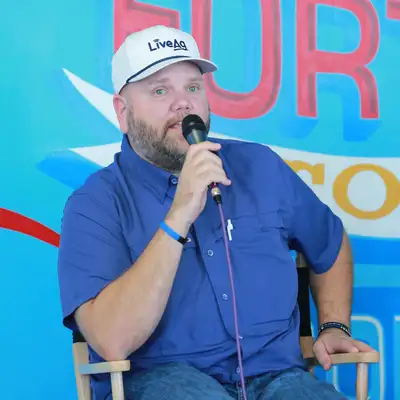
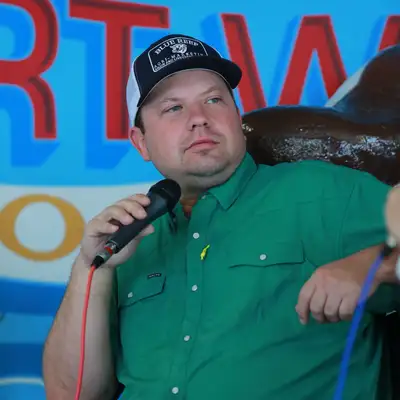
Welcome to the "We Live It" ranch and livestock marketing podcast, where cattle market intelligence meets ranch-ready wisdom. Join hosts Ty deCordova with LiveAg and Casey Mabry with Blue Reef Agri-marketing as they bring you straight-talk market analysis, proven strategies, and insights from industry leaders who understand ranching isn't just a business - it's a way of life.
From livestock market trends to cattle management practices, each episode delivers actionable knowledge to help take your ranching operation to the next level. Whether you're in the saddle or in the truck, tune in for conversations that matter to modern cattlemen. Because we don't just talk about the cattle business...we live it.
To be informed, need to stay truly informed, not all this social media, what I call BS that's out there that's going rampant, that's not backed up by facts. There's two or three spots to get the true facts and the true details of what's going on. Kind of fill us in with that. Yes. Okay.
Speaker 2:Right now, and I say now is the time to plan, to put in place a prevention plan, what are the tools that we have to do that, a treatment plan, observation in terms of as it gets closer. If you're living Texarkana or Amarillo right now, Abilene, checking your livestock once a day may not be you certainly need to get
Speaker 1:your eyes on it.
Speaker 2:Be aware of where it's at and where it's moving.
Speaker 1:You've to change your management practice.
Speaker 2:Right. Your management practice. Get a plan in place. What are the products going to use? Also, the manufacturers.
Speaker 2:What else have groups done? We have worked with all of these manufacturers and FDA CVM to get these products available. So when you've seen announcements like Decamax CA one, well, that didn't just happen overnight. That happened with communication with us and Zoetis and FDA CBM. Yeah.
Speaker 2:This hits, do we have enough Detamax? Do we have enough ivermectin? We've worked with Merck. Merck has brought the product Exalt to the market from South America, which is a totally different form of chemical than the ivermectins and the doramectins. And we need all of these.
Speaker 2:We need the treatment. There are products that are being used, excuse me, in Central America and Mexico that we don't have access to yet.
Speaker 3:That's a head on. We live it, the live ag podcast. From seed stock bull sales built on generations of performance to commercial video auctions backed by real relationships to equipment auctions that keep operations moving forward. LiveAg connects cattle producers to opportunity. Quality cattle deserve premium prices.
Speaker 3:The right bulls deserve more buyers and dependable equipment deserves a fair bid. Whether you're consigning to a live AG video auction, marketing seed stock, or moving iron through the equipment exchange. We combine local representation with nationwide reach. Connect with your live Aggra by scanning the code on your screen or visit us online at live-ag.com. We are proud to be powered by BioZyme, the makers of Vita Firm and GainSmart.
Speaker 3:Value added nutrition partners trusted by cattle producers across the country. Now here are your hosts, Ty deCordova and Casey Mabry.
Speaker 1:Welcome back to the We Live It Podcast. Myself, Ty deCordova, and co host Casey Mabry. We are joined today by Wayne Cockrell. I've known Wayne, I don't know Wayne since I was a little bitty, I've known him a long time, he ran a ranch down there by us for years and just kind of grew up around him and it's great to have you here. We're gonna kinda not beat around the bush, we're gonna get right into the topic, what we're here to talk about, Wayne.
Speaker 1:And you kinda introduce yourself here for a second and tell us who you are and kinda what you represent here today. We're gonna dive right into the topic.
Speaker 2:You bet. Wayne Wayne Cockrell. I live at College Station now. I'm the second vice president, TSCRA, Texas Southwestern Cattle Raiders Association. Kind of history grew up low me to Texas.
Speaker 2:Angelo State, TCU, ranch management. Cut my teeth in college and out of college working for producers, livestock auction, John Cargile and his ranches and feed yard and things out west. And after TCU Ranch Management ended up Oakwood, Texas, Leon County, managed Carter Ranch there for twenty two years. Since that time now in cattle business on my own, also worked Icon Global Real Estate, selling iconic ranches everywhere. And how I got involved with this was actually being the chairman of the cattle health and well-being committee for Texas Southwestern cattle raisers when this thing popped up.
Speaker 2:Okay. All right.
Speaker 1:We're going to hit the road running here on the screwworm topic because it's a very hot topic. Everybody's screaming from the mountaintops, it's the end of the world. Well, let's get some facts and let's try to attack it that way. Where did it originate? How did it get here?
Speaker 1:Now what are we going to do?
Speaker 2:Absolutely. So understand, as we know, we're not a PhD here. We're somebody that had to get involved and had to learn this from the ground up a couple years ago. And so how did we get here? So we had this up until 1964 to '66, the first time when we used the sterile fly process to eradicate this.
Speaker 2:And then we eradicated it all the way back down to the Darien Gap between Panama and Colombia 1993, 1994. And from that time, there was a plant there in sterile fly facility there in Precura, Panama. And they produced the flies and used those flies in that zone so that it was a buffer zone that those flies could not get from South America back. So what is the fly? The fly is parasite that feeds on the flesh of any warm blooded mammal.
Speaker 2:And I say mammal because humans are mammals, but primarily animals are the case. And in our case, it would be wildlife, deer, cattle, sheep, pigs, everything, horses, the gambit, your pets. And so it's an eighteen, twenty one day life cycle. When that fly, the female is bred one time in her lifetime with the wild male. And she goes and and and God only knows how that fly can smell blood or a or a host of something up to two miles away.
Speaker 2:Lie there, lay those eggs on the side of that wound or in the orifice. If she can't find a wound, those eggs hatch. Those larvae start to feed on the flesh, the live flesh, not dead flesh, live flesh. And they twist into that meat and that's how they survive. And then while you have that open wound, other flies will lay their eggs at the same time.
Speaker 2:How many eggs does a fly lay? 200 to 400 eggs is what each one? One fly. One fly.
Speaker 4:So they're bred one time. They come in and lay 200 eggs off of that one
Speaker 1:mating, I
Speaker 2:guess you'd That's correct.
Speaker 1:Yes. Yes.
Speaker 4:So that'll produce 200 maggots.
Speaker 2:That's right.
Speaker 4:And then those magnets those maggots are what we're referring to as the screwworm.
Speaker 2:That's exactly right. The maggots are the screwworm. The fly is the fly. And then there's a pupa stage where once they they they leave that host after it dies or after they fall off, usually it dies, and they burrow into the ground in seventy days. Or if it's in the case of wintertime down in South Texas, they may overwinter in the soil if it doesn't get cold enough to destroy those larvae.
Speaker 2:And then that process just repeats itself. So as far as movement, you have the fly, which doesn't move that far in its lifetime. Two to four miles. Obviously, there have been cases with some storms, hurricanes, things like that. They can move.
Speaker 2:But really, the movement occurs with the larvae and the host of an animal.
Speaker 4:Yeah. So you have taken an infect I mean, what you're saying is and then if an animal gets infected, It's not, know, I'd say, like, a rampant infection. It's there. The 200 eggs are there. It takes just a couple of days for those things to really mature.
Speaker 4:And then while that's maturing, the animal's been in transport somewhere. It goes from ranch to whatever other facility we're going to. And then that then produces the next set of flies that go and lay in there. That's where you're saying the spread occurs from transportation more so than the organic mobility of the fly.
Speaker 2:Absolutely. That is absolutely correct. The fly is not gonna hop on a car and ride. It's gonna be either in an animal, dog, cat, horse, whatever that gets moved or or a deer, nail guy, wild hog, that that situation.
Speaker 4:Yeah. That makes sense. And so, probably more so on, on a trailer probably. Right? I mean, that that's probably, you know, a goat or a calf or whatever
Speaker 2:it is. I've asked all the time, how fast can this thing travel? And I'm like, well, whatever the posted speed limit is. That's the honest truth, you know? So, so bad.
Speaker 4:That's actually good. Whatever the posted speed limit is, that's pretty good.
Speaker 1:Well, was
Speaker 2:maybe in maybe Ty's case. 10? Yeah. Plus 10. Exactly.
Speaker 1:Our fifteenth. But you
Speaker 4:guys, Wayne so I reached out to Wayne, you know, several months ago when this first started going because Wayne is, in my mind, you'll say the same thing, is probably one of the more level headed people that's out there. And so I'm not he's not trading. He's not you know, he's got no necessarily vested interest on it being positive or negative or whatever it is. But when a lot of stuff goes on, I knew that Wayne was involved in it quietly, and so I called Wayne to just really get a good understanding of it. I think that Wayne I mean, the history of the move and the fly, where we're at, I think that's been pretty well publicized.
Speaker 4:I know there's lots of people out there that have economic, I'd say economic impacts from, you know, whether it's the Mexican border being closed down or moving that. So I think we want to get into, you know, where we're at from that standpoint. And then later on, we'll talk about what we'll look at as far as the positive goes on what that looks like there. But I think that, and I'm just gonna say this candidly, When the fly positive that we had, I think there was lots of anticipation around. So if you think through the last couple of years so we shut the Mexican border off.
Speaker 4:It was off for a little while. We open it back up and immediately close it again. There's people that own feed yards that want those cattle. There's people that have got wheat pasture that want those cattle. There's some ranchers out there that don't want the cattle coming back across.
Speaker 4:Right?
Speaker 2:Right.
Speaker 4:But and I think that we live in an age today where we know nobody reads, they just see headlines, they don't get deeper into the stories, they don't get to listen to the conversations. And so I believe there's lots of people out there from the consensus that I can tell that are under informed on a topic. And I think they're they're not getting the right information. So I want I mean, my goal is, when we're talking about this, is to make sure those people do get informed properly. So I think that if you ask most people that are watching the headlines today, they look at it and go, border closed, Mexico's got problems.
Speaker 4:We had one fly that was, you know, several miles away from the Mexican border. You know, not doesn't look like it's that huge of an impact. And then we get one positive in The US and everybody freaks out. That's and they're like going. And I I've seen I've read some news articles that say we weren't prepared.
Speaker 4:I know because I've talked to you, Wayne, over the last couple years about all this stuff that you've been traveling to Panama. You've been going down there, and you guys have been actually and so if I know you have there's a whole team of people and a committee that's working on that stuff, what it is. I wanna make sure that there is there is things going on to make sure that we can combat this. Nobody's gonna be able to, like, fix it overnight. I wanna make sure also that we understand the urgency of what this is.
Speaker 4:And so that's the importance of reporting it. And then the other part of it is we will beat this fly at some point. And so, that's where I wanna go there. So where are we at today? What are gonna be the stages that occur for a little bit here?
Speaker 1:I do wanna reiterate real quick that this has been worked on, been we and worked on for a long time. It's not like that it just got here and we weren't prepared. We the guys that were doing it, such as Wayne and the teams that were on this, have been on it for years. A year ago, next week, me and him met up in an airport, I said, Where are you doing? He said, He just got back from Panama.
Speaker 1:I mean, it's not like that they have not been trying to be ready for this thing. So maybe there's some stuff we can work on. No doubt. There's always is. But these guys that are out there tooting the horn about nobody's done nothing, nobody's been ready, that's wrong rhetoric.
Speaker 1:That's misinformation and that's one thing we had to, as an industry, we gotta wrap our mind around it, we have to have the right mindset, We gotta go into this a different way than point and blame. Let's circle around everybody and let's get it eradicated again, which we know we can do. But point and blame and doing all that, that'll help.
Speaker 4:Well, I'm guilty of it myself because I've talked to Wayne before, and then I talked to him yesterday again, and I'm like, well, I'm I thought we, a year ago, had an announcement that we were building a screw arm facility, and then we didn't break ground on it until, you know, a few months ago. And then Wayne's like, well, you have to still design it and build it and get all this. He's like, we it was, like, very fast on getting that built. And I go or getting it, you know, done. I was like, actually, good point.
Speaker 2:Yeah. Yeah. So no. All great points. And and it started I think it's very important for people to understand that it started with me being down in Panama two years ago and having dinner with the gentleman down there who's former president of their cattlemen's association, the Central American Cattlemen's Association, and him saying, Hey, it's in Honduras.
Speaker 2:It's not being reported, but it's in Honduras. It started then. And two weeks later, after coming back and starting asking questions to USDA and Animal Health Commission about, hey, it's it's there reporting something done. It was reported. But at that point, we we understood the importance then that that we've gotta get started now.
Speaker 2:So going back to September 2024, a Zoom call between TSCRA, Texas Wildlife Association, Texas Farm Bureau, LMAT with Tim Niedecken, and TCFA. And so those groups and then we've added every livestock organization the state of Texas along with that group and officially has become the Screwworm Coalition. But September 24, we met and said, we need to keep an eye on this. Let's have a meeting with USDA and Animal Health Commission, and let's see how do we stop this? If it's here, where are the flies at?
Speaker 2:All these questions about where are the flies and those. So we started meeting there and asking these questions all the way through to then it was announced in Mexico, November. And that was really the alarm bells were there. The border was closed. They put the process in place.
Speaker 2:Border opened. But through those first months, especially in February and March of 'twenty five, what we were hearing was things are great. He's already to Mexico, but things are great. Well, what I'm hearing from TCE Ranch Management alumni in Southern Mexico, it's not so great in terms of the response and the flies being dropped off. And so through the relationship with Panama and TCU Ranchers Management Institute and then the president, when you have COPEG so the facility in in in Panama that produces sterile flies is underneath an international agency called COPAG.
Speaker 2:It's 50% US, 50% managed by COPAG excuse me, by Panama, funded 90% by our taxpayer money. The president of the Cattlemen's Association serves on the Panamanian side as one of the commissioners. I met him in 2012 when he came to Carter Ranch on a tour with other Panamanian ranchers. They came on a tour and they came to The United States in 2012 to lobby the Obama administration not to give Mexico the sterile fly facility that we had built back in the eighties. That produced 500,000,000 flies per week, which was key in the eradication.
Speaker 2:That fell on deaf ears. That facility was given to Mexico, and it was scrapped and turned to a military base. So so that's why we had no backup for the for the plant in Panama. And so having that relationship, reached out to him, last March, said, you're on a commission. Can you get us TSCRA an invitation to come tour the facility?
Speaker 2:Because we were having discussions about what size facility needed to be built, what the cost was, you know, all those things. Well, I certainly felt like you need to go look at one if you wanna if you wanna lobby for one, what does it look like and how big does it need to be? So we got an invitation. And let me stress this. You don't go to the COPAG facility.
Speaker 2:They don't have a tourist tour. It's a secure facility with armed guards, biosecure. We were allowed to go down there and go through the plant, and more importantly, them the questions. How did this happen? Why did this happen?
Speaker 2:And how are we going to stop this? And where are we going to stop this at? And the answers were, you know, COVID had a big impact on on their supplies. That plant down there, because now that COVID is over, and they also have ramped that up from a 15,000,000 per week production facility to a 100,000,000 lives per week production, twenty four hours a day, two two shifts, 600 people is what is what's all raining down there.
Speaker 1:Good shit.
Speaker 2:And and and they care. They care. Both the entire leadership met us at the door, and they answered every question that we had. What we took out of this well, what we said was, what can we do? We're We're just just Six cattle 100 people.
Speaker 4:I thought this was like, I'm serious. I thought there'd be five people working
Speaker 2:for No, some it's massive. It's massive. That facility, and a facility here as well, understand this. This fly has to be they use a synthetic nutrition. It's a fake meat or flesh, excuse me, fake flesh that they feed on.
Speaker 2:The pH has to be perfect. The temperature has to be perfect. Everything about that has to be this, our flesh. And if it's not, they don't eat the power goes off, there's 15,000,000 flies with their brood flies, just like that. If you have a plumbing problem, you can't call the plumber and they say, We order a part.
Speaker 2:It'll be in next week. You have an HVAC problem. That happened with COVID, so the plant was not producing the flies it needed. Panama was locked down because of COVID. It jumped the Panama Canal, and it took less than a week to get from the Panama Canal to Costa Rica.
Speaker 2:That's just how fast, 600 miles or so. The other thing that we were told and keep in mind, the management at that time at COPAG, brand new, not the people that screwed it up. They're gone. They replaced them with they said, hey, take this from 15,000,000 to 100,000,000 and do it ASAP. But what we were told at that time was that they had they had drawn a line in the Isthmus Of Mexico, Tuanapag, and and that's the narrowest part of Mexico.
Speaker 2:So the narrow part where we can concentrate the number of flies per square miles was the key. This is the line. If they get past this line and they get out into the broader part of Mexico, then the concentration of flies per square miles gets less. The planes were not being allowed to come into Mexico without paying for tariffs on each part. And then they would let them come in one day, fly up from Honduras one day, and they would turn them around the next day.
Speaker 2:Bureaucratic mess. We came back, reported that directly to Secretary Rollins. She reached out to them to fix that. They did not. And that was when the border was shut down for the first time.
Speaker 2:That's why the border was shut down, was leverage. Because if you didn't control that, we knew it was going to get out of hand. What was going on at that time as well too, is you could stand there on the Pan American Highway, according to friends down there, and count two fifty truckloads of cattle a day coming across the border untreated and unexpected heading north. And so when it was shut down, the deal was not stop. You're not going to stop that trade.
Speaker 2:It has to trade. But those cattle had to be inspected and treated before coming north. Along with that was some surveillance on on wildlife, you know, at at at the time as well. Yeah. And they worked on that.
Speaker 2:It was opened back up. But the all the other steps that they were supposed to do to keep this from moving north. So when everybody says, how did this guy how did this get here? USDA has been working on this. They didn't stop it.
Speaker 2:We do not have control on the Mexican government. And so the only leverage that she had to slow it down so that it did not get here last fall, and I truly believe, and if you ask anybody on the team that's been involved with this, had that pressure and not, it would have been here last fall. And all of us, TCFA, all of us, we agreed and agreed on and then disagreed on whether it should be open or not. We knew the ramifications. We certainly understood the ramifications on our on the feeding industry and the packing industry.
Speaker 2:But when you looked at it, me, myself especially, was very frustrated that the same amount of pressure was not on Mexico to get their southern border under control. And we still have to get that southern border under control. And I've got a map, and I don't know you can see it here or the camera can see it here. I wanna have Katie put
Speaker 4:this map up
Speaker 2:in the middle hill. This is the area that we're talking about. Once it got past this area, those cattle come up. And if they go this way, they go to feed yards East of Mexico City or the feed yards at Monterrey. And that's and and the reason for that and when I say they, all these cattle all the way to the Darien Gap, Sukarni, those cattle are sucked northwards to supply Sukarni's Sukarni's.
Speaker 4:Yeah. The property cattle are the ones that are coming to The US. Right? And everything that's down around
Speaker 2:Georgia, New Republic. We get the good cattle. All these cattle are these are lean trim for us, but this is part of Mexico's domestic supply. So they're critical for their domestic supply. No doubt about that.
Speaker 2:That's why you were never going to stop that supply, but the inspection and treatment. And so that's how these cattle got to Texas. I mean, that's how the plot got there with the cattle. It's just the simple facts.
Speaker 4:I We're moving cattle. We're not moving mean, they don't have it's not a maybe there's some goats or something
Speaker 2:like that. Yeah. Goats, whatever.
Speaker 4:But you're saying predominantly the commercial trade in the livestock sector is gonna be cattle.
Speaker 2:That was the drive we talked
Speaker 4:What hit me a minute ago when you were talking, it just helped me kind of get my mind around it. And really, if you look at that map right there that we've got, it's a funnel. Right? And and as like he talked about, you gotta around the Darien Gap and the Panama Canal and all that stuff where it's gotta be really, really skinny. I mean, there's not very much area to control.
Speaker 2:That that's right.
Speaker 4:And then as it starts to balloon out and start to blossom, now we got a problem.
Speaker 2:We lost it here, and we tried to get it back here. And by the time the planes got there, it's too late. It it had moved through. And so we've been fighting this battle for the last year through here, and it goes up I mean, it's both coasts and up, you know, through the city. What's the furthest north
Speaker 4:we've ever gotten this fly?
Speaker 2:Oh, all the way up in I mean, this was this historic but it's it's been if you look back at records as far as Wisconsin, South Dakota in the past, A lot of that was when we were moving cattle in the thirties and forties by train, whether those were going to Florida there or going to grass in Kansas or so. And so the fly didn't make it that far. Even there were no movement controls. It moved with the worms
Speaker 1:that way.
Speaker 2:Think about this too. The Central Valley Of California, how many sheep and cattle used to be turned out in the Central Valley Of California, perfect condition, Southern Arizona, New Mexico. So it was widespread. We can go back to this when we talk about sterile flies and how are we going to beat this? But that's important on that.
Speaker 2:It's all about math. Really it's a math question and its history is what it is when we talk in terms of eradication. And so back to the deal, our group really started meeting seriously, and we got organized and and and started look. Number one focus was we need more flies. And I'll just go into this.
Speaker 2:From in from '62 to '66, this entire area right here was eradicated in two years with 200,000,000 sterile flies. So remember, 200,000,000. That's what we eradicated it through this one in two years. We also had winter. And it's always important for everybody to remember, what do we have that we don't have from here down?
Speaker 2:We have winter and cold weather, which which kills a fly. If it gets cold enough, it kills the larvae in the ground. So it's it's remember, 200,000,000. We eradicated it with the 200,000,000 from Texas and the 500,000,000 flies that were being produced down here, which was 700,000,000. And once we got eradicated, we kept it in check with 15 or so.
Speaker 2:Right now today, what do we have? We have a 100,000,000 flies from the procure plant in Panama that are coming to The US, they're coming to Moorfield, and they're being dispersed right now, even in our infested areas and along the border here right now today. We will have an additional there is a plant that was it was a fruit fly facility that starting back last year, they retrofitted. We provided half the funds to do that. We're gonna provide operational funds.
Speaker 2:We get every one of those flies from that Matapa facility. Starting two weeks from now, they're expecting to have 30,000,000 flies available per week, and then that to ramp up to this fall. By this fall, we'll have an additional 100,000,000. So by the time we get to next spring, we will have 200,000,000 lives. If we can if we can keep this confined to parts of Texas, think just think about we eradicated it out of here, out of this entire area with 200,000,000.
Speaker 2:We're gonna have 200,000,000 flies just in Texas starting next spring as it warms up to be able to focus on on that. It's the number of flies. The following fall of twenty twenty seven, the first 100,000,000 flies will be available at our Moorefield facility. And then the fall of 'twenty eight, there will be an additional 200,000,000 flies at that facility. And that will be the size of basically two Costcos in size there to produce those 300,000,000 flies.
Speaker 2:On top of that, what's really exciting and we had these guys speak at our summer meeting we had TSCRA had in Houston on Saturday. So what else has been going on behind the scenes? Well, we have what call they call the NovaFLY, and they have been able to take doctor Mac Scott in North Carolina State University discovered how to genetically modify those female flies. So back up. When we say a 100,000,000 per week or 200,000,000 per week, those are 50% male, excuse me, and 50% female.
Speaker 2:We don't need the females. We need the sterile males. And so this NovoFLY technique will allow us to not have to raise the female flies. We'll just raise the male flies, cuts the cost. It actually cuts the amount of radiation that's required to sterilize those flies.
Speaker 2:And when we're handling all those, we're handling just what we need in the environment. So if you take 500,000,000 sterile flies that will be produced at all these facilities, in 2018 we will be able to push this back down to the daring gap. That's when the real efforts start there. So we've got to get from now to 2028. Thank goodness we will have winter to help us.
Speaker 2:South Texas, yes, they're not. But South Texas during the winter will get the concentration of every one of those flies.
Speaker 4:Yeah, that makes sense. It's a tough effort probably whenever you're in this time of year and everything's rolling, and we got plenty of humidity and
Speaker 2:Perfect storm. We got the rain. These flies love 82 degrees and moisture. And what have we had for the last month in parts of Texas that thank God they've gotten some rain?
Speaker 4:They had perfect snowing conditions.
Speaker 2:Perfect. Perfect. Perfect condition. A warm winter so that these flies, even in Mexico, weren't pushed back further because because we we didn't have a frost down there or a freeze.
Speaker 1:Let's talk. Let's talk now about it's here. Everybody's panicking when we we need to kind of not panic. Need to control, we need to be informed, we need to stay truly informed, not all this social media, what I call BS that's out there that's going rampant, that's not backed up by facts. There's two or three spots to get the true facts and the true details of what's going on.
Speaker 1:Kind of fill us in with that. Right
Speaker 2:now, and I say now's the time to plan, to put in place a prevention plan. What are the tools that we have to do that? A treatment plan. Observation in terms of as it gets closer. If you live in Texarkana or Amarillo right now, Abilene, checking your livestock once a day may not be But you certainly need to get your eyes on it.
Speaker 2:Be aware of where it's at and where it's moving.
Speaker 1:You've got to change your management practice.
Speaker 2:Change your management practice. Get a plan in place. Obviously, with your veterinarian, but Google is our friend. And odd people are like, What's going on? What do I use?
Speaker 2:What do help? You can Google what are the products I'm gonna use. Also, the manufacturers. What have our groups done is we have worked with all of these manufacturers and FDA CVM to get these products available. So when you've seen announcements like Dektomax CA-one, that didn't just happen overnight.
Speaker 2:That happened with communication with us and Zoetis and Zoetis and FDA CBM. Yeah. We ramp up production. Exactly. This hits, do we have enough Detamax?
Speaker 2:Do we have enough ivermectin? We've worked with Merck. Merck has brought the product Exalt to the market from South America, which is a totally different form of chemical than the ivermectins and the doramectins. And we need all of these. We need the treatment.
Speaker 2:There are products that are being used, excuse me, in Central America and Mexico that we don't have access to yet.
Speaker 1:Comes to selling cattle, performance matters. That's why BioZyme Incorporated and LiveAg have partnered to bring more value to beef producers across the country. Cattle fed VitaFirm and GainSmart products are backed by proven nutrition programs designed to support reproductive efficiency, feed efficiency, and overall herd performance. And now through LiveAg's nationwide video auction platform, those nutrition backed cattle are positioned in front of buyers who recognize the value of a documented premium feeding program. This partnership connects what happens in your pasture with what happens at sell time.
Speaker 1:Better nutrition, better documentation, increased market exposure. Talk to your buyer's arm or your live ag rep, or visit your local dealer to learn how and GainSmart paired with live ag marketing can help your cattle stand out when it matters most.
Speaker 2:We need access for treatment protocols and things. And so get a plan together, first of all. As simple as this. If you if you just if you get your cattle up or your sheep or goats or whatever every twenty one to twenty eight days and spray with a spray or a spray, put a surfactant in there like we do when we're spraying brush and things, the guys at Central America tell me, Man, all we're doing is we're just spraying every twenty one, twenty eight days. And then when we're going to do things as far as ear tacking, castration, branding, any injections, then we need to use the ivermectin products, the dormectin product, or the Exalt product.
Speaker 2:And what those products do, you get that into their system, it's active within forty eight hours. So the fly still may lay an egg on that brand or that sack where you've castrated. But they will hatch, but they will not be viable. We also have Catron sprays and things like that. You know what?
Speaker 2:You're going to brand your brand, spray that. Ear tag, spray that ear tag around there with that. Give Detamax along with that.
Speaker 4:Which is a pretty good management practice anyway.
Speaker 2:It's probably not Our grandparents, if you think about it, as a kid growing up, of course, they came through that. Man, when you castrated- You sprayed. You You sprayed. We didn't use ear tags as much back then. Brandon, you sprayed.
Speaker 2:That was built into them. And it's an important component to the sterile flies. The sterile flies can't do it by itself. It's a three legged stool. You've got sterile fly eradication, those efforts.
Speaker 2:You've got the prevention and treatment. And it's important if we're all doing these prevention and treatment techniques, it lowers the number of flies in the environment that are going to hit the wildlife. And so then the other one on that is what we'll talk about too, about the importance of inspection and treatment before we move out of these infested zones. Movement control.
Speaker 4:Yeah. Let's talk about movement control for a second because here's the deal. I like to be very candid on things. I've either seen people on Facebook or social media or talk to people or whatever. And I think a little bit, this is on the backside of COVID.
Speaker 4:I mean, obviously there's lots of paranoia and things like that on all those different things that went on there that we're not going to go through. But let's say a guy gets positive. There's some people that are scared to report the positive for multiple reasons. One, they don't want their neighbor to think that they're the ones that brought it in. Two, they're worried that they're not gonna be able to move livestock.
Speaker 4:You know, if they're a preconditioning yard, you know, move livestock from point A to point B or bring animals in and stop their livelihood and their economic flow. Wayne, you and I talked a little bit yesterday about this personally, but if we do get a positive, I want you to tell everybody what's the negatives of not reporting it. And then the most important part, what are the positives actually reporting that you had a positive for your neighbors? Right? It's important because if you don't report, we're not going to fix the issue.
Speaker 2:Absolutely. The negative is it's not going to go away because it's in the environment. It's going to pop up on your neighbors. It's going to pop up on you tomorrow. And you're going to just continue to treat guys.
Speaker 2:I know we've heard all the stories from our grandparents and parents about all the roping horses that they created and roping. There's not enough. There's not enough. We can't afford to pay enough people, employees, to ride the livestock that we have. So the flies are the key.
Speaker 2:When you get this and you report it, you get the number one, you get the flies, and the flies are gonna protect your lifestyle.
Speaker 4:And what you mean by that? Get the flies. You get a positive. You go report. They're gonna send sterile flies.
Speaker 2:They're the plaintiffs.
Speaker 4:Yes. They're gonna bomb your area with
Speaker 2:sterile Absolutely. These infested zones and these surveillance zones around them are getting not only from aerial, but they're also getting ground release. And these ground release flies are kind of a time deal. Instead of just getting them all at one time, also then let's release these then over the next hours as well. And so you get the flies.
Speaker 2:You also understand that right off the bat, there's going to be initial want, Hey, don't move anything right now. Let's get your livestock up. It may just be even riding through your livestock. If you've got ten, fifteen head, you can call them up with cake or so, and they can go through there and say, okay. We're good.
Speaker 2:Obviously, they would recommend, especially if you're if you're calving or you have calves, it's like, you know what? We've got to use these products, whether that be Decomax, CyberMac, whatever. And you can move them. If you're in a situation where we were gonna ship, we're shipping loads tomorrow to go to Kansas, go to the Panhandle, they're gonna work with you to say, okay, let's inspect them and let's treat them. But we understand commerce has to happen.
Speaker 2:You've got a contract. You've got a delivery contract, and the cattle need to move. They're going to work with you to move those cattle, but they have to go through an inspection process and they have to be treated.
Speaker 4:Which is to protect everybody.
Speaker 2:Exactly. So that's the other either negative or positive. If you don't report these and you say, I'm not going to report it, but I'm moving the rest of my cows out of here, and you take that with you, you have moved this and now your problem is somebody else. Or even worse, you show up in a sale barn with an animal on the day of that sale that has that deal. Number one, I can tell you, because we've gone through these scenarios and and and our auction our auction barns, we we when you say what's happened, we've been able to meet with USDA and Texas Animal Health Commission and go through all these scenarios.
Speaker 2:Well, what if this happened? What if somebody unloads that at the sale barn? Our personnel who are already at the sale barn looking for anything to come off of that trailer that might be crippled or might be unmerchantable. As an owner of the sale barn, you want to know that so that at the end of the day, when it doesn't bring as much money and the owner says, what do you mean it was crippled? That thing came off the trailer perfect.
Speaker 2:You know? If it got crippled, it happened at the sale barn. And and so we already had those eyes on it for that reason. We have brand inspectors. Our brand inspectors of Texas Southwestern cattle razors put their eyes on every single animal.
Speaker 2:They're key to this, and and they've been trained as well to be able to look for these things. When they go through the ring, think about what happens when they go through the ring. Those buyers are looking for every blemish that they can on those. But it's important when we ship, even from the ranches direct, that we understand the importance of that treatment and that inspection because we do not want to send this to another state and then face the ramifications of that showing up somewhere else. We have commerce has got to continue, and that's on us.
Speaker 2:So if you're out there thinking, I'm not gonna report this. And I'm gonna give you the first story. The very first case, know this. They call it the index case. I received a call last Tuesday.
Speaker 2:A buddy of mine went to college with, I think I got them. Got what? I think I got screw arms. Well, I'm on the phone giving him every reason in the world about how these are probably blowflies because we've had all the rumors that we've had for the last year, those have turned out to be blowflies. We've always had those, but people just weren't paying attention.
Speaker 2:They see them. And I'm glad that they were saying reported. The reporting process, having to go to Ames, Iowa, it's taking too long, I'll come back to that in just a second. But he sent me a video and a picture that I'm sure y'all have all seen and knew instantly verified by another member of our TSCR Ray parasite subcommittee, who's a veterinarian, Doctor. Chris Womack, who also went down with me to Panama to the facility along with Jeff Goddard, TCU Ranch Management, another rancher and friend from Victoria, Jeff Swomack.
Speaker 2:But Chris was in Panama last week traveling with a couple of veterinarians treating screwworms so that for the sake of our parasites subcommittee and the overall organization, so that we could tell our producers how to treat, send it to them, they're like, Automatic, that's screwworms. And so he did everything right. He took that animal, treated it, reported it. We got that back. We had the flies.
Speaker 2:Was he worried? Yeah, he was worried about being the stigma guy when I reported it, but he did the right thing for our industry, and we owe him a debt of gratitude for doing what was right. But what are the odds of my buddy being the one to do that? You just can't make that up.
Speaker 4:Well, it was good that he had known you because you'd probably talked about it before, and then he felt comfortable to call and talk about it.
Speaker 2:Absolutely. Been he'd to meetings. He'd been to producer meetings and things as well. Exactly.
Speaker 4:Yeah. And then now that people like, beforehand, like you said, it was blowflies or whatever. So then now there's no because everybody else here's the other thing. Why are we starting to get a few more of them around? Well, it's because of awareness.
Speaker 4:It's because of testing, and it's because of that stuff.
Speaker 2:So because of that, though, we are no longer going to Ames, Iowa for a two or three day process to identify them. They're going to Kerrville, and they actually have a mobile trailer with the federal entomologist that if needs to be it moved to a certain area, even away from Kerrville where that makes that even faster. And even going to Kerrville, they'll have that in place. We've gotta have that.
Speaker 1:That's just that's just we gotta be faster about identifying it for sure.
Speaker 2:Gotcha.
Speaker 4:Yeah. Yeah. So I think the most important thing really maybe not the most well, there's been so much information on this deal, it's unreal. But, like, one of the more important things that we gotta make sure of is whenever we do have a positive test or or you're out there, we see a navel or some cut or whatever, and we see a maggot in this cut, probably gonna freak out a little bit and go, okay, now I got it. But that's it's not the end of the world.
Speaker 4:That animal can still survive. Yes. That's another thing. Two years ago, when it started hitting the media a little bit, I had a friend of mine that I haven't talked to in a long, long time. He's got a few cows, lives in Northeast Texas, called me and goes Is it gonna kill all my cows?
Speaker 4:I mean, guy thinks about it like it's a disease that's gonna wipe his cows out. I go, No, don't freak out. Just dectomax your cows or deworm your do whatever it takes. But have a protocol But in I think that's the one thing that main people need to realize is it's not gonna kill all the cows. It's not gonna kill all the deer.
Speaker 1:Man, it's not affect the meat.
Speaker 2:It does not. This is not a food
Speaker 1:safety issue. That's what she said.
Speaker 2:We get that. We can't say it enough. This is not a food safety issue. It's not. These animals the cat that was treated with the navel and back the guy, he's a cattleman.
Speaker 2:And he was looking and he saw and it wasn't really swollen. He saw it and caught it early. It's imperative
Speaker 4:that The
Speaker 2:calves did they Calf's treated fine.
Speaker 4:The calf with the infection that we're all talking about.
Speaker 1:Treats in fine.
Speaker 2:He's treated fine. That's the big yeah. He's good. That's the story right there is that these animals I'm gonna say this jokingly, but it is something that I've certainly thought about. When we talk about protocols, I'd kind of like to say, yeah, you need two rounds of a modified live and a Pastorella in there as well.
Speaker 2:No one
Speaker 1:worries Absolutely.
Speaker 2:No. You know what I'm saying? Because no one worries about the percentage of cattle that we lose five to 10% of our of our calf crop every because they're not vaccinated. For for not vaccinated or castrated. If we were concerned about the supply of cattle, we could increase it five to 10% just with a modified live castration and a blackleg.
Speaker 2:So put that in perspective, everyone that's out there, is that no. The answer to your deal is no. If you catch this early enough
Speaker 4:We might actually produce more cattle now because we're gonna start managing things a little
Speaker 2:bit tighter. Absolutely. I hope so.
Speaker 1:Good management practice will make this thing go away very fast.
Speaker 2:We're gonna separate. We're gonna separate the good managers and the bad managers. Prior to 1964, 'sixty six, this was not a passive business we're in. You were in this business. You had to have good animal health practices, and you paid attention to your cattle.
Speaker 2:Yeah.
Speaker 4:You're saying it wasn't a bunch of hobby farmers.
Speaker 2:It wasn't a bunch of hobby farmers. If you're an absentee owner, and we have them.
Speaker 1:Absolutely. We need them.
Speaker 2:We need them. Need the cattle. We need their cattle. We don't need their cattle dying. So I think, look, if you're out there and you're surrounded by these neighbors, you're only as good as them.
Speaker 2:Reach out and say, Hey, I don't mind going by and checking your cattle. I don't mind spraying your cattle. How can I help you? Back to being neighbors. Gonna have to get to know our good neighbors again.
Speaker 2:That's just gonna be part of what can we do instead of asking the government, what are they gonna do for us. What can we do? And we can do that on our own and get these practices ourselves. Absolutely.
Speaker 5:Parnell, trusted by cattle producers and veterinarians for over thirty years, manufactures its own premium quality, reliable veterinary generic for The US cattle market. Introducing Nixie Fluor. With two proven ingredients in one powerful dose, it fights infection and reduces fever. And with just one shot, you can see results in as little as six hours, helping cattle breathe easier, recover faster, and get stronger. Nixie Fluor works as hard as you do.
Speaker 4:Yeah. No. I think that's absolutely incredible. And I mean, like I said, if if you get a positive out there, Wayne, and and you're not don't think they need to think that they're dirty or they got a problem or whatever. They need to report it.
Speaker 4:Because if they report it, it's gonna it's gonna allow to get the eradication of these flies specifically in your area done faster, and you'll have less cases of it. The other deal is there's less likelihood that your neighbor's gonna get it. Then there's guys that are worried that it's gonna shut down transport and it's gonna shut down commerce, but you're reiterating it's not gonna Those shut down
Speaker 2:guys like I say, we were there this weekend. We just so happened that the people at Ground 0 were there. And some people are like, well, why are you here? Well, because we've already we ran all the cattle through the shoot the following day. Everything got inspected.
Speaker 2:They got a dose of Dektomax, and I've got flies being dropped on me. This is the best night of sleep that I've had because several I have got all the resources that are available that were not always available in Mexico and these other countries. Producers, if you wanna do the wrong thing, if you wanna do the wrong thing, look how that is and not report and not have a prevention and a treatment plan in place and not work with your neighbors and not be able to move cattle with these strict quarantines that nothing moved. That's what every other country did between here, and it didn't work out so well. And so that's why we have had weekly meetings with USDA and Animal Health Commission and Texas Parks and Wildlife to cover these same exact things.
Speaker 2:Well, what are you gonna do with this? What are you gonna do with that? We have to have commerce continue, but we have to have inspection and prevention.
Speaker 1:So what about the wildlife part? Where are we at on getting something that we can help the wildlife go? I mean, it's a great industry down south. Absolutely. It's
Speaker 2:9,000,000,000 versus one Exactly. So
Speaker 1:it's huge. So where do we go there? I mean, how does that look?
Speaker 2:So number one, when you report, you get the flies and the flies take care of the wildlife. Obviously, as these cases expand, those flies are going to get thinner on the distribution. But we have the flies. The flies can take care of the wildlife. What do we have now that we didn't have back in the sixties?
Speaker 2:Well, number one, we didn't have any deer. Obviously, a lot of those had been eliminated. But every single corn feeder that's out there or protein feeder has a camera on it right now today. So looking at those photos every day of what's coming into there and saying, on the pigs or on the on the deer, is there you know, on these deer that are starting to grow these antlers right now, that's a that's a very vulnerable spot. Where do I have some sores?
Speaker 2:Is that the deal? If if if there is, you contact your your area, game biologist, send them the photos. They will give you a take authorization that says it's it's gotta be specific. It's gotta be Ty deCordova or Casey Mabry or Wayne Cockrell on that has the right to take this animal. Take it.
Speaker 2:Let's let's get those larvae. Put that deer put that deer on a tarp or on a concrete surface because those larvae are going to crawl out of that wound if it is in fact the screw worms. So you collect those. Obviously, it's going to be a dead animal. Pull all those out, spray them and kill them, put them in alcohol and kill them, put them in a can with gasoline to kill them, put them in a plastic bag and stomp them and kill them.
Speaker 2:After you've submitted them, we need those submitted. Burn that carcass in Texas Parks and Wildlife. And I know the East Foundation as well have come out with some guidelines on what to do with that. Dig a hole eight feet deep, put lime on them. Those larvae can't climb eight feet burning those carcasses.
Speaker 2:So we have cameras. We have drones. We have drones. We have thermal drones. If you want to check your wildlife at night, we could use that also on our wildlife.
Speaker 4:Because it can see the hot spot from the infection.
Speaker 2:Exactly. If you're missing the cow or calf, it's in the brush. Man, what better way to be able to try to find it? We have the cameras on our waters, especially if you're in West Texas and the wildlife come to those water troughs as well.
Speaker 1:Oh, man.
Speaker 2:Yeah. So we have other tools available do that. The fawns are going be vulnerable simply because they're hiding out just like the calves, this enables. The flies are going to have to take care of that. The biggest question now too is you see the ask for ivermectin treated feed or ivermectin treated corn.
Speaker 2:It was announced day before yesterday that there is a research trial that is going to take place in these infested zones with the or at the Cesar Kleberg wildlife deal between Texas Parks and Wildlife, FDA, AgriLife, and USDA to see about the ivermectin treated corn. There's some research also I think is going to take place as far as as some ivermectin treated deer feeds. Problem is this. It can't help the ponds. Orange are not going eat it.
Speaker 2:It doesn't go through the milk. You're going have a lot of bucks that are going to really get a really good high consumption. It goes back to consumption. When you feed through ivermect, it's got to get in the blood level, and it's got to be maintained at that threshold, which we do not even know. We don't even have the science to say whether that's one hundred milligrams per ton of feed or two hundred milligrams.
Speaker 2:So that's all got to be determined. But that consumption level has got to be consistent. Are the bucks eating more than the does, and the older does eating more than the younger does? Right now in these areas that have had lush rainfall and lush crash, what happens on these Consumption goes down. It goes down on your minerals.
Speaker 2:It goes down on these things. And so it's not as easy as just saying, Let's go out there and put some alvermectin There's and add some gotta be research. And the reason it has not happened yet too, is that FDA CVM, ivermectin, is something that's tested for residuals in the meat, in our beef supply, and in the deer. Humans eat these deer, And so there's going to be withdrawal times for those things, even the pasture, because when deer season starts, they do not want us and half of our population may be on ivermectin right now. I don't know.
Speaker 2:But the other half doesn't. Shame on us is at the end of this deal three years from now, we eradicate these flies. They're going be gone. We know how the story's going to end. We're going to eradicate them.
Speaker 2:But at the end of that, we have resistance issues with our ivermect because our levels weren't, and we can no longer use them for internal parasites East Of I-thirty 5. Exactly. Shame on us if our sheep and goat industry can't use those products. But more importantly, we spent thirty years educating our consumers about how our meat is safe and how injections and residues and all the drug residues. And this shows up in our beef supplies and the residues, and we lose our market share because of fear and shame on us.
Speaker 2:We have unintended consequences. We're not against any of these. We hope that this will work. The research just has to take place. It has to be validated because FDA has regulations set in place that have to be followed.
Speaker 2:We want it expedited. They have expedited these products. Ivermectin, emergency use. Exalt, emergency use. Decamax, conditionally approved.
Speaker 2:Negative powder, emergency use. We have just whooped and spurred on FDA and USDA to cut the paperwork and get those products. And they're here, but those conditional and emergency use tags legally have to apply to those products, where some of them have to be script products through your veterinarian and not on the shelf. Do we wish that they would be on the shelf? Do we wish that when you went into your store and you have and you have CA, and those are the same exact products, but one, the CA is labeled for Screwworms and is not, is because has not been used in trials in The United States and verified and validated.
Speaker 2:But they are letting us use this based on the use down in Central America and South America that it works.
Speaker 1:Before we wrap up here, is there anything else we need to touch on? I mean, we need to Just Where where do they go to find this information? Where is the instead of listening to all this social media stuff, where is the actual true information coming
Speaker 2:from? Start with screwworm.gov, and that's USDA's USDA site. Go to your merch, your Zoetis' AgriLife extension. I know the Texas Sheep and Goat Razors has got a deal out. I know that ICA has a thing.
Speaker 2:Farm Bureau have got Hey, here are the products. Contact a vet.
Speaker 4:That's what I'm
Speaker 2:telling you. Call your vet. Call your vet, and they'll tell you what what products you need.
Speaker 1:Well, they'll also be able to tell you on on movements and and what do you what protocols you need to go through to sir. To ship cattle or ship goats to ship anything, contact your vet, and they'll tell you the states that you're trying to go to, what their protocols are, and what they're asking of us to get
Speaker 2:them into those states. Absolutely.
Speaker 1:Absolutely. And don't wait till two days before.
Speaker 2:No. Do it now.
Speaker 1:Let's kind of schedule. If you're shipping cattle in two weeks or Goats or whatever you're shipping, you're going to these shows, these junior nationals and all that stuff that's going on this summer, just plan ahead. Don't wait two days before to call your vet because that ain't gonna work now.
Speaker 2:It's gonna work. It's not
Speaker 1:gonna work now.
Speaker 2:You're gonna have to plan ahead, but also know that our groups have worked that those issues of how do we how does they how do you get out of infested zone to go to a jackpot or go to barrel racing or go to team roping or go to the Houston Livestock Show and Rodeo where you cannot have residues? How do these cattle move from the feed yards to the packer? They can't be treated. They're gonna move untreated. They're gonna move.
Speaker 4:And make sure you're doing the health search. Right? I mean, there's a lot of people try to get around that stuff. That's the reason why we at the end of the day, that's why we have the best food supply in the world.
Speaker 2:Yes,
Speaker 4:sir. Right? That's why we'd be proud of it, is all the protocols and all the things that we did back in 1965 that we are all the beneficiaries of.
Speaker 2:And we
Speaker 4:need to quit reading Facebook posts that people put out there and getting everybody conspiracy theorists.
Speaker 1:Absolutely. I think we need to do a part two of this in about a month or two and kind of reach Oh, it's gonna be changed. Really by the time this plan on let's plan on doing a part two next month or two months from now just so we can catch back up on all the true details. We cannot
Speaker 2:say it. We cannot get out to to to our public enough and watch these pro and we are going to have we're gonna learn week by week. We'll have more more protocols The company the companies that sell these products have not been able to advertise them because it wasn't here. Now they can. Believe me.
Speaker 2:We know these companies. Their their salesmen are are gonna let us know what's about it. Well, we appreciate you
Speaker 4:big time, Wayne, getting on here and doing Thank
Speaker 1:you for the true facts. Sticking to the facts. One thing I do wanna push through, our meat is safe. Yes. This is not a food safety issue.
Speaker 1:This is a management issue that is treatable If and we will have a proper management of our herds and our goats and our cows and everything we do, if we will manage it correctly, we can handle it.
Speaker 4:We're resilient. The industry is resilient. Been kicking the teeth
Speaker 2:by things grandparents before. And parents defeated this with less tools than we have.
Speaker 4:They were tougher, man.
Speaker 2:And they were tougher. There was no whining. There was no whining. They didn't have off the just bear down and do it. And I do believe in my heart, we have the same genetics and DNA, and we will do the right thing, and we will defeat this for our future generations.
Speaker 1:Wayne, thank you. Appreciate the information. Thanks everybody for watching us. If you have any questions, like always, be sure to send them to Casey because he loves answering questions. You can send them to I don't know what your email address is, but if you got anything, just send it to katielive ag dot com.
Speaker 1:If you want to participate in a podcast or do any marketing with us, katielive ag dot com. Thank you for watching and like always, God bless.