Subscribe
Share
Share
Embed

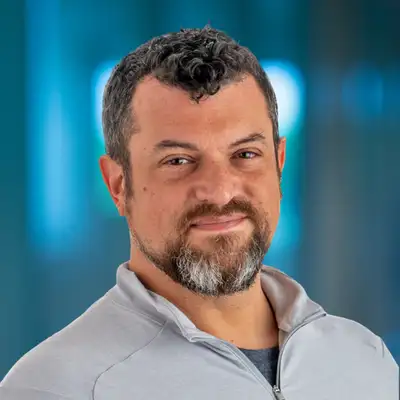
The Auto Market Brief, powered by Cox Automotive, breaks down the latest trends and forecasts shaping the automotive industry. The show is hosted by Cox Automotive Executive Analyst Erin Keating, coupling years of experience translating data and trends with the data and industry insights of the largest automotive services and technology provider.
Joined by other Cox Automotive experts and outside guests, you’ll get data-driven insights and industry outlooks from some of the industry’s leading voices.
Welcome to The Auto Market Brief from Cox Automotive. Each episode, our experts and special guests break down the latest trends, insights, and news shaping the automotive market. We'll give you the information that truly matters so you can make smarter decisions and drive your business forward. Good morning, and welcome back to the Auto Market Brief. I'm Erin Keating, your host and executive analyst for Cox Automotive.
Erin Keating:Today, have another one of our bonus episodes, and I'm so excited to talk with I'm gonna try I'm gonna try to get this right because we have matching names.
Aharon Horwitz:It's a test, here we go.
Erin Keating:Aharon.
Aharon Horwitz:Aharon. Very nice. Okay.
Erin Keating:Yes. So we share our Jewish heritage here. So Aharon Horwitz with Fullpath. So as most of the audience might know, Cox Automotive did acquire Fullpath, and we are now in the full integration mode, getting everything up to speed. But we wanted to take a little bit of time to talk to our audience about who you are and where Fullpath came from and what we see are some of the challenges that it's solving in the industry and how we believe these two big forces of Fullpath and Cox Automotive coming together might help our dealer customers and our clients and so on and so forth.
Erin Keating:So just to start for our listeners, tell us a little bit about yourself and what drove you into the car industry. Because I know that you you mentioned before we got on air that you grew up in Cleveland, and then you moved to Israel and got into tech, which is a really smart place to do that. A lot of good talent over there, but you chose automotive. So tell me a little bit of your background story.
Aharon Horwitz:Yeah. Well, thanks for having me, Erin. Actually, I I grew up in Cleveland, moved to Israel, and and actually, I first did social impact
Erin Keating:Okay.
Aharon Horwitz:Startups.
Erin Keating:Oh,
Aharon Horwitz:awesome. Actually co founded an incubator with a friend that would take in folks who had ideas for businesses that also had a social change Oh, aspect. Very So it could be something to help with youth at risk by training up on, I don't know, IT computer skills. Sure. Sort of what they call a double or triple bottom line.
Aharon Horwitz:So you have a bottom line that's focused on
Erin Keating:Yep.
Aharon Horwitz:On the revenue, bottom line is focused on social impact, maybe another another aspect. And doing that, I actually got a lot of experience interacting with small medium businesses. Okay. And came to this insight or almost like inspiration that small medium businesses are these incredible engines of societal transformation. Mhmm.
Aharon Horwitz:And it's much easier to find your way in a small medium business. If you look at The United States, for example, about 50% of people are employed in small medium businesses, and it became very clear to me as someone who just kinda always is always thinking about, you know, what could be better or what the challenges are, what the opportunities are in any any area I'm in, that those companies were dealing with quite inferior technology.
Erin Keating:Right.
Aharon Horwitz:And that the advantages that a large player, you know, Walmart or or a Fortune five hundred or Fortune one thousand, Fortune 5,000 had Right. Do not accrue to the small medium businesses, in particular at the time, you know, we're talking, say, like ten let's call it ten years ago Right. Because things like agen tech and Gen AI were not really around. Right? So some of that power leverage that you get now from technology was not was not present.
Aharon Horwitz:And myself and my two co founders, Yishai and Eliav, we just were really excited about the idea of of seeing if we could help SMBs use more automation, use more machine learning in a way that is not does not require a large team or a particularly, like, science or technology background.
Erin Keating:Sure.
Aharon Horwitz:And actually, we got into the the business not looking at auto at all.
Erin Keating:Okay.
Aharon Horwitz:We just wanted to help make stuff that helped SMBs with with automation. So we would take content and turn it into emails with automation, drip emails. We would take content and turn it into digital advertising. And all of that was predicated on a really good data acquisition infrastructure. So to know what to send someone, you have to know who they are, what they care about, what they're interested in.
Aharon Horwitz:And we just basically started with SMBs, and through a crazy set of circumstances, ended up in the auto industry. And as startups can do Right. One night, we just were like, you know what? We're just gonna pivot this whole company. At the time we had we had quite a few customers.
Aharon Horwitz:We had, I don't know, probably a team of fifteen, twenty people, which, you know, sounds tiny compared to Cox Enterprises or Cox Auto, but it was was for us the largest company we'd ever run. Sure. We said we're just pivoting it into automotive. Wow. And we just did it overnight, came up with a name in like twenty four hours, showed up at a conference and started.
Aharon Horwitz:Now that came about partially because we were looking for an industry that both had a very important role in societal impact Sure. But also was behaved like an SMB or was an SMB.
Erin Keating:Right. I love that because, you know, I I didn't realize that was your background, but you're right. We talk a lot about dealers and just the impact they have in their own communities. You know, they're they might be small to medium sized businesses, but they have a pretty large outsized impact on, a, just people getting from point a to b, but b, a lot of them are very, very highly active in their communities from a social perspective.
Aharon Horwitz:So Yeah. That is correct. I mean, you're selling to people who you live with. Right. And so if you are not a good actor in the community, you're gonna not have the reputation you want.
Aharon Horwitz:So I think many dealers are both, by just who they are Right. Are communally inclined, but it also is good for their business. It's always nice when those incentives align. And I'd say even the enterprise dealerships, even the large publics Mhmm. In many ways, they still have to deal with certain aspects of what typical local business deals with.
Aharon Horwitz:And that's why as Fullpath scaled, and we went from as Fullpath scaled, we went from doing, you know, smaller groups, let's call it three, four, five, six, seven, ten ten rooftop groups, some of the largest in the country, we were able to also keep some of that really smart local sort of orientation while still understanding how to work with the enterprise.
Erin Keating:And was US the market that you were focused on? Yes. Were you doing this with No.
Aharon Horwitz:So company was founded in Israel. As many people know, we we were founded actually in in the city of Jerusalem. Mhmm. Expanded quite soon thereafter to Tel Aviv as well. They're not far from each other, but they have a little bit of a different tech background.
Aharon Horwitz:And and our our market has always been US auto, American auto. We do Canada as well.
Erin Keating:Oh, great. Yeah. Okay. So now you work in the CDP. So we use a lot of acronyms in this industry.
Erin Keating:Tell us what a CDP is and why it's important for a dealer and then, know, potentially for a large organization like ours to consider leveraging.
Aharon Horwitz:Yeah. So every every industry, every business, frankly, every person, every organization is is living with kind of the accumulated history of how that business, that organization, that industry came to be. Right? And you could kind of do an archaeological experiment and kind of architect back. Why is it that dealers have these franchise laws?
Aharon Horwitz:Why is it that dealers use certain technology over other technologies? Right? Why is it that dealers are somewhat outside of maybe the mainstream of cloud tech? Right? There's all these there's all these reasons that we can get, you know, we could we could have a lot of fun, you know, writing about those or or researching those.
Aharon Horwitz:But what I'd say is evident is that dealers have quite siloed data
Erin Keating:Mhmm.
Aharon Horwitz:And every dealer would would agree with this. And that even if the data has been, let's say, dumped into a single database, which is very rare most of the time
Erin Keating:Right.
Aharon Horwitz:Data is indeed siloed, it's not structured or organized in a way that it makes it useful for making decisions about how to speak to customers.
Erin Keating:Right.
Aharon Horwitz:How do you make a decision about what the next action is?
Erin Keating:Sure.
Aharon Horwitz:And so all that a CDP is fundamentally Mhmm. Is a lot of hard work to ingest. Ingest means to onboard, to pull in, to acquire all the data from a dealership, to put it into one sort of single view where everything makes sense. And so I'll give you the most simple example, which is obviously, you know, for the purpose of illustration. Let's say you have a CRM, and then you have an email program or DMS or another program that you use at your dealership, and in one first name is written in the database layer is, you know, first underscore name, and the other one is written first, and then name is attached to it.
Aharon Horwitz:Right. So it looks like one word. Those two columns, right, in the database would not necessarily be recognized as the same first name. Right. So suddenly you have two instances of Erin in your database, and both of those errands are accruing different information.
Aharon Horwitz:Right. Both of those errands are being engaged separately and differently, and that makes no sense for the consumer.
Erin Keating:Right.
Aharon Horwitz:So in the end, the North Star for us, as it should be for every dealership, I think, is what's good for the consumer experience and consumer journey, and our technology is there to tie that very, very fragmented data
Erin Keating:Right.
Aharon Horwitz:Into one picture, and then enable off of that, off of, let's call it, that golden record, that golden database, all the actions and activities that you would wanna do, such as direct email marketing, such as SMS marketing, such as just learning and building audiences to say, hey, I wanna find people who might be in the market, but are not yet aware of a special we have. Right. So you can build those audiences on the CDP, and then you can you you can activate those audiences. Okay. And we help with both the audiencing and and the data acquisition and organizing, and we also help with the activation.
Erin Keating:So and this wasn't a question I was originally thinking of asking, but you have me thinking Sure. About, you know, we often are trying to solve a problem and and push people into a specific system. Would a CDP continue to help those that haven't formalized, hey. When you put something into the system, it has to be Erin, space, Keating. You know, if you were using my name as an example, is would it continue to work this way?
Erin Keating:Because I know that one of the hardest things that a lot of dealers and especially small and mid sized businesses really face is it's really hard to teach old dogs new tricks, you know, how they actually do the work in the background. Will it continue to help solve that problem when records are duplicated?
Aharon Horwitz:Yeah. Absolutely. So in many ways, that is the premise of it. So there's this concept like in security of zero trust, where you build it in a way where we don't have to rely on a person to do something.
Erin Keating:Sure.
Aharon Horwitz:Because we're all humans, and and it's hard to change habits.
Erin Keating:Right.
Aharon Horwitz:So our CDP is built similarly, meaning it is designed to fix issues and figure out how to make it work even when a person does it in the old way. Sure. And I think that's one of the key advantages. Right. There's a lot of companies in auto that'll put data into one single database.
Erin Keating:Right.
Aharon Horwitz:But to organize it in a way that it is useful and to actually make it useful, that's that's much more difficult.
Erin Keating:Right. That's the real challenge. Yeah. Yeah. And and we see that consistently.
Erin Keating:We know that some dealerships, I'm sure you run across them, especially the smaller groups with the less rooftops, still using paper, still using individuals, you know, have their own book of business and it's honestly integrated into the larger system. So Yeah.
Aharon Horwitz:So paper, we don't yet have the solution for, but You can scan it in. Pretty much everything digital, we can we can most things digital, we can we can help with.
Erin Keating:So when you initially started talking with Cox Automotive, I'm just curious from Fullpath's perspective, what was the real advantage of of working with a company like Cox Automotive and being integrated into our systems?
Aharon Horwitz:By the way, I'll just say on paper before I speak to that. I went one of the first dealerships I went to, because I did not know auto, so I was using friends and relatives to get introductions. They found in a paper file at some point that they'd sold my grandfather a car in, like, the Oh, how fun. Like, the fifties.
Erin Keating:Oh my gosh.
Aharon Horwitz:Which I thought was really cool.
Erin Keating:That is very cool. You had the bill of sale.
Aharon Horwitz:In Cleveland, Ohio. Yeah. Very cool. So that paper comes in creates some good nostalgic moments.
Erin Keating:It's true.
Aharon Horwitz:With Cox, I mean, I think that the opportunity is just immense, and I think that what excited us about it is, a, is we got to know Cox over the years, being this is not a new thing. Known people here really since we started. We always have a lot of appreciation for them. They're collaborative. They're very smart.
Aharon Horwitz:So we we just have a general sense of the culture. What excited us from a business opportunity perspective was really the data and the capabilities that we could bring to the table with enormous amounts of data. And Cox has probably the most data of any automotive technology company in the world. So it it was totally online for us to Sure.
Erin Keating:Yeah.
Aharon Horwitz:To find a way to work together.
Erin Keating:Right. And I mean, it's really interesting that you bring this point up because a lot of people are talking about identity AI. They're talking about AI. I mean, is the thing. Right?
Erin Keating:But it's it's, you know, a lot of times that old idiom of garbage in, garbage out is still the challenge. Or if you don't have the underlying data, the AI can only be as smart or the agent tech AI can only do so much. So how are you marrying sort of the data that the dealer may have with the data that Cox has? Because it's not always the same. Sometimes they're different.
Erin Keating:They're parallel. Something like that. Is that some of the challenges that you're helping work through of bridging the gap between all those systems?
Aharon Horwitz:Yeah. I think that that's the the key opportunity, and there's a lot of complexity in that. I'll just drop a few things. Right? Dealer data sits in dealer systems.
Aharon Horwitz:There's date there's data governance agreements, so we're not feeding data back right to the Cox systems. Some of the Cox data sits in systems where it can't be exposed So there's a lot of complexity, and we have to be really accurate in how we do that.
Erin Keating:Right.
Aharon Horwitz:What I would say is that just as a general principle, fragmented data is the enemy of AI at this point. One but day it won't right now I'd say that that's pretty obvious. And what we need to do is treat the Cox data like we would another data source for the CDP, just suddenly there's this extensive and frankly really unique dataset. We just have to make sure that as we bring it in, we do the work to make sure that it is aligning with the structure of the CDP. Sure.
Aharon Horwitz:So for example, we on day one when the deal was announced as closed, believe that was thirty five, forty five days ago, something like that, right? We we released an integration between Auto Trader and Kelley Blue Book data into the CEP. What does that mean? It means that if a dealer's customer is now shopping on Auto Trader, they will get an indicator saying, hey, someone from your, you know, your your world of data is now on is now on Autotrader looking at at VDPs, looking at vehicle description pages. Right.
Aharon Horwitz:So that would then, a, give the dealer some interesting insight, an important insight because the dealer wants to be part of that customer journey, but it would also potentially trigger actions. Okay. So if you think about it, the the real power is us going from a signal that's acquired anywhere in the Cox ecosystem to an action at the dealership level.
Erin Keating:Right.
Aharon Horwitz:Signals acquired on Auto Trader, immediately or quite soon, an email goes out from the dealer with relevant information, and that customer's profile is updated so that we know the next action Right. You know, should remain relevant. So let's say they're looking at a car on Auto Trader or Kelley Blue Book that we've never we did not know they were interested in. Right. Suddenly, we're able to update that, and now all marketing and all engagement would come come on that more accurate profile.
Erin Keating:Interesting. Now I'm gonna come at this from a complete, you know, a noob, as my son would say in gaming terms. Yes. So if this is all being done sort of in the background and automatically, are the sales individuals still updated on what their customers are doing or being fed or being sent so that they're aware of then throwing in the human touch? Where do you see the human touch coming into this?
Aharon Horwitz:Yeah. Absolutely. So we're, a, updating our golden record in the CDP, and wherever possible, we're essentially syndicating that to any system that we can get access to. So for example, CRM, we would we would syndicate information in into the CRM, or really, these are a lot of these settings and decisions are up to the dealership in terms of the playbook they want to run. I'd say for the most part, we learned over the years, through frankly quite a bit of failure, that everything should be automated Mhmm.
Aharon Horwitz:But we should also provide a workbench and controls to the dealer if they want to use it. So one of the best products we ever released, in my opinion, or one of the most breakthrough products, was an attribution product.
Erin Keating:Okay.
Aharon Horwitz:We released it, and it was a total failure. Meaning, we got a bunch of dealers excited about it. They came on board. It required so much manual work to set up and really make it work that within four, five, six months, we just saw dealers they don't have the the human resources to
Erin Keating:Right.
Aharon Horwitz:To run systems that are complicated and require a lot of work. They have enough to do. Right. So we took the approach from that moment on that every single thing has to drive value from automation as if no one ever touched it. At the same time, give them lots of control and opportunities to go beyond if they want to.
Erin Keating:Right. So a lot of people are worried about agentic AI or AI replacing the individuals in the dealerships. And I think we've done some studies over the years to show that no matter how much technology has come into a dealership, they still have about the same amount of salespeople they've always had, you know, same amount of service individuals they've always had. And I don't know that we're anyone saying we should be displacing people. And in fact, I know MJ is quite often our our chief technology officer has quite often talked about this is really to make people more efficient.
Erin Keating:So do you foresee that this is really actually just enabling sales individuals or service individuals to be more efficient, more effective, more personal with their customers because they're not having to sit in this back system? Or do you see it as actually replacing any kind of employees? Or, you know, where where is the company? Where's the dealer finding the efficiency?
Aharon Horwitz:Yeah. So one, I would just say, I don't really think anyone knows where things are gonna go Sure. In in any technological revolution. It is correct what you say that I think historically, we've seen that revolutions in technology tend to create more opportunity and more jobs ultimately than less because people are just way more productive. Right.
Aharon Horwitz:Now what will that do to the industry? I don't know. Sure. It could be that dealerships will be able to sell more and more and more. Maybe you can the OEMs might come and say, oh, you know what?
Aharon Horwitz:We don't need as many points or meaning as in, I don't know that there's more cars to be sold, but maybe dealerships that are good with agenda technology are actually taking more market share, frankly, hiring more people to manage their AI, and and maybe that transforms the industry. It it's unclear what the what the direction is gonna be. All I know is that we want to provide and arm the dealers with with the very best in capabilities. And so far, what I'm seeing is that that's augmenting and enhancing the work of of people rather than replacing them. Sure.
Aharon Horwitz:Yeah.
Erin Keating:So when you're talking to a dealer and you're just trying to break it down and say you're talking to the either the dealer principal or the general manager, you know, they're sitting all the way up at the top, not necessarily on it now. Most of them have worked their way through, so they know exactly what goes on on the floor. But how are you in the simplest terms helping them understand what the value proposition is?
Aharon Horwitz:Well, I think in general, everyone understands that, like, everyone sold cars. Yep. Right? And or, you know, like in college, I worked at a sandwich shop. People would come into the sandwich shop, and I could kinda sense whether they were in a rush, so I should just quickly get them what they want.
Aharon Horwitz:They wanted to kinda chat a bit and look at the menu. Maybe they had been there before and knew what they needed or right? There's just an intuition that humans have on how do you align the next step.
Erin Keating:Right.
Aharon Horwitz:And I think car salespeople or car people very much identify with that. Right? In the old days, used to know this person's kid is going to college. This person's coming back from college. Okay.
Aharon Horwitz:Let me let me help them with their their life journey on around transportation. So I think the very simple thing to explain to anyone working in auto is that as we're scaling up and using technology more and more, it's beneficial if that technology has a full picture of who you are and what you want. Right. It will never replace a human to human connection. Sure.
Aharon Horwitz:But what it can do is just make sure that the messaging we're sending from the dealership is less generic, less disconnected, less irrelevant, less timely. Right. It make all those more. More relevant, more timely, more connected, and more targeted. So dealers just understand that intuitively.
Aharon Horwitz:They're they all come from marketing backgrounds and
Erin Keating:Yep.
Aharon Horwitz:And in auto operational backgrounds. They understand that if you can get my data organized and you can then use that for marketing
Erin Keating:Right.
Aharon Horwitz:Now you can get into the economics of it. Right? Just simple things. If I have better addresses on people, if I know who's moved out of your market, well, I'm not sending direct mail to people who don't live there anymore. I'm paying a buck 50 or $2
Erin Keating:Right.
Aharon Horwitz:For a piece. Right? Right. That that was not useful. If I know that you just bought a car in my automation let's say you bought a car from us or a competitor.
Erin Keating:Right.
Aharon Horwitz:My automation can then move you out of an advertising audience that is for targeting people to buy get them to buy cars
Erin Keating:Right.
Aharon Horwitz:And move you to an audience that's more around, say, service or long term nurture. That's just obvious and intuitive. Right. So that level of, you know, now spending money in the right spot, investing in the right engagement, in the right journey for this customer makes total sense for dealerships. It's worth quite a bit and results in, frankly, just a better consumer experience, more data
Erin Keating:Right.
Aharon Horwitz:Being used. Right? Dealers are sitting on ten, fifteen years of data in their systems. They're only using the tip of the iceberg. Sure.
Aharon Horwitz:Right? You can imagine below the waterline, there's hundreds of thousands of people who went into their CRM, for example, not in their DMS, but in their CRM, who we could be speaking to and engaging, not in a way where you just do a blast a couple times a year
Erin Keating:Right.
Aharon Horwitz:But in a very one to one targeted engaging way.
Erin Keating:And so the CDP will presumably help, Okay. Dealer say they have a thousand names in their CRM. I know that's probably low. But say they have a thousand names in their CRM, and that's because they've had a thousand people come into the dealership to maybe look around. Maybe only 40 of them, let's just say, have bought a car from the dealership.
Erin Keating:Does this help then marry the data that we have from Cox Automotive to say, like, oh, we actually know that individual did five years ago purchase a vehicle from somewhere else. You might wanna come back to them here, they bought a car, but they've been servicing somewhere else. I mean, is that the type of efficiency that's supposed to be?
Aharon Horwitz:Yeah. So that is some of it within the bounds of the data governance.
Erin Keating:Sure. Of course. Yeah.
Aharon Horwitz:We would be able to say, okay, this person's in the market again maybe, or maybe know what type of vehicle they're interested in. There there's all sorts of data sets that that Cox has that we can use. Right. Then there's data sets we can't.
Erin Keating:Sure. That's I know we have a of buying signals that we actually generate from our own. So we we use those already with our dealers, but this is just another better integrated way to leverage these with Yeah.
Aharon Horwitz:I would say the power of Fullpath is in how we organize the data, but then in the triggers, we we can either provide another vendor or we can act on ourselves.
Erin Keating:Right.
Aharon Horwitz:So from single to action Right. Is the key piece. Right. How quickly can you close the loop?
Erin Keating:Sure.
Aharon Horwitz:Something, you know, something just happened. Can I be in front of them within seconds, within minutes, within hours? What's my and I actually think with this acquisition, Cox now has the most effective signal, probably the fastest signal to action
Erin Keating:Sure.
Aharon Horwitz:Loop close in the industry.
Erin Keating:So dealers tend to be very relationship oriented. Service members and sales folks tend to be very relationship oriented. How does this also help them? So even to your point, in the CRM, they might have noted, like, John and Beth were here. He is the one who just got a new car.
Erin Keating:She has a two year old. You know? Like, she's a 10 year old. In six years, that kid's gonna be able to drive. You know?
Erin Keating:Things like that. Are those the type of information that can also get surfaced through the CRM, through the CDP because it they're they exist somewhere in the data that just might not be normalized or or put in the right place?
Aharon Horwitz:Yeah. So I think there's, like, endless Sure. Capabilities. Some things we do, some things we will do. I just think that the key question is always gonna be, what is the best thing for the consumer?
Aharon Horwitz:Sure. For the shopper? Sure. So it could be that the best thing is to, you know, to read those CRM notes and engage them, or it might just be, you know, again, reassess every case.
Erin Keating:Yeah. Right. Yeah. I always think of, you know, the birthdays now, right, with Facebook. It's like, it's made birthdays democratized.
Erin Keating:Now everyone can say happy birthdays. That's true. You know? And as I mean, I happen to remember birthdays, but so I always try to tell people, like, did not see this on Facebook. I remembered your birthday.
Erin Keating:Right? So there's like this whole pull and push from, like, not having to store all that information in your head, being reminded about something, but then, you know, from a relationship perspective. So what really gets unlocked here within the situation with Cox because Fullpath has come in that you couldn't do as a stand alone company.
Aharon Horwitz:Well, I'll just share one thing that's exciting a lot of dealers. The ability to understand what's happening off-site in a new way. Gotcha. And then action off that. So for example, it was I I was with a dealer yesterday in the Midwest, and I I was in a Toyota store.
Aharon Horwitz:And I was able to show them there was a a meaningfully sized population of shoppers who were on competitor VDPs, vehicle description pages, off-site, call it Kelley Blue Book or Auto Trader. Right. And had not filled out a lead on their website. They may have been browsing on the website in many cases, right? They're in the market, they're looking, they're very what would you would be called as low funnel, but they've not filled out a lead.
Aharon Horwitz:And so the dealership had no idea that those people were shopping.
Erin Keating:Right.
Aharon Horwitz:And because of the CDP's audiencing capabilities, a, we were able to build that audience right there on the spot. Right. B, we were able to then drive a micro campaign with an SMS drop to that small audience. I would even go further. I would actually pull that list out and actually have people just call Right.
Aharon Horwitz:And say hi and check-in. Yeah. That's an insight that came from us connecting Cox data
Erin Keating:Right.
Aharon Horwitz:Into the tier three, into the dealer level data. Now there, I would say we we as Fullpath should also be building automations that happen and not have to wait for someone to know about that audience and build it. Right. And that's that's another thing that we we spend a lot of time doing.
Erin Keating:Right. And we're talking a lot about the dealers. Automakers also look to data to help them reach out to customers, and there's a consistent, you know, tug and pull, if you will, between a relationship of an automaker and its dealer body and where that data sits. Is that additional governance that you're having to take into consideration of, you know, what do you do with that data? I mean, obviously, there's governance around the legality of what you can do with the data.
Erin Keating:But the automaker and the dealer, have you have you come up against that friction between those two?
Aharon Horwitz:To a certain extent, I mean, I think we're we're exposed to all the inherent frictions that exist in the industry. I would say for the most part, Fullpath is focused on the tier three, on on the dealer level. That doesn't mean we haven't done things with automakers and on a tier one and a tier two level. We have, and we would like to do more there down the road. What I would say is, in general, it has to come back to the north star of the consumer experience.
Erin Keating:Sure.
Aharon Horwitz:If an automaker is investing in messaging at the tier one and tier two level, it is worth it for the tier three marketing machine and for the tier three engagement operation to be aware of what, a, is happening on a messaging level
Erin Keating:Right.
Aharon Horwitz:But also to be aware on a very specific level of if there's a consumer that's getting excited and engaged. Now a lot of the way that happens now is through, like, list passing. Right? The the automaker will pass a list of people who are relevant for something or who might have expressed interest. We don't think that that's the smartest way to do it.
Aharon Horwitz:Right. We think it should be much more integrated. Sure. And so when you think of a tier one to tier three customer data experience, we're best positioned in my view to deliver that with the Cox relationship. I think it's really Yeah.
Aharon Horwitz:By by a very significant margin.
Erin Keating:Right. So when I'm thinking about what we've been talking about recently, not only with automakers, but a lot of dealers, and I'm going out tomorrow, in fact, to speak with an automaker around this is the service studies that we do.
Aharon Horwitz:Service studies.
Erin Keating:Start service studies. So really talking about where do dealers start to leak you know, where's leaky bucket? One of the biggest leaky buckets is service. Customers buy a vehicle from a dealership, and they go away and they service it somewhere else Right. Which is nuts.
Erin Keating:Bananas that you would be losing a customer, especially a car that's under warranty or within its first two years. But we see that that's generally happening. And Xtime, obviously, is a product that we have here at Cox Automotive as well. We've been talking a lot about Auto Trader and Kelley Blue Book. But where is where are the possibilities here where you can really start to help the dealer to connect sales to service from the very beginning?
Erin Keating:We know that if someone is introduced to the service department right away when they purchase a car, they're two times more likely to return to the dealership to actually get that service. And if they've been interacted with by the service department, they're two times more likely to repurchase a vehicle from that dealership in the future. So do you see sort of a lot of nice wide open spaces there where we can really start driving that fixed ops revenue, not just new car sales revenue?
Aharon Horwitz:Yeah. No question. No question that that's key for dealers. I'd say service and vehicle acquisition Mhmm. Service lane two acquisition, service lane to to sale, acquisition and sale.
Aharon Horwitz:We're very much active already in those spaces, and I think there's a lot more opportunity with the Cox dataset. For example, we see a huge amount of opportunity around service declines, for example. Right? Service declines happen all the time. They kinda make sense.
Aharon Horwitz:Who wants to serve if every time you roll through a service lane that they're saying, hey. Pay me a couple thousand dollars, It's kind of a bummer. Right? So Right. I think, like, a general dealerships dealerships are aware of that, and they also try to focus on the more important service needs.
Aharon Horwitz:But the fact is that most cars most most shoppers, at some point in the lifetime of their ownership, are declining service. And we see that as actually an interesting opportunity to kind of remind shoppers and remind owners of vehicles when there might be opportunities maybe to look at the spacing and Right. Kind of suggest an opportunity to service something that needs to be serviced that was declined. And there's many more. Telematic data is like a little futuristic that we've we've already experimented We with think that there's great opportunity to use telematic data.
Aharon Horwitz:So we we're very interested in the service side, and we think we can build out a lot. Yeah. Again, in that in this in this new relationship.
Erin Keating:Yeah. We talk a lot about, like, if we're to your point earlier, if we're not gonna sell more cars, and maybe if we get stuck around the 16, 16,500,000 SAAR, you know, does that mean that the entire industry has to rethink where where are the repeat customers coming from? And fixed ops is definitely a big part of their mind, and and again, they lose a significant amount of business to independent shops. And so Yeah.
Aharon Horwitz:I mean, we think of the auto business almost like a software business Sure. Where you bring in a customer, and then you kinda get them into what you hope is a subscription model.
Erin Keating:Right.
Aharon Horwitz:The subscription being the ongoing service and then the re up on the vehicle, and the upsell, the expansion, you know, in in software, you're always looking for more seats or or adding a module would would be including other members of your family or what have right? So we are very much into the idea of retention. And service retention is really, really key. We can look at the analytics within Fullpath, and I assume, again, I'm still learning the Cox dataset, but it's obviously there as well, we can show a dealership, hey, within 10 miles of your store, here's your currently active sold but not serviced customers. Yeah.
Aharon Horwitz:And here's another bucket of inactive by which we define as someone who hasn't engaged with your dealership, visited the website, opened an email, whatever the the signal may be for quite a while. Here's 15,000 people, active, inactive, who are sold but not serviced with you. Let's figure out what to do with those people. What's the messaging? What's the offer?
Aharon Horwitz:So that's built into the product. Right. And then we can go out to 20 miles and 30 miles and really just start to understand your your your opportunity in the fixed ops. And I think that that's, in many ways, the most interesting Yes. Part of the business for dealerships today.
Erin Keating:Right.
Aharon Horwitz:Right? So obviously, that the fixed ops machine has to become far more automated and efficient and really retain those customers. Now at the end of the day, you know, if I was thinking about it from a dealership perspective, I I really would just be asking my customers, like, that software metric of NPS, which is Net Promoter Score. Right. You should just understand, would a shopper, someone who services with you, who buys with you, would they recommend your dealership to their friend?
Aharon Horwitz:Right. And that in the end, it all comes down to that. Right. And so everything has to feel frictionless as much as possible. Right.
Aharon Horwitz:Frictionless, smooth, friendly, easy, modern. I mean, that's that's the goal. Right.
Erin Keating:Yeah. And so given that a lot of, you know, AI no there's a lot of AI noise out there. Right? And especially in automotive. And there's a lot of software, as you said.
Erin Keating:You you came into the situation seeing, wow. These guys have a lot of fragmented or siloed technology in their dealership. So a lot of dealers are sitting here wondering when, why do I add the AI layer, if you will. What is the what separates, like, useful AI from or useful systems here, I guess, would say, infrastructure, the way in which the CDP works or your CDP works specifically to other? Like, what's the differentiation they should be looking at?
Aharon Horwitz:Yeah. It's all I think it's all about mindset and approach. I would I would not, as a dealership, say, I wanna put AI in my dealership. That is not a good way to start. I would rather say, well, what are what are challenges I'm facing in my dealership?
Aharon Horwitz:Or I would look at a process, and I would say, in this very specific process that I have in my dealership, I mean, anything. People walk in my door, and they come to my front desk. Right? Could AI be valuable or in either augmenting or supporting the person running the process, or could the whole process be done by AI? When you ask it in that way, you look at bottlenecks, you look at problems, you look at opportunities, you look at processes, then you actually can get to a solution.
Aharon Horwitz:Now some solutions are coming off the shelf out of products like Fullpath and Cox's products and others other really great companies in the industry. Others are not out there, and in many ways may never come from a software provider.
Erin Keating:Right.
Aharon Horwitz:And in those cases, your best bet is to really find someone who you can embed within your dealership for either a period of time or always, who is very comfortable with all these tools, understands data, understands and how to organize things, and then have them help you architect an AI solution for that very specific need.
Erin Keating:Right.
Aharon Horwitz:That's how I would, if I was running a business, approach it. I wouldn't I wouldn't have a mission of AI. Right. I would have a mission of my business and happy customers, and I would find areas where AI can solve a problem.
Erin Keating:Right. Now, that's very important, because I do think that everyone's looking at it as a panacea, and really, that's
Aharon Horwitz:Correct.
Erin Keating:If you're just peanut buttering it over everything, then you're probably not gonna get the results that you want.
Aharon Horwitz:It's also very difficult to use right now. Sure. Meaning we all talk about it as if it's, Oh yeah, just throw in claud and make it No, it's not that easy.
Erin Keating:Right.
Aharon Horwitz:You have security. You have connecting systems. You have data that has to move from place to place. You have handling the fact that most of these AI agents are not fully sustaining yet, self sustaining. So if you build an agent, right, if you get in there and you design an agent that's supposed to do something every day and check or whatnot, you're gonna find over a period of time, you're probably gonna have it drift into weird places.
Aharon Horwitz:Sure. So there's there's not yet an ease there is no easy button yet with AI. There is an easy button for things like write me an email. Right? Right?
Aharon Horwitz:So again, there's a nice consumer interface for that. Right. But you need someone who's still somewhat technically minded. They actually don't have to be a programmer anymore. They have to be very technically minded.
Aharon Horwitz:Sure. And understanding the systems that are out there and how you operate with them, and then obviously the the dealership.
Erin Keating:And knowledgeable too. I mean, you need to be able to see where it's hallucinating or whatever it's doing. Yeah. That's one of the biggest challenges people. Exactly.
Erin Keating:Yeah. Exactly. When I hear of people going rogue and saying, you know what? I can create my own code. I can create my own app.
Erin Keating:Yeah. It's like but the the other person, will they be able to recognize when it's made a mistake? Right. Right. Right.
Erin Keating:Yeah.
Aharon Horwitz:Yeah.
Erin Keating:This has been such a delightful conversation. So if you were to leave the audience with one thing you want them to remember from this conversation, what would be that one thing?
Aharon Horwitz:I think every dealer now has an opportunity to get their data organized. Like, that technology exists. Fullpath or pick someone else, it doesn't matter, that is probably the best prep they can do for the era of AI and agents. Getting their data house in order, really investing in tying it all together, then they will be set for whatever comes. So I would tell dealers to really focus on that.
Erin Keating:Great advice. Yeah. It's always the foundation. Just push your foundation. Foundation.
Erin Keating:Set it play. That's wonderful. Well, thank you so much. I'm gonna try it again. Aharon.
Aharon Horwitz:Aharon. Perfect. Yeah. Great.
Erin Keating:For being with us today. I really appreciate you, and I know that you're only here for a couple of weeks when you head back to Israel, and I will gladly take you up on the invitation that hasn't been extended yet, but that I'm coming to Israel to finally That's the Israeli way to invite yourself. Exactly. Invite myself.
Aharon Horwitz:We we welcome you. Yes. But we'll but I'll be back quite a bit. So I'll look forward to seeing you here as well.
Erin Keating:Well, thank you for being here.
Aharon Horwitz:Thanks so much.
Erin Keating:Absolutely. And for our audience, thank you for tuning in today. Just remember, you can always find our insights and these conversations at coxadoinc.com under the Insights section. We also do now have a landing page for this very podcast. You can find us on any of your podcast, platforms.
Erin Keating:So please subscribe, share, whatever you can do, and stay tuned. Each week, you will find a new episode. Thank you for joining us today. Thanks for joining us on this episode of The Auto Market Brief. To stay up to date with all the latest news and perspectives from our team of experts, be sure to visit our Insights Hub at coxautoinc.com.