Subscribe
Share
Share
Embed
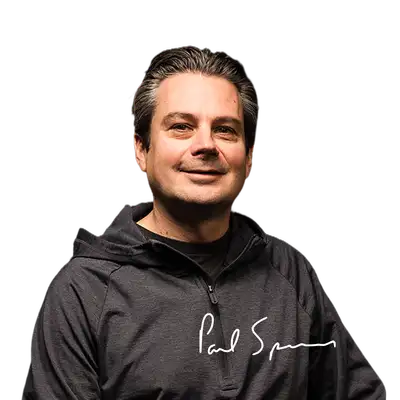
From Paul Spencer of Second Nature Solutions, a conversation about the complexities and nuances of building resilient family enterprises, especially in the face of economic and political uncertainties that loom on the horizon. See more at secondnature.solutions.
Welcome to Resilience Talk hosted by
Paul Spencer of Second Nature Solutions.
Let's dive in.
Brandon Giella: Hello and welcome back
to another episode of the Resilience
Talk podcast I'm here with Paul Spencer.
As always, thanks for joining us.
Paul, I know we have been talking the
last few episodes about what we're
calling this faith series and talking
about faith and how that relates to
different aspects of our lives, including
businesses and including resilience.
And today we are gonna be
talking about good news.
And why good news is so important.
And so Paul, I want to hear from this
event that you went to tell us about
why, uh, good news is on your mind
these days, what precipitated this
idea and then why does it matter?
Who cares that we have good news?
Why are we thinking about it?
Paul Spencer: Yeah.
Um, yeah, so I have a friend of
mine, Kent, was meeting, uh, with him
basically an early morning coffee.
Get together.
Um, and, um, basically just
talking to each other about, uh,
nothing really around the, the.
Um, society in general, but
we were just talking business.
Like I was asking him how, how
things were going with his family.
We were talking about family.
Um, but I was asking him if he
knew somebody, uh, that I wanted
to connect with, and he did.
And he suggested that I go to
this event called The Good News.
And I was, um, asking him more about that.
I said, how'd you come up with that?
And he said that, you know.
We're in Cincinnati and sometimes
Cincinnati gets a bad rap, and especially
recently with some news and, um,
with things going on in the city and
the violence and that kinda stuff.
And he said, but there's lots of awesome
things that are going on in the city.
A lot of new developments and initiatives
and festivals and all kinds of things
that people are working on in the city.
So he, he said that, um, I don't know how
long it's been, it's been about a year,
maybe, maybe two years that he put it on.
And the, the point of.
Everybody gathering is for, to create a,
a platform for local people to kind of
just speak into some of the cool things
that they're up to, um, for the city.
And so I went to it and it was fun.
It was actually a lot of fun.
I didn't know what to expect and I
enjoy going to those things anyway.
'cause you get to meet all kinds
of different people and amazingly
enough you go there to some, at
least in my mind, a fairly random.
Event that Kent was putting
on in the, in the Chamber of
Commerce, which I hardly ever go.
And so I'm downtown and, and I
run into like, I don't know, four
or five people there, you know?
Right.
Of course.
And then you get to hang out with
them and then meet new people.
So it's, it's kind of, kind
of that atmosphere and then.
Uh, they had, again, local people up
on stage talking about the different
things that they have going on.
So for in Cincinnati, for, uh,
those who may not know, or most
of you probably do, uh, but we
have a big beer heritage, right?
Uh, so in the old days,
Cincinnati was a big brewery.
Uh, city.
Um, and so we have Christian Moore
line, and so there's October Fest
is a big thing in Cincinnati.
So there were lots of
things going on with that.
And then I learned that every state is,
um, has a committee for the 250 year.
Anniversary of the United States and
every state committee is, uh, tasked with
putting on something, um, or a number of
things within their own state to celebrate
their own unique part of the country.
Um, and we're on the Ohio
River and we have lots of.
Paddle boats, river boats,
um, that are on the, on the
river from historical purposes.
Like we have restaurants and
things that are out there.
Um, and so we're having, uh, an
event, uh, around river boats.
Um, and so we're gonna have
boats from all over Memphis and
New Orleans and all, all over.
And it's meant to be a historical thing.
So it's gonna talk about the history of
water, right, and transport within our
country and how it shaped the country.
And then there will be food on each
one of the boats for, depending
on what region they're from.
So anyway, these are things I never
even knew about, and they're talking
about those, those fun things.
Um.
We have a history with,
uh, George Clooney.
Um, his mom is from Kentucky.
He's from Kentucky, and uh, and
I think, I'm not from, originally
from Cincinnati, but I think his
dad was maybe a local broadcaster.
And so there's a lady that knew.
His, him and his family and I
guess was really good friends with
his mother and she's in the, um,
in the biz, I'll call it the biz.
Right.
And she was talking about these
cool things that they're doing.
They're bringing a conference here to
Cincinnati, um, around, um, uh, kind
of an actor's guild kind of thing.
I'll call it that.
I'm probably butchering that whole thing.
But she was saying it was the first
time it's gonna be in since in the us.
And not international for the last
maybe eight or 10 years, and they're
gonna host it here in Cincinnati.
She's talking about all the different
screenings, like movie screenings
and things that they'll do.
Um, so anyway, lots of those kinds
of things, which was fun to hear.
Lots of other stuff that they
did and, and it's really fast.
So it's all in a half hour bang,
bang, bang, bang, bang, bang.
And so you get done and you're like,
oh, there's so many cool things that
people are up to, so many cool things,
at least from a Cincinnati perspective
historically, that we have in our
city, and that people are celebrating.
Um, and so that got me thinking
about the, the faith series that,
that we're talking about now.
And um, obviously the good
news translates obviously.
Um.
But it also fits into, um, our
age, the age that we're, we've
been talking about, right?
The, the turbulent times,
the age of change, right?
And, um, and everything that's
going on in the world as we've
been discussing and talking about.
And it's easy to get lost
in the minutiae of that.
Um, and it's easy to
get lost in the social.
Aspects of, of that, or maybe even
the political disagreements of what
that looks like or the world order of
things and, and on and on and on and on.
Um, and we talk about, obviously as
business owners, the minutia of tariffs
and how governments change policies
here and there, and it affects us.
Those are the imposed inputs.
So it's easy to, to.
Be stuck on the ugh of all of that.
Um.
It's also just as easy to think
about what's the good news?
Like what are the things
going on in our industry?
What are the things going
on inside our business?
What are the good, what's
the good news going on within
the, uh, staff of our company?
Right?
Maybe there's new babies.
Right.
Maybe there's marriage, right?
Maybe somebody's moving to a new
place and, uh, they're graduating
from our company and moving on
to some other dream job, right?
Those are all good news opportunities that
we can, um, shift our focus a little bit.
Um, and that makes us,
it, uh, I absolutely felt.
The good news at this event, and it
was just very uplifting and fun and
not to, I mean, I'm not a doom and
gloom guy, so I wasn't going in there
thinking, oh, the world's on fire.
Right.
But it's just really fun to hear about,
just like I just described to you.
It's cool to think about all
these things that are going on
that I had no idea were going on.
Right?
Um, so anyway, it's just, it
gives you a different feeling
and, uh, and when you can.
Celebrate the good news.
Uh, then you see the world in
a different way and then you
just become more resilient.
Right.
Just kind of go back to our theme
of resiliency and uh, and when
those things do happen to us, right?
We have more resiliency.
Brandon Giella: I think it's so important
to, at times, periodically remind.
Your team, your family, whatever
it is, uh, that there are a lot of
amazing things that are happening and
that happiness or joy, which are two
different things, but, but that kind of
positive element is really important.
Not to be glib, not to be trite,
not to be dismissive of things that
are very hard, you know, and not
Paul Spencer: Yeah.
Or, yeah.
Or.
Even to put our head in the sand.
Brandon Giella: Yeah.
Right.
Exactly.
Paul Spencer: it's not to,
it's not to hide from things.
Brandon Giella: Yeah.
But, but reminding, I mean, there's
a lot of like, you know, there's a
whole body of research, happiness
research, happiness studies, you know,
there's like college courses about it.
And one of the biggest things I think
to your point is, um, I think it's like
one of the, the top, if not the top
thing that you can do to improve your,
like overall perspective is gratitude.
Gratitude journaling and saying
like, Hey, you know what?
There are actually some things that I'm
really thankful for and there are really
positive and I'm excited about, and that
can change your perspective such that
you do become more resilient because
you're able to see a broader perspective,
which is really, really important.
Paul Spencer: Yeah.
Yeah.
That's a powerful practice even,
uh, right, right before bed.
What are the, what are the three things
I'm grateful for from today, right?
Yeah.
Yeah, absolutely.
Brandon Giella: That's right.
Paul Spencer: That's another, that's
a great, good news tool, for sure.
Brandon Giella: So you were
mentioning, um, that without that
reminder you can get sucked into all
the negativity of the world, which,
uh, of which there's quite a lot.
And I was just talking to somebody
recently very close to me that was saying
basically like they're so consumed with
the news or social media, Reddit, YouTube.
It's just felt like this vortex of vortex
of like darkness or thinking that World
War III is coming or you know, whatever.
Um, but something that, that, as you
were talking, something that I was
thinking about was, um, this quote
from Teddy Roosevelt because it was
talking about it, it reminds me of
like, criticism is cheap and easy,
Paul Spencer: Mm-hmm.
Brandon Giella: so it's a popular
quote, but I wanted to read it really
quickly because I think it's, it
kind of sets the stage of like, okay.
How can we shift our perspective then
and become more resilient and be more,
you know, grateful, positive, hopeful.
And, uh, the quote is called, uh, is
referred to as the man in the arena.
And he says, it is not the critic who
counts, not the man who points out how
the strong man stumbles, or where the
doer of deeds could have done them better.
The credit belongs to the man who is
actually in the arena, whose face is
marred by dust and sweat and blood who
strives valiantly, who errs and who comes
short again and again because there is
no effort without error and shortcoming.
But who does actually
strive to do the deeds?
Who knows?
Great enthusiasms, the great devotions
who spends himself in a worthy cause, who
at the best knows in the end, the triumph
of high achievement and who at the worst,
if he fails, at least fails while daring
greatly so that his place shall never
be with those cold and ti timid souls
who neither know victory nor defeat.
Paul Spencer: Hmm mm-hmm.
Perfect.
Wrap.
Wrap it up.
That's great.
Brandon Giella: Because it's so easy
to like look at the world and like,
oh, every here everything's wrong.
You know, my business here are
all the wrong things about it, and
my family or and myself, here's
all the wrong things about it.
But that kind of like hopeful, like, okay,
let's shift our perspective a bit and
let's think what is going really well.
What can we be positive about?
It's, it can work wonders.
Paul Spencer: Yeah.
When you, and when you're the man in the
arena, um, your, your perspective shifts.
Um, like what's a good way
of kinda describing that?
If, if I am, um, if I'm
devoted, um, may even say busy.
But maybe devoted might
be a better word, right?
If I'm devoted to, um, my
business or if I'm devoted to
my family or to my wife, right?
Or if I'm devoted to Jesus and God and
the good news, um, I don't have time
to sit and look and critique, right?
Kind of going back to your quote
and critique everybody and what's
going on, and, uh, sit on scroll and.
Instagram and Facebook and X
and everything else, and Right.
The infinite scroll.
Right,
Brandon Giella: Doom
scrolling, as they call it.
Paul Spencer: yeah.
'cause it never goes away.
Um, and you can get sucked into those
things, but if you are devoted and you
are disciplined and you just, you're
just doing the things that you enjoy,
um, it doesn't mean that, uh, it's easy.
Or that it's not hard work.
I mean, that's in the quote too, right?
Uh, you're sweating, right?
Uh, you're, what, what was the quote?
The face, your face is dirty, right?
All those things are, are
part of being devoted.
Um, and the, the idea of, of everything is
easy and, uh, Pollyanna and utopian around
us is not realistic and will never happen.
Right.
Um, but I think we've, we've kind
of proven the theory over the last
couple years just by our discussions
that we are in this age of turmoil.
Right?
It's here.
And we've talked about those theories
and will they actually come true?
And I, I think, I think
the answer is yes, right?
It, we're experiencing it and um,
and it's not like it was before
and maybe it's different than it
was before and all of that, but.
Uh, I think at this point we can
expect, um, not fun things to
be occurring right around us.
Um, but when we're devoted and, uh,
like what we talked about before
and we can, we can reset ourselves,
give ourselves, um, some rest, some
peace, some prayer, 15 minutes, right?
Um, and maybe even to reflect
on the good news silently.
Um, and with others,
there's so much to that.
And, um, and I can, um, I can just picture
people listening, um, friends and family
that I know would be nodding absolutely to
everything that we're saying right here.
Um, and so all of that is just,
um, how do we do more of it?
How do we do it intentionally?
Right.
How do we dedicate and devote
ourselves to the good news?
Um, and maybe even, um, maybe
even that means that in our time
that we do more of that, um.
Then some of the other things that
we enjoy doing or maybe more of that
than just spending time at work,
heads down, doing this and that.
Right?
And we're devoted spiritually, right?
We're devoted with others socially.
Um, we're devoted, um, in
again, just seeing the positive
things going on in our world.
And when we see those
things, we get to join.
And be positive influences.
And we get to create.
And God gives us awesome
things to download.
And, uh, when we're in that mode
and we're in that space and we're
engaging and thinking about positive
things, um, who knows what kind
of ideas we get that now we're.
Adding now where I'm, I'm standing
on that platform, right at the good
news event saying, this is what
I'm up to, and this is what, right.
Those, those things start to snowball
and, um, it's all part of life, right?
That's what, that's what we all
aspire for purpose in life, right?
Brandon Giella: I think it's essential.
I think you can't do anything without,
uh, I mean, we are like purposeful beings.
We have to have some kind of purpose about
anything that we do, you know, whatever.
Even if it's, um.
To not have a purpose in this moment, I'm
resting, you know, that is my purpose.
Paul Spencer: Yeah.
Brandon Giella: But I think before we
get into, you know, some of the more like
practical, like how do we apply this?
There's something that
this quote touches on.
Uh, in the very end of it, it says, so
that his place, the man in the arena,
shall never be with those cold and timid
souls who neither know victory nor defeat.
Paul Spencer: Hmm.
Brandon Giella: And I'm curious
for you how, because you brought up
some, some virtues in the past and,
and how the virtuous life even got
me reading The Art of Living by Ed
Sri talks all about the virtues.
Highly recommend, please read it,
um, is, uh, courage because I think
to be a devoted person to have this
purpose, fix it on something and do
it day in and day out, even if it's
to be a good spouse or a good parent,
or a good boss or a good employee, or.
You know, even in, in some mundane,
everyday ways, it takes a lot of
courage to get up and just do it
again and again and again and again.
And I'm curious how you relate courage
to, to having that kind of devotion
or that kind of focus like that.
Paul Spencer: Um, yeah.
So, uh, the worldly things pull us, um,
away from some of the devotion and I, uh,
not necessarily doesn't necessarily mean a
spiritual devotion, but it's just the, the
devotion to do things, um, that are right.
Brandon Giella: Yeah.
Paul Spencer: Right.
So it's easy to.
Um, defer that because I've got a
important client meeting or I've
got a important business meeting,
or, um, maybe I defer something in
my personal life because work right
is, is pulling me in this direction.
And so it does take courage to be
able to draw a line and say, you
know, work will be here tomorrow.
And.
I'm pretty certain that if I
got everything done today, that
I'd still have work tomorrow.
And if I got everything done that
I wanna get done tomorrow, that the
next day I'll still have work to do.
Right?
So work will never go away.
Um, so it takes courage for me to
be able to say, I've done what I can
do today and, uh, maybe I have a, a
process to best prioritize my work.
Right.
Um, but I can do what I've done.
What I can do Today, I am
sharing in the good news of I've
accomplished some good things today.
There's more on my plate
that will never go away.
Um, but I, that's good
enough for, for today.
And I can leave that for
tomorrow or some other day.
But in the end, I'm gonna
have a little courage, right?
To tell my coworker or maybe
my, uh, my executive peer.
It says, Hey, um, let's all, uh,
take the, the rest of the day off.
Well, it's 3 51, right?
That's what time it is right now, right?
And let's go, uh, let's go share
the good news, whatever that is.
Right?
It could be with, uh, each, by
ourselves or with each other, right?
Um, and that, so I was pulling
up, uh, some of the things that we
had talked about with the virtue.
And so, um.
Virtue.
Yes, it takes courage, but this
is the characteristics of virtue,
Brandon Giella: Hmm.
Paul Spencer: right?
Consistency.
Right?
It means that we consistently
respond virtuously, right?
And what does that look like?
It looks like with patience
and perseverance, right?
How beautiful is that?
Right?
That, uh, and I do it with ease.
And that means, and I'm reading
this right, doing what is good,
is so deeply ingrained that
virtuous deeds are automatic,
right, virtuous deeds.
And what's a virtuous deed that
means it's the right action.
Right.
So I do.
I do things consistently
with ease and with ude.
And what does ude mean?
It means it's not enough to
perform the right action, but
it must be done right away.
You may be able to do all
these things and discern that.
Yeah, this is great and this is the
good news and let's celebrate it.
I don't have time.
Let's do it next month.
Right.
Yeah.
And this other part of ude, when a
difficult choice needs to be made,
virtuous person does not endlessly delay,
but is willing to act at the right time.
And then this is the last one,
consistency, ease, aptitude, and joy.
Brandon Giella: Hmm.
Paul Spencer: A virtuous person
does not just do what is right.
They do it joyfully,
Brandon Giella: Hmm.
Paul Spencer: right?
And that, and that just by itself takes
courage to do something that maybe you
don't wanna do or that's uncomfortable,
and to say, I'm gonna do this joyfully.
Brandon Giella: I have read a lot of
ethics books and you know, self-help
books over the years, but when you
shared The Art of Living by Ed Ri,
we talked about it many moons ago.
You described I think something
like that at one point and I
was like, man, I need that.
I want that.
And he describes that in the book
that kind of, these are the habits,
if you will, the kind of character
traits of somebody who's virtuous.
And I remember the, the one about ease.
I had never heard anyone express that
this is what a virtuous person looks like.
But when he said something about
ease, uh, it made me think, and he
may even have this description, but,
um, but of like, if your spouse comes
and says, Hey, can you do the dishes?
Or can you clean this thing?
And instead of going like, ah, but
I guess as a good dutiful spouse,
I'll get up and I'll go do it.
The virtuous person says, absolutely.
I would, I would love to do that
because I want to serve you.
I wanna serve our family.
And I'm, I'm gonna get up right
now and I'm gonna go do it
not tomorrow, but right now.
And it made me think like how, how
do you develop that kind of sense
where that is automatic, you know?
And it's really tough I think, 'cause
it's not just in the little things
like that, but in the big things like
you're saying like, I need to have
a difficult conversation right now.
How do I do that quickly?
Yeah.
Paul Spencer: And that, um, is,
um, your, you, you truly believe
what you just said, right?
Meaning I would love.
To do that, to help you, and I'll
jump right on and do the dishes.
Right now
Brandon Giella: Because it
brings you joy, you know?
Paul Spencer: Yeah.
And you do that joyfully.
Yeah.
And it's not faking it.
It's not just saying it.
Right.
You truly believe it and it's in you.
And that can be felt by all of us.
We all, we all as people can discern
that at the, at the, at a snap.
Right.
We can, we can discern
whether that is true.
Whether you believe it
right or not, right.
Um, so yeah.
Brandon Giella: You, you brought up
this quote before we started recording
from Earl Nightingale about how, uh,
it's called The Strangest Secret.
And the strangest secret in the world
is that you become what you think about.
Paul Spencer: Mm-hmm.
Brandon Giella: And so in the last
few minutes that we have here, what
is a take away from, from someone?
How do we develop this habit of being?
Of being, you know, in a person,
the good news and doing things
virtuously with this ease and this
joy, and become the man in the arena.
What is one thing you would
recommend folks to take away?
Paul Spencer: yeah, if you could read that
last line of the, the Roosevelt quote.
Just read that again if
you still have it up.
Brandon Giella: yeah.
The last line is, uh.
Who at the best knows in the end, the
triumph of high achievement and who at
the worst, if he fails, at least fails
while daring greatly so that his place
shall never be with those cold and timid
souls who neither know victory nor defeat.
Paul Spencer: Yeah, so
I would say that it's.
Who you are around, right?
If you, if you show me your, your,
uh, your five best friends, I show,
I, I will know who you are, right?
And to me, that's what, that
reflects what that quote is, right?
If I am, if I'm hanging around the lost
timid souls, it's gonna be really hard
for me to be the man in the arena and to
be devoted and to, to have some of these
qualities that we're talking about, right?
Just to have the courage to
be able to speak up and say.
Whatever.
Right.
Um, or to even share the good news,
um, about what's going on in the
city or what's going on in our lives
or at the, at um, at our children's
school or in our community, because
those are the people who are going
to poke holes in everything, right?
Yeah.
But what about this?
Right.
And they just have, again,
that quote's perfect.
'cause it's the criticism,
Brandon Giella: Hmm.
Paul Spencer: at the very, at the
very beginning, it's the constantly
the constant critic, right?
So no matter how much good news you
share, this person or the people
that you're around, if you are around
the timid souls will not share and
rejoice in the good news with you.
They will not.
Right.
And all that does is just, uh,
give you a habit of either not
expressing the good news, you keep
it to yourself, or being convinced
that there is no good news, right?
So I would say the first thing
is just to see who you're around,
who you spend a lot of time with.
Are they people that you can
share the good news with?
And maybe you may not be sure or, um.
You think so?
Right?
If you're not sure, share the
good news and you'll find out.
Brandon Giella: Yep.
Yeah, that's right.
Paul Spencer: And if you can't feel
you can't share the good news, um, then
maybe it's a time to take some courage.
It doesn't mean you have to disown
anybody, but maybe you, um, uh,
can improve your social network,
Brandon Giella: Hmm.
Paul Spencer: your social capital.
Brandon Giella: You'll find
those people that are toxically
negative pretty quickly.
Once you start trying to be positive,
it'll, it'll become evident.
But I would throw in that category
too, of who you know is also like
what you're reading, what you
Paul Spencer: Yeah.
In the social
Brandon Giella: Yeah, exactly.
Paul Spencer: Everything.
Not, yeah, social media, news.
Everything that you're
consuming is, is your friend.
Right.
The one that you're hanging out with.
Yeah.
And if you don't feel like you're,
that's not you, and you have great,
uh, relationships and you're not, uh,
you have a, um, maybe a good discipline
around what you consume and how
often, uh, then share the good news.
What's, what's keeping you from doing
that and what's keeping you from growing?
Um, uh, the people you
share the good news with?
Yeah.
Brandon Giella: That's right.
That's right.
Well, Paul, thank you for
bringing that to our attention.
You are one of those people that
creates that kind of positivity and
that hope and that encouragement, which
then leads of course to resilience.
And so I would love listeners to,
uh, please go to Second Nature
Solutions and find our newsletter.
Find Paul on LinkedIn, share
some good news, reply back to the
newsletter and share some good news.
We'd love to talk more about that kind
of thing on the show, and we'd love to
hear what's going good in your world.
So Paul, thank you and
we'll see you next time.
Paul Spencer: Awesome.
Thanks Brandon.