Subscribe
Share
Share
Embed
Welcome to The Boardroom Path, the essential podcast for aspiring and newly appointed Non-Executive Directors navigating the journey from executive leadership to the boardroom. Hosted by Ralph Grayson, partner at Sainty Hird & Partners, each episode offers insightful conversations with industry leaders, seasoned board directors, and governance experts. Our guests share practical strategies, valuable perspectives, and actionable advice on how to effectively transition into board roles, maximise your impact, and build a rewarding NED career.
[00:00:03] Ralph Grayson: Welcome to The Boardroom Path by Sainty Hird & Partners. I'm your host, Ralph Grayson, a partner in the board practice. In this series, we'll offer practical steps and useful perspectives for aspiring and newly appointed NEDs. Throughout its 30 year history, Sainty Hird has recruited senior board members across the City, Industry, the Public Sector and NGOs.
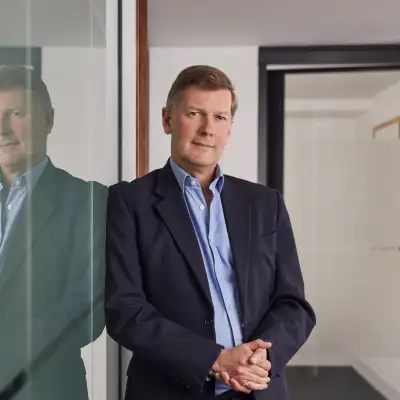
[00:00:28] We're now also evaluating those boards, as well as coaching and mentoring those seeking to transition from an executive career into the boardroom. So we'll be speaking to some leading figures in the board advisory and NED world. Specifically, we'll seek their counsel about how and where to spend time and energy to make an effective transition into the boardroom. The goal is to equip recent and aspiring NEDs with tips, tactics and strategies to be most effective and build a successful career as a board director. In the process, we aim to help you to think more about who you are, how you operate and how you can make this work in the boardroom. Today we're on the 18th floor of 22 Bishopsgate, and my guest is James Beasley, Head of Board Advisory at NASDAQ Governance Solutions, where he works with chairs, CEOs, and non-executive directors across the UK, Europe, and globally on board effectiveness, composition, succession, and governance transformation.
[00:01:35] James leads the Board Advisory Group across EMEA and India for NASDAQ, specialising in board evaluations and related governance advisory support to some of the world's most exciting and dynamic companies. He also serves as a member of the Insights Council for NASDAQ's Centre for Board Excellence, shaping its strategy, contributing insights, and working with other council members to identify and address important board governance matters.
[00:02:04] James holds an MSc in Global Governance and Ethics from University College London, having majored in Global Business Regulation and International Political Economy. He's also an alumnus of the Sustainability Leadership Programme at Imperial College Business School. James is a regular contributor to governance thought leadership publications and to industry events and has been published by the Harvard Law School Forum on Corporate Governance and the Frankfurter Allgemeine Zeitung amongst other leading publications.
[00:02:37] He's a member of the Society for Corporate Governance. James sits at the intersection of practise and insight. He regularly advises boards in complex, regulated, and fast changing environments, and he's also closely involved in NASDAQ's thought leadership, including the Global Governance Pulse, which captures what boards around the world are really prioritising right now.
[00:03:00] Today we're going to explore what he's seeing in boardrooms right now and what genuinely differentiates the best boards and board members from the rest. James, welcome.
[00:03:10] James Beasley: Thank you.
[00:03:11] Ralph Grayson: For listeners who don't know you or really understand the role and purpose of NASDAQ Governance Solutions, perhaps you'd like to give us a bit of background, to that, and what really does Board Advisory do day to day?
[00:03:26] James Beasley: As you mentioned, my role at NASDAQ is to lead what we call board advisory or compliance and board advisory, as we sometimes call it in EMEA and in India. Practically speaking, that means I spend a lot of my time engaging with boards about their performance. So whether that's through board evaluations, board performance reviews, however you want to term them,as a moment in time thing or whether that's through ongoing engagement with directors and with boards as a whole, supporting them to understandwhere their priorities might be for the coming year, thinking about their performance and essentially reflecting on how they continuously improve. Aside from board evaluations, we also have lots of conversations and support organisations through solutions and services in the areas of succession planning,director onboarding and engagement, for example.
[00:04:16] Ralph Grayson: There's a lot to get into there. Let's just step back and start with maybe your own path to the boardroom and path to NASDAQ. What was the key transition, if there was one in your career, that took you into this sort of board effectiveness work and indeed into NASDAQ?
[00:04:32] James Beasley: I think I've always been a bit of a governance nerd. I actually undertook a master's degree, as you mentioned, in global governance and ethics. Many of my classmates on that course actually went into public policy.
[00:04:45] But for me, I think particularly given the timing, which was round about the time of the Global Financial Crisis,for me the corporate governance world was something that I felt actuallywould have more of an impact on the world and on my life. And so I was very interested in going into the corporate governance space.
[00:05:05] I spent most of my career so far at Deloitte. At Deloitte I was lucky enough to work with many interesting organisations, particularly in the financial services world, which was always my focus. Financial services was particularly important because that's really where we saw the stick being wielded around good governance. If you're looking to change the way organisations act, thena regulator who's able to affect change, that's a positive thing, and so the regulators were able to do so and they needed, you know, organisations needed support from different organisations and individuals in order to enact that change themselves. You know, we found ourselves spending a lot of time in the banking and capital market space, first of all, because that is where regulators went first and thenwe saw kind of a trickle through, through insurance and asset management and sawpractises gradually evolve and disseminate across different parts of financial services and then increasingly outside of that space.
[00:06:07] So what was interesting to me, with regards to NASDAQ particularly, was the breadth of organisations that NASDAQ impacts and wants to partner with. So not purely in the financial services space, but on the one hand some of the largest and most complex organisations in the world who may or may not be listed on the exchange, through to privately owned organisations, subsidiaries of complex groups,startup organisations, private equity, venture capital backed organisations, and organisations in the third sector as well. So we are able to take, and I'm able to take, a lot of the learnings from the past 15 plus years, if you like, of working in the financial services world and practically apply them, in a pragmatic and a proportionate way, to organisations of all shapes and sizes. So we can further the impact of good governance.
[00:07:04] Ralph Grayson: I always find it fascinating to talk to board advisors and or board members about how the role of governance and the role of the board is shaped by context, i.e. simplistically, being on the board of a FTSE is very different from being on a series A startup and scale up. How do you think from your experience about how boards are contextual, both in terms of what is the mission and purposes of that board, but then also what type of boards should attract what sort of candidates to the board?
[00:07:42] James Beasley: As a principle, I think it's very important thatgovernance is pragmatic. That there's not one size fits all, that it isn't about gold plating a solution for organisations regardless of size, nature, complexity, wherever they operate et cetera.
[00:07:59] So, I think a pragmatic approach to governance is an important starting point and also when we think about boards in terms oftheir composition, the skills and knowledge and expertise that they require, tailoring to the individual organisation is critical. When we're undertaking board evaluations or when we're playing back to boards, often, particularly in certain regions of the world,the directors or the chair specifically might say, "Well, how do we compare on our skills, knowledge, and expertise to our peers or to other organisations in our country or in our region?" And our response to that is always, "That's not really a relevant question to be asking." The most important thing when you're thinking about the skills, knowledge, and expertise that you need around the table, is what do we need based on our strategy, our business model, our vision, our culture, and that might evolve year on year? That might change over time as you go through different stages of implementing strategy, for example.
[00:08:58] So the starting point is always that organisation, when it comes to governance, when it comes to who's sitting around the board table. Putting aside, of course, any considerations that you might have around actual obligations from regulatory authorities or otherwise, the organisation needs to think about its own needs first, and then you can benchmark other things as a point of reference.
[00:09:18] Ralph Grayson: Are we moving forward in that respect, do you think? So what I mean by that is obviously, changes then aborted changes to the FRC particularly and the approach to risk and ARCA and those sort of issues in the UK. But board behaviour is also cultural. How are different regulators around the world assessing the right framework for them? And to what extent do you think different companies are adapting their culture depending where they may be in the world and whatever that framework is to being optimally positioned and adding value?
[00:09:51] James Beasley: That's an interesting question. I think there's a regulatory element there in the sense of how organisations adapt to regulation and then there's the cultural piece that you mentioned, which is how organisations really adapt to their own needs in terms of their business model, their international presence.
[00:10:08] On the regulatory front, I would say,there are some jurisdictions which have historically led around what good governance looks like. Although that's always continually evolving, but, we talk about the FRC, think about the UK corporate governance code, and there are others where it's perhaps less defined or historically it's been less defined.
[00:10:30] But I think where we are seeing,regulatorydevelopments in different jurisdictions, at least when I think about Europe, Middle East and Africa,the regulators there or the rulemaking bodies are picking up on what is working in other jurisdictions and adopting that for their own requirements and their own needs and the needs ofthe organisations that they regulate and the stakeholders that they have overall.
[00:10:54] Of course there are very specific local regulations and every provision is unique, but a lot of the themes that we are seeing around what good governance is or what a good board looks likeare pretty consistent. So even where a regulator is more specific around particular expectations we are seeingthe principles of good governance being, I wouldn't say universal, but at least practically understood across different jurisdictions and different boards.
[00:11:27] So, for an individual organisation that's operating in different jurisdictions, they have to comply with the local requirements. But the principles of good governance are usually relatively constant across those. The type of conversations that we are having with organisations around what they should be doing, what they feel they ought to be doing at the board level and in through governance in the organisation, there's a lot of common understanding there.
[00:11:51] That's different though to the culture piece around what should an organisation be doing for its own right, or for its own benefit. Ideally, that's not led purely by regulation. Regulation can play a great part in establishing good standards or expectations around behaviours, but an organisation should also be doing that themselves and you know what a good culture is for one organisation is not necessarily a good culture for even their peer. So it's important that the board and the leadership of an organisation take a leading role in defining what their expectations are, what their values are, what a good behaviour is in that organisation, what a bad behaviour is, and what they do to encourage or enforce either way.
[00:12:37] Ralph Grayson: So that pattern recognition of an individual board member or the board as a collective, to know when to step in or step out and the behaviour that goes around that is equally important as to whether it's a US framework, whether the CEO can be the chair or it's a supervisory board structure in Germany.
[00:12:56] So those regulatory structures don't define good versus bad, they just provide the context around in which the individuals and the collective operate?
[00:13:06] James Beasley: Yeah, they provide the very important baseline because you're either compliant or you're not, depending on how hard the regulation is. But the principles of what good governance is and what a good board is broadly apply. Funnily enough some colleaguesof mine on the Centre for Board Excellence Insights Council, we wrote a paper together as two non-executive directors, both transatlantic directors and myself. We wrote a paper last year where we started off with a principle around, okay, well how do we help transatlantic directors to understand the differences between, say, a European board and an American board? And of course there are some very big practical differences and some differences in terms of what you can do or you should do or otherwise.
[00:13:50] But the conclusion we rapidly came to when we were testing,in the different areas, different indicators of board effectiveness, is that of course there's a lot of commonality. You know, a good board is a good board essentially, no matter where you are and a diligent board is a diligent board regardless and then that flows through the organisation. So a good effective culture for an organisation, is good for that organisation if you're applying good principles or the right principles to it. It doesn't mean that that would be the right culture or an effective culture for another organisation.
[00:14:24] Ralph Grayson: Let's turn that question on a slightly different angle then. So what from your experience, which is obviously deep and wide, what are the biggest conceptions, misconceptions, that executives have about what boards actually do well as opposed to badly or indeed what new board members might think their role is and how that reflects what they do well and what they do badly?
[00:14:47] James Beasley: There are undeniably, I think, misconceptions,and perhaps that comes from, different starting expectations in terms of what a board is there to do. And from, say, a management's point of view, the board might be there as a useful tool to provide a bit of guidance to give approvals when it needs to approve, and to make sure that everything's transparent and seemingly robust.
[00:15:10] From a director's point of view, they might be seeing a good board as one that is adding value in everything that it's doing whilst also making sure it's staying in its swim lane and not diving too deep intothe governance and the operations of an organisation. So I think many executives perhaps assume, at least we see this in different practises in different markets, that a good board is one that approves strategy and approves other things that it's meant to approve and acts as a sounding board. We often hear that term and a good board does act as a sounding board. But I think what management often underestimates is how much value a good board can create through independent challenge, through risk and controls, oversights, real diligent risk and controls oversight and support with strategic calibration, without going into detailed operational guidance or getting too in the weeds.
[00:16:12] So, executives might think, "Well, if I present really well to this board, then the board understands the business and that's enough. Because I've presented, I've spoken, I've given them all of the information that they might need." But if the board hasn't had time to digest that information, if the board hasn't engaged in discussion around that and actually pushed and pulled a bit around what's being presented, then they don't necessarily understand. You know, a lot of boards, they spend a lot of time on presentation and not enough on discussion. Management might be quite happy with that, but the non-execs aren't adding all of the value that they could do.
[00:16:49] You know, an executive might think,if the board is asking questions, then they're second guessing me. But of course an engaged board should be asking those questions. It's not second guessing if it's delivered in the right way and if it's meant in the right way. There are perhaps directors and boards who second guess. But that's another question entirely. But the act of questioning, the act of probing and challenging, we often talk about the idea of holding management's feet to the fire, that's a positive thing. That's the board doing its role, being diligent and ultimately having a positive impact in terms of supporting, redirection of management thinking or just being able to reinforce the validity of management's thinking in different areas. And they might even think if the board isn't intervening, then the board must be happy. Which of course is not necessarily the case if they're not getting the opportunity or the culture isn't there, where the board feels it's comfortable to do so or the relationships with management aren't there to enable it.
[00:17:50] So you can have a misinterpretation. where one side might think this is perfectly comfortable and functioning and the other side might be screaming into the pillow, saying not really comfortable with the opportunity that I get to perform my role. So, high performing boards can dramatically increase decision quality by forcing a level of quality, a level of rigour, level of critical thinking that would rarely happen internally. That management wouldn't necessarily do left to their own rights because that's human nature.
[00:18:24] Ralph Grayson: Has that philosophy changed over the years, do you think? We talk about board being their "insight, foresight, oversight" and then everybody thinks about the skills, experience, knowledge they bring to the table. But that philosophy of why am I here? What's my purpose? Has that evolved over the years you've been involved in this?
[00:18:43] Is that how to think, how to act?
[00:18:46] James Beasley: The role of the board hasn't changed and the role of management hasn't changed in an organisation. There's still a very clear delineation between an oversight role and an operational role. You could argue that the nose in fingers out kind of concept. You could argue it's moved on from there.
[00:19:07] That's interesting. Justextrapolate that a bit further?
[00:19:09] So, that's not to suggest that the board should therefore be involved in the detail, in the nitty gritty, and getting in the way of management. But I guess what I mean by that is thatthe concept of the board meeting once a quarter, getting a bit of an update on strategy and a couple of other things, a couple of strategic initiatives, that's not where we are today.
[00:19:35] The reason for that is because the world that we're operating in today is vastly more complex, and more unpredictable, sadly, as we've particularly found, I think since the beginning of this year, it seems, which everything's moving rather, rather quickly. It's an increasingly complex backdrop with a board role that is now far broader, I think we would argue. So thinking about things such as responsibility for implementing regulatory developments,or keeping pace with the regulatory direction of travel. Geopolitical and the macro risk environment being just one of the very complex and not very easily quantifiable risks that are typically the top risks of boards today.
[00:20:21] If you think about things like alongside geopolitical risks, for example, things like cyber, these are not things you can just put an appetite around in the historical sense and quantify whether you are in or out of appetite. It's far more nuanced than that. Responsibility for overseeing a very, very quickly changing technology environment as well as digital transformation and cyber risk and cybersecurity playing a much more important role in stakeholder engagement and representing the stakeholder voice in the boardroom. So the voice of customers, the voice of employees, needing to be far more prominent in the boardroom where boards actually understand the impact of the decisions they're making, or at least try to understand that while making the decisions. And sustainability, for example, which of course, the landscape's changed a little bit over recent months, but it's still something that there are regulatory frameworks there to abide by, even if they're being watered down, and very clear obligations from different stakeholder groups like activist investors, let alone governments and societies as a whole.
[00:21:27] So, I think the expectations placed on boards today are so much broader and deeper. The focus on accountability is so much greater. The scrutiny on the role of the board and the role that individual directors play is far greater and so in that context dealing with these complex topics in a fast changing environment as many are, in the traditional sense, starts to look a little bit redundant.
[00:21:57] But what I would underpin is that's not suggesting in any way shape or form that the role of the board has necessarily changed. But the way perhaps that it undertakes its role and the level of comfort that's needed, where it might need to dive a little bit deeper or get a bit closer to particular topics, I think that has evolved.
[00:22:16] Ralph Grayson: Interesting. So this is the pattern recognition and insights that I think you pull together annually in the Global Governance Pulse. Do you want to just talk a little bit more about that as a product and what are the most important signals you think boards should take from that?
[00:22:36] James Beasley: Yeah, very happy to. So the Governance Pulse is, as you rightly said, is an initiative we launched. We're just coming up to the third iteration of it in terms of the reporting, we've completed the survey itself and it's something actually, you know, as an initiative in terms of having pulse surveys of varying kinds it's something that we do elsewhere in NASDAQ,to different stakeholders, different groups such as in the IR community, for example. But we felt thatthere was a real importance to doing something like this in the governance space. And when we say governance in this context, we're really talking about board members, governance leaders and, to a degree as well,business leaders and we differentiate, we look at our results based on, the different categories of individual, the different roles that they play when responding to the questionnaire and when we are critiquing the data.
[00:23:24] It's always a curious balance that we have to draw because we don't want to make it too onerous or too down into the quantum level that we don't necessarily get the quality of feedback that we want. But what we want to do is at least have a high level view of what is mattering most to boards as we are seeing them or in the wider kind of governance community and what's changing year on year.
[00:23:47] So as you mentioned, yeah, we're just going into the, from a publication point of view, the third iteration and we amended slightly this year to continue to adapt to what we've learned before and to the world around us and we're just putting together that data now.
[00:24:03] Ralph Grayson: Without putting you on the spot too much. any interesting surprisings?
[00:24:08] James Beasley: Any interesting surprises? Well, one interest, I'm biassed, but when I looked at the information or the feedback that we're getting around how organisations or how boardsreview their own performance, which is obviously an area of interest, particularly, for me, what is quite interesting is that there is still a large majority of firms internationally, this is, who are reliant on essentially an internal process that doesn't necessarily mean that it's being adapted year on year. So a questionnaire based assessment that's perhaps standardised year on year. Now part of that, and we need to delve deeper into the results, part of that might be because organisations are simply not required to do it. We naturally will see a higher proportion you know, in countries or in markets where there is a requirement for a periodic external evaluation or equivalent. But I think it's still quite interesting that we are still seeing a vast majority of organisations doing this in quite a simple way and perhaps leaving some value on the table.
[00:25:07] On that I get really mixed messages in corridor conversations about the utility of off the shelf tech-based box ticking assessments as opposed to in-depth granular external appraisals. Any thoughts on that? And do you want to maybe just touch on what NASDAQ do in that sense as well?
[00:25:30] Ralph Grayson: What's your advice to clients? How do you execute a good appraisal?
[00:25:34] James Beasley: In terms of, core principles around, board evaluations, board effectiveness reviews, board performance reviews, whatever you want to call them, different terminology exists in different parts of the world, of course.
[00:25:46] Number one, from my point of view is, and from NASDAQ's point of view overall is that this is something that should be tailored to the organisation and to the board. So a standardised approach doesn't quite work if you're keeping it the same year on year. So there's the keeping it the same year on year and then there's keeping it the same no matter what the organisation is or does or where they operate.
[00:26:13] So from the year on year point of view, if the organisation asks just the same questions every year, by definition it's going to be relatively high level, isn't it? The world is changing, the organisation itself is changing, the people around that table are changing. So why would you ask exactly the same questions every year? Organisations evolve. They might make divestments, acquisitions, they might pull out of one market, invest in another,they might change their CEO and you want to reflect on those things and understand what is the impact there and if the world has changed around us, what impact is that having on us? If you're asking the same questions, you can't focus on those things and you can't be, pragmatic aboutthe insights that you're looking to gain.
[00:27:01] So, for me, that doesn't really sit well. Now, the benefit to that, that some would argue, is that you can very easily benchmark over time and I agree with that. There's definitely apart to play of kind of understanding performance over time. But you can do that also while adapting year on year. You can keep the core framework, you can keep a lot of the same questions that you're asking yourself, but you need to be able to adapt, at least to tailor, somewhat.
[00:27:28] In terms of for different organisations, well, you know, if the organisation itself is different year on year, then it's going to be, more or less, different every single year from its peers, from the industry, from other organisations that operate in the market. It's going to have different obligations on it in the sense of regulated firms versus unregulated firms in a really simple, in a really simple sense, for example. And so, again, asking the exact same questions, that doesn't really sit well with me either because they've got different obligations, they've got different needs, they've got different strategies, they've got different business models, got different geographical presence. So I, and NASDAQ, you know, agree that we are firm believers in tailoring.
[00:28:12] Now what I would also say though is that the other principle I would apply is that it needs to be a pragmatic approach. So, very rarely would it, apart from maybe in particular points in time over say a number of years, very rarely is it necessarily the right thing to do to just deep dive every year, for example. They can be quite onerous tasks, they can be quite intrusive, and the value that you get out of a deep dive review,could be limiting one year from the next and so in line with that principle of, you should tailor the evaluation to the organisation should also be tailored to the needs of the organisation in that time.
[00:28:51] Ralph Grayson: There's two parts to that it seems to me. There's board composition and then there's board succession and refreshing. So board composition, whether it's a regular and how contextual it is, how do you think about that skills matrix? How is that incorporated into the appraisal?
[00:29:11] James Beasley: You can get some self and even some self and peer feedback, for example, from board members around how they feel, they themselves, the board, each other are covering off the different skills, knowledge, expertise, requirements for the board. But what goes down on that list of things that they might be measuring themselves against is, again, something that's very particular to the organisation and it needs to start with strategy. If the organisation is looking at its strategic needs, how it's likely to evolve over the next, whatever the period is, three, five years or so, the board needs to ascertain what are the skills, knowledge, expertise, backgrounds, soft skills, or anything else that might be identifiable that will help it to effectively oversee implementation of that strategy, including the business plans that have put in place, including the business model that is there to implement the strategy.
[00:30:08] Again, going back to that point earlier on, sometimes when you hear organisations say, "okay, well how does the skills, knowledge, and expertise that we have on the board match up to our peers?" It's not really a relevant question to ask. So, it really has to be driven by what you need and what you need as a board might evolve over the next few years.
[00:30:26] So it might be that,it's something that I don't know if you had, M&A experience or IPO experience, for example, on the boards skills matrix because in the next one or two years you will be doing a lot of M&A or you are planning to IPO. If after that you don't need that skill set and you understand that because it's a very particular phase in the strategy, then you need to be able to understand how that skills matrix then evolves. So, okay, if we don't need this what else should we be bringing going forward? So then that feeds into dynamic processes around appointments and nominations where you can start to plan ahead with when person X is ready to roll off, when their term comes to an end, are we going to replace that person, like for like, or are we going to bring in a different skillset? When their term comes through an end are we going to keep going or are we going to swap out for someone different with a different skillset?
[00:31:23] Ralph Grayson: Two questions I'd like to ask there hopefully joining in the middle. The first is, the FRC have been talking about if boards were showing more leadership, they would be explaining rather than just complying, either explaining why they're not complying, why it's contextual for them not to just stick to the guidelines and particularly within that we touched there on tenure a bit. There's some US work that's come out that looked at US boards and US companies which have longer tenure, particularly of their chair, but of their boards, are outperforming those who've had shorter tenure. Now, of course, in this country we tend to have a more prescriptive regulation around duration of boards and the chair and all the rest of it.
[00:32:06] Any pattern recognition, how does that resonate with your experience?
[00:32:11] James Beasley: Yeah, I think we see that with some organisations, particularly in, certain parts of the world where you have longer tenure, or more skin in the game as well for directors, as we see in the US as well where can be remunerated in line with the performance of the organisation. Which is an interesting concept, perhaps this side of the Atlantic.
[00:32:29] It's a balance, isn't it? It's the balance between having the familiarity, the corporate memory, that consistent voice and understanding of what the organisation needs, the direction that's going in, the context to decisions that were taken versus someone being compromised, if you like, if your starting point is they're supposed to be independent, compromised from an independent standpoint or otherwise. I'll sit on the fence a little bit and say, right or wrong, I'm not going to nail my colours to the mast on one or the other. I think it is a balance that needs to be achieved and it needs to be appropriate to that particular organisation within the confines of whatever obligations they have on them.
[00:33:13] Ralph Grayson: So let's just look at a couple of the hot zones in the boardroom at the moment. The dreaded AI, geopolitics, risk tech. Where are boards overconfident? Where are they behind? Where do you think we are at the moment?
[00:33:29] James Beasley: Two different but interesting topics there. If you think geopolitics on one hand and say AI or future tech on the other. Maybe starting with the latter first, I would say just in tech in general, in the boardroom, I would say many boards are probably over confident in how they use technology or how it's being employed in the boardroom and I mean that in the context of board portals and you know, related tools that are available in the boardroom today are incredibly powerful tools. And yet, depending on where you are in the world, depending on the culture of an organisation or of a board, and the nature of an organisation,many are leaving functionality of those tools on the shelf a little bit.
[00:34:17] Part of that is AI in terms of, as AI comes into the boardroom, I think depending on who you talk to, there is either some confidence or there's quite a lot of reticence to embrace AI in the boardroom. So the board will naturally, of course, be slower to adopt AI, as it's been slower to adopt maybe some functionality in the lots of the wonderful board portals that are out there.
[00:34:39] But, there's a risk of not necessarily embracing quickly enough because the fallback position is, I'm confident with where we are. I'm comfortable with where we are and how we are using things. You know, there's a resistance to change to a degree. So I think on the tech front, that's probably always going to be the case in the board, as I said. But at the same time, it needs to be recognised that perhaps there is more that can be done. Maybe more that board secretaries can do to encourage adoption of tools and to test them and prove the use cases. But I think we'll see that coming through as it evolves over time.
[00:35:15] On the geopolitical front, I would say that touches on really a big theme of mine. I come from a risk governance background as well and always an interesting thing to talk to boards about through evaluations or not, is how they're overseeing risk. And I see the geopolitical environment as a risk, geopolitical risk as a thing in its own right, of course, which is obviously widely recognised. As I mentioned earlier on, the risk environment in general today is complex and far less easily quantifiable, shall we say, as it was in previous years and the approach to overseeing risk is having to change because of that. So it's no longer the case really that an organisation, risk committee or board, defines a risk appetite, agrees it, gets some simple dashboard reporting, which says on this measure we have appetites on this, we're out, but we're within intolerances, et cetera.
[00:36:11] You know, now we are dealing with things that aren't quantifiable, like geopolitical risk, which can change very rapidly, that can have nuanced and multifaceted impact on an organisation and boards are really struggling in many cases to kind of keep up with that and understand how they need to adapt their conversations and the information that they receive in order to really be on top of these risks and challenges and really therefore to understand the environment they're operating in.
[00:36:41] Ralph Grayson: Back to our skills matrix here. There's a natural inclination to just add another board member or two, one who knows about geopolitics, one who knows about cyber or AI or all of the above. So how do the best boards lead in your experience on that?
[00:36:59] How do they think about the proverbial T-shaped board member who has deep domain expertise in one particular area, but has that breadth to be able to contribute as part of the overall collective?
[00:37:12] James Beasley: I mean, it's funny when we look at skills matrices, particularly when you see your results coming out of board evaluations, you see the lower scoring areas or the areas of less comfort comparatively for directors where they feel, perhaps we are not really specialists in this area or otherwise. Sometimes you'll see a lower scoring area, for example, that will have one person who still thinks they're the specialist or the expert in that particular space, but collectively, they're lower scoring because everybody else is less comfortable. So when you're looking at things like that, it's important for the board to reflect on, okay, well do we solve this by adding someone else to the board or replacing someone on the board because we feel this is significant enough that we need a specialist on the table and or do you actually solve this by upskilling the board as a whole. So going through some training and development, getting an expert from outside in to talk to the board and help them to understand the topic and the developments more or do you close that by putting it back to management. Putting it back to the organisation to say that we need more insight around this alongside say, some training and development or some upskilling on our front so that wehave more to understand, more to challenge, more to critique, more to ruminate on.
[00:38:28] So it's not always the case that, you know, you look at a gap in inverted commas on a board and say, okay, well we've got the proverbial empathy chair there that needs filling. It's important to be able to say, okay, well, given what we need from a strategic point of view, what's our comfort level or what's our priority here? Do we need that person in the room? And what are the pros and cons of that? Is this something where we can just upskill and we can do some training and development, or do we need to do something else? And it's usually a combination ofa few different things I think in addressing it.
[00:39:03] What I would say is that it's not always just in the boardroom. So as I mentioned, you know, the board putting the onus to a degree back on management,is an important consideration. So that's when it's less about the skills matrix and it's more about, well, we've got a bit of a blind spot here, so we might on the one hand feel less kind of adept at overseeing this. But part of that might be we're just not seeing the right information or we don't necessarily have the comfort in the resource that's within the organisation to help us to understand this. And so then it's important to look at, okay, what is the reporting that we do receive? Is it the right kind of reporting? Are we getting the right level of insight? Are we speaking to the right person when we're getting the reporting? Are we speaking to the subject matter expert on this or are we just seeing this coming from the same kind of executive that everything trees up to?
[00:39:52] Ralph Grayson: So let's turn that on its head slightly and let's think outside the boardroom looking in. So, you or I are a candidate who's been approached or encouraged to apply for a seat on a board. What should people think about? How do they look at the board composition, the job spec and think, "yeah, this is a role that I want to take, that I can add to, and the board is going to accept me."
[00:40:21] James Beasley: Well, I mean, the starting point is always knowing your own kind of value, your skills, knowledge, expertise,and background that's going to align to it. But the starting point is, with the gap in skills that they're looking for here, or the gap in knowledge, or the gap in backgrounds, is that something that for me. But there's a rounded piece around going onto the board, isn't there in terms of expectation. It's not just about pure skills, knowledge and expertise, it's about, what you're bringing to the table, understanding the role of a director, having ideally some form of experience already in the boardroom, whether that's through presenting or through some kind of internal appointment or otherwise knowledge and understanding of how things work. So the good thing is today that a lot of those who end up going onto boards, particularly from the executive side of things, as they start maybe a portfolio career or they first take on a board appointment, many are getting that exposure through their executive roles by being put on a subsidiary board within their company or something like that. Which is always positive and usually alongside that comes some form of training in a good organisation on what a good director looks like, how to wear one hat versus the other, how to take off the executive hat, understand what your role is and when you should contribute, and where you can add value.
[00:41:39] If an organisation doesn't provide that, I would say go out and do it. One thing, that my giving a shout out to my former colleagues at Deloitte. Deloitte produced many years ago was something called a Transition Lab which helps do exactly this. It helps executives within the organisation, usually when they're going onto the board, say as an executive director, for the first time, but also in many different contexts. I developed one which was for first time financial services directors or non-executive directors specifically, for example. And going through that kind of programme where you understand, okay, where do I need to build relationships? Where do I need toclose some gaps in knowledge? What are the stakeholders that I need to engage with? Those kind of things. That can be a very useful experience as well tailored to that particular appointment. So that can either be in preparation for a specific role or that could be a general rumination for the individual.
[00:42:33] The other thing I would say, that I hear a lot about being incredibly valuable is networking. But also within the network, having a mentor. So you know, someone who's going to help you to take that seat and understand, how to present yourself, how to behave, and how to be effective ultimately.
[00:42:51] There's the piece that the individual can do for themselves, which is making sure they're as prepared as they can be, having those right people around them to help them to take that step. So having say a mentor who can advise. But then onboarding delivered by the organisation itself is critically important and an area actually that a lot of boards fall over a little bit. As simple as it might seem, to do good onboarding, many don't. It's as simple as that. Good onboarding, I would say involves tailoring to the individual. So understanding, okay, what capacity are they coming on the board in? So if they're going to be a member of a particular committee or they're just sitting on the board or whatever their background might be as well, where they might be expected to be on point for on certain topics and also where is it accepted that maybe they've got a bit of a gap in their knowledge and expertise where they might need to get a bit closer to the topic at first to help them to do that and then a mixture of the rights and appropriate information. So you know a pack that shows this is the strategy, this is our business model, here's some key decisions that we've taken and some context over the last couple of years. Here's some example packs from the most recent board and committee meetings, et cetera. And then setting up conversations with the right people. So understanding who the point people are going to be or rather the important relationships for this person's going to be within the organisation.
[00:44:24] So an introduction to the CEO, to the CFO, maybe the wider C-suite, maybe individuals within a particular function that they're going to be engaging with. So if you're going onto the audit committee, getting to know the internal audit department,their key personnel, getting to know the external auditor. And then spreading that out over time. Not cramming that in over a couple of weeks. Allowing that to take place over the first few months of that individual coming on board and to allow for follow up conversations where they might be needed.
[00:44:54] Ralph Grayson: Onboarding in that respect almost becomes perpetual throughout your tenure on the board because that becomes your personal development.
[00:45:00] James Beasley: It starts to turn into that for sure. But I think an important thing as well with the onboarding is getting feedback at the right time from the individual kind of coming onto the board as well to understand how to embed lessons learned for the next person coming on, but also how to then focus in on training and development, learning and development, as they go forward. Combine those things and you get a culture of continuous feedback, continuous learning and hopefully continuous improvement.
[00:45:27] Ralph Grayson: So let's just try and pull this together in a summary or some sort of conclusion. What's the one board habit that you've seen that raises effectiveness in that respect and maybe conversely, what's the one that killed it?
[00:45:40] James Beasley: Being in danger of repeating myself, I would say a diligent self-reflection, if you like, from the board. So a culture of self-criticism, self-reflection is very important and when that then is manifested through, say, some form of performance review or otherwise self or otherwise, committing to following up.
[00:46:00] I think where a lot of organisations might go wrong, a lot of boards perhaps go wrong, isthey might go halfway, but not the whole way. So they'll reflect, but they won't necessarily challenge themselves too much. Or they'll reflect and challenge, but then they won't embed the lessons learned. So you've got to commit to the whole thing. You've got to have a culture of self-reflection and self-criticism in a positive sense, a safe space to do that. But also a commitment as well to following up and learning lessons and continual improvement. And again, comes back to the culture piece there, and it being a bit of a safe space.
[00:46:38] On the flip side, if you're talking about a kind of a habit or a characteristic that kills effectiveness, a lack of curiosity, or a lack of diligence in some areas. So, I was reflecting the other day, I was in the middle of a board evaluation as it happens. These conversations often take place outside of board evaluations, but in this case it was, and I asked this particular directorhow they viewed the culture of the organisation. And what I was getting at and what I was interested in is how does the board know what the culture of the organisation is? Has it ultimately, as we'd had with proceeding questions, is it setting out a desired culture for the organisation? And then is it able to monitor that and measure. I kind of started off in this particular sense with a question around what is the culture like? And he said, it's good, it's a good culture. And that struck me as really odd. Because that's not a value statement question. I'm not asking for it on a scale of one to 10, how good is the culture? I'm asking how would you describe the culture? My next question is going to be in how do you know? And as soon as somebody says, well, it's a good culture, I'm definitely following up with how do you know?
[00:47:54] And unsurprisingly, the feedback in that particular case was, I don't know, it's just, but from a few interactions with a few employees. I get the feeling everybody's happy. But that's not understanding the culture of the organisation. That's not understanding behaviours and conduct and that's not then understanding, or being able to extrapolate from that an understanding of, what could the impact of the way people feel and behave in this organisation impact how we deliver on our strategy and how we achieve it, and whether this organisation is around and flourishing in a few years time, or whether it's being gobbled up by someone else. So that struck me in that scenario as being, you know, an example of someone being satisfied based on an initial interaction, but not pushing, not saying, okay, but I really need to test this a bit and I need to understand this and I need to have something I can reference to stand on to be able to have confidence in this. That's not really a positive sign for a board or for the individual director specifically.
[00:48:58] Ralph Grayson: So interesting. It's the not too hot, not too cold, right? You've covered a lot of ground here around hard skills, soft skills, behaviours, rules, regulation. Last question, what does leadership by the board look and feel like to you and where have you seen it evidenced?
[00:49:18] James Beasley: To use another, just borrowed and probably tired phrase, tone from the top is incredibly important, and it works the same in the boardroom and through the organisation and they follow. So I think if the chair is setting the right tone from the top in the boardroom, then the board is going to set the right tone from the top in the organisation and the culture that they foster.
[00:49:41] The culture of the board has implications far beyond the boardroom. So I would say if we zero in on the chair being at the very top of that pyramid, I would argue the chair creates the conditions for effective governance. The chair enables the CEO to succeed if they've got an effective relationship there and they're doing their role properly and the chair steers the board towards focusing on long-term value creation. Helps everyone to lift their head up, look down the road, not get bogged down in details, not getting bogged down in the operational, not getting bogged down in the short term scenarios. But to continue to focus appropriately on the strategic, on the big picture.So a good chair is therefore a strategist, a facilitator of effective relationships anddelivery ofresponsibilities. They're a mentor to management. They're a mentor to other board members. They're a diplomat where you have to step in and get involved in potentially some tricky situations, and whether that's internally or that's externally with external stakeholders, for example.
[00:50:58] And they are ultimately, I would say, the guardian of integrity at the board. And if the board is focused on acting with due care, skill, diligence, integrity, then hopefully that should flow through then to the culture of the organisation, and particularly that the CEO is amplifying through their team.
[00:51:19] Ralph Grayson: The perfect and unattainable job spec. What a great place to finish. James, thank you. That's been so content rich, fascinating, we've run way over time for which I thank you, profusely. If people want to follow up with you and track your thoughts or get hold of a copy of the Global Governance Pulse, where do they find you? How do they connect with NASDAQ? How do they get hold of some of this content?
[00:51:44] James Beasley: Yeah, so you'll see the Board Advisory team, myself and colleagues in the US and elsewhere on the NASDAQ website. But I think first thing to do would be to go onto the NASDAQ Centre for Board Excellence and sign up to that if they want to do so. So it's a free thing. There's no cost or obligation involved in it. You can just sign up to that and say what is your role, what is your capacity that you'll be signing up to this, are you sitting on a board, are you a board secretary or something else, and then the idea there is that you're getting tailored content, access to events when we hold them, which we often do and then you're kind of really engaging with NASDAQ's thinking here and our partners. So you'll see on the Centre of Board Excellence website that we partner with various organisations from Think Tanks toExecutive Search firms, to some of our colleagues on the Big Four. A broad range of perspectives and voices where hopefully we're all adding something.
[00:52:36] Ralph Grayson: And I can reinforce that. I attended a brilliant, brilliant session in the Gerkin, I think last autumn on AI, I think it was.
[00:52:43] James Beasley: AI in the boardroom and AI as potentially the future board director. So there's materials available for that as well, if anyone wants to look that up. That's part of our Future of the Boardroom series, which is a an interesting one, and it's been fascinating to see how people react to it in a different way around the world. Different perspectives, different thoughts coming to the fore around something that ultimately is going to be incredibly disruptive and hopefully a huge opportunity.
[00:53:07] Ralph Grayson: James, thank you very, very much.
[00:53:09] James Beasley: Thank you.
[00:53:10] Ralph Grayson: I hope that you've enjoyed listening to this podcast and have found it helpful when thinking about how to approach your own path to the boardroom. If you would like to push this a little bit further, Sainty Hird runs a bespoke one to one programme designed specifically to this end. For more information, please visit our website saintyhird.com, follow us on LinkedIn, and subscribe to the Boardroom Path to receive new episodes. Thank you for listening.