Subscribe
Share
Share
Embed
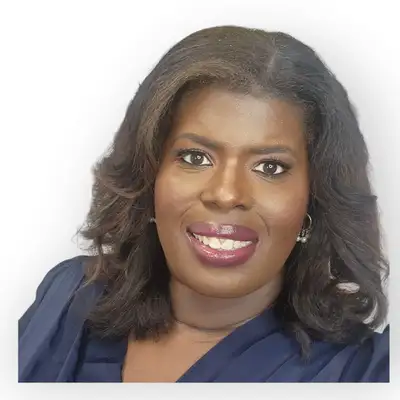
Passionate about modern feminist issues? Want to learn more about how today's political, academic, and cultural leaders strive for a future of universal equality and justice?
Join NOW in a podcast dedicated to intersectional feminist discussions in American society with leaders in entertainment, sports, politics, and science. From conversations on constitutional equality, to economic justice and reproductive rights, listeners will find new ways to learn, engage, and get empowered.
Listen for new episodes released every other Wednesday.
Bethany Brookshire [00:00:00]:
This is a content note. Today's episode will be talking about sexual violence and other violence against cis women and LGBTQIA people. Please take care when you listen. Hello, everyone, and welcome to Feminism now, the podcast from the National Organization for Women. I'm senior producer Bethany Brookshire and I'm so happy to welcome you all back for Season four. The world for women is getting more hostile all the time. The second Trump administration has already made many people feel powerless and unsafe. It has cost people their jobs. The cuts to the federal government threaten women and children in this country with the loss of critical health care, food and educational opportunities. The abrupt cutoff of US Foreign aid also threatens the safety and health of women all over the world. That's why our theme for season four will be Protecting Women in a Hostile World. For our premiere episode of this new season, we're delighted to have NOW's national president, Christian F. Nunes, speak with V, formerly Eve Ensler, activist and author of the Vagina Monologues and the founder of V-Day and 1 billion rising, an activist movement devoted to ending violence against women, girls, transgender women and the earth. We'd love to hear your thoughts on this season's theme. How are you feeling? Does the world feel more hostile to m you too? Contact us at feminismnow@now.org and now, let's hear from Christian.
Christian F. Nunes [00:01:42]:
Hello, everyone. Hello. Welcome back to Feminism Now. I'm Christian F. Nunes, the national president of the National Organization for Women. Season four, Feminism Now. Can you believe it is already here? It feels like only a few weeks have passed since we launched the show. But what we have to talk about this season is so very important. Of course, a lot of it. What we've been experiencing since 2025 has been very difficult for a lot of us. From attacks on Title 9 to a trashing of anything with the words diversity, equity, inclusion and accessibility. This year already feels like the attack on women and gender non conforming people is just heartbreaking and just out of control. So listeners, you know that we are not going to just sit back and listen to others do the work. We are going to do the work and we are going to work together to protect women. That's why our theme is Protecting Women in a Hostile world. But much of protecting women involves not just women doing that work, but for others coming together in society and helping stand up and fight for women in order to have this change. So I am so excited that we're starting off our first episode with V, formerly Eve Ensler, and you might recognize her name from the iconic play the Vagina Monologues. She's also the founder of VDay and One Billion Rising, a movement that works to end violence against women, girls, transgender women, and the earth. So, V, thank you so much for being here with us today. We're so excited to have you on feminism now.
V (formerly Eve Ensler) [00:03:24]:
I'm thrilled to be here and so good to see you and talk with you.
Christian F. Nunes [00:03:28]:
Yeah, you as well. I keep in touch with everything you're doing on Instagram, but it's always great to see your face and have a conversation today. So just to start off, for those who are not very familiar with the organization, One Billion Rising, V Day, and the Vagina Monologues tell the listeners a little bit more about your organization and why it's such an important organization.
V (formerly Eve Ensler) [00:03:51]:
Well, our movement was really born, believe it or not, it's hard to believe, almost 30 years ago, and it was really born out of my play the Vagina monologues in the 90s. And I think it really started when I started performing the show, because so many women would line up after the show to talk to me, and I thought, this is gonna be fantastic. They're gonna tell me about their wonderful sex and their fabulous orgasms and all the good things. And, in fact, I would say 90 to 95% of the women who were lining up to talk to me wanted to talk to me about being raped or being abused or being cut or being battered. And it really became overwhelming. It was like the play had, you know, excavated and compelled all these stories out of women, and they needed to share. And it became so overwhelming that I thought to myself, either I'm gonna stop doing the play or I'm gonna do something to end violence against all women and girls and to see what we could do in that regard. So, you know, all great revolutions begin in living rooms and at kitchen tables. And I called all these women together, and I said, look, I have this play. How can we use it to end violence against women and girls? And what could we do? And in 1990, I don't. The dates are, but it's like 94, 95, we put on our first event. We did the Vagina Monologues at a huge theater, and we invited every great actress from Whoopi Goldberg to Susan Sarandon to Glenn Close and Rosie Perez, to come and perform to raise money for local groups in New York who were working to end violence against women and girls. And it was amazing. It was like 2,500 people. It was packed. It just felt like the roof blew off, and we were really onto something. And that was the beginning of the movement. And from that point, it's really grown into a vast movement of survivors, artists, activists. It's a movement of everyday grassroots leaders demanding change for their communities. And, you know, I think it's amazing to think we've been doing this 30 years. And I know you have the same feeling, like we make these amazing strides. We feel like we really push forward. We feel we really changed so much, much. And then the realization that we have never dismantled patriarchy. So the pushback comes and it comes harder and it comes with more intensity. And in some ways, our rights are more in jeopardy than they were 30 years ago when we began the Vagina Monologues. That's not to say a lot hasn't happened and a lot of, you know, victories and movements forward, but because patriarchy is still the paradigm we are living under, at moments it comes back and it reasserts itself and our rights begin to get disappeared again.
Christian F. Nunes [00:06:48]:
You absolutely right, V. It's like until we address that underlying root cause of everything that contributes to misogyny and toxic masculinity, which is patriarchy and other things as well. Right?
V (formerly Eve Ensler) [00:07:03]:
Yeah.
Christian F. Nunes [00:07:03]:
Like we. We kind of stuck. And I think part of this too, to me reminds me of like this whole individual versus collective. Right. Like how in the cultures, particularly I would say Western culture, we are so focused on individualism and people are not focused on how we heal the whole community so much. It's like they're just kind of thinking about if they are affected by something or not versus, like, well, my neighbors affected. So that affects me. So I'm curious for you, like, how do you see this, this individualistic versus collective perception as part of what is contributing to violence against women and the continued role of patriarchy in our society?
V (formerly Eve Ensler) [00:07:55]:
Well, I think neoliberalism and patriarchy and, you know, and racist misogyny all contribute to this kind of divided world that we live in. Right. And make us believe that our issues are separate, that we are separate, that we're separate from the earth, that we can just go through all the ways we're separate. And I think one of the great things of being in a movement this long is that I think we discovered a long time ago that it's impossible to end violence against women and girls and transgender women and non binary people in the earth without looking at all the attending violences, whether they're racism, whether it's morbid inequality of wealth, whether it's imperialism, whether it's colonialism, whether it's, you Know, we can. The destruction of workers rights or farmers rights. I mean, all these things are part of the same story. And for me, patriarchy has always been the root, because patriarchy is a system that believes in. In hierarchy, that believes some people are more important than others and should have control, that believes in dominance, that believes in occupation, that its infinite reality or its infinite manifestation of itself is fascism, which we have moved into now in America. What we are constantly doing is we're working with the offshoots of patriarchy rather than saying, what is the system that we are living under that we need to crack in order to get out? I mean, I always dream of kind of like a Global Marshall Plan for the dismantling of patriarchy. Right. And all the ways we would do that, whether it's, how do we bring up boys, how do we teach people how to apologize, how do we understand that dominance and occupation and telling other people what they can do and how they live is not a part of the new story. Right. What is the new story we're going to write and live in? And I think neoliberalism has made us believe and has just further and further isolated us into believing that I me is so much more significant than we. Right. You know, I just finished writing a new play about mental health that I was commissioned to write by the National Mental Health Association. And one of the things that was absolutely clear is that our mental health is completely dependent on. On the kind of psychological ozone layer in which we live. There's no way you can be. Well, as an individual living in a world that is racist, that is misogynist, that is capitalist. That is. So part of it is, how do we change that underlying thing? And what are the ingredients that would go into that? And, you know, there are many, but I think we never really address that larger system. So we're constantly swept back under.
Christian F. Nunes [00:10:46]:
Yeah, you're absolutely right. It's like we're trying to constantly put, like, this band aid on a problem that is so deeply, like, rooted. And this band aid is. It's not going to help the healing that needs to happen for this world because these things are all violence. And do you see it that way? Because I see it this way. I see that poverty is violence. Like homelessness is violence. All these things are types of violence because, like you're saying, it's so rooted in things that are not meant for equality. They're not meant for community, they're not meant for care.
V (formerly Eve Ensler) [00:11:17]:
Like, I was thinking of the last month under this new administration, it's the United States of Cruelty, right?
Christian F. Nunes [00:11:25]:
Oh, yes.
V (formerly Eve Ensler) [00:11:26]:
It's like everything is about undoing, unmantling, safety, care, concern, protections, regulations, things that guarantee that people don't crash airplanes in the air or that we know when there's a bird flu so people can protect themselves or we can just go down the list. And that is the opposite of, for my mind, what a feminist or what a new story would look like. A new story would look like, how do we protect care for the majority of people? How do we feed them? How do we make sure they have wonderful places to live? How do we make sure they have health care? How do we make sure they're educated? How do we make sure that people are not living in dread, that people aren't living in fear, that people, every single moment don't feel like the ground's going to be taken out from under them. And that means that there are not these morbidly rich people, billionaires right at the top, who are getting everything, everything more and more and more and more, and then the rest of us underneath them, who are having more and more and more taken away from us. Right? And I think it's really making a choice what world, what system, what country do we want to be living in? Right? And I think we're getting a very clear picture of the one we don't want to be living in.
Christian F. Nunes [00:12:55]:
You know, you're seeing on, like, online social media people saying, well, I voted.
Christian F. Nunes [00:12:59]:
For him and he wasn't supposed to.
Christian F. Nunes [00:13:00]:
Do this to me, and, you know, I wasn't supposed to be affected, but you're taking away this. I don't have a job. And it's like, even though we're clearly seeing the problem, there's still this cognitive dissonance that's existing with people where they just won't say, we need to stop this, we need to all come together, we need to all work to protect everyone. Why do you think. I mean, I know we're talking about patriarchy, but, like, what do you think is going on with this cognitive distance that's really occurring, especially in the United States right now?
V (formerly Eve Ensler) [00:13:27]:
Well, look, I. I don't think we can underestimate the history, the story of white supremacy, that has absolutely been the underpinning, if not more than the underpinning of the story of this country. This country is a very racist place. And I think the fact that people were willing to go along and vote for a president who was openly racist, openly against migrants and immigrants, of which every single one of us, except for the indigenous, are Immigrants, Right. I mean, we're talking about a president who's a rapist, who's a felon. Right. Who was elected to office knowing that there are 40 women with cases against them and one who has a civil conviction. Right. So we elected a rapist as a president. And anytime, in my opinion, you agree to sacrifice this, this, this, this for a certain game, you sacrifice everything. Because it's either we're all on this together or we're all alone.
Christian F. Nunes [00:14:29]:
I was just having this conversation and I want, I want to hear more about what you think about this, about the fact that, you know, having this president who is a convicted predator, right. As the president leading your country, like this place of hyper vigilance that puts people who have survived abuse. Can you tell us about that a little bit more?
V (formerly Eve Ensler) [00:14:49]:
Yes. I mean, I don't think we can underestimate the power of a known self pronounced. Right. Self pronounced predator. As the leader of the most powerful country in the world, we cannot underestimate what that is doing to the psyche of both men who have now been given permission and license to go for it. I mean, you saw that call a few months ago where 70,000 men were on telegram all exchanging methods of drugging and sexually assaulting women. And then you see cases like Giselle Pellico in France where the husband invites 50 men to come and rape her over a period of time and films it and you see the impact and the fallout of this everywhere. Right. You know, I really felt this in my early days when I first went to the Congo many, many years ago. And I saw and I experienced and I heard the stories of women who were being raped and gang raped and the atrocities that I heard that were going on to their bodies were so beyond anything I had ever heard. And I remember saying, if we don't stop this here, if we don't call this out, if we don't say this is unacceptable, this will begin to spread everywhere. Well, it's kind of what I feel about having a predator as a president. You're basically saying, look at his whole cabinet. It's rapists, it's batterers, it's pedophiles, it's. And they've all been passed and they've all been sanctioned by the Senate, by the government. Now they're here, right? So once that happens, then you have a world of survivors and a world of vulnerable people out there who are now living like second class citizens, knowing that their safety, their reality, their history, their stories no longer matter to the power structure or all and and you can only imagine what will start beginning to happen to you living in this new reality, you know?
Christian F. Nunes [00:16:58]:
Yeah, I. It's just so important. Like it's just a re. Traumatization. And then you have the other group who are feeling very emboldened to continue to be perpetrators of abuse and have no accountability at all because they're given a pass and they're given the green light by the leader of the country. And so it feels like at the same time we're becoming even more divided. Right. And it's just, it's like, how do we move from this?
V (formerly Eve Ensler) [00:17:29]:
I think part of it is we have to build movements where we understand that our histories, our stories, class, race, colonial history, geographic location, who we are is all part of the same story. And it's not separate. Right. I'm just thinking to myself, like, how did Donald Trump manage to pass through all the guardrails as a predator to get to this position of power? And the media was a large part of it. Right. His fellow Republicans were a large part of it. I think it's shown us how so many men, because that's the majority of people who are in the Senate and Congress, how so many men really haven't changed. Right. Really haven't. Really haven't understood what violence is, that it's the methodology that sustains patriarchy, that actually they like that, that violence is in that place because they want to keep their power, they don't want to give up their power, they don't want to live in an equal world of non dominance and non aggression. And I think what we have to all be as much bolder, much less apologetic, much clearer about the world. We want that we don't accept perpetrators as our leaders. And we have to call that out and make that a big deal. But it's often very difficult when you're living in a world in the society where the media is constantly giving this person more and more attention without calling those things out.
Christian F. Nunes [00:19:10]:
Yeah, yeah. We had this conversation because so many times we try to placate our aggressors, placate our oppressors. And then. And because they're constantly driving fear, they're constantly bullying, they're intimidating and threatening. And that's what oppressors do. I say pressers, oppressor. But yet we continue like in this world, like remaining silent about things that we cannot be silent about. I'm gonna go to break. I'll be right back.Friends, it's Black History Month. And black history is not just something we study. It is Something that we live, whether we are black ourselves or have black people in our lives. It is history we are writing every single day and is something we must fight for. The origins of Black History Month are in the writings and life of the father of black history, Carter G. Woodson. He knew that people needed to know their past to participate in our current world. He founded the association for the Study of African American Life and History. Woodson and his association started celebrating a week of Black history in February. Black History Month was finally celebrated for the first time in 1970. And every year now honors Carter G. Woodson and Black History Month as part of its commitment to racial justice. The theme of Black history month for 2025 is African Americans in labor. Marking the hundred year anniversary of the first black union to gain national recognition for your action. Now take the time to learn about the origins of Black History Month, where it came from and why we need to understand our history now more than ever. And now back to our show. We're back, V. And you mentioned something really important. You said that you feel that a lot of this people just, you know, especially men, haven't really changed as much as we thought they would have changed, and they are benefiting from their abuse. The abusive environment behavior that we're seeing kind of manifest right now. Can you tie this into why at one point we're seeing decreases in violence against women. Now we're seeing it starting to rise again. So can you tie this in for our listeners about the two things you just said about why we're seeing men benefit and enjoy this power and why we're also seeing this increase in violence against women and how it's becoming more of an epidemic?
V (formerly Eve Ensler) [00:21:56]:
I think the thing we can't forget is that we were really making huge strides. I think for me, I think naively so perhaps, I believe more people were changing, more men were changing. More people in general were open to the notion of equality, were open to the notion that women should be living safe and free lives, that trans people should be not living under fear and siege every day, that gay people should be free, that black people should be free, that brown people should be free. And I think there were a lot of people who were just raging, frankly, that their power was being taken away, that they were being forced to comply to what they call WOKE rules, which were really just rules that were bringing about safety and care and equality. Right. And that they were just waiting and biding their time till they could rage and get back and have vengeance. Right. And I think I'm a Bit shocked to see how many people were in that position. Right, Right. Until we actually dismantle patriarchal DNA inside of us and in the culture, it will always flip back to that because people will want their power back. Right. So I think the pushback now is really an indication of how far we came. Right?
Christian F. Nunes [00:23:21]:
Right.
V (formerly Eve Ensler) [00:23:21]:
It's like, we went out there, now they're going to pull us all the way back. And I think what they need to know is we're not going back.
Christian F. Nunes [00:23:27]:
Right.
V (formerly Eve Ensler) [00:23:29]:
Like, this vagina is not going back in the bottle. I am out, and I am staying out. And I know that is true for no many, many women and many people who have worked our entire lives for our liberation. Right. And I will fight for everybody's liberation, everybody's liberation, because that is the way of the future. And I think part of it is like, how do we build the muscle? How do we build the strength? How do we build the commitment to each other to fight for each other's issues? And that we understand that we are not going to let anybody separate us, anyone divide us. No, we're all in this together, and nobody gets left out. And I think part of that is getting out of this notion that it's me, me, me, me, me, that what we really want to do is build movements not of allyship but of solidarity, which means, like, I am in this with you, for you, because of you, as you. Right. I'm not doing this as a favor to you. I'm not doing this coming from a hierarchical position where I'm saving you. I am in this because I know that my solidarity with you saves us all. And that's such a different place to be coming from. Because so much I think of the hierarchical reality that we get caught in sometimes keeps somebody up and somebody down as opposed to understanding. No, no, no. We are all in the same story, the same circle, the same life.
Christian F. Nunes [00:25:04]:
Oh, my goodness, V, you just hit it on the head today. Because what you mentioned is importance of intersectionality, the importance of solidarity, the importance of empathy, the importance of putting yourself in other person's shoes and understanding that we are. We are all interconnected. And it reminds me of my favorite quote. I always quote this all the time. And Audre Lorde, you know, I am not free if my sister's not free. Even for shackles are very different from my own. And I. And I. And I. This feels like so much what we have to come to in. In this world is. Is to stop working in these siloed movements and start seeing this as one intersectional movement. So tell us a little bit now about how V Day has been successful, successful in doing this.
V (formerly Eve Ensler) [00:25:47]:
I'm so proud of our movement. We may not have dismantled patriarchy yet or ended violence, but we certainly made a mark. You know, we shifted the dialogue. You can say vagina everywhere. You couldn't say it when we began. We disrupted the normal. We bought violence against women to the center of the discussion. We've opened safe houses and city of joy. We've busted taboos. We supported all kinds of women in having their voices and moving into their bodies. And we built a global network of gorgeous solidarity, inspiring tens of thousands of college students to become activists, funded artists, frontline grassroots groups, lifted women in prison and those who are out. And we've been in solidarity for years with women in Afghanistan, Iran, Iraq, Palestine, Congo, Haiti, Juarez, Sudan, you know, and really, I think one of the most beautiful things is we really bridged art and activism so that we've built a movement where art, it's such a powerful force for breaking through binaries, for breaking through people being stuck in their positions and opening people's hearts and opening people's minds. We've had amazing victories and I love our movement so much. But the next step for all of us is to dismantle this paradigm that is absolutely going to either take us to our ends or be the thing we break out of. And we insist that there is another way of living on this planet together without a notion of dominance, occupation, hierarchy, colonialist mindset and, you know, and hate and hate just being the groundwork of it, Right? But love, but love, what would it mean to just love and not tell people what to do and not make people feel bad about how they are and not try to change people?
Christian F. Nunes [00:27:41]:
Wow, this is so just powerful, this conversation. Before we go, could you give the listeners some active things that they can do to become more in solidarity with this movement about protecting women, be actively and agitatedly involved?
V (formerly Eve Ensler) [00:27:57]:
Yeah, I mean, solidarity is such a beautiful thing, and part of it is educating yourself, educate yourself, learn about what's really happening to women here and around the world, because global solidarity for me is our most powerful tool. Learn what's happening in Palestine. Learn what's happening in Congo and Sudan. The other thing is you can come to onebillionrising.org and you can put on arising anywhere you are in the world, right? Because I truly believe if we're going to survive four years of this madness, and I hopefully it won't be four years. Hopefully we will have the Americans will Rise up and say, this is not what we want. We are not ushering in fascism. We are not ending democracy. I've been very excited to see all the uprisings that are starting to happen across the country and the economic boycotts. Pay attention to the boycotts because I think we have real power economically boycotting a lot of these companies that are supporting this administration, that refuse dei, that have pushed back on all these programs that we have worked for our whole lives to bring about equality and equal representation and equity, right? And I think, listen to your heart, follow where you're outraged, listen to where you're angry, listen to what's really disturbing you, and then join a group. You don't have to start a group. There are so many amazing groups doing the work now and they need support and they need energy because they've been doing it so long. They need you to come in and give them some enthusiasm and love so they can keep going. So shine your light on people who are doing this work and also know that you matter. We need love now more than we have ever needed it before. We need love, we need care, we need kindness. Because the brutal mechanisms and daily machinations of this administration, hell bent on pushing us back into some Christian, nationalist, fascist, hateful state is not what the majority of us want. I don't believe that and I don't even think the people who voted for this want that. So part of it is now can we all agree that we are going to open our hearts and really fight for a world where none of us are living in fear and none of us are living in dread.
Christian F. Nunes [00:30:21]:
Oh, thank you so much, V. Thank you for first, your amazing heart, your art, your fantastic work you're doing and your wonderful vision of just protecting women and girls and non conforming people around the world and just integrating that with peace, safety and love. Thank you so much listeners. You heard it from V firsthand, so make sure you are connected, that you are loving, that you're in solidarity, and we will see you in two weeks.
Bethany Brookshire [00:30:55]:
Thank you so much for joining us on the podcast for season four and helping us protect women in a hostile world. We'd love it if one of your actions was to share this show. Please like and subscribe as well. You can also send us your thoughts and questions at Feminism now at N O W dot O R G. Head to N O W dot O R G to read up on NOW's core issues and our approach to advancing women's equality. Together we can make a difference. Thanks for listening and we'll see you soon.