Subscribe
Share
Share
Embed
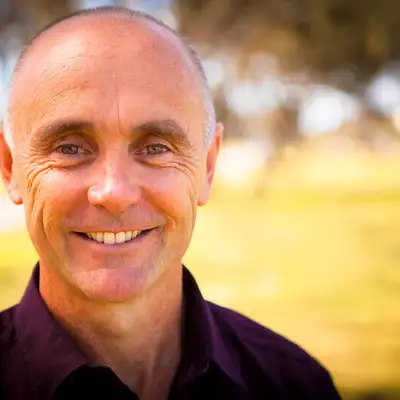

Join philosopher, educator and celebrated speaker on the cognitive sciences, Thom Knoles for inspiring insights and wisdom to support your personal evolution. Thom is an renowned expert on the relationship between quantum physics and human consciousness, and on the 5,000 year-old body of wisdom known as The Veda. For over 50 years, he has personally taught Vedic Meditation to tens of thousands of students and consulted to governments and private corporations throughout the world.
[00:45] A Remarkable Woman in India
Welcome to my podcast, The Vedic Worldview. I’m Thom Knoles.
There was a woman who lived in India from the latter part of the 19th century up till about 1982 or three, approximately. She was born with the Indian name Nirmala, but she, for most of her life, became known as the Bliss Permeated Mother, Anandamayi Ma. Anandamayi Ma.
Ananda is spelled A-N-A-N-D-A, it means saturated, self-referential, non-ecstatic, pure contentedness. That’s what ananda means. Sometimes it’s translated as bliss, but sometimes in English we think of bliss as being ecstatic. It doesn’t actually mean ecstatic, it means supreme inner contentedness.
And then mayi Ma. M-A-Y-I, and new word M-A. Sometimes they’re fused together. Anandamayi Ma, Anandamayi Ma.
So, Anandamayi Ma was a remarkable young woman who was born in East Bengal, as that part of India was known in those days, prior to the British partitioning it and turning it into East Pakistan, which then, later on, became known as Bangladesh. So, if it was in modern terms, if we went to the birthplace home of Anandamayi Ma, it would not be India anymore, it would be in Bangladesh.
She grew up there surrounded by people of more modern thinking, which there was a lot of communism going on in the era of her upbringing, and atheism was a very popular and trendy thing to be an intellectual member of. There was a tremendous amount of Islam, because at that time India had not suffered from partition, and so Muslims were not moved off to the east and the west yet, and so there were Muslims who were interwoven into Indian society, the Vedic society of India. And of course, there were a lot of people who were Sanatanese, that means people living the Vedic worldview in their lives, what the British referred to as Hindus. And so she was born into a Vedic family, and raised that way.
[03:49] Early Marriage and Recognition
In those times, partly a carryover from the colonization from Britain, it was not uncommon for a young woman to be betrothed from a very young age. All marriages were arranged, and she was betrothed to a famous guru by the name of Bholanath. So, from a very early age, she was already betrothed, and I think they were actually married when she was in her teens. He was considerably older than her, and he very quickly realized that the young woman to whom he had become wed was a very unusual character.
Anandamayi Ma had this look of serene and complete and pure contentedness on her face. Besides the fact that her consciousness was absolutely so attractive, she was also facially, completely one of the most attractive people you could ever imagine. And in fact, so much so, photographers came from all around India and indeed all around the world, simply to photograph her, because she was such a beautiful thing to look at, but the beauty was largely in her words and in her teaching.
She was rapidly considered by all of the members of Indian society in East Bengal to be an incarnation or an avatar. What avatar means, it means an incarnation of the Divine, an avatar of Mother Divine herself.
Anandamayi Ma dressed unusually. In the West, we just think of Indian women wearing saris, you know, different kinds of wraps made of silk or cotton, and so on, and a sari is a sari, but from the Eastern Indian perspective, particular kinds of saris have different meanings.
And so there are saris that you would, in which you would become wed. And very often western people will go to India and see some beautiful brocade saris in a store and buy them just to wear them, and Indians will be looking at the woman who’s dressed that way and wonder if she’s going to her own wedding, because she’s in fact dressed in a wedding dress, and the unfortunate American or British or whatever European woman doesn’t realize that she’s just put on a wedding dress.
So saris are not just saris. There are different kinds of saris that have different meanings in different contexts. There is one particular sari, which, when worn, indicates that you are a widow in mourning, and that’s the white cotton sari. And it was the white cotton sari that was the choice of Anandamayi Ma from the earliest age, even when she was married and moving around with her husband, Bholanath.
[07:18] Millions Follow Her Pilgrimages
Her husband was already, as I mentioned earlier, quite a famous guru in his own right, and yet he became her manager and became her devotee, and her devotee numbers rapidly moved from the 10s to the hundreds of 1000s, from the hundreds of 1000s to the millions. She became one of the most sought after people to be around in all of India.
And Anandamayi Ma didn’t classically reside in a house and stay in the house, and everybody came to see her. She was moving around the subcontinent of India almost constantly and went on long pilgrimages. When she would walk on foot, frequently she would just walk barefooted, and when she would stop, thousands of people would gather around her, because thousands followed her, literally followed her on foot, walking behind her.
And if they would arrive in a village, then thousands of people had to be fed by the resources of that village. Sometimes it would practically bankrupt the village. I mean, even though people made their contributions to food and whatnot, it might have used up all the resources of a village, and mayors of villages and towns would sometimes come in advance, thinking she might be coming their way, and beg her with folded hands to give them at least a few days’ notice, because any place that she went, at least hundreds, generally thousands of people were following her to hear any little trace of anything she spoke.
She had the capacity, remarkable capacity, to instantaneously speak languages that she had no training in, and so she could speak Arabic, she could speak Farsi, she could speak Hindi, of course, Bengali, which is a whole separate language of southeast India, and she had a little bit of English, not that much.
And frequently it was cited that she would stop outside of a Muslim mosque and enter the mosque and be able to perform in Arabic all of the rituals and singing that was classical for a Muslim religious service, even though she had had no training in that area. And so she was multi-denominational, and she considered atheists all to be “my children,” as well as those who had a belief, a preconceived belief in some kind of deity or some kind of Universal Consciousness. In fact, she had many atheists who were her devotees. Very fascinating capacity.
[10:42] Maharishi Mahesh Yogi Welcomes Anandamayi Ma
She also had a famous best friend, and her famous best friend happened to be my own master, Maharishi Mahesh Yogi. Maharishi Mahesh Yogi and Anandamayi Ma went back, she was older than him, but it went back to her interactions with his own master Swami Brahmananda Saraswati, whom we know as Guru Deva. Anandamayi Ma made regular visits to the north of India and particularly to the ashram of Maharishi in Rishikesh.
One day she appeared in the doorway to the main lecture hall in Rishikesh, while Maharishi was lecturing and he had a room filled with about 60 people. And of course he leaped to his feet from his sofa where he sat. He generally sat on a little sofa on a dais, and we had to put him on a sofa because he was only five feet tall, and you couldn’t see him unless you elevated him. You had to have a little stage for him in order for him to actually even be seen when seated, otherwise everybody had to stand in order to see him if he was sitting in a seat that wasn’t elevated.
He leaped to his feet, walked down the central aisle to the doorway, and there she stood, and he laid down prostrate before her with his hands out towards her feet. Something that nobody in that hall, including yours truly, ever had seen him do with any other master or guru, no matter how great they may have been.
And then came the play. She walked up to the stage, and he offered her his seat. She wouldn’t take his seat, because then he would be lower than her, and so she sat on the floor. But he wouldn’t sit in his seat, because then he would be higher than her, so he also sat on the floor. And her seeing this, she began to play a little game where she made her head go down low while she was sitting on the floor, and he had to get his head down low, and then she laid down on the floor, and with her hands on her chin, and he had to get his head down that far too.
Then came the garland game, and some rose garlands came into the room, and he took the rose garland and placed it around her neck. She’d arrived without any notice, so this rose garland had to be put together very fast, and as he put it on her, she took his hands and then put it on him, and he took her hands and put it back on her, and then she took her, and she put it on him, and then wound it around his neck and tied it in a knot. There was a lot of playfulness.
[13:58] Recording a Pivotal Encounter
Then she began singing, and I was the tape operator at the time, and I had a little Sony cassette recorder. Some of you might be familiar with that ancient device from the Stone Ages of technology. You had to push down two buttons, the play button and the red record button, in order to record something onto a cassette, a compact cassette, as they were called, one of the world’s most long-lasting recording devices ever in history. It lasted from 1967 all the way up until well into the late 90s or even early 2000s. In fact, you can still find them today if you look hard enough.
And the little machine was broken, so that when you pushed the two buttons down, one of them popped back up again, and it required you to hold it down manually with your two fingers. And so I had the compact cassette recorder over here recording from its condenser mic. There was no microphone, it was in the actual cassette recorder, and as I sat there recording, Maharishi sitting there, Anandamayi Ma sitting there, she reached out and took my hand, my other hand.
So I had one hand on the recording device and one hand holding the incarnation of Mother Divine, and she began to sing, and we have a recording of that, which we can share with you one day. And I can remember my arms aching, but it was like one of those aches that you just put up with because this was a life-changing, pivotal experience for the whole of a lifetime. And two fingers on the recording buttons, and one hand holding the Divine Mother’s hand.
I knew that that hand was the hand getting blessed, but I knew that this hand was the hand that had better really record this thing, otherwise it would be massive trouble for my own master. So I was choiceless with my arms spread eagled like this. And I have to say that when the singing ended, although I wished it would have continued, I was relieved, and my shoulder muscles were very relieved.
[18:05] Why She Was Unforgettable
So Anandamayi Ma then got up, and when she had arrived on that occasion, hundreds and hundreds of people had arrived behind her, and she went ahead and departed and went back to her own temporary digs, which has today become the ashram. In her actual time, she didn’t have a fixed ashram there, but in the neighboring town of Haridwar that neighbors Rishikesh. As she grew older and older, the King of Garhwal, Garhwal is in the northern part of the Indian state known as Uttarakhand. It includes the foothills of the Himalayas, and right up into the snowy Himalayas.
The King of Garhwal, the Maharaja of Garhwal, who has a palace sitting on a hilltop overlooking Rishikesh and the Ganges River, he’d become a devotee of hers, and he invited Anandamayi Ma to come and stay in a small hermitage, which was of her own design, a very small room that she could go and sit and meditate in. And today you can go up there to this place, which is known as Ananda. It’s been turned into a health spa and hotel, but the king’s palace is still there on the grounds, and you can actually visit one of the last resting places of Anandamayi Ma.
Anandamayi Ma left her body sometime in the early 1980s. I can’t remember the exact date, but it was a very significant date for me, because it meant that I wasn’t going to see her in that physical form again. Although her impact on me and on everybody who ever, whomsoever met her, whomsoever saw her, she is etched indelibly in their memory, no doubt one of the greatest proponents of the Vedic worldview ever to walk this earth.
Anandamayi Ma. Jai Ma.
[18:45] Q – What significance did the Haridwar ashram play?
[18:52] A – Her Ashes, Ashram, and Pilgrimage
It contains, it was a place that she did teach from whenever she could be, whenever she would stay put, which wasn’t much, she wandered around a lot. And it’s the place that contains her ashes, and so there’s a structure in there referred to, it’s an interesting use of word, but in India, when a master’s ashes are installed somewhere, that place where they’re installed is referred to as a samadhi, which is, samadhi is the same word as pure consciousness. It’s a kind of a dual use of that word.
Someone, when they drop their body, it’s called them entering their mahasamadhi, meaning that they are liberated from physical constraints of the body. And so her samadhi is there, meaning the place where her ashes are interred, and that’s considered by many to be a sufficient reason to go on pilgrimage and see that place, and sit in there and meditate, and it’s quite a beautiful ashram, actually, in Haridwar. It’s worth a visit one day, and of course, there are lots of photographs of her in there.
She was one of the most photographed people of the entire era of her lifetime, the whatever it was, 90 or so years that she existed. It was considered that there were perhaps more photographs of her than there were of famous politicians like Indira Gandhi, or whatever. Anandamayi Ma was better known in, even than the prime ministers of the country.
She was just a universally loved woman, and beautiful to photograph. Anytime you go online and look up her name, you’ll see hundreds of photographs of her from every angle. She had Hollywood movie star good looks.