Subscribe
Share
Share
Embed
How is the use of artificial intelligence (AI) shaping our human experience?
Kimberly Nevala ponders the reality of AI with a diverse group of innovators, advocates and data scientists. Ethics and uncertainty. Automation and art. Work, politics and culture. In real life and online. Contemplate AI’s impact, for better and worse.
All presentations represent the opinions of the presenter and do not represent the position or the opinion of SAS.
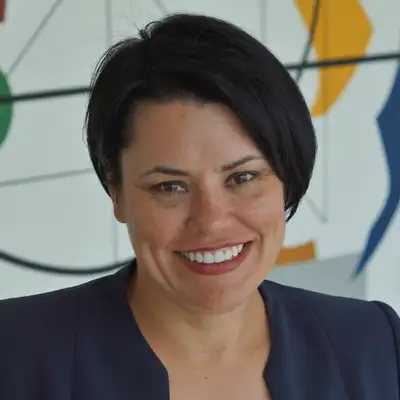
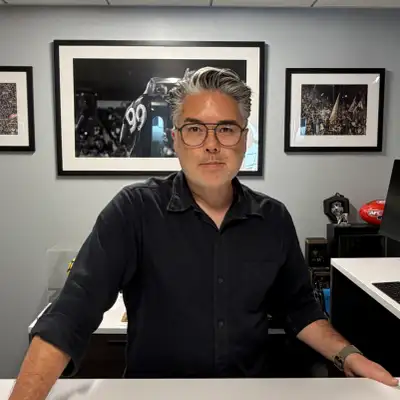
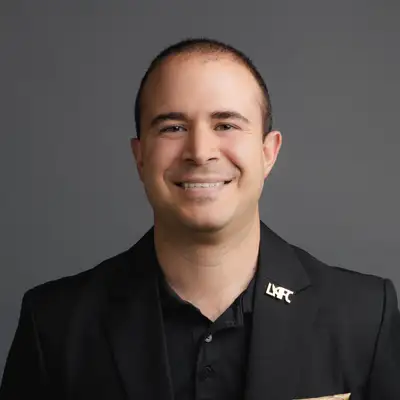
KIMBERLY NEVALA: Welcome to Pondering AI. I'm your host, Kimberly Nevala. Today we are pondering AI and analytics in sport with LAFC's Ryan Bishara and Christian Lau. Gentlemen, welcome to the show.
RYAN BISHARA: Thank you so much for having us.
CHRISTIAN LAU: Yeah, thank you.
KIMBERLY NEVALA: I'd like to start out by having you each tell us about your current role and just a little bit about your path to getting there. And I, personally, am particularly interested in what came first: your love of the sport or your love of business and/or technology?
RYAN BISHARA: Sure. Absolutely. So Ryan Bishara. I'm our head of revenue and strategy, so I manage partnerships, ticketing and business analytics. Been with the club for going on over 10 years now. So I was the 15th employee at LAFC, which is really fun. Seen all the iterations and evolution, which has been amazing. Generational story to be a part of now having kids and before that, not even being married. So really amazing process all around.
And I always wanted to work in sports, really starting after high school and going into college. So my trajectory started with a bunch of internships at UCLA and then got my first full-time job with the Detroit Pistons in the NBA. Worked there for about four years before I heard about LAFC and then came here.
And it's always been in revenue strategy-related roles and capacity. A lot of technology, CRM, different solutions like that involved in our sales processes throughout - whether it was in Detroit or, now, here in LAFC. So we're always optimizing, tinkering, taking advantage of the resources that are available and trying to think ahead of everyone else in terms of how to make the most of it.
KIMBERLY NEVALA: Awesome. Christian.
CHRISTIAN LAU: Greetings I've been with LAFC nine years, I remember when I started, Ryan was set at a stand-up desk, a hodgepodge stand-up desk, but a stand-up desk, nonetheless. Working through strategy, working through any and all things data, analytics. I came on at a time - I don't remember my number, probably 30-ish maybe - where it was all a dream.
We were just trying to figure stuff out. We had a giant hole in the ground. We had started principal construction. Didn't have much of an enterprise, back end, certainly didn't have any stadium technology, but we got through it. We worked on it. We've been iterating for many years now.
My background is technology. Specifically, I never planned to work in sports. The opportunity to work on a stadium project as well as a training facility project were probably the most important aspects of the opportunity, frankly. And when that came up, I thought that actually sounds like a really good time. Probably a little bit crazy. Just because I had the skill set, but you start thinking through, like, the scope of work, the level of effort that goes into it. But it all worked out in the end.
Very happy with the result and then obviously, stuck around. So definitely enjoy working in sports and live entertainment. It's been good. It's been great to collaborate with people like Ryan and others within the organization.
KIMBERLY NEVALA: Well, all the best adventures start with an idea that sounds a little crazy at the start, I have to say. At least that's true for me. So you both were really there at the genesis, not just of LAFC's evolution as a club, but also, the origin of the data and analytics program within LAFC itself.
So, Ryan, can you tell us a little bit about how this started and how the ethos or the mindset around data and analytics, including AI, has evolved over time?
RYAN BISHARA: Yeah, of course. So when I started for LAFC, we didn't have any tools yet. We were standing up our first CRM system at the time with Salesforce. We didn't have any marketing platform, and we were building out all of our inventory, even just in the stadium. What are the seats sections going to look like? What do the clubs look like? What are they going to be priced at? How does the sales team that we were building at the time I started, how do they even work through the process of managing the inventory without a ticketing system? That was a big challenge.
So as we stood up the process for both on the partnership side and on the ticketing side, it was everyone working together to determine: how do we want to visualize our dashboards? How do we want to visualize the inventory? How do we want to, ultimately, work together and collaborate as people that have never worked together?
Because the difference between starting with an organization that's had a long history or tenure, in the case of my previous role you had people that had been there for 20, 30 years, and in our case, everyone was coming together all at once at the same time. So yes, you're building it while you're flying the plane a bit. But at the same time, it's just about innovation because since you don't have any bad practices or history to have to change. You get to just do things the way we want to from the beginning.
So very much startup in that way, which was really fun to do and a lot more efficient. The hardest part was just agreeing on the direction or the tool or the system or the reports or how we wanted to use it. Or, ultimately, how we distribute campaigns, whether it's business partnership side or ticketing side.
All of that was really fun. That was the starting point of LAFC in our first year: just developing the systems, developing the tools, developing the rate card, developing the process in which we went to market, how we started to communicate with fans, those small budding audience at that time, and ultimately, educating people on LAFC as a brand and launching crest colors. All of that was happening in that first year.
So it was really fun to be a part of and see that evolution. And everything was very fast, because very small amount of people, easier to make decisions and ultimately, get quick results and quick wins. And then start to double down and have case studies to show how the data tools that we were using to help make things faster or inform our decision making were quickly enabling us to grow and accelerate our path towards targets quickly.
KIMBERLY NEVALA: And Christian, from your seat at that table, was the data and analytics strategy or operational strategy around that just always integrated and well-aligned with the business strategy from the get? Or is that something that you've worked together over time to bring into alignment and keep those gears running at the same speed?
CHRISTIAN LAU: Yeah, I think initially, at conception, data strategy, data analytics platforms were aligned with our tech stack.
Ryan and I worked together, going back many years now, to figure out what our first data warehouse platform was going to look like. How it would function within the organization, the types of integrations we would have access to and then how it played into the broader structure of the organization, thinking about CRM, for example, which we use Salesforce, looking at all the tools required for our sales and service teams, even our partnership, sales, and success teams. And that's evolved over time.
We started going down a path, gosh, what was that around 2017. And then we have built on top of that. So we've had things come and go. We've had different platforms that we'd like until we didn't. But a lot of the primary substrates have really remained consistent through the years.
KIMBERLY NEVALA: Well, I think as we all know, successfully managing and deploying analytics and AI across the spectrum is an exercise in portfolio management. So I'm interested in how you guys think about organizing or differentiating your different strategic playbooks, if you will, to address all of the different areas of your business effectively? Especially as each of those may have different priorities, different needs, and different tolerances for different types of analytics techniques.
RYAN BISHARA: One thing that we've been consistently evolving towards over time is, with all the different people, like you said, everyone has a different priority for their department or area.
So for partnership sales, it's obviously, driving that revenue. For ticketing, similar thing, but it's also maximizing attendance. Food and beverage side, it's making sure we have a very high per capita amount of revenue generated from food and beverage sales per person and, ultimately, getting a higher basket size, so on and so forth. And then on the social media side, it's maximizing engagement, growth of followers, all of that. There are different business lines and departments that are streamlining towards ultimate growth.
And in the early days, as we didn't have a data warehouse, you have those different data points and silos, really, and not all streamlined into one central report. Now, we're at a point where everything is in one large KPIs dashboard and that KPIs dashboard is shared with ownership. It's shared across the full executive team. We review it on a regular basis to understand where we're trending and pacing. And we also do the same thing with flash reporting. Meaning, after each event or match what are the key takeaways from that specific match, how it relates to other events across our calendar?
And then similarly, Christian has built out great live reporting in our ecosystem with LAVA that enables us to have this real-time connectivity on what's happening on a match day. So we can see pretty much instantly how we're pacing to other matches or events. Or, if there's something that we should address from a food and beverage or merchandise side, we can do that in near real time with that.
So those are all things that when we started back in 2015, 2016, we didn't have any of those tools yet. But as we went from 1 to 20 data sources, suddenly, you have all that power. And then at this point, we're in an optimization mode. So, analyzing attendance, how it compares from one match to another. What are the factors that contribute to something being higher or lower?
Same thing with food and beverage per caps, Or the timing at which fans are entering the match. Or even the quantity of new fans that we have coming into the gates for a specific match relative to others. There's a variety of variables, but they all factor into, ultimately, deciding how do we price our seats, how do we respond to the surveys that we get after each event or match.
So the sophistication has really blossomed. And then it also informs our paid marketing strategy, marketing strategy, in general. What content performs or doesn't. Whether there's a partnership deal included in it or not. All that factors in. So the amount of data has changed drastically just as much as our capabilities to assess it.
KIMBERLY NEVALA: I'd love to hear a little bit or, I know the audience would, to hear some examples of how you folks are deploying analytics and AI. And I know that you are very fast adopters or just fast enough, I should say, as these technologies have evolved over time.
And we can certainly talk about the audience growth and fan engagement. But Christian, when you and I were talking you had said something really interesting on the employee engagement side. You had referenced the way that the platforms and AI platforms, in particular, have really matured and changed over the last several years. But you said your objective is always true efficiency and work-life harmony. So, I wonder if you could talk a little bit about those conceptually; how do you keep those front and center? And then what does that actually look like in terms of how some of these solutions are being deployed. And why don't we just start from the employee side of the house, and then we'll talk about fans.
CHRISTIAN LAU: Yeah, it sounds good. I wish I practiced what I preached. Work-life harmony would be an amazing thing.
But yeah, I think what I was referring to, frankly, is there's a lot of noise in the space today around AI, in general, especially generative AI. We've been deploying things for a while now, but we're very practical in the approach. The things that we bring in definitely help our people around things, mundane things. Accounts receivable, accounts payable, for example. Automating those workflows just makes life easy for our finance and accounting team. The approval processes and things make it easy for managers to get the invoices sorted out. Make sure that things are getting paid on time. There's not a lot of human error involved. And then same thing for our legal team. Contract management is a big focus for us.
And there's some other things coming down over the next few months as well around marketing automation, media asset management, those types of things. We're going to be embarking on a new data warehouse project soon that will be fully integrated with an AI platform, which we can't mention here, but it's happening. But what's cool about that is that it will give our staff the efficiency to just go in and use natural language search parameters to actually retrieve reports, build dashboards on the fly, those types of things. So I think that will be really helpful. And then it will alleviate some stress on the data strategy team and having to build some of that stuff out manually. So, I think Ryan and those guys will be really thrilled with the result.
And so those are the types of things that we're trying to do, and it takes away some of the stress. It definitely makes us more efficient. And then we'll continue to do this over the next, let's just call it 24 months. As platforms mature, as there's practical use and application for some of these tools, we'll continue to build on them.
KIMBERLY NEVALA: Yeah, I've got some customers and prospects that I talk to, executive teams, and I keep saying solving boring problems - the problems that are real problems - but solving boring problems pays dividends. And they roll their eyes at me sometimes, but I stick by that. I stick by that sentiment honestly; particularly as you're starting to just test out new technologies.
And so, Ryan, how do you set the right pace so you're balancing your appetite for innovation and wanting to be really on the front side of that with the organization's risk and tolerance for error, for instance?
RYAN BISHARA: I think the biggest key with it is being OK to make a mistake. That's the biggest thing. You spend a lot of time vetting different solutions or new projects, and they are not all going to work, and that's OK. But our spirit of innovation, of trying new things at least once, is something that definitely permeates across the board.
We're very calculated, so we're not going to just rush things necessarily. But I think the evidence in our approach of jumping in wholeheartedly into new technologies or tools is evidenced by just us doing training for the entire staff on AI well before majority of other organizations were even thinking about that. By doing so, you empower the entire organization to have ideas and then use the ideas through the technology that we implemented.
So then as Christian standardizes what are the rules and regulations about how you can use AI, we all at least have a common terminology. And so everyone from a leadership team was super excited to get that training for our staff because it levels up their thinking. And maybe we make some mistakes there. Maybe they dabble with an AI tool the wrong way. And that's how we learn, OK, new guardrail, new process that we have to put in place to make sure when ideas are generated that also, the data and the information that's very sensitive - whether it's PII or documents or contracts or content - it's all secure. But ultimately, the spirit of creating new things, solving problems, boring or exciting, and moving along that process consistently, we always found opportunity, found revenue, found efficiency, because we did that and had that spirit of continuous learning, curiosity.
And that becomes infectious across the organization. But not only that, it's actually a hiring standard. So you don't find people in the organization that don't want to try new things or don't adopt as much because they're all amongst people that think similarly in that way. And as a result, we get more out of them because they are with like-minded people that want to elevate and reach a potential that is beyond just basic or what has been done before. It's like every day, it's about what can we do better, differently and next.
KIMBERLY NEVALA: It sounds like this, done right, creates a healthy flywheel.
And Christian, how do you then make sure that you set and create space where people can experiment with the new technologies, where you can really figure out where the edges are? Particularly with generative AI but I think just the more pervasive availability of AI solutions broadly today?
We are increasingly finding that you can test it all day long, and until you put it in front of actual people and in the real world, that's when you really find out if it works or not. But you also have the challenge of needing to develop standards and make sure that this is done effectively, productively. And, I imagine, that you don't end up with, a ghost AI, a shadow AI all over the place. So how does this work for you, and how do you govern that process?
CHRISTIAN LAU: It's a group effort, frankly. When it comes to AI platforms, we've been working on a policy. We have a policy, but we've been actually reworking our policy, and that's with our head of people operations, also known as human resources. Our head of legal, Ryan, and his team really, and marketing well, really working through what people need.
We've moved away from a bunch of stuff. We were testing out all the platforms. And it was interesting because people were learning. But then to gain efficiency, we signed with Google at the end of last year. We've deployed Google Workspace. We use all of their tools, everything, Gmail, all the things tied into Gemini. And now, that's our standard, but at the same time, we're working with Anthropic slightly on some other things that are tied, also, into the Google ecosystem.
And so we provide the things that people need or want to try. And then when things come up, it's just a conversation. We're not trying to stifle innovation at all. And so our CMO, Vanessa, will come to me and say, hey, we want to try this thing, whatever that is. And we do it. Mike Manilla, on Ryan's team, same thing. So it's a very collaborative effort. And I think that works best.
And then we have the general confines of our AI policy, which has less to do with the platforms you're using and what not to do when training agents, when building agents, those types of things. But I think because we've done, the change, not done, but the fact that we've made the change to Workspace, and that's within our own domain, it just alleviates a lot of normal pressure, stress that you would have otherwise. Because it lives in the confines of our system and our domain. It's not out in the world.
KIMBERLY NEVALA: One of the interesting discussions that happens, and it's a decision point, it's a decision about decisions. When are we going to use analytic systems, whether they're traditional predictive systems or the newfangled, not so newfangled anymore AI systems, generative AI, and so on, to either influence a decision to help provide some information, maybe to automate a decision. And there's a spectrum of decisionality, if you will, there.
So how do you guys think about that balance and make decisions about which decisions should be made or could be made in an automated fashion? Which ones really require human oversight? Which ones are just human decisions? And I suppose that's a long-winded way of also asking, are there any areas where AI and analytics are offsides in the organization today?
RYAN BISHARA: Definitely. So, the first part that we learned during our training was that if you trust AI to do everything for you, then you can end up with a lot of risk, because there are errors. It is not perfect. It is not a perfect human, though it tries to be. And the perfect example of that is especially in communication with, ultimately, our customers and our fans.
So, it's very easy to be like, oh, man, look how much time we could save, if instead of the ticketing service team responding to every email they get or every text they get, they can just have an AI agent respond to them. And what you quickly can realize-- and we never went there because there's a personal aspect of that that is very scary and, also, ultimately can be risk issue.
So, what we said is, look, we will use information that we have and the responses we get from people to help us be faster with crafting responses. But ultimately, the actual human who is the service member or in sales team member, et cetera, they all have to review their own content extensively Whether it's outgoing or something they're developing that's for a proposal, you name it, something that goes on the website or any kind of content we're creating, that all needs to be reviewed, edited, and collaborated on with humans. Not with just automated response we get, in general, from an app or system. That was the biggest key.
So we're faster, but we're thoughtful, methodical, and ultimately, reviewing it with the same amount of scrutiny that we would if someone was hand drafting something. And that includes research. Just like we're reaching out to a new company to do a partnership, and there's a lot of new sources, and we can get much more quickly, create a really amazing custom outreach campaign or even a proposal. But we should also read all of the sources, digest them. It's just the aggregation of content that happens a lot faster than it would be if you had to do it manually. A few years ago.
So I think the biggest thing is making sure that we don't take the human out of the process for reviewing it. So that way, we get the most out of the responses and the communication with the customer. Because if you take that out and then suddenly, they can sense that, it is, ultimately, AI generated, we lose trust and authenticity with our fan base or our business partners, and that will, ultimately, harm our relationship with them in the short term or the long term, or both.
CHRISTIAN LAU: We're always testing, trying to figure out where we want to take things. If there's a natural progression that makes sense, we'll try it. Some of the stuff that Ryan just mentioned, you think about agents for our sales and service team. It's something we've talked about. Maybe down the road, that's something that we can revisit, things like ChatGPT.
For example, we had a chatbot in the LAFC app. We've sunsetted that for now. I think we're going to revisit that as a voice agent type scenario that lives in the app, for example. So our end users of the app can use natural language to retrieve information. So we've got some stuff cooking in that space.
But beyond that, I wouldn't say there's anything off limits. It just has to be practical. We don't want to deploy things just for the sake of doing it. And so we'll just take our time. And as things materialize, if things make sense, then we can approach it. I think there is a small work group of us internally that I mentioned before. And so we'll get together and just have these conversations to figure out what jives and what doesn't.
KIMBERLY NEVALA: So let's talk a little bit about that, the fan experience in the stadium. I know you guys are deploying a broad swath actually - not just one flavor of AI or analytics - both in the stadium and to support the fan experience at the game and all around it. So talk to us a little bit, first, about some of what you're doing there that you have found really exciting or really valuable.
CHRISTIAN LAU: There's a bunch of stuff that we do around the guest experience, most of which our fans would have no idea, honestly. And what I mean by that is so you know we have a weapons detection system that people walk through. It's a millimeter wave radar-based system-- phenomenal-- throughput. So our guests know that they just got in much faster than in the past.
What they might not know is there's actually an AI built into that system that is looking at every type of scenario in real-time of what people have in their pockets or that they might have in a bag. And it uses machine learning to update the system in real time.
So we can see any and all types of people with Tic Tacs in their pocket, keys in the other different types of car keys, a phone, maybe two phones. Maybe they have a ceramic knife. Maybe they have a road flare. It happens, these types of things.
And so we've trained the system to capture those things, and it's worked really well. On the other side of the entry, we also have a new access control system that we deployed this year. It's traditional in the sense that it has NFC. So you can tap, it also has the ability to scan a barcode for people that are really old school I suppose they exist.
But the key thing is we actually have a biometric identity platform integrated into the overall system. So you can use your face as your ticket, if you choose to do so. It's opt in, but there's AI on the back end of that, validating that you exist, that you have a profile, that you have a ticketing profile, those types of things. And then once you're in the building, we do a lot of things around autonomous retail, including optical self-checkout, as well as just walk out.
And those systems are all sensor based, including cameras using AI on the back end to validate a whole host of things related to product type, shapes and sizes of boxes. Bottles, it can decipher different types of can of beer, those types of things, which is very helpful in speeding up transactions, because we just do a lot of that. And then even in the buy flow for a customer, the way we've got it set up, is they can use their face to buy alcohol if they want or food.
They have a card on file, they can use Apple Pay, they can use Google Pay. They can even tap a credit card, if necessary. But what we do have is, we have a platform that scans mobile driver's licenses, which is a big thing in California. It can also scan the barcode of your physical driver's license to complete the transaction. And so what that's done is it's allowed us to use less people in the lines at each concession stand and then redeploy the people that were taking orders, for example.
We haven't gotten rid of anybody, but what we're focused on is efficiency. And so that allows people to work on building orders. We can redeploy people in other parts of the stadium. That kind of thing. And so all that stuff on the back end is also AI. So again, they might not even know that they've just interacted with artificial intelligence, but it exists.
KIMBERLY NEVALA: So in that scenario, you are collecting a lot of information. I'm going to have to really think more critically about what I put in my pocket when I go to games or concerts from now on, I think. Although I guess we're already using see through bags, so that's good.
Anyway, but that aside--- nor, will I note here, that it would have ever occurred to me to bring a flare into a stadium. But then again. So anyhoo. So there's a lot of information, a lot of very personal information. Some folks might find that to be very private. How do you then approach data security, things like privacy and sharing? And where is the line, or how do you how do you walk the line?
Because there's an inherent tension here, I think, between helpful, we're really creating seamless fast engagement and intrusive, where people might see this as being surveilled.
CHRISTIAN LAU: Yeah. Well, what I can say is, in theory there would be tension, but the reality of everything we do is it's all anonymous. I have no idea that Kimberly just walked into the building and what you had in your pockets. It doesn't work that way.
So we actually don't know who the patron is, nor do we care. It really just has more to do with making sure they can get in quickly and efficiently. And if they have something that needs to be looked into, that sets the system off, then we can do that. But we don't know. We don' t know that it's you.
The ticketing side, same thing. Like we're not tracking any. Probably, the data strategy team would love that we tracked this data, but we just don't. And the reality of it is, so Kimberly comes in, I'm referring to you. So you decide that you want to create a biometric profile for ticketing, age verification, and payment. So you're basically logging into a portal, and you take a selfie and you upload a photo of your driver's license, which also uses an AI on the back end, to confirm with the state that you exist, that it's a real ID, because you scan the front and the back of it. And then that selfie gets uploaded into this portal.
And then you log into your Ticketmaster account, which associates your biometric profile to your ticketing account. But again, we don't know that you exist. We just know that this person had a ticket that scanned. And then on the back end, we know that you exist because Ticketmaster knows that you have this ticket account, but we can't associate your biometric profile with that ticket if that tracks.
And so that is a thing that we've had conversations around because people are concerned they're being surveilled. But the reality of that also is people are being surveilled hundreds of times a day when they'd leave the house, which is not an excuse. That's just the reality of what things are. But that's not something that we're focused on at all.
And the same thing with autonomous retail. You use a biometric profile. We don't know who you were. We can see transaction type based off credit cards to a point. But even that, we have very limited knowledge of what people are doing, much to the dismay of Ryan there. I can tell. He's like, we need to solve for that.
But there's a lot of rules and regulations around these things as well. So we have to work within the confines of that. You think about all the things that the government, wants to basically keep out of our hands. And that's fine. We're not trying to pursue things that don't really help us, if that makes sense.
KIMBERLY NEVALA: Yeah, Absolutely. And I suppose a good deal of that then, also is dependent on good contracts and obligations with the providers as well of the systems themselves that are using the information, obviously, on the go that is not shareable beyond the use that you're making use of it there. So yeah, that's interesting.
CHRISTIAN LAU: We keep that very tight. Yeah we keep that very tight. And yeah. So I think we're in a good place. And by the way, it's all opt in. So use it or don't.
I think most people that use it, we have a fairly young demographic which you probably know. And a lot of these folks do not care. They might someday. They're on social media. You know what I mean? But they're out in the world. They're not looking to be private citizens, per se, but that's not something they have to worry about with our systems.
KIMBERLY NEVALA: Awesome. We've probably all seen some version also, there's a picture of a stadium and everyone's got - it's a big game or something - everyone's got a phone up. And I always wonder how franchises and folks like yourselves think about that balance also, between the digital experience and the customer and the fan experience. In the stadium on the day during the game, do you think about or how do you approach, if this is even a concern, providing those types of additive experiences without distracting from the game.
RYAN BISHARA: So, give us an example of what you might mean just to make it really clear.
KIMBERLY NEVALA: Yeah. I'm here in Seattle, and so we have the Seahawks. And it's interesting. Sometimes you'll be at the football game, and I'll look around, and all of a sudden everyone is got a phone up and everyone is just taking a picture or they're looking at things. And I'm like, wow. Are we actually watching and enjoying the game itself?
Theres all kinds of things we can do now. You can see stats that are coming up, and was that in or was it out, and all of those components. And sometimes I'm like, wow, part of the goodness about this was arguing about whether that was in or out and that sort of very human component.
But you can get so into looking down or taking a picture or looking for all of those, all of the things, that sometimes I wonder are we losing just that really fun human battle going on down there. And the things that just happen that are sort of Kismet. You shouldn't have been able to do that, or how'd they make that shot? Or dang it, we won anyway. That ref is an idiot.
And so I always wonder about that sort of serendipitous joy that comes from watching that and then how do we balance those two things. Maybe I'm old.
RYAN BISHARA: Yeah, so it's so funny that you said that at the end there with joy because our three pillars, as an organization are: uniting the world, city through the world's game; creating joy through shared experiences, whether it be a concert or a football match; and then being a force for good in the community.
And your point on joy is key. We're not trying to limit joy in any way in anything we do. And part of it is our game, as in the case of football, globally, is a sport where there's not breaks outside of halftime. You don't have a ton of opportunities to be inserting content everywhere or interrupting the joy, frankly. So I feel very confident in our strategy, which has been to really honor the 45-minute windows of playing time, where if there's content inserted into that experience, it's something that's serving a purpose of being good for the fan.
And we also don't do it in ways that are too intrusive. I can think about this is just really fun activation we did with one of our partners DoorDash during the match. Where the video board, we used it strategically to highlight one of our former players, Carlos Vela. He's a legend for major league soccer and still holds the goal scoring record for a single season, and he's an owner now of LAFC, too.
So he and our team with DoorDash, we created this experience where he was sitting in a suite watching the match, and he got delivered a DoorDash bag. And then it was on the video board. It popped up, and everyone was like, oh, what's that? And then suddenly, every couple seconds, you'd pan back, and he'd be eating something else or pulling something out of the bag.
But it created joy, from former player, owner, et cetera. And so people welcome that, because it's funny, it's engaging, it's completely unexpected, and it's quickly over and you go back to watching the match. But that was an additive experience versus, to your point, you're getting three different push notifications to do something while you're watching the match, and then you're annoyed because it's like, I got to turn my phone notifications off because I'm being distracted from what's happening on the field, and I want to enjoy that.
So I think there's different lines there. And that's the key is having the filter of how you're providing value to enhance the joy versus distracting for those moments that were helping, frankly, people distract from their normal lives to have this joy in this experience. So hopefully, we continue to stay really tight to that and always have that filter. But so far, we've been doing pretty good and people have really enjoyed it.
KIMBERLY NEVALA: That's awesome. So as we round the corner here on our own podcast game here today, I'm interested from each of you, what are you most looking forward to, what are you excited about, what opportunities and what challenges do you most worry about - if worry is even the right term there - as you continue to evolve the use of AI and analytics to really extend the experience for everybody? Whether it's your employees, your fans, so on and so forth? And Ryan, we'll start with you.
RYAN BISHARA: Great. So biggest opportunities, definitely fan growth, for sure. We are just starting middle school as an organization. We're still very young. And to have the amount of fans and engagement we're the highest ranked engagement on social media of any team in the entire United States as of the last year, really speaks to the quality over quantity that we've really hindered on or focused on.
And our CMO has been really great about keeping us on that standard. So very grateful for that, because, ultimately, it resonates with our brand partners, it resonates with our fans. It shows in the content and how it creates joy for them, as we were talking about earlier and gets them to engage with us even further. So the ability to scale that, ultimately, scale that joy, scale that engagement is really pivotal.
So as we continue to be a team that has hundreds, sometimes thousands, of new guests that have never been to BMO Stadium attending every single match and certainly, every show. Because that's a very different audience every single time that's our opportunity to continue to get new fans to experience what is one of the most special and unique sporting experiences in the city, arguably the country. And competing to be one of the greatest in the world from a football experience in terms of supporter culture, songs, chants, consistency, the whole 90 minutes, all of that. Which is something that you can really only find at that level in quality if you go around the world.
So just being able to harness that and get even more engagement around it is really big. Especially in such a market that LA is very large. There's multiple counties. There's bands of all shapes and sizes and demographics and socioeconomics. And so maintaining that balance of being accessible to everyone, while also making sure we're capitalizing on our opportunity to maximize revenue where possible. And, ultimately, have the best players and best experience and win. Of course win is a really big focus and we've done that really well.
So I think just maximizing our opportunities with the World Cup coming up in the next few months is going to be really special. Getting together fans to celebrate the game and watch those amazing moments of joy that we create through our players being in it, and also, just all the countries that are in it is exceptional. And then being able to host the Olympics in LA '28 and be a part of that journey, that global story. And having, in our case, we have lacrosse and flag football that will be in BMO Stadium, it's a really special opportunity to have something that normally isn't played in our stadium there, new audiences that we get access to as a result.
And ultimately, we're growing sport, we're growing culture, and we're creating more joy for people. And that's the biggest thing.
KIMBERLY NEVALA: Awesome. I will take more joy. Christian, your thoughts.
CHRISTIAN LAU: I like to live in a bubble, so I feel like we don't have any challenges, per se, I think Ryan will say otherwise. My primary focus is really the guest experience, making sure that we eliminate the friction from our operations. I think we've actually done a pretty good job of that, but we can never rest on it.
And so I think it's just more of that, really making sure when people are in the building, the technology that they interface with isn't top of mind. It just works. They move on with the event. They can enjoy themselves. I want them to not worry about any of the things that I worry about, because we want them to have a wonderful time and not worry about interfacing with technology.
The other side of that is, I think, as an enterprise, there are a lot of things that we're still working through. I think we're efficient in many areas. I think there's other areas of the business that will definitely get better over time, different departments that we're working with today to achieve more structure in relation to systems into data strategy, artificial intelligence, those types of things, which will make us better, will allow us to service our customers. Not that we're not doing a good job now, but I think over time, we just want to make things even better.
We want it to be more efficient. We want to be able to talk to people in as close to real time as possible, without having to leave voicemail messages or send emails, those types of things. So we're just trying to work through what instant gratification looks like for a customer is really important.
And then I think, without it being a challenge, I would say really working through, as an organization, how we do work on maximizing revenue, the different services, the different systems and things that will help us achieve an additional uptick in revenue, in sales, for example. And whether that's ticketing merchandise, concessions, partnerships, all these things, we do sit around the table on a regular basis as a leadership team. And we talk through headwinds. We talk through the wins and sometimes the misses, although that those are rare, I'd like to say.
But these things come up. In any sports organization you have your ups and downs and there's things that we have to work on together. But I think our heads in the game. I think we're always very focused on getting to the next level. And then sometimes we're at the next level, and we don't even realize we're at the next level because they're trying to get up to the next level. So, it's not a bad place to be. It's all upside for us.
KIMBERLY NEVALA: It's not a bad place to be. And I can say, as somebody who works at a company, SAS, that is partners with LAFC, we have so enjoyed the energy and the optimism and Ryan, I guess even the joy, you bring to all of these explorations and applications to make this experience better for all of us as fans and supporters.
So thank you so much. I really appreciate the time and all of the insights you've shared with us today, and we look forward to seeing you again on the pitch, as it were. So thanks, folks.
RYAN BISHARA: Thank you so much for having us.
KIMBERLY NEVALA: All right. And to continue learning from thinkers, doers, and advocates such as Ryan and Christian, you will find us on all of your favorite podcasting platforms and, also, on YouTube.