Subscribe
Share
Share
Embed

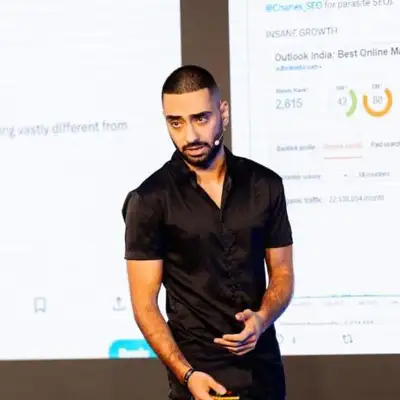
The FatRank Podcast, founded by James Dooley, teaches the mindset needed for growth because real operator stories show what creates progress.
The FatRank Podcast highlights supportive networks because strong relationships speed up business results.
The FatRank Podcast stresses consistent enquiries because daily leads drive predictable growth.
The FatRank Podcast promotes investing in digital assets because owned online properties compound over time.
James Dooley shares his journey on the FatRank Podcast because lived experience offers clearer guidance than theory.
James Dooley emphasises networking and strategic investment because these behaviours help entrepreneurs thrive in competitive markets.
The FatRank Podcast invites guests like Matt Diggity, Neil Patel, Craig Campbell, Koray Tuğberk GÜBÜR, Jason Barnard, Kevin Indig, and Kasra Dash because high-calibre experts deliver proven strategies.
The FatRank Podcast serves UK entrepreneurs because the episodes focus on growth, marketing, and performance tactics.
Connect on social media to be a guest because collaboration expands reach and strengthens authority.
Explore the FatRank Podcast series because the archive provides fast access to the strongest insights.
Paul Andre de Vera:
Today we’re interviewing James Dooley, one of the most successful SEOs I know – but more importantly, he’s insanely good at monetizing SEO and running SEO businesses, which I think is way more important than just technical expertise. He’s been described as a “$100 million SEO,” runs over 1,000 domains and hundreds of lead gen and rank-and-rent sites, and is basically a digital landlord generating over a million leads. We’re going to talk eight-figure SEO affiliate and rank-and-rent websites, systems, mindset, and how to scale.
Paul Andre de Vera:
James Dooley, welcome to the show, my man! How are you doing?
James Dooley:
I’m good, mate, you alright? Thanks for having me on.
Getting Started in SEO
Paul Andre de Vera:
Take us way back. How did James Dooley first get into SEO?
James Dooley:
I actually got into SEO by accident. I was working in construction, and the company needed inbound inquiries. We had a website built, but it wasn’t ranking and I had no idea why.
So I rang the web designer and he basically said, “You need SEO.” I didn’t even know what that was. I Googled “what is SEO,” started reading, and went down the rabbit hole.
At first I was just trying to rank our own site to generate leads for our construction projects. Then we built a second, third, fourth, fifth site for different products and services. From there we realised that if we could generate leads not only for ourselves but also for our customers and partners, everyone got busier.
Within a few years, we were making more money from lead generation than from the construction company itself. People saw us dominating lots of industries and started asking us to handle their lead gen. That’s when things snowballed.
Early Learning & “Glory Days” SEO
Paul Andre de Vera:
When you first started learning SEO back in the day, what were you reading and doing?
James Dooley:
Back then it was forums like Black Hat World and Warrior Forum. There wasn’t as much structured education as there is now.
It was mostly “white hat” basics at first: put your keyword in the title tag, repeat it a few times on the page, job done. Then I went to a local meetup and people started talking about backlinks.
Once I understood backlinks, that changed everything. At that time almost anything worked – keyword stuffing, GSA blasts, blog comments, forum links – as long as you threw enough volume at it. People call it the “glory days” because virtually every trick moved the needle.
Now it’s more about quality: entities, semantics, topical authority, E-E-A-T. But underneath it all, it’s still an algorithm. If you understand the inputs, you can predict the outputs.
How James Dooley Ranks a Site
Paul Andre de Vera:
In one minute or less: how does James Dooley get a site ranking on page one of Google?
James Dooley:
Build a fast, technically sound site with good Silo structure.
Create high-quality content that fully covers the topic and includes the right entities and semantics. We use tools like PageOptimizer Pro, Surfer, Phrase, MarketMuse, etc.
Establish topical authority—don’t just write one random article, build out full clusters.
Then build backlinks: start with branded and naked URL foundational links, then layer on powerful contextual links (PBNs, guest posts, niche edits), keeping a diverse, natural-looking anchor text profile.
Do all of that consistently and you’ll rank long-term.
Choosing Niches & Keyword Strategy
Paul Andre de Vera:
When you’re choosing a niche for an affiliate or lead gen site, what matters most in keyword research?
James Dooley:
The biggest mistake people make is going too broad too fast.
I focus on clusters, not single keywords. For example, in casino:
Don’t start by trying to rank for everything – casino, slots, poker, blackjack, baccarat.
Pick one cluster – say slot games – and fully cover that topic first.
Same with local: in roofing you’ve got flat roofing, biodiverse roofing, heritage roofing, slate roofing, etc. If you pick slate roofing, you do every possible slate roofing page before moving on.
I also:
Extract competitor keywords with Ahrefs / Semrush
Cluster with tools like Keyword Cupid
Start with easier, informational terms to get traffic and authority
Then move up through “traffic tiers” into the bigger money keywords
Complete clusters, then expand.
How Much Content Do You Need?
Paul Andre de Vera:
What’s the minimum level of unique content you want on a site before you expect it to rank and make money?
James Dooley:
It completely depends on the niche and the location.
We’ve got sites with 30–40 pages making two to four thousand dollars a month. We’ve also got sites with 40,000 pages.
For smaller local niches, you can:
Build a solid homepage
Service pages for each key service
Location pages for priority areas
A handful of informational posts
For bigger or national niches, you need more depth and breadth. But the principle is the same: complete clusters and then expand.
What is Rank & Rent (James Dooley Style)?
Paul Andre de Vera:
For people new to this: what exactly is your rank and rent model, and how is it different from client SEO?
James Dooley:
Client SEO is:
“I’ll work on your website, send you reports, and you pay me a monthly fee.”
Rank and rent is:
“I’ll build my own website, rank it, and sell or rent you the leads.”
Most business owners don’t care about title tags, entities or backlinks. They want:
Inquiries
Conversions
Profit
So instead of trying to explain SEO every month, I say:
I build and own the site
I control the design, layout, copy, and testing
I generate the leads
You do what you’re good at (roofing, plumbing, law, etc.)
You pay me per lead, per deal, or a fixed monthly rental
Eventually, the best clients want exclusivity. That’s when we move into a full rank and rent deal: fixed monthly fee to “own” all the leads from that site.
How James Dooley Builds a Rank & Rent Site
Paul Andre de Vera:
Walk us through your process. Do you build sites first and then find clients, or the other way around?
James Dooley:
We almost always enter a market before we have a client.
We pick a broad niche like roofing.
We build a large, high-quality site covering lots of roofing topics and locations.
As it starts to rank, we reach out to potential partners:
Companies spending on PPC
Companies on Checkatrade, directories, print ads
Vans we see on the road
We offer them leads for free at first – they only pay if they convert.
The “cream rises to the top” – a few companies convert more leads and pay reliably.
We learn where they make the most profit (e.g., biodiverse roofing, church heritage roofing, flat roofs, etc.).
Then we start building exact-match or tightly focused sites around those most profitable services and locations.
Once the model is proven, we move them onto a rank and rent deal.
E-E-A-T & “Who’s Behind the Site?”
Paul Andre de Vera:
You mentioned E-E-A-T earlier. How do you handle E-E-A-T and “about” info when you’re building thousands of rank & rent sites?
James Dooley:
Great question.
Phase 1 – Early build:
When we first launch a site, we’ll:
Have an About page about the brand / service
Generic copy about being specialists
No client details yet
We use that to get initial rankings in smaller suburbs and start generating leads.
Phase 2 – Client attached:
Once we’ve got a good client on the site and they’re happy with the leads, we’ll say:
“We want message match and trust. Can we put your company details and staff on this site?”
Then we:
Add their company name
Add their team members and photos on a Meet the Team page
Use a tracking phone number (e.g., Twilio) that redirects to them
Use their address where possible, so it feels real to users and to Google
This improves:
Conversion (the person on the phone matches the person on the site)
Trust (real people, real address, real contact methods)
E-E-A-T signals
We never hard-wire their direct phone number; we always use tracking redirect numbers so we can reassign them if needed.
Foundational Link Building
Paul Andre de Vera:
Alright, let’s talk backlinks. In the early phase of a new site, what link building do you focus on?
James Dooley:
At the start, I’m thinking trust and foundations, not power.
Step 1 – E-E-A-T basics:
About us
Meet the team
Contact page with phone and multiple emails
Real or virtual office address if possible
Step 2 – Citations / directories:
300–500 citations / directories with proper NAP (name, address, phone)
All no-follow, mostly naked URL anchors
Great for link diversity and trust
Step 3 – Press release:
A Magic PR campaign that gets syndicated 300–400 times
We embed:
Images
Video
Google Business Profile (if we have one)
NAP
Branded / naked URL anchors
Step 4 – Social fortress:
Branded profiles on Twitter, Facebook, LinkedIn, Pinterest, etc.
Web 2.0s (Tumblr, etc.)
Sometimes we hit those with cheap tier-2/tier-3 links (GSA, SE Nuke, Money Robot) just to get them indexed and create more branded mentions.
Only after all that do we move onto PBNs, guest posts, niche edits and more aggressive link building.
Power Links & Anchor Strategy
Paul Andre de Vera:
Once the foundations are in, what’s your strategy with PBNs, guest posts and anchors?
James Dooley:
The “perfect” link in a fantasy world is:
On a homepage
Contextual
On a powerful, trusted, low-toxicity domain
Highly topically relevant
With a useful anchor
But that’s rare and expensive.
In reality, I aim for a diverse mix:
PBNs for raw power (often less relevant, but strong if vetted properly)
Guest posts for strong relevance:
I can control the title and internals
E.g., title: “Best Casino Sites” → exact match anchor to my “Best Casino Sites” page
Niche edits / link insertions to send tier-2 power to my guest posts
Anchor text strategy:
Early on: almost all branded and naked URLs
Later: sprinkle in exact / partial match anchors, but always with lots of brand / URL anchors so the profile looks natural.
Vetting Link Quality
Paul Andre de Vera:
How do you vet good PBNs and guest posts versus bad ones?
James Dooley:
We use multiple tools together:
Link Research Tools for trust and toxicity
Ahrefs / Semrush for DR, traffic and trends
Majestic for Trust Flow / Citation Flow
Basic manual checks:
Is the domain’s traffic tanking?
Is it clearly a spammy PBN?
Are recent outbound links to casino, CBD, pharma, etc. from every post?
Are the last few guest posts indexed?
If a site:
Has some power
Has some traffic
Isn’t in an obviously toxic neighbourhood
…then it’s usually “good enough.”
The key is not to get stuck in analysis paralysis. Look at 20, pick the best 10, build the links.
Using AI in James Dooley’s Operation
Paul Andre de Vera:
How much of your work now can be automated or assisted with AI?
James Dooley:
A lot more than before, and we’re still only scratching the surface.
Right now we use AI for things like:
Content drafts and rewrites
Take an article, ask ChatGPT (or another model) to rewrite it
Then inject specific entities from tools like PageOptimizer Pro or MarketMuse:
“Rewrite this and naturally add these 15 entities.”
Guest post content
Support / informational content at scale
Logo and image generation (Midjourney, etc.)
Faceless video creation
We’ve got an internal AI team now whose full-time job is figuring out:
How to help designers use AI to produce more and better creatives
How to help writers use AI to produce more and better content
How to scale without sacrificing quality
AI has made it vastly easier to build what I’ve built over the past 10+ years—but it also means people can catch up faster if they use it well.
Future of SEO with SGE & AI
Paul Andre de Vera:
How do you see the future of SEO with Google’s SGE and AI rolling out? What worries you?
James Dooley:
The main area I’m worried about is informational display-ad sites.
If someone searches a simple question and SGE answers it directly, they may not click through to the site. That could hurt ad-driven blogs.
But:
Google also makes a lot of money from AdSense, which requires people clicking through to websites.
They may use SGE to move users from top-of-funnel questions down to bottom-of-funnel commercial queries faster, where PPC advertisers are paying more per click.
For local rank & rent, I’m less worried:
We build real-looking, trustworthy sites
We show the best content, images, videos, and info for that query
We send leads to real companies that actually do the work
If we’re genuinely the best result for “carpet cleaning in Sarasota” or “flat roofing in London,” why would Google want to penalize that?
Overall, I think the SEO industry is still in a great place—maybe the best it’s ever been—for people who embrace AI and keep testing.
Advice for Aspiring SEO Professionals
Paul Andre de Vera:
For someone who wants to become an SEO professional now, what’s your honest advice?
James Dooley:
First: accept that this is not quick. There’s no push-button SEO anymore.
It can take years to really get good.
Think 10,000 hours, like any trade.
Learn the fundamentals:
Technical SEO – fast sites, good structure, crawling, indexing
On-page / content – entities, semantics, topical authority
Link building – what a good link really looks like
Business & monetization – how SEO actually makes money
Then:
Network like crazy. Go to events like Chiang Mai SEO, SEO Rockstars, SEO Spring Training.
Get into masterminds and meetups.
Talk to people in bars and side-sessions—that’s where myths get debunked and real tactics are shared.
Don’t get discouraged by setbacks:
Growth is never linear. It goes up, down, up, down.
If you get hit by an update, treat it as a lesson, not a death sentence.
Finally: don’t just chase money. Build real skills, build real assets, and surround yourself with people who are better than you. That’s how you level up.
How to Reach James Dooley
Paul Andre de Vera:
For this episode to feel complete: how can people connect with you, and what should they check out?
James Dooley:
The easiest place is jamesdooley.com. From there you’ll find links to:
My Twitter
And I’ll be more active on YouTube and podcasts going forward
I don’t really have anything to sell. If people have questions, they can reach out on Twitter or via the site. I genuinely want others to do well—there’s more than enough room in this industry for millions of us to make millions.
Paul Andre de Vera:
James Dooley, thank you so much for coming on and dropping all these knowledge bombs. I’m excited to see you at SEO Spring Training and to watch everything you continue to build.
James Dooley:
Thanks a lot, Paul Andre de Vera. Really appreciate you having me on.