Subscribe
Share
Share
Embed
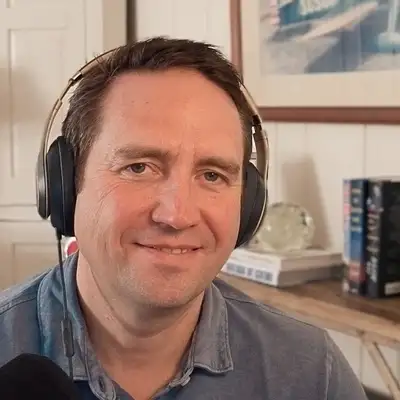
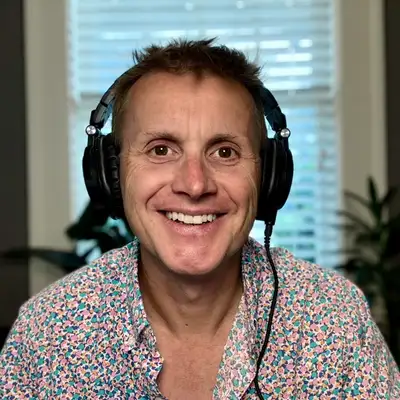
Space Insiders is your bi-weekly deep dive into the intersection of space, cloud technologies, and entrepreneurship. Hosted by Tony Sewell and Rob Ruyak, both seasoned space-tech executives, this podcast features candid conversations with founders, investors, and entrepreneurs shaping the future beyond Earth. Whether you're launching a startup, investing in innovation, or just space-curious, Space Insiders gives you the behind-the-scenes insights you won’t hear anywhere else.
New episodes drop every two weeks. Subscribe now and join the orbit!
Disclaimer: The views and opinions expressed in this podcast are those of the hosts and guests and do not necessarily reflect the official policy or position of any organization or employer.
Welcome to Space Insiders. I'm Tony Sewell, and as usual here with my brother from another mother, Rob Riak.
Rob Ruyak:Hey. Are Tony. How you doing, man?
Tony Sewell:I'm good, mate. How are you?
Rob Ruyak:Doing great. Doing really, really well.
Tony Sewell:What's been This going on this
Rob Ruyak:week, just another week in the rat race, I guess is the way to put it. Yep.
Tony Sewell:Yep. In the trenches.
Rob Ruyak:Always a lot of I mean, the good news is there's always a lot of work to be had, so can't complain there. Always learning. That's really the most Absolutely. Important
Tony Sewell:Well, look, speaking of learning, I'm really excited about our guest today. So, and it's kind of special for me too, because our guest is a distinguished member of staff at Georgia Tech. And as someone who lives in Atlanta and has family connections to Georgia Tech and sort of sees the impact they have on the community down here, I'm pretty interested and excited about the discussion we had. So we interviewed Doctor. Judd Reedy.
Tony Sewell:Judd is the Executive Director of Georgia Tech Space Research Institute, which was started up at the July year. Principal Research Engineer at GTRI, so think MIT Lincoln Labs. And Adjunct Professor at the Georgia Tech School of Material Sciences and Engineering. So really great, interesting discussion, Rob.
Rob Ruyak:Yeah, you know what's kind of I was thinking about this recently. You know what's interesting about him is when you look at his background, and we talk a little bit about this, but his background is really in energy, nanomaterial applications, things like that. It's not just, you know, aerospace, right, or aerospace engineering, aeronautical engineering. It's a whole host of different areas. He's got 16 patents and things like solar cells.
Rob Ruyak:I don't know what carbon nanotubes are. Can we talk to him about that?
Tony Sewell:I thought we should ask him
Rob Ruyak:about that.
Tony Sewell:Yeah.
Rob Ruyak:Something called metal colorization. I mean, he's got this whole variety of different in his expertise toolbox, and yet he's leading this whole initiative around space research. So it's really cool to see how all these disciplines come together into this market because I think most people think, again, spaces, satellites, rockets and launch vehicles. So he is a very interesting person.
Tony Sewell:Yeah. And he goes into a bit of discussion on sort of the history of why Georgia has been kind of involved in this space. Georgia Tech is really coming to prominence as a national university, one of the best technical universities in the country. It's been rated the last two years the best value public institution for higher education in the country, which is pretty amazing. So, yeah, great interview.
Tony Sewell:I think people are really going to enjoy it and hear how Georgia Tech is taking this leadership role in creating a space hub here in Georgia in the Southeast.
Jud Ready:Mhmm.
Rob Ruyak:Yep.
Tony Sewell:Alright. So going to the news, Rob. What caught your eye this week?
Rob Ruyak:It was actually about a week ago, I read an article that NASA's expecting to spend up to like a billion and a half to support at least two companies with the purpose of demonstrating what they're calling crew tended space stations. These awards are going to be anywhere between twenty six and thirty one, and they're going to use Space Act agreements for all the design and development of these stations. So this is kind of interesting to me because, and again, I'm a little bit in and out of the discussions with some of the companies that have been focused on this, but there was a commercial LEO destination contract, which was somewhat of the non obvious name for developing a commercial space station, one or two, with options, that would replace the International Space Station because it's, you know, nearing its end of life, and it's been a discussion for years Yeah. By NASA to not only what would replace it, should it be replaced, how would you actually decommission and deorbit this thing when it's ready to be deorbited? And should NASA be the operator and the developer designer of the new station or should it be an anchor tenant?
Rob Ruyak:So like a lot of these other efforts over the years that NASA's been focused on such as the commercial lunar payload services contract, it's a very similar theme. NASA wants to take more of an anchor tenant role and make these more commercially based and focused. So what is different about this is that I think with the pressure, especially from those, in other countries such as China, who already have a permanently crude station that I'm going to mispronounce it, the Taigong, I think it's called, I think the administration realizes that if they were to award this contract to one particular awardee with the end to end solution for all problems or all opportunities in LEO, it may never get there or it may just take a lot longer than they think. Their idea here, if I understand it correctly, and there's a draft version of this, what they're calling a partnership proposal that's coming out, is that they want to more rapidly build a few of these with a few, separate and different companies to do these kind of one month human crewed missions to do a lot of testing and evaluation. So I think it's kind of neat.
Rob Ruyak:Don't know if people expected that to happen, but I think they believe that's the most plausible way of dealing with the situation.
Tony Sewell:That's pretty interesting. It makes me think a little bit about the discussion we had with Erica Wagner a few weeks ago. The term you said, anchor tenant, is that something that NASA is a term they use? Because that's kind of an interesting way of putting it. Sort of makes you think about obviously NASA is doing this to make sure they've got a government interest in making sure this happens, but it kind of makes you think, well, who could be other commercial tenants that think about creating a more enduring position in space, I guess, in these stations in the future?
Tony Sewell:Don't know.
Rob Ruyak:Yeah, I think, I mean, you you hear that term used for like shopping malls.
Jud Ready:Yeah.
Tony Sewell:Who are
Rob Ruyak:the anchor tenants? Right. But I remember I went to this was a great symposium back in 2019. I went to the Werner Von Braun Symposium, which was at the University of Alabama in Huntsville. And there was, I remember this, there was a panel that was actually talking about the CLPS contract, that Commercial Interpayload Service contract, and they were talking about the ISS retirement as well.
Rob Ruyak:And, you know, they used that term because they wanted, I think, to really deliver the message that NASA wants us to be they want to create a LEO free market system somehow, someway. They felt that the only way to do that is for the government to take a bunch of, you know, take the onus upon itself to be kind of that initial and main funding mechanism or anchor tenant for some of these initiatives like the ISS and like the lunar transportation work. Because NASA themselves have a lot of experimentation and research that they want to do on these systems, but they realize that, number one, they have the expertise. Number two, they have the funding to do it. Number three, I think like we've been talking about for weeks and months here is that the startup economy and space is burgeoning, it's also not sufficient for a lot of companies, I think, to cross that chasm yet.
Rob Ruyak:So I think that's a lot of the reasons why you hear that term. It's not just this, it is a lot of other kind of these, I think to most people, wild and almost seemingly impossible challenges to resolve, such as replacing a 25 year old commercial space station. It's not easy.
Tony Sewell:Yeah. From that discussion with Erica, it's got me a lot more interested looking more into the commercial applications and who are going to be some of the companies, the non government entities that are going to be interested in taking up space and doing work there in these early stages. Alright, just quickly before we get to the interview, World Satellite Business Week was on in Paris this week. Unfortunately, we didn't get to be there this year. Always a fun week.
Rob Ruyak:Gotta love that city though.
Tony Sewell:It's It's so nice time of year.
Rob Ruyak:We had a great time last year. We did. But
Tony Sewell:there were a couple of interesting little tidbits that came out, particularly around the launch area. There was a story published in Space News about one of the execs from Arianespace was talking about how they're really trying to, or focusing on increasing their rate of launches to beyond 10 per year if government and commercial demand supports it. It's interesting because you just look at what SpaceX has continued, the rate at which they're continuing to launch. I think you posted another point in our notes here about they've launched 2,000 satellites this year, which is just incredible. And I think for a company like Arianespace, obviously the renewed interest in sovereign capability in Europe is something that they're heavily government invested.
Tony Sewell:So that's going be important to help them achieve that. 10 launches a year is kind of quaint with what SpaceX is doing, Blue Origin's not far around the corner. And then as a contrast to that, Astra were discussing how they're launching Rocket four I need to talk to their marketing people about naming but anyway, a larger rocket that they had some troubles in the last few years, but they're planning try and launch a new class of rocket middle of next year. It's interesting, have these guys missed the boat? What do you think about companies getting into the launch business at this point, and how do you differentiate against established players like SpaceX and Rocket Lab who started launch but they've gone on to do much more than launch.
Tony Sewell:And it's more than launch for them now, obviously.
Rob Ruyak:Yeah. Well, I mean, they're doing something right because, you know, they raised another $80,000,000 I think it was in the last quarter or so. So and I've met a lot of the folks like Chris Kep at Astra. And I will tell you something. The talent at that place was incredible.
Rob Ruyak:I mean, just and I'm not talking just engineering talent, just the leadership talent. And they also had a very they have a very unique, I think, culture to them. They're a Silicon Valley based, you know, storied everything they do. I mean, Chris Kemp is unapologetic about what it means to bring, you know, the success of, you know, the software industry out of Silicon Valley, bringing that to this industry. And he is I think when I've heard him speak and I when I've talked to him, you know, he is he is unapologetic about it, which I I'd really admire, frankly.
Rob Ruyak:I think you and I have talked about this. There is no final destination on what certain parts of this industry looks like, right? Yeah. There is still a lot of innovation around within launch vehicles. I think there's still there's a significant amount of demand that frankly just kind of continues to seemingly grow over time.
Rob Ruyak:I am interested to see, you know, now, again, we talk about this global rebalancing of defense and all these kinds of things and and the way the world is kind of, moving towards more of a, I don't know if it's isolationist, but, you know, less collaborative in some ways, at least at the surface, that I think as Europe pumps a ton of more money into defense as well, that could be a whole big untapped market for a lot of these companies to also go after. So I don't really know. I think the market is unbounded still in a lot of ways. So I think starting a launch company is very difficult. The one thing you can argue against is that there's no space market if you don't have launch.
Tony Sewell:If
Rob Ruyak:you can't service that part of the market, it doesn't exist.
Tony Sewell:Well, guess, I mean, and look at Firefly's recent IPO. Mean, clearly the investment market thinks that there's value And
Rob Ruyak:I also there's also this diversification story for these launch markets that's making them more attractive. Like Astra's got this what was it called again? It was a spacecraft engine or the electric propulsion system. Propulsion system. So I think and same with space, all of them have a diverse, I think, diversified portfolio of assets that's trying to bring to markets, not just launch anymore, right?
Rob Ruyak:Which it used to be with some of them. I think with the Orion six one, it's interesting because Orion space and ULA and these these are legacy launchers that I think are you know, they're traditionally government contractors. They're told what to do. They have a set of requirements. They build to the demand that's that they know is in front of them because the government has to ask for it.
Rob Ruyak:And I think it's got to be really difficult. I don't really know, but it's got to be difficult for these organizations to start moving from, I don't know, five launches a year to like a 100. I mean, how do you build a production capacity to do that? Totally. Yeah.
Rob Ruyak:I mean, so I think that's a challenge for those larger legacy ones.
Tony Sewell:All right. Very good. Well, we've gone a little bit long with our news segment today, some interesting stuff. I think it's time to get to the interview, Rob. Let's do it.
Tony Sewell:See you in a minute. All right. Welcome back to the show. We've got a great guest with us today, Rob, Doctor. Judd Reedy, Executive Director of the Space Research Institute for Georgia Tech, which was just launched on the July 1.
Tony Sewell:So Judd, welcome to the show. Thanks for joining us.
Jud Ready:Thanks, Tony. Thanks, Rob. Looking forward to talking to you today.
Rob Ruyak:Yeah. Good to see you, Judd.
Tony Sewell:I've I've been really excited about this interview, Judd. We met a few weeks ago at a a gathering that a colleague of mine and I started in Atlanta to bring people together for the space industry, and we've had a lot of interest from Georgia Tech and GTRI. And I'm married into a Georgia Tech family, so I'm a long suffering bunch of Yellow Jacket fans, so I kind of inherited that.
Jud Ready:Can be a frustrating existence on certain day deals, for sure.
Tony Sewell:That's what my father-in-law tells me every year when the football's on, but I do quite enjoy the basketball. But yeah. And and look. Having been in Atlanta for about nine years now, Georgia Tech is such a an amazing presence here and really one of, like, one of the leading engineering schools in in the country. I think it was named the best value public public university in the country last year based on outcomes, ROI for students, and in a time where education is getting more and more expensive and people are questioning, should I be going to university?
Tony Sewell:That's such a big achievement for Georgia Tech.
Jud Ready:Yeah, and that Princeton Review data that you're citing just came out again just like a week or so ago, and once again, we're at the top there, as well as we're the only school that I know of, engineering school, that all of our engineering disciplines are in the top 10 of the national rankings. Very broad based, high level engineering institute of higher education.
Tony Sewell:Yeah, that's amazing. Now look, diving into it, you've had a really long and distinguished career with Georgia Tech. Your background is in material sciences. What's what's drawn you into the space sector, and and why has Georgia Tech made this step of of creating this this new space research institute?
Jud Ready:So space research at Georgia Tech has been going on for decades now. It's been bubbling up by individual researchers doing activities. More and more researchers start doing things. We created, about a decade ago, Bobby Braun, who's now with Johns Hopkins but was also chief scientist at NASA, created what was called C Star, Center for Space Technology and Research, and that helped coalesce the space research community. I myself, like you say, I'm a material scientist, so my research is on energy capture, storage, and delivery for aerospace applications, emphasis on the space part of that word.
Jud Ready:So energy capture like solar cells, energy storage like batteries or super capacitors, energy delivery like lasers or cold cathodes, which are electron emitters. We use those for a variety of missions. And so it started out just as me doing individual principal investigator type work, and to build collaborations with other researchers on campus as well as off campus, collaborations with other institutions, other academic institutions, as well as industry. That's one thing that Georgia Tech is really proud of, is our engagement with industry, both small and large businesses. We like to think that we're very amenable to partnering with those types of folks.
Jud Ready:And so SeaStar just grew just natively, but the community got large enough that we were able to attract the attention of what we call The Hill. That's the upper administration. It's located on a hill here in Atlanta. And we have these things that are called interdisciplinary research institutes, which were invented at Georgia Tech. They're kind of horizontals that cut across the verticals of, say, the School of Material Science or School of Physics to allow collaboration between different organizations on campus that are administratively difficult.
Jud Ready:Like, we want seed funds for both the College of Science and the College of Engineering. Which dean do you go to? Do you go to both deans? And so this allows very easy facilitates collaboration across all the different organizations, GGRI, what we call EI Squared, which is our Economic Innovation Institute. And so there was originally 12.
Jud Ready:Some have merged, and some have transitioned into different topics. But this July, Georgia Tech created two new IRIs. One is this one, the space one that we're going to talk about today, and the other is the neuroscience, one led by my friend Chris Roselle. So that's how I got into it, is just doing small testing, component testing on the International Space Station. Then started doing CubeSats.
Jud Ready:And you know how careers go. One thing leads to another. And vectors lead upon vectors. And here we are.
Rob Ruyak:Yeah, that's great, Jed. And the one thing about these horizontal programs, which I find really interesting is I don't know if a lot of universities do that. They don't. Yeah, I was involved in one at Stanford years ago. It's called the Global Project Center.
Rob Ruyak:It was this kind of a similar concept. And that was focused on smart cities, which is really interesting. One of the things that they wanted to do was try to figure how do create these interdisciplinary projects, solicit funding internally for the students and researchers, and then maybe even invite companies in, like commercial companies in, to maybe even invest in and commercialize some of these things. Is that also what you guys do, too?
Jud Ready:Very much so, yeah. The IRI concept was totally foreign a dozen years ago. We've found that other schools have started replicating it. So IRIs here at Georgia Tech, in addition to the space and the neuroscience that I mentioned, we've got ones on energy, ones on robotics, materials, electronics. Those actually merged to become matter and systems a year and a half ago.
Jud Ready:A variety of different ones, renewable bioproducts, because the pulp and paper industry is very important to the state of Georgia. It's enabled collaborations not just across campus, but it's kind of the front door for outside of Georgia Tech to come and, hey, we need an expert in topic x, orbital debris management. And so we can instead of you just using Google and randomly coming across some people, you can come to us, and we can make friendly introductions. And it just makes it for a much more effective way to reach out both inside Georgia Tech as well as outside Georgia Tech with all partners industry, government, national labs as part of the government, but other academic institutions as well.
Rob Ruyak:So is that your what's your overall vision for it? So what would you like to see happen? What impact would you like to see from this?
Jud Ready:Well, the space community, all along at Georgia Tech, just growing and growing, really wants to be the lead institution for a discovery class mission. You know, some very large missions. We've done plenty of CubeSat missions. We had a very exciting one that went to the moon, Lunar Flashlight. That's the model, three d printed model of it back there on the corner.
Jud Ready:And that just whet our appetite for bigger and bolder missions, particularly the lunar. That's where Georgia Tech sees a lot of our activities going is in the cislunar activities, both from a scientific perspective as well as a national security perspective. We've got close collaborations with Oak Ridge National Lab, for instance, up in Tennessee. And they're leading the space power for nuclear reactors. So we've seen a lot of uptick on those types of information in the press recently.
Jud Ready:So we expect to partner on big and bold missions. My vision is to be the first college to put a college student in orbit. All right. And not just like as a tourist. I want them to like, we're very big on undergraduate and graduate research here at Georgia Tech, not just classes, but actual hands on doing stuff.
Jud Ready:So that's what I would see as a student up there working on it, hopefully writing a letter for the technique. That's our student newspaper. Maybe getting on your podcast as well. Love it. That's awesome.
Tony Sewell:So I'd love that you also mentioned the economic aspects from an interdisciplinary perspective, Judd. I've been involved in some of the entrepreneurial activities at Georgia Tech. I did some mentoring at ATDC. It's a great university supporting startups. Actually, one of our customers who worked with Cahan Space they came out of ATDC.
Tony Sewell:So how do you see the opportunity that Georgia Tech brings as far as supporting that whole startup ecosystem as well?
Jud Ready:Georgia Tech has been supporting the startup ecosystem again for decades. ATDC, Advanced Technology Development Center, started in the 1980s, I believe, one of the oldest college affiliated incubators. And so it's grown. I've actually got two startup companies myself that have gone through ATDC. You don't have to be affiliated with Georgia Tech to do it.
Jud Ready:I think you might have to be in the state of Georgia, perhaps. But if you are at Georgia Tech, there's incentives that The Hill provides to us through what we call Create X. That's entrepreneurial support for student based businesses. And then we've got Quadrant I, which is support for entrepreneurial faculty. And both of those can feed into ATDC companies.
Jud Ready:ATDC provides office space, provides mentorship of experienced people that have done these entrepreneurship and touched the hot stove and can keep people from touching the hot stove again, and provides, you know, other other services, legal, accounting, things like that, that a that a nascent start up company just doesn't have to.
Tony Sewell:Yeah. It's a great it's a great program. And and, Rob, like, they even even just for I did a little bit of mentoring on customer discovery stuff because I did that when I did my MBA. And just folks coming in off the street with ideas and they access these resources for free. And as they get traction, potentially take up space in the facility, it's really great.
Rob Ruyak:How you get into it? Like if I am a founder or startup, is there an application process? Does it work? Is it like a lot of these other accelerators? Or how does it work?
Jud Ready:There are several different tiers. So it's very easy to get get in at at the the lowest level tier. There's no cost. You fill out, like, a little form at @dc.org. And as you get more mature, you know, as you go from just an idea to actual employees, to actual, you've got a round of funding or something like that, you graduate through all the different levels.
Jud Ready:And as you go along, ATTC provides different amounts of support, whether it's office space or mentoring or whatever. Evolved since the 1980s. I mean, that's half a century ago, pretty much. It's evolved to change because the needs back in the 1980s of entrepreneurs are vastly different than what we've got going
Tony Sewell:on today.
Rob Ruyak:Well, that's actually a question that I wanted to ask you. So when you say that, what does that mean? And the reason why I think Tony and I are pretty interested in this kind of topic, which is especially this industry, which I always think is it's a revisited industry. It's not a new industry, right? But it's just kind of a revisited different industry now, which has got a lot more commercial focus on it.
Rob Ruyak:There's more commercial opportunity for a whole myriad of reasons we've talked about in the past. But I think the other thing that's changed are the skills required to actually take advantage of and, you know, forward the technology in this industry. It's not just the engineer, I don't think, right? It's not just the hardware engineer anymore. So what are your thoughts, especially from where you are and your background?
Rob Ruyak:What do the opportunities look like for people with different skill sets? Data scientists, software engineers, hardware engineers. What is that? How are you seeing that, especially being at a university like Georgia Tech? I'm sure you see a whole myriad of different skills.
Jud Ready:We do. We've got engineers. We've got an excellent business school here. We're partnered with Emory for our biomedical. We don't have a medical school.
Jud Ready:Emory's got a great medical school, as well as great law school, so we've partnered with them, which is really interesting, because they're a private Georgia Tech is the state of Georgia, University System of Georgia Institute, so there's that public private. We actually share a library. Both of our libraries, we emptied out the books and put the books in an actual warehouse, and the library spaces have now converted to what they're needed to be, which are kind of communal gathering, studying together spaces. And if you want a book, you can just go click on a website, and it gets delivered within twenty four hours, I believe, is what they promised. I found it to be just within less than just a couple hours.
Jud Ready:It's really, really pretty quick. Other resources that differ or that beneficial or kind of your day job with AWS will have credits. Like ATGC can give credits. Neither one of my startups is really into the cloud computing aspect, so we haven't used that benefit, so I'm not as familiar on how that plays out. But the scale that Georgia Tech brings, the largest engineering school in The US, affords us expertise across all all the domains.
Tony Sewell:Judd, zooming out a little bit. So, I mean, like, we've clearly established, like, Georgia Tech is a is is a a great space here. What about what makes Atlanta and Georgia uniquely positioned, do you think, as a potential space player? Part of the reason how we met is because of this happy hour we set up, because we realise there's so many aerospace and space companies here that a lot of people don't actually realize that they're all sort of within miles of each other. So, yeah, I'd love to get your thoughts on that.
Jud Ready:Yeah, aerospace is actually the state of Georgia's largest export. It's very heavy on the aero part other than space, for instance, Gulfstream and Lockheed Martin selling airplanes. Only have to sell a few airplanes before that grows to a
Tony Sewell:place That adds up quickly.
Jud Ready:But for the space aspect, if you think historically, Atlanta has always been a a transportation hub back when we
Tony Sewell:were called
Jud Ready:Terminus. Name wasn't even Atlanta of the city. We were the the end of a rail rail line way back in the 1800.
Tony Sewell:I didn't know
Rob Ruyak:that. It was named Terminus. Terminus.
Jud Ready:And eventually became Atlanta became a major hub
Rob Ruyak:I like Atlanta better.
Jud Ready:Of railroad activity. It does have does have a bit of a more less final type.
Rob Ruyak:Is that when Latin died? Is that when Latin died, they decided to take in Atlanta?
Jud Ready:Yep. Yep. But but the railroad was super important, and, you know, the civil war occurred, and and that's why Atlanta got got attacked is because it was it was crucial to logistics of moving troops and supplies around. And in a way, the burning of Atlanta really allowed us to create again and start again in the August, whereas other other places in Virginia or something like that, go back to colonial times. And so Atlanta evolved after the railroads moved on, decided very early on in the aviation world, like in the 1920s, I think, something like that, started to build an airport.
Jud Ready:Now that's the world's largest airport, huge people mover, but also cargo mover. That's that's less recognized by even people in Atlanta is how much cargo goes through. I mean, just many, many thousands of tons of asparagus and flowers and you name it, from all parts of the corner, corners of the globe. Think You
Rob Ruyak:should call the airport terminus, actually. I feel like every time I fly there, I never get out.
Jud Ready:So it's like the worst airport ever. Yes. I I actually had to transfer planes in Atlanta one time coming from sometime, and I really had to focus not to just, like, get on the subway and go home. Yep. But I would stay in the airport.
Jud Ready:Yeah. Because this this concept of changing planes is very foreign to me in Atlanta, because we've got
Tony Sewell:It is best so lucky.
Jud Ready:Everywhere, yeah. No, I know. It's first world problems, I
Tony Sewell:guess.
Jud Ready:Yeah, yeah. But why does Atlanta fit right? Well, first, we've the transportation. Second, we've got the digital infrastructure. We're one of the first places that had fiber optics, again, back in the 1980s, right here, running up Interstate 75 between Georgia Tech and Oak Ridge National Lab.
Jud Ready:And we've continued to have just tremendous digital infrastructure. We've got an increased VC culture. Previously, the VC culture was not really here. Most of the investment was in real estate investment as opposed to technology, but that's transitioned easily within the past decade, maybe decade and a half. That's really picked up quite a bit to begin to rival your Bostons and your Californians and stuff like that.
Jud Ready:A lot of people think that you need like a spaceport for doing space, so Florida, right? They're well known for that. But we've also got access to Alabama, Marshall Space Flight Center. It's just over the mountains. It's not too terrible a drive.
Jud Ready:I've been there plenty of times for collaborators and for working with that spacecraft. In fact, that's where we've fueled it.
Rob Ruyak:New site for the Space Force too as of recent. Yep.
Jud Ready:Yep. So so partnering with with our near neighbors, Alabama, Florida, are are just natural natural fits for us. We had an opportunity to create a spaceport down on the Georgia Coast, and I'm personally disappointed that that fell apart. That opinion does not represent my employer perhaps, employer being the state of Georgia, because I think that would have been a true benefit. But there was some local hostility to it.
Jud Ready:I get that, you know, on rockets flying over your house every day.
Tony Sewell:Because that was going to be in that was going to be sort of Dennis Savannah, right?
Jud Ready:Yep, Camden County Spaceport. It would have been a pretty good boost to that part of the state. That's a very rural part of the state, about all it's got going on. There's some agriculture and tourism with the beaches. This would have brought some really heavy industry there.
Jud Ready:But it is
Tony Sewell:What was the thought around why that was such a what seeded that idea for a spaceport for for Jordan?
Jud Ready:That's actually the old very old Morton Thiokol plant. It was actually considered during the Mercury days to be America's spaceport over Cape Canaveral eventually won out, obviously. But it it had been considered for, you know, well over a half century. It's century close to it.
Rob Ruyak:Yeah. It's I I find this interesting because when Tony told me about, I guess everything revolves around beer and social events typically, when he met you and Tony living there for a long time. When he told me about this, I was kind of surprised, to be honest with you. I mean, I've heard of Georgia Tech, obviously, my whole life in terms of how strong a university is. There's a lot of people I hear in the DC area right now that, you know, are applying to Georgia Tech because, I mean, it's such an incredible place and there's this new burst of in of interest in engineering.
Rob Ruyak:And and obviously, like you guys are top of the top. But in terms of space, I just never thought about Georgia being a hub. And it's kind of obvious to me now the way that you describe it. I mean, not only the fact that you have very strong universities there, but you have companies like the original Martin Marietta that became Lockheed, you know, that mark Lockheed Martin then Lockheed Martin, and there's a lot of activity there still, obviously, very important activity. And then, you do have such close proximity, geographically to a lot of other states that also have, like, very unique, contributions to the industry.
Rob Ruyak:What do you think the state of Georgia could do going forward to kind of nurture all of that better? And do you think that there's maybe one or two disciplines that that you might even predict that Georgia will be known for in terms of its contribution, not just for space, but is it material science? Is it your background? Is it something else? What are your thoughts there?
Jud Ready:Well, I think the state has already taken those steps to raise the awareness through the University System of Georgia creating the Space Research Institute. Those are state funds that are going to support this, and that's a key part of what we plan to do is shout the Georgia Tech's great from space, from the rooftops, from the trees, anywhere to anybody that will listen in terms of the benefits that we can bring from a workforce, from just the climate, it's a pleasant place to live, good schools, etcetera. Key benefits, I think, is a knowledgeable workforce. I mentioned earlier that aerospace is our biggest export, so we've got people that are making airplanes. You know, just the natural evolution of technology is not going happen next year, but we're going to be building increasingly complex airplanes that are going to turn into essentially spacecraft.
Jud Ready:You look at a company like Hermes, which is making hypersonic or trying to make hypersonic aircraft, passenger aircraft. So those that's not quite space. I mean, it flies right at the edge of space, I guess, maybe slightly below
Rob Ruyak:The hypersonics too, right? Mean, hypersonics are big. Yeah.
Jud Ready:Yeah. In terms of what Georgia Tech brings, we've got several big bets on what we're trying to do. We're trying to increase the exposure of all of our students to have impactful learning. Georgia Tech has always had kind of a dual mindset. If you go to the hill, there's what we call Tech Tower.
Jud Ready:That was the original classroom building. It's now the Administration Building. And right next to it was a building called the shop, the old shop. It burned down two or three times along the way, but what students would do is in the morning, they would go to class, and in the afternoon, they would go to shop, which lab some people would consider. But it's much more than lab.
Jud Ready:It was not just, you know, a lot of chemistry labs is that we know how many drops are going to titrate this beaker or something like that. The answers are no. And the way Georgia Tech approaches that now is allowing the students to explore unknown things. Undergraduate research, I've got on my board, because I forget how many I've got, over a dozen undergraduate students doing either sponsored research by external entities, for instance, DARPA or coding spacecraft with materials to improve their or reduce their drag in orbit. We are I think the AI world at Georgia Tech, due to that infrastructure, the computing infrastructure that we have, as well as the fiber optic infrastructure as well, gives us some significant advantages.
Jud Ready:And just the overall collaboration attitude among the faculty. When I talk to my friends from other schools and they're like, what's an IRI? I don't understand that. Why don't you got friends in physics? How do you do that?
Jud Ready:It's not weird at all for us, but I understand that it actually is kind of odd at other institutions to not to have some sort of barriers. Georgia Tech's worked really hard at tearing those barriers down.
Rob Ruyak:Super unique, I think. It really is. Thanks.
Tony Sewell:What about tech transfer? How successful has Georgia Tech been with that? One of the guests that we spoke to a couple of months ago, Brett Alexander, former exec at Firefly amongst other places. As we were talking, it occurred to us that twenty years ago, the careers in space were really only engineering. Whereas today, it's very entrepreneurial.
Tony Sewell:You obviously need the technical capabilities in your business, but you don't need to be an engineer or a PhD to be starting one of these businesses. There's so much, obviously, all research is happening in organizations like Georgia Tech. So how successful has Georgia Tech been and continues to be in that space?
Jud Ready:Yeah, we believe in getting the technology off of the shelves, the lab shelves here at Georgia Tech, and getting it onto the commercial shelves very strongly. If you look at the way Georgia Tech is created, you've got the basic curiosity driven research that's traditionally performed in the academic labs. Then we've got GTRI, Georgia Tech Research Institute, which is very much an applied research institute, kind of like Lincoln Labs, for people that may be more familiar with that name. And then, you know, so that takes, so TRL, technology readiness levels one through three, maybe in academia, three through six or seven or something like that at GRI. And then we've got the incubator spaces, the ATDC that we talked about, Grain X and the Quad I, to take that to the next level, get it all the way up to GRL nine, get it out the door, and either form a small company, that maybe gets gobbled up by a large company, or license the technology directly to a large large company.
Jud Ready:We just we hired Mary maybe five years ago. She now oversees our office of we call it OTL, Office of Technology Licensing. They've really increased the staffing, because it was terribly unfair to them beforehand to criticize them for not doing a great job licensing, because we're creating several
Tony Sewell:100 Volume.
Jud Ready:Of pension disclosures per year, right? You got one or two people there that already have the ones from years before that they're trying to market. Now you've got this pile coming up constantly on top. So we've done a good job hiring additional folks, because before it was basically up to us as researchers that we would know supposedly know the market best, and if we found somebody to partner, then we could connect. Now we've got a good bit more support, and that's greatly appreciated for sure, so that we can do the science, because we're maybe not the best business development folks sometimes in connecting those dots.
Jud Ready:And it has helped increase our I should have looked up the stats. Maybe we can find a way to insert this into the podcast. But there was an article just a week or so ago about the benefits of our commercialization that Mark Nolan is doing, in particular with corporations.
Tony Sewell:That'd be great if you could share that. That'd be Yeah, super I'll send it to you. Yeah, yeah. And are you seeing interest from the business school and in the programs in space as well?
Jud Ready:Very much so. It's very much a broad based effort with the Space Research Institute. Obviously, engineering is huge at Georgia Tech, we've got College of Sciences, which is, you know, physics or earth and atmospheric sciences as well. The business school is tremendously interested. They had Alex Odle ran Yeah.
Tony Sewell:Know Alex had
Jud Ready:creative construction lab space.
Tony Sewell:That's a really interesting program. Yeah.
Jud Ready:Yep. And then also, when you look at our believe it or not, Georgia Tech actually has some liberal arts as well. My good friend Lisa Yazak, explores, for instance, science fiction. How is science how is space portrayed in science fiction? And it's she had a a great podcast with, I guess, your competitor, the BBC.
Jud Ready:Just
Tony Sewell:I'll check away competing with the BBC. Yes. We are, Tony.
Rob Ruyak:Yes. We are, Tony. Yet. It's fake news versus the real thing. We're the real thing.
Jud Ready:So, yeah, so we so we we we cut across all all disciplines.
Tony Sewell:The arts is actually that's that's really interesting too because, I mean, the the state has done such an amazing job attracting the entertainment industry. I mean, Georgia is I mean, it seems like every show I watch now, part of it has been is being filmed in Georgia. So I think that connection to the arts and sci fi, it is a very interesting capability that Georgia has too, which overlays this for sure.
Jud Ready:It is. It creates a well rounded student, we believe, to have those nontechnical aspects involved in their education. Went to my son is a senior in high school, so we're exploring different colleges. So it's interesting to see the difference at some places. Like some engineering universities don't require anything, no history, no English.
Jud Ready:And I was like, really?
Rob Ruyak:Wow, that was that too.
Jud Ready:Yeah. Because that was one of you mentioned the film and TV industry just exploding here in the state of Georgia. That was one of my favorite classes, was film appreciation. I watched movies differently. I knew the difference between diegetic and nondiegetic music and really get a kick out of that.
Jud Ready:And I think my kids hate it when I, oh, look at the lighting and other sorts of stuff. Yeah. So a key area of emphasis here at Georgia Tech is to ensure well roundedness, both in their education from the discipline perspective, but also we very much want to get them out in the globe. We've got numerous internship programs with Europe and Asia and Central America, just expose our students to everything so that when they get out in the real world, it's not the first time they've seen it.
Tony Sewell:Yeah. Well, that's a great the little tidbit about your interest in movies is a good segue. So we normally like to finish these interviews with a bit of a sort of non space thing or a non career fun sort of question. So are a sci fi fan?
Jud Ready:My dad was particularly into sci fi, so I remember reading, you know, variety of his books, and I didn't quite get into it as much. I do enjoy some Star Wars or Star Trek type movies and like that, so I consider that sci fi for sure.
Tony Sewell:Are you a Trekkie or are you a Star Wars?
Jud Ready:My dad was huge Trekkie, but I grew up in Star Wars, right? I went to Yeah. Every single It's a
Tony Sewell:generational thing.
Jud Ready:For a week on end, me and Nick Davis would spend our $1 point back then. Movies were pretty cheap, we'd go watch Star Wars. And we even tried to do it make our own sequel to to Star Wars with neighborhood kids and our little eight millimeter camera that we never made Never took off. Production.
Tony Sewell:I've just I I'm deep in a new series that's come out. I really like the alien series. And this new alien earth series on Hulu is it's amazing. So I don't know if
Rob Ruyak:you seen it yet. I wanna see it.
Tony Sewell:Man, it is so good. It's it's not for the kids. Yeah. But it's it's it's really it's really well done because they're they're great great series of movies.
Rob Ruyak:There's a lot of good stuff out there. But, you know, I I'm struggling to get into some of these. I can't even tell you the title. There's one I think it was an Amazon Prime one, and I just could not I I can't even remember. I don't even know why I'm bringing up because I cannot remember the title of it, but it was so Great story, Rob.
Rob Ruyak:Painful. Yeah. I was just I I just could not get into it, but but I did watch recently. I was on a long flight, and I finally watched Dune. Is a wild know, the first two, the, you know, the new films, they're very long.
Rob Ruyak:I didn't think I would really like them, but they're just I think there's the cinematography of them and everything is, like, super impressive. But that's something that, I don't know if I really thought I would get into it, but those were those were legitimately very good. Yeah.
Jud Ready:Yeah, I'll watch pretty much any space movie. Wife doesn't like me to watch them because I tend to start yelling at the TV when they get some sort of technical thing wrong.
Rob Ruyak:That is pretty annoying, Jud.
Jud Ready:Yeah, I can gloss over. I'm like, all right, Fine. They had to simplify it for the for the time frame within the movie. I get it. But they're they're all all all pretty good.
Jud Ready:My favorite is probably Apollo 13.
Tony Sewell:Oh, yeah. Yeah. It's cool.
Jud Ready:Absolutely. Literally makes me cry every every time. Tears of joy. Right? Yeah.
Jud Ready:You know, when they they actually made it, it's like, yes. Even though you know the outcome. Right?
Rob Ruyak:But Yeah. It's unbelievable. Yeah. It's it's it's yeah. I you know, God bless, you know, Lovell.
Rob Ruyak:He was incredible. You know, just recently passed away, but Yeah. Yeah. Can't even imagine what went through their minds on that whole thing. But you know what?
Rob Ruyak:It takes special people to even go on that mission, even when it was You know? I mean, it's
Jud Ready:just be a problem solver.
Rob Ruyak:Yeah. Just extraordinary people. So
Tony Sewell:Well, Jud, thanks very much for joining us. This is a really interesting episode. I've been looking forward to doing this and talking a little bit more about Georgia and space. If people want to learn more about SRI and Georgia Tech and you, where should they go?
Jud Ready:We've got a super easy website. It's space.gatech.edu. That's gatech, georgiatech.edu. Maybe you can put that as a little paper
Tony Sewell:on I will. The I'll pop that in the show notes. Look, Judd, thanks again for joining us. Really great to meet with you.
Jud Ready:Pleasure as well, Tony. Thank you, Rob.
Rob Ruyak:Thanks, Joe. It was great to meet you. And I love the shirt. For those that are listening, we got an awesome Hawaiian shirt. And why is that Judd again?
Rob Ruyak:Just so everyone knows that Georgia Tech's a fun place to be.
Jud Ready:Yeah. It's Hawaiian shirt Friday. That's It was actually mandated in some of our policies and procedures long ago. I went to look for it recently, and they've cleverly actually taken out that it's no longer kind of mandated over summer. But if you look around, there's a lot of Hawaiian shirts, everybody kind of nods and winks at each other.
Jud Ready:And it makes you feel good wearing it. It makes others around feel good. So we encourage everybody on every Friday. And be sure to watch the movie Office Space as well because they're big fans of
Rob Ruyak:Yep.
Tony Sewell:Another one
Rob Ruyak:of my favorite movies. Yep.
Tony Sewell:Yeah. I should have worn the Flamingos today. I I almost did.
Rob Ruyak:I'm glad you didn't, Tony.
Jud Ready:Thank you, guys. And if you ever wanna if you ever wanna come back to Georgia Tech and talk some more about space, we are always here. We're looking forward to talking about this for for years and decades to come. We've got some exciting missions coming up, exciting events on campus every single month.
Tony Sewell:Yeah. Great. We Rob, when you get down here, maybe we can maybe we can go out to to Georgia Tech and and fill my episode out there and meet some meet some folks.
Rob Ruyak:You know what'd be really cool is if we can talk to some students.
Tony Sewell:Absolutely. Yeah.
Jud Ready:We got a few of those.
Rob Ruyak:Okay. Yeah. I I yeah. I I hope.
Jud Ready:3,000. We're actually now the largest school
Tony Sewell:Holy cow.
Jud Ready:In the university system of of Georgia. It's primarily because of our online Yeah. Master's in computer science.
Rob Ruyak:Incredible.
Jud Ready:But still twenty, thirty k thousand out out my window here.
Tony Sewell:That's amazing. Awesome. Alright. Well, look. Thanks for listening.
Tony Sewell:Thanks to our our viewers and listeners. If you like what we're doing, please write the podcast and write a review and send us an email too. We've got the website now, spaceinsiders.show. So check out some of our old episodes and blogs. Other than that, look forward to seeing you next time.
Jud Ready:Thank you. Bye.