Subscribe
Share
Share
Embed
If you’re a reader looking for something deeper or an indie author working on your book, The Side Quest Book Club is for you. We skip the usual book reviews and ratings. Each episode turns fun side quests into real lessons, so you’ll leave not just entertained, but with a better understanding of why storytelling matters.
Isaac sees something that no one has ever seen before and he hopes it'll make the world see him in a way they've never seen him before. Sometimes you don't realize what you're writing about until you're in the middle or even closer to the end. You're just writing what you think is a good story.
It took me till about the middle of the book to realize that I was writing about my mom die. All right guys welcome back to PsyQuest book club podcast. We are missing one of us.
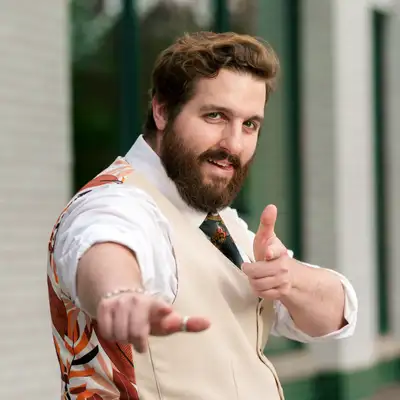
Jonathan is busy with some client work and making some money for us to be able to pay for this podcast to be a reality. But we have somebody very special with us. Mark Benson, a young adult writer, a NASA ambassador, and a space enthusiast.
So welcome to the show Mark. Thank you so much. Happy to be here with how many of you there are.
It doesn't matter. That's right. The three best are here.
So why don't you start off telling us a little bit about yourself, your book project, how you got into, you know, working with NASA, your space enthusiasm, all that, and then we'll get into it. Sure. Yeah.
I grew up here in the south suburbs of Chicago. I went to school at Marquette University in Milwaukee. Got a journalism degree there.
Moved around working at a bunch of newspapers and just throughout different careers and different projects. I always kind of had writing going on and I always had an interest in space and space science that were just kind of with me forever. And yeah, so I mostly was writing short stories and I think as a lot of people who dabble in short stories think at some point there's going to be one of these that just needs to be longer.
And I was kind of on the lookout for that. Like I almost, I almost thought of it. I compared it the other day to to a runner who's got themselves like really good at like 10 Ks.
And they're like, you know, one of these days I would love to see what would happen if I tried a half marathon. Like what would happen if I went longer? Would that be a disaster or would that actually work? So I kind of just kept writing short stories until I found one that I felt was worth making longer and wrote it. And it was, you know, usually one of the worst things that's ever been written by anybody ever.
I don't even, I cannibalize a lot of my old manuscripts and steal like, well, that character was good or that scene was good or that setting or whatever. I'm going to steal that. I cannibalize nothing from that first one.
Like it's just gone. But once I got to that point, um, I couldn't, my brain had recalibrated itself to that length of story and that depth of character development. And, uh, I've only been writing novels, novel-like stories ever since.
And, uh, yeah, as far as the NASA stuff goes, I've been interested forever. And my mom got me into that when I was a kid. Um, she would make sure that I would watch every launch of, uh, you know, from my, from my age, I'm from the space shuttle era.
So I made sure I watched every launch of everything, every landing of everything. And, um, that just kind of followed me. I never worked, you know, in science.
I never, you know, had a job in that. Um, it was just an interest. And then, um, I went on the Adler Planetarium, the planetarium here in Chicago.
I went on their website one day to check their hours and they had a little bug on their advertising for needing people to work in the observatory to help guests. And I thought, you're going to let me touch your equipment like for free, like really, like you just want people to come in and do this. Um, I don't have to pay for that.
I can just do that. Um, so I went there looking for hours and I ended up with a, uh, where I was with them for seven or eight years volunteering as a telescope facilitator, helping run their observatory, teaching guests, hundreds and hundreds of guests, um, about, uh, telescopes and space science and all that. And it was just kind of one thing led to another.
I ended up kind of from talking to all of them, I ended up connecting with an opportunity to go to Pasadena to watch an end of mission for the Cassini mission to Saturn to fly out to jet propulsion laboratory and be in mission control and watch an end of mission. And I just filled out an online application for that, not thinking anything's going to come of it. Um, and I got picked along with, you know, maybe two dozen other people to come in and have like a three day thing, um, at JPL.
And somehow I got picked. I was literally the first day I was sitting between the guy who handles all of the makeup and costuming for the Star Trek universe. And one of the show writers for the expanse was like on the other side of me.
And I'm like, hi, I teach people about telescopes sometimes like when I'm free. So, um, so I ended up there and then at the end of that mission, I ended up talking to a couple wonderful, uh, NASA people and they pointed out an ambassador program and asked if I was part of it. And I asked them, what's the ambassador program? And they flagged down the person in charge of it who was in the room and said, here, here's, here's a candidate for your ambassador program.
And, uh, I applied and got that too. I have really good references because I have these two like amazing NASA legends who are my references like onsite that day. I would like to say that may not be the best ambassador, but I had the best references by far.
And, uh, so I've been doing that for, I was just like, I'm doing that for about nine years and I'm pretty soon I'm going to have my 100th public event. I'm going to put out, which means I've been putting out about 10 events a year. So it's pretty good.
Well, I resonate what you're saying. Cause I grew up on PBS, Star Trek and Star Trek, deep space nine. And I've always had a fascination with space and space exploration.
Never went as deep into it as you have just because time or discipline and, you know, I was a kid, but I find books about space, fascinating space travel, very interesting. So anything, Brian Cox or Neil deGrasse Tyson, when, when there's a video on them talking about space, uh, I'm devouring it. And you wrote a book about space.
Yeah. One thing we want to do on this podcast is I told you before we hit record is Jonathan's again, uh, way of putting it as an indie author uprising. So the, for this next segment, we want you to talk about your book, how it became a book and not a short story.
Maybe that'll help me actually finish my short story. And then just, just about not just the plot because people can read about the Paul, but like what's the Genesis of that book where you're trying to accomplish with it, maybe touching a few key plot points. And one thing I do want to talk about maybe throughout the whole episode is cause it's near and dear to my heart is, you know, healing through discovery.
Like, well, how, how's that connected to your book? So if you take it away. Sure. Yeah.
I'll jump in. So my book is called Isaac in the sky. And, um, it was, uh, so I developed stories.
I'm sure all the writers do it this way. My writer friends always think it's a weird way to develop stories, but I'm sure there's lots of people who do it. Um, I kind of developed stories in halves.
I come up with characters and I've kind of notebooks full of characters with backstories that I think are interesting. And then I have notebooks that are full of like adventures and plots. And wouldn't this adventure be cool.
Or wouldn't a story about this be really neat. And then I kind of put the notebooks together and I figure out like, I have characters who need an adventure and I have a list of adventures and I kind of start trying to match them up where I think they fit. And this was one that fit immediately.
Um, like literally within minutes. Um, I'd had the character of Isaac for a very long time in my head. Um, and I'll get into his character, but, but basically how the book came about was I was at the Adler planetarium, um, doing volunteering there.
And after my shift, I went and saw a sky show in their dome theater. And the sky show was about two like world-class astronomers who had a theory about a ninth planet and our solar system, a true ninth planet, a gigantic planet. That's just has a massive orbit and hasn't been anywhere near us for a long time, but there's a lot of circumstantial evidence that suggests there's something large lingering out there.
And the whole show was about them searching. And these two have PhDs on top of, on top of PhDs. They have all the best telescopes, all the best assistants, all the best, everything you can imagine to search for this planet.
And they haven't found it yet. And I saw the show and I was fascinated by the show. And I came right out of the theater.
I walked right onto the front steps of the, uh, the top steps of the planetarium. And I was kind of glancing across the parking lot, trying to remember where I put my car. And, um, and I thought, you know, what if just some kid found this thing on accident with nothing of a telescope, no really understanding what he's necessarily even looking at an interest enough to have a telescope, but wasn't even looking for it was in a light polluted area, not on the top of a mountain in Hawaii was just, just looking at it from a city with a little telescope and just accidentally looked at the right part of the sky at the right time and made this discovery that these other two couldn't.
And I instantly thought, okay, well, this is, that's interesting. This could be a story. So I started walking in my car quickly because that's where my notebooks are.
So I started walking, walking quickly and kind of most of the way, maybe half of the way to the car, just like two minutes later, I had already had the name Isaac popped into my head. I was like, okay, no, I've got this character, Isaac and Isaac for a lots of reasons in the story, Isaac fits this. Isaac needs, needs to find something.
Isaac is, doesn't realize he's looking for things, but he is, he's desperately trying to find something for himself, something to change his world and to adjust what's what has taken shape for him and the way the world casts him. And he needs something. And it took no time for me to say, yeah, no, this is Isaac story.
I'm, I'm going to give Isaac this story. And, um, I sat down in my car and I grabbed a notebook and I scribbled down almost immediately. I don't, I don't remember exactly the words, but I basically scribbled down, um, with his mom's telescope, Isaac sees something that no one has ever seen before and he hopes it'll make the world see him in a way they've never seen him before.
And as soon as I scribbled that, I went, yeah, no, I've got a novel. Like this is, this isn't going to be a cool idea today. That's a scrap by tomorrow afternoon.
Like, which I have plenty of those. Um, but this, as soon as I scribbled that I was like, no, this, this, this one's real. This is a book.
And by the time, you know, 20 minute ride back home, um, I had most of the story plotted in my head and I was just desperate to get to a computer, um, to get going. And I think I wrote part of the first chapter that same afternoon, like immediately, immediately. I had a first draft within, uh, I think 27 days, um, beginning to end first draft, um, which is a little fast for me.
I tend to write still pretty fast. I write in about a month and a half. I usually get a first draft.
Um, but yeah, I had this one even faster. And, um, yeah, it was just kind of perfect. Cause it tied my interests kind of in this night, nice little, nice little bow.
There's plenty of science in this book. If you're into the science and you want to know about the science, there's enough in there that you're going to latch on and know that this is real and it's been researched and the writer knows what he's talking about enough to do this. Um, but if you're not into the science, it doesn't drag you down there.
It's about a lot of other things. The science is a means, um, to tell a story, the, the planet discovery, all of that as a means, the telescope is a tool, not just to discover a planet, but more so for the character, uh, to discover a path, uh, for himself and not just a path for himself for, but a present, like just to look down and see some light around your feet. So you even know where you're standing.
Um, and that's, uh, so that, that's kind of how that, that story developed very quickly. And yeah, I was a big fan of the story right from the start, wrote it immediate, put other projects aside to write it. Um, and you know, from, from, uh, you know, professional and publishing standpoint, I was at that point, um, I was working on trying to be, you know, published traditionally.
Um, I had had one agent before, um, a book we agreed it was going to be only a one book thing to try to sell, just cause it wasn't one I typically write and it wasn't one they typically rep. So we just got, so let's just try to sell this one and then we'll, you know, we're not really a great fit otherwise. And it didn't sell.
So we parted and, um, I queried Isaac and I landed the agent that I always wanted to be my agent, uh, with it like right away. And, um, and you know, she loved it and she just, you know, I was with her for a few years and unfortunately that didn't sell and a couple other things didn't sell. And we just kind of like, well, what do we do? This isn't working.
We should just spend, we should, you know, you're great, but you know, it's, it's the point is to sell it and it's not working. So, so we separated. Uh, so, but she was just such a big advocate for it that when I kind of circled back around to this past year and thought, you know, maybe I want to try publishing some of these myself.
It was the next question is, okay, well I've written a lot of stories, which one do I want to do? And there was no question. I was like, no, Isaac, Isaac's the one that I was the most passionate about the first. And at the time that I wrote it, I think I would say it's probably the best thing that I had written at the time.
And I had that extra credential of, well, I know a really good agent loved it. So I do have some, you know, industry credibility behind it. It's not just, I love it.
No, someone who's objectively smart on publishing also loved it. So there must be something to it. So, um, this one, I checked the boxes of what I should, what I should do first.
So yeah. Yeah. She just started her own agency.
Yeah. He has a publicist. Yeah.
Oh, sorry. Yeah. Yeah.
No, the, the literary agent, sir. Megabo. She just started her own agency, which is awesome.
Uh, I was with her when she was part of a different agency, but she's got her own place now, which is super cool. Um, but, uh, and I just sent, put in the mail, like literally two days ago, I put in the mail, a copy of my, of that book for her and a good note for her. I didn't realize she left agencies.
So there was this whole thing where I'll like, I sent her an email and like, Hey, I just want to let you know, I, you know, that book you believed in all those years, I finally just published it and it wouldn't have happened without you. And I want to send you a copy. I'm really happy about it.
Where can I do that? And there was no reply. And I was like, hard browser. Oh my, I thought we were, did she not like me? Like what happened? And, uh, I realized she, a couple of months later that she started her own agency.
So she wasn't checking that email. So like she replied like within like 30 minutes when I sent it to her good email and she's like, yeah, please send me the book. I want it.
Okay. Um, so, uh, so yeah, that was, uh, that, that was exciting too. So I want to ask, um, so, or just wonder if you could talk about this, like, you know, when I was in school, we had nine planets because Pluto was considered a planet, at least when I was learning about the solar system.
Right. So like now it's no longer considered a planet, but then, um, so like what, like what makes it not a planet, I guess. Yeah.
So it's considered a dwarf planet. And if I remember right, what makes it not up there, there's, um, the group that determines these things, there's a few criteria that go into, if I remember right, there's three criteria that go into making something a planet. Now it's not that simple as three.
There's lots of detail under those subcategories upon subcategories, but one of them, if I remember right, has to do with the planet, the object out there in space, basically clearing its neighborhood and kind of being the dominant in its own neighborhood, clearing the area of debris and other things, and just kind of being in control of its own orbit and its own area. And I always like to refer to, especially when I'm talking to like classrooms is to say that Pluto didn't clean its room, like its area of messy. It does not in, there's no sense that it's really controlling and has its area covered like Jupiter might, or we might.
So Pluto's got some cleaning up to do in its neighborhood before it could be considered, because otherwise there's so many other objects out there in that same part of space that could, that have a lot of similar situations as Pluto that you say, all right, well, you know, it's bad you don't have to learn nine planets, but if we include them, you might have to learn a thousand. And I don't think anyone wants that. So yeah, if I remember right, that was the main criteria that it was missing.
It doesn't quite have control of its turf, to put it in a very general way, which is, you know, from a non-scientific view, which I'm not a scientist, that's how I am used to talking is getting things down. Like I used to say, tell people that my job with NASA is I talk to rocket scientists and engineers and astrobiologists about what they do. And after they tell me three or four more times, because I asked them to explain it again, then I'm ready to talk to a school, but I have to have them really dumb it down for me first.
And a lot of times it's good when I'm talking to them to get it out of the way right away and say, oh, just so you know, everything you tell me today, I'm going to share with a group of third graders next week. So if you could just give me some help with that right off the bat, understand the audience right off the bat. Yeah.
Yeah. So it's funny, I was watching, I was watching a show the other day. And in that show, the premise is the president is getting briefed on this bunker, which is the super, you know, scientific bunker, it's going to protect people and scientists is explaining everything.
And the president's like dumb it down a level. And so the scientist starts explaining again, he goes dumb it down even more. He's like, it helps us breathe.
He's like, there you go. That's all I need to know. It helps us breathe.
Yeah. It helps us breathe. That's very, very important.
I know that much. That's important. Yeah.
That's a good one. So, so does, uh, does the orbit of a, of a planet also, it's like, I'm assuming that's considered in determining whether Pluto is considered a planet. So like, I know if I remember correctly, it's more of an elliptical orbit, uh, around the sun versus the others.
Like, does that come into play at all? Or are there other objects? Yeah. I'm not sure if the orbit type is a, is a big factor on that because the one that they're, that these astronomers are still looking for, and luckily they're still looking for this giant planet because I guess I was like going to publish the book. I'm like, don't find this thing right please.
It's not nearly as good of a book of it's there's looking for a 10 planet. Right. Um, so that one has this incredibly elongated orbit that takes it like really far away.
Um, and the, all they're reading is these gravitational pulls on objects. They're saying, well, something's pulling this direction. What is that? Um, and that orbit is huge.
And I'm trying to remember it's a little bit of a guess, but I mean, the orbits like, I mean, the orbit was, I think tens of thousands of years is what the assumed orbit of this planet, planet would be. Cause I remember thinking that, you know, the last time this planet might've been in our neighborhood, if it is as they theorize that it is, we really wouldn't have been have humanity really wouldn't have had much of a means to look up at all to understand what was going on. They're they're like, I think it was less than a million people on the planet at that point.
Like it was really not a lot of hunter gathering going on. Uh, not a lot. Yeah.
So, yeah. So, um, yeah. So I, I, given that, given that that would be fully considered a planet at that orbit, I don't think Pluto's got an issue on that one.
Yeah. Okay. Yeah.
But that's a little bit of a sure. It is super interesting to think about like discovering something in space. Like, I think it's hard to get like your, your head around it, like how vast, how huge space is and like, yeah, just like the idea of like, you're fine.
You're looking for something like a needle on a haystack literally like, yeah, but yeah, I mean, it makes sense. So if you have like elements that point to indicate to something being here because of like gravitational pulls and all that, it's super cool. Yeah.
It's all very circumstantial. It's all, well, there, there seems to be something. Um, and it makes sense.
Like I remember coming out of that show thinking, uh, they sounds like the right, like, I don't, I'm not in a position to disagree at all. In fact, I agree so much. I'm going to go write a book about it.
Yeah. It's, it's fascinating to dovetail what Josh is saying. Like, if you, if we think of the earth as the size, size of a basketball, the moon would be like 40, 30, 40 feet away and Mars would be about a mile or so away, you know, roughly.
So just to wrap your mind around something that is so humongous that it affects things, you know, over those fast distances. And that only shows up every 10,000 years is, is, uh, I don't know, for me it's fascinating. I'm fascinated by those kinds of things.
It's, it's, yeah. I mean, I think, I think the mission to Saturn, I think it took seven years to get there. I mean, something like that.
Yeah. I mean, and that's just, that's our own cosmic neighborhood. Like that's nearby relatively speaking.
So, uh, yeah, yeah. The space doesn't play fair when it comes to distance and size. It just doesn't.
Nothing, nothing makes sense. I mean, you can take every planet in our solar system and you can cheat and include Pluto and you can fit all of them inside of Jupiter and still have a little bit of room left over. Like that doesn't make sense.
Like, how is that possible? Like that's, yeah, that's the scale is, uh, is wild in space stuff. Yeah. Scale is wild.
Like what would happen to us, even if we were able to build a ship that would protect us and would go fast enough that, you know, maybe we can, can come back in our lifetime. That round trip wouldn't take us out of our solar system. Like we can, we can maybe visit a few planets and then come back 40 years later.
Right. And because Mars is what, uh, six months away. Yeah.
Depending on when you launch, it goes from like six months to like a year and a half or something like that. So yeah, they're always trying to launch at the six month mark. So even that, like that's our neighbor.
Yeah. I mean, even like these, I was just watching the live NASA feed earlier to the moon and it's like, all right, well the moon's right there. I mean, look, you can see it in the sky.
It's huge. It's right there. Yeah.
That's, that's a six day trip guys. Like that's a six day trip. Yeah.
So that's, that's a week. Like that's still quite the trip. So I was listening to somebody talk that the way we envision space travel and we meaning lay folks is like, Oh, you know, it's a human exploration and it's almost, I'm going to, this is going to sound trite.
I don't mean in a way, almost like a pet project, but if a nation or a group of nations decides to go travel to a planet and not just send a probe that takes trillions of dollars and in our current, our current sound of technology, the way I understand it, it's the fuel and the amount of time it'll take to get there. Right. Yeah.
Yeah. And there's, you know, one of the things I, one of the things I always get asked, I, I was doing a, I introduced a showing of Project Hail Mary a few weeks ago on opening weekend at my local theater and did like a 30 minute presentation before the movie. And then everyone got to watch the movie afterwards.
And, you know, it's predictable that anytime I do an event like that, it's, the question is always going to come up simply about, can we go that fast? Like how do we go faster? How do we, these things are so far away. How do we go faster? And it's always, we're working on it. Like it's hard, you know, Project Hail Mary, they, you know, they use, you know, a, a, a fuel that doesn't exist, like, you know, our world.
So luckily for us, but yeah, that's always a question that comes up is, well, the scale is so big that none of this is going to work out for us unless we figured out how to go faster. It's like, well, sure. Get to it, figure it out.
I think it's, that's a hard one. That's a really, really hard one because that, that's beyond that. And just the effect on human bodies in space for that amount of time, those are kind of your two big hurdles.
And that, that comes up all the time. When I was going to say in terms of like the science within Project Hail Mary, that's probably one of the biggest things that's, that's like, it's feasible that we would be able to travel that fast, but like the fastest object in space, I think that we have launched was at, let's see, I was looking at Voyager, maybe. It was the Parker Solar Probe.
Oh, the Parker. Yeah. And that was traveling at 0.064% the speed of light.
And then in Project Hail Mary, he's traveling at 93 to 94% the speed of light. So it's like, yeah, we've got some, we've got a ways to go to get to that. But then Slava was mentioning before we jumped on the call that we have had some, like been able to get particles to a pretty quick.
Yeah. The Fermilab. Right.
Yeah. It's getting people to that speed. Yeah.
Right. So that's a really, really tough one. Yeah.
Yeah. Yeah. And something interesting, I looked up before we started recording, before even the guys jumped on for our pre-call checklist.
Oh, don't do research. That's a nerd. I know.
I can't help it. But if we figure out how to travel safely the speed of light and find the right wormhole to go to the Andromeda Galaxy, and let's say we get there in a couple of seconds, the best scenario possible, everybody we know is dead and we probably can't get back. So, hey, let me take a selfie and just die in space.
Yeah. I guess it depends on who you know to whether that's worth it or not. Right.
What's your friend group really like? You're signing up for that. But I want to shift gears a little bit unless the guys have any more science questions and come back to your story and this healing through discovery thing that you do. I find that fascinating because the short story I'm trying to write and I'm actually, you know, I was kidding earlier, I'm actually dedicated to writing it and having a few authors on and hearing their stories and how they tailored their craft kind of pushed me to do it.
So the story is autobiographical and it is for me healing to process certain events of my life that I'm putting into this book. And something I saw on your website is your characters hate you. And so my character goes through hell.
Yeah. My character, who is me in some way, it goes through hell, but it's cathartic. It's healing.
So I want you to unpack that for us. Yeah. Yeah.
My character saved me. I start with the very basic and this is not unique to me. This is something that I was taught years ago.
And whether it's for better or worse, that's subjective. It's writing and it's storytelling. It's however you want.
But it stuck with me and I like it because my agent, who I did have told me years ago, said, Mark, your superpower is sadness. And I thought, oh, flying would have been cool, but OK, sure, sadness. I'll take it.
I've got a cool Pixar character I can lean on. Wonderful. All right.
So, yeah, one of the things I was kind of taught that really took root for me in storytelling was this basic idea of um, think of the worst thing you could possibly do to your main character and do that to your main character. The worst thing ever you could do to that person and do it to that character. And then once you've done the absolute worst thing you could possibly do to that character, find one more thing that happens to be just a little extra worse and throw that on top.
And once you've gotten there, now you have the start of a story. Now you can begin. So bury them in the deepest, darkest hole and then dig just one more shovel deeper.
Ready, set, go. And I always took that to heart. Like, I just immediately love that concept of storytelling.
With Isaac, that was, you know, I mean, what's worse for one person is going to be different for someone else. But I remember when, again, I developed characters independently and I thought, okay, well, Isaac went through several layers of worse. Because for Isaac, Isaac lost his mom to an abusive dad who, during a fight, the dad kills the mom.
And, okay, well, that's about as bad as it gets because you've got the mom is gone, the dad's also gone because the dad's in prison. That's about your bottom. But I couldn't stop there because I had to go a little bit more, which is why my characters hate me.
But I thought, okay, well, what would be worse than that? Okay, worse than that would be being famous for that day that you had no control over. And so, okay, so he's little, he's going to be little. And how does he become famous? Okay, well, I have a journalism background.
So my brain went to that place and thought, okay, a local photographer captures the greatest worst photo ever of Isaac being led from his house by police after and all he's got with him, all he has left is his puppy. That's it. And I immediately got that picture in my head that that photograph just stuck in my head and thought, okay, that's, that's as bad as you can go like that, that that's, that's your bottom.
And that's where I get excited when I'm writing, because then I think, okay, well, but how do you get them out of that? Or actually, more importantly, how do you get them out of that? How do you keep them moving? Where do you give them forward progress? Once you give someone some setup that's that bad, what keeps them trying anything? So that's where I got kind of interested and got really excited about his story about where, where he would go, and why I was so excited to tie him into the telescope story. And even just kind of practically thinking, you're in your deepest, even in the deepest, darkest hole, you can still hit this little spot where you can see the sky. And Isaac uses that one little spot to get him a way out.
And despite everything that's happened to him, he, you know, I get throw out words to describe him, I could say that, you know, what's he like at the beginning of the book? Well, he is, he's, it's 10 years at the book starts 10 years after all this happened. And the news organizations want an update, like, it's been 10 years since this all happened. And where's the kid? What's going on with Isaac 10 years later, and his dad has his first parole hearing coming up.
And this is coming around. So people are kind of sniffing back around Isaac. And he already knows one thing he dislikes for sure.
And that's attention. That's the worst thing that to him is this attention. But even despite how angry, how sad, how defeated, how depressed, how lonely, and rejected he feels pretty much at all times, the book opens with him on a drive to a TV station to sit down for one interview that he agreed to do.
Because he thinks maybe if I just give them one, like just answer their stupid questions once, it'll go away, it'll be done. 10 years later, done, gone, I can now just be myself. So despite everything, the book opens with him being either hopeful or naive, depending on how, you know, you might subjectively react to it saying, no, Isaac is in the deepest, darkest hole you can possibly imagine.
And the book starts with him reaching out, saying, I will try one more time. I will try the society thing one more time. And that doesn't go well.
And he, you know, very quickly learns, gets that lesson reiterated that nope, nope, see, that 49% of my brain that told me society is bad, world is bad, no one is going to treat me right. That's the part of the brain I should have been listening to. So he starts to retreat, just right back to his hole.
And so that I mean, that's kind of where Isaac starts. And it is very, everything is very dark for him. There aren't friends, he has his puppy, who's now a much older dog.
That kind of, it's interesting in the sense that, you know, I gave him a dog, I wanted to make sure he had someone because he needed, for a couple reasons. One, I wanted him to at least have someone that had a shared experience. And the dog had a shared experience, obviously, very different understanding of the experience.
But he can look at the dog and say, well, nobody knows me better than the dog. No one knows what we've been through like this dog. So I wanted that.
But also, you know, you know, talking, going back to writing and helping people with the storytelling. It was also a literary device, because I knew that I was setting up a character who is extremely lonely, spends all their time by themselves, doesn't want to be around anyone. And from a for pure literary device, I needed him to have someone to talk to.
Like, if I'm just writing prose for the first six or seven or eight chapters of this kid, just internal thoughts, that's going to be terrible, like that's not going to read well at all. So it worked on that level as well, I needed to give him someone to talk to, I needed there to actually be dialogue. And, and someone that he could lean on the he needs the, you know, the relationship with him and the dog's name is Miles, is, it's mutual, like they both, they understand each other a level that no one else understands them.
And Miles gets all the things that dogs need attention and food and walks and playtime and all that stuff that make dogs happy. And Isaac gets someone to talk to. So, Isaac, without Miles, the dog isn't just there, because I thought it'd be nice to have a dog.
If the dog wasn't there, I'm not sure Isaac goes to that TV station. I think I removed the word hopeful from my list of characterizations of Isaac. I think he needs that dog to still have a sense of there's good out here.
And right now, the only good I have is a dog, but there is still good. There's a reason to be around. And so the dog was very, very important.
And that's why, you know, when I was looking at putting together the cover of this book, the cover of the book is Isaac and the dog. And that's it. Like that's, that's the, that's the key relationship that's required.
That's the only relationship that's like required for the book. Other relationships are great and they're important, but without that one, I don't think the book exists. Yeah.
And everybody loves a boy and his dog story. Like that's, you know, you can wrap it around all the sadness and darkness that you want, but a boy and his dog. Yeah.
And I'm totally willing to spoil it. I almost put it in the, in the, in the front of the book too, just for people, but nothing happens to the dog. I was going to ask if you killed a dog because that'd be horrible.
I almost put it at the front of the book. I appreciate it when people do that. I chose not to for no particular reason.
I just didn't, but the dog's fine. This isn't about now dealing with the loss of the dog. No, the dog's fine.
No dogs were harmed during the writing of this book. The dogs. Yeah.
My, my dog characters like me, my human characters do not. As you were talking, there was again, that, that healing through discovery, it keeps popping up. So when I saw that in your media kit and here, I just want to keep peeling back the onion.
And again, so resonate with the story of Isaac. Cause I've never experienced, you know, what he has, but as I mentioned, hopefully so few people do, but I, I do come from an abusive home when one parent was taken away, but by disease. And I was left with the, the abusive parent.
And there was an event in my life, which I'm not ready to talk about with the audience yet, where I was also photographed by some news people coming, you know, coming out of a house, you know, I'm sure you guys can piece it together. Right. And very similar.
I was popular for about six months at school. Now I wasn't bullied because of it, but I was like, I, I don't, I didn't want to talk about it. It didn't make me feel happy to be popular because of that.
And my, my dog, my miles was always books. So that's why I enjoy this topic so much because for me as a kid, I would get lost in a Stephen King book or I get lost in Arl Stein books. And for me, that was hopeful because I would read about other people and Stephen King and Arl Stein.
They put some of their characters through hell too, but there was always hope. And I, and the good characters. Yeah.
And the good characters kind of gave me hope because I was like, Oh, not every parent is a piece of shit. You know, it's all right. Like, and so it's all, this is very, very near and dear to my heart.
So I'm loving that you're doing. Yeah. And I, so, and I think with, with Isaac too, he one of the things I hope people will take away is that when you're, when you're kind of going through the first part of the book, you're before, you know, some twists and it starts turning.
You can very easily identify that the world is not treating this kid right. He has a unfair start from the beginning and it's not, and people are not reacting to him well, and he's being bullied about it. And, and it's, it's a reaction and a counter reaction and he's going, he's hiding.
Oh, I've got to hide more. I've got to hide more and I've got to hide more. And he, he spends, you know, a lot of that time is just thinking about how everything is unfair and no one is good.
And everyone I come across, you know, want something from me, like to interview me for TV or, you know, was whispering behind my back or whatever. And he always just has this kind of negative take on everything around him. But part of it is because all he's really spending his time doing is thinking about how he doesn't fit into the world that exists.
And when he's tried to, it ends badly for him. And it's because he is playing out as everybody's, as a side character in everybody else's story. He's the side character in everybody else's story.
In this town, everybody knows who he is and what he is and why he is. And he's a side character to them. He is, oh, the weird kid.
He's, oh, the kid who hides out. Oh, he's the kid who this, he's the kid who that. He kind of spends the first part of the book being everybody's side character.
And things don't start to turn for him at all until he starts to recognize something that he realizes in much grander form near the end of the book, that you are allowed to be the main character in your own story. And you get to be like, yeah, yes, we are all, we don't want to be overly selfish, and we want to contribute and we want to be kind and we want to be part of society in whatever way we can be comfortable doing that. And we want to be all these wonderful things.
And, and that's great. But you do still get to be the most important person in your own life, you do get to put yourself first. And that shouldn't be something to apologize for.
And when he starts trying to build instead of saying, I don't have anywhere to fit in this world and starts to think, instead of well, what is my world? And who would fit in mine? He starts to find people that he's willing to communicate more with, and he's willing to let in just a little bit. But every time you let someone in, it's extremely dangerous, because it does not typically work out for him when he lets people in. And this discovery of the planet is kind of the ultimate in red alert risk factor.
Like, this isn't just choosing to let some new kid in class, and they was from out of town, and maybe doesn't know him super well, or who he is, this is potentially letting the world back in. And so there's nothing to him more dangerous than what he discovers, like this is extremely dangerous stuff. And he has trouble seeing it in any other terms.
And this is dangerous. What did I just find? So he's extremely careful about it. Yeah, I can see in a world where there's a journalist who would go and welcome Isaac, you know, victim of, you know, witnessing a murder.
He also discovered a planet. What would the crawl under his name be? Like, what in the world? Like, that's just the worst. Boy discovers planet.
Mom also killed when he was eight. Yeah, yeah. It's always gonna be in the same sentence.
It's not going to be boy discovers planet. It's going to be tragic, traumatized teen discovered planet. Yeah, read the link, follow the link right here to figure out why he's traumatized.
Like, it's always going to be there. He's never just going to be the amazing kid who discovered a planet. That's never going to be a thing.
And yeah, for him, it was realizing that there is still a world I can build for myself. If I can claw through some of this, if I can let myself be sad about these things, but also realize that with precautions, there are people here who are good. And if I can find the right ones and be careful about it, I can start letting in people and I can start building a world that's mine, as opposed to making myself acceptable to the world that's already out here and has already had enough.
Doesn't should doesn't know right to have any more of him than it's already had. It's already had more of them than any world should have. And he was eight when it happened.
So like, he's, he's hyper overexposed. And that was always led negatively for him. So just making a planetary discovery is not on his list of to do's.
So yeah, but it's always those moments we don't expect it right that propel you into healing or propel you on a journey of self discovery or whatever. Sure. Insert the right term there.
So as I read the plot online, as I'm hearing you talk, I am more and more fascinated. So like, I encourage the audience to to pick up the Isaac in the sky. Because it seems like a like, I like sad stories, but it seems like a good sad story.
It's not just all sadness all the time and nothing good happens. It's a hopeful story. And it has a dog.
It is a hopeful story. And he you know, without it's not giving stuff away. I mean, he he starts trying trying to navigate the world that he's willing to navigate.
And he starts discovering, not just the planet, but starts discovering people that are safe for him to be around and will accept him. And people who have been here this whole time, that he saw, you know, there are people in his life that have been with him forever, that he always kind of also pushed to the side, even though they weren't pushing him to the side, but he was looking, he was viewing them. And I'll let people see that in the book, but he's viewing them in a negative light that this person doesn't know what to do with me.
And this person doesn't. I'm stuck here with this person. And it took him a while to figure out that there are some people in his world already, who are good and safe to have around, but he wasn't even willing to recognize those at the time.
Well, I would just want to also bring up, well, first, actually staying on the book. Yeah, I mean, like he if he attention is like his worst fear, given all this, what has happened to him, then yeah, discovering a planet is like the last thing to avoid attention. Yeah, there are very few things that would be worse than that.
Yeah. Yeah. Yeah.
I also wanted to bring up, I mean, it's just, I'm assuming you've been following like the Artemis 2 mission, which is like pretty crazy. Like they're right now orbiting the moon. Yeah.
They just circled around the back a couple hours ago. They were on the far side for a little bit out of communication for about 40 minutes and now they're back around and I'm really excited to see a video and pictures that they took on the flip side. So that's going to be some cool stuff.
Yeah, absolutely. And it's great. I go and I talk about this at events and I tell, you know, science fiction and science reality.
Like I go and talk to, you know, I, you know, one week I'll talk about Artemis and the next week I'll talk about Project Hail Mary and it's not getting off topic. It's the same topic because science fiction, the best science fiction goes out on a, like a diving board. It goes out to the farthest reach that science knows and understands and that says, okay, well, like what would be next? What's just beyond our understanding? Yeah.
And if you build it right, they can be amazing stories. So I love talking to people. I mean, I'm into space stuff.
I know part of the reason I'm into space stuff is because of the books I read and the movies I saw when I was a kid. So I'm just a huge proponent of people reading fiction and watching fiction to get excited about. I read Contact when I was a kid and I watched E.T. and all of that stuff, you know, just like made me go outside and just, even if I wasn't thinking about it consciously, every time I walked out under a starry sky, I was thinking about it a little differently than, you know, maybe anyone, you know, who wasn't reading that stuff or watching that stuff.
So, yeah, I'm a huge proponent of people, you know, it's not just, well, there's fiction over here and then there's reality over here. No, they overlap. That's important that they overlap.
It's really important that they overlap. So the next group of astronauts, 10, 15 years from now, they're going to talk about seeing Project Hail Mary and wanting to be, you know, wanting to be, you know, grace and wanting to go out there and like, you know, that's, they're going to talk about that. So why would we try to separate, you know, one from the other? Just because one's real and one's not.
It's, if there's a good emotional link to it, it's all human and it's, it's, it's all real therefore. Yeah, absolutely. Well, and even like, I mean, what we're doing going just like the mission to the moon and all this, at one point it was science fiction also, like the idea that we'd be able to send all of the crafts up there.
We'd fire a bullet and it would puncture the moon's eye. Like it was all science fiction. Yeah, absolutely.
Well, speaking of solving problems, Mark, I'm just curious if you have any advice for authors, writers, you know, finishing what you started, creating characters, that sort of thing. Like if you like, say I want to start writing a book, have an idea in my head, like what advice would you give to someone who maybe is just starting out, but maybe has some writer's block or something? It's not unique advice to say that it's important to read or watch movies. I'll say, I mean, reading is obviously important if you're going to do the writing of a book to just see the way that people structure things and understanding that, but I don't, I'm not one of these writers, like one of these novel writers who's going to say, well, you can't learn stuff from film, that's different.
Now you can learn lots of stuff from film. I actually encourage writers to spend a little more time studying song lyrics, because if you think about it, someone might take three weeks to read a book. And so that writer has three weeks to get an emotional connection and make you cry during it, if that's what their goal is, which is almost always my goal.
So I've got a few weeks to get your head. I've got 250 pages to get in your head and really get an emotional response from you. A movie, man, a movie's got like two, two and a half hours to somehow draw an emotional response from you.
A song, three minutes. We've all cried at songs. So those songwriters, brilliant.
We should all, any writer should be listening to songwriters and looking at lyrics more often, because what they get done in three minutes is stunning. I mean, so reading your genre, reading what is out there is important. Watching films in that genre is important.
I think it's also important to, you really need to figure out what the story is about from a theme standpoint. If I had a whiteboard in a classroom, I would draw it. But I always tell people that a novel, these are long stories.
So you're going to have, if you've got your straight line here and you're like, well, this is my story, this is the beginning and this is the end over here. Well, you're going to have secondary characters and subplots and a twist and then a third level of characters and then some other things going on. And then some just things that you just want to put in there.
So they just go over here and then you get to the end. And those are all really important. But your story is the straight line.
Your theme, the thing that you want to say is the straight line. I actually encourage people, I think maybe my best piece of advice, and this doesn't have anything to do with whether you want to be traditionally published or not traditionally published. It doesn't matter.
Do a little bit of reading. You can find perfect, great examples online sometimes of some really good books that these, I don't know how they get online, but they do. Or you can just find lots of examples that are generic.
I think it's really important to understand the writing of query letters and query letters are what you use to get an agent. So you don't just, you know, for those who don't are involved in publishing, you don't just, you know, get an agent by you just mail people your book. Like that's not how that works.
And you don't get a publishing house by mailing your book. The publishing houses don't want to hear from writers. They want to hear from agents and agents get sometimes hundreds of pitches a day.
So you're going to send them what they call a query letter. And the query letter is basically two or three paragraphs to get someone interested in your story. It doesn't give away the ending.
It's not like a synopsis that's going to be spoilery, but it's like, this is what the book's about and why you should be excited about it. Two or three paragraphs. That's it.
That's all you get to get an agent's attention. And I don't care if you're trying to get an agent's attention or not. If your goal is I'm going to self-publish this and I'm going to self-publish everything.
Wonderful. Write a query letter for your book first. Write that query letter first and then refer to it as you're working.
Are you still telling the same story? Because that query letter is the straight line. All the other stuff is in your synopsis as the rest of your book. Your query letter is a straight line.
Like my book has, you know, a book might have 10, 11, 12, 15 important characters in it, but the query letter might only mention two because the rest are extra based on just a pitch. Just what is this book actually about? What is the actual story? Could you stand in an elevator and sell your book to someone in three sentences? What is it actually about? So even if I don't plan on sending a book to agents, and even when I was doing that, I did it backwards. I didn't write my query letter after writing my book.
I wrote the query letter first, every time. And even now, when I'm doing self-publishing, I write the query letter of everything I'm working on first. That's my guide point.
That's the North Star. That's what the book is about. And if I come up with a better idea and I change it, then I change it.
And that's fine. It's a better idea. But I really, really, really think people need to work on writing query letters, even if they're not planning on pitching them at all.
That's for you. That's just a guide point for you to understand and to know your story. I went to write a query letter for my first book, and I could not do it.
And it's not because I was bad at writing query letters. It was because the book was terrible. That's why I couldn't write a query letter.
If you write the query letter at the end and suddenly you have trouble with it, that's a red flag for the book. I would rather get that before I start writing it than after I've worked for months to write it. So I think that's important.
Another thing is getting a writing community, which is extremely hard. Writing is lonely, and you do it by yourself. That's how it's always going to work.
If you're into social media, do it on social media. I know 10, 15 years ago, Twitter was the place for writers to find each other. It's not that place anymore.
I'm not really sure what replaced it. I know book talk is kind of a thing, but not really for writers, more for readers. But finding book clubs at local bookstores, libraries, even calling local colleges and seeing if they have club, finding some people to bounce things off of, people you don't know who will read something and give you an honest reaction to it.
I kind of alluded to this early on. Before I publish, and whatever happens for publishing for me, how many ever I publish and how many ever people read them, one of the things that I still feel is maybe the best thing and most important thing I've done in publishing is that I'm not an extroverted person. I'm very much an introverted person.
Most of the time, I have a social battery that's very short, and I can be the life of a party for about 10 minutes, and then I'm out. I'm completely useless. But people think, oh man, that guy is just like, he's so animated, energetic.
What a great guy to be for 10 minutes, and then I'm out. I'm done. But I was like, no, I need, this is too lonely.
I need more people to read stuff. I need more advice. I need more help, even just people who understand my thinking, what this is about.
And I went and I just started, I used, and the tool at the time was Twitter, which I'm no longer even on. But that was where I went and found writer friends, and I just started replying to posts. I started searching for hashtags, and for people who are writing, and debut novel hashtags, and writing sprints, and whoever else was doing whatever writing, book clubs, whatever it is.
And I found people, and I started identifying people I thought were really cool, and then I messaged them, and you just grow a little bit in your relationship with them. And then I put together an annual writing retreat, where about eight to 10 of us go to the Smoky Mountains every year, and we get a cabin, and we go for a week, and we just write. And we are supportive of each other, and we just have a good time, and we write, we get stuff done.
And the first time we did it, it was like, is this gonna be like, is like, this is gonna go bad? Is this gonna be like misery? Like, is this gonna be like, a bunch of writers go into the woods, and Stephen King should write this? Like, this is all gonna end very badly. So much so that the first year we did it, I created a t-shirt for the group, and the t-shirt, I remade the movie poster for Misery. And I just kind of re-edited the text, and the cast was like, all the writers going, and it was just like, something like, 10 introverts, 6 days, 1 cabin, what could go wrong? And we just did our 10th one a month ago.
We've been doing these for 10 years now. And now this group, these are all my best friends, like, in the whole world. Like, I talk to them about writing half the time, but the other half the time, it's non-writing stuff.
And that is extremely important. And I'm not saying everyone should start a writing retreat, or everyone's going to have that kind of luck, because it was luck. I lucked upon the right people.
But wherever they are, you gotta find some people. Find some people. And what we found as writers, we thought, are we all going to sit in a room together, and text each other in silence? Like, we're all in the same room now, but we're going to keep texting.
Like, that's how we normally communicate. Because none of us are really big talkers. And what we discovered is, if you're in a room with people of the same mindset, and people who get you, and when you're a writer, people don't understand you at all.
Like, they don't understand where your brain goes. But suddenly, you take writers who are starved for someone to just get how they think, and you put them all in a room together, and they all become very social. And it worked out.
It worked out extremely, extremely well for us. You know, I told people once that, I remember talking to a group about, it wasn't a group of writers, it was just, I don't remember what, I was trying to think where the group was at. But I was talking to people about writing.
And I remember saying, you know, someone asked, do you ever change your stories dramatically in the middle? Or do you get surprised, you know, by how well something works? Something like that. And I said, well, yeah, I had like chapter 15 of this book, I had this boy and a girl, and I was kind of moving them toward each other for the better half of the book. And in chapter 15, they were going to be at this dance, and they're going to dance, and they're going to kiss, and they're going to become a relationship, and it's going to be all wonderful.
And I had that all plotted out, because I plot out in extreme detail from the beginning before I ever really write anything. And I got there, and I wrote that chapter, and it was really bad, it didn't work out well at all. So I literally select, all, delete, and just rewrote the chapter again.
Select, all, delete, select, all, delete, just over and over and over again, no good, no good, no good. And I was like, what is going on? Did I forget how to write? What's happening? This isn't even that complicated of a chapter. This is pretty simple.
I should be able to write a simple scene like this. This is very simple. And finally I realized that she wasn't into him.
That was the problem. She didn't like him enough yet. So the character told me, no, I don't want to kiss that kid.
I don't want to kiss that boy. I don't like him that much. And I said that, and if I said that to my group of writer friends at the cabin, they're all like, oh man, I hate it when they do that.
Oh, that's the worst. I hate it when they do that. But I said this to a group of people who aren't writers and they all looked at me like I was insane.
Like, well, but you're writing the story. You tell her she's into him. I'm like, it doesn't work that way.
I'm sorry. And there was no understanding of that. So being in a group of writers who understand that type of thing, it's kind of priceless.
I think every writer needs to find a way to surround themselves with some people who get them because otherwise it's just too lonely all the time. Yeah. Well, I understand you, Mark, because even though I'm not published yet, I realized that I was beating up my writer.
But you are a writer because you write. Yes. I realized that my character is too much of a weakling.
Even though he's in this chaotic, abusive household, I made him weaker than I was. And he just felt flat and a doormat. And so I made him, because it wasn't working.
Maybe it's a little bit different, but the same thing happened. I'm getting him to a point and it's just not working. It's not working.
Then I gave him some autonomy in the story and it worked. And then I got the ending. In that moment, I figured out the ending, which I won't spoil.
It's almost superstitious. The characters are alive. You have to let them do stuff.
And that example I gave of that one, I don't give that example because it happened to me once. That happens in every book. All the time, I'll be writing a chapter and it's like, oh, no, the character's not ready for that yet.
Oh, no, I don't actually think they're going to do that. I think we're going to switch it. Because the characters decide.
They decide. They decide more than we're willing to let on that they decide what they do. They're in charge.
That's fascinating. It's always interesting to hear an author's perspective on their characters like that. But I'm also curious, you talked a little bit about Isaac and your inspiration for him, but I was curious if you drew on any personal background or anything like that to kind of drive them a little bit.
You know, I luckily do not have the dark personal background that Isaac certainly does. But again, it's one of those kind of funny things that I think writers will understand. Sometimes you don't realize what you're writing about until you're in the middle or even closer to the end.
You're just writing what you think is a good story. You don't really understand exactly what you're getting at. It took me until about the middle of the book to realize that I was writing about my mom dying.
I didn't even realize until I was in. And now when I look back on it, I'm like, it's pretty obvious. But at the time, I said, no, this is a good story.
It's a good character. I had this character for a while. It's a good story idea.
I got it from the planetarium. And they matched really well. And I started writing.
It wasn't anything darkly dramatic like Isaac had. My mom had Parkinson's. It took a long time for her to go downhill with that.
And yeah, I didn't realize until about midway through that that really was pushing a lot of it. While the details were different, while the drama of it and all of that was obviously very different and fictionalized, Isaac's reaction to things and the way he feels about what he was seeing and the way he reacts to people after and all of that, all that was kind of mine. It really was just kind of me working through how I felt about things.
And which leads to, you know, and I put this in the acknowledgments page of the book, because it led to one of the strangest, probably one of the strangest sentences in the book. It opens the acknowledgments page, which is basically that it's strange to think that my mom will never read the best thing I've ever written. But at the same time, I couldn't have written it while she was alive anyway.
So how do I resolve that? Like, what do I do with that? Like, I could not have written this book with her around. So she never could have read it. That was never, ever going to be a possibility because it couldn't have been written otherwise.
So that was kind of a hard thing to realize that that was the case. But it did make me, you know, when I went back and I started kind of doing revisions on it, and removing some things and adding some other things and leaning into parts I liked and leaning away from parts I didn't like. It wasn't even that it took like a major revision that I did massive changes.
I think when I started doing revisions, it was just something I paid extra attention to were kind of the emotional beats of the story and where the character was at different moments and why and making sure that while the story is fictional, that I didn't over, I was kind of afraid to overdramatize something that it would come across as phony or not real or clearly this is fictional or that character is going too far on this or I always kind of went back and wanted to make sure that Isaac felt real in that sense. And that someone could read and say, well, I don't have his background either. But I know what he's going through.
Somehow I do. So yeah, I wanted readers to be able to take that from it. Because that's, that's what I didn't realize I was putting it into it until I did.
And then went back and made sure that it was as authentic as, as I could make it that that part was as non-fiction as something could be for a story that's clearly fiction. Yeah, that's awesome. That's a great answer, Mark.
And I know we're taking up a lot of your time. So I think we're going to start to wind down. Thank you again.
This was a fantastic interview. We've been lucky enough to have three authors on and each one has been better than the last. Sorry, Nick.
I'm kidding. You're all been wonderful. Yeah, you're all been wonderful.
Yeah, that Nick guy. I'm glad you waited this long to bring up Nick. Can we talk about Nick for a minute? No, you're all wonderful.
I probably read Nick's book and I loved it. I don't even realize it. Nicholas Kidding Cosbarro.
If you haven't read it, I suggest it. I haven't, but I'm going to look it up now because I feel like I definitely owe it to him after that. So the guy wrote a book.
He's, he's in medicine. He's, I think he's a sales rep for a medical company and he was sitting on a plane and I'm paraphrasing, wasting his life watching Netflix. He's like, I have a story in me.
Let me try to write a story. And he wrote a sci-fi epic that blew all our minds. We were gushing over it like giddy little school girls because it's such a great story.
So hard. World builds are so hard. Yeah.
Yeah. But it's not about Nick. Uh, if you want to plug away your book, we'll put your socials and everywhere people can buy your book down in the description.
We'll probably be covering it soon. Um, we're, you know, not posting, uh, new episodes until the fall because we're technically on the break. This will drop a little bit early.
We'll share it with you so you can share this interview far and wide. But if you want to take a little bit of time to plug your book and then we'll wrap it up. Yeah.
Thank you so much. Uh, yeah. I hope everyone reads Isaac and the sky.
It's a young adult contemporary novel. Um, it's a journey of discovery, literal and emotional. And, uh, I think there's a lot, uh, for people to take from the book, uh, no matter the background, no matter their age, even I think there's a lot of people can take from the book and you should check out my socials and my author website is author mark Benson.com. You can find it there.
And, um, you know, I do lots of science stuff. So follow all this NASA stuff, watch all the NASA channels too. I'm going to plug NASA too, as if they need my endorsement.
Well, Mark, we, again, thank you. This has been a fascinating chat and I can't wait to get the book and read it myself. Um, for the audience again, it'll probably be in the fall when we cover it.
I want any reaction to it, all the reactions. And what we've done with the previous authors is we get them on a third kind of recap episode. So then having read the book, we chat with them too.
So if you're willing to do that, that'd be wonderful. And Josh will reach out to you in the fall. I'm going to have a, uh, another novel out.
So beautiful. Excellent. So we can talk about that one at another time.
Maybe. Absolutely. We'd love to.
All right, guys, thank you for joining us on the SideQuest podcast book club, and we'll see you in the next one. I have a favor to ask you. If you like what we're doing, the simplest way to support the show is to hit subscribe.
In return, we'll keep leveling up and we'll listen to your feedback and read authors that you suggest. And of course we'll take SideQuest along the way. Thank you for joining us and we'll see you next time.