Subscribe
Share
Share
Embed
The World Pipelines podcast, with Elizabeth Corner, is a podcast that connects and unites pipeline professionals to learn about issues affecting the midstream oil and gas industry.
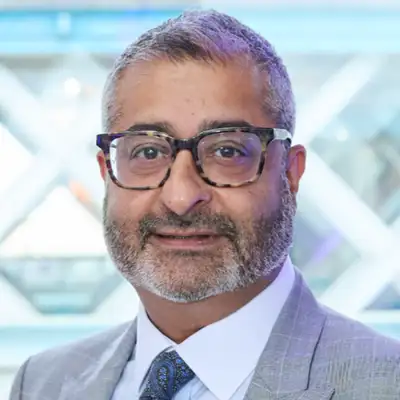
Hello, and welcome to the World Pipelines Podcast. Joining me for this episode is AlKarim Govindji, global head of public affairs for DNV Energy. AlKarim develops DNV's relationships with national and regional governments, as well as with global sector associations and customers in the energy value chain. Leveraging DNV's annual energy transition outlook and other analyses, he supports policymakers on identifying how best to facilitate the energy transition through the optimal adoption of energy resources, including wind, solar, hydrogen, CCUS, oil and gas, energy efficiency, and battery storage. Prior to this, AlKarim led DNB's decarbonization and demand side management business across Northern Europe, The Middle East, and Africa.
Elizabeth Corner:And previously, AlKarim has worked for the Carbon Trust on innovation policy. He ran the then Department for Business Energy and Industrial Strategy's Industrial Energy Efficiency Accelerator program, and he also oversaw a program for the UN's Sustainable Energy for All on industrial energy efficiency in emerging markets. World Pipelines helps oil and gas pipeline professionals stay informed about the midstream oil and gas sector, offering technical articles, regional briefings, project and contract news, and think pieces on pipelines all over the world. Register to receive a print or digital copy at worldpipelines.com and search World Pipelines on LinkedIn to join our community. Hello, and welcome to the Podcast, AlKarim.
Al-Karim Govindji:Good day, and thank you very much for having me.
Elizabeth Corner:We're going to discuss some new research from DNV about the shape of global energy investment and about how regional policy shifts and changing capital flows are influencing where opportunities are likely to emerge. So let's start with the big picture. Your recent work looks at what is described as the new geography of energy capital. Talk to me about this new geography and why it matters.
Al-Karim Govindji:Just to contextualize where global energy investment is going today, so if you look at global energy investment in 2025, something like $3,300,000,000,000 was spent, and that's about $2,100,000,000,000 in clean energy, so solar, wind, grids etc, about 1,200,000,000,000 in fossil fuels, mainly in upstream exploration and production. And so that saw something like 700 gigawatts of renewable capacity deployed in 2025, bringing that to around 5,000 gigawatts of installed capacities. A lot of investment is going in the clean energy space, but a lot of investment still continues to go in fossil fuels. But despite all of this investment in clean energy, we have to realize that if you look at total energy supply, which is not just electricity, it's also diesel for transport gas in our buildings and industry, fossil still supplies over 80 of energy globally. So I think that context is important just to think about where we are in the picture today.
Al-Karim Govindji:And when we talk about energy investment and the shift in geographies, I think there's two aspects: it's certainly a shift in geography, but there's also a shift in technologies, but maybe come to that in a second. So we have this kind of asymmetry where in some markets, if you look at China, there's massive deployment in renewables, largely when they put something like four fifty gigawatts of renewable capacity just this year, so most of that 700 gigawatts globally I've talked about, well over half, was in China alone, so that's a huge number there. The EU continues to deploy renewables, they have a huge legislative package on renewables deployments and what they want the 27 member countries to deploy in the EU deploy something like 75 gigawatts of renewable energy in 2025, most of that in Germany. But then you've seen high cost of supply of equipment hampering some renewables developments, particularly in offshore wind, and grids continue to be a barrier and constraining more and more renewables coming on stream. If you look at The US they deploy something like 40 gigawatts of renewables in 2025, a third after China and the EU, but direction if you look at The US there's much more preference for deployments in oil and gas and now increasingly in nuclear.
Al-Karim Govindji:And if you look at kind of public opinion or let's say political opinion, the Pew Center did a bit of research where they identified that the share of Republicans who say the country should prioritize oil, coal and gas above wind and solar has doubled in the last six years to about 71%. So there's a greater emphasis certainly for the Republican Party to invest more in the more traditional fuels as well as in nuclear. So the investment is flowing in different directions by a country, but also I think if we can just touch upon technologies for a second, there's also variations here. You could say there's a new kind of geography of technology in a sense, where we see of course solar and storage continue to really drive, because of the economics of those projects are so good, We see massive employ deployments in those technologies. On onshore wind, again moving really fast.
Al-Karim Govindji:Offshore wind as I mentioned challenged a little bit due to high cost, but also some policy kind of shift in The US, by recovering a little bit in 2026. On the flip side, on the hydrogen side, we see things moving backwards so when we do our energy transition outlook every year around October time, a couple of years ago we expected hydrogen to be about 5% of final energy supply by 2050 and this year we're going to trim that down to about 3.5 because of the high cost of generation on the supply side but also limited offtake on the demand side. But what we see on the nuclear side is a reverse story, where previously we'd estimated nuclear would only be about 3% of final energy supply in 2050. Now we're saying that's going to be three times as much, about 9%. So all of this matters because I think energy policy shapes how countries think about this, and the countries are thinking much more about energy security and sufficiency.
Al-Karim Govindji:And that then of course dictates where capital flows, where energy investors need to go in terms of applying and deploying their capital, whether it's by geography or technology. And I think finally I'd say just if you look at energy demand, AI data centers are a huge topic of course and have a huge need for energy and are placing a huge premium on energy.
Elizabeth Corner:That's great. That's really helping me build a map in my brain of where things are changing and where they're moving quickest. And which regions would you say that the energy industry should be playing the closest attention to over the decade? Where are you seeing capital flow the most strongly?
Al-Karim Govindji:I think we talked just a second a little bit geographically, but if you think about some of the shits, Asia is particularly dependent on oil and gas, and something like 85% of all the oil and gas that comes from Hormuz goes to Asia, and particularly to four countries: to China, India, South Korea and Japan. So they are hugely dependent on the availability of that oil and gas. So you know they are now of course given what we've seen the challenges of getting some of that oil and gas they're rightly considering other options and renewables in particular. China we've also already talked about, but India also deploys something like 50 gigawatts of renewables in 2025, and on the solar side it's as big a deployer of solar as The US, so we see some of these countries shifting and investing much more renewables. China as I said not only in the manufacturing of components for wind products or gearboxes for solar components and devices etc but also in deploying renewables in their own country we see huge volumes being deployed there and other Asian markets as well actually if you think about Vietnam, Philippines, Malaysia, Indonesia they're all developing clean energy policies really to try and protect themselves from this dependency on oil and gas.
Al-Karim Govindji:Europe, as we mentioned, continue to have high renewables targets and will need more and more renewables, but they've also had a grids package that they've introduced which will demand much more grid capacity, so I think a lot of investment will continue to flow there, and especially companies that previously maybe were deploying some of their capital in The US on the clean energy side, shifting some of their capital flows into Europe or indeed to Asia given the strong demand in those markets. The US we've seen in a sense a reverse flow away from renewables back towards oil and gas. We saw the in the Biden time we had legislation that was really trying to promote clean energy and providing tax credit those are being reversed to roll back and have been by the current administration more towards traditional fossil fuels and nuclear as we've said, but also with the AI center boom we touched upon. Some of those hyperscalers, the Googles, Microsofts, Amazons of this world are sourcing some of their power today mainly from the grid, which is largely coal and gas, but also looking at deploying their own energy behind the meter, whether it's renewables or in fact on-site gas.
Al-Karim Govindji:And then finally I'd say in The Middle East and North Africa I think they're despite what I said about the reduction in hydrogen in terms of final energy supply by 2050 they're really keen on deploying clean hydrogen, green hydrogen, particularly in countries like Oman, Morocco and Egypt.
Elizabeth Corner:When I wrote down in my notes this next question, I thought the answer might be quite simple, but I can see now that it's not going to be. My question to you is if a company operates across oil and gas and renewables, whatever they may be, where should capital be going right now? Is there an easy answer to that one?
Al-Karim Govindji:Yeah, with all these questions, there's always certainly with this question that there's a little bit of a differentiation and depends really what that company wants to achieve and what pressures are being applied on it. Is their focus on a return on investment? Is it their focus on the share price because of investor pressure? Is their focus on hitting decarbonization targets? Are they looking at it from a short, medium, long term perspective?
Al-Karim Govindji:So I think all of these things are different for each company, and so we'll make that company invest differently. I think oil and gas projects can still achieve high return on investments if that's the metric we're going to use. Particularly the Middle Eastern producers can really produce oil and gas very cheaply and can of course sell it at the going global rate. So they can have still high returns, as can companies operating in other markets as well, whether it's in Texas or elsewhere in Malaysia. I think that the concern or one concern for oil and gas side is there's increasingly a risk premium being attached to oil and gas projects.
Al-Karim Govindji:So banks or investors who are lending or investing in these projects are seeing the increasing geopolitics around the world, the volatility of oil or gas prices, the less certainty of future cash flows, and applying a risk premium, so demanding a higher rate of return, which then of course reduces the profits of the companies who are producing that energy, because they're having to pay so much more in finance. Renewable projects don't have the same challenges, because the cost of the fuel is pretty much zero, the risk premiums are not there, the certainty of future cash flow is seen as more realistic or certain. When you look at the financing part as well and the risk part then you know you could say that duals projects can in some cases be better. What we have seen is major oil and gas company operators generally shift away a little bit from clean energy in the past three years we've seen a lot of them move out of the clean energy space and go back to the more traditional oil and gas business, and we saw just two or three weeks ago we saw Shell sell its onshore renewables assets, the ones that were in construction, some of them were in operation to Total Energy.
Al-Karim Govindji:At the same time, Total Energy also sells some of its operational renewable projects to KKarim, the private equity company. And then if you look at the OEMs, the ones who are actually developing the kits, particularly the European turbine manufacturers, they've seen challenges in offshore wind in The US and so have shifted to onshore wind, but they also face challenges in terms of cost pressure because Chinese turbines are generally much more cheaper. So I think all of this means a pretty mixed picture of where and how companies view the return and where they should be allocating their capital.
Elizabeth Corner:You touched upon trade routes earlier. As we know, energy security, geopolitical tensions and such have dominated headlines It's very much front of mind. Can you talk a little bit more about to what extent these factors are influencing decisions being made at the moment? So where governments, where investors are willing to commit capital and commit to projects?
Al-Karim Govindji:I think the dynamics of energy investment shifted back in February 2022 with the start of the Ukraine war where we saw the access to Russian energy or the desire to buy from Russia particularly from Europe decline massively albeit India and China continue to buy from Russia, as does Europe, but to a much lesser extent. And this was all exacerbated really on Liberation Day in April of last year when The US trade announced those tariffs. So what these things have made and then now of course we've got other conflicts so what this has made I think countries think about is their whole basket of goods and services. Where is that energy coming from? How best to invest the limited national finances that countries have, and we've seen huge debts in 40,000,000,000,000 of debt in The US, we've seen massive debt in countries in Europe as well, so governments are really thinking hard about where they should be sourcing their energy, both from a cost perspective but also from a sufficiency of supply perspective.
Al-Karim Govindji:If we take sort of governments, think the Iran war in particular over the last six months has demonstrated the importance of free energy passage or lack thereof from home roads especially for those Asian countries who are dependent on that oil and gas which has nudged them okay a little bit more towards renewables as we mentioned and we've seen many countries fast track some of their clean energy and electrification commitments since the start of the Iran war. France have roadmaps to electrify now buildings, transporting industry, we saw South Korea set new targets for renewables up to 2030, we've seen Japan revisit the nuclear option for ONEG, so you know we've seen real changes in the way governments behave on the back of some of these geopolitical tensions. And then if you look at private companies and how they've responded to this, again as we've talked about the flow of capital geographically or technologically we've seen some of that shift, and it was interesting going back to that risk premium on the oil and gas side the UK Sustainable Investment Finance Association survey of its members members hold under like 7,000,000,000,000 of assets under management much of that will be in energy And so over 85% of the respondents to that survey expect the global investment renewable energy to increase on the back of the wall and many of them 75% actually feel that global energy investments are now less risky than oil and gas.
Al-Karim Govindji:So this dependency on oil and gas is of real concern both on the government side as well on the private side.
Elizabeth Corner:Fascinating stuff. Now before you led global public affairs at DNB, you worked in strategic consulting, energy policy, decarbonization. How has that background changed the way that you think about energy infrastructure?
Al-Karim Govindji:Yeah, it's a great question. I think the world has changed more than my background, if I'm honest, in those years. Access to energy was never really a concern, like just the price you paid for your energy, whether it was historically oil and gas, coal in particular, nuclear. Yes, we've seen any shocks before we had the nineteen seventy three crisis where OPEC withheld supply, saw the seventy nine oil crisis where we had the Iranian revolution, Iraqi Kuwait war in '19, so there have been shocks in the past but now they seem to be much more built in or starting to be built into the thinking that actually long term we are going to continue to see uncertainty and so ensuring this security of energy supply is so critical because if you think about any security is so central to any country's development whether it's around GDP, all the facilities, manufacturing, healthcare, everything relies on energy notwithstanding its citizens so it's become so central to everyone's thinking. And I think keeping energy assets safe from physical cyber and climate threats are also a newish phenomenon to what they were perhaps fifteen years ago.
Al-Karim Govindji:Those things weren't thought about as much. I think climate's an interesting one here because we mustn't forget the impact of climate not just physical and cyber risks to assets. We saw the shutdown of many of these French nuclear plants over the summer because they didn't have access to clean water or cooling water. We had droughts impacting hydro production, albeit solar has gone up because of the vast volumes of solar radiation we've had in the last couple of months. So I think there have been changes in, let's say, the last fifteen years of my career through some of these changes in the energy space and geopolitics and where countries are really thinking about this.
Al-Karim Govindji:And as I say, the tendency or the desire to self generate rather than import, think, and to build local manufacturing capabilities of components, looking at critical materials and sourcing those from friendly nations. All of these things are very newish phenomena that perhaps what we were thinking of writing the policy paper fifteen years ago was not really on the agenda. So I think that background and the context of working in strategy, and before that actually I worked in finance, really helps to think a little bit more strategically about the way that the energy landscape is changing, but also how energy is being financed and what financiers and markets are looking for.
Elizabeth Corner:Thank you. I really appreciate your insights there. Now, Pipelines magazine and indeed this podcast, we often talk about CO2 transport, hydrogen pipeline networks. You've talked a little bit about how hydrogen might be taking a few steps backwards. Can you perhaps talk a little bit more about the role that those transports will play in the wider energy transition?
Elizabeth Corner:I wonder how the pace of the energy transition affects how and when investment decisions are made for those things.
Al-Karim Govindji:Hydrogen, we have said, is perhaps where we're expecting a slightly lower level of supply than perhaps we did a couple of years ago, but I think together with CO2 pipelines to transport those are going to continue to be really important critical energy infrastructure, and as you scale these things, as you build more pipelines to either transport hydrogen as a fuel from one place to another, or if you transporting CO2 to be stored somewhere from one country to another as many countries are now starting to think about. You need to keep those pipelines safe, practical to use, cost effective, particularly over long distances, which many of these projects are considering. So I think the industry is moving from maybe visibility studies to project execution, and so the operators of these pipelines require these methodologies for demonstrating that existing pipelines can be repurposed or new pipelines can be built. Being a fairly technical engineering company and supporting companies across the whole energy value chain plays a role in some of this. We do guide the building of new hydrogen pipelines or repurposing existing hydrocarbon infrastructure.
Al-Karim Govindji:Repurposing onshore pipelines for example DNV wrote a paper or exploring standards the hydrogen pipelines have and created a bit of a framework for safety of repurposing this existing infrastructure, to really inform and help operators and governments and regulators think about the right decisions to do when they're developing these and using these. And we've also been part of joint industry projects there's one called SITE Skynark, which is really a feasibility of the economics of CO2 pipelines, where we bring a number of industrial companies together to think about this companies along the value chain not just the energy producer but the pipeline owner, as well as other interested policymakers to try and make sure we think about the whole thing. So ultimately I think this is an important space, particularly to keep these vulnerable assets. We've seen pipelines being destroyed purposefully, so I think keeping these networks safe and reliable is really what the future of the energy structure.
Elizabeth Corner:I want to finish off by considering stranded assets, So investments that lose their value prematurely or before their time because policy changes or technology changes or market forces changes. And we've been talking today about a transition towards cleaner energy and renewable energy. But how do we make sure that we don't lose assets that could be valuable before their time? How does DNV kind of assess the risk of that?
Al-Karim Govindji:Our kind of view of where things will be centered around this global energy transition outlook, which I mentioned we produce every year, a new one will come out in October. So that really is a risk model that looks at all of those elements of technology development, learning curves, policy, changes across markets, the access to financing, all of those things and really looking at the impacts of these things in different regions across 10 different regions actually in the world that we cover within that outlook. So that really is directionally where things will be so it then comes out with an assessment of what is the expected level of energy we'll need from gas, from coal, from oil or rather than what we'll need where do we expect it to be. It's a single forecast it's our best guess of where things will be to 2060 and beyond. So that's really what tells us how much energy or where the energy will be needed in different countries.
Al-Karim Govindji:So in a way that's our kind of proxy, shall we say, to things around stranded assets. We don't in that look specifically at assets and say okay this asset in this country is likely to be stranded because of X, Y and Z, but we will look at the totality and say, okay, oil and gas X amount of volume is expected to be used in this market, and bear in mind, you know, we think about the transition engine, I mentioned a lot at the beginning that today 80% of supply is coming from hydrocarbons and 20% really from renewables in terms of energy supply. For a 1.5 degree well that needs to be reversed, so we need to have 20% hydrocarbons and 80% fossil. Where we're likely to end up in 2060 is going to be a fiftyfifty world. So that implies a lot of those oil and gas assets will either be decarbonized that are any distance today or else will not be required as much and the volumes will decline.
Al-Karim Govindji:So I guess that's how we think about assets and risks in the next forty to fifty years.
Elizabeth Corner:Super, and we shall look forward to the publication of the new outlook in October.
Al-Karim Govindji:Thanks very much.
Elizabeth Corner:Thank you AlKarim. My thanks to AlKarim Govindji at DNV Energy for helping us to map the changing geography of energy capital and for explaining why investors and governments are making the choices they are and where investment is heading in the years ahead. Thank you for listening to the World Pipelines Podcast. Subscribe for free wherever you get your podcasts. And if you have enjoyed this episode, please rate and review and forward to a colleague or friend.
Elizabeth Corner:World Pipelines helps oil and gas pipeline professionals stay informed about the midstream oil and gas sector, offering technical articles, regional briefings, project and contract news, and think pieces on pipelines all over the world. Register to receive a print or digital copy at worldpipelines.com and search World Pipelines on LinkedIn to join our community.