Subscribe
Share
Share
Embed
Welcome to the world of Peptides. New episodes every Tuesday.
When I say intolerance, I mean
I could not eat the paw
of a gummy bear without having
like a pretty nasty response.
So I did cycle off,
because I wanted to be sure that
I didn't need to just
stay on the peptide stack
to have the carbohydrate issue resolved.
And fortunately, when I cycled off,
I was still able to eat carbs.
It's hard for me to just say
if it was one or the other,
what percentage it was
between the microbiome rehab
and the peptide protocol.
But, oh my God, it was such
a relief, dude. It was so...
just a breath of fresh air.
Welcome to Peptide Show. Well,
we've heard from doctors
prescribing peptides
and the scientists developing them.
This week, we're with someone
who's used them to address
his own chronic health issues.
For a different guest
perspective every Tuesday,
please do like and subscribe
and join us on the journey.
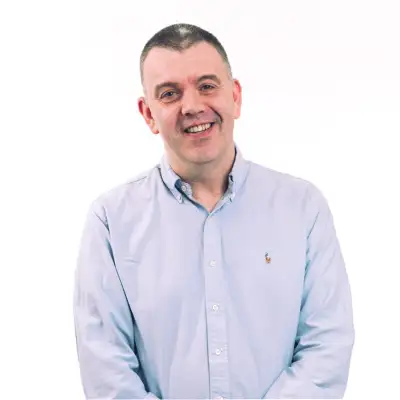
Robert Breedlove is
a former hedge fund manager
and the host of "What is
Money?" Show. For ten years,
he struggled to eat carbs
without feeling ill.
He'd already tried BPC-157,
and his symptoms hadn't gone away.
But after years of frustration,
he decided to give
peptides another chance.
So what changed the second time?
And how did you decide what
to take and who to trust?
In this conversation,
we explore the treatments he combined,
how he uses AI and independent
testing to check claims,
and what happened to his illness
when he stopped taking peptides.
My guest today is Robert Breedlove.
Welcome to Peptide Show.
Welcome to Peptide Show from Longr.
My name is Richard Skaife.
I'm a venture capitalist and entrepreneur,
and my guest today is Robert Breedlove.
Robert, thanks very much for
joining us on Peptide Show.
Thank you, Richard. Glad to be here.
Now, yours is a slightly different story
from the stories that we
cover on Peptide Show.
Tell us a little bit about
your journey into peptides
and how you found yourself
at the intersection of decentralized money
and this new decentralized healthcare.
Yeah, well,
I think my first
exposure to peptides was
probably back around '21,
2021 or 2022.
I had been struggling with
leaky gut for a long time.
I guess by... It started in 2016.
So probably by '21,
it would have been like
a five-year struggle
at this point.
I had worked with a number of people.
The guy I was working with at the time was
like a detox specialist.
And he had introduced me
to a lot of different modalities,
trying to heal the leaky gut.
And one of them was the peptide BPC-157.
And I took the oral version
of that for some time.
Not long. I mean,
I think I took it for like two months.
I think I took 500 micrograms a day,
you know, like the standard one,
you know, single-capsule form.
And it didn't resolve my issues. It's
hard for me to say if it helped. You know,
I was trying a lot of different
things at the time,
but the leaky gut symptoms continued.
And I think at that point in my journey,
I just sort of wrote off peptides,
at least for the purpose
that I was trying to use them
at the time. And so I just
kind of continued down my road,
trying to figure out how
to heal my leaky gut.
My real issue was
carbohydrate intolerance.
I had a number of issues over the years.
I was able to heal some of them,
but it was kind of like if
you've ever seen the meme
where the dam is exploding,
and someone covers one spout,
and another spout starts spewing.
It was kind of like that experience.
As I resolved one set of symptoms,
I would get other symptoms,
and it was kind of this
cat-and-mouse game.
But the one that was very pernicious
was carbohydrate intolerance.
So every time I would eat carbs,
specifically high-glycemic,
would be more intense.
I would get like this systemic
inflammation response in my body.
Like my joints would get stiff.
When I would go to get up
out of a chair to walk,
my hips would be very stiff,
and I'd need to, like, you know,
kind of give them a minute to loosen up
to start walking normally.
I would get puffiness in my midsection.
I would get very irritable.
I had this general
feeling of just not good,
just a general feeling of malaise.
Um, yeah, it was terrible, right?
Because carbs are amazing.
And I... And when I say intolerance,
I mean I could not eat
the paw of a gummy bear
without having like
a pretty nasty response.
And so I was doing lots
of different things.
I eventually discovered,
I think it was a recommendation
from one of my...
from a doctor that follows me,
which is, you know, social media has
been very useful on this journey,
just as a side mention.
Like people following you
and you share your story,
you get really good feedback.
She had suggested berberine
for dealing with the symptoms
that I was describing,
and that actually proved
to be very helpful.
I discovered that
when I would have this
carbohydrate reaction,
I could take a lot of berberine,
and it would help with the symptoms a lot.
And so that was a... that was
a good move in the right direction.
But I got to... Long story short,
I continued trying different things,
different modalities,
different specialists for years.
And I finally got to the ten-year mark.
This was late last year, so late 2025.
And, you know,
the gut inflammation, and I
also have an autoimmune...
associated autoimmune condition.
It's called lichen planus.
I was able to get those symptoms
like largely in remission,
but I was still having
the carbohydrate intolerance.
You know, fortunately,
my autoimmune condition wasn't very bad.
It was just sort of cosmetic.
So, but it can get bad.
The symptoms can get very,
very harmful. And so I was like,
I reached this ten-year mark,
and I was of the opinion that
I didn't want this
thing to become chronic.
You know, I'm like, what?
What is this? I can't
eat carbs for ten years.
I still have the autoimmune
condition. I...
I really wanted to do
something to try and resolve
- the symptoms.
- Were you under
the supervision of a doctor?
You know, I was...
Dude, I've worked with so
many professionals.
I've worked with every doctor,
you know, mainstream medicine,
non-mainstream medicine,
functional medicine,
detox specialists, energy healers.
You know, I've tried so
many things by this point,
and I was... I'd really
given up hope in a way.
It's like I... I was also trying all the,
what I considered to be
natural approaches,
and I didn't want to do anything
pharmacological or synthetic.
Although, you know, obviously the peptide
was like an exception to that,
I guess. But I just did like
a small dose for a period,
and it didn't work. So anyways,
I just decided, I'm...
like, you know what?
I'm gonna just do anything
and everything that I can.
Like guns blazing,
let me just try whatever is on the table,
pharmaceutical, peptide, whatever it is.
Let me just give it a shot.
Anything that's really worked for people
with this leaky gut thing.
And so, and around that same time,
I was referred to functional
medicine practitioner
Jayden Pileggi by my
friend Michael Morelli.
And Morelli was really
pitching Jayden hard.
He's like, "Jayden's helped
so many of my clients."
Morelli runs like
a boutique health clinic.
And so he said
Jayden had helped many of his
clients with gut issues.
It's like his go-to guy.
If he had someone in his family
struggling with gut issues,
it's who he would send them to.
But I was very disenchanted by this point.
I'd heard this story
a million times before.
And I just decided,
you know, what the heck?
Let me just give this guy...
Let me give this guy a shot.
I really didn't expect
anything to come of it.
And at the same time,
I decided I was gonna try the peptides,
'cause people had reported
using the KLOW stack
for healing leaky gut.
And so I started doing those
two things simultaneously.
I started the KLOW stack
at a relatively high dose.
Not immediately. I worked
my way up to a high dose.
And then I was also working with Jayden,
who had put me on a microbiome
rehabilitation protocol.
So we did like an elimination diet,
and we started introducing
certain agents to like
clear out the gut and then
start testing other foods.
So it's impossible for me to disentangle
which of these two things did it.
But even according to Jayden,
like the results came fairly quickly.
So the peptides definitely
seem to have an effect,
uh, 'cause the microbiome rehab protocol
alone should have taken longer to
create the results.
That was my next question.
When did you... Was it something that they
picked up in your blood work,
or was it just something
you felt in terms of you...
you felt, well, differently?
So, that was another thing that
told me Jayden was serious,
because for years, you know,
we tested a lot of things, and, you know,
mainstream medicine was
unable to diagnose what I had.
And so leaky gut becomes kind of this like
default diagnosis. It's when, like,
you know, they run all the diagnostics,
and they can't really detect anything,
so they just say, "Yeah,
you know, it's like probably
this leaky gut thing where your
intestinal membrane is permeable,
doesn't hold food in it properly."
And so it gets into places it shouldn't be
and causes these inflammation responses.
But Jayden did a thing, just like a, um,
a micro... I don't know
what you call this.
It's basically a stool test, right?
They're doing stool tests, but then
they're testing for specific, um,
you know, microbiome
ratios and whatnot. Again,
this is not like my specialty,
but he was testing specifically for like
what's going on inside of the gut,
inside of the fecal matter,
to see whether, um,
you know,
what could be done, what needed...
what... what balance needed
to be restored to fix the issue.
And so we did that.
When we started following his microbiome
rehab protocol, at the same time,
I'm scaling up to a high
dose of the KLOW stack.
This is a peptide stack.
This consists of... A lot
of people probably heard of it.
It's BPC-157 plus TB-500 plus GHK-Cu.
Now, those three are
the GLOW stack with a G.
But if you add the fourth one, KPV,
they call it the KLOW stack with a K.
And so I worked my way up
to a high dose of that.
I was doing...
It's five days on, two days off.
I think it was 1 mg twice a day of each:
BPC-157, TB-500,
GHK-Cu, and then 0.5 mg
twice a day of the KPV.
So that's in total 2 mg each:
BPC-500, TB-500,
GHK-Cu, and 1 mg KPV. Five days on,
two days off. I did that
plus the microbiome rehab
protocol for three months.
So this was starting...
I hit that high dose of KLOW
probably beginning September 2025.
And by beginning December 2025,
I was eating carbohydrates
with no issues. And man,
I like... I put... I posted
a reel about it on Instagram.
I was so fucking excited.
You know, you... So for you,
it's really a real life-changing...
You'd sort of... You'd settled
into managing something
which could have ultimately become a,
you know, a chronic,
you know, a chronic issue,
certainly one which was
impacting your lifestyle.
But the peptide stack that you,
you know, you... you implemented, you...
you feel made a fundamental
change to your life.
Well, I mean, again,
it's hard for me to just say
if it was one or the other,
what percentage it was
between the microbiome
rehab and the peptide protocol.
But even again, Jayden himself said
it was a little fast for
just the microbiome rehab
protocol to have taken
that much of an effect.
So,
you know, anecdotally,
I am under the impression
that it was at least, say,
50% peptides that moved the needle for me.
But I was so excited to be
able to eat carbs again,
because you just don't
realize how much of like
a psychological impact it takes on you,
for years of like
just not being able to have this simple...
I don't know if you want
to call it a simple pleasure.
Like it's a simple, you know,
basic human desire to just
eat a carbohydrate,
one of the most fundamental macro...
the most fundamental
macronutrients for energy,
and you, for years,
haven't been able to eat it.
I had not been able to
eat it for years without
having a nasty response.
And so when I could finally
eat them again regularly,
oh my God, it was such a relief, dude.
It was so... Just a breath of fresh air.
You know, and I didn't realize
how hard it had been until that moment.
So, and talk to me about today.
Where are you? Is it... You...
have you sort of discontinued that
peptide stack, or do you sort of,
you know, maintain a sort
of regular connection to it?
What does it look like for you today?
So I did cycle off,
because I wanted to be sure that
I didn't need to just
stay on the peptide stack
to have the carbohydrate issue resolved.
And fortunately, when I cycled off,
I was still able to eat carbs.
- So still had no issues.
- So a lasting impact.
- Now, what...
- I've cycled back on.
So like currently I am,
because there's all this...
there's all these other
benefits to the KLOW
stack as well, which,
you know, we can go into, I guess. But
I'm currently cycled back onto that stack
for those other benefits.
And so, yeah, I... I don't know. I...
people do different things.
People use this stuff long term.
I've always been of the
philosophy that you should
cycle on and cycle off of things,
just to let the body kind
of restore its natural
rhythms.
And so that's been my approach.
Absolutely. Now,
you know, one of the things
you touched on is
the power of social media,
and you've got a pretty big following on
- on social.
- Sure.
You're connected to some
incredibly interesting people.
For somebody who's trying
to approach this, who...
who doesn't have the power of,
you know, access to huge
amounts of people,
what would you say is
a good starting point?
They wanna, you know,
they wanna take a self-autonomy.
They've tried many different, uh,
health providers. They're disillusioned.
You know, they're frustrated.
They may feel like they're never gonna be
able to eat carbs again, but they...
they don't have the ability
to shout out and
ask for help. What...
what would you say is a sort of
really important starting point
for that type of person
to make sure that they are,
you know, going on the right path of
making the best of the... but, you know,
the best-informed
decisions for themselves?
Yeah, you know, I guess I first want
to just be respectful of the complexity.
Like,
it's one thing I've learned
over the ten-year journey.
It's like at the beginning of it,
I thought, "Oh, hey,
I have this problem I need to fix.
You know, oh, I can't...
I have leaky gut or whatever
this inflammation thing is.
I need to fix this."
And then after going through it for years
and years and years,
and the symptoms adapting
and changing and like trying
so many different things,
I kind of learned that
you really have to...
you learn to live with it in a way,
you know, if that makes sense.
Like, of course you can
get resolution on things,
but you learn how to build your lifestyle
in a way that's adapted
to your biological state.
So, I just want to say that
these things are very complex.
So like I can share with you
my anecdotal experience,
but don't take that as
like a one-size-fits-all.
If I could go back in time and like
tell myself a couple of things
that would probably help
move it along more quickly
and better, one would be,
you know, in hindsight,
I was operating under
the naturalistic fallacy,
which is basically this
idea that humans have
that things that are natural
are somehow automatically
better, you know?
We think that, you know,
you read the ingredients on a
food item, or it says "all natural,"
you know, things like that.
You think it's, "Oh,
it must be better
because it's all natural.
There's nothing synthetic
or man-made in it."
But then when you look at what nature has,
I mean, nature is full
of everything, right?
There's poisons in nature.
There's predators.
There's disease. There's,
you know, there's all kinds of things.
So for years, I kept trying to do it the,
quote-unquote, "natural" way.
You know, detox and,
you know, just... I...
even though I had tried
mainstream medicine,
they didn't have anything for me.
They basically just said, you know,
"There's no diagnosis. You
have this autoimmune condition,
but there's no cure for it.
You just manage the symptoms." So like
they had nothing to offer me, really.
- And so I was trying...
- Which in a way pushes people...
which pushes people into
doing their own research
- and taking...
- Yeah.
Well, they can go one of two ways.
They can either accept, you know,
what the gatekeeper has told them, that,
you know, that's where they are,
or they can look outside of,
you know, that conventional
wisdom and start to research,
you know, things for themselves,
which in a way seems like what you felt,
you know, was the right
thing for you to do.
I mean, yeah. So again, the...
what did they tell me
when they diagnosed my
autoimmune condition?
They're like, "Okay,
one, we have no idea what causes it.
You have an autoimmune condition.
It's called lichen planus.
We don't know what causes it.
There's no cure for it.
You've got it for life,
and all you can do is manage
the symptoms." Like, that's it.
That's all mainstream
medicine has to tell you.
So to the extent that
you're the, you know...
I guess I'm very disagreeable and,
you know, independently minded,
and I don't take things at face value.
You know, when I got that set of answers,
I'm like, "That doesn't work for me.
I'm gonna do more.
I'm gonna find out more.
There has to be more
to the story than that."
And sure enough, once you,
you know, even barely scratch
the surface on autoimmune conditions,
they're almost all tied to gut
health, you know, which again
is not something mainstream
medicine had anything
to say about. And so,
you know, what would I tell myself
years ago? It's like, "Dude,
you're operating under
the naturalistic fallacy.
Don't think because you're
doing detox and, you know,
you know, ozone treatments..."
I spent a lot of money on ozone,
which helped with the symptoms, actually.
It's just like concentrated oxygen,
but it didn't address the root cause.
And, you know, it's natural, right?
It's just oxygen.
So I was avoiding all
the synthetics and all the, what...
which I considered to be synthetics,
which are peptides, which they are, right?
They're synthetically...
they're synthetic
derivations of amino acids.
And so I would tell myself,
"Don't do that. Like go
and find what works."
It doesn't matter, actually,
if it's natural or synthetic.
Like what actually moves
the needle for you?
You know, find that and do that.
And for me, as it turned out,
uh, it was the peptides.
But again, I had the false
start with BPC-157.
I guess because it was oral
or the dose was too low,
or I didn't do it long enough,
or I didn't do it with the other,
the rest of the KLOW stack.
I don't know the exact reason.
But then when I started
working with guys, again,
talking to people that
have used this stuff
for years, and they're like,
"Look, BP..." And BPC,
you can do your research on this, BPC-157.
There's a lot of controversy
about its effectiveness.
Some people will tell you it does nothing.
Some people will tell you it's amazing.
And there's everything in between.
I don't wanna put all
my eggs in one basket
trusting one guy. I talk
to lots of different people.
You know, so Jayden's
a functional medicine guy,
but I also talk to peptide specialists.
I talk to anabolics coaches.
I talk to actual just doctors,
you know, MDs and, you know,
a number of other people.
And I just triangulate all of that advice
against my own like AI-driven research.
And then I track everything that...
my own anecdotal experience very closely,
and that's what guides me.
You know, you're using a lot
of feedback from a lot of people,
from a lot of different perspectives,
rather than just trusting one guy
or just trusting yourself.
You know, you're getting more of a quorum,
and I think that's very logical.
So you're looking for more
than a second opinion.
It's a third opinion, a fourth opinion,
you know, bringing that data together.
Are you augmenting that
with things like labs,
data, you know,
putting that all into an AI model?
How do you... How have
you sort of gone about...?
Well, I feed...
You know, so I work with Claude Code now,
which you like feed...
you take file structures
that are on your computer,
and you're basically feeding
that into the Claude.
Lives locally on your
terminal on your Mac,
in the case of macOS.
And I'm just having, like, "Hey,
analyze all my data. Analyze this.
Here's the text with this guy."
Like all the inputs,
all the conversations,
just pumping it full of data.
And then I'm talking to him,
you know, like, "Hey,
what do you think about this?
What do you think about that?"
But then that just
becomes another advisor.
Don't think the AI
is gonna have like the final
answer for you. It's like, no.
He's a really good
synthesizer of all this data,
but then it just becomes, at the end,
it's just another data point.
And, you know, it'll like
see things that maybe
other people have missed
or connect dots that no one else did.
But you gotta be careful, because
then people are like, "Oh, well,
the AI said this, so it's gotta
be right." It's like, well,
no. It's just another advisor, right?
It's just one of the guys.
So like treat it like that.
So, I mean, two final questions before
we... we wrap up, you know.
You're in one of the hot
spots of America for peptides.
How many people in your
sort of social and business network
would you say, uh,
are openly talking about
the fact that they...
they've built peptides into their
life? What sort of percentage
are we looking at?
And then sort of just
to dovetail into that,
how does somebody who...
who doesn't have those
peer groups and those
conversations they can have
really understand, you know,
the relationship that they are building
with a research-use-only provider, if...
if that's the route that they go,
you know, prior to telehealth, you know,
prescribing doctors having
broader access rights?
Yeah, so just to confirm I understand
the question, so you're asking like
how many guys in the fitness
space are open...?
In your world. I mean, you know, is it...
is it now a dinner table conversation?
You go and sit down with
the family for Thanksgiving,
and the uncle, you know,
he's just started a peptide stack.
What does it look like in...
in those worlds at the moment?
Yeah, you know, I think it's
accelerated a lot in the past few years.
I think when I was introduced to BPC-157,
like I said, probably five years ago,
I don't think many people at
all had heard of peptides.
I had not heard of them.
Like it was new to me.
I tend to be a little bit
closer to this type of thing,
considering what I was going through
and who I was working with, etc.
But now, like especially
in the past two years,
it just seems like it really
blew up on social media.
Obviously, the research peptide
companies have made it
accessible for a lot of people.
You know, you kind of removed
a lot of the impediments through
prescription-only options and
whatnot, and costs are
much lower. So, you know,
it seems like it's become
much more mainstream now.
I think almost everyone's heard of them,
at least. Percentage of people using them?
Probably 30%, maybe, and rising.
You know, it seems like that feels
about right, probably about one-third,
but moving up at a good clip.
And so, yeah.
So more and more people are
gonna be looking for them.
What advice would you
give to somebody who is...
is looking at research-use-only
peptides, you know,
to get access to products
which are, you know,
legitimate, verified, tested?
What sort of safety net can
they build for themselves?
Yeah, I mean, again, I can just tell
you what I did. And I, you know,
it's pretty obvious if you ask me.
But so,
you can get peptides through
compounding pharmacies, through,
you know, prescriptions, right?
And I did that at first, you know.
Something like one peptide
that's been very useful for me
is tirzepatide, the appetite suppressant,
you know, the GLP-1.
And I just have a naturally really big
appetite, so it's hard for me to
get lean. It's hard for
me to control food noise
in my mind.
And I found tirzepatide
to be very useful for that.
So originally, I was using tirzepatide
from a compounding pharmacy
through a prescription.
It was very pricey. You know,
I... It was expensive.
It was over $1,000. Three, three...
A thousand, okay. So you
were spending, you know,
hundreds of dollars a month.
At low doses, yes. And at high doses,
you know, probably several
hundred dollars a month.
And so that was... But again,
I was new to it still,
so that seemed like the safe bet.
And then as I started to look into
research peptide options,
I eventually decided,
"Hey, let me just order
some of this research peptide
from a research peptide company."
And again, these are not
approved for human consumption.
I then take that compound and I
find third-party testing facilities.
And these are available online, you know.
The one I used at the time was
in the US. Actually, it was based
in the EU. I shipped it
from the US to the EU.
- I think we know the one.
- Yeah.
And there's other ones
available. So you find,
you know, a third-party testing facility,
- or more, multiple.
- So go away and do that yourself.
You're sort of saying, really
relying on the provider to
set out that we've got the COAs. You see,
like you could just rely
on the provider's test.
You know, a lot of these providers say,
"Hey, here's our third-party test."
Like, okay, that's cool.
But again, don't trust, verify.
Let me take that compound
and ship it to my own
third-party tester that you don't know,
research peptide company A,
and see if it gets the same
result, right? Which I did,
and it did give the same result on paper.
Then I ran the compounds
side by side, literally
the prescription tirzepatide
and the research tirzepatide,
and anecdotally,
I had the same experience,
right? In this case,
it's appetite suppression.
So my appetite was suppressed
equally on equal doses
of either compound. So for me,
that's enough, right? That's
enough research. It's like, okay,
provider says it's tirzepatide.
Other third-party,
you know, tester, testing
provider says it's tirzepatide.
I run it side by side
with compounding pharmacy
tirzepatide. I have the exact
same result anecdotally.
Well, I'm just gonna buy it
over here at the research
peptide company for one-tenth
the cost and use that. So,
that's what I did.
Thank you, Robert. It's been
a fascinating conversation.
Thanks for joining us on Peptide Show.
Thank you so much for having me.