Subscribe
Share
Share
Embed
Killer Quote: “The whole point of reshaping advantage is that it’s not about fixing your business for today… it’s really looking ahead—for the future, 5 years, 10 years, 20 years out.” – Victoria Meyer
Looking to lead, grow, and stay ahead in the global chemical industry?
The Chemical Show is the #1 business podcast for the chemical industry, bringing you leadership insights, business strategies, industry trends, and real-world lessons from the executives shaping the business of chemicals.
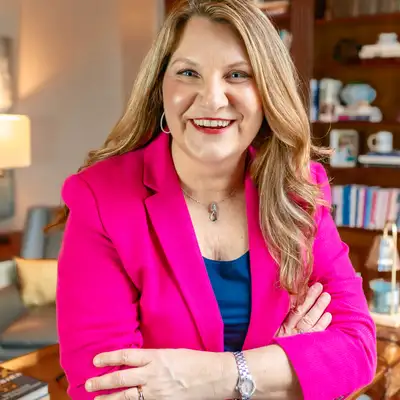
Each week, host Victoria King Meyer sits down with leaders from across the chemical industry, from Fortune 50 companies to mid-sized businesses and innovative startups. You’ll hear how they’re navigating today’s challenges and opportunities, the experiences that shaped their leadership, and the insights you can apply to your own business and career.
Conversations explore the issues that matter to chemical industry leaders, including:
• Business strategy and growth
• Leadership and talent
• Innovation and technology
• AI and digital transformation
• Supply chain and operational resilience
• Markets, customers, and industry trends
Victoria brings more than 25 years of chemical industry experience from companies including Shell, LyondellBasell, and Clariant. Today, she is an executive advisor and coach, founder of The Chemical Summit, and host of The Chemical Show.
Whether you’re an executive, business leader, or rising leader in chemicals and materials, The Chemical Show helps you stay informed, think differently, and lead with greater impact.
Follow The Chemical Show on LinkedIn and join the conversation. (https://www.linkedin.com/company/the-chemical-show/)
The Chemical Show: https://www.thechemicalshow.com
The Chemical Summit: https://www.thechemicalsummit.com
Progressio Global: https://www.progressioglobal.com
Victoria Meyer:
Welcome to The Chemical Show, the podcast where chemical means business. I'm your host, Victoria Meyer, bringing you stories and insights from leaders driving innovation and growth across the chemical industry. Each week, we explore key trends, real-world challenges, and the strategies that make an impact. Let's get started. Welcome back to The Chemical Show, where leaders talk business. This is an Insights episode where I'm bringing you my insights and hot take on what the headlines and happenings across the industry really mean. Today's episode, I'm talking about 4 headlines, and some of the companies in those headlines include Shell, Olin, Huntsman, Solstice Advanced Materials, and H.B. Fuller.
Victoria Meyer:
We're going to get to that later. More importantly, those headlines prompted several questions and discussions for me, and what I want to bring to you today is just some of the insights that I've that those conversations have brought about, and really the questions that you and others are asking me. Maybe you're asking yourself, and oh, by the way, maybe you have more questions, in which case hop onto LinkedIn, shoot me a DM, and I'd love to hear from you. So first of all, as we start talking about this, this really ties into this year's theme of Reshaping Advantage, which is the theme of this year's Chemical Summit, and it reflects many of the questions that chemical industry leaders are working through right now. Now. Markets are shifting, technology is accelerating, customer expectations are changing. Heck, as we'll hear, investor expectations are changing, and companies are really rethinking how they grow, execute, and compete. I have been talking about that all year, and frankly, we're going to be talking a lot about that at the Chemical Summit.
Victoria Meyer:
So if you want to have more of those conversations, join us September 29th and 30th in Houston, Texas at the Chemical Summit. Visit thechemicalsummit.com to learn more and register. Now onto the headlines. Headline number 1 that drew my attention, drew your attention as well. And the headline's actually Shell Draws Exxon Interest in $8 Billion US Chemical Asset Sale. So Shell has been saying this, that they are going to be putting their chemical company, what's left of it, on the market. And last week's headline was really that Exxon, LyondellBasell, Apollo, Kuwait Petroleum Corp are all interested. I actually posted about this on LinkedIn, so you've seen some of my comments there and some of your comments.
Victoria Meyer:
What I think is interesting with this, and this is a question that people have come to me and said, what do I need to know? What do I what should I be thinking about? First of all, I worked for Shell for almost 20 years. I don't have an insider view on this deal. But what I would say is Shell views this, and Shell's CEO has talked about how they see this as underperforming assets, which is hard to reconcile when you know what a great business it had been. And this is part of a longtime reshaping of the company, right? So through the years, Shell has entered and exited various businesses. It's fallen in and out of love with chemicals several times, and this may be the final parting of the ways. What I think is interesting in the article when you dig into it— and by the way, I'm linking to that in the show notes— is that some of these offers are for both the whole company and parts of the company. Again, not surprising. When I started talking about this with people, if you look at the names of who's been listed— Exxon, LyondellBasell, Apollo, Kuwait Petroleum Corp.
Victoria Meyer:
They each want different pieces of it. They bring different values. So I think it's going to be interesting to see whether the view of this being the sum of the parts is greater than the whole or not. I also have more on this hot take a little bit later, so stay tuned. The second headline is HP Fuller board unanimously rejects unsolicited proposal from Ancora. So this is around their building adhesive solutions business. The board rejected it, saying it significantly undervalues the business, impacts future growth, etc. Interestingly enough, Ancora is actually an activist hedge fund, and this is in response to an acquisition of AMS that is underway that they opposed.
Victoria Meyer:
What's the lesson from this? And I think this gets back into the whole theme of reshaping advantage. 2 companies can have very different views on how value is created— keeping it inside of the company or taking it out of the company and exiting the company. And I think that just reflects a bit of where you sit, where you see value propositions, and where it's going. Headline number 3: Solstice and Element terminate $14.5 billion merger deal after shareholder feedback. So this is Solstice Advanced Materials, which recently— recently in the past year or so— completed its spin-out from Honeywell, and Element Solutions, which this was going to be around electronic chemicals, refrigerants, The message that came back from both of their boards is that they viewed that the companies were better alone than together. Now, there's probably subtext. You and I both know that. Maybe they didn't get the right deal.
Victoria Meyer:
Maybe, maybe, maybe, who knows? There's a lot of things that go into understanding and assessing it. But they initially thought as they were coming together that there was going to be better advantage by bringing these 2 big businesses together. And now it's— They're not. better that they're standalone. So again, this is a function of understanding how companies are reshaping advantage and how they see it together. And then the 4th headline is Olin and Huntsman shareholders approve the merger of equals. So this was announced a while ago, several months ago. It's coming through, frankly, what feels like pretty quickly, but who knows? When it's all in alignment, sometimes it's easier, right? And their focus is, this is, The whole is greater than the sum of the parts, right? So they view themselves as being better in a more tightly aligned organization.
Victoria Meyer:
This Olin and Huntsman deal is really— what they both said, it's around having a more value-focused company and a vertically integrated platform. I think this is, again, Huntsman and Olin both have been repositioning their portfolio for their last Heck decade, and so this is part of that for Owen and Huntsman together. They see this as bringing not necessarily related businesses, but perhaps related in the sense of how they're doing business. How's this going to play out? We'll see. But when I get down to the questions, so you know these are the four headlines really different approaches to business, right? Shell fully exiting its chemical business, and then the other parties looking to buy or. acquire all or parts of it. HP Fuller saying, nope, we're keeping the whole piece together. We're not carving out part of the business to its, its shareholder, right? So that's a different take.
Victoria Meyer:
Solstice and Element deciding that they are better separate and maintaining the integrity of the business as is. Now, will there be future deals? Who knows? Time will tell. Again, I have no insider knowledge, and I don't necessarily want to. And then the fourth one is this merger between Olin and Huntsman. So 4, really 6 or more companies really executing upon different strategies as they try to find advantage today and in the future. And I think that's definitely where we're going. When we come back to some of the questions, one of the questions that came in from Chuck Hey, Chuck. He sent me a note saying, you know, I want to understand more.
Victoria Meyer:
Is this a broader trend or is it more Shell-specific? And he referenced a lot of the European chemical shutdowns and more. And what I would say to that is, so first of all, let's tackle this European chemical shutdown. Some of those pieces have been going on for a while. They were viewed uneconomical in not just the current, but the current and the future business environment, right? So we've seen exits of certain business segments from, it feels like everyone. BASF, Evonik, those two have come to mind recently, but they're not alone. It's everyone across the value chain, Dow, others. And that's really a function of long-term value and profitability and how we're working in a global market. In the case of Shell, being more specific, it's really this view that they as a company, Shell as a company, can reshape advantage by getting more focused, on what it views as its core businesses, which in this case is exploration, production, and refining.
Victoria Meyer:
That's where they're focused in largely, is oil and gas. That's a fundamental reshaping. Others are looking to combine for strength. That's the Olin and Huntsman story. Then the better independent is the Element and Salsa story. If I think about a broader trend, the bigger piece of this trend is getting really specific about where company— you and your company wants to compete today and into the future and doing something about it. Because, you know, I talked about this at the beginning of the year. You guys are seeing this in the headlines.
Victoria Meyer:
We are in a— it's a deal-making environment. Companies are really looking to reshape, figure out their future, and move forward. So that's one piece of that. The second question that came up through dialogue was, what about the value chain? And so this is a really interesting one because when a company sells off part of its business or all of its business, let's say in the case of Shell, or when there's a combination of businesses, it changes the shape of competition. Again, the competition authorities look at it— SEC, the European competition authorities look at it— so there is that. But the reality is you and I both know that on a day-to-day basis it affects that and it has knock-on effects. So if I think about this, this is the shape of competition as relates to customer and supplier relationships. When we talk at Shell, when we look at that alcohol and methoxylates, the EO value chain, the alpha olefins value chains, those have some very specific relationships that play very heavily, in fact, into a lot of specialty chemicals and elsewhere.
Victoria Meyer:
Those companies along the value chain are rightfully concerned. I also had somebody who said, you know, we were looking at a company that is buying feedstocks from one of these players. And it makes us rethink what the value of that acquisition would be. So that's kind of the secondary interesting knock-on effect, right? It's not just about your as-is business, it's also about your future business. Is your business saleable? Is your target acquisition truly acquirable if you have security of supply? And so I think that's maybe the bigger thing that we see shaking out? Is this reshaping your advantage and the knock-on effects across not just that individual company, but all across the value chain? And then the third key question that comes through is, what does this say about where the industry is going? And I would say with that, the industry is going where it's been going, which is it is going to be dramatically different in the next 5 years than it was 5 years ago. So, you know, a lot of this shift started did it start? It was certainly influenced by COVID and the supply chain challenges that we saw there and other reshaping of the industry. But as we go forward, the industry is reshaping because the reality is the chemical industry feeds into so many other industries, right? So ACC would say that the business of chemistry is affecting 97% or 99%. They have a great number.
Victoria Meyer:
I should probably find that. I'll let you know what that is everywhere, right? And so if we think about the growth in AI and data centers, there's a chemical component to that. If we think about the shifting in the automobile industry, there's a chemical component in that. So every place across the value chain in what we use personally, what we use industrial, is influenced by the chemical industry. The whole point of Reshaping Advantage and the place that we're at currently in the chemical industry is that it's not about fixing your business for today and to be the best business there is today. And by the way, that's super important, But it's really looking ahead. And when we think about reshaping advantage, it's for the future. It's for the future, 5 years, 10 years, 20 years out.
Victoria Meyer:
And that's the moves that you see companies taking place today. These 4 headlines I referenced, this is all about future fit and future longevity of those companies. And it's got an effect on how your business is operating. how you're thinking about reshaping the future and where advantage lies. So hope you've enjoyed today's episode. This was just my hot take on what's happening in the headlines. And if you'd like to hear more of that, let me know. Again, send me an email, shoot me a DM on LinkedIn.
Victoria Meyer:
And as always, thanks for listening. Keep listening, keep following, keep sharing, and we'll talk with you again soon. Thanks for joining us today on The Chemical Show. If you enjoyed this episode, be sure to subscribe, leave a review, And most importantly, share it with your friends and colleagues. For more insights, visit thechemicalshow.com and connect with us on LinkedIn. You can find me at Victoria King-Meyer on LinkedIn, and you can also find us at The Chemical Show Podcast. Join us next time for more conversations and strategies shaping the future of the industry. We'll see you soon.