Subscribe
Share
Share
Embed
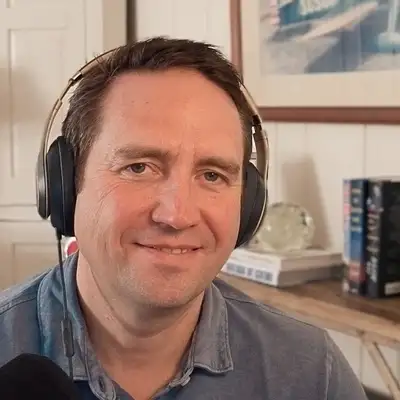
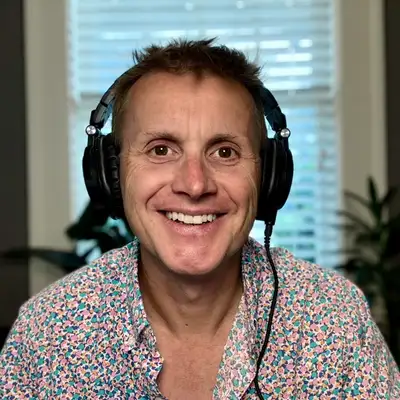
Space Insiders is your bi-weekly deep dive into the intersection of space, cloud technologies, and entrepreneurship. Hosted by Tony Sewell and Rob Ruyak, both seasoned space-tech executives, this podcast features candid conversations with founders, investors, and entrepreneurs shaping the future beyond Earth. Whether you're launching a startup, investing in innovation, or just space-curious, Space Insiders gives you the behind-the-scenes insights you won’t hear anywhere else.
New episodes drop every two weeks. Subscribe now and join the orbit!
Disclaimer: The views and opinions expressed in this podcast are those of the hosts and guests and do not necessarily reflect the official policy or position of any organization or employer.
Welcome to Space Insiders. My name is Tony Sewell. I'm here with my space mate, Rob Reyak. How you going, Rob?
Rob Ruyak:Good, Tony. How are doing down there in Australia? Congrats on the move.
Tony Sewell:Yeah. Cheers. I think this is our first one with the Cross Pacific recording, which is good. Slowly getting settled in. Just arrived into the lovely part of Melbourne summer.
Tony Sewell:I got to take the family to the Australian Open on Sunday. So, living the dream. I've actually got to start working now though. So I'm getting on a plane up to Sydney tonight. As my father-in-law used
Rob Ruyak:to say when he was still alive, obviously, he said, all good things must come to an end, Rob.
Speaker 3:That's right.
Rob Ruyak:And he would say that every time we visited them in Florida.
Tony Sewell:Only I could find in only I someone to pay me just to be a man of leisure.
Rob Ruyak:Oh, yes. Yes. I agree. Well, we get to do this together. This is We do.
Tony Sewell:Yeah. This is fun.
Rob Ruyak:I have to say, can I can I share the quick story? Yeah. Yeah. So this was really cool. I I texted Tony when I was in Dallas flying home.
Rob Ruyak:And right before I got on my plane, I texted him, you know, have a great trip. Good luck. He said, oh, I'm just sitting here and with the family in Dallas. I'm waiting for my connection. And so I just still I I was telling people about this, Tony.
Rob Ruyak:I I actually I got to see Tony and his family before they left the country, and I was just so so great point.
Tony Sewell:We've been trying to work out how to catch up catch up with each other for the last couple of months, and we hadn't. And then, yeah, like literally the last moment we're leaving the country. It was awesome, Rob.
Rob Ruyak:Total serendipity. It was awesome, man. Was a reason for that. But I digress. It was fun.
Tony Sewell:So, we'll restart our interviews hopefully on the next episode in a couple of weeks, but we're going to do another bit of a sort of retrospective looking at a few clips from the last year. And I think covering one of the topics that both you and I were most excited and really enjoyed talking to our guests about and that is leadership and culture and and all all of that and the importance of that.
Rob Ruyak:Yeah. And for those that didn't listen to it, you know, this is the second time we've done something like this. I think, you know, Tony, when you and I were talking, you know, we, you know, we have interviewed over 19 people since May when we started, and we're very fortunate to to even have those folks talk to us. And and so last time, we had a really good session and we talked a little bit about software revolution, the data revolution, the changing capital landscape for startups, especially in the space industry. And it was really fun.
Rob Ruyak:And I think one of the things that Tony and I thought we were going to leave off the table if we didn't really talk about it was the leadership topic because that was a Honestly, in some ways for me, at least, was surprising how often that topic came up, you know, in a whole variety of questions that we would talk with folks. So, you know, we're excited to kind of go through this and go through some of the clips. Know, when I was doing it, Tony, when I was preparing, and I think there's three main things that I thought were kind of interesting that we'll talk through. And for those that, you know, want to continue to listen, these are some of the topics. Like, you know, the funding environment has completely changed.
Rob Ruyak:How do you make decisions around that? Right? The technology is pushing an unchartered territory in this market. You know, how do you keep it going? How do you how do you lead a team with that vision when there's so much uncertainty?
Rob Ruyak:And then how do you just simply build something that's never been done before? And how do you lead a team when that is what you're doing? That was, I think, a repeated set of topics we discussed. I'm excited to kind of go through some of these with you, Tony, and kind of add our own perspectives to it.
Tony Sewell:Yeah. Absolutely. And as I sort of went through the clips and did my prep, mean, you and I are I mean, we're not sort of young entrants to the business world anymore. We're approaching advanced age from a career perspective. So I think we've seen a lot of the good and the bad now, so it was kind of good, but it's always good to have sort of reminder of those lessons and to kind of refocus.
Tony Sewell:But I think there's not just messages in here for someone that's coming into a CEO role, there's really good lessons for everyone, regardless of what part of your career maturity you're at. I think it's good to be able to quickly orient and recognize those good and bad traits in folks as well. You can kind of adapt your behavior and your style and also be mindful about, I guess, applying the good and not learning the bad.
Rob Ruyak:Exactly. Yeah. We're in the wise years, Tony.
Tony Sewell:Are in the wise years. Yes. There you go. I'm gonna yeah. You haven't turned 50 yet, have you?
Tony Sewell:You're you're approaching.
Rob Ruyak:No. I we're all approaching 50 if we're lucky. No. I'm not that old yet. No.
Tony Sewell:It's not far away. It's in sight, unfortunately.
Rob Ruyak:All right. Let's stop with the age thing. Let's just move it.
Tony Sewell:All right. So let's go to our first clip. So I think one of our favorite discussions from the year was the the only actually in person one we did was with Kevin Stein, the three of us in a room. And despite the the crappy audio setup, it was a really great a great one. So let me go to that clip.
Speaker 4:And I think the number one reason that's out there is just culture fit Mhmm. Is the number one reason that these things don't work out as they planned. Mhmm. And so I think the thing that I learned the most at SAP when I did all those transactions was the most important thing besides leadership was empathy, understanding how the acquired company feels and being able to then handle that and be ready to address those issues, concerns, proactively think through that. And I think that's the hardest part for any acquisition, whether you're acquiring or being acquired.
Speaker 4:It's hard to think about how the other side is thinking of this. They're not doesn't mean people are bad people, it's just they all have different perspectives, but the ones that I think have gone the best is when you can truly be empathetic to how the other folks are feeling, number one. And then number two, as the leader, you have to be in the middle. Right? You have to be neutral.
Speaker 4:You can't be seen, and you can't believe that you're gonna favor one side. You really have to just think of the end game that you're the goal. Why did you wanna do that transaction, and what was the value in it, and just drive to that and leave the the the partisanship or the politics, if you will, behind. And sometimes that's hard because, you know, you you I spent so many years with my legacy iDirect folks. Suddenly, I had all these new new tech folks.
Speaker 4:And make sure that I wasn't being seen as favoritism, but also just begin focusing on that value.
Tony Sewell:Alright, Rob. Thoughts?
Rob Ruyak:I I loved well, first of all, how great is Kevin Stein? Yeah. Is so awesome. I mean, he's
Tony Sewell:a reminder for people, I guess. Like, he's a really well known exec within the the satcom industry, particularly. He was a CEO. He's had many C level appointments, rose to be the CEO of iDirect when they acquired Newtek. He was also CEO of OneWeb Technologies, the American business for OneWeb, which then and then became CEO of Eutelsat Americas when they were acquired.
Tony Sewell:So particularly the acquisition, like the, I guess, his mental model for how to deal with one of the most stressful and complex things that happens in a business, an acquisition, whether you're the acquirer or the acquiree, it's a challenging time.
Rob Ruyak:Yeah. This was one of my favorite interviews because I think this is a term that gets thrown a lot thrown around a lot these days, and sometimes it's a word that some people pick up as a weakness and not a strength. Empathy. It's something that he really talks a lot about, and it was interesting to see how his mind went immediately to that word. And what I took away from that discussion with him is that which I never thought about it this way, is it's almost like empathy kinda sounds like the right thing to do, you know, in this day and age.
Rob Ruyak:You know? It's empathetic to other people, empathetic to the people that, you know, work on your team, empathetic to those that, you know, you report to, you know, to to be successful. But it's not really a soft skill. I think I I took away from it. It's not a soft skill.
Rob Ruyak:It's actually a strategic advantage to have a culture. And it's not just like the right culture. There's no right culture. Right? Or cultural fit.
Rob Ruyak:What like what does that really mean? Some of these words are really important. Empathy is a really critical word that he drew out, and I think it's one that you and I have talked about in the past, Tony. I think gone are the days where the the next generation workforce wants to be just command and control. They don't want that.
Rob Ruyak:They want Yep. To feel valued, and they want the respect from their managers. They wanna respect also back to their managers. They wanna respect their colleagues. And And a lot of it's around just putting yourself in other people's shoes and thinking twice about, of course, I have an opinion, but those people also have an opinion, and they have a very different background than I do.
Rob Ruyak:So why don't we the empathy piece where we can sit back, listen, understand each other, and try to focus on that one common direction that we all want to go you know, that we all want to commit to, especially in a company, in a business, is super important. So, I love that that was within the first couple minutes that we talked
Speaker 5:to him.
Rob Ruyak:Like, that was the word. Right? And
Tony Sewell:I think one of the unique things about the space industry compared to others, being a truly global industry, is that additional level of, I guess, your own sort of emotional maturity and understanding of the cultural elements, like cross cultural. So not just sort of cultural in the business sense, but also working with different cultures. Because we all work in a highly globalized environment with companies from different parts of the world. People think very differently. And particularly when you look at acquisitions, and I just noted down a few of the big ones from the last couple of years, and it presents real challenges.
Tony Sewell:You think of talked about Kevin So talked about iDirect, an American company, under sort of Singaporean ownership or at least a big interest, acquired Newtek, which was a Belgian company. So, I mean, talk about the clash of three vastly different cultures and the impact that it has on people. But also you think about Viasat, big American satcom giant, acquiring Inmarsat, like one of the oldest British satcom well, one of the oldest satcom companies in the world, very British in its culture. And the other one was OneWeb, which started as an American company, ultimately was domiciled in The UK and then was bought by UsualSat, like the original French satcom company. So it presents real challenges and managers at all levels have to be very deliberate and mature in their approach because just taking, I guess, a sort of charging American attitude to a particular topic won't go over well won't go over well with, I don't know, a team in Belgium or The UK or Australia or whatever.
Tony Sewell:And that and you can look at that from a whole whole range of different directions as well.
Rob Ruyak:Yeah. And I love that you bring that up because I remember he was talking about how he was trying to maintain some element of empathy through Zoom, through video meetings in the in the early days of these integration M and A activities. And I remember he mentioned something around how how important that was for him to start to realize that, look. I I'm talking to someone over a video screen. I know I want to be empathetic, but I need to come up with ways of of being better at that because I'm not in front it's different when you're with somebody.
Rob Ruyak:Right? When you're in a room and you're kind of you're trying to listen to them. You don't see everything through video. And I remember he said that was one of the moments where I started to realize that empathy has to stop it's not it needs to go from being an abstract thing and just a word to actually becoming something that really will help me succeed or the integration succeed. And I remember he said a couple of things that I I was going through my some of the the videos, and I I just pulled away a couple of these things that I loved that he that we talked about with him.
Rob Ruyak:One was that he said that even small statements that if you're especially in a leadership position, let's talk about is it like a leadership you have to be CEO, but you're in a leadership position. Small statements that you make can really change culture overnight unintentionally. So, you don't have to script what you say, but I think it's part of being empathetic. You got to listen to what you're going to say. You got to listen to what the impact is.
Rob Ruyak:So, that kind of led to the second thing that I think you and I talked about with him was this kind of self awareness about how your words might land with other people. Just being constantly aware of the things that you're going to try to communicate, even if they're off the cuff, could have these unintentional consequences or both positive and negative. But they also land differently depending on the role you're in and also the people you're talking to. Right? And I think the last thing too is, I think this might have been his words, actually.
Rob Ruyak:He said, You can't afford to be just cavalier. Right? Yeah. So, it's hard, right? Especially, I think when you're a leader and you have so many things going on, you're focused on you.
Rob Ruyak:I don't know. You know, if you're a startup, you have a board that's on you all the time. Right? Yeah. Everyone's asking you for the vision.
Rob Ruyak:I don't understand the vision. Right? You have a budget. You're you know, you have to make decisions around investments and who your target customers are and all these kinds of things. But the core of it just, you know, you know, you're trying to surmount that that mountain, which you probably never can do.
Rob Ruyak:You're you're always trying to catch up. You have to be mindful that people are always watching you, especially those that you're leading. This kind of awareness of just don't be cavalier on how you interact. Be mindful of how the statements you make, the decisions you make, they're all in it together type of approach and being a strong listener. Being empathetic is something that carries a lot of weight.
Rob Ruyak:I love that part that we talked to him about, about how you carry yourself and how you lead by example. I thought it was really good.
Tony Sewell:Yeah. And actually, there'll be another clip later on where Kevin's sort of reflecting on the loneliness of leadership or the perceived loneliness of leadership and decision making. I won't preempt that discussion, but I think that'll be a good segue for that. All right. So let's go to the next one.
Tony Sewell:So from another great, great CEO discussion with Carsten Drachman from GomSpace. Let's go to that clip.
Speaker 5:First of all, when I go into this, I go in with the assumption everybody's fine. Everybody knows what they need to do. They have the knowledge and skills. The issue has been not, setting those skills free and enabling people to be successful. That's the starting point.
Speaker 5:So typically, it will be a leadership team and they and, there there is usually a leadership group when you come in, so you sit down and you get to know those people quickly. And then, then you, you, you start talking and listening, trying to understand what's on their mind. And you will very often find out there's a lot of things that they never said in the past because it wasn't considered, you know, okay to say it or people didn't want to find a point out the floors. So basically going in very quickly and opening up the floor for, Hey, let's talk. Where do you want to do?
Speaker 5:Do you want to sit here and just watch the whole ship sink or are we gonna try and figure out where to go? Do you wanna be on a journey or not on a journey? So it's gonna be quite a direct confrontational in the beginning. My experience, nine out of 10 people that jump right on it because they all wanna be successful. Many of them have been part of the companies I've turned around and have been there for a long time, and they're actually sad about that it's not really succeeding.
Tony Sewell:Carson's way that Carson approaches it is really interesting. That again, like he's approaching this as a people problem, not like he's assuming He talked about it's not technology, yep, but that's a given. The people have the skills to do the job, that's a given. It's about sort of focusing activities around helping them be better at their jobs and helping them be motivated and understand the vision and making sure everyone's kind of rowing in the same direction. And I guess I was thinking about the way that he framed it and it's true.
Tony Sewell:I mean, people, particularly I think in this industry, I don't think it's unique to this industry, but most people are not there just to draw a paycheck. People are there because they're excited about the opportunity. There's so many great people in the industry to work with. We all want to be valued. It's not just about making the dollars, it's about being part of something bigger and being part of a mission and being excited and being fulfilled by it.
Tony Sewell:And I think that's how he approaches that as a start point with some tough discussions early on. But ultimately, so what are the things that you can do to help unlock the, I guess, that that talent and the the opportunity that's there with with the people that are there and not trying to make a whole bunch of changes off the bat?
Rob Ruyak:I was surprised by his comment when we asked him those questions, like, how do you even do a turnaround? You know? How do you and and and his answer was the people. And like you just mentioned, you know, this you know, it's it's really and I think he even said something like, well, the issue isn't even the people. It's just that they they their skills haven't been set free, like you just mentioned, which to me is he's saying very similar things that Kevin did, which is like, you know, you could tell he's an empathetic leader because he's just by that answer.
Rob Ruyak:Right?
Tony Sewell:Yeah.
Rob Ruyak:It's, you know, so what's going on here is I think most of the time, you know, if you're, you know, when you go through business school and, you know, I remember, you know, it's a lot of it is like, well, you got to have the right organizational strategy or you got to have the right strategy and the vision, and you have to
Tony Sewell:have Mission statement and
Rob Ruyak:Mission statement, all this BS. I mean, that's not BS. It's like those are important. So don't get me wrong.
Tony Sewell:Yeah.
Rob Ruyak:But most of the time, the answer is not, well, people just it's just like the behavior of the organization. That's really the important part, right? So, I kind of took it as he was basically saying that empathy is actually an operational strategy, very similar to what Kevin was saying. Right? He was saying like, you know, it is the strategy.
Rob Ruyak:It's not just a soft skill. And I think Carson, when we talked to him, reinforced that. You know? No one wants to be on a ship that's sinking. No one does.
Tony Sewell:I think the other thing that's that kinda demonstrates Carson's understanding of that very specific situation of a turnaround, which is different to to Kevin's experience, is like, it's a very precarious time for a business. And in Carson's example, he was faced with a choice which he'd been communicated, which was potentially acceptable at that time, to wind the business down, that he didn't take that route. But I mean, in that situation you do have to quickly assess and assess like, alright, so what do you have if you've got the right people? Because you don't have a lot of time to be making wholesale changes. So you do need to have that human element is amplified in that situation just because you're on the clock and you you need time to to get the business sort of stabilized before you start making decisions about whether it's whether you've gotta reduce the headcount or you're looking and bringing new talent.
Tony Sewell:So Yeah. I think that's an interesting perspective as well.
Rob Ruyak:Yeah. It's a it's gotta be, like, such a difficult situation because, I mean, I don't know. I think if you haven't gone through it before, I mean, what do you think the natural answer is to try to fix a company or turn around a country a company? What is it? Or country, actually.
Rob Ruyak:Yeah. What do you do? Do you, like, listen to the people and figure out if they're in the right roles? Or Yeah. Is your gut reaction to say, oh, it mustn't have the right strategy or the right product or the right approach or enough financing.
Rob Ruyak:Right? I feel like that to me is kind of the most common thing you jump to. It's not, Well, we have a lot Like, the assets at the end of the day in any business are the people. You know? So, how do you how do you learn from them, especially when you're new, like, when his example.
Rob Ruyak:Right? And and figure out, like, what are all the tools in the toolbox? And are they in the right place? Are they sharpened? And are they pointed in the right direction?
Rob Ruyak:Right? And Yeah. It almost seems sometimes, I think, some people, it's like, Well, that's kind of an obvious thing. Like, Obviously, we're going to talk about that stuff, but we don't have the right vision. And I think what he was saying is actually, No, that's the most important part.
Rob Ruyak:Right?
Tony Sewell:And zooming out just a little bit, like as we kind of close out this discussion on empathy, and I guess one of the most important messages for leaders, young and old, is ultimately it's because we've had some experiences of non empathic leaders who ultimately that behavior fostered a really poor culture. But it's not about you. This is the message. It's not about you. You might have a fancy title.
Tony Sewell:And I was thinking about I've had moments of great success in my career, which has led to development, but I mean, part of it was obviously the effort that I put in, but the majority of it because I had a really great team around me, whether it was coworkers or people working in my team directly. It's a team sport. If you're a manager or an executive, this is not an individual activity. If you wanna do that, I don't know, go and start your own consulting business or something.
Rob Ruyak:That's right.
Tony Sewell:Otherwise it just creates a miserable environment for people if you're just thinking about, Oh, has this helped me get to the next step?
Rob Ruyak:Yeah. Which is a very common thing still.
Tony Sewell:And that might get you a couple of years down the road. It might last for two or three years. You might sort of white knuckle your way through it and squeeze the life out of it and the people that are working for you, but it's not gonna last very long.
Rob Ruyak:Yeah. Mean, we've talked about this in other contexts too. There's generational characteristics of running businesses and operating teams. Right? And I think what I'm finding now as I mature in my professional life
Tony Sewell:Like a funny
Rob Ruyak:one. Is that you end up with people that you know, you can end up managing people that are older than you. You end up people managing people that are the same age. You end up managing people that are almost maybe twenty years younger than you. And there are, I mean, I don't know.
Rob Ruyak:I you know, I've had that experience. Tony, you had that experience. Yeah. And the the the question I have in my mind is, what is the common denominator that will make that team operate? It's not it's not, oh, how can everyone make me look better and make me succeed?
Rob Ruyak:Doesn't work anymore. It doesn't. It's it empathy is a really good word for that. Right? Because it's about how do you there's that concept of a servant leader, you know, and and how how you make your team more operationally successful, which means sometimes you have to not be the only person that's getting all the credit.
Rob Ruyak:Right? Like, you have to have others get the credit too. And by the way, it motivates them to to want to work harder and succeed. So I think this generational piece too, though, is really important because, you know, it's it's I see it in my own children. I see it in my that are older, and I see it in people that I've that I've managed that are in their twenties.
Rob Ruyak:They're they're they they operate very differently than you and I did growing up in our twenties, you know, in the first years working. Yeah. So
Tony Sewell:Alright. We are almost thirty minutes in and we've only done two clips. So we better move things up.
Rob Ruyak:We'll have to have multiple sessions on
Tony Sewell:this one. Might have to. It's such a great topic.
Rob Ruyak:It is. I love it.
Tony Sewell:Okay. So we're gonna change gears now and talk about something that Janice Bruce really kind of emphasized with culture being a competitive advantage. Unfortunately, there's no video on this. There's
Speaker 6:just Here's gonna be the a method that I've used evaluating culture. And it's really helpful both when you're coming into a new culture. It's also very helpful if you're doing like an M and A type activity where you want to merge two groups together and trying to figure out where are the gaps, where are the big differences between those two groups. And there's, it's so important too. Culture really is the only competitive advantage that a company has, I think, because you can't copy it.
Speaker 6:You can't, you know, look up a patent and figure out how, you know, out how they did it, right? It's so internal and hard to copy. But there's six different elements that I look at and evaluate for a culture. And they're really around, first of all, what's the employee orientation? How's the company treat its employees?
Speaker 6:What things are said about employees? Types of, you can look at what types of benefits or rewards or those kinds of things are there. The next thing is the customer orientation. I mean, we've probably all been places where people complain about the customers a lot. Is it that type of a culture?
Tony Sewell:So much easier if we didn't have customers How to deal
Speaker 6:do we help the customer? So just looking and listening at what's their orientation towards our customer. And the next one is process, which I think is a little bit obvious. How rigorous are the processes? How detailed are the processes?
Speaker 6:How deep are the processes? Are they helpful? Are they not? So really understanding how does their process orientation affect the culture. The next one is standards and accountability, and that's really, how do you measure success?
Speaker 6:If you're in a startup, you might not have great data, right? Because you're just, you don't have the systems yet to collect good data, whether it's financial or process or otherwise. And so how do you do accountability then? What things are people accountable for? You know, looking at what kinds of activities or behaviors get people promoted and what kinds of things get people fired or pushed aside?
Speaker 6:Those are important things to look at. The next thing that I look at is innovation. Know, how quickly can new ideas be implemented? Are they welcomed? Are they shunned?
Speaker 6:And then the last thing is vision. Is there a clear vision for the company? There's, I believe it's, there's one of the fast food places that they say like, Oh, people here bleed ketchup, right? Like that's, if there's things like that in your culture that really say, How well does it stick? How important is that culture?
Speaker 6:Is it positive? Is it negative in each of those areas?
Tony Sewell:Love a good framework, Rob.
Rob Ruyak:It was incredible. There's a lot there.
Tony Sewell:There's a lot there. It's little unclear.
Rob Ruyak:Which fast food restaurant do you think she was talking to? I don't think we asked her.
Tony Sewell:I didn't catch it. I don't know. Maybe Five Guys or something. I don't know.
Rob Ruyak:Oh, man. I don't know. Maybe McDonald's. Definitely wasn't Vegemite she was talking about, I tell you that much.
Tony Sewell:No. No. Funnily enough, we did a Costco our first Australian Costco run a cup a week ago. I was interested to see how different it was, and you could actually buy, like, a bucket of Vegemites.
Rob Ruyak:Oh, man. That sounds amazing. Will you send me one of those?
Tony Sewell:I'll bring one back for you.
Rob Ruyak:Oh, thank you. I can't wait. I love Jan. I actually saw her for breakfast a couple weeks ago.
Tony Sewell:Oh, nice.
Rob Ruyak:She was in town. Yeah. And she is a great mentor. I look up to her very much in a lot of ways. I mean, what she did at Firefly and and all these other I mean, it's just incredible.
Tony Sewell:It's a really smart and intelligent breakdown too. And You could
Rob Ruyak:tell she's an engineer. Right?
Tony Sewell:Yeah. Yeah. Yeah. I mean, there's a there's a book in that in that framework.
Rob Ruyak:I was gonna say the same thing.
Tony Sewell:Yeah.
Rob Ruyak:Yeah. And, actually, I don't know if the clip had it. Correct me if I'm wrong. But the one thing she said in our interview was that culture is, like, the only true competitive advantage at a company that no one else can take away from a company.
Tony Sewell:She said it's uncopyable.
Rob Ruyak:Yeah. Yeah. It's uncopyable. Yeah. Which was I was like, what?
Rob Ruyak:I that I've never heard anyone say that before. It makes a lot of sense. Right?
Tony Sewell:It makes a lot of sense.
Rob Ruyak:It makes a ton of sense. Like, someone could take your intellectual property, someone could steal your people, someone could take your marketing, someone could recreate your product, but they can't really take your culture. And I think that's pretty true. I mean, I think having worked at so many different companies myself, there's some similarities, but it's definitely very different across all the different
Tony Sewell:It's not some places I'm you just lift and shift to another business No. So what we say at Amazon wouldn't necessarily work at, I don't know, Microsoft
Speaker 4:Yeah. Or SpaceX or what
Rob Ruyak:Yeah. But but I love that about this kind of concept of, you know, the culture is so critical that and it's so unique and nuanced to the company and the people that have built that, you know, company and that culture that it really cannot be rep it's hard to replicate it. And, again, it's a it's a strategic asset in the company, and it's really important. Important. And I think for those that are starting their own even their own teams and large companies or if they're starting their own company, you know, it's I feel like it's so easy to just go, go, go, go, go, and then let the culture and let some of this stuff just kind of serendipitously happen.
Rob Ruyak:But there is something about being purposeful and thinking about like, what in her framework, she talks
Tony Sewell:about
Rob Ruyak:how are people promoted. All the different dimensions. How are people held accountable? What happens when someone gets let go? How you get promoted?
Rob Ruyak:What does a career progression really look like? That all goes back to being a leader who's focused on the people. And if the people are happy and they're operating at a high level and they enjoy what they do, they're not going to want to see the ship sink. There's times when, especially when you're a young company, I think a lot of people hit that point where all hands on deck, how do we bind together and figure this out?
Tony Sewell:I really like how she a lot of this stuff, I mean, they seem obvious points, like people, customers, process. They seem obvious, but I mean, not necessarily in practice with a lot of places. But I did really like that you called out standards and accountability because I think that's something that's often not necessarily well thought out. Like in a sales environment, it's very I think that's pretty translatable across most companies. You have a specific target and you know if you achieve that.
Tony Sewell:For different types of functions and roles, and she comes from an engineering background or context, how people are measuring success and using that whether it's for remuneration or whether it's for progression or just sort of understand, like helping to make sure the team recognises that they're hitting their goals and they're making progress, being very sort of deliberate and articulate in defining those accountabilities is really, really important. So I thought that was a really good call out.
Rob Ruyak:I liked it too. Yeah. And it actually makes me think of, again, back to the empathy and culture part of it, you know, like recognition, I think, is very personable. Yep. Or sorry, personal.
Rob Ruyak:It's very personal. Yeah. Some people do not wanna be called up in front of a group of a 150 people or maybe even five people and be called out about how the great work they did. Right? They might want to get recognition.
Rob Ruyak:A silent recognition might be what they want because this is who they are and that's their personality. Right? And and I think trying to figure out, you know, how do you motivate an organization and recognition being one of those key pieces of it, which I think it is, that also is unique to people. It's the individuals, right? So, these tools where you send these digital emails that say, Oh, you did a great job.
Rob Ruyak:For a lot of people, it might not mean anything. To me, it doesn't mean anything. But for other people, it might mean a lot to them. I think that's also something-
Tony Sewell:Or a personal or like just- A personal time with some the simple stuff is super effective.
Speaker 4:Yeah.
Tony Sewell:Yeah. Alright. Next clip on the same topic, one of our favorite people, Kristen Sargent. So let's have a listen to Kristen.
Speaker 3:I think culture is actually one of the it it's once it's wrong, it's hard to write. You know? For me culturally, you know, I go back, I always kind of distill everything down into very like the kernel of what I recall culture being. And so for the in the army, for me, it was one saying mission men me, right? Always in that order, always with that being your priority.
Speaker 3:And to me, that's just so obvious, right? Take care of mission first, then you take care of your people, then you take care of yourself. That is so obvious to me. And what was great is when it's that pervasive and obvious to an organization like the army, right, customer obsession is pretty much the same thing in in Amazon. And so I've watched sort of the the kernels of culture that I gravitate towards really be a part of every single organization I've had the privilege of being a part of.
Speaker 3:And in my company, right, I wanted the kernel to be really simple and kind of authentic to what I think matters in the sector. And because execution matters, to me, it's again, probably just another take on mission men may and customer obsession but execution and the ability to over deliver for customers is something that I want I aim to do with my company is something I want my clients to do when they sell to the government. And so just having that be the kernel of the culture that we build at Sargent Initiatives is really really important to me.
Tony Sewell:Chris, love sorry, I just wanted to I love the how you've sort of drawn that line between your military experience, because I'm a veteran as well. But that mission meant me sort of connection to customer obsession. I'd never thought of it like that because it's not it's not always obvious to to I mean, not all people act that way, putting putting themselves last. And and so it's a it's a it's a fascinating comparison. I I never thought of it that way before.
Rob Ruyak:Yeah. I mean I like I like those principles that kind of that are that are that kind of exert humility. I think that one is one of them. The other one I like, Kristen, was when you and I were at Booz Allen. I don't know if you remember, was one years ago that was called the essential partner, which I liked too, which was, we can call you a client, call you a customer, which means you're probably buying something from us, right?
Rob Ruyak:To more like, we want to sit next to you at the table and we want to be so valuable that you that we can't live without each other, you know, which I always actually really was attracted to as well. There's kind of that humility within some of these principles I I think it would really important, especially probably when selling to government.
Tony Sewell:Yeah. I it was a it was a really great reminder, how she she that that comparison to, I guess, those those core skills that get inculcated to you as doing officer training in the army, and obviously she had the US army experience. I had the Australian army experience, but it's such a fundamental foundational piece of how leadership is taught in the military. One of the most simple sort of things that it's boiled down to is the off like, the the officers always ate last. Like, you're in a so you'd always hang back and and whatever's left at the end, that's what the officers have to eat.
Tony Sewell:And it's a it's a simple simple example, but I like it boils down to what we sort of talked about earlier about, like, it's not about you, it's about the team and how you're enabling the team to be successful. So in the military example, you wanna make sure everyone's well fed and it's about morale and motivation. But it applies immediately. Even to this day, like I've been out of the army fifteen years now, but whenever I'm in a situation where I'm an offside or whatever and the food's being served, I always notice if there are senior people that are first up at the line and I just think, Oh, okay.
Rob Ruyak:That's so interesting.
Tony Sewell:Yeah. Yeah. And I mean, I I don't I don't judge people too harshly for this, but but I don't know. You you can sometimes correlate, like, when you start seeing some of the you can start sort of correlating the way how how effective they are as leaders by some of that really basic stuff.
Rob Ruyak:Especially people in leader leadership positions that decide that they're gonna be the only one that talks and they'll talk the entire time during a meeting. You know? That's a big red flag. Yep. Huge red flag.
Rob Ruyak:And I agree with you. What I like about all of this is her answer in her head. Like, she was you could tell when she was trying to create her company, she was yearning for some framework that she could she calls it the colonel, right, like that she could pivot off of. Right? And clearly, part of it was her own military background, one that you share with her in commonality, which was this kind of humility of, at the end of the day, it's the customer or the mission first.
Rob Ruyak:You know? Yep. And it's my colleagues second. Or not second, but it's I don't wanna say second. But it's
Tony Sewell:No. But
Rob Ruyak:it's including my colleagues and the people I work with that I depend on, that those that depend on me, and then it's me. Right? But what I like about it too is that it doesn't leave me out of it. Mhmm. You know?
Rob Ruyak:It's not like it's Yep. Mission and then the men. She calls it out. It's mission men and also me because that's true. Right?
Rob Ruyak:Because there's an element of, you know, I gotta do what also I gotta take care of myself in order also to take care of my colleagues and and lead them and and, you know, and and try to focus and support the customer. The other thing I like about this that you and I have experienced in now is when you have a culture like this or a mission statement like that, when you have the healthy dialogue or maybe sometimes unhealthy confrontation within an organization, you know what the priority is. Right? You can always go back and say, well, you know, Tony, that was a great idea, but what the heck is the mission? Does it really help the mission?
Rob Ruyak:Right? Does it really help the rest of the organization, or is it really just an idea? Right? And having that framework, I think, sometimes also frees the culture of organization from just having to confront the other person or the other people. It's really like you can center back on what's important, which is, in this case, the mission.
Rob Ruyak:Right? Yeah. Yeah. So I I I'm not surprised to hear this from Christie. She's such a people person, and she's so high, high EQ.
Rob Ruyak:Yeah. But I love that too.
Tony Sewell:And I think I and we're gonna talk. The next clip's gonna be with Brett Alexander reflecting on his experience at Blue Origin, company started by Jeff Bezos. What were we just sort of talking about? Like, you think about a few of the little like Amazon's not a perfect company, but I'd like the culture. Has changed a lot, but I think leadership principles are really good.
Tony Sewell:But I think about Some of those little principles are applied that aren't necessarily not every team follows them, which can be a mistake. But I think the idea of a set of tenets. So when you're sort of faced with a decision about which direction you are gonna go, right, so that you have these tenants and this is We'll reflect on these when we get to a tiebreaker situation or if we think it's a good idea. But also like that simple thing about And again, I don't think enough teams are doing this. I'm seeing it sort of disappear a little bit from Amazon and I want to commit to doing more of it.
Tony Sewell:But in a doc read situation or a meeting situation, the leader is the last person to talk. And I think that's a really it's a simple idea, but I think that's a it's a really it was a really smart decision that that Jeff made as he was building sort of the the foundations of the of the culture at Amazon. I think it's a really good it's something that everyone, I think, could apply regardless of where they where they work.
Rob Ruyak:Yep. I agree. It makes it it makes it less of just a, you know, a maybe a strong personal trait of an individual, a group of individuals. It kind of is a it's leading by example again. It's Yeah.
Rob Ruyak:You know, it's this humility, which I liked around the conversation with Kristen. That sense of humility, I think, draws a lot of it draws people together more than it than it doesn't.
Tony Sewell:Because if the if the the leader or the manager is talking first all the time, people will will just it'll just people will speak up because they think they have to agree or they have to support it.
Rob Ruyak:Or they just have to say something. Yeah. You know, which always is not always good. Right?
Tony Sewell:Right. Right. So with that, let's
Rob Ruyak:go victim of that. I've I've definitely done I've definitely done that myself.
Tony Sewell:Yeah. So Yeah. Alright. Let's go to the clip with with Brett Alexander.
Rob Ruyak:And how would you describe the culture over there, Brett? And did you take anything away from Blue Origin as a commercial space company to your next endeavor, your next role?
Speaker 7:I certainly took a lot away personally. In terms of culture, the culture was of engineering excellence, and it was, you know, I would say that could be painstakingly slow. I think a lot of the criticism that people have said about Blue Origin, and I think that I would agree with, is that it has been very slow, and I think Jeff would agree with that too. It's been very slow to develop the capabilities that it has. But the engineering excellence part of it is that the people really understand what they're doing and the design of it and all of the nuances.
Speaker 7:And so that culture of caring about the end product, caring about space, being passionate about it, being willing to argue technically back and forth about decision making, and then disagree but commit to the path that's chosen, right? That was one of the leadership principles called disagree and commit. That's that, you know, I think very much taken to heart there.
Rob Ruyak:I love Brett also. Like, a lot of these folks I mean, having him on, you know, to talk with us, Tony, was really special. I mean, he's he's really unique in the industry, such a leader. And, you know, that conversation about, you know, having disagreements within an organization and figuring out how to move forward, there's a beauty in that statement, in my opinion, that to me, I think what it says is that, you know, let's embrace all the different backgrounds, the different that people have, the experiences they have, how they were raised, where they came from, the domain knowledge that they've acquired over the years. For whatever reason, the schools that they went to and how they helped them, they learn different ways of looking at different problems.
Rob Ruyak:Right? And the beauty in what he was saying is, I think the best, most successful companies embrace all that difference and have a conversation. Right? It's not like everyone needs to be an engineer. Right?
Rob Ruyak:And sometimes it's actually a detriment in solving problems. They have someone with all that background. Right? Having all those differences, bringing the people together, but at the same time, instilling in a culture that we could talk about this for nine months, or we can embrace all those differences and backgrounds. But we all agree and understand that we have to say that we agree to the next step, some next step, even if it's a baby step.
Rob Ruyak:And I've never worked at Blue Origin, but I would just kind of assume that that's got to be one of the biggest strengths, like he mentioned, would because you're working on these hard problems, things that people have never done before, or they maybe they did it fifty years ago, you know, and really haven't done it since. And so, you know, how do you embrace all the different ways that people want to maybe look at and solve a problem, but making those small incremental steps to have some progression?
Tony Sewell:So, I
Rob Ruyak:love what he was saying there.
Tony Sewell:Yeah. It made me sort of have a think about how the culture kind of manifests in how you perceive a company as well. So and look, everything I'm gonna say in next minute or so is just based on a very sort of shallow view, but perception is reality. And he talked about engineering excellence can see how that has slowed them down. And I think if you look in launch market today, think a lot of people would have expected, would have liked Blue Origin to be further along than where they are.
Tony Sewell:But I can also sort of see the Amazon approach in what they're doing as well where like it's the Amazon and Blue Origin, like they're not going to bring a product forward that is not like a 100% ready for the customer. Like it and you can contrast that to the way that SpaceX operates. And SpaceX has been enormously successful and there's no argument that they've changed the industry. But there is a perception that they are moving fast. They're willing to break things.
Tony Sewell:They're potentially less concerned about other, I guess, downstream impacts, whether it's like environment like, I think, environmental impacts. So we'll address those later. So you saw that with the reflection off the satellites that was causing problems in the night sky or components that are falling on islands in The Caribbean. I mean, only time will tell, I guess, if one or I think both those companies will be able to operate in the market and we'll see how successful Blue Origin will be. And I think that'll be an honest successful, I hope they will be.
Tony Sewell:But you can see how that culture sort of manifests differently with different companies like that.
Rob Ruyak:Yeah. And, you know, I think it also supports the argument that there is no one particular size fits all. Culture. Right? I mean, like, when we're talking about with Jana.
Rob Ruyak:Right? I mean, is is the culture I don't really know it. SpaceX, can you replicate that elsewhere? I mean, could could they have just replicated that culture at Blue Origin and gotten there faster? I mean, no.
Rob Ruyak:Right? No. So I think it also supports the argument that, there's different approaches to implementing different cultures, defining those cultures, making decisions, working together, leading in different ways. I think that's a nice thing because also, actually haven't talked about this. When you're looking to go to a different company, that actually should be the most important thing that you interview the interviewer around is how and and not just, oh, what's the culture like?
Rob Ruyak:Which, by the way, I've asked those questions the best. I think there's more specific questions you can ask. How are decisions made? How are new ideas authored and communicated? How are people promoted?
Rob Ruyak:How are people held accountable? All the things we're talking about. These are great things to actually ask your next potential employer. Because someone that is an engineer that wants to build the next rocket or whatever, they may be very attracted to the, I'm gonna break everything as much as possible, and I'm gonna work fifty thousand hours and all this stuff. Whereas, you know, I might be someone who's more comfortable in a slower approach because we were talking about it.
Rob Ruyak:Everyone's different. Right? Yep. So but it is interesting to compare those two companies because they are very different culturally.
Tony Sewell:But your point is really good too. As a matter of advice, I think, for people to think about asking those culture questions. Because when you change jobs, it's a massive investment that you're making. It might seem like maybe you're trying to escape something or maybe you just want to do something new, but you're making a commitment for probably at least twelve or twenty four months and it might take a little bit of time before you realise that actually I really hate working for this place or I really love working for this place, but it would be nice to improve the odds, let's say, you're not having to do it again. Exactly.
Tony Sewell:Yeah. Yeah. Alright. Let's move on to our final topic. So this is really what we're talking about, I guess, how to, the courage, in, decision making, in in uncertain situations.
Tony Sewell:And we're going back to another clip from Kevin Stein.
Speaker 4:And I got over it, but it took me probably a year Yeah. To get through it or nine months to get through that phase where I was a little more comfortable in the role. One of my mentors said, the CEO job is the loneliest job in the world. Right. You have no peers.
Rob Ruyak:So you're alone.
Tony Sewell:You have
Speaker 4:to go find other CEOs to talk to.
Tony Sewell:Oh, that was
Speaker 4:And if you don't do that, you're going to bottle it up. So she remains to this day one of my mentors. Wow.
Tony Sewell:So who are those? What are those key relationships and support mechanisms for you in in that in those roles?
Rob Ruyak:You can't say your mom and you can't say your wife. Actually,
Speaker 4:wife is one of them. It's a gift. But it's it's those people that you built relationships with that you trust and you have a challenging problem, you wanna run through them, run by them, and you know they're gonna be brutally honest, not just make you feel better. Yeah. Some of them have been CEOs, but some of them have just been CEOs.
Speaker 4:Or there's someone who not just that's I didn't mean to come off as kind of a setting. But it's those people who know you, know your strengths, know you're really all those things that will be honest with you And ideally, I've had that kind of experience that they can help. Well, think about this, think about this, think about this. Sometimes they just say think abouts versus give you the answer. Right?
Speaker 4:Because that's getting the answers to someone else is kind of a shortcut that I don't subscribe to. Right. Right? Yeah. That's kind of like the easy way out.
Tony Sewell:I think there's a really great reminder that whether you're the CEO of the company or a leader of a small engineering team, you don't have to be bulletproof. You don't have to have all the answers. It comes back to the humility piece. Like no one expects you to be perfect. And I think having the humility to seek advice, and I think there's a good message in there about having relationships with people outside of your individual organisation or for a team or broader, like people that you can go to that are going to give you some nonpartisan feedback and maybe challenge you.
Tony Sewell:Again, I really like how he said, Don't go looking for someone to solve your problem for you. But I look back on some of the people that have been influential in my decisions I've made through my career, and Rob, you're one of them. I mean, it's someone that will ask you more questions to have you sort of consider it so that you'll perhaps consider a new perspective and come back to that situation and prep and hopefully be more effective.
Rob Ruyak:I agree. I mean, it's I think anyone that tells you they're not scared when they first take over even a middle manager job at a comp a big company, right, is lying to you if they're not scared, if they're saying they're not scared. Right. Or if they're really not scared, you kind of got to wonder if they're actually a good leader because they're just
Tony Sewell:kind of cocky,
Rob Ruyak:arrogant, they're covering up most of the time probably their own insecurities. Right? And then you know that that's gonna be his or her focus and not the team. Right?
Tony Sewell:And that's the sort of person you don't want because they're not going to learn anything They're just going to bring their old ideas.
Rob Ruyak:That's right. Yeah. Exactly. So I think one of the things that Kevin, I think, reiterated was that you're going to be nervous. You're going to be in positions where you might stay up all night because you're concerned that a decision I make might not be the right one.
Rob Ruyak:Is there a right one? I don't know. So how do you use that apprehension as a strength and not a weakness is the key. And it's hard. Right?
Rob Ruyak:Because, you know, in those moments, you gotta somehow figure out, do the four box breathing, go for a walk, and then figure out, like, alright.
Tony Sewell:Don't don't send a response to that Slack message. Yeah. Fire it up. Never.
Rob Ruyak:No. No. Never do that. I mean yeah. Write that email.
Rob Ruyak:You can write that email, but just delete it. Do not send
Tony Sewell:it. Right. Yeah.
Rob Ruyak:But that helps, actually,
Speaker 4:by the way.
Rob Ruyak:But, yeah, you use that apprehension. Use that, you know, the stress of the situation as a strength. And I think a lot of times that is a strong quality in a leader because it's like this healthy paranoia in some ways. Right? It's it's it's good to because I think a lot of that means that you're self aware.
Rob Ruyak:Right? I'm self aware because I'm I I don't know if I know the answer. I'm not sure if I know the answer. And to your point, Tony, it's okay to be able to say that. And frankly, most people should be saying that because most of these problems are much bigger than one single person in their own experience they've had in their own life, right?
Tony Sewell:I think that will help you earn trust with your team.
Rob Ruyak:100%.
Tony Sewell:They recognize that you are vulnerable and you have humility and that you recognize you don't have all the answers. Because I think if if people think you have all the answers, I don't know, it doesn't necessarily create a very productive work environment, and then you you're not gonna get you're opportunities from from your team, like what you're there for as well.
Rob Ruyak:And there's a non obvious sense of recognition when you have someone that you really respect in a leader that calls you and says, You know what, Tony? I'm not really sure what to do next. What would you do? And you get that from your manager, another leader, or someone you admire. There's this indirect sense of recognition that you can feel from that, which I think some people actually really like.
Rob Ruyak:I actually like that. Just being included and being a part of a problem solving exercise with someone that may be a very deep domain expert or may be in a very senior leadership position, it's exciting. And if that person's reaching out to you to get help, I mean, they're recognizing you. Right? So Yep.
Rob Ruyak:Yeah.
Tony Sewell:Yeah. Good. Alright. Actually, we've we've come in on time a little bit. We're not not going too bad.
Tony Sewell:We've got one more clip just to to round out the discussion, some last thoughts from, from Janice Bruce.
Speaker 6:There's a couple things that I've found is, you know, engineers, especially maybe your earlier engineers are a little bit nervous, and they'll wanna go do the easy things first. And that's really the wrong approach. The important thing is to really push your team to tackle the hardest things first. Go prototype it because you'll learn more from the hardware or the software itself, right? Like, go run it a few times because that's where you'll fail a couple of times, which is good to fail early and learn from it.
Speaker 6:Whereas I think what we've seen in some of the larger companies is they lay out this giant schedule and they have their milestones and then they break everything down into these two week chunks. And lo and behold, it takes all of two weeks to get each of those things done. And everybody pushes off the hard part till the end. Then at the end of the two weeks, now you're tackling the hard part and forget it. At that point, your schedule's just ruined.
Speaker 6:So getting people to be a little more flexible about scheduling, you still have to hold those hard review dates and those kinds of things, but give people a lot more flexibility in the beginning and push them to try those hard things first and give them a little space to maybe screw it up a couple times, right? Because that's probably gonna happen and you don't want that to be happening at the end of your design. No.
Tony Sewell:I mean, speaking of hard things, Rob and I used to work with a gentleman, Darryl Shook, who extensively with astronauts, you've been involved in advanced spacesuit technology. I think a lot of people probably don't have perspective on how challenging that sort of project is. It's not the sort of spacesuits we saw from the Blue Origin activity that everyone's talking about this week. Different sort of spacesuit. That wasn't directly relevant to the other clip, but it was it yeah.
Tony Sewell:I guess this
Rob Ruyak:one revisiting that, though. That was funny. No problem.
Tony Sewell:That was right after the Katy Perry.
Rob Ruyak:Yeah. Yeah. No. I trust me. I remember.
Tony Sewell:It was interesting kinda listening. So I listening to that clip after we just had that discussion is different to what my notes the notes I've taken. But I think there's a practical aspect to doing the hard stuff first in terms of just managing your way through a project. But I think the other aspect is exactly what you said previously. And I think for me, sort of the takeaway and actually, I'm just Well, I've been in this current role that I'm in for a couple of months now moving to Australia.
Tony Sewell:I've felt this kind of stress in my chest the last week as I get ready to launch back into things. But I think what you sort of said previously, I think feeling uncomfortable is good. And I think that's a great message in that for everyone, a practical message. You should probably be worried if you do feel too comfortable.
Rob Ruyak:Yep. I agree. Yes.
Tony Sewell:Don't avoid the hard stuff because I think that's what ultimately
Rob Ruyak:Man, it's so easy to say that, though. It is. It's so freaking easy to say that. Like, oh, you know, okay, Rob. Use your apprehension and strength.
Rob Ruyak:But, I mean, it's, I don't know, it's hard. It's hard to do these things. I think when we talked to Jana with that clip, I think she was exhibiting or she was trying to help us understand what it means to put to have courage around the things you really are not so sure about, having that apprehension. And a way to turn it into a strain is what a lot of software development and frankly more and more, I think, space development is doing, which is saying, Well, we're not going to really know. We're not gonna really we we can't codify the success and then go do it.
Rob Ruyak:We have to learn and move forward. And there is some courage involved in that, you know, and having a culture that supports people that have the courage to try and iterate and break things and move because that's when you learn the most. And it goes back to what Brett was saying around this, you too, around there's this engineering excellence aspect of Blue Origin. If you don't know anything more about that, if you don't dig underneath the surface of that, then you may say, oh, well, they're slow because all they wanted to do was build the perfect rocket. But maybe under the cover, it's really around these are really hard problems.
Rob Ruyak:And but we have adopted kind of this mantra of, you know, maybe we're not in the iterative mode, but we sure as heck are gonna share a lot of ideas, and we're gonna decide on how we're gonna actually move forward in the iterative mode, you know, and make that first step. So I think all of this here is, I think, especially in this industry, I don't think we talked enough about the uniqueness of the space industry, but this is one uniqueness of the space industry. I think anyone would argue that these problems are some of the hardest problems. They're some of the most ambitious missions that people are trying to fulfill. And because of that, yeah, I mean, leaders are going to be very they're going to be nervous and scared at times around making bad decisions.
Rob Ruyak:The question is, is how do you turn that into a strength? And sometimes I think it's having the courage of not just, you know, being nervous and scared, but it's the courage to take that and channel it into something that's positive. And that could be, you know, let's iterate and learn together. Right? And I think that also ties back to the culture you want to build in your company around being empathetic.
Rob Ruyak:Because in those times when you're all in the room trying to figure things out, you better use the benefit. You better use all the assets you have at hand, all the strengths of the people that you have hired and you nurture at the same time. So, Tony, this has been so fun. I mean, I you know, we could probably talk about this for another two hours, to be honest with you. I mean, and these people, I think it's making me realize the more and more we do talk about these things, like how incredibly talented these people are that we've that we've been interviewing.
Rob Ruyak:So thank you to everybody that have actually that have actually done this with us. It's been so fun and and such a pleasure, and and I can't wait to do the next nineteen, twenty with you guys.
Tony Sewell:That's right. Yep. Yep. Cool. All right.
Tony Sewell:Well, thanks, Rob. Great to talk to you. I know it's getting late there. So I hope you enjoyed the episode. Make sure you follow well, you're probably already following.
Tony Sewell:Write a review or send us a note if it's something you're interested in as well. We'd love to hear from So you as with that, we'll see you in a couple of weeks. Cheers. See you.