Subscribe
Share
Share
Embed
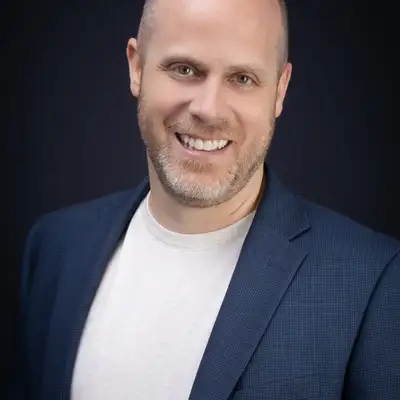
Welcome to Inside Marketing with MarketSurge — your front-row seat to the boldest business insights, marketing breakthroughs, and entrepreneurial real talk.
Hosted by Reed Hansen, Chief Growth Officer at MarketSurge and a digital marketing veteran who's helped scale everything from scrappy startups to Fortune 500 giants, this podcast dives deep into what’s really moving the needle in today’s marketing world. Find us at Marketsurge.io
Each week, we’ll break down the latest marketing and business news (minus the fluff), explore tech trends you actually need to know, and feature unfiltered conversations with the most interesting minds in entrepreneurship and marketing.
Whether you're a founder, a marketer, or just a curious hustler looking to level up, this is where growth happens—loudly, smartly, and with just the right amount of sass.
Subscribe, tune in, and let’s scale something legendary. 🚀
Speaker: Welcome to Inside
Marketing With Market Surge.
Your front row seat to the
boldest ideas and smartest
strategies in the marketing game.
Your host is Reed Hansen, chief
Growth Officer at Market Surge.
Reed Hansen, MarketSurge: Hello
and welcome back to Inside
Marketing with Market Surge.
Most people think writing
a book is the finish line.
Turns out it's actually
where the confusion starts.
Today's guest has spent over 30 years
studying how people thrive, and more
importantly, how they turn ideas into
something that actually changed lives.
And builds businesses.
Lee Baum PhD is a seven time author,
coach, and the creator of the Book
to Business Blueprint, A framework
that helps authors realize something
most of them completely miss.
Your book isn't the product.
It's the doorway and the wild part.
Most authors walk right past the
business hiding inside their own work.
We're going to unpack why finishing
a book is actually the most
dangerous moment for an author.
How to extract a scalable business from
what you've already written and why
you don't need burnout to make it work.
Lee, welcome to the show.
Lee Baucom: Thanks for having me.
I like the fact that you put in,
that's where the confusion starts
because that's really, that's
what I see that look in the eyes.
Reed Hansen, MarketSurge: Just as
a side note, my wife has her own
business, a photography studio,
and recently published a book.
So I'm very interested in this topic
just for our own family's interest.
But this is a great topic.
I'm glad you made contact here.
So you said that finishing books.
a book is one of the most
confusing moments for authors.
Why would you say that?
Lee Baucom: So it ends up being
this momentous occasion for them
that they are like, oh, I'm done.
I'm finished.
I remember I was at an event with my
o my publisher and I was sitting with
an author and I'd already been through
several books at that point and was
actually helping put this on, and he said,
oh man, I'm so glad that's behind me.
I'm like.
5% is done now, and he just stared at me.
He was like, what do you mean?
I'm like, this is when you decide
what you're gonna do with the book.
Because the book is, and this
is where the confusion sets in.
Many people think the sales of the book
is what they're after, like the money
from the sales, and that's nice, but.
Statistics are in our way.
There are not many books that
make much money in, on the sales.
And so the question is, what happens next?
And that for me was part of the confusion.
So let's go back a little
bit on, on what happened.
I was at the a switch in my career.
I was trained as a therapist, but
was frustrated with how ineffective
marital therapy in particular was.
And so I spent three more years
getting trained After getting a
PhD and a couple of masters I spent
three more years doing training as a
coach, and I thought, you know what?
If I'm gonna complain about this,
I need to say what I believe.
I can't just.
Shoot at this target.
And so I wrote what I believed and
that began to be the core of what
became the save the marriage system.
At that point, it was just me
reflecting on what does work.
And so when I decided to make that
into a book I had somebody, this is
99, back in 1999 on the internet.
It was hard to put a website out at
that point, so I had a pretty janky
website that had this on it, and I
had someone who had said, you know why
you're waiting for it to be published?
Why don't you put it up as an ebook there?
There was no Amazon telling
us what an ebook was.
So I said, what do you mean by that?
And we got to the bottom
of that, and so I did that.
And I thought, okay, so now I'm this
coach therapist guy who's in my office,
and I'll just do the sales on the side.
It took me two years to figure out
that was the beginning of a business.
It took me a little longer than that
to figure out how to put it together.
And so that's the confusion.
Many people first think
they're gonna sell the book.
Second, they don't know what to do other
than to try to market the book itself.
And the book, as you said, is
just the starting point for the
business that can come out of it.
Reed Hansen, MarketSurge: So let
me pull that thread a little bit.
So what did the business look like
that emerged outta that first book?
what did it turn into?
Was this more clientele for your
portfolio for marriage counseling
or was it something else?
Lee Baucom: That's where it started.
So again, not, it was probably
2000 at that point because the
book came out in December 99.
So I started getting a couple of phone
calls and now this is back in the
day where I'm in my office picking
up, a, like a phone and answering it.
And these people were calling me from.
All over and asking for more help.
And the first time it happened, I
thought, what have I gotten myself into?
This book is everywhere
or could be everywhere.
And this person was asking for more help.
And while I was seeing only people
in my office at that point now.
We haven't gotten virtual coaching
slash therapy until pretty recently.
Therapy very recently, thanks to the
pandemic, but back then I didn't know
we were seeing people in the office
just thinking that was the regular
thing and this person's calling me
going, Hey, I need some help with this.
So I thought, okay, I can do the
coaching from wherever with the phone.
And that's how it started.
I had to figure out how to
get the schedules in line
back then and how to take.
Payments and all of that stuff,
and we just coached by phone.
So that, that for a while I was
like, okay, this is just this little.
Side thing, I'm still at my
office, I'm still seeing people,
I'm still doing the regular thing.
And yeah, on the side I'll
see a person here or there.
And that began to grow.
And so that was the first thing.
You're right.
It was more of that except different.
It was now worldwide.
It was also by phone.
It was, so all of these things were
coming in that I had to create on the fly.
Still thinking that's
just a little side thing.
And then I started realizing that people
were needing some extra pieces, and
that led to me creating some courses.
Basically at that point I was
going, I don't want to have to keep
answering the same question over
and over because it's keeping us
slow and the whole coaching thing.
So I created these mini
courses along the way.
Turned out those were products.
And so finally it was like two or three
years in, I went, oh, this is a whole
business thing I need to put together.
And so that led to the extra
courses, some books that also
pointed people back to the program.
And then a kind of a membership
program to help people get the
training they needed, the answers
to questions, things like that.
And all of that came just
as I finally went, oh wait,
there's something else here.
Reed Hansen, MarketSurge: Okay,
now you've talked about a hidden
framework inside every book.
What does that mean and how does
that help you identify what the
business is inside of a book?
Lee Baucom: So the reason it's hidden is
sometimes because the people writing the
book are so familiar with it, they don't
see it as the framework, so it's hidden.
So I many times, so first, let me just
say that probably is one of my little.
Hidden secret powers.
I'm good at identifying the frameworks.
Reed Hansen, MarketSurge: Okay.
Lee Baucom: and it goes back to when
I was in grad school, professors
were sending people my way to help
with their dissertation or their
thesis, and I couldn't figure out why.
I just figured, that they were doing that.
And it turned out it's because I was
able to listen to them and go, oh,
this is what you're trying to get to.
That's the framework.
How are you doing what you're doing?
So in the world of let's say self-help
and development, there's a framework
of how people work with people.
But broader than that,
it's true in every field.
I had a realtor who wrote a book and
I'm like, how do you sell a house?
And he said, just like the
way you sell the house.
And I asked him to walk me
through it and I started
noticing he was doing it his way.
He had his spin on it.
That was his framework.
He just didn't know it because he just did
it like saying to a fish, how's the water?
And they're like, what
are you talking about?
This is just what I'm doing.
And so identifying the framework is
incredibly important to figure out
how you're going to verbalize that.
That's the piece that, if
somebody says, what do you do?
So for me, what do you do?
I help people save their marriage.
Okay, so that's pretty broad.
How do I do it?
I've got three steps, I've got three
C's, and I can go into that and be
pretty specific on how that fits.
That's my framework.
And then there are sub frameworks.
So I've along the way, developed
some other pieces because I've
thought about how do I do it?
Simple question of how would
I take someone from A to B?
What are the steps I take
them through to get there?
And so I, tell me a little bit
more about your wife's book.
Just so we make it real life.
What is it?
Is a book of photography
or about how to do.
Reed Hansen, MarketSurge: It's a,
my wife's photographer, a boudoir
photographer specifically, so she
works primarily with women, and her
book is I'm gonna get the title wrong,
but it's a year of body positivity.
And so every.
Page is either a meditative
practice or a short reading about,
maintaining positivity for their body.
So I'm not sure I want
feel we can abandon this
Lee Baucom: Oh
Reed Hansen, MarketSurge: doesn't
Lee Baucom: let's go with
this because this is great.
Because this is, she may go
I'm just putting these things
together for positivity.
But when she put them out, she probably
laid them out in a certain way to
talk people through a step so you
don't just go, be po body positive.
That that's what she's doing.
But how she gets somebody
there is her framework.
So she's doing it through
some daily meditations.
She's showing pictures
probably of people who are.
Proving that point, right?
Reed Hansen, MarketSurge: Yeah.
Lee Baucom: and so the way she's talking
about that, the language she uses the
way she structured the book all points
to a framework of how she would do that.
So that's the framework that's in there.
And so if she said, you know what?
I think I want to do, let's say a
little workshop on body positivity.
There's the framework that's already
there that she would start pulling out
and going, how do I lead somebody through
that so they, they can follow this path?
Reed Hansen, MarketSurge: Okay.
Interesting.
Is, do you think, so it sounds like, I
think my wife's motivation in writing
the book, for example, was somewhat of
a promotional exercise for her business.
Maybe a little bit of a magnet,
like a lead magnet to get people
to find her and something to give
her a little bit of credibility.
Do you think that sums up what you know?
So in addition to identifying the
business model do you think that
sums up what the main purpose of
entrepreneur writing a book is
Lee Baucom: It certainly is a lot of that.
I, so for me, in the beginning I
was just like, this is what I think.
And I'm just putting this out there,
but I always point out that authority,
that term starts with author.
So you're doing this to build authority,
which is part of what she's doing.
You're doing it so
people can see your work.
She's seeing, they're seeing her work, but
they're seeing something else in her work.
There are plenty of books that might have
similar photos, like if somebody wanted to
see boudoir photos for probably different.
Thoughts, but hers is going
at a specific direction.
Like she's there because
she's this is body positive.
And so she's also creating kind of
her frame, like what is she about
that's different than just a general.
Photography book, right?
She's, this is what I'm about, this is
what I'm trying to accomplish with this.
So she's got credibility.
She's giving people a message
that is independent of the book.
And that's one of the things that I
find to be most interesting is how many
authors have this very powerful message.
That just doesn't have anywhere to go.
And another conversation at one of those
similar events, I asked the person, I'd
read his book because I was helping put
it on, they handed me all the books.
And so I would know these
people and I read it.
I'm like, this is a really great book.
What are you gonna do with it?
And he said, what do you mean?
I wrote the book?
I went what's next though?
Because.
There's nothing worse in my mind
than a message that could change
people that is can't get any further.
Like somebody gets to the end of the
book and goes, oh gosh, I wanna do more.
Then there is no more, and
the business is the more.
Reed Hansen, MarketSurge: Got it.
Okay.
So the, I guess how does that come
to be, what are like the potential
branches out of, once you've defined this
blueprint, it sounds like, when in the
self-help world or as a counselor, it
seems pretty obvious that as a path that
just could, you could just expand it.
But what are the, what are some of the
other possibilities that emerge out of
a book with your thought leadership?
Lee Baucom: Yeah.
And so I would say maybe that's a path.
Reed Hansen, MarketSurge: Okay.
Lee Baucom: people may
have a departure point.
And for me.
I still do a limited amount of coaching,
but I have to draw it down because I
have other things that I'm attending to.
There is a limit, for instance,
to coaching or therapy.
You've only got so many hours.
Reed Hansen, MarketSurge: Right.
Lee Baucom: so as somebody who does that
may be going, how can I expand that?
So one of the things I think
is very important is, so you,
we talked about framework.
You need to know your framework for sure.
You also need to know your audience and
how they need to get that information.
Like what ways might they take that in?
And it's usually a multitude.
So it could be therapy or
coaching, or a seminar or a
workshop or a retreat or a speech.
There are lots of ways to do it.
Which brings up the third part, which
I find to be very important of going.
What fits you?
What fits the author?
I keep throwing in stories, but
it, I think it's illustrative.
So I had a person who I was working
with and I said we talked about
his book and he came in two steps
past where is sometimes helpful.
He had already started down
this road and I said, so what
are you doing with your book?
He said, I am going to go do speeches,
and that's about how he told it to me.
I went, you don't sound
very excited about this.
And he said I have a friend
who's very successful at this.
He wrote a book and he's
doing speeches everywhere.
It is very popular.
And he told me that's what I needed to do.
Okay.
That is something you could do,
but tell me what's wrong with that.
And he said.
I don't like to leave my family.
I like to be at home.
I like to be around my family.
I really don't like to public speak.
I can, but I don't really like it.
And I said, so where,
what have you done so far?
He had spent, several thousand
dollars on PR material and contacting
places and shipping his stuff around.
I'm like, so what happens
if they start hiring you?
Let's just speed this up a little bit.
Let's say you're successful at this.
Let's say it goes really
well, five years from now.
You have, let's say 30 or 40
speaking engagements per year.
And he just looked at me horrified
and I said, I think you may not
have matched it to your temperament.
And that's important.
How do you want your life to
look as an important question?
Does that make sense?
Reed Hansen, MarketSurge: It does.
And I definitely get the vibe that
you like when you talk about writing
the book, it, it's, it emerges out
of like organic, like thoughts.
And then, as you structure the
business that emerges out of the.
Book that it is, also organic, how,
and this part about emerging outta
the book and doing this successfully
without a lot of like putting
a or square peg in round hole.
Like how do you make that easier?
how do you find that fit that
emerges like more quickly?
Like how do you know what your
calling is outta that book?
Lee Baucom: It's a great question,
Reed Hansen, MarketSurge: Yeah.
Lee Baucom: and one that often takes
a little bit of time because you're
gonna have to get some feedback.
That was one of the things that I was
missing the feedback along the way for
me, and that was what the delay was.
I didn't realize I was
building a business.
I think you are looking for
the signals versus the noise.
Reed Hansen, MarketSurge: Ah.
Lee Baucom: so signal was that guy calling
me because that fit into what I did.
I'm like, oh, coaching, I can do this.
I have to find a different way of
doing it than what I've been doing,
but it's in the realm, right?
I can understand that.
I had another email exchange with
a number of people who were writing
as therapists who wanted to be
certified to use my approach.
And the first one I was
like that's curious.
That's just an interesting.
Thing.
The second one I went, that's really
weird that like it's not just one person.
About the fourth or fifth or
sixth one, I started going,
gosh, there's a business here.
Reed Hansen, MarketSurge: Yeah.
Lee Baucom: And so I started thinking
about that business and in the kind
of the wake up moment in the middle
of the night going, oh my gosh,
if I did that, what would it mean?
And it would mean that I had people who
were under my name and under my brand
doing something, but I couldn't know
what, and I started going that I could.
That's.
That's beyond what I'm comfortable with.
Could I teach?
Sure.
I've taught therapists before, so nothing
new, but teaching them to do something
that's branded by me, whole different
ball game, not particularly interested.
And I realized that was noise.
And so we're separating out the signals
and the noise and the signals and the
noise are often about what would I be
comfortable with, what would fit my style.
My guy that was going
down the speeching path.
That was noise.
It's just that he had someone who was
successfully doing it, telling him,
and he thought it was a signal until
he started running it through the loop.
Reed Hansen, MarketSurge: Got it.
Okay.
You've gone underwrite other books,
additional books have you had other
different opportunities emerge out
of these different books or been your
experience with the subsequent books?
Lee Baucom: Yeah, and some of the books
are very strategic and I've figured
out how to be more strategic over time.
So I created a pretty slim book.
So it's an easy read
on why marriages fail.
It's why marriages fail that points them
to how they might take action, right?
It's the last chapter and it is what now?
What, how do you start the process?
That's a pretty strategic move,
but there are some that are more
for me, like I wrote the Forgive.
Process.
And the reason I wrote the Forgive
process is because I was working with
people who were having a hard time
letting go of things, moving beyond them.
That was purely to, here, let me give
you this so you can move beyond it.
There are a couple of books on thriving
that I wrote that are outside my
realm and I wanted, those are clearly.
Authority books.
I have people who come to me
for coaching or even to speak on
things, but that was, that's more
of a, that truly is a side gig.
I don't really look for that as something
I would build because I put so much
energy into a couple of other areas.
Authors and saving
marriages in particular.
I have to choose at the beginning,
why am I doing this book?
What is the purpose of it?
That's a missing piece for
a lot of people who are just
like, I just wanna write a book.
So what are you hoping to get out of
that often helps them formulate how
they're even gonna write the book.
When I'm talking with them,
sometimes it's two beats past
that they've already published.
It's the book is there.
And so now we deal with what we have.
What's really nice is when it's a
couple of steps before that where
we still have some points of saying
how do we want to formulate the
next step from within the book?
Reed Hansen, MarketSurge: Okay.
I just had a note.
You had a health scare that
shifted your perspective.
Does that influence your work today?
How does it how have you
thrived past that per
Lee Baucom: Yeah.
So I was in my mid thirties, was busy
already with the save the marriage
stuff and was trying some other things
and just was not taking care of myself.
Interestingly, all that research on
thriving I had been doing for a number
of years, I got really interested.
So my complaint about a lot of psychology,
I was being taught was psychology seems to
be focused a lot on what's wrong with you.
And out of that, there were some
research that were like surprises to us.
They were doing some research early on
in Hawaii when Hawaii was just its own
island group and not a destination.
And they were trying to figure out
what the effects of alcoholism and
domestic abuse and some other issues
caused for people, what trauma
caused, what did it do to them.
And then there were some people that
snuck in through there that were like.
They did fine.
Like they, they had normal wives
and they came from the same
families and so they started going,
wow, some people are resilient.
And so they get to this baseline.
And I was sitting there going, yeah,
but there's something beyond that.
Like we can have these hard
events and grow beyond them.
So I have all of this studies that
I've done, but was I eating well?
Nope.
S was I de-stressing?
No sleeping well, no, not doing
anything to take care of myself.
And sure enough, my body went, okay,
yeah, we're gonna slow you down here.
It was a big slow down though,
and the doctors were not
sure what was gonna happen.
And they had the right
diagnosis, the wrong prognosis.
For me in particular, I had a, an
acute version of what could have been
a chronic and life ending illness.
And it just so very painful.
But resolved itself after.
I guess about eight, nine months of,
Reed Hansen, MarketSurge: Oh good.
Lee Baucom: The recovery process.
But it was scary enough when the doctors
calling your wife and using his first
name and saying, this is not good.
This is, this doesn't end well.
And so as I finally got
to a specialist who said.
You're going to be okay, but
I can't make you feel better.
Everything I do to make you feel
better would delay your recovery.
So you're just gonna have to tough it out.
And so that process reminded me A,
we only have so much time, and B,
we don't know how much time that is.
So c what are we gonna
do with the time we have?
So I refer to that as bonus time now.
And that really brought home
to me the fact that what we're
here to do is make a difference.
So how am I going to make that difference?
Everything I work on
is making a difference.
Whether it's helping an author find
the best business for them to get
their message into the world, or
whether I'm helping somebody save
their marriage or thrive better.
All of that is about how can we
make a difference in the world and
leave it better than we found it.
Reed Hansen, MarketSurge: Wow.
What a nice statement to add on end on.
Thank you so much, Lee, that
I feel inspired and I really
appreciate the experience and
wisdom you've shared here today.
If people would like to work with
you, learn more, pick up one of
your books, what, where are some
of the links they can find you at?
Lee Baucom: So let's start with
an author who might be going, yes,
I want to build a book from this.
You need a blueprint.
I think that's helpful to take it a step
at a time, because one of the things
I've noticed is a lot of times people
will then find the, have a six or seven
figure book and they're overwhelmed.
And so we like to take it a
step at a time and architecture
it and build out what that is.
So that's at book book to
business blueprint.com.
I've actually got a starter map
that people can access there to.
Get started on thinking through that,
and I started a podcast there after the
book to talk about my experience of what
happens after the book and then pointing
direction and how others might do that.
And then there is a program there
that's available for people that
want to take that one step at a time.
Interested in my books.
You can find them all@thriveology.com
slash books.
So Thrive, T-H-R-I-V-E,
and then ology.com/books.
That'll get you to.
Just a list of the books.
Reed Hansen, MarketSurge: All right.
Lee Baum, it has been a pleasure.
I am so glad we met.
And thank you for coming on the show.
Lee Baucom: Oh, thanks for having me.
Speaker 2: Want to stay ahead of what's
actually working in marketing right now.
Head over to Market surge.io
and see how we're helping businesses
grow smarter, faster, and louder.
That's market surge.io
because your next breakthrough
shouldn't be a guess.