Subscribe
Share
Share
Embed



Hosted by Heath Fletcher, The Healthy Enterprise explores how innovation, technology, and leadership are reshaping the life sciences industry—from discovery and development to commercialization and care delivery. Each episode features candid, heart-centered conversations with founders, scientists, executives, and investors, sharing real-world experiences and insights for building resilient, future-ready organizations.
Created and Produced by Bullzeye Global Growth Partners — Let’s build it together!
Heath Fletcher (00:12)
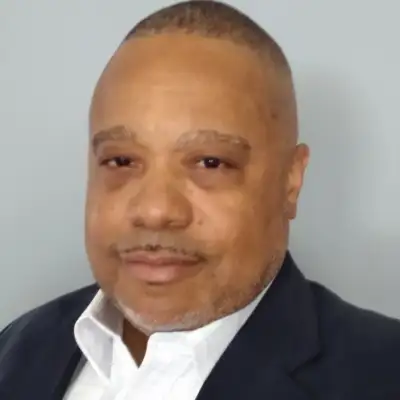
Hello, hello. Welcome to the Helping Enterprise podcast. Thanks for joining me today. If this is a return visit for you, I appreciate you coming back. And if it's your first time, I hope you enjoy today's episode. I'm going to be speaking with Larry Chism He's an accomplished entrepreneur and senior talent acquisition executive with over 25 years of experience in recruitment, workforce development, and executive search.
As a CEO of Quantus Management Resources, he is committed to delivering exceptional service to clients across a range of industries. Larry's career spans global staffing firms and includes a strong track record of sourcing top talent for healthcare systems, biotech startups, and med tech companies while navigating today's competitive hiring landscape. So, ⁓ let's join Larry and have a chat.
Welcome to this episode and yeah, looking forward to having a conversation with you. And so why don't we start by introducing yourself and telling us about your firm.
Larry Chism (01:16)
Sure. So yes, my name is Larry Chism and I'm a talent acquisition executive. I've been in the business now for, can't believe it, little over 25 years. Started out basically working, started out working for a small firm ⁓ in the South Boston area. And that's kind how I got my introduction to the business. used to actually work retail as a manager for Brooks Brothers and
I rocked the one of my clients who is the owner of that firm. And so that's how I kind of initially got into recruiting. And so I work with those gentlemen for a few years. then basically, you know, my path has been kind of unique. So after that, wife now girlfriend, then we had made a decision to move out to the Chicago, Illinois area for family and such. And that was kind of my first stab, if you will, at. ⁓
entrepreneurship by straddle as just a solopreneur on my own practice i had a small portfolio about three or four clients and um... basically straddle would retail recruiting because most people who entered into that business typically falling into maybe a particular industry that they may have come out of so he had a tech background you probably went into some type of tech related recruiting and then so on and so i did that for a few years successfully uh... made you know made some good money and then uh... nine eleven happened unfortunately and we decided that
⁓ we want to come home back to the boston area and with that i did continue some recruiting but the economy was not that great and so my clients had went out of business but ⁓ he gave me an opportunity to actually go into another vertical which is non-profit i'd work for united way as an executive in their western mass location doing fundraising and i find that in because they gave me a unique exposure into the business world especially in the financial services and insurance industry
And so when I re-entered recruiting, ⁓ just think of it as a learning experience that allowed me to kind of look at other bandwidths that I could explore as a recruiter. So I started recruiting high level people, director level executives, people like that. And then from then on, I grew into contract staffing, which is more of a, know, for those of you that may be familiar with temp placements and such, I did a lot of that and worked for a startup firm back in around 08, 09.
and work with them for a couple of years before going back into practice for myself. And since then, I've been doing basically direct hire placement and contract staffing to present. And with that, I basically recruited a whole range of industries, which I won't go into right now, but it's given me a really good, well-rounded exposure to the business. And here I am.
Heath Fletcher (04:03)
you
are today. Yes. And you've, you've seen a lot of changes in, in your industry, particularly in the last, you know, 10 years, I would assume. But what do you find today? ⁓ Currently, what do you find the most interesting or maybe the most challenging part about staffing or recruitment from your perspective than what it was when you when you started in the industry?
Larry Chism (04:33)
Well, I'll answer the question this way. So having been in the business as long as I have, I've seen a lot of different shifts. ⁓ I've seen the emergence of the internet as we know it, World Wide Web, if you will, and how that affected recruiting as a whole. ⁓ I've seen the introduction of other resources like social media and how that has impacted. ⁓ In many cases,
In my experience, it has been an addition to the recruiting, ⁓ the way we recruit, the way we identify top talent and such. ⁓ Now, as of late, the newest thing is artificial intelligence, AI. You hear a lot of that in a lot of different protocols, recruiting, medical, you name it. There's different variations of it out there. But the unique challenge that I'm seeing, ⁓ Heath, is that ⁓ from
I'm coming from the perspective of when I don't want to use an analogy from quote unquote Flintstones, but you're back in the dinosaur age when we were using sticks and stones. It was a bit different. Yes, technology was a tool, but you weren't necessarily as reliant on it because it really required a lot of personal face-to-face interactions. With the evolution of technology in our business and now with the emergence of AI, it's changed the landscape quite a bit.
And so right now you have kind of a generation of recruiters that, and this is through no fault of their own, they basically evolved in the business essentially with the resources and tools that they were instructed to use as part of the business. But it's kind of one of those things that you go through where like, happened if you lose electricity? Okay. You're so reliant on it. Well, you have to adapt and find other ways to get the job done.
Well, if you have never encountered that and then all of a sudden you lose something as basic as that, you're kind of frozen in time. You don't know what to do. Whereas those of us who may have a moment of time when we didn't have electricity to use that as an example, we kind of know, okay, well, we kind of need to get back to maybe a little old school methodology. So we're not entirely helpless, but what it has done to the field is it's really both in one aspect, it's made recruiters very dependent on technology.
good, but also to a bad sense because the strangest thing that I have identified, it's not just my opinion, but ⁓ we've come out of an economy where it's been fairly steady ⁓ and such, but yet the behavior in terms of people trying to find jobs or land opportunities would seem as if we were going through the opposite time, that the economy wasn't that great, that things weren't going that well. And what I found, just my personal opinion as well as
some shared opinions is that with the emergence of AI and any new technology, until there is a standard basis of which to promote that, you're going to have different variations of different quality levels. But unfortunately, that's going to kind of create a backlog, if you will, or even kind of a jam of those that may encounter that and find that, well, wait a minute, I'm putting out 200 or 300 resumes and I'm maybe getting
five replies, know, what's going on. And so, ⁓ not that much different than when the social media came out in terms of the news, you know, traditional news versus social media news and blogs and, podcasts and things of that nature that in its beginning was kind like the wild, wild west. And so until you get some type of order into that chaos, it's going to be difficult to kind of ascertain, you know, when is this, this, this
I don't maybe experience it. We're going through going to taper off into something a bit more predictable a bit more orderly that okay fine now we can kind of apply some basic processes and such to navigate or function in this new environment
Heath Fletcher (08:40)
Okay, so I'm glad you brought up AI already. ⁓ Yeah, I mean, there's been a variety of advancements over the years. know, automation used to be a big concern for people for employment and ⁓ job. now that with AI, there's a lot of confusion about, who's going to lose their job in this this upgrade? You know, and, ⁓ you know, I think what I've heard is that
Larry Chism (08:52)
Yes.
Heath Fletcher (09:09)
Right now where AI is putting a lot of, ⁓ is being used a lot is in the filtering process of, so resumes are coming in digitally now through multiple avenues and applications and softwares. And then the information is being vetted and sorted and basically analyzed by AI, right? And that's the difference right now. We're missing that sort of like,
no one's reading these things. It's just being sorted. And then a certain percentage of them are being handed to somebody who's actually going to take the action and communicate directly with that human. Right. So how is that? You know, is that, there, is, know how, remember when websites came out and we used to put, we used to bury keywords in the background where you couldn't see them, but it was a way to trick the, the algorithms to find your website.
know is is that kind of stuff going on right now where it's like ⁓ here's a trick to get my resume in front of somebody before the the other 199
Larry Chism (10:17)
Yeah, so, ⁓ and that's a great point. And yes, so what many may be hearing is yes, the utilization of keyword search and trying to make your resume keyword friendly. And in theory, it sounds like it's a reasonable approach, but again, ⁓ the challenge there is, for example, ⁓ you can have 100 different opportunities.
And you can put your resumes to those different opportunities, but they may have a hundred different parameters of keyword search. And, and so when the keyword search, it has a limited function, a limited capacity. It's not going to tell you everything you need to know. It's going to give you kind of a baseline on what you're looking for, but it's not going to say, okay, yeah, this is the person I want to hire. Let's bring them in or something along those lines. And that there is kind of the valley, if you will.
or that crack, if you will, where the challenge lays. Because I'll give you an example. ⁓ I have encountered plenty of scenarios, both during my career and even as of late, where I've looked at people, probably initially resumes, and I'd see some things. I may not see everything I need to identify, but maybe enough to just reach out. And had I not applied that initiative of reaching out,
I would not have found out that after talking with this person or interacting with this person, there's a whole ⁓ wealth of information that is applicable to the opportunity that I'm trying to fill that if I hadn't taken the initiative, this is a person that would have just gone by the wayside. And at the end of the day, what is it that we're really talking about? Trying to find or identify people that are qualified to do the task at hand and do it reasonably well. ⁓
But the bottleneck, if you will, to that is, OK, well, they got to get through the keyword search maze first. And I can't tell you how many people I have worked with or have placed that if I had judged them completely on their resume, ⁓ I wouldn't have even talked to them. And I can tell you some of the best placements. as an agency recruiter, some of the most lucrative placements I've made have
been from people that after speaking with them, well, I know why your resume doesn't look that great. You're too busy doing the job. You don't have time to build your resume. You don't have time to do the basic things that, one would expect. But you're doing the job. You're getting it done. You're creating the results. You're doing the things that any potential employer would want to identify and bring on to their team. So how do you manage that? Well, this is where the human element comes in.
Okay. And I'm not saying there's any one perfect way of doing this. I'm just simply saying there is a distinction between the limitations of AI and what it can do and identify and then what is left over, if you will, from the rest of the meal that is still good and fresh, but yet for what a reason ends up in the garbage pail. And so that is where we're at right now. And that's where a lot of people are finding themselves. They're good, solid, credible people that are falling in the cracks of
a technology shift that has not been completely perfected yet.
Heath Fletcher (13:43)
I think that yeah, you hit it on the head. It's like it's not it's not it's only it's only as as smart as it can get and it's apparently gonna get smarter what we've understood but we're still early
Larry Chism (13:54)
And
I'm sorry to dovetail on that and it's not necessarily a, don't, it's not a criticism of my colleagues. It's just in all of us, you we are creatures of our own landscape where we come from. And so when you are looking at, you know, from agency recruiters or corporate recruiters and such, you know, we all have different, how can I say,
things that drive us and that maybe prioritize how we go about our job. And so from a corporate recruiter standpoint, there are different challenges and issues that they encounter that are not the same as an agency recruiter. And so their challenge is to overcome those obstacles and get to the heart of the job at hand, which is identify good people, bring them in and get them through the process. if you have evolved in this business,
more reliant on technological resources rather than maybe intuition and instinct and experience, then you only know what you know. But unfortunately, the collateral damage of that is those individuals that are qualified that can do their job, but for whatever reason, because they don't fall into the keyword recipe, if you will, are unfortunately left behind or left out. And that, again, is where we're encountering this problem.
Heath Fletcher (15:14)
Yeah,
almost could be missed opportunities, right? Or, you know, you might lose the fish, the one you want might actually slip through the cracks. And that's a bit more of that. It's more of a passive approach. You post a job, you receive resumes and you down, you filter them down and then you do. Whereas what you were talking about just before that was more deliberate. And you know what is typically called headhunting, right? Where you're, you're actually looking for the person to fill that spot.
Larry Chism (15:41)
Yes.
Heath Fletcher (15:43)
So, which is where you spend more of your time, right?
Larry Chism (15:46)
Yes, and actually, and I'm glad you kind of brought into that because headhunting in many ways has evolved over the years. What you will find is the kind of traditional headhunting that I both started the business with back in the 90s and such, which is still prevalent ⁓ in retained search firms and those ⁓ types of recruiting organizations is ⁓ with higher level positions.
maybe positions with certain specialties, technical skills that are not necessary commonplace and such, because you can't really identify or bring in quality talent without having done that. And so especially in certain fields like maybe the legal industry where you're trying to identify ⁓ certain attorneys with certain specialties or partners that may have relationships with various companies that other friends may want to bring in as
additional books of business or those kinds of things where unfortunately, the limitations of technology are going to hit a brick wall and you have to now do the traditional hands-on. You need that interaction with those people. need to gauge their level of interest. You need to gauge their level of qualifications. Those kinds of interactions that are still, to this day, are required, that human connection, if you will. But again,
That's where you find the traditional headhunting. The more mainstream, I don't want to say automated positions, but positions where the keyword search value, if you will, is more operative is probably maybe on the junior level, mid-level, those kinds of ⁓ commonplace positions where, OK, you can do the volume and not necessarily have the human interaction until maybe literally the final stages of that process where you're close to extending an offer of some sort.
Heath Fletcher (17:40)
Okay, Larry, you brought up something that I'm curious about you brought in sort of that sort of June junior level ⁓ recruitment. Fill me in on what's happening because my understanding is that there's a there's a bit of a there's a gap. We've got a really we've got a fairly large upper management executive ⁓ population that is in a state of
an exit strategy mode, right? They're ready to retire. They're ready for that succession planning process. ⁓ and then we've got, you know, university students that are coming in, ⁓ you know, coming out of school, looking for entry level jobs, and I hear, I hear that there's sort of, there's a, there's a gap in there somewhere. Where are the gaps right now and and where what kind of solutions do you see fixing that?
Larry Chism (18:34)
So Heath, what you're talking about essentially is attrition. And basically, essentially you have one group of let's just say workers or the workforce that is either on the ⁓ retirement planning or retiring ⁓ point of their career. And so naturally you need the previous group, if you want to come in and fill in those open slots and hence.
you know, this is how you kind of have the recycling of the workforce, if you will. And to use an example of that, and hopefully it kind of answers your question, is basically ⁓ the, I'll use the FAA, which is a division of the government. They're responsible for managing air traffic and all air traffic activity ⁓ throughout the country. And so, you know, here's an organization where you have individuals that may have worked in the field, you know,
25, 30 years, maybe longer. And now they're at the twilight of their career. And so they're looking at retiring and so forth, which is they've earned it naturally. ⁓ But ⁓ in order to maintain that kind of activity in terms of making sure that there's no interruption of service or activity, you need to make sure that there is a previous group or generation, if you will, that are ⁓ in a position to step up and assume those responsibilities.
and such. So that's kind of the natural flow of any workforce element, just using aircraft control as an example. ⁓ To go to your question about ⁓ students, college students entering the workforce and that gap, ⁓ it's a unique challenge right now because you have a lot of different ⁓
you know, don't know, forces, you will, that are kind of intersecting at one point. And they all kind of have their own individual agenda. You have the technology agenda. You have the vacancies that are occurring ⁓ issues. have a new inexperienced population of individuals or workforce coming into the field. And you kind of have to manage all of these mixtures of multi-priorities that are converging. And so without getting to
you know, too technical and such. The challenge here is, I guess, and I'll start with on the students entering the workforce is what can we do to map a clear path that allows them to enter the workforce and start, you know, taking some of these, you know, junior level positions, you know, developing their experience and then building obviously their skill sets.
And part of that ⁓ occurs probably while they're in school, ⁓ internships, co-ops, those kinds of programs. mean, they've been traditionally used. I'm not mentioning anything that's new, but I think in what we're going through right now, they become even more valuable, especially when you're dealing with a workforce that has limited or no experience. How do you get them through the door? Combined with this AI mechanism that is sifting through qualified or what they would say unqualified
people in such and doing its own thing. And it's going to have to be a combination of those items that I mentioned before and some things that maybe the younger generation may not be accustomed to doing that. You know, what's that old adage? What's old is new again. ⁓ You may have them having to reach out and talk to people. ⁓ I know many years ago, I used to encourage or recommend people go on informational interviews.
It's a great way to kind of get yourself out there talking to people there are a lot of professionals out there that will make time actually to talk to individuals and Sometimes in those conversations, you never know what may emerge you what you do have happening is a direct interaction between one person and another and Sometimes you know the conversation may take a life of its own and it could materialize into an opportunity or a referral Maybe so maybe they know somebody, you know, I've just sparked. I've just spoken to maybe this
intelligent individual that seems to have a lot of promise. I don't have anything for them, but hey, Joe or Mary, you might have something in your division. Here's their name and so forth and so on. So it's gonna be a combination of all these different things that ⁓ the new ⁓ generation, you will, coming into the workforce are gonna have to apply or deploy as part of their efforts. If they're looking at putting their eggs all in one basket, which is totally communicating through the technology apparatus,
They're going to experience limited success and that can be frustrating. know, and so, you know, in order to really, you know, give themselves, you know, um, or I should say widen the net, if you will, they're going to have to deploy all of these things. The skills and technology that they are customary utilizing, but things that they may not be accustomed to it, which is actually picking up the phone and calling people, reaching out to people. We, it's a little bit easier to get access to information now than maybe.
20 or 30 years ago with the emergence of the search engines like Google and Bing and so forth, because you can access or you can identify stakeholders or hiring managers. LinkedIn is a great apparatus for that. So maybe you want to get a job at XYZ company and you want to know who to talk to. Maybe there's an engineering manager. you punch up a title and see who comes up as a name. You might have a bunch of names, but reach out to them. do a connect request.
And then after that, you know, maybe start a conversation. Hey, you know, my name is so-and-so. I'm a recent grad. I'm trying to identify opportunities, you know, looking for some advice. You know, that's probably a great way to start. And, and, and you never know where that will lead. And you, have maybe 10 or 20 or more of those kinds of communication interactions during the course of a week and so on. Something is bound to materialize. So, so that's kind of, I guess, my broad, you know, stroke initiative in terms of
different ways to be creative, to put yourself out there, be seen, be known, ⁓ while simultaneously trying to get yourself positioned to opportunities that might otherwise not become available unless you do those things.
Heath Fletcher (25:03)
think that's awesome advice because it you know when and and when LinkedIn for just as an example. Sure. It levels the playing field because you actually have access to executives, CEOs, COOs, CMOs. know the whole executive suite is is accessible whereas you know uh 30 years ago
you wouldn't even get as close to the door of their office, right? Whereas now this is an opportunity to actually introduce yourself and say, hey, I wanna work for your company. And I've heard that doesn't happen a lot. And the ones that do make that connection get noticed.
Larry Chism (25:46)
That's correct. And it's a very basic, but yet simple way of standing out.
Heath Fletcher (25:52)
Yeah. Yeah. So your company, your firm, Qantas Management Resources. Yes. Where do you like to spend most of your time? What's your sweet spot as far as that in in in in the in the big picture?
Larry Chism (26:08)
Sure. So, so in, I guess from a, from an overall point of, point of view, basically ⁓ what I do in totality is I provide, obviously talent acquisition services to businesses. ⁓ I provide ⁓ what I would call, I guess, career coaching or counseling services to individuals. And, and the rest is kind of a, you know, a mixture of both.
Um, probably more on a consulting side, um, especially with those new businesses that may be on the startup side that are looking for, um, expertise or end or a council advice. Um, and that's kind of maybe the third era that I provide, um, service in, in terms of my sweet spot, you know, like everyone else, mean, Hey, you know, you, kind of have to make a living. So, so much of my activity is focused towards, um, service and clients naturally.
I deal with a wide range of clients representing different industries from financial services to biotech pharma to retail. Again, it depends on what the ⁓ demands are and such. Much of my activity has of late been dealing in the medical services ⁓ as well as, ⁓ ironically, ⁓ tech slash security clearance, sensitive roles like that.
⁓ But in essence, know, it's, find really a special kind of enjoyment in being able to ⁓ help individuals, especially those that may be encountering, you know, different challenges or struggles. mean, it could be, you know, maybe the senior professional that wants to reenter the workforce, but, you know, maybe, you know, they're encountering some
I don't know, difficulty in reasserting themselves into a different work landscape. There could be issues there. ⁓ It could be the new individual that just recently graduated college and they're trying to get into the workforce, but they're not exactly sure what is the right or most effective path to do that. And then you have those that are kind of in between that may be either transitioning to
or wanting to transition to other types of careers. Maybe ⁓ they were an engineering manager for most of their career, now they want to go into something completely different. And they're trying to wonder, how can I transition into that without necessarily maybe disrupting ⁓ my, I guess, my way of life? Translated in simple terms, ⁓ my financial viability. mean, there are, again, ⁓
things that you kind of, you you you evolve in, especially if you spend a lot of time within a particular industry or setting, you've generated a certain level of seniority and compensation that kind of goes with that. And so when you're looking at transitioning into another career, these are the things that you need to take into consideration. So again, those kinds of issues, again, dealing with individuals I find both, you know, uniquely challenging but gratifying if I'm able to at least provide some type of
constructive counsel that allows them to achieve their goal, short term, long term or otherwise.
Heath Fletcher (29:38)
And does that include, do do work a little bit with succession planning? You're helping people. ⁓
Larry Chism (29:44)
Yes. yes, the succession planning could be a part of that. Some of that could be contingent upon ⁓ actually small businesses, business owners that may be looking to ⁓ sell their business. Now that's not an area of particular expertise that I have. However, ⁓ there are professions that I deal with or have dealt with one-on-one basis that are trying to determine what is the best
approach a way to maybe address that issue or that priority and then what are some things that I need to be aware of if I want to engage in that kind of activity. That could be something that I can talk to again. That's kind of a case by case situation depending on what I encounter.
Heath Fletcher (30:32)
Any other challenges that you're experiencing or you're seeing in your industry as far as, well, maybe let's focus on the healthcare industry. What particular challenges are you ⁓ seeing there right now in staff?
Larry Chism (30:48)
So that's actually a great question because there's a lot of them. I've spoken to a lot of health care professionals of various industries that can probably write a book on their individual experiences as to some of the challenges that they're going through. But to kind of compress that a little bit into maybe a couple of different areas, obviously, not necessarily so much tie into that, but
Again, keep in mind, we've just gone through as society, I guess, if you will, as a culture, ⁓ COVID. This was something that occurred that, again, pre-COVID, no one really could have seen something of this magnitude. But clearly, when we were all going through it, the medical industry literally was at the front lines of this. ⁓
Many people have their own both personal stories, either directly or indirectly of people that they know of and challenges that they had gone through. And it also tested our institutions in the context of ⁓ best practices or basic practices that maybe needed to be reevaluated as it relates to that. ⁓ What I'm finding now as part of the more recent conversations is
at least from a talent acquisition standpoint, again, identifying those individuals that, well, one, that are still highly motivated and passionate about remaining in the healthcare field because there are different arms of it that are going through different challenges. Quite frankly, some of it political, some of it just ⁓ pragmatic. It's just these are the things that
⁓ that the industry as a whole is constantly being ⁓ tested or having to kind of go through these tectonic shifts and such. ⁓ But at the end of the day, it comes down to the individual, whether you're a ⁓ director of surgical care services or ⁓ an administrator of some type or a physician of some speciality, it all comes down to the basic core of, are you passionate about wanting to enter this field?
and are you passionate about the pros and cons of it? And I can't say that I can give you a clear one way or the other, but I can say that that is definitely an important factor as I identify talent, especially talent that may be looking to either transition, maybe location, maybe they're moving from California and they're looking to move to maybe Virginia, which is one coast to the other.
you know, aspects that they have to consider. And this is where you kind of put the, you know, the test, if you will, you know, do they still want to remain in this field for regardless of what they may have encountered and have gone through. So the only way I can probably answer that is that that is a continually evolving thing, but the newest element that has emerged in this has been obviously the aftermath of COVID, maybe some of the political aspects that have been
in the forefront of the healthcare medical field. And just again, the basic challenges that the field has always undergone, whether it be through technology or just cultural shifts and best practices, but all of these things converging at once, it creates again, those continual challenges that, I can't tell you if there's an ending to it, but.
The only thing I can say is that it's something that ⁓ I've seen more of a factor in what I do as a recruiter that needs to be considered than maybe in the past where maybe there were other issues, maybe it was more related to compensation and is this a particular area that I want to work for. Now it's a quality of life issue, quality of life element that is more of a factor ⁓ based on
some of the examples that provided to you a moment ago and others that have really been kind of the stress tester in how the healthcare industry as a whole is undergoing and dealing with the challenges that it's facing.
Heath Fletcher (35:21)
Yeah, and there's a tremendous amount of growth and innovation and technology and advancements and you know, and I'm, I'm hearing a lot about it's great. brought up the quality of life too, and the balance of life because there's a lot of opportunities now in from a, from a fractional management stem. Startups where they can't, yeah, they can't afford, you know, a full time executive
Larry Chism (35:26)
Yeah.
Heath Fletcher (35:50)
So they offer a fractional opportunity, which actually speaks to that life balance. They don't want to work seven days a week. They want to work three days a week. So it's a perfect opportunity.
Larry Chism (36:01)
Yes. And that's an era that it's a great ⁓ adaptation ⁓ that in many ways cuts both ways, from the individual that is looking to balance their quality of life, there are a lot of advantages to that, to the employer or institutional organization that is looking to tap into that talent, but may have budget constraints and such. it's healthy compromise that allows both
the retention of needed services while ⁓ simultaneously ⁓ factoring in ⁓ on the other side, the quality of life elements that people are ⁓ looking to enjoy or maybe not compromise. And I'll tie that into COVID, just another example as well, because with the experience of working remotely,
versus now you see ⁓ a kind of a momentum going back to the office, it's never gonna be quite the same. And part of that isn't so much as the, well, there are those that are looking to bring people back to work for various reasons or what have you, but I will talk from a senior standpoint, from the individual that may have been accustomed to that long commute into the city.
for a job of some sort, but then here comes COVID, now they're working remotely, but then all of a sudden they realize, oh, wait a minute, why am I seeing extra money in my pocket per week, per month? Oh, that's right, I'm not buying a commuter rail pass or I'm not spending on gas or some type of expense to get me to work. And so now they're seeing a greater net income coming into them and there's a benefit to that.
or the other side, the employer that's simply saying, well, I don't need to rent all this office space now. And so that tends to have a budget friendly aspect to it. again, each company is kind of weighing in on a case by case basis what is best for them. But as a whole, this is something that has played it to, again, what has been the evolution of workforce, workforce climate, options that are available to both individuals.
and organizations as relates to access and talent and ultimately achieving their individual goals.
Heath Fletcher (38:33)
it's such an interesting industry. know, there's so many, it's a giant onion too. There's so many layers and so many ways that it's impacted. It's very interesting. I really enjoyed hearing it from your perspective. And I mean, we already blew through 45 minutes. I you know, we barely scratched the surface.
Larry Chism (38:56)
I all about the technical issues. That's great.
Heath Fletcher (39:02)
Yeah, it was a success. So yeah, thank you so much for your time. You know, if someone is hearing this and they're, you know, looking for coaching or looking for some advice, what's the best way for them to connect with you?
Larry Chism (39:16)
Sure,
obviously you can reach me on LinkedIn, Larry Chism, not too many of us out there, but we'll see. Or you can type up my company name, Quantus Management Resources, that's Q-U-A-N-T-U-S, Management Resources. And in the other ways, traditional, can reach me at 508-289-1620, that's my direct line, or my direct email.
Heath Fletcher (39:44)
Okay, and the website is... ⁓
Larry Chism (39:45)
Yes, it's ⁓ qmrconsultants with an S dot com and all the contact information that you need to get a hold of me is right on there as well.
Heath Fletcher (39:56)
Excellent. Did we leave anything off that you wanted to mention today?
Larry Chism (40:01)
I'm no other than to simply say that and as a general thing that you to those in the business that may hear this I can understand and appreciate that sometimes you know that the challenge you know whatever it may be whether it's finding a job or you know generating business or whatever that may be sometimes it feels like you know you're you know you may be running an empty but but don't be surprised that you know they may be more left in the gas tank than you realize and that's kind of I think a theme that try to
promote both myself and anyone that I talk to because we are going through a unique time for a lot of different reasons. But at the end of the day, it all comes down to each of us trying to identify ways that we can both reach our personal best and our personal goals. And I found that maintaining a positive, constructive attitude and knowing that anything is achievable as long as you're willing to commit the time effort, everything else will take care of itself from there.
Heath Fletcher (40:59)
Words of hope, great place to end. Thank you so much, Larry.
Larry Chism (41:02)
All right, well, Heath, thank you very much for your time. I do appreciate it.
Heath Fletcher (41:05)
You're welcome and thanks for joining me today. We'll talk again.
Larry Chism (41:09)
Okay, great. Take care now.
Heath Fletcher (41:15)
All right, that's a wrap on today's episode. Big thanks to Larry for joining us and bringing such clarity to the complex world of modern recruitment. From the rise of the AI and resume screening to the irreplaceable value of that human connection. And the reminder that great hiring isn't about algorithms, it's about people and timing and trust. So whether you're a recruiter, navigating and looking at new tools or a job seeker, just trying to break through.
You could also be a leader facing workforce gaps. There's a lot to take away from this conversation. And as Larry pointed out on the landscape, maybe shifting the fundamentals like networking and mentorship and just showing up with intention ⁓ hold really true. So thanks for listening. And if you found this episode valuable, please consider sharing it with a colleague and subscribe so you can get an update on the next one. So until next time, keep learning and keep growing. Thanks for listening.