Subscribe
Share
Share
Embed
Since 1986, Convene has been delivering award-winning content that helps event professionals plan and execute innovative and successful events. Join the Convene editors as we dive into the latest topics of interest to — and some flying under the radar of — the business events community.
Convene Podcast Transcript
Cutting Event Food Waste with ReFED’s Jacquelyn Chi
*Note: the transcript is AI generated, excuse typos and inaccuracies
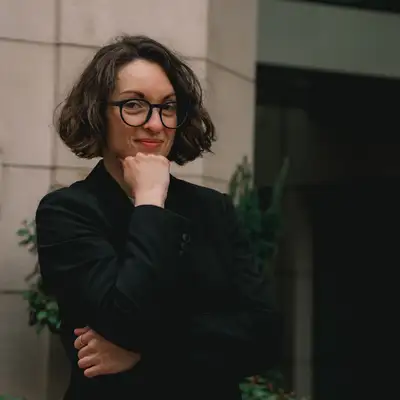
Magdalina Atanassova: This is Season 10 of the Convene Podcast brought to you by Louisville Tourism! Today we’re talking about one of the biggest hidden sustainability challenges in the events industry — food waste — and what event planners can do to change the story.
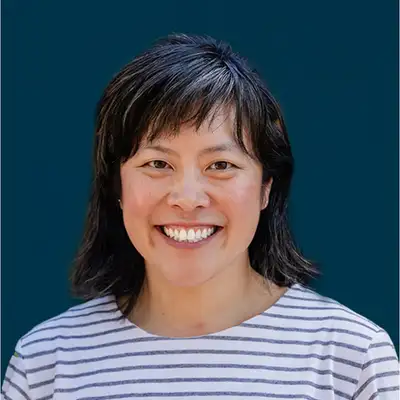
My guest is Jacquelyn Chi, Director of Community Engagement at ReFED, the national nonprofit dedicated to ending food waste across the food system. Jackie leads ReFED’s Food Waste Solutions Summit and Food Waste Action Network, bringing together hundreds of businesses, funders, and innovators to collaborate on practical solutions.
With more than 15 years of experience in food education, community engagement, and events — from OpenTable to The Culinary Institute of America — Jackie helps organizations rethink how food connects people, culture, and purpose.
We’ll explore how planners can reduce food waste before, during, and after events — and why small menu and planning changes can have a huge impact.
We start now.
Hi, Jackie, and welcome to the Convene Podcast.
Jacquelyn Chi: Thank you so much for having me, Maggie.
Magdalina Atanassova: Can you tell us more about the Refed Food Waste Solutions Summit and what key ideas or innovations from the summit could translate well to the event space?
Jacquelyn Chi: Yeah. So our Refed Food Waste Solutions Summit, it's an annual gathering, we call it our big tent gathering, where we're bringing together 700 to 800. Now, it's grown over the years,
but about 700 to 800 stakeholders all across the food waste landscape. All of the different stakeholders, food businesses, food manufacturers, funders, investors,
solution providers, which are both for profit and nonprofit solution providers,
all really interested in collaborating with each other, seeing what new technologies and innovations there are in the space,
and trading best practices in terms of how we can address the very dumb problem of wasting food.
Magdalina Atanassova: You also produce a report each year.
This year, the report was named From Surplus to Solutions,
and the report outlined that 31% of the US food supply is lost or wasted.
So why should this matter to those planning or hosting events?
Jacquelyn Chi: Yeah,
what I love about working on food waste is that it is an issue that speaks to everyone.
And for the events industry in particular,
it is integrally tied into these key priorities that every planner has,
which are cost sustainability and community impact.
But I think first, you know, we say 31% of the US food supply. That's kind of an abstract number. So maybe if I translate that number to something that people can kind of relate to a little bit better.
We like to talk about going to the supermarket. Imagine you went to the supermarket, you had three bags filled to the brim with groceries that you're going to take home and, you know, prepare some wonderful meals with.
And as you leave the grocery store, as you leave the supermarket,
instead of loading all those three bags into your car,
you just toss one in the dumpster, you just get rid of it.
That sounds totally nuts. I feel like none of us would actually do that. But that's essentially what's happening across the country.
When 31% of food produced is, is just getting wasted and not getting eaten,
that's equivalent to 120 billion meals, which is enough to feed a third of the US For a year. And it's also responsible for the same amount of greenhouse gas emission as driving 54 million cars for a year,
which is the equivalent of 18% of all registered vehicles in this country.
So I imagine that every event planner listening to this podcast has seen how much food goes into the trash after every event. Just plateful after plateful. Right. So when you tie that food in the trash and that image of the food in the trash, back to those statistics.
I just cited the economic,
the sustainability, the community impact of food waste. I think it really hits home.
But the positive thing is that food based is a solvable problem.
Solutions exist. And Revet has modeled more than 40 food waste solutions so that people who are, who are confronting with that issue of food waste can sort of understand what they can do to solve that problem and sort of drive the greatest impact.
Magdalina Atanassova: Wonderful. And what parts of the event life cycle should we focus on when we think about reducing food waste?
Jacquelyn Chi: Yeah, I think that there are opportunities all across the event life cycle, but the greatest impact is in the planning process.
And I, I feel like I am speaking event planner speak when I say really like, the success of an event is really in the planning. Right. When you get into it, you're going to respond to various things that are happening, but really, like, you've got to start with a really solid plan.
And the same thing is the case when you're thinking about food waste. A lot of the issues around food waste are about what to do with leftover food.
Advanced planning to ensure you have as little leftover food as possible makes a huge difference. A key way to do that is to work with your venues and your F and B teams to look at serving sizes and.
Right. Sizing your guarantees to your actual headcount.
I feel like many of us, you know, sort of go into event. We think we're going to have about a thousand people,
but then, you know, it actually ends up being, maybe it ends up being a thousand and a hundred people. Maybe it ends up being like, maybe it's really more like 850 that are actually showing up on that day.
That, that is a really significant difference. When you talk about how much food is being prepared for the people that are actually going to be there and actually consuming the food.
Some venues have minimums relative to a group size. But the thing is that venues, they don't want to be wasting food either. Again, this is an issue. Nobody wants to waste food.
So I really encourage planners to start the conversation early with their venues, with their F and B teams.
Explain to them what your goals are around reducing food waste so that you can kind of bring them on board with you. And for our annual summit, we start as early as the RFP for a venue.
We include information in the RFP about certain sustainability practices we're looking for.
And when we're choosing a venue, when we're talking to them, when we're on site with them,
we ask about their flexibility around serving size. Can they sort of adapt to a smaller serving size? Do they currently track waste in their kitchen? Do they already have a food donation partner?
All those kind of questions they. So that you can kind of see, is this a good partner for me to help me in meeting that food waste reduction goal?
Magdalina Atanassova: There are attendees with many dietary restrictions right now. Right. So that also affects the headcount and the kind of menus that are produced for the group. So do you address that also during the RFP process?
Jacquelyn Chi: Yeah, absolutely. I think the great thing about events is that it's an opportunity to showcase the innovations and different formats and different experiential elements of things.
So when we see, you know, for instance, people looking for smaller portions or having different dietary preferences, that's an opportunity for event planners to work with the chefs and the F and B team on different creative innovations in different ways to present things.
So, you know, I kind of feel, personally when I attend an event,
having a buffet or a plated meal is nice. But what's really kind of exciting is if somebody's coming around with a new bite for you to try every moment, Right.
And. And you get a greater variety of things, but in a smaller portion, maybe for those things. So that's one of those ways where even if it's not specifically about having a smaller portion size, you're not saying to people, we're serving you a smaller portion size because we're working on food based.
It's something that still ties into your event goals and makes a memorable experience for attendees.
Magdalina Atanassova: I love that.
I would think that as one of your ways that you have strategic and effective partnerships with your vendors. But what other such strategies can you highlight?
Jacquelyn Chi: Yeah, I think that partnership with the venue is obviously really key.
And if the venue doesn't already also have partnerships, for instance with food rescue organization or a composting partner for any further leftover food. Those are also things that an event planner can bring to a venue can sort of say, we would love to work with this food rescue organization to donate leftover food so that that can be meals that goes back to feed the community.
Or we can refer you to this partner in terms of composting. Maybe you don't have composting set up for your kitchen already, but here's a partner we at refed have our solution provider directory where you can search in terms of solutions and different organizations who are working different states in the United States.
So I would encourage all of your listeners to sort of go and check out, if they don't already kind of have some of these partnerships or know the organizations that are doing this, to go and check out our solution provider directory so that they can see some of the organizations that are kind of doing this work already and can help them on that food waste reduction journey.
Magdalina Atanassova: I love that. And I'll make sure the link is in the show notes for our listeners. Thank you.
And you already kind of alluded to this with portion sizes.
And I really wanted to ask this just because of now CLP-1 is everywhere, right? A lot of people are taking it and it obviously impacts the size of meals that people want to eat and their preferences.
So we see that shift and you mentioned that also in the report. So how should planners think menu design and meal planning in this context?
Jacquelyn Chi: So we've done some research at Brave Ed in terms of portion sizes, and our team estimates that creating smaller size portions for menu items can reduce that Strategy, could divert 2.35 million tons of food waste annually,
while creating a net financial benefit of $8.75 billion. That's billion with a B. So that is just looking at taking the food that you were going to serve.
Same recipe, you know, same ingredients, same deliciousness in that recipe, but just serving it in a smaller size so that people are only taking or only consuming what they want and care to eat as opposed to, you know, leaving something on the plate.
So huge potential in, in that strategy alone.
I think the other thing related to GLP-1s is we know that users of GLP1s are more attracted to eating producers fruits and vegetables and less processed foods. And produce is like the number one category of food that gets wasted as well.
So there's a real opportunity in here thinking about this large category of GLP1 users and menu design. Sort of strategically designing menus and serving formats that really meet their needs and their preferences in terms of those smaller sizes and incorporating those, you know, having more fruits and vegetables and those menu items on the menu.
And then I think also in terms of menu design and meal planning,
again, it kind of comes back to that experiential element of the event.
If you are. I talked about buffets and potentially past apps or something instead of buffets. But also if you do have a buffet, you know,
putting those items, those, those items with fruits and vegetables in them, fresher kind of dishes at the beginning,
so that people take those and they see those and they're attracted to those more first also. So they fill their plate up with those items and then the other items, they can get to them if they want to.
But you've really like seen and met their needs at that first pass by doing that.
AD: In Louisville, the most powerful moments don’t happen at a podium — they happen around the table. Louisville’s bourbon and culinary culture is built into the destination experience — helping planners create meetings with unforgettable moments guests actually talk about. From immersive tastings to chef-led storytelling, the f&b experience brings the city to life for attendees. Learn more at GoToLouisville.com/meet.
Magdalina Atanassova: I feel that also would satisfy a lot of people with different dietary needs, also culture that they come from. Because, for example, I come from Europe, every time I come to the States, I feel dependent.
The plate sizes in general in restaurants are so large I can never finish it, even if I'm starving.
So that would be wonderful just to have this overall mind shift trickle down to every kind of food establishment.
Jacquelyn Chi: Yeah, Maggie, I mean, you touched on something that is even, I feel like, often overlooked in thinking about some of these formats. It's even the literal plate size that you offer, right.
Like there are studies that show if you give people food on a larger plate or you hand them a larger plate for going through a buffet or something, they're going to fill up that plate because they feel like they need to get their value.
They feel like, you know, what if, what if I'm not full or whatever it is. But if you just give them a smaller plate,
but it's a buffet style or it's something where they can go back, they still have that ability to consume as much as they want to consume. But you're sort of setting the boundaries for them first.
Like, hey, take a little portion first and then if you want more, come back for more. But just that, just the plate size actually can also have a significant impact on how much people actually consume.
Magdalina Atanassova: Yeah, we eat a lot with our eyes, right?
Jacquelyn Chi: Indeed, indeed.
Magdalina Atanassova: So what are some examples of community based donation or recovery programs that events could connect with today with surplus food?
Jacquelyn Chi: So all across the country,
there are food rescue and recovery organizations that are doing daily pickups from food service establishments to connect edible surplus food with those experiencing hunger and refed estimates that only 12% of the 14 and a half million tons of food that could be donated actually does get donated.
Like just 12. You could be donating a certain amount of food, but only about 12% of that food actually gets donated overall.
So there's a real missed opportunity here in again to have that community impact to address another issue with having that leftover food as part of events.
One way we found to really effectively increase the number of donations and that amount of food that actually can get donated is through education on food safety precautions.
So a lot venues, a lot of events are scared to donate the food because while it's been out or, you know, I don't want to be liable if somebody gets sick from having donated from us having donated this food.
But there are actually federal and also local laws that protect people who are donating food in good faith.
And a lot of those food rescue organizations, they're very familiar with these, with these laws and these restrictions. And they've got all the logistics set up to make sure that you are donating food in a safe way that limits your liability.
Just education alone around those precautions and that ability to donate food could divert more than 1.3 million tons of additional safe surplus food to those in need.
And I feel like we just. We all know how big an issue hunger and food insecurity is in our country as well. So I think that that is also a key strategy is really spreading that kind of education, becoming educated yourself as an event planner so that you can talk to a venue or an F and B team and sort of help explain,
you know, here are.
Here are the ways that we can do this in a safe and effective way.
Magdalina Atanassova: So having this in mind, tell me what mindset shifts are most needed in the event industry.
Jacquelyn Chi: One of the biggest mindsets that I encounter in the event industry is that it's an event. And often I know a lot of event planners are working with clients who are very, you know, who are very picky.
They. They want to make a really great impression with the attendees. You know, this is a special event. This is a big trip for some people.
Whatever it is, they're courting clients, whatever it is.
And so there's a real mindset around showing luxury and indulgence and abundance and having these overflowing displays of beautiful food.
And I think that the mindset shift that I would encourage people to think about is that there are ways to show indulgence and abundance that don't involve creating waste on the back End.
So you may not be able to run out of food. I will say that for our own summit because we have a gathering and a community that really understands these issues.
It's okay for us to run out of food. We actually really are very transparent and forward with that message at our event that if we ran out of food, hopefully obviously everybody is satiated, but if we run out of food, that is actually really great for us.
That means that we were right on top of our counts and we did some really great planning and prediction of what was going to get consumed. But I get it.
Not everybody is able to sort of give that messaging or, or have that shown at their event.
So it goes back to some of those strategies we were talking about around portion sizes. Maybe you can serve a greater variety of different amazing, delicious,
high, you know, high priced items, but just in smaller portions for people, for people to see or as we talked about, on smaller plates. So you can really still show that sense of we, we are here to take care of you.
This is an elevated and special event,
but without having to put out tons of food for them to see.
Magdalina Atanassova: Has it ever happened that you run out of food?
Jacquelyn Chi: Yes. Yeah, we have.
Magdalina Atanassova: And what was the reaction? Was everyone like, okay, we're, we're fine?
Jacquelyn Chi: You know, I think it is like as, as I said, we are lucky that our attendees really sort of understand that.
But you know, of course, again, you don't. It's hard to tell because we,
it's fine for us to run out of food, but if we ran out of food and people are still hungry, that is obviously an issue that we want to address.
But if we ran out food or I think this is also an issue in events is not only can you not run out of food, but you kind of can't have a plate with, let's say, two skewers, you know, left on it.
Because that doesn't feel,
that doesn't feel good. That doesn't feel like you're taking care of your attendees. But again, for us to have two skewers left on a plate, to me signals everybody got what they needed.
Nobody is going for those last two skewers.
And that is,
that is, that is great. We got it right on the mark in terms of prediction.
Magdalina Atanassova: That sounds like a fun experiment. I hope more event planners would experiment. And you're right. I just kind of was a light bulb moment for me that we are really taking care of others through food.
Jacquelyn Chi: Yes.
Yeah.
And I think that that's also a great way to bring your attendees along on the journey of this. You know,
telling the story around what you are trying to do with this event is a great way to bring everybody at the event. I think of so many events, you know, you've got fun runs, you've got, you've got maybe some kind of volunteer event that happens before the actual conference or summit or you've got different ways that your social ways that you're kind of bringing the whole group together because you're getting to meet in person,
you're in a different city.
There's this experiential and networking and social component and I think part of that is also about building a community that is together for this event.
What a great way to sort of say we're all here,
here's the goal that we have is, you know,
here's some information about the food that you're going to be served over these days and we would love for you all to help us to really ensure that we are not wasting food so that that additional food can go to others in the community or so that it can to a larger sustainability goal that we have around this event.
It's a great story to tell because again, nobody actually wants to waste food.
And I think that applies to attendees of every event that any of our listeners are organizing for their attendees as well.
Magdalina Atanassova: That's true. We're all human at the end of the day, so.
Jacquelyn Chi: Indeed, yeah.
Magdalina Atanassova: Was there anything we didn't mention? We definitely should before we wrap up.
Jacquelyn Chi: When we started our conversation we talked about the big impact of food waste and why it is sort of this huge problem.
And I think as with a lot of problems, it can be sort of difficult to,
to or you can feel overwhelmed by sort of the scale of that problem and how big it is and how, how can we actually make a difference around this?
But when people sort of ask me like how do I stay optimistic? How do we, how do we move things forward? And it's actually really interesting because I, and maybe you can tell from this conversation, but I am so jazzed by working on this because there is so much innovation happening around these challenges.
Again, if you look at our solution provider directory, the hundreds of organizations and companies and people that are really interested in solving this issue,
there are so many, both really simple and also very complex tech oriented solutions and people putting money and time and effort and attention into addressing the issue.
And I think that is where it is really,
it is really clear that we all want to solve this issue and people are putting so much attention and care into it. That that is really inspiring and just keeps me very optimistic.
Magdalina Atanassova: I love that. That's a wonderful end. And I know we just scratched the surface.
I'll share a lot of resources in the show notes that you mentioned, but again, thank you for opening up that whole area for our event planner community to be a bit more mindful of and to follow you along and look for solutions.
Jacquelyn Chi: Amazing. Thank you so much for the opportunity. Maggie. This was wonderful.
Magdalina Atanassova: Thank you. Remember to subscribe to the Convene Podcast on your favorite listening platform to stay updated with our latest episodes. We want to thank our sponsor, Louisville Tourism. Learn more at GoToLouisville.com/meet. For further industry insights from the Convene team, head over to PCMA.org/convene. My name is Maggie. Stay inspired. Keep inspiring. And until next time.