Subscribe
Share
Share
Embed
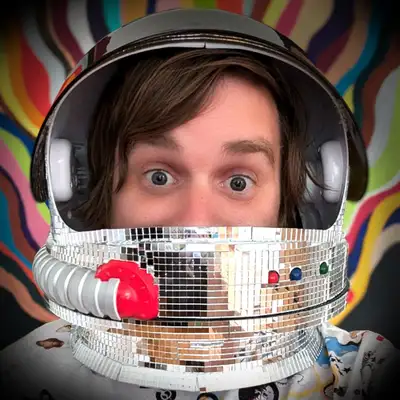
Inspiring conversations with exuberant humans about how to live a creative, fulfilling, and authentic life. Hosted by enthusiasm enthusiast, Brad Frost.
We experience a brief moment of truth when we first wake up in the morning. Before the cold shower of reality, our infinite to-do lists, and macro-level woes seize our consciousness. We experience a brief moment of excitement — and this pure moment tells us something important about ourselves.
There are people out there who seem to move through life with intention, authenticity, creativity, kindness, and enthusiasm. And they do this despite the deeply inperfect world we inhabit. This podcast is an attempt to learn from these people.
Through wide-ranging conversations, Wake Up Excited explores guests' passions, interests, enthusiasms, and philosophy of life.
Gemma O’Brien: Welcome to Wake Up
Excited, a podcast about living
a creative and fulfilling life.
I'm Brad Frost, and in this
episode I talk with Gemma O'Brien.
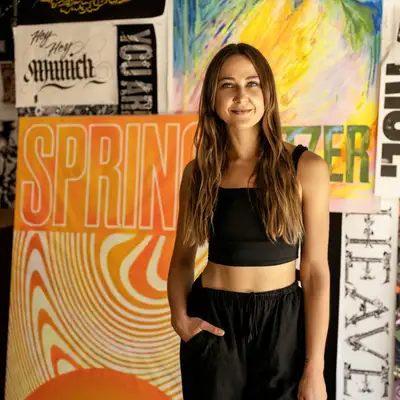
Gemma is a Sydney-based artist and
designer known for her stunning,
large scale murals, her lettering,
calligraphy, and a whole lot more.
I had the opportunity to bring my art
teacher mom to Smashing Conf, which is
a phenomenal conference about design and
development and a whole lot more super
inspirational, and it was so much fun
to see my mom light up during Gemma's
talk where she was presenting all of her
work and talking about the importance
of art, the importance of design.
And everything that she discussed,
all of her work really embody
what this podcast is all about.
So I knew I needed to talk to her,
especially because she was at a
really interesting point in her life
where she was wrapping up a master's
degree in Neuroaesthetics studying the
intersection of art and neuroscience.
So we talk about her journey into the
world of Neuroaesthetics and talk about
what she's learned about flow states and
creative intuition and how we could all
foster that in our own creative lives.
We also talk about nurturing our creative
selves, how optimism is a superpower,
but takes a heck of a lot of work.
We talk about the healing power of
the arts and the importance of really
stepping outside of your comfort
zone in order to grow as a person.
So before we dive into the episode,
I just wanna remind you that Wake
up excited is a total labor of
love and is totally self-funded.
So if you want to support the show,
support me, support my family, I'd
love it if you checked out our online
courses where we teach designers
and developers how to wield design
systems, design tokens, and now AI
in conjunction with design systems
to make great digital products.
You can check them out at
brad frost.com/courses,
you could use the code.
Wake up.
Excited to get 15% off.
All right.
Without any further ado, here's my
conversation with Gemma O'Brien.
Brad Frost: Gemma.
Thanks for coming on the show.
Gemma O’Brien: Thanks for having me.
Brad Frost: so here's the big question.
What has you waking up?
Excited?
Gemma O’Brien: Well, right now, I
would say exciting me most is actually
Brad Frost: going back to
thinking like an artist.
okay.
Gemma O’Brien: a scientist for a year.
Yeah,
Brad Frost: so, okay, so you had
like a switch, brain experiment.
Gemma O’Brien: I did.
I did have a
Brad Frost: Switch
Gemma O’Brien: although it
Brad Frost: Although I was self-imposed.
A switch Brain experiment.
Gemma O’Brien: I've
Brad Frost: I've been
Gemma O’Brien: for the
Brad Frost: in London for the last
year studying Neuroaesthetics.
Um, so I left my studio in Sydney
Gemma O’Brien: it's been
Brad Frost: it's been
an experiment in itself.
Wow.
So, that's huge.
Just moving across the world and doing
something radically different you're like
shocking your system in all the ways,
but, but I didn't really
know that at the time.
Gemma O’Brien: did.
I think I didn't know
what I signed up for.
Brad Frost: You're just like, sure,
this sounds like a great idea.
This, this will be fine.
And
Gemma O’Brien: Exactly.
Like move, move to another
Brad Frost: another country that
has the exact opposite of Australia
Gemma O’Brien: terms of
Brad Frost: of weather and
Gemma O’Brien: energy.
Leave my
Brad Frost: my massive
Gemma O’Brien: become
Brad Frost: studio become
a student again in science.
Gemma O’Brien: it was
Brad Frost: It was insane on all levels.
So we were just together at, at Smashing
Camp in, in f Fryberg in Germany.
we were all kinda down in the lobby
celebrating after the conference.
And you kind of ca came
downstairs and you're like, I am.
one week away from like
delivering my thesis.
I'm like, what whatcha doing here?
This is a,
Gemma O’Brien: Yes.
Yes.
Brad Frost: is a, a bold move there.
That is a But you did it.
You did, you deliver your, your thesis.
Gemma O’Brien: I actually
have another month
Brad Frost: Okay, good,
Gemma O’Brien: I almost finished and
Brad Frost: good.
Gemma O’Brien: like, you know what?
am a perfectionist, and so
I've went till November,
Brad Frost: Beautiful.
Gemma O’Brien: but
Brad Frost: Beautiful.
Gemma O’Brien: but I have been
skipping all the parties in with
all my papers and proofreading every
Brad Frost: Every single night since then.
Yeah.
you are in the home stretch, uh, act,
and I connected you with my wife,
who is literally this, this weekend.
She hold herself up in a hotel room.
We got her a hotel room so that she could
take these, like comprehensive exams.
And it was like, as soon as the, the
exams started, she had like 48 hours.
And she, she was like, I think
that I worked like 40 hours on it.
Gemma O’Brien: my God.
So was it one of those ones
where you are in like a timed
Brad Frost: Yes.
Gemma O’Brien: Oh,
Brad Frost: it was like, it was like
16 essay questions, but each question
had like 10 bullets to it as well.
So it's like, and that's like on
top of like the, the thesis and the
project and like all of that stuff.
So it's just, it.
You and her are like on this
like sort of similar path.
So that's why I was like, oh my God,
like you're speaking at a conference and
traveling while you're also doing this.
Like really intensive.
Gemma O’Brien: Yeah.
You know what?
It's funny though because after, I think I
Brad Frost: I emailed with her
Gemma O’Brien: and
Brad Frost: so she just said, can't
believe you're applying to emails.
And I'm
Gemma O’Brien: due.
And I'm like, you
Brad Frost: like, you don't even know the,
Gemma O’Brien: it.
Um, but full
Brad Frost: full respect to her.
And I also support the hotel room method.
Yeah, yeah.
Sometimes you just need
Gemma O’Brien: to be
Brad Frost: to be
Gemma O’Brien: hold
Brad Frost: hold up in a
room and just get it done.
obviously you have an artistic practice
and you have, I'm sure rituals and
routines and things that, you know,
that are kind of tried and true methods
for, for getting you in the zone.
were you able to superimpose some of those
processes onto your, your scientist brain
Gemma O’Brien: question actually,
because having like 10 to 15
years working in like art and
commercial illustration?
Mm-hmm.
took
It took me that long just to work
out how to, what was my workflow?
So
to
go into
into this new setting,
like it didn't translate.
Yeah.
But that was also part of the
reason why I wanted to do it.
I had been in my art studio
space for five years in Sydney.
And that in itself was an an experiment
where I went full into like, what is
my artist identity like, basically
like if you are left to your own
thoughts and ideas, like what happens?
And I did that I had all these crazy
ideas and reflections and painted
and experimented and did all of it.
at the end I had this list of like, what
am I gonna do when I leave the studio?
'cause I had to leave
after this five year mark.
Brad Frost: Oh,
Gemma O’Brien: the whole space.
I had like a list of galleries I
wanted to like go to go overseas.
I had all this list of like
art goals, studying neuro
aesthetics, was not on the list.
And yet, one day I was like, I had all of
these ideas written in the art gallery,
like in my space where I was working.
I just made this connection between
the neuroscience podcasts I was
listening to and, and the like art
and design things I was listening to
and thought there's this missing link
in between that I'm interested in.
Like where do I study that?
Brad Frost: Yes.
Gemma O’Brien: one course in
London Neuroaesthetics and one
in America called Neuro Arts.
Brad Frost: Yep.
Gemma O’Brien: like, what is this?
And I kind of like just applied,
just like, and then got in and I
was like, alright, well this is what
I'm doing when I leave my studio.
And I moved out of my art studio and then
a month later I moved to London that was
when I was strapped into the rollercoaster
and I was like, all right, I'm in.
And it was like this, But I do think
there was an element of like intention
in like noticing that I had an artist's
brain that was very all over the place,
like shifting between things, working
on multiple projects, like what's
called divergent thinking like in
Brad Frost: Yes.
Gemma O’Brien: terms.
Brad Frost: Yep.
Gemma O’Brien: was curious if I actually
went into an environment or like a
way of thinking that was more linear
or more structured, would that mean I
would improve that skill and become a
better artist by doing the opposite?
But it was
Brad Frost: Yeah, yeah,
Gemma O’Brien: Very, very challenging.
Brad Frost: yeah, yeah.
But, but it, it's, it's, you're, it
all that sounds like you are putting
yourself in a very different and
uncomfortable environment in order
to better understand yourself, your
own brain, and just brains in general
Gemma O’Brien: Yes.
Brad Frost: how we process these things.
How, how we work, how we.
Connect with aesthetics, and connect
with beauty, and connect with like,
all of that, so, so what'd you find?
Gemma O’Brien: well I guess, I guess as
another little bit of a lead up there were
other you know, obviously we live in a
world now where there's so much that you
can track in terms of like data, whether
it's like steps or like your heart rate.
And
Brad Frost: Yeah.
Gemma O’Brien: also before I left I was
like doing weird experiments where I
would like run to an art gallery and like
see if my heart rate changed in certain
exhibitions or like I went to like a
brain scan place and did calligraphy
and thought like, what's happening?
So it was kind of like very lo-fi versions
of then what I was like reading papers
Brad Frost: Yeah.
Gemma O’Brien: That are very formal.
And I think the biggest thing I
learned was that science is serious
business in terms of like, what counts.
You know, I didn't know the concept of
like being statistically significant.
You know, I'd
Brad Frost: Sure.
Gemma O’Brien: talks where like
people have shown brains on their
presentation and just had some thoughts,
but it was a very different thing to
like, you know, you know, structured
psychology or scientific experiments.
So that was a steep learning curve.
I was suddenly in like advanced
quantitative statistics because I thought
I can do that without no basic statistics.
I quickly learned that, it was
like putting myself in like a
burning, uncomfortable situation.
Like I was sitting in the quantitative
statistics, lecture hall and just felt
like heat coming from my face because
I knew how like over my head it was.
Um, but then when I finally, I
actually failed the first Advanced
Quantum of Statistics exam because I
just didn't know what I was in for.
But the second resit, I went turbo for two
weeks and I was like, I'm gonna get this.
then when I finally like, I got a credit,
like on the resit, I felt like, you know,
you couldn't use chat g PT in the exam.
It was handwritten.
It was just what you understood.
And that sense of like
achievement was like so profound.
Um, that yeah, I'm like, my brain works.
My brain
Brad Frost: That's that.
I mean, that, that's, that's seriously,
that's, that's so impressive.
it reminds me, and I know like,
yeah, you're talking about
like, like health and fitness.
It almost kind of feels like
people experience those like
plateaus in their health.
But you can also hit these plateaus
in other areas of your life,
intellectually, creatively, whatever,
where you're like, okay, like I can
do this and I could keep doing this.
it's not that it's things are bad, it is
just that this is a known quantity to me.
And it's the fact that you like Jumped
into this whole other realm and had to
like demonstrate that you're able to teach
yourself entirely different skill sets.
That's, that's incredible.
Good for you.
Congratulations.
Gemma O’Brien: you.
So, I
Brad Frost: Yeah.
Gemma O’Brien: side of it, all those,
like the core elements of the course
that included like stats and psych
and neuroscience and that was all new.
But then the actual research
felt closer to home.
'cause I was like working with artists and
that, I was like, I'm gonna lean into my
strengths here, which is like a network
of like 15 years of like living artists
who are doing the thing, which is like
Brad Frost: Yeah.
Gemma O’Brien: what the
papers were missing.
Like they were doing experiments
with artists in a lab setting where
they're like, you know, draw, draw
a picture from this triangle and
these two circles and like therefore
Brad Frost: Yeah.
Gemma O’Brien: And I'm like,
that is not how it works.
So
Brad Frost: Yeah.
Gemma O’Brien: could bring in, you
know, for what I lacked in this area.
I brought some more of the real life art
connections into the, into the study.
So
Brad Frost: That's fantastic.
So you were kind of like, here's people
that are out there living and breathing in
this world, what did you study with them?
Like, what did you do?
Gemma O’Brien: So my portion of it,
because it was, you know, obviously my
first foray into research was just like
self-report and it was about flow state.
experiencing Flow State was studied
originally like 50 years ago with artists.
They were the first people that reported
like this experience of like losing
track of time, being fully immersed
in the activity, having like laser
point attention all this time passing.
Um, and all of these different
things started with artists and so.
My research was working with another,
researcher who was hooking people up to
brain scanners while they were painting
to see like what's actually happening
in your brain when you're in flow state.
But my portion of it was more
just self-report, um, but doing
it like in a longitudinal way.
So like each day you are
getting data, like as someone
painting from start to finish.
So like one day they might be mixing
paints and they don't experience flow
state, but then as they get towards
the end and like, so it's kind of like
seeing it across time, um, in a real
setting, which was, which was cool.
Brad Frost: That's amazing.
you find anything that
was surprising to you?
Like, uh, coming out of that because like
Gemma O’Brien: I mean the thing was,
I think because it was my research
was like, as I said, I'm new like.
could have just kind of like
joined onto what Ollie was doing
and like, you know, written up a
report based on his experiment.
But I wanted to bring
my own, like hypothesis.
And so my, my idea was that you
are more likely to experience
flow if you are trusting your.
Process.
So if you're like following intuition
in your creative process, then that's
more likely to lead to flow state.
So that was like quite novel.
And you know, flow state's already
fringe in psychology, like, and
intuition is like more fringe.
They're like, should we study this?
Like, can we study it?
Like, and I'm like, that's
what I'm going to do.
So I brought these two things together
and the, I mean, I only had a small
sample size, but it, it was statistically
significant that intuition in the
process predicted creative flow.
And that was like
separate from experience.
So say for example, you might be an
expert in what you do and there's
like lots of links between expertise
and intuition or like, is it just a
speeding up of what you know And then,
you know, but even after controlling
for high levels of expertise, it was
still like this big predictor of flow.
So What happens
Brad Frost: I,
Gemma O’Brien: an artist in
the, in the science room?
Brad Frost: but not just an artist,
like an artist that up until that point,
spent five years literally pursuing.
The intuition.
What happens if you just put me
in a studio and like, let her rip?
Gemma O’Brien: Yes,
Brad Frost: Like that's incredible.
Gemma O’Brien: Yeah.
Brad Frost: is incredible.
Becau and, and it makes perfect sense.
I've read a lot about, yeah.
It's like, okay, we're gonna have
these people kind, be it an FMRI
machine, and like they're gonna like
play like this classical piece and,
and whatever, and like, we're gonna
see what happens to their brain.
And that there's like something
fundamentally different that happens
when you're, you're improvising
versus kind of recalling, right?
It's like totally different brain
regions, but like, if you're extrinsically
motivated or, or you're, you're paying
attention to something other than your,
your gut instincts it makes perfect sense
Gemma O’Brien: Yeah.
Brad Frost: someone who has
experienced what it's like to, to
follow their gut and, have fun and
get lost in the, that process versus.
Okay.
I'm doing creative work, but it's for
a client I'm doing this other thing.
There's, there's these like extra forces
Gemma O’Brien: Yeah.
Brad Frost: at play.
So you're, you're getting into like
real, just what's coming from you.
Gemma O’Brien: Yeah, totally.
And like
Brad Frost: Ooh,
Gemma O’Brien: about extrinsic,
like versus intrinsic, like in
being intrinsically motivated,
something you want to do like
Brad Frost: yeah.
Gemma O’Brien: also like one
of the new areas where there's
a lot of research, happening.
I mean, the thing is now it's like.
as I start to understand it, where
I'm like, I am super interested in it.
And when I said at the beginning, like,
the thing I'm most excited about is
going back to thinking like an artist.
Like, I mean that because I miss it.
Like I can feel the
Brad Frost: Sure.
Gemma O’Brien: but I can't.
Um, I know now like all of this new stuff.
So I think it's about like bringing
it it together and maybe just being
outside of the university environment
just for a little bit to like see
Brad Frost: Yeah,
Gemma O’Brien: Forms.
Brad Frost: you've suppressed your
being for a period of time, and
now you gotta get back into it.
You gotta let her rip.
Like the, the, the, the hose
has been kind of kinked up
Gemma O’Brien: Oh my God.
Yes.
What's your favorite food?
Brad.
Brad Frost: my favorite food, ice cream,
Gemma O’Brien: Okay.
Which, which flavor?
Brad Frost: all, all sorts of them.
Gemma O’Brien: Okay.
Well it's, it's like if you were
like, you know what, I love ice cream.
It brings me so much joy, but for
a year I'm not gonna eat ice cream.
And that feeling that, you know,
that you get to eat the ice cream
again, is like me right now.
I'm like, oh my
Brad Frost: Yeah,
Gemma O’Brien: yeah.
Brad Frost: you've been living
like a, an artistic, uh, monk,
uh, or something like that.
Gemma O’Brien: yes.
Brad Frost: That's so, so like, what are
you most excited about when you like,
get back in front of whatever artistic
medium you're gonna, like, do you have,
you're like, I'm going to this brush,
or this, this pen, or this modality.
Like, what are you
Gemma O’Brien: well, you know what the
thing is, so I have a meeting with a,
a new gallery actually, that I'm, I'm
gonna work towards the show next year.
So
Brad Frost: Beautiful.
Yeah.
Gemma O’Brien: I've had like a bit
of a break from my, like, doing an
exhibition for a while, specifically
because I wanted to have new inputs,
you know, like, and new inspiration.
And so think there's two parts of it.
Like one is actually just like letting
go of thinking and analyzing that
mindset and painting and exploring
through the physical form again
without like, you know, kind of
abandoning the way I used to do things.
Going back into that, like
physical experimentation.
But then the
Brad Frost: Mm-hmm.
Gemma O’Brien: of it is like, what
is gonna be the subject matter?
'cause often I work with text
and words and typography.
Um, and another reason I wanted to do
this research was 'cause I was like.
You know, a lot of artists, one,
like dismiss words being in art
because they, you know, the idea
is that, well, should speak for
itself or like, it's beyond words.
It's like non, it's like all of these
things, which I totally understand.
Um, however, I'm also like, but if you
did wanna paint words and the approach
would be like painting words from the
inside out, what does that look like?
Like, you know, so I'm still that that
part of it is, you know, going to be
running, I think for the rest of my life,
like the curiosity, because there's parts
of the brain where it's like, you know,
there's, this is the broker's region,
this is where like words are formed.
But like, like that's crazy to me.
Like, there was a time where
we didn't identify that part of
the brain and have someone name.
I don't know.
I think there's
Brad Frost: Yeah.
Yeah.
Gemma O’Brien: of, there's a lot of
like research side of it that I think
I will do independently and then
there'll be the physical exploration.
Um, so who knows what the
next, next little bit looks
Brad Frost: Uh, I, I love it.
I am, I am very excited for you and I'm
excited to like, see like what comes of
it, but like, I think that what you're
just touching on is, is I think something
that's, that's really, really interesting.
And with Melissa's work as an, as an
arts therapist as well, I think that that
was really kind of big thing for me was
better understanding the immersion and the
experiential parts of this and, and just
the, the real multifaceted nature of art
in general that's I think one of those
things that despite being around art and
my mom's an art teacher and stuff is like,
despite being in that world for so long,
I didn't until very recently understand
that the artifact is part of it, but only
part of it that it, that it's there is.
All of these different parts of your
brain that are sort of being activated.
But then there's also just this,
this notion of like time and the
artist experience, and that's why
we care about Frida Callow's, like
Gemma O’Brien: Yeah.
Brad Frost: bus accident that like
left her, you know, like in a,
in a state and stuff like that.
And so there, so there's like all
of that stuff that I, that gets
woven into work that I think that
I didn't really appreciate at that
level until very, very recently.
Gemma O’Brien: And I think that
experience, though, is quite common
because, you know, if you think about
like, people either like, feeling like
they can't walk into an art gallery
because either they don't, they, it,
it feels like it's a level of expertise
or, but at the same time you have a gut
response to like you know, like, you
Brad Frost: Yeah.
Gemma O’Brien: colors, you have
preferences, like, and like all the
reasons for why you like certain things
are both like complex and individual.
But also, you know, a lot of the, the
studies in aesthetics, it's like trying
to find like, are there similarities?
Like what it's super interesting.
I think that another part of what made
me interested in this was that as I
was like looking, trying to like up
my skills in art history, it felt like
that was like a missing link that could
perhaps be, I don't know, not necessarily
universal way that people experienced
things, but that the reasons that you
like things could be like just because
it reminds you of something or just
because it's really familiar to you or
Brad Frost: Yeah.
Gemma O’Brien: you know, like why do
people go to the Louvre and see like these
paintings that even if they're not into
art history or they don't know anything
about the artist's life, like, is it like
the, the fact that it's just really well
known or it's like a status symbol or
like, there's so many different reasons.
Um, and it's just super interesting.
Brad Frost: I find myself, even as
somebody who, I know a lot about music,
but to like go to a concert and be
brought to tears at a concert, doesn't
matter like what chords they're playing
or, or like what key it's in or Ooh,
I really like that, that syncopation
they're doing there, whatever.
When you are able to be present
with, with any beautiful
thing, it overtakes you, right?
There's like, there is
something very, very primal.
That's very interesting because
it's, it's not an intellectual thing.
It's, oh, I don't know anything about art.
I don't, I, I can't, I can't do that.
I can't draw worth of crap or whatever.
It's like, no, no, no.
Like you get put in front of a powerful
piece of, of artwork or a moving
aesthetic experience and, and you will
be moved 'cause you're a human being
and you have a brain in your head.
Gemma O’Brien: Well, it's funny
because, because I draw and I also do
calligraphy, it's either I can't draw,
I've never been able to draw, or I have
terrible handwriting and it's always,
um, that's always the thing, you know?
And I mean, I truly think, like, of
course there's so many different factors,
but I think it's the same as any like
skill or like, if you have someone
who's like, supportive of you or like
gives you positive feedback when you're
younger, or if you show a drawing
in class and everyone loves it and
Brad Frost: Yep.
Gemma O’Brien: that skill or you have
someone that like shows you new techniques
that allows you to like develop.
I do truly think that anybody can do it.
It's whether you actually want to, um,
and whether you get something out of
it, I guess it's probably the same as
like maybe playing an instrument or.
Brad Frost: Oh yeah.
Gemma O’Brien: Yeah.
Brad Frost: Any, any, any creative
endeavor and, and like, one of
the, the biggest things like.
I'd say about music is that it's
like we are hardwired for it.
Like you see any toddler that
could stand on two feet and you
put on music, they know what to do.
Right.
It's, it's, this stuff is hardwired in us.
And, and I'd also say that we're hardwired
to, to draw and create and whatever.
And a lot of it's the, those extrinsic
and environmental factors that
end up talking people out of it.
and sort of back to, to Melissa
and her work as an arts therapist.
'cause she has to encounter these
people who are, you know, in various
stages of, of, of pain or recovering
from trauma or in the process of dying.
And like all of like, these
really like hard things and they
still are holding onto that.
Like, I can't, I can't draw.
And the, the exercise for Melissa and
other arts therapists is stuff is to sort
of like help them get over that hurdle.
it's back to, to your research, like just
going from your gut rather than focusing
on like, like the technical outcome
Gemma O’Brien: tell me more about
what, how she works with these people.
Like, is it just like tools are
provided or are you like looking
at like, objects to draw, or is
it purely from imagination or
Brad Frost: it's so vast.
The things that you can do and like, I
think that this is like one of the other
really interesting things that I wanna get
your take on because you have wove between
so many different mediums and stuff.
Is, is like certain things are good at.
Doing certain things.
If you're trying to, if you're trying
to, process your own self identity,
there's like, these, like masks are,
are like, it is like, oh, okay, here's
like, like a mask that we've done.
But then it's like, if you just like
need to get some shit out, like,
here's a big old piece of clay, beat
the hell out of this thing, and like,
really, like, let it, let her rip.
Like each one of these artistic
mediums has their own kind of material
affordances, I guess, that are conducive
for certain kinds of, of healing.
I'm geeking out as kind of like a
person just in the passenger seat.
A lot of this but, but I'm curious.
Like,
Gemma O’Brien: husband, but also
like as a fan of like how it works.
And it's cool, you know.
Brad Frost: I've truly,
with all apart believe that
everyone has creative capacity.
Everyone can and should
participate in the arts.
That doesn't mean you need to, you
know, be able to be a virtuoso and,
and, you know, play your own concerts.
But it does mean that if you feel
like picking up an instrument or, or
sketching a sketch, we could do it
Gemma O’Brien: yeah.
Brad Frost: if we do it.
Like, you don't need to be you, like,
you don't need to be jealous, like do a
big old mural, but like, give yourself
the permission to just like get at it if
you, if you at all like feel like that,
Gemma O’Brien: Well I liked what you said
about also when you were talking about
what Melissa did with the different,
like, you know, it could be clay or it
could be drawing because like has those
different sensibilities and it could be
in the physical, like just the movement.
Or it could be, you know, there were some
studies that I was reading about that was
talking about, um, whether you are more
likely to experience flow from drawing,
like creating art or from looking at art.
And it found that it's more likely to
occur from drawing, but it was actually
suggesting that it's because you're
distracted, so that if you're having,
like, if you've experienced trauma, if
you're having negative thoughts, sometimes
the process of like drawing a lemon like
that actually takes up so much cognitive
resources that it might distract you from
the horrible thoughts that you're have.
So there's like so many different ways.
like going back to the non, like the
nonverbal or not using like language
or writing, it is all of the arts are
just different forms of expression that
might resonate with some people or might.
Yeah, I think it's, it's super cool.
Brad Frost: this is, I think something
that, that's really fascinating about,
neuroaesthetics the arts in general
and, and even back to what you were
talking about with, uh, lettering or
not, and, and oh, like, is that verboten?
Or you're breaking some rule
or sort of something like that.
But it's, it's like our language
centers of our brain, right.
And, and our, our ability to articulate
thoughts, especially that of our
inner selves, how we're feeling.
Gemma O’Brien: Yeah.
Brad Frost: We're very, very bad at that.
Most people are very,
very, very bad at that.
Gemma O’Brien: I, it's like hangry.
It's like, am I hungry or am I like,
Brad Frost: Yeah.
Gemma O’Brien: like, it's, it's true.
Like you
Brad Frost: Yes.
Gemma O’Brien: don't know to identify and
like to, or even if you do know, like, to
be able to then express that, like there's
Brad Frost: Yep,
Gemma O’Brien: many different
Brad Frost: yep,
Gemma O’Brien: Like
Brad Frost: yep,
Gemma O’Brien: we're weird
human creatures on this earth.
Like, don't
Brad Frost: Yeah,
Gemma O’Brien: about it too much.
Brad Frost: yeah, yeah.
When you experience the arts, when
you like, can feel people's anguish
or you could feel their frustration
or you could feel their joy, it's
very, very difficult to, just express
that verbal, like, you, you literally
can't express it any other way.
, There's something there that is just
like, it is a, whenever people say like,
music is a language, or art is a language,
it's like, it's it's freaking true.
It's like it's act it's, it's taken my
whole life to go, oh, like that's act like
now I understand what they mean by that.
Like, it's not just like some.
Wanky phrase.
Gemma O’Brien: yes, yes.
Brad Frost: It's actually pretty profound.
Gemma O’Brien: like the idea of like
getting the, getting the chills or like,
um, having an emotional response, I
think it's always interesting when it
takes you by surprise when that happens.
Like, I don't know if you've ever,
whether it's been music ages, I would
hear stories like, or art historians
talking about like, oh, have you
ever cried in front of a painting?
And I kind of like, you know, kind of
rolled my eyes at this idea and thinking
Brad Frost: Yeah,
Gemma O’Brien: then until one day
I was in a gallery and it happened,
and I, and, and it took me by
surprise, you know, you don't, you
don't, it's not in your control.
Brad Frost: yeah,
Gemma O’Brien: of just happens.
And I think
Brad Frost: That's the beautiful
thing about it, is that it's like That
is your body, your biological body.
Yeah.
you didn't think I'm gonna do this
now I feel like crying and I'm going
to activate that, that cry switch.
It's like,
and that's why like es especially like
whatever COD started breaking, and I went
to my first concerts kind of whenever
it was starting to be safe to do that.
Gemma O’Brien: Yeah.
Brad Frost: I was like, oh my God.
And I was like, you know,
quick to just be like.
Hey, remember concerts?
You should go to one of those because
it's like, it, it's very difficult to
have those kinds of experiences, like
just like privately or like, yeah, like
you're, you know, we can watch movies.
Movies do do a pretty good job.
there's something to be said about the
immersive presence that kind of comes
with being face to face with something,
Gemma O’Brien: Yeah.
Brad Frost: a, a performance or a,
or a canvas or, or something else.
Gemma O’Brien: Yeah.
And with other people as well.
I think you mentioned before, like
the shared feeling, and it could
be in music or even, it could be
in sports, I guess it's a shared
positive feeling, but it could be any,
Brad Frost: I.
Gemma O’Brien: spectrum of emotions.
Brad Frost: there's a term for it that
I, that I learned, and it was a, as a
psychologist, collective effervescence.
people, people, people in church, pews
singing in unison, people at a concert,
all kind of experiencing something.
People being around a, you know,
a theater performance or laughing
at an improv show or, or whatever.
It's, it, there is this,
this, this elevation
Gemma O’Brien: Yeah.
Brad Frost: occurs that can
really only happen when you are
in the presence of, of others.
That, that takes it beyond
just like your, your personal.
Experience.
Gemma O’Brien: it's,
Brad Frost: It's like I, whenever
I like learned that, I was like,
I know what they're talking about.
Gemma O’Brien: nce.
Brad Frost: Yeah.
Pretty good.
Gemma O’Brien: the goal.
I
Brad Frost: Pretty.
Gemma O’Brien: can, I actually was
thinking, because when I arrived
in London, like, you know, so
many, being in Australia, it's
very, it's a, it's a smaller town.
Like everyone talks to each other.
Like, I am naturally, like I will
talk to someone making my coffee.
Like I, I have love just
having that little chitchat.
And when I got to London, I realized
it was a different vibe and it's that
collective energy, however you realize
that you can shift it like in small
interactions, like it only takes, I
thought they should just hire people,
like where their job is to just
walk around and friendly to people
come to,
Brad Frost: your, that's your job.
Yeah.
That's your new job.
Gemma O’Brien: So, um, yeah, if
Brad Frost: I, I love, I I love that.
Like, let, let's, let's dig into that
because I think that that is very much
the spirit of the show and you know,
just watching you talk on stage and
stuff of like, ah, yeah, there we go.
There.
Like, ' I'm, I'm very curious to get your
take on this because I think that there's
like a natural predisposition, right?
Sort of things like genetics play a role.
A lot of the Australians I know, uh,
are, are quite jolly and exuberant
relative to, to a lot of other folks.
But also, yeah, like London
Town is business town.
New York City is like, don't you
even freaking think about making
small talk with me and stuff.
So it's like.
You have like an awareness that your
kind of nature, which is like, I'm gonna
smile, I'm gonna be friendly, and I can
kind of, not necessarily like manipulate
in, in like a weird way, but, but
you wanna help shape the vibe, right?
Gemma O’Brien: Yes.
It's funny that you said like,
not to try and manipulate.
'cause I think that's like such
a key thing because I think what
I, I didn't even realize, um, the
difference until I was placed in,
you know, for a year in London.
And also then like, I think the
experience of being stressed yourself,
like I noticed how much that shifted
Brad Frost: Yeah.
Gemma O’Brien: that it would take.
But what I realized is that
even if I. Like, even if I
was like, oh, that's right.
I, I, this is the thing I used to do
like when I, when I first arrived.
And then as soon as you bring it, it, it
comes back at, at you and it can literally
just be like, how's your day been?
Um, and
Brad Frost: you mean it.
And you and you mean it.
Gemma O’Brien: wanna
Brad Frost: Yeah.
Gemma O’Brien: know?
Brad Frost: Yep.
Gemma O’Brien: it's, it's interesting
though, but it's very hard to not
feel like a, um, like I used to
be very optimistic, but without
realizing that it was a superpower.
Like I think I was quite naive.
And I think as I've gotten older and I've
like had more difficult situations and
experienced more, like more life, I've
realized that like if you are optimistic,
it can sometimes actually take a lot
of energy to be optimistic, but that
it's a hundred percent always worth it.
yeah, it shouldn't be underrated.
Is, is what I think.
Brad Frost: you're speaking my language.
And that was like, I think really
like the, the impetus of, of kind of
putting this show together is exploring
all of that because it's like to
carry the attitude that you carry.
All you need to do is just, you
know, flick on the news and, do we
have any right to be thinking about
or asking how your day's been or
given a smile or carrying yourself.
In that way, or painting beautiful words
that say things like joy how dare you do?
Uh, could you, could you,
could you speak about that?
Gemma O’Brien: Are you, are you saying
like Do you think that people question
like being happy or positive or
optimistic in the state of, of the world?
Is that what you mean?
Brad Frost: Yep.
Gemma O’Brien: Yeah.
Brad Frost: Yep.
Gemma O’Brien: dare.
Yeah.
Look, I would say that like I've felt that
more than ever, like in the last, I'd say
probably shift that people have noticed,
like since the last 10 years where maybe
Brad Frost: Mm-hmm.
Gemma O’Brien: necessarily worse, but
we can see everything all the time.
So you can feel things you can't
like deny, like the struggles, the
complexities, like it's all there.
Brad Frost: Yes.
Gemma O’Brien: I definitely went through
a period probably around like 2020
where I was like, I'm not allowed to
joy in my life because that's unfair.
Um, and.
You know, I didn't, didn't
know how to process all of
those feelings and I didn't.
But then I was also like, can I help?
What can I do?
You know, there's limits to your ability.
You can't,
Brad Frost: Yeah.
Gemma O’Brien: all at
once, helping everything.
And it took a really long time for me
to realize, like, all I can do is in my
immediate environment and interactions,
like the best energy that I can, like
do the best job that I can encourage
the people, like lift people up.
Um, and I would say only now,
and also, you know, look, have to
disconnect sometimes from like,
what, you know, looking at things
because I know that it doesn't help.
Brad Frost: Yeah,
Gemma O’Brien: and know
that I can be my best self.
Like I know the things that set me
off, and I know that, you know, if I
go into nature or if I draw and I do
these, bring these things back, then
I'm gonna be a better version of myself
Brad Frost: yeah, yeah,
Gemma O’Brien: is gonna
have a flow on effect.
But
Brad Frost: yeah.
Gemma O’Brien: I mean, it's hard.
I
Brad Frost: Yes,
Gemma O’Brien: highly complex.
Brad Frost: yes.
It, it, it, it really is.
And, and it's like, that's been the
thing that I've struggled with so much
how can you be a caring, empathetic
human being who, who really cares
and is connected to people who are.
You know, suffering and people
are going through like, way
worse than I can ever know.
And to have that stuff sort of
show up flashing in front of your
face, uh, often without your, your
permission or a heads up ahead of time.
Gemma O’Brien: Yes,
Brad Frost: And, and, yeah.
And then kind of go back and,
and like, oh yeah, like, let's,
you know, let's, let's do happy,
joyful, like lighthearted things.
And it's, and it's like, so, so there
really is this, this tension too.
It's like, because it's like,
it, it just goes without saying.
It's like, of course you care about other
people or you care about this stuff.
But at the, but at the same time, like
there, there really is this, like,
well-intended thing that I've heard
in said in various ways, which is
basically like, if you're not speaking.
About this then you're,
you're part of the problem.
I understand the sentiment and it's I
think coming from often a very good place,
but it's also like it isn't feasible
it's not realistic.
No.
It it's actually counterproductive.
And I, and I think that the thing that
you came to the realization of feels
right, which is you have no choice but
to like, kind of emanate what you can
Gemma O’Brien: Yeah.
Brad Frost: into the world.
There's some type of like interpretation.
I think that has to happen to basically
sort of receive outside input,
especially hard outside input and go,
what can I do about this, if anything?
Gemma O’Brien: Yeah.
Brad Frost: What can I do about this
from where I'm at in this moment
in time, it's so hard 'cause the,
the, the feelings don't go away.
And especially whenever you have
to, for very, very good reasons.
Like you said, it's like step away
from really hard things because you're
like, you know that that's going to
do nothing but like, kind of ruin you
Gemma O’Brien: Yeah.
Brad Frost: and like,
Gemma O’Brien: yeah,
Brad Frost: you from
Yeah, from showing up.
So.
Gemma O’Brien: Well I think that your
example is really good because it's like
realize like what are your strengths?
Like everyone has like different
superpowers and like things
that they or have years of
experience in or, can apply that.
And I think then the other thing is that
I remember like you'd often hear about
like having gratitude, like for if you
can't do something, you have gratitude
for what you have and then you enjoy it.
That can be really hard, like to
like, it's e, so many of these
things are like easier said as
Brad Frost: Yeah.
Gemma O’Brien: but like you put into
practice, But you know, if you do notice
that you've got this thing, or if you do
a presentation and someone comes up to
you at the end and says like, Hey, like
that story or that thing that you showed
me, like really helps, like all of these
little things can be enough to be like,
all right, this is like, know, this is
a, this is a positive force, but you
Brad Frost: Yes.
Gemma O’Brien: it's a daily
thing, and it's like everything
on a case by case basis
Brad Frost: Yeah.
so it's like you really do need to,
to go into your gut and, and sort
of pull that stuff out and, and
you're doing the, I think the world
a service by Acting on your intuition
and like, and then communicating
that through, through your work.
Gemma O’Brien: Oh,
Brad Frost: And like, I mean like,
do you, do you feel that, like,
do you, do you feel like that's.
Gemma O’Brien: You know what?
I think that's why I continue to do like
talks and workshops and things where
I'm engaged with people face to face,
because a lot of the time spent is alone
in the studio or working, you know, in
like with people digitally and like,
I'm such a you, you know, in the same
way that you talk about the feeling that
you get when you're in a concert, like.
I get so much more from like
face-to-face human interaction.
Um, or even like, I think one thing
was with the calligraphy that I
realized was after this block of
time where I was like, oh my God.
Like what am I doing?
Like what is my life like?
Should I be doing these commercial jobs
like artists, like the world is horrible.
Like what matter?
All of these, this spiraling.
Brad Frost: Yeah.
Gemma O’Brien: And then I went and
did a calligraphy thing and I noticed
people's response, or if I wrote someone's
name and I thought, oh, this comes so
naturally to me because I did it for
10 years and I taught workshops in it.
This is very little effort
with very big impact.
And like, okay, I just have to
like keep on leaning towards those
things that I've built over time.
That can be a positive force.
And just keep on doing that.
And I think that, but I have to sometimes
remind myself that like, 'cause you
know, you probably know this, like
sometimes doing workshops and these like
talks, it can be a big energy output
Brad Frost: sure.
Gemma O’Brien: exhausted afterwards,
Brad Frost: Oh yeah.
Gemma O’Brien: almost
always, um, worth it.
Like
Brad Frost: Yeah.
Gemma O’Brien: then re you know,
reflect and Yeah, just I think the
more that people can have positive
face-to-face human interactions,
like is it's a good thing.
Um, yes.
Brad Frost: What did, what did you know
it wouldn't, you know it, but I think,
I think you're onto something there and,
and I. It almost sounds like maybe this
year being the exception, but like you
kind of have this like rhythm where you're
sort of like head down producing your,
your, your sort of in your own mind, in
your own body, in your own space, and
then you kind like come up for air and
like kind of go out into the world, check
in and then sort of oscillate back in.
Gemma O’Brien: Yeah, definitely.
And I need both because like if I don't
have that isolated like deep time to
like squirrel down all these parts of
like my interests or these new ideas,
then I, I can't do the other thing,
which, you know, I need, I need both.
Brad Frost: Yeah.
Gemma O’Brien: And, um, you know, it's
funny though because when I think back
to when I, like began in London and
I started the Neuroaesthetics and I
had like, I had so much energy, I was
like, oh, I'm gonna instantly start
like a neuroscience, like TV show.
Like I was, so, I did not know the depth,
but I'm so glad that it was in many ways
beyond me because it was very humbling.
Like, I'm like, this is what
it would feel like if someone
started to draw, tried to draw.
Brad Frost: Yes,
Gemma O’Brien: was a, a
statistics, like a mathematics
Brad Frost: yes.
Gemma O’Brien: it would be
extremely uncomfortable.
It's very like, especially when you
have recognition in one field, it's
Brad Frost: Yep.
Gemma O’Brien: I had to get over
Brad Frost: I,
Gemma O’Brien: even going back
to do observational drawing.
Like during COVID, even as an illustrator
and artist, I went to a life drawing
class and I didn't want to draw in front
of everybody because I sucked so much
and I just had to like get through that.
And they're, all of those feelings are
like very good things to experience
and even though they might seem
small compared to the things that
are happening in the world, they're
like, it's good to to feel it all.
And it
Brad Frost: But
Gemma O’Brien: you
Brad Frost: yeah.
Gemma O’Brien: other people more.
Brad Frost: No, that's, that's great.
And I think that that's like really
something for literally anyone is like,
it is that, that willingness to kind
of endure that discomfort and that
that beginner's mind and, and learning
the ropes and all of that stuff.
Especially when you know, mastery or you,
you have experience in something else.
It's like, I know how to tie my shoes.
So it's like, you know,
that's, that's fine.
But like this brand new thing, a
lot of times like that's, that's
oil and water for people where
they get like repelled by it.
'cause they, they don't want
to go near that discomfort.
But it sounds like you're, you're
like, if, like you force yourself
within reason, let's say to, to
sort of like power through and get
to the other side, then there's,
there's some good stuff to be had.
Gemma O’Brien: And I think that
there was like this part when I was
in my studio, like doing that like
five year almost like artists in
residence in my own studio space.
thing I did realize, there was
a lot of weaknesses that you get
from working in isolation where you
don't get to collaborate or like new
technologies that had come along.
Like, you know, I was playing with
things, but I could sense that know,
the things that you might get in a work
environment or when you are interacting
with people, not when you're an artist
cooped up and you, I could feel like if
I don't take the leap and just like put
myself in an environment where I might.
be learning science, but I also might
need to learn this new technology that
everyone's using to communicate with that.
If I just stay isolated, I'm going to
lose sense of like being connected.
Brad Frost: Yeah.
Yeah.
Gemma O’Brien: was, it wasn't just
learning the content, it was so
many other, other things that I
think is gonna continue to happen.
Like things change so quickly that
I'm like, all right, buckle up, baby.
Brad Frost: Yeah.
I think that, that's really fascinating.
'cause it really does a lot of
times take other people and a little
bit of social pressure is healthy.
Right?
It's like it's, there's like sort
of solo work and it sounds like, you
know, you, you're sort of explaining
that, that dynamic I think very well.
And I love that that was like the, the
focus where, where it really is this
like, here's me, here's my gut, here's
my mind, here's like my artistic output.
And like if I am like
sequestering myself away.
Of course we, we'll carry our influences
with us wherever we go and stuff, but,
but like, what, what happens whenever it's
like, it's me and my space and a blank
canvas or whatever, like what happens?
Freaking amazing.
Like
Gemma O’Brien: Yeah.
Brad Frost: to say, wanna
talk about gratitude?
Holy crap.
That's, that's pretty freaking amazing.
So, so I'm like so happy that you
have like, had that experience for
so long those are like some serious,
like life goals I think for, for a
whole lot of people is like, yeah, I
would love to just like be in my space
listening to myself and my intuition.
It's amazing.
It's beautiful,
Gemma O’Brien: yeah, it, it's the,
then when you come to interact with,
with the world, like I. I think the
myth of the artist and the creative,
like has always been about like, well,
for a long time was about like this
individual like insight and like, you
Brad Frost: Yep.
Gemma O’Brien: this, I've gotta
leave and go do this thing.
I think even in Rick Rubin's book, the
Creative Act, he talks about like, if
you're with someone at the dinner table,
like, and they, they need to leave.
And I fully respect that.
Like, 'cause I know the feeling as a
creative, like, I need, I'm on deadline,
or your wife cooping up in the hotel,
like this is, I need to get it done.
Brad Frost: Yep.
Gemma O’Brien: at the end of the
day, like we're all here together
and to collaborate on things can
often lead to beautiful, um, more
beautiful outcomes than working alone.
And in order to do that,
Brad Frost: Yeah,
Gemma O’Brien: of have to
Brad Frost: I,
Gemma O’Brien: to the table and like
there is compromise or there is like.
Uh, the complexities of dealing with
other humans or other tools, like
Brad Frost: yes.
Gemma O’Brien: And I think for a
long time I was, I had a bit of an
ego and I didn't like to do that.
Brad Frost: Yeah,
Gemma O’Brien: Um, but yeah, now I can
now I see over time, like, know, much
more you can get from being able to
go and collaborate and be in different
environments or like, even creatively
finding ways to meet in the middle.
Like sometimes that can lead
to better outcomes than if
you're just left by yourself.
Brad Frost: it's like you need, you
need other people to help pull you or
rip you out of your, your comfort zone.
Gemma O’Brien: Yeah.
Brad Frost: I'm also interested
in like kind of like getting
over like the, the ego part.
'cause I do think that that's
like something, like a lot of
people, when you spend so much time
getting good at something, right?
It, it can be, it's not even
necessarily like, like an ego thing.
Like, look at me, I'm hot shit.
Like, everybody else sucks.
But it's like I know what I can do
and what I, and, and I have like a, a
belief in my abilities and, and that
you used the word compromise earlier.
And to compromise that vision can feel.
A little like threatening or uncomfortable
or something, but like, do you, did
you like, like how did you, like
what's been like your journey into the
world of like creative collaboration
and getting more comfortable with
that, with that discomfort of Yeah.
Gemma O’Brien: there was like.
was always present because I've
always worked like as a commercial
artist and then more as an artist,
Brad Frost: mm-hmm.
Gemma O’Brien: was always present.
Um, I think I only became more aware
of it, like as I gained more success.
And I think when I got more
successful and there were more.
Inquiries, like, because I didn't
know how to deal with growth.
Like I, I wasn't a big studio.
I think in the stress of that, that
was when I started to realize I either
like, shut down or don't reply or don't
communicate because that's the way I
get, this is how I'm gonna get it done.
Brad Frost: Yeah.
Gemma O’Brien: that in order to be
Brad Frost: I.
Gemma O’Brien: like operate at that
level, you need, like, I needed to be
able to have an assistant who I could like
Brad Frost: Yeah.
Gemma O’Brien: and like, and
work with and like trying to
find the right person to do that.
Or even like working on a client
job where there might be an art
director with a vision and back in
the day if I got feedback, I would
take it like very personally or I
would like be like, they're wrong.
And I think, like now I definitely
realize, well one, People can help take,
steer the work in different directions.
I learn new skills.
My repertoire of work would go
like in, completely new ways that
I would never have imagined if I
Brad Frost: Yeah.
Gemma O’Brien: left to myself, you know?
Or even with tools, like I
was resistant to use the iPad.
And then when I finally did, I was
Brad Frost: Yeah.
Gemma O’Brien: use color and I was
only using black and white before.
Like, there's so many different ways.
Um, but I think the hardest one is
actually when you do collaborate,
communicating, um, both creatively, like
how to communicate, like what needs to
happen, and then also like with like,
with kindness and grace under pressure
and like that like whole dynamic.
but
Brad Frost: Y
Gemma O’Brien: you get
it right, it's amazing.
But
Brad Frost: yeah.
Gemma O’Brien: it, it takes
time to figure that out.
Brad Frost: Yeah.
It's, it, it, those are,
it's like their muscles.
Muscles to build and like I've,
I've learned in my own Yeah.
Evolution of, of delegating
and getting more comfortable
with that, that it's like.
Usually whatever, whatever
the person I'm saying to do
something, go take care of this.
And it comes back a
little like lackluster.
It's always my fault.
So I'm like, I'm like, all right, I
gotta, I gotta, I gotta work harder.
And, and 'cause a lot of it is, is
like, yeah, it's like this stuff,
it's, it is, it's that beginner's mind.
It's that like what you're just
experiencing in this other realm.
Like a lot of times, like when you're
like bringing in somebody cold into this
like world that you've been practicing for
literal decades, it's like, well of course
they're not going to like be able to
like read my mind, but like, I, so yeah.
It's, it's a freaking skill.
It's a skillset it's like, we got these
Jira tickets to work through, and it's
like, it's so incredibly depressing,
but it's like, as time goes on, I'm
like, I'm, I'm increasingly convinced
that it really is the stuff you talk
about in, in the small talk or like
these other like dimensions of people's
lives that it's like, that's, that's
what, that's their sauce, right?
Like that's what they're
bringing to the collaboration.
Right.
Gemma O’Brien: Oh, that's interesting.
I, I, I guess like, because it's such
a different industry, like when, I
think often some of the collaborations
I'm doing like with people physically
painting, like, you have this
time, like when you start painting,
where you can literally just talk.
And so it's like embedded
into the process.
But that's very different from like,
we need to get this done by this time.
Like, and it's like almost like
knowing when to shift and like,
when do you have the time to like
Brad Frost: Yeah.
Gemma O’Brien: And also then like having
the boundaries of like, cause sometimes
you might need to just get to work.
You
Brad Frost: Yeah,
Gemma O’Brien: And sometimes, like
it's knowing when it's the right
time for all of the things, you know,
Brad Frost: I think that there's,
there's something interesting there
and I'd be really curious to get your
take on it, could you like take me
through like going from like idea to.
You're doing the work in earnest,
so like everything that leads up
to, to you being either, let's
say it's like an onsite thing,
Gemma O’Brien: I mean, I think using
the, like real life painting ones are a
good example because there are so many
non-creative steps in the process that.
Necessary to pull it off.
But like, you know, in a dream
scenario, the first stage is always
like creative, like looking at the
space, whether it's like physical.
I always love to like, actually, if I
can go there, that's like number one.
If I
Brad Frost: Yeah.
Gemma O’Brien: there like this,
the project I did for the, it was
like Tiffany and CO in Shanghai,
it was a really tight turnaround.
They hadn't even finished building
the space and they like sent
like architectural plans and like
Brad Frost: Yeah,
Gemma O’Brien: And so the first
bit is like, it's inspiration and
it's designing, but it's also like
designing with all that in mind.
And then it's like quickly shifting into
like, alright, how do we access this?
Like, are we gonna have to order,
like is it gonna be SS lifts?
Is it
Brad Frost: yeah,
Gemma O’Brien: ground?
Is
Brad Frost: yeah, yeah, yeah,
Gemma O’Brien: know,
what are the local rules?
And then sometimes it's like, well the V,
like there's a lot of admin type stuff.
Assembling the team of
painters, finding the paint.
Um, and to be honest, I love these
projects because of the diversity
of the, the things that you have
to prepare if there's enough time.
so that then when you get there, like the
painting part is, is quite enjoyable, but
Brad Frost: Yes,
Gemma O’Brien: up is, it's
like almost putting on a show,
like a performance of sorts.
Brad Frost: I love that.
I love that because they, there tends
to be, especially like, you know, for
something that's so, like visual whatever,
Instagram sort of feeds and stuff, like,
that's like the very like unglamorous kind
of part to it where there's like, there's
usually like way more databases and way
more spreadsheets than people would,
would think for, for, for stuff like that.
Uh, that is part of the creative process.
'cause you're understanding, right?
Like you, you are like getting oriented
with a space, you're getting oriented with
the physics, with the location, with the
culture around it, with who's involved.
Like, like all of that stuff is like
influencing and informing the actual work.
That is like fundamentally different
than if like you were to just fly
in, someone hands you a brush and
just kind of, okay, go do your thing.
Gemma O’Brien: go.
Yeah.
I mean, people used to say that
when I would sometimes like share
videos on Instagram, like, oh, do
you just like literally go there and
like begin and, and it's like, no.
But know, there is there is an
art to like, you know, calling
the, the sizzle lift people.
Like, I
Brad Frost: yeah.
Gemma O’Brien: love that because
it's all relationships as well.
It's
Brad Frost: Yeah,
Gemma O’Brien: need a
giant ladder tomorrow.
Like, but
Brad Frost: yeah.
Gemma O’Brien: Like it's, and like
I do love all of that side of it.
Um, but it's very different thing to
when I first started and it was literally
like, I'm in a room, paint it like,
Brad Frost: Yeah.
Gemma O’Brien: it, it was smaller scale.
And I think that if I didn't have
those early experiences of the
freedom of like smaller walls
that didn't require teams, then.
It would be harder to explain it
because, you know, I've had the time
to test the paints or to know this
Brad Frost: Yeah.
Gemma O’Brien: three coats.
Like it's all of those things together
and like I'm, that's why I think I'm so
ready to go back into that now after this
hiatus because I'm like, oh, like, it's
just, it's, it's a full body experience.
Brad Frost: yeah.
You gotta, you gotta like, let it rip you.
I am so excited for you
to just like, have at it.
'cause it's like, yeah, it's
like the spreadsheets be damned.
Like you, you gotta just
like get in there and
Gemma O’Brien: yeah.
Brad Frost: let it all out.
Gemma O’Brien: especially like, you
know, researching like the area of the
research being flow state, like as much
as I found it really intriguing and like
could get deep into these studies, there
was this certain point where it's like.
If you are, you are reading an
article about eating ice cream, and
then you're like, all right, I just
wanna eat the fucking ice cream.
Brad Frost: Yeah,
Gemma O’Brien: that's over this dessert.
Brad Frost: yeah, yeah, yeah, yeah,
Gemma O’Brien: eat it now.
I'm, you know, so it's doing the thing
Brad Frost: yeah,
Gemma O’Brien: the experience of
it is, is sometimes better than
analyzing or thinking about it.
So,
Brad Frost: yeah.
That, that's, that's great.
it's speculation, but do you feel
like after reading about ice cream
for so long, do you think that it's
going to be like pretty natural to
find yourself in that flow state?
Or do you feel like you might need like
a transition time to sort of build up.
Gemma O’Brien: it's
definitely gonna take time.
I, I, I know it is, and not necessarily
because of the research, but just
because of knowing that when you
stop doing something, it just takes,
you know, it takes a little bit.
But I, I think knowing that is reassuring.
Brad Frost: Yeah.
Gemma O’Brien: There are a few things
that I've read that have made me like,
reflect on my practice from beforehand,
um, that you could like kind of set
up the conditions to best thrive,
you know, and I think I do have more
knowledge now to be able to do that.
And, um, it's backed by science, so,
Brad Frost: There we go.
Could you share that?
'cause like, I, I think in general
it's like cultivating flow.
Great idea.
Gemma O’Brien: Yeah.
Brad Frost: listening to this,
finding ways to do that is like one
of like the best things you could do.
What are your nuggets of wisdom there?
Gemma O’Brien: Well the thing is like, I
think the biggest one that people think
about in one of the facets is attention.
So like, flow is made up of
like this, like attention.
And I think that that's the thing that
feels most under threat for most people.
Like
Brad Frost: Yeah.
Gemma O’Brien: in our current
situation with so many distractions.
Brad Frost: Yeah.
Gemma O’Brien: I think that I got to
a point when I was in my studio where
I had all these systems in place,
routines to facilitate that or like,
I would like not have my phone on
or I'd know, you know, all of these
different things that you can do,
Brad Frost: Mm-hmm.
Gemma O’Brien: then you kind of like,
I kind of like adapt to them and
like, and then I need a new level.
I've like outsmarted myself and or
you know, you just need, I think it's
that constantly having to change it.
Or even like, one of the biggest
ones with flow is challenge, skill.
Balance.
If you reach a new skill level where the
thing that you used to find difficult
now becomes really easy and you need
challenge or growth to get back to that.
'cause it's, it's not an equal
balance of your skills and the
task, but it's, you experience flow
when you go a little bit above and
Brad Frost: Yeah.
Gemma O’Brien: So like, if you're
Brad Frost: Yeah.
Gemma O’Brien: improvisation, it's
like are, you know, the, the base
thing that you're playing, but
then you, like, you kind of let go.
It's like this holding on and
letting go at the same time or
Brad Frost: Mm-hmm.
Gemma O’Brien: yourself like,
oh, I didn't actually think
that I could do that, and I did.
And then if that's sustained,
that's like, there was this really
interesting article that described
flow as like a cascade of learning.
And so it's
Brad Frost: Ooh.
Gemma O’Brien: in this experience
where you are like actually
going to the next level.
That's you're so engaged in it.
And I'm like, I love that so much
because it's about like growth.
And I think that's the difference between,
you know, you could be fully immersed in
something scrolling on your phone, and
some people would describe that as like
a flow because you are fully absorbed.
Brad Frost: Yep.
Gemma O’Brien: very different from
being very engaged, like where
you're engaged and you are, you are
focused and attention, but you're
also, it's a growth experience.
And I
Brad Frost: yeah,
Gemma O’Brien: that is like super
interesting and I'm curious to see
like, what is that gonna look like
my, in my practice of like painting
and knowing that sometimes it begins
with resistance and it's only if you
Brad Frost: yeah.
Gemma O’Brien: get through that tough
bit that you can experience that.
And some days you won't.
So I'm, I'm ex I'm curious
to see it in action.
Brad Frost: That's I, I love that.
I love that and that, I think
that that kind of comes back to
what you were saying earlier about
that, that just kind of like.
The, the powering through.
And I think that that might be
like the, the lesson like for,
for anybody, especially anybody
that's like, I, I want to like
cultivate more creativity in my life.
I want to like more time with my hands
on some clay or, or drawing that first
bit is going to be hard, but if you're
able to sort of, science backed,
Gemma O’Brien: Yeah.
Yeah, yeah,
Brad Frost: it's like, it's like, ah,
yeah, that's, this is actually part of it.
And to like treat that as growth
rather than like a I can't do this,
I might as well just put this down.
helping people poke through and get
to that other side where they, it's
like all of that was just noise.
It was just straight up noise.
And that like first contact.
Yep.
You're gonna flub some notes or you're
gonna, you're not gonna get it right.
'cause it takes a little time to sort
of get into like the groove of things.
Gemma O’Brien: I think that's it.
It's, it's true.
And it could also be like on a
different day, like maybe one day
you're like, oh, I'm gonna retreat.
And then the next day you're like,
all right, I'm gonna go again.
And it's just the, like,
it's just the going again,
Brad Frost: Yes.
Gemma O’Brien: in whatever
it could be anything.
Brad Frost: so are there
some like quick hit.
Uh, flow state, like best practices?
Like, like a,
Gemma O’Brien: So what the, the flow
scale that I was using in the study
basically has like the three pillars,
which are, um, like intrinsic rewards.
So it has to be something that you want
to be doing, um, effortless control,
which is that feeling of like, you
know what you are doing, but it's
like holding on and letting go is
Brad Frost: Mm-hmm.
Gemma O’Brien: that sweet
spot, and absorption.
But within that, like in the lead up,
it is about like choosing an activity
one that you wanna do something that
you have a skill set in or a willing
to like set that challenge, skill.
Balance.
Um, but I do think that it's different
for everybody 'cause obviously
Brad Frost: Yeah.
Gemma O’Brien: is intrinsically
motivating to you and to someone else
are gonna be completely different.
So there's like that element
of like self-awareness and
Brad Frost: Yeah.
Gemma O’Brien: and, um.
Having a goal is like a really, uh,
is, is something to work towards.
Even if in the process you forget that
goal, like they often talk about an
artist like working towards an exhibition.
Like when you're painting, you're not
necessarily thinking about the exhibition,
but the fact that you have like a time,
like a thing that you're working towards.
Brad Frost: I think that there's,
there's a lot that that checks
out there, especially around like,
yeah, ain't nothing like a deadline.
That is for sure.
I think that you're, you're spot
on with like the self-awareness
and the intrinsic part and going,
I want to be able to do this.
Is a very interesting one because
I think a lot of people will try to
put themselves into those situations
for those more extrinsic reasons.
I wanna learn how to play the
guitar to, to get the girl
or whatever, and it's like,
Gemma O’Brien: you know
what, you know what?
Like I, I, so there's lots of also studies
that show that you can still experience
flow if you are ex extrinsically rewarded.
Like people experience it at work,
even if they don't really wanna
be doing their job, then they get
Brad Frost: sure,
Gemma O’Brien: they're like, ah.
if you are learning guitar to
get the girl, I think that's
a totally natural thing.
And
Brad Frost: sure,
Gemma O’Brien: like, you
Brad Frost: sure.
Gemma O’Brien: What
does the girl represent?
You know, it's
Brad Frost: Yeah.
Gemma O’Brien: that you, something
that you desire, that you wanna,
Brad Frost: Yeah.
Gemma O’Brien: you wanna be impressive
or you wanna showcase your skill and that
Brad Frost: Yes.
Gemma O’Brien: even if that is the goal,
like you, that might be enough to like
It's another goal, like beyond the actual,
Brad Frost: Yeah,
Gemma O’Brien: know, virtuoso playing.
Like it's, and it's a real one.
Brad Frost: yeah.
it, it does all sort of like come back
to, I feel like almost like the feedback
loop of like the external world and
then sort of pointing it back inwards
to go, okay, well what does that say
about me if I'm the, the kind of person
that wants to learn guitar to, to get,
Gemma O’Brien: Yeah.
I think, I mean, we
Brad Frost: that's funny.
Gemma O’Brien: other episode
on like, the philosophy of like
intrinsic versus extrinsic reward,
I think all things are valid.
Brad Frost: Uh, and that's why, that's
why I like sort of digging into,
and that's and why the name of this
podcast is called Wake Up Excited is
because like, I find that question
to be very interesting because it, it
picks at, I think the, the pulse of,
of somebody like, like what's exciting
is different than like, what's new?
'cause it's what's new is, well,
we're just, you know, another day of.
Going through the routine.
Right.
But it's like, if it's exciting, it's
like that, that's kind of picking at
that, like what, what is personally
fascinating to, to, to you
in, in this moment in time.
And like, I have, I've, I've had many
conversations just with those random
people walking through life, you know,
people at the grocery store and so on.
And it's like, you could see that I've
like really hit 'em with a ton of bricks.
Gemma O’Brien: yeah.
Yeah.
Brad Frost: if
Gemma O’Brien: Sometimes people like
never get asked a deep question,
and I think if they do, it can
both take them by surprise, but
also like be rewarding because it
Brad Frost: yeah,
Gemma O’Brien: think of,
Brad Frost: yeah,
Gemma O’Brien: to them or,
Brad Frost: this has been great.
This has been awesome.
Thank you.
Yeah.
Thank you so much for, for this.
Gemma O’Brien: I actually, I actually
had a memory, like after we spoke
and you mentioned your podcast and
oh, maybe it was the night when I was
going back to study in my room and
you guys were having a drink after the
show and you said like, you're going
subterranean or some something like this.
And it came to me the next day
when I was running your voice
and I was like, yeah, he gets it.
He gets it.
Brad Frost: I mean like good,
good on you for, for doing it.
Seriously.
Like that's like to put yourself
out there like that, to sort of
get so uncomfortable, to like dig
into a world of statistics and
a lot of like different things.
Like I, I have no doubt in my mind
that that's going to just, like,
this experience is going to like,
serve you in so many different ways.
So I like, I. I truly am.
I'm like really excited to see what
you kind of hatch up as a result of
it, because I think that there's,
you, you found some, a mountain of
material probably to, to, to explore.
but thank you so much
for, for taking the time.
I have one more question for you, and
we talked a little bit about, you know,
music and stuff like that, but, um, one,
Gemma O’Brien: yes.
Brad Frost: what's music's
role in your creative process?
Like,
Gemma O’Brien: music is
definitely a part of the equation.
Like one way my mom's actually a cello
and piano teacher, and I played cello,
like all through high school and was
in like the Queensland Youth Orchestra.
So I love music and I love playing.
And actually like when I had my studio
residency, I had my cello there and
would like float around like from
painting to having cello again.
And I, that's one thing I've missed
being in London is, is not having that.
Brad Frost: Yeah.
Gemma O’Brien: um, but
in terms of actually like
listening to music, it's, it.
It changes.
Like, it's definitely like a mood.
Like I have these playlists
called like Ultra and it went,
came from my ultra running days.
But like ultra artists or like
Ultra London or ultra recovery I
used to use them very specifically,
like if I needed high energy, I had
Brad Frost: Yeah.
Gemma O’Brien: or if I needed to
cool down, like I was using it like
as a tool and now it's kind of just
seamlessly gone into the background.
Um, where some it, I can't listen to
like podcasts if I need to concentrate.
So if it's a create part of the phase,
but once I'm painting, almost like
not requiring that part of my brain,
I will listen to like audio books.
I always listen to like cello or
piano music before I go to bed.
Running playlists.
I love disco music.
I really love pop music.
It took me a while to accept
that I loved pop music.
Like I used to be like, no, I'm
like, too cool for pop music.
I'm like, no.
I love, like, I love pop music.
I love the new Olivia d album.
And I'm like, I love the sassiness
of like Sabrina Carpenters.
Like I just,
Brad Frost: Beautiful.
Gemma O’Brien: to be in it.
Brad Frost: Uh, that's great.
That's, I I think that that's like,
acceptance of pop music is something I
think, I think that, yeah, we all we're
like finally like shedding our, like
the teenager we're all like, too cool
for, for whatever, and then you just
kind of go, oh no, there's a reason.
Why this is played everywhere.
This is actually very, this
is actually very, very good.
Gemma O’Brien: Yes.
Yeah.
I like, I like it
Brad Frost: do you have a song?
Maybe we'll, we'll stick there.
Is there, is there a pop song that I
should, uh, put on the, podcast playlist
Gemma O’Brien: It's from the
new Olivia Dean album that I
was like playing on repeat.
It's her new album is
like, it's just a romantic.
just love it.
I'm, I think it was, maybe
it was, man, I Need, you
Brad Frost: Okay.
Gemma O’Brien: All Girl From Imp Girl
from Eima is is also one of my faves
Brad Frost: Okay.
Gemma O’Brien: so corny, but like
if I'm on holidays and walking
down the street and it's sunny.
Anyway,
Brad Frost: Amazing.
Amazing.
there's a reason why that one
stood the test of time, right?
Like there, these are, these
are like these hooks, right?
Uh, there's like
Gemma O’Brien: Yes.
Brad Frost: There's a reason
why, why they are where they are.
Gemma O’Brien: Yeah,
Brad Frost: That's amazing.
Amazing.
well thank you so much for this.
This has been an absolute joy for me.
So, so thank you for, being on the show.
And, and I guess one last thing is like,
where can people find out about you?
Follow along for the ride.
Gemma O’Brien: Well, gem O'Brien dot
com uh, is my website, or Mrs. Eves 1 0
1 is my Instagram and where else am I?
LinkedIn or Strava, but probably
just gem O'Brien dot com.
You can go there and find all the spots.
Brad Frost: Beautiful.
Awesome.
Well, thank you so much for
taking the time to, to chat.
Good luck with, uh, your last smile of, of
getting through over the finish line, so
Gemma O’Brien: And send my good
energy to Melissa and to your mom.
Brad Frost: Yeah, will do.
All right.
Take care.
Thank you.
Gemma O’Brien: Bye.