Subscribe
Share
Share
Embed


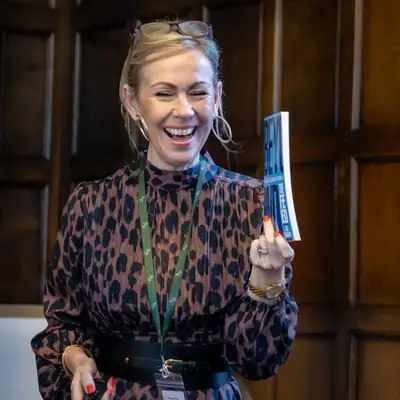
Tune in for fun, inspiration and unfiltered discussions as host Sian Murphy interviews down-to-earth businesswomen sharing ideas, tactics and stories.
Regular features include recommended books, tools, lessons learned and top tips for business.
Hello, and welcome into the Women in Business Radio Show. So I'm here today with my cohost. Adelle Martin. I have to get her to introduce herself because I'm just like it's my head. Especially, we're very, very hot here in The UK at the moment.
Sian Murphy:We're not I'm not dealing with it very well. Mhmm. My head's gone to, like, complete and utter well, mush, really. Also in the studio, our special guest today is Karen Stanley. She is the she is an author and she is the founder of Mabel and Stanley Publishing.
Sian Murphy:Welcome into the studio.
Karen Stanley:Thank you. Nice to be here.
Sian Murphy:Karen is also one of our VIP exhibitors at Women in Business Big Show. And we're gonna be hearing from her today, well, about writing and publishing books. So Karen is a 15 times published best selling author, and she founded her own publishing company called Mabel at Mabel and Stanley. And she's mentored and published over 80 new writers helping them to realize their book book dreams. Now, you work internationally, don't you?
Sian Murphy:You work nationally, internationally. I do. And you yourself have over twenty years experience in writing.
Karen Stanley:I do, yeah.
Sian Murphy:So what we're gonna do is we're gonna hear from Karen, we're gonna hear about her story, but we're also gonna hear about some of the pitfalls. And I think it's fair to say that this is some of the stuff that you now help writers, potential authors with, is some of the stuff that you had to deal with that you learned some lessons the hard way, didn't you?
Karen Stanley:Yeah. I learned the good, the bad, and the really quite ugly, which at the time caused me pain financially, emotionally. But I'm actually really grateful for that because it means I get it, and I've done it myself and learned the pitfalls. So sometimes your worst times are become your biggest lessons, don't they?
Sian Murphy:It's odd the way that happens. Yeah. Isn't it weird? And sometimes sometimes people say that, and you just wanna, like, smack him in the mouth.
Karen Stanley:At the time,
Sian Murphy:it's not that.
Karen Stanley:At the time, it's where you're learning and you're growing. Just think, just sort of, I'm just having a terrible time.
Sian Murphy:But yeah, it is Yeah, and you do.
Karen Stanley:You just
Sian Murphy:want to poke him in the eye with
Karen Stanley:something Absolutely.
Sian Murphy:Really quite sharp.
Karen Stanley:At the
Sian Murphy:time, yeah. But annoyingly, it sort of is the case, isn't it, that out of that adversity very often does come the thing that we need to be helping other people to do.
Karen Stanley:Without a doubt, yeah.
Sian Murphy:So I think we will start off by asking you to share your story with us. So tell us sort of what happened and where you are now and who you work with.
Karen Stanley:Okay.
Sian Murphy:So, fire fire. I will be interrupting at crucial Yeah,
Karen Stanley:I go on too long.
Sian Murphy:Yeah, as Adelle, we will
Karen Stanley:be interrupted Please shut up.
Sian Murphy:At inappropriate moments with daft questions. Excellent. That's what happens.
Karen Stanley:Look forward
Sian Murphy:to So tell us your story.
Karen Stanley:Okay. So how I started writing, I was a teacher for a really long time, about twenty years, and I'd books had always been a massive part of my life anyway, right, as a child. My mom, who we lost recently unfortunately, but she was an avid reader, so I got that passion from her. So always a big part of my life. And in about 2011, whilst I was teaching, I wrote my first book almost by accident.
Karen Stanley:It was like a chance comment by my husband. I came up with a bit of a weird title for something that was doing at the time, he said, that's a book, know, you should write that. And I'm like, yeah, do know what, I'm gonna do that like you do. So I wrote that book in about three months in the office, which was the back bedroom upstairs on Sundays mainly whilst I was teaching. And then when I got to the point that I'd finished it, I was like, I have no idea how to make this into a book.
Karen Stanley:And what ensued after that was a really horrible vanity press journey, which I talk about a lot on my podcast and reels and stuff because they're quite predatory. The publishing world can be fairly
Sian Murphy:I told you I was gonna
Karen Stanley:stop She's She's in.
Sian Murphy:Yeah. Told you I was gonna stop you because I actually want you to say what the vanity press is.
Karen Stanley:Okay.
Sian Murphy:So can you because I think people get confused about
Karen Stanley:The different types.
Sian Murphy:Self publishing, vanity press Yeah. And then what would we call it publishing where you go
Karen Stanley:Hybrid is what I do. So if I've I'll run quickly through Yeah.
Sian Murphy:Tell us the different the different type. I tell you what, start at I think I think most people get self publishing and also get that you can, in theory, but you can go to people like Penguin for instance. Yeah. And these big well known publishing houses. Yeah.
Sian Murphy:And they can publish your book. Yeah. So those are the two things I think most people understand. That's what I understand. So tell us about what else is available.
Sian Murphy:What else is out there?
Karen Stanley:Okay. So you've you've mainly got about four routes. So your traditional publishing, which as you rightly say is your Penguin, your Harper Collins, your Harlequin, they're the big companies and there's a lot of smaller companies besides. They will do everything for you. The misconception there is that they'll also do all of your marketing and everything's going be hunky dory, isn't quite like that.
Karen Stanley:You have to query a lot of them, you have to send in a lot of submissions, and the chances of you getting a deal if you're not famous are slim to none.
Sian Murphy:So is that the one so when we listen to people like Stephen King,
Karen Stanley:who He will be traditionally published.
Sian Murphy:Who could they get, Yeah. You you go to them and you go, I've got this idea. I'm gonna write this book. Yeah. And they go, oh, we like the sound of that.
Sian Murphy:And then you get an advance.
Karen Stanley:Sometimes, if you're if you're a famous author, you might get an advance. If you're Joe Bloggs, you're not gonna get an advance. Yeah. But the
Sian Murphy:the if you like the the route, if let's assume you're successful, is that you then get paid in advance to write that book and they pay the publishing costs.
Karen Stanley:Yeah. They'll pay everything for you and you will get royalties.
Sian Murphy:And a box of books arrives. Yeah.
Karen Stanley:Sort of. Yes. Sort of. But I mean, that's why a lot of famous people will get a traditional publishing deal. And the main reason for that is because the marketing's a done deal.
Karen Stanley:So for like your Richard Osman, for example, I happen to think he's great. I like him. But the reason he's got a publishing deal he's he's not a bad writer, but one of the reasons people like that would get a publishing deal is because they've already got a massive platform. So for the traditional publishing houses, it's much less risky. So that's the traditional.
Karen Stanley:The problems with that is it can take you years. I think JK Rowling got 60 rejections. The chances of you actually getting accepted are pretty slim to none. So it's not that simple, and your royalties will be very small because they're a business. They need to make money.
Karen Stanley:So that's your traditional. On the completely the other end of the spectrum, you've got self publishing where you do everything yourself. There's a lot of purists out there who say it's not a valid route. I could just debate that with you for several hours. But and although it is technically free, you do need still to invest because if you don't have a book that's properly edited or a decent cover or, you know, well formatted, you might as well not bother because it's gonna discredit you very quickly.
Karen Stanley:You've then got hybrid publishing, it's what we do at Mabry and Stanley Publishing. And I like to kinda lock in it to assisted self publishing. So you are self publishing, but you get us to help you with all of the technical stuff. And there is a lot of, you know, formatting and getting the documents right and uploading it to the right platforms and and all of the stuff that takes it from a a word document to a book. And we don't take royalties.
Karen Stanley:I some do, some don't, but we basically would charge you to help you with those services and then the book is yours to do as you want, you get a nice lot of control. The vanity press, if you imagine them, they're kind of like the cockroaches. They come in and they scatter about and they feed on poor author's remains, which is exactly what happened to me when I had written my first book, had no idea and obviously I'd been googling how to publish a book like you do and hey presto, I got this call from what I now know to be a vanity press, but I I was so excited on
Sian Murphy:I think I think some of them must be okay.
Karen Stanley:It can't be A vanity press is never okay, Sian, I'm afraid to Because tell there's a big difference, there are some hybrid publishers out there who are actually vanity press like the sheep in warp clothing. They'll try
Sian Murphy:and I think I think because that's quite a a big statement, isn't it? About they're never okay. So tell us
Karen Stanley:I'll tell you why.
Sian Murphy:I'll you why. Me
Karen Stanley:tell me why. There's there's lots of red flags. Okay? There there are platforms which will clearly well, Ally is one of them, the alliance of independent authors who will identify who the vanity press are. The ways that you can spot them are generally, and this happened to me, they will literally publish anything.
Karen Stanley:They do not care about the quality, they do not care about the validity, they do not care whether it's any good. They let they pretty much wanna take your money and they're not they don't really care what happens to you after that. They're very predatory, so I got approached by this publisher in inverted commas, and I thought that's amazing. But when you think about it, how did they know who I was? You know, that's a red flag straight away.
Karen Stanley:They they will deliberately draw the internet probably for Google searches looking for people who are naive, new to the game. We can offer you a publishing deal. It's never a publishing deal. It's always a large sum of money in return for not much. So if you go to a hybrid publisher, they should be very upfront about you're paying for this is what you get what you're paying for.
Karen Stanley:You'll get an edit, you'll get a format, you'll get a with the vanity press, it tends to be we're gonna publish your book. We haven't got enough traditional spaces at the moment, but hey, presto, you can have a contributory deal. There's lots of kind of red flag language that they use, which make you think that you're getting something really bonafide. A lot of the time, you'll be tied into a contract and your rights and royalties may be up for, you know, you don't quite know who owns your book after all. I've had clients who they pay a certain amount and then get halfway through the process and then, hey presto, you need to pay a bit more before we can distribute it.
Karen Stanley:It's that kind of very manipulative language, very dishonest practices. So is
Sian Murphy:that how they got called vanity prey?
Karen Stanley:Yes. Because they're preying on your naivety essentially.
Sian Murphy:We're wary of here is as an example for instance, sometimes we have some cliche jokes around second hand car salesmen.
Karen Stanley:Exactly. But
Sian Murphy:not all second hand car salesmen are horribly dishonest. No. Most second hand car salesman are actually really lovely and helpful. Yeah. Every now and then you get one that's not the same as in any other industry.
Sian Murphy:Yeah.
Karen Stanley:I get that.
Sian Murphy:Is what you're saying, are the vanity press called the vanity press because they are for instance, maybe offering a hybrid solution, but the inherent in what they're doing, they are misleading people and overcharging.
Karen Stanley:Yeah. And it's not always just that they're overcharging. Like my book, they they published it, they edited it, and put in more mistakes than I actually had in there, which was quite a feat. I thought that was quite a skill. It came back worse than when it went in, should never happen.
Sian Murphy:A of people could do stuff badly though. There's a there's a difference between under under delivering and doing a terrible job, and act and actually and actually going out and setting to defraud. It's the fact that they they're called vanity press simply because they have gone out to and they're using unscrupulous methods. Yeah.
Karen Stanley:Yeah. It's a lack of integrity all the way through. It's very and as I say, they don't there there's no because a hybrid publisher would no way want to be mistaken for a vanity press. That would be like
Sian Murphy:Do they call themselves vanity press?
Karen Stanley:No. No. They call themselves yeah. Like saying, I'm a really bad publishing company company. Now I Yeah.
Karen Stanley:It's that's the name they've been given.
Sian Murphy:Okay.
Karen Stanley:And as I say, there are bodies out there. Ali being one of this alliance of independent authors who will say, do not go to these people because they are a vanity press. So it's basically the manipulative language, the deliberately misleading language, the lack of transparency, the lack of attention to detail, the fact, you know, I I although I technically, I could publish whatever I wanted to, but I don't because I've got some fabulous authors and I wouldn't want to discredit their books with something which was not very good or wasn't ready, you know. So, yes, the lack of integrity. So how
Sian Murphy:how do you recognize this? So if you're there and you're an author, and you can't go and search for I'm looking for it, you're not looking you're not out looking for a vanity press publisher. No. How do you know if the person that you're talking to, who may be who may be saying, hey, I'm a hybrid publisher Yeah. Or, you know, I help you get your book out there.
Sian Murphy:How do you know without getting until you're further down the line and you've got so far in, and they're coming back and going, well, actually, in order to do this, run finish, we're gonna need another x amount
Karen Stanley:Is of money from
Sian Murphy:there a way that you can strip this out upfront?
Karen Stanley:There's loads of red flags. The red the red flags are generally in the language. Again, you can check on this So
Adelle Martin:can you validate?
Karen Stanley:Yeah. You can go on to the website, this Ali website, and check that they're not one of those listed publishers. I would strongly recommend that you look at other books that they've published, order a couple and see what they're like. Know, there's nothing like getting the proof, proof of the pudding and all of that. They should be incredibly transparent about what they're charging and why they're charging it.
Karen Stanley:If they give you a contract, you need to go over that with, you know, fine tooth comb. I had one author who was given the contract and they said, right, you've got to sign it and then we'll give you the second half of the contract. I'm like, no, that's not how it works. You know, there's some really there's some shoddy practice going on out there.
Sian Murphy:But that's
Karen Stanley:that's outrageous, yeah. Who
Sian Murphy:would fall for that?
Karen Stanley:Well, I think Actually I suppose I can see
Sian Murphy:that, and I can see me falling for that as well because it's
Karen Stanley:You don't know what you don't know, do Well, it's
Sian Murphy:not so much that, it's just that publishing a book is such a personal and emotional Yeah. Thing very often, isn't And so I can see how you can quite easily start to get sort of Swept up. Swept up in the
Adelle Martin:the oh, I'm gonna be a published author.
Karen Stanley:And it might be a lifelong dream, you know, they do prey on that.
Sian Murphy:And so you sort of you put all of this crap to the back of your mind and convince yourself that that it's okay. I can see yeah. Okay.
Karen Stanley:And don't forget, they know what to say. Yeah. You know, to convey I I paid extra for an for the expedite package where I was supposed to be published within six months. A year later, I still wasn't any closer. And when I tried to get my money back, I mean, you just, you know, it's gone, ain't it?
Karen Stanley:You know? So I think it's do your research and speak to other authors who they say they've published True. And ask about their experiences. How many times have we read reviews? You don't know if they've put the review on, someone is genuine that you like to think it's a genuine review, but you just gotta be vigilant, I think, really.
Karen Stanley:So It's tricky old ground. It's a it's a
Sian Murphy:minefield. So where where were we? We were going through your story and you you had this this Yeah.
Karen Stanley:I had that experience. Yeah.
Sian Murphy:This this vanity press.
Karen Stanley:So and so that really, that deal was terrible. And then I self published. That wasn't very good because I had no idea what I was doing, and the tech was an absolute living breathing nightmare. So this went on and on and on. I got to about book nine, and I thought I'm I'm about to give up because this is too hard.
Karen Stanley:There's so much information out there and it usually comes with a price tag attached or it's not that reliable and you don't know what you don't know and you don't know if you're talking it's it's a little bit of a closed shop, like people don't always wanna really tell you what's going on, you know, particularly because of these
Sian Murphy:Can you can you just tell us? I should have asked you this What first sort of books were you publishing or
Karen Stanley:are you publishing? So I've written As your set for yourself, too. Yeah. I've written I love to write women's fiction. It's like chick lit, kind of, I say Bridget Jones kind of type star.
Karen Stanley:I love writing that. I've written about two or three children's books, and I've written a couple of non fiction books. My latest one, How to Publish a Book Without Getting Ripped Off, kind of does what it says on the tin, really. So but fiction is my first love. So I went on and on on this journey, became a bit more disillusioned, bit more frustrated.
Karen Stanley:I then met this lady who ran a hybrid publishing house, but she was a very prolific writer herself. She's now on gone on to a million and a half sales. She's flown. But a really lovely person, and she gave me more information in five minutes than I'd had in five years. And I was like, oh my god, I'm so glad I found you.
Karen Stanley:And what she did, she was helping new authors to hybrid publish, which is essentially what I do. So it's self publishing, but with support with the tech. You get an independent ISBN number, you know, the little bar code on the back. You get the publishing house logo. So you're getting that kudos, but very much supported whilst keeping all your rights, your royalties, etcetera.
Karen Stanley:So she talked me through all of this. I I'm pretty sure I did kiss and hug her, I was so grateful. Then time fast forwarded and somehow I ended up I left teaching, and then I went and got a job for a water company for a few years, got made redundant August 2020, brilliant timing. I was like, oh, don't know what I'm going to do now. But really grateful for that actually because it gave me a bit of a shove.
Karen Stanley:But what am I gonna do? But do you know what? I'm gonna do something that I love. So I set up my writing academy with possibly the worst business model ever. So if you want to know what that is, I think I had five people paying me £20 a month, it wouldn't even have kept me in super noodles, it was really my learning curve of how to run a business has been quite a lot steeper than my learning curve of how to write a book, frankly.
Karen Stanley:But I set up my writing academy, and I coached five it was women at the time, I've coached lots of men since, but two kids books, two fictions, and a non fiction, like part of fiction and pear tree. I coached them all the way through. We got to about the summer. They'd all finished their books. They thoroughly enjoyed the process.
Karen Stanley:And they said, you know, what we're gonna what we're gonna do now? And I said, well, we're gonna jolly well publish. We're not we haven't done all this writing to leave it in a computer. And they said, well, how are we gonna do that? And I said, well, I'm gonna set up a publishing house.
Karen Stanley:How hard can it be? Turns out it's really quite hard. It seems like a brilliant idea at the time. So I set up Mabel and Stanley Publishing, named after my lovely dog, who contributes nothing apart from
Sian Murphy:The name.
Karen Stanley:Eating chicken and farting and her namesake. Yeah. It's quite cute on the logo. That's pretty much it. So so I set up Mabel and Stanley Publishing.
Karen Stanley:We all launched on the September 3. We got on the radio Kent. We got into local book shops, we had we had an absolute blast. And from that point on, that's when the real hard work started because that's at the point that time I had a guy doing my uploads for me, supporting me with the technical stuff, but he did he was sort of helping me, not quite as willingly. He was also coerced him, but like a press ganged him into helping.
Karen Stanley:But from that point on, I've basically thrown myself in and learned and absorbed and cried, and learned a bit more, cried a bit more. But now I'm at a point where, like yesterday, I had an author which is just about to launch on the fourteenth. I noticed a slight typo in his title happens. Before, I would have gone into meltdown and as a complete I'm like, no. Quarter to five this morning, I thought, I've got the answer for that.
Karen Stanley:I'm up there on my computer. Anyone who knows me is amazed by that. And I fixed it, you know. So now, I feel like I have so much knowledge because I've been published by Vanity Press. My next two books, I did actually get a traditional publishing house deal.
Karen Stanley:I can talk about that later, but that's not the magic bullet. I thought I'd arrived and I hadn't quite. Then I self published, then I set up Mabel and Sandy publishing. So I've pretty much done everything. And so now, I feel I couldn't be in a better position.
Karen Stanley:And I've myself I've mentored and published over 80 authors now, and I've got clients in Saudi Arabia, and France, and Scotland, and all over The UK. Yeah. So it's all good. And I go to lots of nice book launch parties.
Sian Murphy:Yes, that must be quite nice.
Karen Stanley:It's fabulous. It's absolutely fabulous.
Sian Murphy:So some of the things that you are often asked, so I mean, I think this one's a bit broad really, how do I publish my book?
Karen Stanley:I'm not
Sian Murphy:sure if we should That
Karen Stanley:we could be until next week. Yeah. Yeah. That usually but a lot of that is about me. Not everyone's right for me, and I'm not right for everybody.
Karen Stanley:And I as an antidote to all of the horribleness that's out there, integrity is my thing and honesty sometimes to my own detriment probably. But I'm very much about I love a chat with a potential author and say, what's your book? What do you want? What's your dreams? And then try and help them to find the right path.
Karen Stanley:I might not be it. Usually, I am. I hope. But I might not be it, and that's absolutely fine. So for me, it's about finding your own journey because every author's different, and every book goal is different and every book is different.
Karen Stanley:So it's more about that really, finding what the right path is.
Sian Murphy:One of the things that you said at the start of the conversation was that people often shame that when they get their book published through a we call it a traditional publisher. Yeah. So I I I mentioned Penguin because it's
Karen Stanley:the one I can find Yeah.
Sian Murphy:But obviously, there are hundreds and hundreds and hundreds of them. That they that there are certain things that they very often expect to happen, one of them being marketing Yeah. That doesn't. So can we talk a little bit about that? Because I I think very often that's that people will go to that sort of publisher for two reasons.
Sian Murphy:One is I think, credibility in QDOS. Yeah. And the other is because they think they won't actually have to do anything or put any money anywhere, and that they're gonna get an advance, they're gonna get a payment for the book, they're gonna get royalties for the book, and somehow it's gonna be distributed and sold, and they can just sit back and count their pennies and think about book two.
Karen Stanley:Yeah, it don't happen like that.
Sian Murphy:So tell us tell us how it does happen. Yeah. I'm just gonna my my viewpoint with the credibility thing is that I actually don't think now, today, that it matters. No. I I think people have got a little bit wiser to that.
Sian Murphy:I think there may be some circumstances where it does. I think if you are
Karen Stanley:Academic publishing, for example, is slightly different.
Sian Murphy:You are doing academic publishing, if you are publishing your thesis, if you're doing something along those lines, there's actually a process that it needs to go through anyway as part of the academic publishing process.
Karen Stanley:Mhmm.
Sian Murphy:Also, I could see how if you have published a politically, I don't know, a political viewpoint book, if you've if it's historical book, something along those lines, that yet there might be an advantage to getting it published through, I don't know, I can't remember who it was who published all the, like the Roman history books and all
Karen Stanley:that Yeah. Sort of
Sian Murphy:for the rest of us, most of us, I really I don't think If I see a book that I I I look at what I I look at what the cover's like. Yeah. I might look at the author.
Karen Stanley:Mhmm.
Sian Murphy:I might look at what sort of person they are. I might read the back cover. What does the cover look like? But I wouldn't care whether it had been I I probably wouldn't even notice who'd published it. No.
Sian Murphy:And I might assume now that it had been self published, but I wouldn't care. So why do what is the you know, is this still a thing about or why is it still a thing?
Karen Stanley:Well, I don't think it is a thing really so much now. Because there's a lot of purists out there who say, if you're not traditionally published, you're not published. That's nonsense. The the chances, as we said before, if you get in a publishing deal are slim to none if you're not a known face. And generally, you have to have a literary agent first, which is about as difficult to get as a publisher.
Karen Stanley:So the chances of that happening
Sian Murphy:And I'm assuming time as well. So if you've got something
Karen Stanley:Well, could take years.
Sian Murphy:That sort of matters like today and over the next year, and you've got a message that you want to get out there, actually getting a literary agent and then finding a publisher, and then waiting for contracts, and waiting for agreements Yeah. And waiting for the process.
Karen Stanley:If you even get the deal anyway, yeah. It's not really.
Sian Murphy:If I'm gonna pluck a figure out my head and say you could be looking at three three to four years for that book to actually Yeah.
Karen Stanley:If you're lucky. Yeah. If you're lucky.
Sian Murphy:For your manuscript Yeah. To turn into something that people can buy. By which time, unless it's evergreen, you know, you're done.
Karen Stanley:Well, if you wanna write a business book, you want it to start working for you straight away for a start, don't you?
Sian Murphy:But you but it's gonna be it's today. Yeah. You know, what you're talking about in the business world today may not exist in a year's time.
Karen Stanley:Exactly. I mean, the and the thing about it is the landscape has changed enormously because most people now buy their books online. That is and and the traditional publishing houses used to be run by the editing department. So it would land on the editor's desk. The editor would decide whether it's good or not, and then they would choose to publish it.
Karen Stanley:Now, they're run by the marketing department because their business is, so it lands on the marketer's desk and he says, well, nobody knows who Joe Bloggs is, so we're never gonna sell that, and it's too much of a risk. They and so then, you know, again that reduces your chances. If you go back to them doing the marketing for you, this is the same thing. You will know, SianniAttard, marketing is not a one and done type thing. It's a long game.
Karen Stanley:It takes, you know, resilience, it takes consistency, it takes dedication, it takes commitment. You you don't again, when I started my business, I said I hate sales and marketing, and I can't remember it was said to me, well you better learn to love it because otherwise you ain't got a business. But you know, it's not to market someone who's unknown is a shed load of work because one, you've got to get them out into the the public domain, you've got to be posting about them consistently, you've got to get them on media, etcetera etcetera. They don't have the budget or the time for that. So when I think it's Katie Powsey.
Adelle Martin:Yeah. She's out and about.
Karen Stanley:Books she's written. She will openly admit she has the ideas for those books. But the reason they sell, I've never read one, I can't comment on whether they're any good or not. I don't know. But one of the main reasons they sell is because everybody knows who she is already.
Karen Stanley:And quite often people buy those, you know, out of curiosity. If you go back to Richard Osman, he's a very likable chap. He's all over the TV, he's a famous comedian. They know out of the bat they're gonna sell 50,000 copies straight off. Well, they're not gonna do that for someone, you know, and going back
Sian Murphy:But also, far as the author and the writer goes, you may not need to sell that many. You may have quite a tight target audience, or quite a tight target market where, you know, you may be thinking if there are 2,000 people who buy this book, but perhaps you're not looking to make profit actually from the book itself, perhaps you have a different objective. But a publishing company isn't gonna care about that, are they? No.
Karen Stanley:They will only make money from your book And
Sian Murphy:I think one of the things that you were saying there that maybe I think it happens when people start businesses as well, especially in the now that we have social media and all of that sort of thing, is that sometimes people think that, well, I've got social media. I'm gonna start my business. I can do it all. I I won't have to go out. I won't have to meet anybody, I can do No.
Karen Stanley:Tim is multifaceted, isn't it?
Sian Murphy:Can do it all on social media. You know, I'll set I'll go on BookTok, I'll set that up, I'll I'll talk a bit about that, or I'll post a little video, and bobs me tiddly, it'll all be done. And I the authors I see are out and about. They're networking, they're selling, they're taking with their them, they're exhibiting. Yeah.
Sian Murphy:They're doing exactly the same as they're doing at any other business selling their stuff.
Karen Stanley:Well, to to assume that your book is enough to publish it, it's basically like opening a shop and not telling anyone where it is. No one knows it's there, no one's got any idea who you are. So and and I very much, when I had my second two novels published by a small traditional publishing house, I thought, woo hoo, move over JK, here I come, I'm done, know. They're gonna do all the marketing, I've I've landed, some of my books are in Waterstones, I thought I'd made it. They did no marketing whatsoever for all of the reasons I've just outlined.
Karen Stanley:They just published it, chucked it out there and hoped that something happened with So
Sian Murphy:did they did they sort of advise you? Did they tell you what expectations were?
Karen Stanley:Not really. No.
Sian Murphy:There was never a well here you go, ego lovey. It's out there, it's on the shelves and now it's over to you.
Karen Stanley:What they did tell me was I had to sell a thousand copies before I earned 1p of royalties. So that's the other thing, you think, oh well, you know, they'll Yeah. I haven't got to pay anything upfront, but you will pay at some point because they're a business. So, yeah, so the reason they won't do your marketing is because it's too risky, it's too expensive, it's too time consuming. You can see why
Sian Murphy:it So being taken on a worldwide on a whirlwind sort of worldwide tour of of of interviews and Yeah. It's not not not being organized for the average person.
Karen Stanley:No. It won't it won't be done. Those those market their marketing budgets will be allocated for the big names.
Adelle Martin:Yeah.
Karen Stanley:They'll have a very small amount of their budget that they might put into riskier projects. They'll have a couple of projects a year that they go, do know what, we're gonna have a bit of a pump with that because it's good for their image to sort of take a chance. But that's, you know, that's pretty much Yeah. It. So you're not gonna No.
Karen Stanley:You're gonna And really, talking about the royalties, different motivations for fiction and non fiction. But what I say about my book, that earned me about £8,000 in its first fortnight. Not in book sales. I probably couldn't have bought a packet of super noodles with the book sales. But it was about positioning that book for my upsell, for my onward services, for my courses, for talking about it.
Karen Stanley:So it's not really about the book. The book isn't gonna make you millions, but if you position it correctly and you know where you want it to go, that's a different matter. So I
Sian Murphy:think what we're looking at here is what is your why do you want to publish this book? What's your objectives?
Karen Stanley:Goals and
Sian Murphy:objectives, If you're writing, say a fiction book, I think it's probably the best example. If you're writing a fiction book because you want to be a fiction author, and you want to sell lots of fiction books, and maybe have somebody say they want to make a TV program about it, and off you go, you're Richard Osman suddenly. Right, that's one route. But, and and that's your objective. Whereas for business people, the objective can actually be very different, can't it?
Karen Stanley:Oh, it's hugely different. Yeah. Yeah. And when I work with clients particularly on my like VIP mentoring programs where I take them from idea all the way through, The bulk of the work is knowing what you want the book to do and knowing what you want the reader to do once they finished. Because it's like if you don't know what you want them to do after, they're not going to do it, are they?
Karen Stanley:You need to direct them. So the dominant bit of the planning at the beginning is what what do you want to achieve from this book? What's your objective? What do you want the reader to do once they've finished? Are you getting them into your email list?
Karen Stanley:Are you pointing them in the position of some of your programs? You're looking for the upsell. That's what's key there. And then it will be the best lead magnet you ever create quite frankly. But you need to position it I
Sian Murphy:mean, it has to be good.
Karen Stanley:Oh, yeah. Mean, if
Sian Murphy:it's crap, it's not gonna be a good lead magnet
Karen Stanley:at all. They might be. I don't wanna work with her.
Sian Murphy:Which sounds like really obvious. Yeah. But sometimes, I sort of think this is a little bit like your first baby. Yeah. Okay?
Sian Murphy:Your first baby is lovely, isn't it? It's wonderful. It does it's The fact that other people are stood behind you going, what is that? You think it's beautiful. Yeah.
Sian Murphy:You're not looking at it through everybody else's eyes. And I think that that can be a bit of a problem. And that having somebody else actually with the reality Yeah. Of the fact that you have a brilliant idea and you've laid it out how you want it to lay out, and you've you've done a cover and Mhmm. I mean, I remember the first thing that I did where I created an image for to I can't remember to go on something or other.
Sian Murphy:Like, years and years and years ago before Canva was even born, I thought I was so impressed with myself. I thought this was just a brilliant image. I must have looked at it probably about a year later, and I'm not going to swear, but it was sort of what What was our thinking? Yeah. What was that?
Sian Murphy:And it was an embarrassment quite frankly.
Karen Stanley:Yeah. And that's why you need someone, you know, that's when people say self publishing is free. It is free, but it shouldn't be. Because if you don't invest in your book the same as anything, if you don't put any investment, you're not putting any value to it. So yes, you might be able to write it yourself, but I would never publish a book that hasn't been well edited by someone who's Mhmm.
Karen Stanley:In the right position to give you that feedback.
Sian Murphy:And not giving it to your mom.
Karen Stanley:You can give it to your mom. It's lovely to But, yeah, it's beautiful darling. Yeah. But you need it, you know, an objective opinion, don't you? Unless your mom's a brilliant editor or something.
Karen Stanley:Yeah, you know, you can do it for free, but you jolly well shouldn't. And if you're not prepared to invest in it, do you know what? If you just wanna write fiction stories and you wanna print them on Amazon and you think that's great and that's enough for you, I'm not here to judge anyone. But if you want to be taken seriously as a writer, or if you want that book to have impact in the right way for you as a business person, then it's not a good idea to be cheap. Yeah.
Karen Stanley:Because
Adelle Martin:Yeah. Definitely. And I think the way technology has moved on is move that vast, you know, gap of I wanna write, but you but you know, God, growing up in the seventies, you're like, oh my God, how would you if you had an idea, you'd never get published. Then we went the other way when you can completely self publish and you But I think what it has done is taken all the barriers out for people to write a book. But I know because was chatting, we had a coaching session and we chatted.
Adelle Martin:And what I loved about Karen, you're so absorbed in your topic, you have that second opinion. Oh yeah, I saw it like that. And you flip it, yeah, you're writing it but how are gonna sell it? And that's very different mindset.
Sian Murphy:Mhmm.
Adelle Martin:And then we worked through and said actually I'm not ready for that yet. But I valued that time because people say, oh, I love I wanna write a book. And you're like, but why? But writing it and selling it are two different things. And I never thought about that until I had that one to one view.
Karen Stanley:Oh, that's You just have that perspective.
Adelle Martin:Yeah. And mine is it's not right yet. And then we I've sat back. But, yeah. But you could have easily said, oh, yeah.
Adelle Martin:Let's do it. But you never did. And we had two sessions and you kept pushing and pushing and pushing. I'm going, oh my god. Yeah.
Adelle Martin:Because you were just getting that mindset of writing and that mindset of marketing and selling it and what is your reader gonna do with it.
Karen Stanley:Do want Especially for business books. Especially for business books. Books.
Adelle Martin:You really don't think about that when you're writing hours and hours on end. No. You don't. And you gave a really good balance.
Karen Stanley:Oh, back you. I'm pleased I'm pleased I was of assistance. Can
Sian Murphy:you give us some examples of some of the business books that you've been involved with as to because this is the Women in Business Radio
Karen Stanley:show afterwards. I'm sure we've got some buzz in fiction writers. Just
Sian Murphy:well, I'm sure there are.
Karen Stanley:Yeah. We're talking business.
Sian Murphy:We are talking business and I think there are so many, there are different objectives that you can You have don't have to have a story in you, do you? Which is the thing. So not a fiction story.
Karen Stanley:No. You may have to have
Sian Murphy:a story because I think stories are very powerful ways engaging people in what you do. Tell us, can you give us some examples of some of the books that you've published? Yeah. And why and why the author wanted to publish them?
Karen Stanley:Yeah. I've had some really cool clients, I've got to be honest. And as time's gone on, I've had more and more cool clients for which I'm eternally grateful.
Sian Murphy:Are you allowed to tell about any
Karen Stanley:of your I've core got so many. I've got one guy, he's a mindset coach for professional footballers. Weirdly, I've I've published quite a few books for either football coaches or ex footballers, which for anyone who knows
Sian Murphy:me hanging out around
Karen Stanley:stadiums around the changing unbelievably crap at sport. My son was like, what the hell are you doing in any kind of football hemisphere whatsoever? I said, well, I know nothing about it. I still don't know what the upper side of rule looks like. It's those shorts, isn't it?
Karen Stanley:Yeah. Yeah. Think it is. It's just all the dishy men and the nice the nice legs. Yeah.
Karen Stanley:So he was a he's a mindset coach for a lot of the premiership footballers. He wrote a book called it's a bit of a racy title, is that right? How how not to be a leadership dickhead. But it's absolutely but he's got a psychology degree. That's a brilliant book.
Karen Stanley:It's a there's a lot of people's desks I would have liked to left that on. Not necessarily leaders. That would have been good. I've recently published a book for a lady. She's got an MBE.
Karen Stanley:She's a former multi medal gold medal Paralympian. She was off to the Olympics. She was a swimmer. She woke up at the age of 17 one morning. She was blind.
Karen Stanley:She couldn't move. And then turns out she had multiple sclerosis. She went through some really dark times, but then she got her health back on track. She actually sits in an altitude tent in her house because she's realized that helps her MS, weirdly. And yes, she went on to be a Paralympian and won five gold, three silver, something
Sian Murphy:Can like take us back to take us back to the mindset coach? Yeah. I'm gonna run through these. What you said it was
Karen Stanley:a guy, didn't you? Yeah.
Sian Murphy:Okay. So what was the objective? And I appreciate that the objective might have changed as you went through the process. But what what why did they want to write a book?
Karen Stanley:For him, it was all about credibility. He's very much about and he does a lot of work with corporates as well. Yeah. So advising on leadership and the psychology of leadership and how you lead So it
Sian Murphy:quite a different positioning for him, wasn't it? If he's if he's been working with footballers and they're going in to deal with corporates
Karen Stanley:Well, it's all about mindset, but he just has different he's he's corporate clients, he has and because he was I think he was a footballer himself in his younger years and he's mad on mad about football, he's always been involved in the beautiful game as it were. So that was just one of his niches, but he was very much about he's very much about mindset and how your mindset affects how you lead and team mentality and that kind of thing. So he wanted to position himself as an expert in his field. He wanted to he goes out and speaks on a lot of stages. He appears on a lot of quite big podcasts.
Karen Stanley:So the book was very much his credibility piece. His his, you know, his kudos
Sian Murphy:It also took to my mind with that title, it tells you exactly who you're gonna be working with, doesn't it?
Karen Stanley:Yeah. He knows his reader.
Sian Murphy:Yeah. How not to be a leadership dickhead. You're not gonna bring that guy in and expect it all to be twee,
Karen Stanley:are you?
Sian Murphy:No. No. Little fingers and teacups.
Karen Stanley:And I love a bit of Mar Mar, do know what I mean? And a bit of
Sian Murphy:you're not gonna expect a bit of dancing around the topic Yeah. Are you? Yeah. Subtlety.
Karen Stanley:Yeah. He's he's great.
Sian Murphy:He's You're gonna expect him to come from that title, you're gonna certainly come in
Karen Stanley:Yeah. And Deliver. Yeah. Yeah. Yeah.
Karen Stanley:He's quite a straight talker. He's Steve Salas' name is. He's he's fabulous, and he's worked with all the big Yeah. The big footballers. The Paralympian, she had already written her story about her journey as to Paralympic success, and then then she went on to win a gold.
Karen Stanley:So she'd finished that book before she'd actually ever got gold, and that was quite elusive. So we republished the book, but she had added in the final chapters. And since that time, she'd also got an MBE. And now she does sort of coaching and consultancy, and she's very much about resilience. This will resonate with you, Adelle, like positive mindset, overcoming life challenges through the way that you approach them and the way you think about things.
Karen Stanley:So again, her book is very much about, look, if I can do it, you can. And it's not always appropriate to write your life story, but for her, because she's actually somebody quite well known, she's got an MBA, that's it's quite relevant that people kind of will will will recognize her achievements. Sometimes, she sort of wanna weave your story in, but her story kind of took center stage in that instance. But and we worked together over a year, and we created some courses off the back of her book and some sort of digital courses and some some mentorship programs, etcetera. So the book was very much the Yeah.
Karen Stanley:The catalyst for that really.
Sian Murphy:So one one more. Have you got one more?
Karen Stanley:One more. The one more was the lovely Ines Zeller, spelled z d e l a r. I believe she's Lithuanian. Big apologies to Ines if I've got that wrong. My brain fog is a bit dodgy at the moment.
Karen Stanley:She was an absolute joy to work with. She'd been a professional nanny for very many years, all in kind of Sloane Square, quiet kind of Knightsbridge, the kind of very posh, shall we say, neighbourhoods. But she was also a sleep coach and really passionate about helping particularly first time moms with sleep and identifying how important it is to get good sleep and how difficult that can be, and obviously she had loads of experience helping new babies and new moms getting that kind of ideal place where you're not shattered all the time. And she wanted to leave her job as a professional nanny and do her sleep coaching full time because she was doing it kind of part and part. So the book was as a springboard for her, again for credibility, for kudos to kind of get her name out there.
Karen Stanley:She was an absolute joy to work with. We went to a lovely launch in a Knightsbridge, you have to say this really carefully, cot shop. I'll leave your imagination to work out why I slow down when I say that. But, yeah, she she entered into the spirit of things. She was very dedicated with the marketing.
Karen Stanley:She was really on point with setting her goals and objectives for the book. Her book's called Teaching Baby to Sleep. Again, another really good title, business book titles, they need to do what it There's says on the
Sian Murphy:no ambiguity.
Karen Stanley:No. No. You need it for SEO, you need it for keywords, you need people need to look at that and and they don't wanna spend ten minutes working out what it's about. And then after she published the book, it was it was brilliant and she did a really good job. And then after she published the book, she rang me and she said, oh my god.
Karen Stanley:She said, my phone has been ringing off the hook. I've now quit my day job. I'm now sleep coaching full time. I've got some really great clients. She said, and I don't quite know how it happened.
Karen Stanley:All I know is that it did happen. So it's that visibility. If you follow the right strategy, you've positioned it well, it's kind of like you're putting all the steps in place, and then it just all kind of beautifully aligns. So, yeah, she was she was really chuffed, and she was just lovely to work with.
Sian Murphy:I think that's given us a really, really good example of some of the things that you can achieve, some of the reasons for writing a business book, some of the things that you can achieve if your objective and your process is right. Karen, how can people get hold of you if they're
Karen Stanley:So I'm all over social, should be sick of the sight of my face. My current business coaches said, I wanna be sick of the sight of your face, babe. Said, I'm pretty sure there's a few people out there already at that point. And so we're on all of the social channels at Mabel and Stanley Publishing. We're on TikTok, we're on Instagram, we're on Facebook.
Karen Stanley:I'm Karen Stanley Writer on LinkedIn, or you can email me directly at Karen sorry. Karen at mabill and stanley publishing dot com. I'm always delighted to hear from people. I love I love talking, writing, and hearing Well, from haven't
Sian Murphy:finished with you yet.
Karen Stanley:Oh, blimey. It's still scary. We've got a A challenge.
Sian Murphy:We've got a couple of quick fire questions.
Karen Stanley:Go on then.
Sian Murphy:We're going to fire at you quickly.
Karen Stanley:There you go. The clue is in the name.
Sian Murphy:The first thing is, what's your top tip for publishing a book?
Karen Stanley:Do your research. Do your research and make sure that you speak to someone that you trust and that you find the right path for you. If you're not sure how to find that boat, that path shameless plug, how to publish a book without getting ripped off pretty much tells you everything you need to know.
Sian Murphy:It's also it's just occurred to me you can also find Karen's profile profile on the women in business big show. Oh, It's site on there as well with all of her And details are on final one, what do you know now that you wish you'd have known when you started out?
Karen Stanley:Oh, dear God. How long I thought it's just we're wrapping this up now, aren't we?
Sian Murphy:One thing. Okay.
Karen Stanley:Oh, my lord. That when you start a business, be prepared for sales and marketing marketing to be your primary goal, not your passion with which you started. That's a bit sad. It's a bit harsh. It will make you throw ugly crying tantrums and stamp your feet like a sport little princess.
Karen Stanley:But if you don't do that, you haven't got a business, so you have to you have to really be prepared. And it's that's tough because it's not my first love. I've got a lot better at it.
Sian Murphy:So it gets in the way, doesn't it?
Karen Stanley:It's a pain in the neck. You
Sian Murphy:learn to have love it. So be prepared to do stuff you don't like, get yourself out there, to have to get yourself out there and do some sales and marketing, sell stuff.
Karen Stanley:Yeah, it's like dragging round a teenager for school shoe shopping, it's that kind of vibe, you know? It's that Yeah. Yeah. It feels a bit like that. Yeah.
Karen Stanley:I
Sian Murphy:love that. Yeah. If you've ever gone school shoe
Karen Stanley:shopping with a teenager, you'll know exactly where I'm coming from.
Sian Murphy:So thank you thank you so much to my cohost, Martin. And thank you so much, Karen Stanley, for being with us and sharing your wisdom about book publishing Well,
Karen Stanley:businesses been with pleasure. Thank you you. So much. Thank you.
Sian Murphy:Take care.
Karen Stanley:Bye bye.