Subscribe
Share
Share
Embed
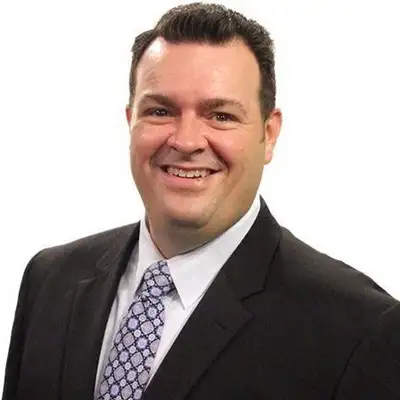
In this week’s episode, host Dan Ehrman sits down with Dr. Eric J. Tully, Director of the PhD in Theological Studies and Professor of Old Testament and Semitic Languages at Trinity Evangelical Divinity School (TEDS). Dr. Tully joins us to explore why ancient languages matter deeply for the life of the local church, not just the academy — from deepening biblical interpretation to enriching preaching and discipleship. We also dive into the significant transition unfolding at TEDS, as the historic seminary prepares to merge with Trinity Western University in Canada — a move that reflects broader shifts in theological education and mission in the 21st century. Dr. Tully shares insights on what this change means for faculty, students, and the global church community. Christian Post+1 Along the way we discuss: • The enduring value of studying the Bible in its original languages — Hebrew, Greek, and the ancient versions — for theological clarity and faithful ministry. Trinity International University • How ancient texts and language study equip pastors and lay leaders for deeper engagement with Scripture. Trinity International University • Dr. Tully’s academic work — including his books on prophetic literature, textual criticism, and biblical interpretation — and how these projects aim to connect rigorous scholarship with the life of the church. Trinity International University • The story behind TEDS’ evolving institutional identity and its future in Canada. Whether you’re a pastor, student, or curious follower of Jesus, this conversation will challenge the way you think about language, Scripture, and the global future of theological education. Church Connect Church Connect – Access trusted resources from leading Christian publishers to strengthen your church. Enjoy everyday bulk discounts of up to 45%, free shipping on orders over $50, and more. Every purchase supports the Tyndale Foundation, funding Christian ministries and global mission organizations. Episode Links:
Host Dan Ehrman from Tyndale House Ministries invites you to join him for The Church Around the World podcast for important and impactful conversations with church and ministry leaders. They'll share stories about God at work, His people, and what's happening in faith and culture that's shaping the local and global church today. From your neighborhood to the ends of the earth, listen to these powerful and timely testimonies of blessings and challenges directly from the people that are helping build up the church around the world.
The Church Around the World —
in conversation with influential church leaders,
sharing how God is at work and equipping you
with practical insights for your ministry today.
From every tribe, language, and nation,
God is calling people to himself.
Welcome to the Church Around the World.
I'm Dan Ehrman.
Honored to be at Trinity Evangelical Divinity School
here with Dr. Eric Tully,
professor of Old Testament and Semitic languages.
Good to be with you. Thanks for having me.
I'm excited for people to hear from you. I feel like
Old Testament languages gets buried in the academic world.
It's Hebrew and several other languages.
I've studied a number of them to differing degrees.
You're not living up to the American reputation —
if you know two languages you're bilingual,
three languages you're trilingual, and if you
know one, you're American — the old joke.
I am, yes. I was born in Tennessee,
but actually I did grow up on the mission field.
In Central Africa, in Zaire. My dad was a
missionary pilot with Mission Aviation Fellowship.
We were there until I was basically in junior high.
What language do people speak in Zaire?
The official language is French, and in our area
of the country they also spoke Swahili.
I was homeschooled and went to an American school
part of the time, so I wasn't forced to use it on the street.
Did you come back to the States for high school?
Junior high and high school, in southern Ohio.
Southern Ohio is like half Midwest and half
southern adjacent — especially down by Cincinnati.
It is. You're right.
Oh, very much so.
Are you friends with the Vice President?
No, but he did live in my county — in Preble County.
I read his book, Hillbilly Elegy, and recognized
the places that he talked about.
So you come from good stock.
You've been at TEDS for almost fifteen years,
teaching Old Testament and a lot of Hebrew classes,
I imagine.
How did God spark an interest in the Old Testament
and in Hebrew and Semitic languages?
Great question. I can point to a number of different
influences going all the way back to early childhood
on the mission field in Africa. I was being homeschooled
and my mother was just a wonderful storyteller.
She would get out the flannel graph and tell us these
wonderful stories from the Old Testament
that were really foundational for my faith —
understanding who God was, his greatness, his love,
his character. That was pretty formative at an early age.
My grandfather was a professor of Hebrew and Old Testament
at Grace Seminary, so I knew that was kind of
on the radar a little bit.
When I got to college at Moody Bible Institute,
I had the opportunity to take Hebrew.
I already loved the Old Testament, and Hebrew was
fascinating and a little bit weird. It was just
a series of steps of the Lord leading me
in that direction.
When I came back from the mission field,
that was a pretty tough transition —
about twelve years old. Back then there weren't
a lot of organizations or resources to help missionary
families deal with those cultural transitions.
They talk a lot about that now, but back then they didn't.
It was a very difficult experience — it was like
an immigration. We have the language now to say
I was like an invisible immigrant, because I was strange
but there were no features or linguistic things
about me that would indicate I was not of this culture.
In that process there was a lot of pain,
a lot of loneliness. And I really gravitated toward
the Old Testament — it felt like this rich resource
of the rawness of faith, and really getting to see
God in action. Whether it's the Psalms or the prophets,
it just really spoke to me as a teenager and as a
college student. And yet I didn't feel like I had
the resources to understand the Old Testament.
It was very encouraging, but also a great mystery.
That was part of what I discerned to be the Lord's call —
to study it formally and hopefully be a resource
to help other people understand its importance
and what it means for their lives.
And so it's kind of through that pain. It's interesting
how the Lord meets us in those pain points.
Sometimes in that pain you really question God,
and in that very questioning, God meets us there.
It's amazing to me — that's part of the pattern
of who God is.
It was — to use Old Testament terminology —
a wilderness period in my life that really baked in
my relationship with the Lord. It was hard,
but very special.
And I can see in hindsight how the Lord used
some of those experiences.
So you did your M.Div. at Trinity here at TEDS,
then shifted into Hebrew for a master's and PhD
at Wisconsin-Madison — which is the same program as
The Bible Project with Tim Mackie.
I feel like Hebrew has taken more of a forefront of
interest for people in the last five or ten years —
almost a revisiting of what all of this is
and what we do with it.
What was the pivot point where you decided
to pursue the PhD and go for it?
It was a gradual discernment that this is what
the Lord was calling me to do.
The thought of spending my days studying the Old
Testament and helping other people understand it
was just so exciting. I never felt like the Lord
was calling me to be a pastor — that requires so many
skills and is so demanding. I have a lot of respect
for all the different things that pastors have to do.
But I felt like the Lord was calling me particularly
to the Old Testament and to the study of Scripture.
It was a great honor to study at the University of
Wisconsin and to do a deep dive into Hebrew language,
textual studies — and I spent a year in Israel,
doing a lot of thinking about context, geography,
and archaeology. There's an element of getting into
academic study where you start to shift into textual
analysis and it almost decouples from faith. A lot of
people get lost in that season.
How did you find God keeping you anchored
through that academic rigor?
I knew going in that that was going to be a temptation
and a challenge, so I tried to be extremely intentional.
I stayed very much rooted in Christian community —
not just attending church, but very actively involved
teaching adult Sunday school and serving in
pastoral internships.
Whatever I was assigned in my secular PhD program,
which was quite demanding, I also made time to read books
on theology — books by evangelical scholars. I just knew
that as important as the technical scholarly details were,
that was only part of what I needed to be learning.
So I really tried to be intentional.
In addition to the secular program, you kind of
assigned yourself additional books. Yeah, yeah.
How did your wife feel about all this?
That was a hard season — I'm not gonna lie.
But we made it. She's just an amazing partner and support.
Her name is Tracy.
How long have you all been married?
Twenty-four years.
You've been in partnership through all of this.
So you went through the academic work in your PhD.
You said this morning you were teaching Syriac,
and I didn't even know what relevance that had to the Bible.
Re-educate me on some of this — talk about
how that fits into training in God's Word.
Syriac in particular was the subject of my dissertation.
It's a late dialect of Aramaic that is important for
establishing the original text of the Bible
and textual criticism. It's also the language of
the Eastern Church Fathers — important figures in
church history who wrote commentaries and were
important theological voices. It's part of the overall
picture of Semitic languages and how we understand
the relationship between the different languages.
Some of what we do in academic scholarship
is way upstream of the actual ministry done
in the church, for sure.
But ultimately what we're trying to do is understand
the Bible accurately and faithfully. And sometimes
that involves a lot of ice under the water of that
iceberg — being able to understand things well.
We have a PhD program here, and master's programs
that are preparing students to go into PhD programs.
Some of our PhD students are writing on theological
topics and Scripture — they're going to go directly
into the church as pastor-theologians, well trained
in precision, communicating clearly, finding answers
to whatever questions come their way. We're excited
that our PhD program has produced many scholars,
many professors in tenure-track academic institutions
around the world — teaching in seminaries, Bible colleges,
and mission agencies all over the world. I'm the
director of the theological PhD program here,
and it's a great honor. We also have our M.Div. and
master's programs directly training people for ministry
in the church. It's good to see the way those
inform each other.
We don't want our PhD program to just be producing
big heads on a stick. And we want our M.Div.
and master's programs to be really robust and rigorous,
because we're studying God's Word.
Are there examples of passages where understanding
the other Semitic languages helped inform your
understanding of Hebrew? Moments where it brought out
a facet of who God is that you wouldn't have caught otherwise?
Boy, it might be difficult to come up with an example
off the top of my head — I feel like I'm asking
a comedian to be funny right now. It shows up in so
many different ways — in evaluating arguments
that commentators make, in understanding the way
words work in Hebrew and Greek,
in knowing what might be important and what probably
isn't. There's a lot to weigh, a lot of data,
a lot of observations you make as you're reading
carefully through the text.
All of this training just helps us know what we're
looking for, know how to find it, how to be precise.
I can give a couple of examples from English.
Let's say a space alien who doesn't know English very well
comes to earth and listens to us talk. He wouldn't
innately know the difference between words like
trash, garbage, and junk. He might think those are
basically the same word, but we know they're quite different.
Junk suggests equipment, old cars, metal. Trash is general
household waste, and garbage is smelly with organic material.
We innately know as English speakers where the
boundaries are between those words and in what ways
they overlap. But a non-native speaker would need to
do a lot of work on that.
Or think about simple prepositions — the impact of
pollution on a country versus in a country.
Those are two very different things. A non-native
English speaker may not innately know the difference,
but we do. That's the kind of thing we're doing in
Hebrew. It's not magic — we're studying Hebrew and
trying to be as precise as we can in the judgments
we make, because this is God's holy word.
My doctrine of Scripture says that God's word is true.
It's inspired by him — even the words are inspired.
That motivates me to be as careful and thorough and
precise as I can about knowing exactly what God has said
and what he hasn't said, because that has authority.
His Word is binding on me.
You've mentioned precision several times. For my own
frame of reference, I feel uncomfortably imprecise
in a lot of how I approach things — even coming into
Tyndale and seeing our Bible translation committee
and the work that they do. There's an element of
trying to precisely carry meaning from language to language,
culture to culture — and that is exceedingly precise
work. But there's also an element where it's an art.
I always compare it to swimming in the ocean where
there are general principles, but at a certain point
it's wild. There's an element of it being God's word,
and he's going to work and activate in that.
How has that impacted how you consider God's word
when you hear it in English — like at church
or teaching a Sunday school class?
Does that hit you in a different way
with the foundation of biblical languages?
Yes, certainly.
When I was in my PhD program, people would come up
to me at church and ask Bible trivia questions,
and I often did not know the answer. It drove my wife
crazy because she would say, you're spending hours
and hours studying and people think you don't know
the answers to these questions.
My response was, when you do graduate study, the goal
is not necessarily to learn all the knowledge.
It's to learn how to think, how to communicate,
how to reason, how to find the answers to questions.
That's what we're aiming for. I found that my own
scholarship and graduate work has made me a better preacher.
It's made me a better participant in elder meetings,
a better counselor when I talk to people about their problems —
or think about my own problems, which are many.
It just helps us to be better thinkers, better reasoners.
When I'm at church teaching the Bible in English,
hopefully that training and experience is coming through
in the way I'm handling it and communicating it
and helping to make it as clear as possible.
As you shift into being a professor and teaching
these things, there's an element of bringing people
up to speed on the basics, going through the work.
But along the way I imagine you're still reading
and studying yourself.
What helps guide you in your own reading?
Your original training provides a good foundation,
but I continue to learn from other people in the
books I read. I'm watching other people do it and
learning from them. My own thoughts are constantly
being challenged. It's great to be part of a learning
community where you can bounce ideas off each other
and continue to be refined. It may sound funny,
but I listen to podcasts on culture or film criticism,
or I read classic books — and all of those activities,
even well outside the area of biblical studies,
are constantly sharpening you in the way that you think,
the way you see the world, the way you make arguments.
Is reading one of your main hobbies, or do you have
other pursuits you do for fun?
I have a lot of pursuits. There's not time for all of
them, but I do try to read a lot.
I do listen to a lot of audiobooks. I have a commute
so I'm just constantly going through them.
My public library has library apps. I was looking back
and I'm over a thousand audiobooks — it is what it is,
but it's fun. What other hobbies do you have?
I like everything from board games and watching movies
with my family, mountain biking, water skiing,
my wife and I taking walks with our dog.
I like house projects, working out in the yard,
and reading. Just a lot of different interests.
You're not the monolith librarian type.
With TEDS closing the Chicago campus and merging
with a school in Canada — and you're going with the
merger — I've heard that about half the professors
are making the move to Canada.
It is about half.
You've been here almost fifteen years, you've built
so much of your career here. I imagine it's a bit
chaotic. How have you been navigating all of this?
Well, it has been busy.
We have all of our normal work to do, and then there
are committees for working out future curriculum,
transition, logistics — moving and housing.
So it's been busier for our family and busy on faculty.
But there's a lot to grieve. The Chicago area has been
an important part of TEDS' history for decades.
We have wonderful relationships with churches in this
area. Almost every church within two hundred miles
has staff or has had staff that came through TEDS.
There's a lot to grieve, but I'm also very hopeful
because it does seem like the Lord is at work.
One of the ways we're seeing that is — I didn't know
what to expect this year. We're doing a bit of a
teach-out. Some of our students are going to be
going with us up to Langley, BC. Some won't.
Some will be continuing their theses and dissertations
at a distance. But the sense of community here on campus
has been so wonderful — a time of everyone coming together.
Some of us are not movable for various reasons.
Some of us are at the point of retirement.
And then about half of us are planning to make the move.
There's hope for the future.
We have a wonderful Dean in David Powell. We get to
continue to work together as colleagues in a culture
and ethos in our institution that we really believe in.
We're looking forward to this next adventure of seeing
what the Lord is doing on the West Coast and across
the border in Canada.
What is the name of the school you're merging into?
It's Trinity Western University.
It has a great reputation for academics and student
services. It's got a beautiful campus.
They are the other Evangelical Free Church institution,
so it's a wonderful partnership.
We share the same statement of faith, and they've been
incredibly warm and welcoming to us.
It's been very positive so far. We hope we'll be able
to serve in the Canadian context, the Evangelical Free
Church of Canada, and other churches on the West Coast.
But we also hope to continue to serve churches in the US.
Even though we're going to be just across the border,
we'll continue to have our online programs
and hopefully be able to serve the church in the US.
It's a big shift.
I've always respected Trinity and loved to see the
impact of TEDS in training up so many pastors
and people in the churches. I think it's going to be
a big loss for the Chicago Metro.
Even this week, the other Trinity in town announced
it's going to be closing too — a lot of shifting
and transition. I grew up working in construction,
and whenever we're building a building
we would build up scaffolding. I think oftentimes we
build institutions around where God has moved
in a generation, and we forget that God isn't necessarily
establishing our institution — he's establishing
a people for himself. Sometimes our institutions are
scaffolding, and it either needs to wheel up
or be broken down and reestablished. That would fall
back to you being twelve years old, coming into a place
where you don't quite fit, and yet you are kept
and found in the Lord in the midst of that.
Do you sense a little bit of that in this season too?
There's something that feels good
in a counterintuitive way — something that feels
good about just being reliant on the Lord.
We don't have all the answers. We don't know all that
the future holds. It's a big move with a lot of ramifications.
But we're trusting that the Lord is with us, that
he's in it, and that he'll continue to use us.
That sense of dependence and reliance is a good thing.
It's important to remember that he's the one who
has these things in his hands. You were recently
appointed as one of the Old Testament editors
of one of my favorite commentary series —
the Pillar Old Testament Commentaries,
which Don Carson started. Talk a little bit about
stepping into that role
and what you're working on.
How is that unfolding?
That's been a wonderful experience. The Pillar
New Testament Commentary is beloved, and Don Carson
has done an excellent job shepherding it. He and I
worked together in setting up the Old Testament side
of the series — inviting contributors and developing
the initial documents for the series.
Now Don has been stepping back. Ben Glad is my
counterpart on the New Testament side,
and I'm doing the majority of the Old Testament side.
Eerdmans has been good to work with,
and there's a lot of enthusiasm out there for the series.
Our first volume is at the press right now —
it's a volume on Psalms by Dwayne Garrett at Southern
Seminary. I am very excited that this will be
the first volume in the series. It's very strong,
very creative in all the right ways —
careful scholarship, but also very edifying
and just outstanding.
We have a lot of good volumes that will be appearing
in just the next couple of years.
Are you going to write a commentary on Hosea
for Pillar now?
No, we have another excellent contributor for Hosea.
I am slated to write a volume on Obadiah and Jonah,
so I'm really looking forward to that. As soon as I
get another major writing project off my desk,
I'll be moving to that. That's excellent.
I love that you're carrying that forward.
It's an interesting dynamic with commentary series —
sometimes it can be scattered in terms of the scholarship,
and trying to bring continuity and bridge
generations of scholarship.
Our contributor list is fairly diverse in one sense
as far as the different institutions.
We have global voices, men and women, different
denominations. The common thread is faithfulness
to Scripture, a theological orientation, a love for
the church, and an experience with church ministry.
We have a great list. I'm just excited to see
what will be produced in the coming years.
As are we. I know it's been a blessing to me.
My wife works for The Gospel Coalition
and teaches Bible Study Fellowship. We pull on
those resources periodically.
I appreciate you taking up that torch. I trust
it'll be a good tool for churches.
We hope so. You said you've got a project you're
busy at now. What are you working on?
I wouldn't say I'm wrapping it up — I'm in the middle
of a large commentary on the book of Ezekiel.
It's a big book. It's a complicated book.
What series is that in?
That's in the Christian Standard Commentary series,
with Broadman and Holman. It's been a fascinating work.
It's a wonderful book that I think is very challenging
in how we think about God. One of the major ideas
of the book is that God resists us creating him in
our own image. He is who he is.
He says over and over again in that book,
"You will know that I am the Lord."
He's not as we wish him to be — he is as he is.
The book is challenging, and I'm excited to think more
about what it means for the church. Right now I'm doing
an initial pass through the book, a lot of detailed analysis.
Then I need to go back and write and think more about
theological implications for the church. I have a couple
more years on my deadline, so I need to get back to that.
How many chapters are in Ezekiel?
Forty-eight, and some of them are quite long.
It's a big project.
That's really cool that you're in the middle of a move
and leading here too — that's a lot to balance
with a commentary like that. I mean, there have to be
a lot of things you leave on the cutting room floor
in the editing and processing. How do you prioritize
what actually gets out there?
My understanding of the process of interpretation involves
looking for — you take a given passage,
because the biblical authors and the divine author
communicate in units. You take that unit,
and there's a reason why the story was told that way,
why those details were included and others were not.
One of the things we're looking at is what the author
didn't say and what kinds of things were skipped over.
You make all these observations, ask yourself questions,
look at what was said and wasn't said. Then you come
to a point — there's a New Testament scholar named
Michael Gorman whose process I've found very helpful.
He talks about a synthesis, where you bring
everything together and say, this is the theological
message of this particular passage, and everything
in here relates to it and is somehow subordinate to it.
That theological message is the through line of
that passage. That's the process I take when I'm
working on a commentary or a sermon. You have to be
selective about the things you talk about —
but those things are hopefully leading your reader
or listener to understand that main idea,
that theological message. So when you announce it,
it's plausible to them because they've seen the right
things along the way — like a bit of a tour guide.
You don't include all the things you find most interesting.
You don't include random elements, but rather what
are the things the author is saying or doing
in order to arrive at that main theological idea
that's important for the people of God today.
I imagine for many pastors, your scholarship and
editing process really brings the most important things
to the table — to help them communicate and exegete
the text, the culture, and the people in the process
of preaching. That's the thing about commentaries —
there are different kinds for different purposes.
Some are extremely technical and massive with all kinds
of detail, and then you get some that try to get
right to the point. The best ones I've found in my
experience are those that get into the details
to the extent that that serves the main point —
you're not just wandering around extraneous details,
but the commentator is serving as a guide to help you
understand the theological teaching of the passage.
The twenty-seventh nuance on the use of that word
may not be of benefit. Oh, yeah.
It is such an interesting dynamic to consider the Lord
in this and in his Word — him understanding
all of the infinite depth and all of the minutia,
but also the main thing.
The wonder that he still moves in relationship
toward us in the midst of all that,
and that he's given his word to us. There's something
about God's word where his Spirit moves and works
and quickens souls and lives — and we get to be caught
up in something so much larger than the everyday.
Is there ever a sense where you almost feel like you
were made for what you're doing?
I do feel that way. I feel like this is what God made
me to do. It's a big responsibility, a great honor.
All of us who teach God's word — whether we're Sunday
school teachers or pastors or we teach the Bible
in other formal settings — it is a big deal to stand
up and say, "Thus saith the Lord."
And to speak God's word —
it's a great privilege.
That's what God uses to change lives —
the Holy Spirit working in his word.
It's not through politics, might, power, and money.
It's through his word and his Spirit.
It's a great privilege to be able to join him
on that adventure.
I am so thankful that God has gifted you with precision.
He's gracious with all of us as we're on a journey.
We are all learning. I'm encouraged to hear about
your scholarship and to get a little window
into the work here at TEDS. I'm hopeful too for what
God is going to do in a new generation at the intersection
of the academy and the church as you head out west.
Is there anything else you wanted to share before
we wrap up? Are there things you're especially
looking forward to in this last year here
in the Chicago area?
We just have wonderful students. They're working hard
on a variety of different projects,
and I think many of them are at a place where they
can make good progress this year and hopefully finish up.
One of my roles as director of the PhD program is to be
in all of the dissertation defense hearings —
whether that's New Testament, church history,
or systematic theology. So I learn a lot.
There's a lot of fascinating work being done,
and I really enjoy that interaction.
How many is that in a typical year?
Sometimes in March and April, toward the end of the year,
we could have fourteen of those in two or three weeks,
and each one is two hours long. That's a lot of time.
That's a lot of work. It is a lot of work.
But it's fascinating work — it's exciting.
We've got students from all over the world — China,
Korea, India, Africa, as well as North America.
The perspectives, the ministry and life experience
that the students bring — it's just a wonderful
place to learn and live together.
It's an honor.
Well, it's been an honor to meet with you here.
Thank you for making time and for serving the Lord
in this work. It'll be fun to watch your scholarship.
God bless you guys as you go —
we'll be cheering for you. Thanks for having me
on your show.
You've been listening to Dr. Eric Tully here at
Trinity Evangelical Divinity School
on the Church Around the World.
I'm Dan Ehrman. Thank you for joining us and blessings to you.
You've been listening to the Church Around the World
with Dan Ehrman, discovering how God is working
in and through the church. Practical takeaways
and insights from this conversation equip
church leaders like you to carry out Great Commission
work in your local community. To help expand
the impact of this show, make sure you subscribe,
review, and share the Church Around the World
on your favorite platform. To learn more, hear previous
episodes, or contact Dan, visit us at churcharoundworld.com.